This paper further exten ds the discourse on the social and cultural experiences of children with Special Education Needs and/or Disabilities (SEND) in two mainstream primary schools in postcolonial Guyana. The discussion in the paper extends the argument into the learning and socializing experiences and opportunities of children with SEND. This study was conducted using an ethnographic approach over two semesters employing participant observation, focus group discussions and unstructured interviews. The data gathered was analyzed using situational analysis as posited by Adele Clarke. It revealed that despite Guyana being a multi-racial, multi-ethnic, and multicultural society with religious freedom, which is protected by the People’s New Constitution Guyana, 1980, children with SEND still face marginalization because of their race and ethnicity as well as normalized negative stereotypical practices and beliefs. Further, the data revealed experiences of neglect and discrimination against children with SEND through the use of discourses and discursive practices on the legacy of racism contingent on race superiority and inferiority in Guyana.
## I. INTRODUCTION
Sometimes I blank out. Sometimes I don't understand what the teacher is saying. If I ask too many times for an explanation, I get yelled at publicly.
- Boyo, July 2018 - Interview
In a previous paper, I illustrated the domestic violence, abuse, racial, religious and cultural interferences experienced by children with SEND in postcolonial Guyana. I also demonstrated how racial discrimination, marginalization, negative attitudes, and exclusion, which originated in the sociocultural history of colonial Guyana and has continued unabated in spite of official policies in the postcolonial period.
In this paper, I focus on children with SEND, who have had similar experiences to that of Boyo. First, I argue that the inclusion of children with SEND in these two schools is, in practice, a form of exclusion. This form of exclusion is contingent on a pervasive system of discrimination that oppresses children whose identities do not constitute the normalized expectations of children suitable for mainstream schools. Here, I reveal that some children face obstacles to learning, due to the physical environment, pedagogical styles expected of the teachers, racism and limited resources. Furthermore, I show that the teachers have an almost impossible job, given their resources and environment. I argue that the interplay of such challenges and limited resources leads to negative experiences for children.
I also discuss the dominant discourses and practices of the school, which have led to children with SEND being marginalized and ignored. I consider questions of race and ethnic influence on the experiences of children with SEND. I show that race, ethnicity and culture are crucial elements which influence the conceptualization of impairments and deficits in Guyana. I suggest that widespread experience of domestic violence and abuse, have a significant impact on the learning and socialization of some children with SEND. As a result, I explore how some children cope with the attitudinal barriers and challenges they encounter in the environment.
## II. RESEARCH QUESTIONS
This paper presents the answers to the overarching question: 'What are the experiences of children who are marginalised by social inequalities in Postcolonial Guyana?' The subsidiary questions are:
- 1: How are social inequalities stemming from social, cultural and ethnic differences affecting the experiences of children with SEND in mainstream primary schools from in Guyana?
- 2: What are the social and cultural challenges experienced by children with SEND through quasi-inclusion practices in two mainstream primary schools in postcolonial Guyana?
## III. RESEARCH APPROACH
While I am a native of Guyana, I had not worked in the education systems at the classroom level for over five years. I needed a research design which would embed me in the lived experiences of the children with SEND. Therefore, ethnography seemed to be the most appropriate research design to facilitate my embeddedness in the lived experiences of the children with SEND. This is because ethnographic research is a process that engages the ethnographer in 'dialogue with the entire social reality encountered' (Corte & Irwin, 2017; Rodgers, 2007). In relation to this, Berry (2011) constitutes that ethnography is the study of the sociocultural contexts, processes, and meanings within cultural systems. It is a microscopic approach. I used Rodgers', (2007) and Berry's (2011) conception of ethnography because it allowed me to reveal and analyse the experiences, socialization and barriers to full participation faced by children with SEND in the two mainstream primary schools in their socio-cultural contexts.
The placement of children with SEND in disabling learning environments constitutes socially context-specific experiences (Iphofren, 2017). Ethnography allowed me to be part of the environment and socially context-specific experiences with the children who shared their experiences from within these environments, which constitute the research site. This made their statements context specific and I was able to map the experiences to context specific situations, which helped to established themes for analysis. It also reconstructed the research process by constituting a focus for theoretical sampling. I involved thirty-eight children; thirty-six with identified SEND and two without identified SEND who shared similar relational elements in the experiences of children with SEND in the two schools. I added their voices to the discourses because they were part of the situation and social arena. This was an approach to situational analysis taken by Adele Clarke (Clarke, 2005) and it was used to gather and analyze data in this study. Purposive theoretical sampling guided me to seek out additional data sources to collaborate the situated meanings of interviewed children with SEND. The group included children with following impairments/disorders:
1. Speech Impairment-Mute
2. Learning Disabilities/Learning Challenges
3. Emotional Behaviour Disorder
4. Dyslexia
5. Speech Language and Communication Needs (SLCN)
6. Intellectual Disabilities
7. Attention Deficit Hyperactivity Disorder (ADHD)
8. Exceptional Intelligence/Giftedness – Exceptional/Giftedness
9. Dysgraphia
10. Down Syndrome
All the names given to the participants are pseudonyms
## IV. ETHICAL CONSIDERATIONS
It is the researcher's responsibility to ensure ethical responsibility in all stages of any research. This study involved participants who were extremely vulnerable. These were children with SEND in a developing, postcolonial country of the global South. It was particularly important to approach the research with sensitivity and with care. Guyana is a very small country with a population of approximately 740,000 (Bureau of
Statistics, Government of Guyana, 2018). The two schools studied are located in small tightly knitted communities, which made preserving total anonymity very challenging or almost impossible even with the use of pseudonyms. The possibility of being recognized in publications resulting from this study was explained to the participants. However, stringent efforts were constituted to safeguard the identity of all participants. Precautions were also taken to protect the safety of children and their integrity in their learning environment.
I ensured that my research complied with BERA (2018) and with articles 16 -21 (Children, Vulnerable Young People and Vulnerable Adults) with additional emphasis on Articles 3 and 12 from the United Nations Convention on the Rights of the Child. Article 3 states that in all actions concerning children, the best interests of the child must be the primary consideration. Article 12 states that children who are capable of forming their views should be granted the right to express their opinions freely in all matters affecting them, commensurate with their age and maturity. All the children with SEND who participated in this study were allowed to form their opinions about their experiences within mainstream primary schools and to express these views freely in all matters affecting them. Teachers' participation in the focus group sessions was voluntary. They were made aware of the study and the topic or issue to be discussed at the beginning of each focus group discussions.
BERA (2018), states that before the commencement of any study/primary research, one needs to get the consent/permission from the target sample of the population. In terms of BERA's consent/ permission, I first sought permission then received approval from the University of Roehampton's ethics committee and consent from participants. The BERA guidelines also state that children should be facilitated to give informed consent. Informed consent is more than a form or requirement in research, it is a process. Information must be presented to participants so that they can voluntarily decide whether or not to participate in research (Nussbaum et al., 2017). I gave all participants information that was, as far as possible, simple to understand, so that they could voluntarily decide whether or not to participate in the research. While the informed consent process is prospective and takes place before any research activity, consent was also an ongoing process between the participants and me for the duration of the study.
## V. APPROACH TO DATA ANALYSIS
Situational Analysis as posited by Adele Clarke was the approach to data analysis taken in this study. Situations are complex and are also particular configurations of conditions, temporal, geographical, interactional, sentimental and material. They are constructed and constituted through discourses
(Foucault (1979, 1980). My analysis focused on understanding the discourses through which the participants constituted their subjectivities. Foucault decentred the knowing subject to focus instead on the social as discursive practices and extant discourses as elements of practice that are constitutive of subjectivities (Clarke, 2005; Foucault, 1975). Drawing on a Foucauldian poststructuralist approach to the study of the experiences of children with SEND allowed me to constitute a more in-depth analysis of the discourses which is constitutive of the apparent subjectivities in understanding the experiences of these children.
The foundational premise of discursive analysis presupposes that every human thought, perception or activity is contingent on the structuration of the field of signification which precedes the immediacy of the facts
(Pohlmann & Colell, 2017; Rasiński, 2011). Any given situation is itself open, indeterminate, changing, unstable, unfixed, tenuous and temporary (Clarke, 2005). This can be determined by situational analysis using social world/arena maps and positional maps (Clarke, 2005 & Clarke et al., 2007, 2008, 2015, 2018). The primary focus is not on facts but to their conditions of possibility (Clarke et al., 2015, 2018 & Laclau 1995 as cited in Rasiński, 2011). The statements of the children with SEND were not perceived as 'the facts' but rather as a way of arriving at an interpretive understanding of how they constituted their realities. Therefore, when children revealed their experiences, they were explored for the situatedness and subjectivities connected to other discourses and phenomena in their social world as is reflect in the situational and positional maps below.
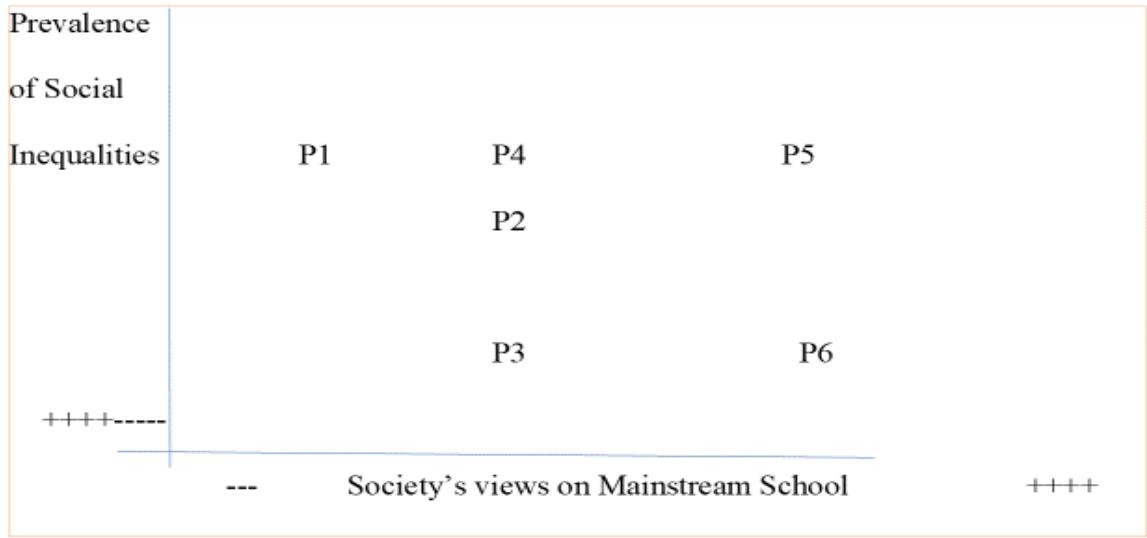
Positional Map 1: Marginalised by Social Inequalities
P1 = Children with SEND who come from impoverished backgrounds are more challenging than other categories (position held by teachers and some parents).
- P2 = Children with SEND participation should always be subjected to surveillance (position held by teachers and children without SEND).
- P3 = Poverty is a sin and produces impairments (position held by teachers and parents).
- P4 = Indigenous and exotic cultures should remain isolated in the jungles of Guyana (position held by some teachers).
- P5 = Some cultures are worthy for inclusion in curricula materials but not actively included in mainstream social practices (position held by some teachers).
- P6 = Children of certain cultures and socioeconomic background are destined failures and only frustrate mainstream teachers (position held by some teachers and some parents).
Some children in the Marginalised by Social Inequalities did not have impairments. For example Amera (see chapter five). On one hand some children of the Marginalised by Social Inequalities share the same impoverished background as the group Being Ignored. On the other hand, a significant number of these children come from working class families and many receive excellent family support. Their families support the schools as well. Some of these children have challenges like language and cultural challenges. The reactions to their placements in the mainstream highlighted structural and social inequalities in the schools and the country.
Situational Map 1: Children with SEND Marginalized by Social Inequalities Positional Map 2: Socially Expected Positions in Mainstream School
<table><tr><td>Individual Human Elements/Actors</td><td>Non Human Elements/Actants</td></tr><tr><td>Individual children</td><td>School</td></tr><tr><td>Parents</td><td>Home</td></tr><tr><td>Teachers</td><td>Training college</td></tr><tr><td>Religious Leaders</td><td>Church/Mosque/Temple</td></tr><tr><td>Head teachers</td><td>Playground</td></tr><tr><td>Education Officers</td><td>Canteens</td></tr><tr><td>Government officials</td><td>School Gate Shops</td></tr><tr><td>PTA executives</td><td>Cemetery</td></tr><tr><td>School Cleaners</td><td></td></tr><tr><td>Collective Human Elements/Actors</td><td>Implicated/Silent Actors/Actants</td></tr><tr><td>Teachers</td><td>Children with SEND</td></tr><tr><td>Parents</td><td>Some Teacher perspectives</td></tr><tr><td>Religious Organisations visiting schools</td><td>Children's voices</td></tr><tr><td>Parent Teacher Association</td><td>Abused children</td></tr><tr><td>Discursive Constructions of individual and/or collective Human Actors</td><td>Discursive Construction of non-human Actants</td></tr><tr><td>Tiered Level of acceptance in social setting controlled by children without SEND.</td><td>Social Inclusion Practices and Policies established by the Ministry of Social Cohesion</td></tr><tr><td>Children with SEND as not supposed to achieved tier 4 level of socialisation (see Chapter Six)</td><td>Government expectations from mainstream placement of children with SEND</td></tr><tr><td>Political Economic Elements</td><td>Sociocultural/Symbolic Elements</td></tr><tr><td>National Division in Parliament</td><td>Disability is deviant</td></tr><tr><td>National Practices of Exclusion</td><td>Segregation</td></tr><tr><td>International Sanctions - Insufficient Achieving Sustainable Development Goals</td><td>Cultural Hierarchical Structures</td></tr><tr><td>Temporal Elements</td><td>Spatial Elements</td></tr><tr><td>Family shaming in society because of impairments</td><td>Variation in inclusion practices within school districts</td></tr><tr><td>Caging disabled children highlighted on national news media.</td><td></td></tr><tr><td>Bullying in schools</td><td></td></tr><tr><td>Major Issues/Debates usually contested</td><td>Related discourses</td></tr><tr><td>Socialisation/Participation</td><td>Religion</td></tr><tr><td>Other Kinds of Elements</td><td></td></tr><tr><td>Family resources</td><td></td></tr></table>
<table><tr><td rowspan="2">Importance of Segregation</td><td>P1</td><td>P5</td><td></td></tr><tr><td>P4</td><td></td><td></td></tr><tr><td rowspan="2">++++</td><td>P2</td><td>P3</td><td>P6</td></tr><tr><td colspan="2">--- Collective Views in School and community</td><td>++++</td></tr></table>
P1 = SEND is as a result of sin and therefore children with SEND should not be allowed to participate equally in the same mainstream schools as children without SEND (position held by some religious teachers and parents of children without SEND).
P2 = Children with SEND should be silenced in mainstream schools or ignored. Their perspectives are not worthy of consideration. They need to accept that (position held by some teachers and parents of children without SEND).
P3 = If children with SEND are allowed participation it must be controlled by those who has the right to mainstream schools (position held by some children without SEND e.g. Thomas).
P4 = The benefits of mainstream education outweighs the depersonalisation, marginalisation and discrimination experiences (position held by parents, teachers and some children with and without SEND).
P5 = Children with SEND must accept their subjugation (position held by some teachers).
P6 = Sustainable Development Goal 4 (SDG 4) aims to "ensure inclusive and equitable quality education and promote lifelong learning opportunities for all." Therefore children with SEND should be fully accommodated and supported (position not held).
All the positions taken and not taken above are discursively formed in discourses.
Some children in the marginalized by social inequalities situation did not have SEND. On one hand some children of the marginalized by social inequalities situation share the same impoverished background as children being directly ignored. On the other hand, a significant number of these children come from working class and affluent families and many receive excellent family support. Their families support the schools as well. Some of these children have challenges like language and cultural challenges in addition to their impairments. The reactions to their placements in the mainstream highlighted structural and social inequalities in the schools and the country.
## VI. EMBRACING SUBJECTIVITY IN THE STUDY
Situations are related and subjectively positioned (Clarke, 2005). This study required vulnerable children with SEND and their mainstream teachers to speak about their lived experiences with me. There were biases in statements about their experiences, and feelings about such experiences, which were shared with me. These interactions generate personal relationships between the researcher and participant; thus, the knowledge gained is anticipated to be context-specific and value-laden (Albon, 2011; Dahlberg, Moss and Pence, 2013), which generates subjective knowledge.
The experiences of children with SEND add value to the situated subjectivities in the two mainstream schools because I could not manipulate or control the environment. I became a part of the environment by participating in the various discourses on SEND. I am explicitly acknowledging the embodiment and situatedness of the participants and myself in my research. In fact, I embrace the subjectivities presented since the aim of this study was not to just identify facts but to understand their meanings as they relate to the experiences of children with SEND. Embracing the subjectivities allowed me to better understand the intended meaning even when participants' statements seemed heavily laden with emotions.
There needed to be continuous awareness that discourses, discursive fields and discursive practices are constitutive of social relations in many ways (Allan, 2010; Whitburn, 2016). I had to acknowledge that I was subjective by being part of these social relations because I was a participant in the two mainstream schools. I always reminded myself of Besley's (2015) and Rose's (1998) statements that it is through discourse that meanings, subjects, and subjectivities are formed. I echoed other researchers' statements that subjectivity is dependent on discourse (Foucault, 1973; Laclau 1995 as cited in Rasinski, 2011). In doing so, I acknowledged that my participation in the discourse is not a neutral reflection and, while I embrace it, I have been transparent about it in the data analysis.
By embracing subjectivity in this manner, I should emphasize that in this study, the approach taken is that of mapping situations, social relations and positions of participants in the discourses as posited by Clarke, (2005), Clarke and Friese, (2007), Clarke & Star, (2008) and Pohlmann & Colell, (2017). My well-documented database can validate such maps, and, in this way, the subjectivities were objectively presented. This reflects Robson's (2011) position that researchers must be able to show others what they have done, beginning with the conceptualisation of the study's design, through data collection protocols to details of the analysis.
## VII. ESTABLISHING TRUSTWORTHINESS IN THE RESEARCH
I embraced the subjectivities presented because of the nature of my study as the first step to develop trustworthiness in my research. Qualitative researchers, in particular, need to establish integrity in their research, the data and the analysis (Korstjens & Moser, 2018). Moreover, as posited by Korstjens & Moser, (2018) and Nowell, Norris, White & Moules, (2017), it is critical that qualitative researchers establish credibility, transferability, conformability, dependability and reflexivity in the quest for transparency and trustworthiness. To be accepted as trustworthy, qualitative researchers must demonstrate that the research is conducted rigorously and methodically and that data analysis has been conducted in a precise, consistent, and exhaustive manner through recording, systematizing, and disclosing the methods of analysis with enough detail to enable the reader to determine whether the process is credible (Korstjens & Moser, 2018; Nowell et al, 2017).
In this regard, I have been open and made clear each phase of the research. I systematically outline throughout the paper each step taken and modified through negotiation with the participants in the field. I aim to present the interpretive meaning of the statements of the participants about their lived experiences. I used situational maps to triangulate conditions, relations and positions in the situatedness of the statements by the children, their teachers, parents and my observations. This started with a messy situational map and ended with a saturated relational map. With this, I am confident that the data, which has come from multiple sources in the research site, is credible and triangulated.
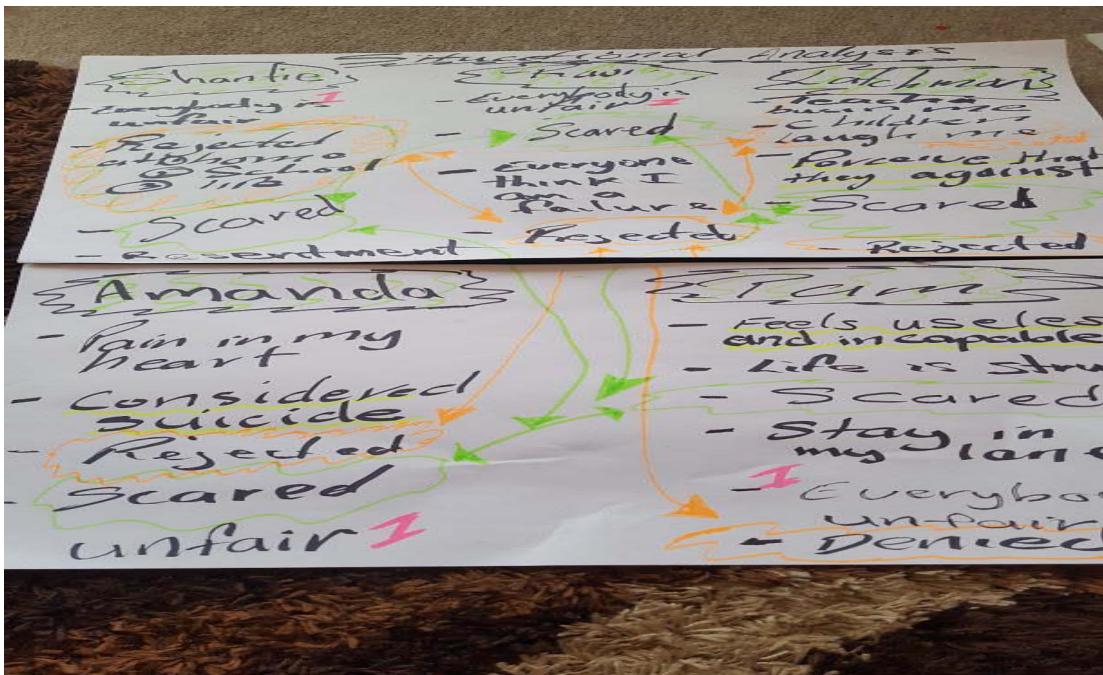
Image 1: An initial messy relational map
It should be noted that the situation presented in this study is the position from a global South perspective. While the data was gathered in one of Guyana's ten administrative regions, the participants reflected the traditions, culture and practices which is constitutive of a Guyanese citizen. Throughout the study, I have illustrated how the outcomes of the analysis can be contextualized to this setting and applied to other regions in Guyana. This research reflects the experiences of children with SEND in two mainstream primary schools. These children revealed their lived experiences and these are reflected in this paper with an audit trail for each step of data analysis. The data analysis process has been both exhaustive and rigorous to ensure that the stated interpretive meanings are dependable.
My final thought, in establishing trustworthiness is reflexivity. Writing a qualitative thesis reflects the iterative nature of the qualitative research process where data analysis is continuous while there is an on-going process of simultaneous fine-tuning. Researchers are encouraged to keep a self-critical account of the research process, including their internal and external dialogues (Tobin & Begley, 2004). I have maintained a self-critical account of the research process to ensure that the process was genuinely trustworthy.
## VIII. DISCUSSION
### a) Marginalized by Race
Situational Map 4.8: Racial, Religious and Cultural Interferences
<table><tr><td>Individual Human Elements/Actors</td><td>Non Human Elements/Actants</td></tr><tr><td>Individual childrenTeachersReligious Leaders (Pandits, Imams, Pastors)</td><td>BibleGeetaQuran (religious books)Church/Temple/Mosque</td></tr><tr><td>Collective Human Elements/Actors</td><td>Implicated/Silent Actors/Actants</td></tr><tr><td>TeachersChildrenParents</td><td>Children with SENDTeachersSome parents</td></tr><tr><td>Discursive Constructions of individual and/or collective Human Actors</td><td>Discursive Construction of non-human Actants</td></tr><tr><td>Some impairments are the consequences of sin. Others are results of family curses, omen and Obeah.Mainstream schools were not build for disabled children.</td><td>Religious Freedom – People's Constitution of Guyana, 1980.Guyana Disability Act, 2010Guyana Education Act, Chapter 39:01</td></tr><tr><td>Political economic Elements</td><td>Sociocultural/Symbolic Elements</td></tr><tr><td>Separate state influence from religious influence in mainstream education.</td><td>Most schools in Guyana were historical church funded and some are still under church influence.Many schools share a compound with a church or has a church immediately close by.</td></tr><tr><td>Temporal Elements</td><td>Spatial Elements</td></tr><tr><td>Children in schools are encouraged to form and join religious groups.</td><td>Multiple religious perspectives are present in one mainstream school and are all challenged by the dominant religion - Christianity.</td></tr><tr><td>Major Issues/Debates usually contested</td><td>Related discourses</td></tr><tr><td>Exclusion by religious perspectives.</td><td>Christian prayers are being repeated in all primary schools four times daily excluding the prayers of other religions.</td></tr><tr><td>Other Kinds of Elements</td><td></td></tr><tr><td>There is division among the perspectives of the Christian groups and the division also fuel exclusion.</td><td></td></tr></table>
The map triggered deeper reflection as I felt I had missed something in the data and this led to further reanalysis of the maps especially the positional map below.
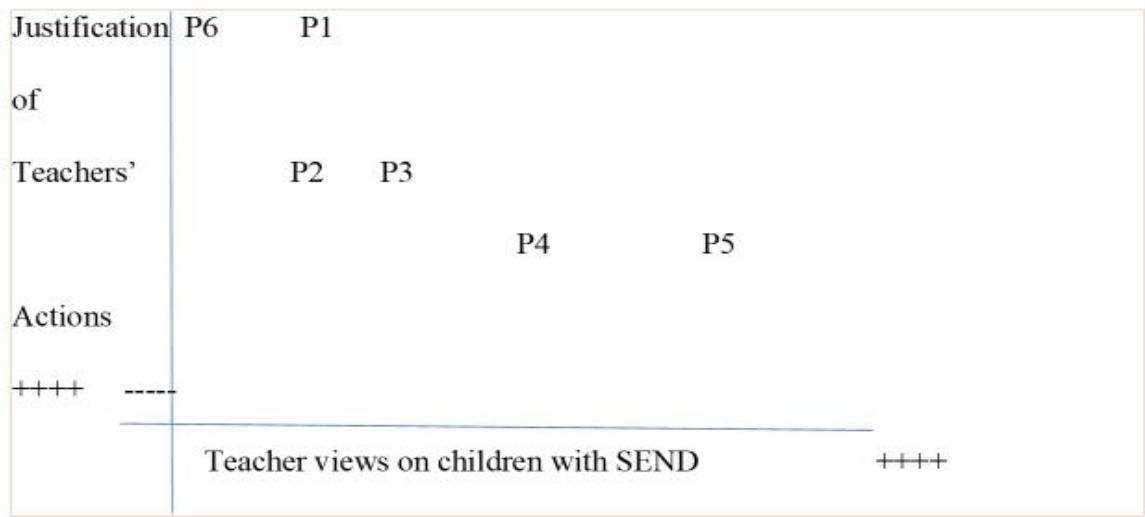
Positional Map 4.9: Racial, Religious and Cultural Interferences
- P1 = All impairments are spiritual curses, family sins and omens, or the results of Obeah (position held by religious individuals and groups, teachers, parents and children).
- P2 = Religion and Ethnicity cause equal challenges from the resulting barriers they create in mainstream schools (position held by some teachers and children with SEND).
- P3 = Some teachers help to exacerbate racial, religious and cultural stereotyping of SEND (position held by some religious individuals, teachers and parents).
- P4 = Teachers are allowed to have preferences since God has his preferences (position held by religious individuals and groups and some children without SEND).
- P5 = Children with SEND must fear the consequences of their impairments (position held by religious individuals and groups, some teachers and some children without SEND).
- P6 = Religious views, opinions and perspectives are superior to every other perspectives (position held by religious individuals and groups, some teachers, some parents and many children with and without SEND).
Religious and Cultural influences are dominant in the local school communities and the discourse of the individual deficit model of disability, which is also spread through traditional religion. During the data analysis, I realized that prevalent forms of marginalization experienced by some children were not directly or indirectly related to their individual impairments. On the one hand, some were related to deficits in the education system, such as the provision of appropriate resources, which led to practices resulting in exclusion for some children. Such deficits in the education system, which constituted the marginalization and exclusion of some children, were based in ableism discourses in the two schools and society (Author, 2017). On the other hand, some forms of marginalisation had their antecedents in Guyana's postcolonial legacy and a racialized social hierarchy. For example, racialized hierarchical discourses have positioned native Amerindians at the bottom of Guyana's ethnic strata. The social discourses around Amerindians subjugate them as inferior to the other six races in Guyana. The other six races also have racial tensions among them despite the illusory appearance of racial unity. I begin by highlighting Amera's experience. She faced racial discrimination, marginalization, negative attitudes, and exclusion, which originated in the sociocultural history of colonial Guyana and has continued unabated in spite of official policies in the postcolonial period. Amera comes from the Forested Highland Region of Guyana 'the jungles'. In the past, her people resided there to avoid enslavement by European colonizers.
According to Lane et al., (2003); Pillay et al., (2018) and Schlinger, (2005), resolving major problems starts by having an understanding of human behaviour. Displacement has significantly affected Amera's socialization. As a native Amerindian child from the Forested Highland who migrated to the Low Coastal Plain, Amera experienced culture shock through racism. She was also forced to abandon her cultural identity to adopt the perceived superior culture of the dominant races on the coastlands of Guyana. The culture and practices of the coastlanders were elevated above her native 'bush' culture in mainstream schools. Also, she had to face a variety of social barriers because the teachers did not understand many of her behaviours, which they associated with mental health problems or classified as silliness.
People of Amera's race experienced widespread political and societal marginalization, in spite of the fact that Guyana is independent and there are national efforts to celebrate Amerindian Culture and develop national understanding of their culture and customs. National efforts to celebrate Amerindian culture include showcasing an Amerindian village as a heritage site each year and nationally tevising the achievements of Amerindians in education, politics, business and science. However, Amerindians remain on the lowest tier of Guyana's socio-cultural stratification (Bisram, 2015; Danns, 2014; Misir, 1998 & Smith, 1971). Amerindians subordinated position on the lowest tier of Guyana's socio-cultural stratification was also contingent on the importance attached to celebrating their heritage and culture which contest for the month of September that dominantly celebrates Education over Amerindian Heritage. Moreover, Amerindian attire is not generally welcomed in mainstream schools and other public institutions such as courts and government offices. For example, on May 25, 2018, a primary school student was left traumatised after his indigenous dress was deemed inappropriate by teachers at his school's Culture Day Celebrations where he was mocked by fellow students.
Culture Day is celebrated at three points of the academic year. First, the culture of the races in schools is celebrated at the end of the teaching year. Second, the culture of people living in Guyana is celebrated at the Republic (February 23) and Independence celebration (May 26) and, finally, it is celebrated during East Indian arrival and African emancipation celebrations. All three cultural events are constituted by and contingent on the presence of the seven races in Guyana. Yet, exclusion and marginalization are experienced by subordinated races due to the perceived greater value or uniqueness of some of the cultures. For example, two years after the televised exclusion of an Amerindian child from his school's culture day, their tribal leader contested exclusion based on cultural attire. On March 11, 2020, a presidential candidate and tribal leader of Amera's community, Lennox Shuman, arrived at court dressed in what he called his traditional indigenous clothing to listen to the arguments in the ongoing elections case. Upon entry, Shuman was prohibited from mounting the stairs. He was told by court officers that he was not permitted in the courtroom as his attire was inappropriate. There are no documented cases in Guyana of any other race in Guyana being denied access to public offices for wearing their traditional garments.
Grotti and Brightman (2016) argue that native Amerindians are characterized as invisible and, in many instances, excluded from full social participation in the Guianas (British, French and Dutch). The constitution of Amerindians as invisible was contingent upon the discourse that presents their culture as outside of the accepted norm and, which should remain hidden unless used for display at national cultural celebrations, museums and heritage galleries like Guyana's Castellani House. Amera's experience in school reflected the characteristic exclusion of a race deemed invisible but was also contingent on perceived 'jungle' association. However, research suggests that inclusion should provide a 'welcoming community' for each individual to retain and develop his or her own cultural identity (Booth & Ainscow, 2002, 2011; Blanco & Takemoto, 2006; Gajewski, 2017; Loreman, 2009; Singal, 2016; Tomlinson, 2017; UNESCO, 2017). Historically and presently, Amera and her people have not been 'welcomed' and have been marginalized at a national level, and this constituted the situation in the local mainstream school, which led to her marginalization there. Her experiences generated a new understanding and interpretation of the challenges faced by children in the two schools.
Amera's situation provides an understanding of marginalization by race in two significant ways. First, Amera's experience highlights exclusion when laws are not enforced. Amera is a native Amerindian and Amerindians are Guyana's indigenous people. As such, Amerindian culture, identity and customs are protected by law through the Amerindian Act of 2006, which includes the revision of the Act of 1951, amended in 1961, and 1976 (Grotti & Brightman, 2016). The law states in chapter 65:01 that Amerindians culture must be respected in all national institutions. The practices I observed in the school indicated that the school, as a national education institution, was not respecting Amera's culture. In practice, the school highlights Amera's culture as a body of knowledge - in terms of topics and resources but exclude in terms of attitudes towards Amerindians during curriculum delivery. For example, when the topic of Amerindians was presented during a typical Social Studies lesson, it was presented as worth knowing to pass your assessment. Knowing about Amerindians and their culture is rarely framed as an opportunity to find out about Guyana cultural diversities inclusively. It is constituted as a separate part of Guyana's heritage distinct from the accepted collective heritage. For example, Mrs. Winter, Amera's mainstream teacher, directly ignored Amera's culture in the selection of instructional materials and activities. Mrs. Winter selection of instructional materials and activities was contingent on the accepted Guyanese cultures deemed suitable for normalized classroom curriculum discourse. Further, I have emphasized that teachers need to be sensitive to race when selecting or producing instructional materials (Author 2019).
Mrs. Winter: Mr. Author, I know you writing in your black book that Amera is not involved in the learning activities but I do not have the resources to include her [Field notes, 2018].
Mrs Winter thinks my research journal is my black book of records of teachers' practices similar to those used when teachers are assessed by Guyanese education officers. In her statement to me, she acknowledges that she has not involved Amera because she does not have the resources but I argue differently. Mrs Winter is aware of Amera's exclusion from learning and is presenting herself here as powerless to include her in the learning. Resourcing learning is clearly important but equally important is the attitude toward Amera and her status within the classroom.
Second, Amera was displaced by tragedy due to the loss of her parents and she could not speak the language of her new environment, which made expressing her grief almost impossible, and this resulted in her not receiving the necessary support to overcome the loss of her parents. This inability to express her emotions led to behaviours which were classified as inappropriate by teachers and students.
Amera is sad again today. She is often crying and making mournful sounds. The children in her class are referring to her as the crazy bush girl. I am confused because I do not speak Lokono either. I sat with her and hugged her. Mrs. Winter keeps looking questioningly at me. Amera stopped crying and showed me her blank book. Amera is lost and lonely in her new school [Field notes, 2018].
Amera faced racial, social and cultural barriers at school in a time in her life when tragedy made her vulnerable. Whilst not having appropriate resources to be able to teach Amera or cater to her evident emotional distress is part of a wider discourse of lack of inclusion, the specific lack of challenge of the term 'crazy bush girl' demonstrates that the cultural practices of racism are allowed to continue and even have become normalised in the school. The expression 'crazy bush girl' emphasizes a historical rupture in the value attributed to Amerindians by other races to maintain their perceived superiority. It also reflects the practise of forced acculturation on a race perceived as uncivilized (Misir, 1998 & Smith, 1971). In my observations, Mrs Winter was constantly looking at me. She seems confused about my interest in Amera's wellbeing and sitting with her while in the class. Her gaze seemed to be contingent on a racial superiority, which was subordinated in the classroom. Mrs. Winter's race is considered to be the superior race in Guyana. However, in mainstream education my superiority to Mrs. Winter is constituted by, and contingent upon, education and professional attainments. Further, her earlier reference to my black book and researcher status constituted me as superior in mainstream discourse. This constituted identity Mrs. Winter attributed to me, and her resulting attitude, was contingent upon the dissonance it created in identity and power in the classroom and society. As a result, her gaze and statement about me writing negatively in my black book could be interpreted as an attempt to protect her image, which she may have felt would be damaged if I recorded Amera's exclusion.
One of the problems for Amera was that staff did not 'recognise' her behaviours as expressions of grief. Their understanding of her strangeness as Amerindian caused them to attribute her grief-stricken behaviour to her racial characteristics. Mrs Winter was bemused but did not recognise such bemusement as part of a racist response. Mrs. Winter questioning stares at my interactions with Amera also suggest racial mistrust (Bisram, 2015; Danns, 2014; Misir, 1998 & Smith, 1971). As discussed in the previous paragraph, Mrs. Winter was trying to project her racial superiority over myself and Amera which was contested by my academic and professional superiority and constituted allegiance to children with SEND like Amera.
#### September 2018 - Interview with Amera's Aunt
Amera's Aunt: Lidon, this is a tough time for Amera. She has lost her parents tragically. We talk to her at home. However, I know being in school will now be another challenge she will face in this tragic period of her life.
Researcher: This is challenging for such a young child.
Amera's Aunt: I know the school does not have the resources, and maybe she is better off back in her native home. I cannot stay at home to teach her English. I am hoping she picks it up by just being in the school.
Researcher: So there are no direct efforts made to support her learning.
What about the use of technology?
Amera's Aunt: I tried it, but Amera does not respond well.
Researcher: Does she talk about school at home in her native Lokono?
Amera's Aunt: Yes. However, it is always sad. She feels it is not a happy place. She wants to go back home. She says the teachers are not helpful. They treat some children nicer than others.
Researcher: Has she mentioned someone she is comfortable with.
Amera's Aunt: Not as yet. I am hoping she finds such a person very soon. I am apprehensive about her future with all these challenges she is facing.
Amera was unhappy at her school because she was lonely. She was lonely because the participants in the classroom used her race to subjugate her further into a more vulnerable state. Due to the communication barrier, i.e. her teachers were not able to speak her native language, Lokono, she was ignored. This is a deficit in the system which reflects the systems view of the language as inferior and unimportant. If the language is inferior, then those identified by the language are also seen as inferior. This perception of inferiority by identity and language further suggests the lack of social cohesion in Guyana and racial tension even in schools among children and between children and teachers. Amera was in a subordinated position where her language, her discourse, was perceived to be less valid, and part of what constitutes the identities of 'bush people'. There are nine indigenous Amerindian tribes in Guyana who speak nine different native languages. Native children like Amera are expected to learn English and abandon their native languages to be accommodated in the education system. Requiring a group of people to relinquish their language or be excluded from formal education is racially biased and a form of national marginalization. Mainstream teachers are not expected to speak native languages, so being unable to communicate with Amera, was not marginalization or discrimination by the teachers themselves, but rather resulted from structural inequality to maintain the racialized hierarchy of English, which is not a native language. The structural inequality was further embedded by the compulsory and exclusive use of English because of its perceived colonial superiority for curriculum delivery in the mainstream schools, despite Guyana being a multi-lingual society. According to Liasidou and Symeou (2018), inclusion is constituted by, and contingent on, social justice and human rights. Amera's exclusion based on race, language and structural inequality constituted a violation of social justice and her human rights.
Further, Liasidou and Symeou (2018), state that the omission of social justice and learner diversity in educational discourse is indicative of the neoliberal imperatives contingent upon low priority attributed to issues of equity and learner diversity, with particular reference to students designated as having SEND. Mrs. Winter did not understand Amera's behaviour and her misunderstanding was contingent on her situatedness in the discourse on the exoticness and uncultured nature of Amerindian behaviours. Mrs. Winter interaction with Amera reflected a kind of constituted situated biasness to the naturalized exotic behaviour in the cultured mainstream classroom. Mrs. Winter actions are also a form of constituted social injustice, contingent on her not acknowledging Amera's behaviour in the same way as she did to other children who were not Amerindians.
#### Classroom Observation September 2018
Mrs Winter looked at Amera and said 'silly child'. Amera was cuddling a book, a book written in Lokono. Later in the day, Amera screamed suddenly while still holding on to the book. Mrs Winter shouted at her to be quiet. Once she was quiet, Mrs Winter carried on teaching the rest of the class ignoring
Amera. At recess, Amera climbed the tamarind behind the school and stayed by herself. It was reported to Mrs Winter. She replied, 'leave the bush girl alone.'[Field notes]
First, Mrs Winter referred to Amera as a 'silly child' indicating that her behaviour was comical and not accepted. She did this without making an effort to understand Amera's actions. Mrs. Winter perceived Amera's 'bush girl' behaviour as not worthy of her attention. Second, neither shouting at Amera to be quiet nor ignoring her improved Mrs. Winter's understanding of her behaviour. Shouting at her to be quiet can also be constituted as telling Amera that she is not worthy of expressing her feelings in the classroom. Probably, it is suitable to express herself only in 'the jungles' with animals. When Mrs Winter told another child to leave the 'bush girl' alone, it could be interpreted as meaning that it was acceptable for the children to ignore her, just as Mrs Winter did. Ignoring Amerindians is a colonial legacy inherited by Guyanese. One of the colonial responses to the Amerindians was to leave them alone as they were constituted as both alien and dangerous. It is a legacy that persists in the present time in the responses of others towards Amera in school and is part of the wider racial discursive practices in Guyana. This is what makes it so difficult for Mrs Winter to engage with Amera – she is a 'bush girl' and that makes her strange, dangerous but most of all someone to be left alone.
The indigenous customs, traditions and practices of Amerindians living in Guyana's forested jungle can appear strange and primitive to coastland residents (Summary Report Guyana-EU FLEGT, 2015). This has led to a negative stereotyping of the lifestyle of this native race during and after the colonial period. Despite the public discourse by the government and the Amerindian Peoples' Association (APA) of Guyana advocating racial cohesion and equality nationally, in the classroom, Amera faced racial exclusion. I also noted that she was teased by Mrs Winter and the children in her class. Mrs. Winter's actions in her class were in a real sense a mockery of Amerindian heritage. The dissonance between discourses promoting racial cohesion and the actual practices observed in Amera's school highlights the very real effects of a legacy of a racial hierarchy that is still exists in communities and neighbourhood mainstream schools. Teasing and using the Amerindians as entertainment is also a racial practice rooted in colonialism. I witnessed the children bulling and calling Amera derogatory names such as 'Jungle Monkey', 'Primitive Native' and 'Bush Baboon'. Racial stereotyping seems, therefore, to be a major factor which contributed to Amera's exclusion and marginalization.
### b) Marginalization by Normalized Stereotypical Practices and Beliefs
Normalized stereotypical practices and beliefs constitute marginalization for children with SEND in the two schools. Normalized stereotypical practices and beliefs are contingent on legacies of superiority and inferiority among the races and cultures in Guyana. For example, a constituted stereotypical practice does not celebrate the culture of rural fishermen. A lack of cultural celebration was evident when Ravi was told by Miss Nathaniel, his teacher, 'Go catch fish that is what you are good at, Ravi'. The statement was intended as a reprimand for inappropriate behaviour, but reinforced Ravi's belief that he was a failure. When a teacher suggests to a child in the classroom that they should go and catch fish because it is what they are good at, the implication is that they cannot manage the classroom work. Furthermore, doing this publicly in the classroom is an exclusionary practice. It is an invitation to the child to leave the class and/or not participate in the learning experience. Mrs Nathaniel is, in effect, constituting that he is unteachable. This is a legacy contingent on past discourses and attitudes, enshrined in society and law, towards children with disabilities. Besides publicly humiliating Ravi, Miss Nathaniel also carried on the legacy of exclusion in his notebook. Without attempting to correct his efforts, she inserted question marks and signed it, which seems to reflect her attitude that he is not fit to be educated
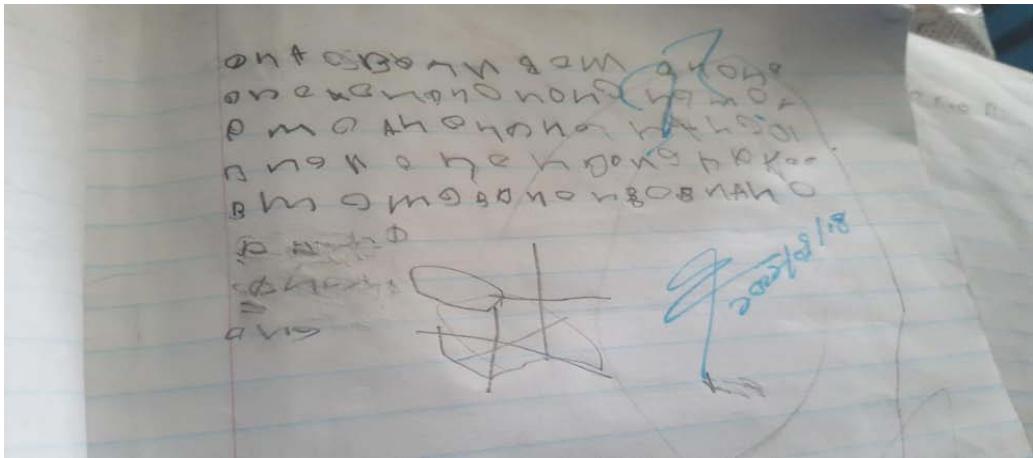
Photo 1: A picture from Ravi's school book, September 2018
Her attitude seems to reflect a wider held view, as research has found that normalized traditional negative attitudes and stereotypes are prevalent towards children with SEND in the mainstream schools of the developing countries in the Caribbean (Caribbean Development Bank, 2018; Caribbean Human Development Report (CHDR 2016, 10; Declaration of Pétion Ville, 2013; Gayle-Geddes, 2016; Kingston Accord, 2004). Traditional legacies of past discourses and attitudes, towards disabilities, enshrined in society and law, negatively influenced Amera's and Ravi's school experiences. Through these observations, I learnt that introducing the social model of disability discourse is vital to overcome enshrined negative legacies and attitudes that affect children's experiences more than their impairments.
I witnessed another demonstration of the negative attitudes described in the paragraph above. Rosemary, a child with developmental delays, came to school with an unpleasant odour. The teacher, Mrs Hamilton, shouted at her in the presence of the other children as Miss Nathaniel had done to Ravi. As a result, Rosemary started to cry and the children laughed and were allowed to continue laughing, which deeply embarrassed Rosemary. Being humiliated in this way, coupled with adverse environmental conditions and lack of stimulation, could lead to a higher risk of neurological and behavioural disorders in vulnerable children (Allen & Kelly, 2015; Edossa et al., 2017; Greenough & Black, 2013) Further evidence of the constituted risks of neurological and behavioural disorders in vulnerable children can be found in research by Ali, (2013), Handal et al., (2007), Hendry et al., (2018), Hernandez & Caçola, (2015), Iverson, (2010), Johnson et al., (2016), Levey & Polirstok, (2011) and Wendt et al. (1984). My awareness about vulnerabilities in children and the risks led me to ask Miss Hamilton about her reaction in the classroom. My question appeared to offend her.
#### October 2018 - Miss Hamilton Response
Researcher: Miss Hamilton, why did you behave they way you did to Rosemary in the presence of the entire class?
Miss Hamilton: It is not inhumane, Mr Author. It is one thing for teachers to have to be dealing with these overcrowded classrooms. It is another thing when the overcrowded classes are full of children with SEND and other deficits and little or no support from either parents or community or the education department. It is also frustrating when you are already pressured as a teacher in an open plan school with limited resources and enormous demands. I did not sign up for this when I became a teacher. Then, I have to punish to breathe when children like Rosemary, who are incapable of learning anything, come smelling pungent and looking unsightly. As a teacher, I have to deal with all this. I have nothing personally against Rosemary. It is not her fault she was born into poverty. I go home most days with a headache from the various odours I have to endure. I am sure Rosemary's clothing smells of urine three out of the five days a week. She cannot learn. She has developmental delays I cannot cater for, yet I am expected to, and I am appraised negatively when my class academic percentage decline. I have my resignation typed, and I am just waiting to submit it.
Mrs Hamilton's response to my question by first stating that her expression was not inhumane suggests that may be aware that her comments constituted attacks on the humanity of children with SEND. It also indicates that she felt I believed that her response was inhumane, so she was defensive in her response. Mrs. Hamilton was frustrated, upset, angry and felt betrayed by the education system in which she works. She felt betrayed because she felt the expectations from the education authorities, parents and even children with SEND as a mere teacher are too high. Mrs Hamilton further expressed her feelings of betrayal by differentiating overcrowded classes into those without children with SEND and those with children with SEND. This differentiation seems to be constituted by Mrs Hamilton expectations that teaching children with SEND is more frustrating. Mrs Hamilton's differentiation is also contingent on the issue of an overcrowded class of children with SEND. Mrs Hamilton also attributed her frustration to Rosemary's smell overwhelming her physically. She highlights this when she said, 'I have to punish to breathe when children like Rosemary, who are incapable of learning anything, come smelling pungent and looking unsightly.' Punishing to breathe indicates the distress Rosemary's smell placed on Mrs Hamilton respiratory system.
Mrs Hamilton's associated Rosemary with a particular group of children who are incapable of learning but capable of aggravating her frustration and anger. Mrs Hamilton also concluded that developmental delays equated to inability to learn. She further associates Rosemary's inability to learn to the education appraisal system which she perceives as likely to be negative towards her for being unable to cater for Rosemary's needs. Mrs Hamilton frames resignation as the way to recuperate from the situation which constitutes her as inhumane. She then had to defend her actions to individuals like me (persons who represent the mainstream education hierarchy) who she feels do not understand her plight but are exercising a form of Foucault's gaze.
As noted above by Mrs Hamilton, teachers are expected to do an almost impossible job in adverse environmental conditions and with limited resources. Miss Hamilton's statement above highlights how such conditions which are contingent on the emergence of an inclusion discourse without fully constituting social justice for teachers. As she stated, too much is expected of teachers who are without the necessary support. Also, interestingly, Mrs Hamilton separated Rosemary from her experiences to justify her reactions. She did this by saying, 'I have nothing personally against Rosemary. It is not her fault she was born into poverty.'
This also reflects Kamenopoulou's (2018) statement that poverty disables children in the global South.
While Rosemary was in despair, Pam's experiences constituted a new dilemma in the same environment. Added to her epileptic condition, Pam was paralyzed in her lower body due to a motor vehicle accident. Research suggests that such injuries are associated with elevated psychological distress that can continue years after the injury (Craig et al., 2016). Because the school facilities were inaccessible to children with physical impairments, Pam's father supported her. He brought her to school and manually lifted her into the classroom and would also be present to take her to the toilets during break times. Pam told me that her condition was the result of God's punishment. Such views of impairment as a divine punishment are echoed throughout many of the interviews. It was also echoed in religious discourse that promoted the idea that one must not interfere with God's punishments. Such religious discourses will be explored later in the chapter.
November 2018 - Interview: Pam after a short period of hospitalization
Researcher: Hello Pam, it is so good to see you back at school again.
Pam: My school is not the best, and the teachers are not always nice, but I have some friends here, and in order for my dreams to come true I must endure this struggle.
Researcher: Is school a big struggle for you?
Pam: Life is a struggle. I just came out of the hospital. I cannot walk. Teachers are scared to be natural around me because of my epilepsy. With all the things I go through, school is the littlest of all my struggles, but it is a big struggle. I need to use the washroom. It is another half hour until my father gets here. I hate to beg the teachers for help. Their faces always state their unwillingness, but I cannot access the toilets on my own.
One of the primary arguments in this chapter is that some children face obstacles to learning due to the physical environment, pedagogical styles expected of the teachers, normalized stereotypical practices and limited resources. Pam shows a dilemma of choosing between two evils. She does this by highlighting two negatives about her school. First, her school was not constituted the best place for a child with SEND and second, the teachers were constituted as not always being nice to children with SEND. She expressed that the two negatives do not equate to the two positives she sees in attending mainstream school. The positives she sees in school frame her reasons to persist. First, she has friends at school and second, her dreams can only be realized by attending school. Pam highlights these limitations in the environment and resources while referring to it as a struggle she must endure. Pam echoed the struggles of Ravi, Rosemary and Amera. For a child to repeatedly state that school is a struggle suggests the significant barriers she faces there. It also suggests the mental burden and challenges simply attending school causes. When necessary facilities, such as toilets, are not accessible, physical impairments become major exclusionary struggles for disabled children. Since Pam was not born with the impairment but acquired it recently, the teachers needed to recognise that she had recently fallen on the other side of the inclusion/exclusion coin. Pam's experiences provide insights into two dimensions of the SEND discourse. Her situation had changed from being a child who was not seen as having SEND, despite her epilepsy, to a child perceived as having a SEND constituted by the combination of epilepsy and physical impairment.
It is almost impossible for Mrs. Murphy, Pam's teacher, to cater for every new situation in an environment with limited resources. As reflected in the extract below, the teacher is affected by Pam's experiences and is concerned about Pam's emotional wellbeing. She is also concerned about how her actions might be excluding Pam and the psychological effects of such exclusion. Mrs. Murphy is caught in limbo. If she challenges Pam and tries to build her motivation, she may trigger Pam's seizures but, if she does not challenge her, she negatively affects Pam's self-belief leading to her feeling excluded. Either way, Mrs. Murphy's action constitutes a negative outcome.
#### September 2018 – Mrs. Murphy's Reflection
I was also Pam's teacher in Grade Three before the accident. She was a very aspiring and promising child when the seizures were less frequent. I used to find it rewarding to challenge her. She would always surpass expectations. Since the accident and the frequent seizures, I am scared and uncertain about how to support her. If I simplify them, I feel like I am disrespecting her. If I challenge her too much and a seizure comes, I feel responsible. It is a torturing battle for me. She is one of my favourite children, and I do not want to affect her motivation and self-esteem. That is her strength at the moment.
A child's functioning is constituted by and contingent on emotional factors and educators and parents must strive to help the child to overcome these by mobilizing and deploying adequate support (Dakwa, 2013; Kinalski et al., 2017). Mrs Murphy was striving to help Pam and was trying to adequately support her. This was an overwhelming situation for both Pam and Mrs. Murphy and the interplay of challenges and limited resources led to negative experiences for Pam. The argument in the first part of this paper was based on the experiences of Pam, Amera, Ravi and Rosemary and it reflected the normalized practices which led to their exclusion due, partly at least to the deficits in an adverse mainstream school environment. The argument I have presented thus far is that some children are marginalized as disabled in the schools, not because of impairments but because basic access to the school' facilities and curriculum are hindered by social and attitudinal barriers. For example, legislation did not guarantee the inclusion of Amera, an indigenous child from the jungle because the schools do not follow it as they should. Other children are excluded because the practitioners in the education system are frustrated and feel betrayed. Further, children are marginalized and excluded because of language barriers, poverty and/or limitations placed upon teachers by the government's organization of mainstream education. They are also excluded by the government's conceptualization of inclusion by merely focusing on impairments without emphasis on social justice for children with SEND or their mainstream teachers.
## IX. CONCLUSION
I set out to argue in this paper that the inclusion of children with SEND in the two schools is, in practice, a form of exclusion. I have discussed dominant discourses and practices of the schools, which caused children with SEND to be marginalized and ignored. I have argued that being ignored, marginalized, and experiencing feelings of despair while being in school is worse than being totally excluded. I have also argued that, in terms of the educational experiences and opportunities available, being physically present in mainstream school was the best that some children could hope for. The children faced obstacles to learning due to the physical environment, the pedagogical styles expected of the teachers and limited resources. Some of the obstacles the children faced were created by the government's poor inclusion practices. I have also tried to show that the teachers were being asked to do an almost impossible job to advance inclusion, given their limited resources and adverse environment. As a result of the interplay of such challenges and limited resources, children with SEND have negative experiences.
I also extended the understanding of marginalization in the two schools by highlighting how race, stereotypical beliefs and normalized practices, religion and culture constitute negative experiences of children with SEND. Race and Religion are, therefore, key elements which influence the conceptualization of impairments and deficits. Both schools have Christian religious associations and practices which are responsible for negative discourses concerning the placement of children with SEND in the schools and through which a culture of self-blame is promoted. Even children who were not Christians, associated their impairments with God's punishment. Further, I have argued that widespread experiences of domestic violence and abuse have a significant impact on the learning and socialization of some children with SEND. I have attempted to show that marginalization by race and normalized stereotypical practices and beliefs created other barriers which compounded the negative experiences of some children. Further, I have showed how some children cope with the deficits in the environment, challenges and attitudinal barriers, which existed a decade ago and are still actively framing present experiences.
Generating HTML Viewer...
References
68 Cites in Article
D Albon (2011). Postmodern and post-structuralist perspectives on early childhood education.
S Ali (2013). A brief review of risk-factors for growth and developmental delay among preschool children in developing countries.
Julie Allan (2010). The sociology of disability and the struggle for inclusive education.
L Allen,B Kelly (2015). Transforming the Workforce for Children Birth Through Age 8.
K Berry (2011). The ethnographer's choice: Why ethnographers do ethnography.
A Besley (2015). ‘Finding Foucault’: orders of discourse and cultures of the self.
V Bisram (2015). Impact of Ethnic Conflict on Development: A Case Study of Guyana.
R Blanco,C Takemoto (2006). Inclusion in schools in Latin America and the Caribbean: The case of the children of Haitian Descent in the Dominican Republic.
T Booth,M Ainscow (2002). Index for inclusion: Developing learning and participation in schools.
T Booth,M Ainscow (2011). The Index for inclusion: Developing learning and participation in schools.
(2018). Ethical guidelines for educational research.
(2018). Current Population Survey, November 2010: Voting and Registration Supplement.
(2018). Disability Mainstreaming in Borrowing Countries.
(2016). Poverty and Inequality in Latin America and the Caribbean.
Daniel Ruvalcaba (2013). China – Caribbean Community (CARICOM).
A Clarke (2005). Situational analysis: Grounded theory after the postmodern turn.
A Clarke,C Friese (2007). Grounded theorizing using situational analysis.
A Clarke,S Star (2008). Statistical Package for the Social Sciences (SPSS).
A Clarke,C Friese,R Washburn (2018). Situational analysis: Grounded theory after the interpretive turn.
Ugo Corte,Katherine Irwin (2017). The Form and Flow of Teaching Ethnographic Knowledge: Hands-on Approaches for Learning Epistemology.
A Craig,Y Tran,R Guest,B Gopinath,J Jagnoor,R Bryant,I Cameron (2016). Psychological impact of injuries sustained in motor vehicle crashes: systematic review and meta-analysis.
Gunilla Dahlberg,Peter Moss,Alan Pence (2013). Beyond Quality in Early Childhood Education and Care.
Francis Dakwa (2013). Inclusion of Children with Visual Impairments in Regular Schools â A Zimbabwean Perspective.
G Danns (2014). The impact of identity, ethnicity and class on Guyana's strategic culture.
A Edossa,U Schroeders,S Weinert,C Artelt (2017). The development of emotional and behavioural self-regulation and their effects on academic achievement in childhood.
M Foucault (1973). <i>The Order of Things. An Archaeology of the Human Sciences</i>. Michel Foucault.
M Foucault (1963). The birth of the clinic: An archaeology of medical perception.
M Foucault (1975). Discipline and punish: The birth of the prison (A. Sheridan, Trans.).
M Foucault (1980). Power/Knowledge, selected interviews and other writings.
Agnes Gajewski (2017). Conceptualizing Professional Ethics in Inclusive Education.
Annicia Gayle-Geddes (2016). A Situational Analysis of Persons with Disabilities in Jamaica and Trinidad and Tobago: Education and Employment Policy Imperatives.
W Greenough,J Black (2013). Induction of brain structure by experience: Substrates for cognitive development.
Vanessa Grotti,Marc Brightman (2016). Narratives of the Invisible: Autobiography, Kinship, and Alterity in Native Amazonia.
A Handal,B Lozoff,J Breilh,S Harlow (2007). Sociodemographic and nutritional correlates of neurobehavioral development: A study of young children in a rural region of Ecuador.
Alexandra Hendry,Emily Jones,Rachael Bedford,Teodora Gliga,Tony Charman,Mark Johnson (2018). Developmental change in look durations predicts later effortful control in toddlers at familial risk for ASD.
A Hernandez,P Caçola (2015). Motor proficiency predicts cognitive ability in four-yearolds.
Ron Iphofen (2017). Achieving Consensus in Research Ethics: An Interim Conclusion and Some Recommendations.
Jana Iverson (2010). Developing language in a developing body: the relationship between motor development and language development.
Sara Johnson,Jenna Riis,Kimberly Noble (2016). State of the Art Review: Poverty and the Developing Brain.
L Kamenopoulou (2018). Inclusive Education in the global South? A Colombian perspective: 'When you look towards the past, you see children with disabilities, and if you look towards the future, what you see is diverse learners.
Daniela Kinalski,Cristiane Paula,Stela Padoin,Eliane Neves,Raquel Kleinubing,Laura Cortes (2017). Focus group on qualitative research: experience report.
I Korstjens,A Moser (2018). Series: Practical guidance to qualitative research. Part 4: Trustworthiness and publishing.
Kathleen Lane,Christine Givner,Melinda Pierson (2003). Teacher Expectations of Student Behavior.
L Author (2019). Author index.
L Author (2017). Author index.
S Levey,S Polirstok (2011). Language development: Understanding language diversity in the classroom.
Anastasia Liasidou,Loizos Symeou (2018). Neoliberal versus social justice reforms in education policy and practice: discourses, politics and disability rights in education.
T Loreman (2009). http://ljournal.ru/wp-content/uploads/2017/03/a-2017-023.pdf.
P Misir (1998). The social construction of race and ethnicity.
L Nowell1,J Norris,D White,N Moules (2017). Thematic analysis: Striving to meet the trustworthiness criteria.
Lika Nusbaum,Brenda Douglas,Karla Damus,Michael Paasche-Orlow,Neenah Estrella-Luna (2017). Communicating Risks and Benefits in Informed Consent for Research: A Qualitative Study.
Roshini Pillay,Edmarie Pretorius,Hugo Canham (2018). Are we getting socially just pedagogy right? Reflections from social work praxis.
A Pohlmann,A Colell (2017). Grounding community energy: A situational analysis approach to an international comparison.
L Rasiński (2011). The idea of discourse in poststructuralism: Derrida, Lacan & Foucault.
C Robson (2011). Real World Research.
D Rodgers (2007). Joining the gang and becoming a broder: the violence of ethnography in contemporary Nicaragua.
N Rose (1998). Inventing Ourselves: Psychology, Power and Personhood.
H Schlinger (2005). How The Human Got Its Mind: Debunking the Last Great Myth in Psychology.
Nidhi Singal (2016). Schooling children with disabilities: Parental perceptions and experiences.
Raymond Smith (1971). Race and Political Conflict in Guyanaa.
(2015). A Seminar on Essential Elements for a Legality Definition & Legality Assurance System (LAS) in the Guyana-EU FLEGT VPA.
G Tobin,C Begley (2004). Methodological rigour within a qualitative framework.
S Tomlinson (2017). A sociology of special and inclusive education: exploring the manufacturing of inability.
J Singh (2017). United Nations Educational, Scientific, and Cultural Organization (UNESCO).
Ben Whitburn (2016). The perspectives of secondary school students with special needs in Spain during the crisis.
L Wendt,H Mäkinen,P Rantakallio (1984). Psychomotor development in the first year and mental retardation-a prospective study.
Explore published articles in an immersive Augmented Reality environment. Our platform converts research papers into interactive 3D books, allowing readers to view and interact with content using AR and VR compatible devices.
Your published article is automatically converted into a realistic 3D book. Flip through pages and read research papers in a more engaging and interactive format.
This paper further exten ds the discourse on the social and cultural experiences of children with Special Education Needs and/or Disabilities (SEND) in two mainstream primary schools in postcolonial Guyana. The discussion in the paper extends the argument into the learning and socializing experiences and opportunities of children with SEND. This study was conducted using an ethnographic approach over two semesters employing participant observation, focus group discussions and unstructured interviews. The data gathered was analyzed using situational analysis as posited by Adele Clarke. It revealed that despite Guyana being a multi-racial, multi-ethnic, and multicultural society with religious freedom, which is protected by the People’s New Constitution Guyana, 1980, children with SEND still face marginalization because of their race and ethnicity as well as normalized negative stereotypical practices and beliefs. Further, the data revealed experiences of neglect and discrimination against children with SEND through the use of discourses and discursive practices on the legacy of racism contingent on race superiority and inferiority in Guyana.
Our website is actively being updated, and changes may occur frequently. Please clear your browser cache if needed. For feedback or error reporting, please email [email protected]
Thank you for connecting with us. We will respond to you shortly.