1. Introduction
During the Klondike Gold Rush in Alaska in 1897, many people lost their lives while searching for gold. No one went there expecting to die; instead, they were driven by dreams of wealth and a better future. Although some miners became rich and fulfilled their dreams, many others faced extreme hardship, hunger, disease, and death.
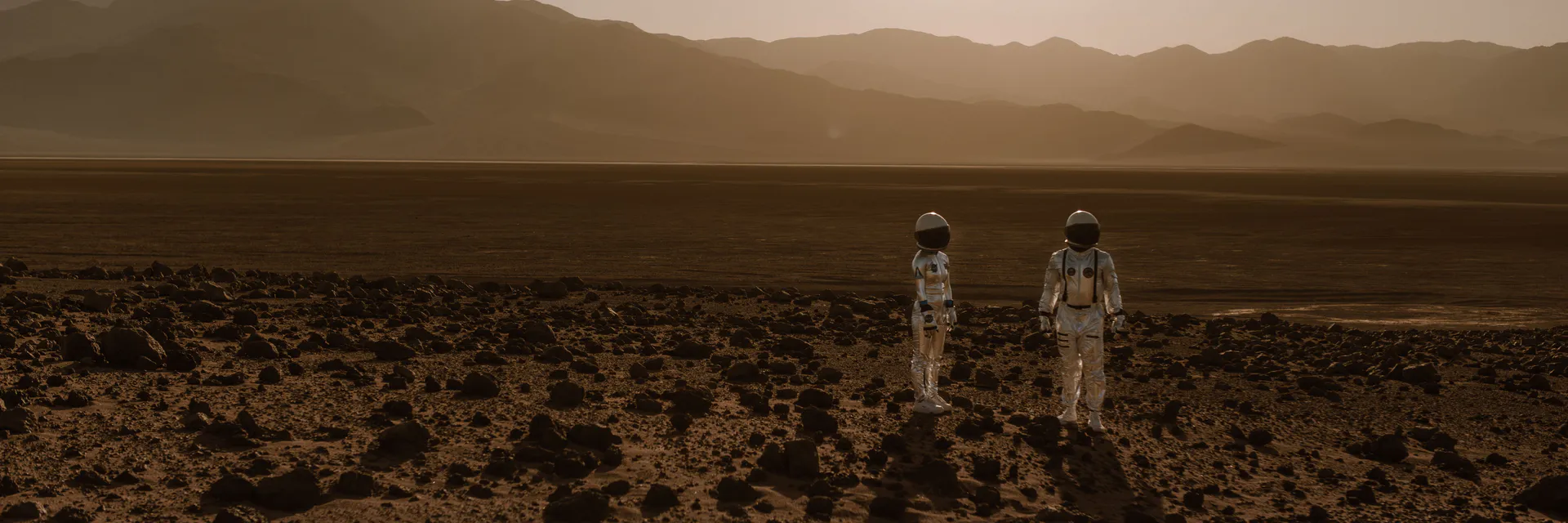
Today, many people dream of establishing a human settlement on Mars. This topic is widely discussed in public media, especially by visionaries such as Elon Musk. See, for instance, [1]. However, I believe that creating a permanent settlement on Mars would be nearly impossible with current technology. Compared to the harsh environment of Mars, even the difficult conditions of Alaska seem pleasant.
Mars has no breathable air, extremely cold temperatures, dangerous radiation, and very limited natural resources for human survival. In addition, transporting people and supplies to Mars would require enormous costs and advanced technology. For these reasons, Earth remains the only planet naturally suited for human life and should be valued and protected.
2. Oxygen
One of the greatest challenges in the colonization of Mars would be finding enough people willing to live there permanently. Although many people claim today that they would gladly move to Mars if given the opportunity, I believe that most would change their minds when faced with the reality of living on the planet. Human beings usually make major decisions only when they believe their quality of life will improve. On Mars, however, living conditions would be far worse than on Earth.
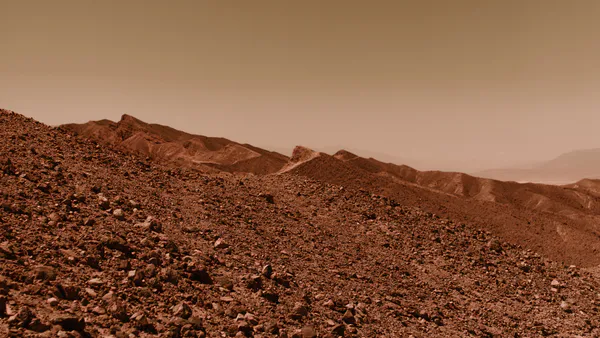
The environment on Mars is extremely hostile to human life. The atmosphere is not breathable because it contains no oxygen. Without a spacesuit as a life support system, a person would lose consciousness within seconds and die within minutes. In addition, Mars has freezing temperatures, powerful dust storms, and high levels of harmful radiation because it lacks a strong magnetic field and protective atmosphere.
Even Elon Musk, one of the strongest supporters of Mars colonization, is unlikely to live there permanently himself. His vision mainly focuses on sending other people to establish settlements on the Mars.
The lack of oxygen is another major obstacle to settling other celestial bodies such as Venus or Titan. Furthermore, these worlds present additional environmental challenges.Venus is extremely hot due to its thick carbon dioxide atmosphere, while Titan is far too cold to support human life. These harsh conditions highlight how rare and valuable Earth is as the only known planet capable of naturally sustaining life.
3. Terraforming
The idea of “terraforming” other planets is often discussed in science fiction and public debates about space exploration. Terraforming means transforming another planet so that it becomes similar to Earth and suitable for human life. However, I do not see how this could realistically be achieved, especially when it comes to creating a breathable atmosphere.
On Earth, oxygen was produced over million of years by plants, algae, and bacteria through natural biological processes. Without oxygen, the atmosphere is not breathable and therefore useless for human survival. Reproducing such a complex process on another planet would require enormous amounts of time, technology, and resources. In addition, planets such as Mars lack many of the natural conditions that make life possible on Earth.
The concept of ‘terraforming’ reminds me of the film The Great Dictator. In one famous scene, Charlie Chaplin, in his role as dictator Hynkel, plays with the balloon - shaped like the Earth. The scene symbolically shows human arrogance and the desire to control the world.
For me, the idea of terraforming a planet represents a form of human megalomania. Humans, like all living beings, are products of evolution. Our bodies and way of life developed under the unique environmental conditions of Earth. Attempting to drastically alter another planet to meet human needs involves interfering with natural processes that we do not fully understand. The consequences of such actions could be unpredictable and impossible to control.
Instead of trying to transform other planets, humanity should focus more on protecting and preserving Earth, the only planet naturally capable of supporting human life.
4. Asteroids
Another topic often discussed in connection with space exploration is asteroid mining. Many asteroids travel through space at extremely high speeds, often exceeding 10 kilometers per second. Even the Moon moves around Earth at a speed of about one kilometer per second. Reaching, landing on, and mining such fast-moving objects would therefore be extremely difficult and dangerous.
Some people argue enthusiastically in favour of asteroid mining because astroids may contain minerals worth billions of dollars. This would indeed be valuable if such an asteroid were easily accessible on Earth. However, in reality, these objects are located far away in space and move at very high speeds. Extracting resources from them would require highly advanced technology, enormous amounts of energy, and extremely advanced transportation systems.
For these reasons, I believe that asteroid mining would be far too expensive to become economically practical in the near future. It would only be worthwhile if the costs of mining and transporting materials from space become as low as mining resources on Earth. At present, I do not believe technological progress will reach such a level in the foreseeable future.
Furthermore, there are many additional risks involved, including equipment failure, radiation exposure, communication delays, and the challenge of operating machinery in a zero-gravity environment. These difficulties show that space mining is much more complicated than it is often presented in popular media.
Rather than investing in uncertain and expensive space projects, humanity should prioritize the responsible use of Earth’s natural resources and the development of sustainable technologies on Earth.
5. Space Travel
Another major topic in modern science and science fiction is interstellar space travel. However, I believe that travelling to other star systems will remain impossible with our current level of technology. The distance between stars are unimaginably large. Even the nearest star system, Alpha Centauri, is more than four light-years away from Earth. With today’s spacecraft technology, such a journey would take thousands of years.
Of course, future scientific discoveries may lead to new technologies that we cannot yet imagine. In the television series Star Trek, spaceships use a ‘warp drive’ that allows them to travel faster than light. Although this idea is fascinating, it remains purely theoretical and far from practical realization.
Even if humanity were able to build spacecraft capable of travelling at speeds close to the speed of light, serious dangers would still exist. One major hazard would be collisions with microscopic particles or space debris. Although the probability of such a collision is very small, the kinetic energy of even a microscopic particle becomes enormous at extremely high speeds.
This means that an impact with a very small particle could cause catastrophic damage or even destroy a spacecraft completely. No crew would willingly risk such dangers during a long interstellar journey.
In addition, long-distance space travel would create many other challenges, such as radiation exposure, psychological stress, lack of resources, and the difficulty of maintaining life support systems for many years. These problems demonstrate that interstellar travel is not only a technological challenge but also a biological and human one.
For these reasons, I believe that journeys to distant stars will remain largely within the realm of science fiction for the foreseeable future.
6. Habitable Zone
Another major topic in astronomy is the search for life elsewhere in the universe. One of the best-known organizations involved in this research is the SETI Institute, which searches for signs of intelligent extraterrestrial life.
In my opinion, the search conducted by SETI is unlikely to succeed because I believe that intelligent civilisations may eventually destroy their own environments after developing advanced technology. There are probably countless exoplanets in the universe, and some scientists argue that this increases the likelihood of intelligent life. However, even if such civilisations exist and continue to develop technologically, I believe that they may ultimately damage their natural environments, just as humans are currently doing on Earth.
As technology advances, populations may also increase because of improvements in medicine and living conditions. This growth can contribute to environmental destruction, pollution, and climate change. Human activity on Earth already demonstrates that uncontrolled technological progress can have harmful effects on the natural environment.
Astronomers have discovered more than 5,000 exoplanets by the year 2026, yet no confirmed signs of extraterrestrial life has been detected so far. Scientists have also defined the so-called "Goldilocks Zone," or "Habitable Zone," which describes the region around a star where temperatures may allow liquid water to exist.
However, some moons located far outside these habitable zones may also contain conditions suitable for life. For example, Europa and Enceladus are believed to contain liquid water beneath their icy surfaces. These discoveries broaden the range of environments in which life could potentially exist and increase the probability of finding microbial organisms somewhere in the universe.
Even in the Habitable Zone, conditions may still be unsuitable for human life. We can survive only a few hours at a temperature of 50 degrees Celsius.
Nevertheless, despite decades of research and observation, no evidence of life beyond Earth has yet been confirmed. Perhaps life elsewhere is extremely rare or perhaps humanity is alone in the universe.
7. The Fermi Paradox
Scientists estimate that there may be around planets in the universe. Even if the probability of life developing on a planet is extremely small, life could still theoretically exist elsewhere. However, the probability of intelligent life evolving may be far smaller. Therefore it is possible that humanity is the only intelligent civilisation in the universe.
This simple estimation illustrates that, despite the enormous number of planets, the probability of intelligent civilisations existing elsewhere may still be extremely low.
The famous Italian physicist Enrico Fermi also questioned why no evidence of extra-terrestrial civilisations has ever been observed. If intelligent life is common in the universe, than humanity should perhaps already have detected signals, spacecraft, or other signs of alien civilisations. This contradiction is known as the "Fermi Paradox".
One possible explanation for the paradox is that intelligent civilisations are extremely rare or may not survive for very long. Advanced societies could destroy themselves through war, environmental collapse, or uncontrolled technological development before achieving interstellar travel. Another possibility is that humanity is simply alone in the observable universe.
So far, despite decades of scientific research and the discovery of thousands of exoplanets, no confirmed evidence of extra-terrestrial intelligence has been found. For this reason, the question raised by the Fermi Paradox remains one of the greatest mysteries in modern science.
Acknowledgement
I thank Lydia Ramachandran for a careful reading and for some improvements of the language.