
Introduction
Stillbirth refers to death of a baby at or after 28 weeks of pregnancy, either before or during delivery.1
The way stillbirth is defined and reported varies significantly around the world.
In the United States, miscarriage is loss of pregnancy before 20 weeks of gestational age, and stillbirth is loss of a baby at or after 20 weeks gestational age.
Every year, nearly 2 million stillbirths occur globally, which averages out to one every 16 seconds.1 More than 40% of these stillbirths happen during labor, and many of these losses could be prevented with better quality and respectful care during childbirth.
Complications during pregnancy, such as anemia, eclampsia, preeclampsia and other hypertensive disorders, gestational or overt diabetes mellitus, cholestasis of pregnancy, as well as APH (Antepartum Hemorrhage), abnormal fetal positions/presentation, and obstructed labor, greatly raise the risk of stillbirth. Therefore, a high rate of stillbirths often indicates the quality of antenatal care (ANC) in a particular area.2
Stillbirths are categorized into:
In-Facility Stillbirth: stillbirth where the fetus was known to be alive upon admission at the healthcare facility (FHS heard).
Antepartum Stillbirth: intra-uterine fetal death occurring before labor begins.
Intrapartum Stillbirth: stillbirth that occurs during labor.3
Additionally:
Macerated Stillbirth (MSB): stillbirth showing signs of maceration (skin changes like skin discoloration or darkening, edema, peeling, redness and breakdown due to prolonged death) at delivery; usually seen in antepartum stillbirth.
Fresh Stillbirth (FSB): stillbirth that has a fresh appearance with no signs of maceration during delivery, indicating that death occurred recently.3
Certain risk factors for stillbirth include:
African/Black race
Age 35 years or older
Low socioeconomic status
Addictions such as smoking during pregnancy
High BMI
Medical conditions: hypertension, diabetes, anemia, cholestasis of pregnancy, obesity, thrombophilia, APLA syndrome
Erythrocyte/thrombocyte isoimmunization
Infections during pregnancy: malaria, parvovirus, toxoplasma and others which can directly cause stillbirth or can induce preterm labor
Multiple pregnancies
Pre/post-term pregnancies
History of previous pregnancy losses
Male fetus
Lack of education about ANC care
Not registered at health institute
Placental abruption
Major fetal congenital anomalies
When investigating stillbirth, workup includes thorough review of medical history, including antenatal visits and care, as well as autopsy, placental examination, and karyotype analysis. Additional tests include Kleihauer-Betke test, antiphospholipid antibodies, serologies for parvovirus, malaria and syphilis, toxicology screening, and indirect Coombs test. Further testing should be tailored to the specific clinical situation and medical history.
The approach to delivering the baby after a diagnosed in-utero stillbirth varies based on the gestational age and obstetric history. Typically, labor is induced using prostaglandins or oxytocin.4
Supporting the patient involves emotional support and providing clear communication about test results.
Objectives
To evaluate risk factors responsible for stillbirth.
To study modifiable and unmodifiable antenatal risk factors associated with stillbirth.
Materials and Methods
Study Design
A prospective observational case-control study.
Study Area
Department of Obstetrics and Gynecology in a Tertiary Care Hospital in Mumbai.
Study Population
Patients with presentation and diagnosis of intrauterine fetal death or patients with fresh stillbirth during delivery admitted in the hospital.
Sample Size
Includes 88 cases and 88 controls, total sample size of 176.
Selection Criteria for Cases
Inclusion Criteria:
All patients admitted to labor ward with stillbirth
Given informed consent
Fetal weight 500 g
Gestational age 28 weeks
Exclusion Criteria:
- Gravidas with live births
Selection Criteria for Controls
Inclusion Criteria:
All patients with live fetus admitted for termination of pregnancy or in labor
Given informed consent
Fetal weight 500 g
Gestational age 28 weeks
Exclusion Criteria:
- Gravidas with stillbirths
Results and Observations
Age
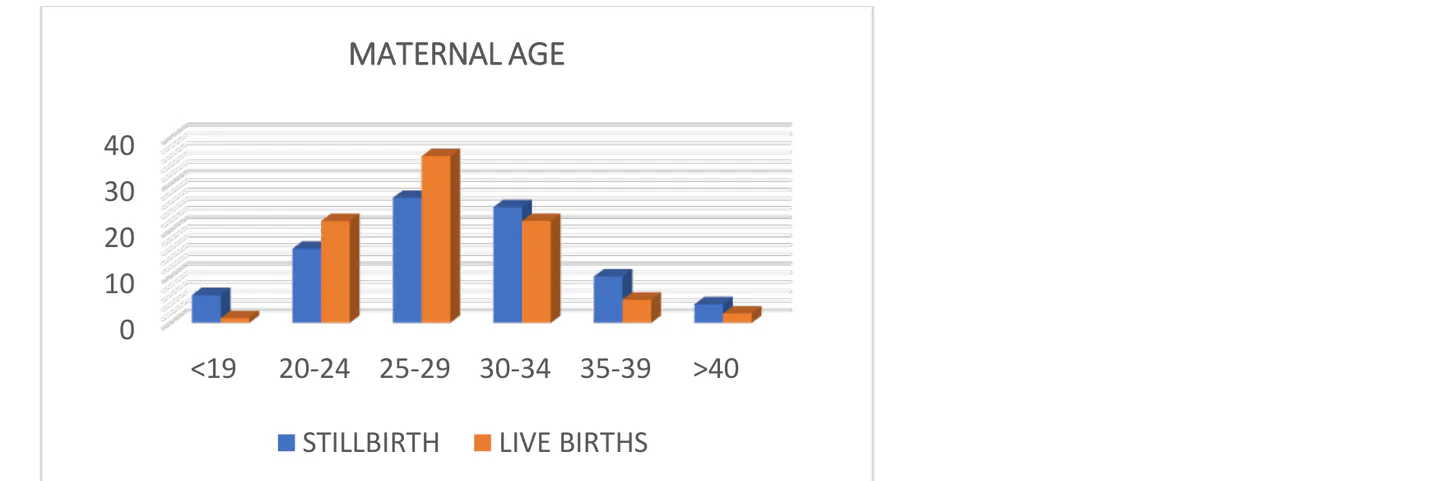
| Maternal Age (years) | Stillbirth | Live Births |
|---|---|---|
| 6 (6.81%) | 1 (1.11%) | |
| 20–24 | 16 (18.18%) | 22 (25.0%) |
| 25–29 | 27 (30.68%) | 36 (40.9%) |
| 30–34 | 25 (28.4%) | 22 (25.0%) |
| 35–39 | 10 (11.3%) | 5 (5.68%) |
| 4 (4.54%) | 2 (2.27%) |
Maternal Age Distribution
Maternal Age Distribution
Mean age among stillbirths is 28.36 years and among live births is 27.68 years.
At extremes of age, the percentage of stillbirths is higher compared to live births.
| Age Group | Stillbirths | Livebirths |
|---|---|---|
| Extremes of age ( and yrs) | 10 | 3 |
| 20 to 39 years | 78 | 85 |
Stillbirth Rate at Extremes of Age
Chi-square test: (), statistically significant.
Parity
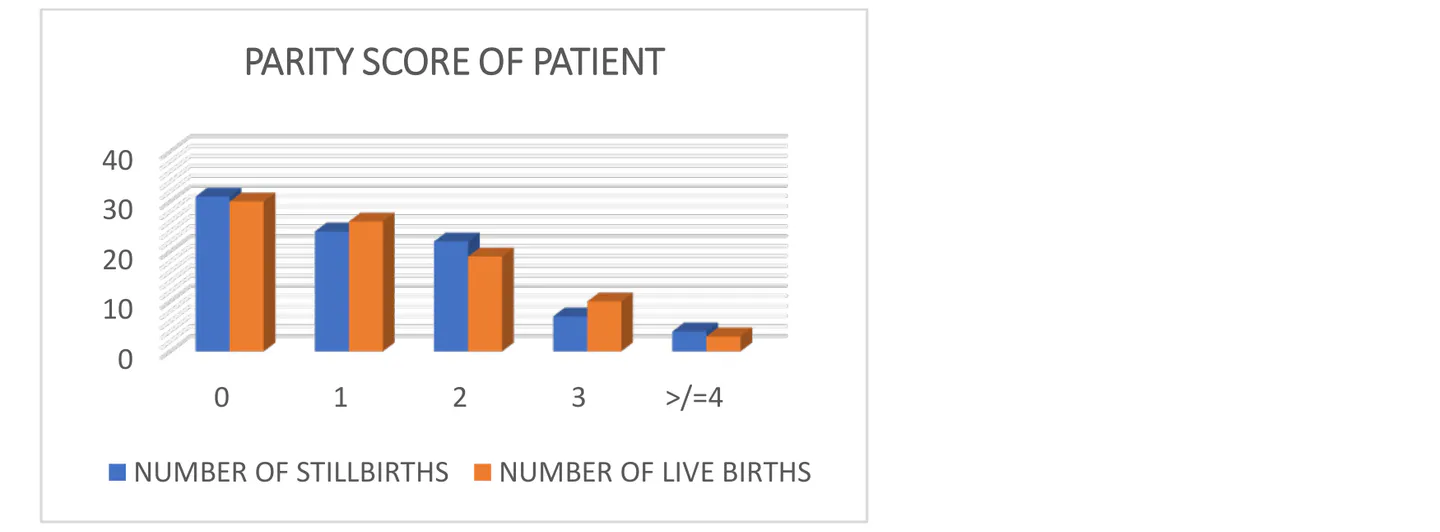
| Parity Score | Stillbirths | Live Births |
|---|---|---|
| 0 (Nulliparous) | 31 (35.22%) | 30 (34.09%) |
| 1 | 24 (27.27%) | 26 (29.54%) |
| 2 | 22 (25.00%) | 19 (21.59%) |
| 3 | 7 (7.95%) | 10 (11.36%) |
| 4 (4.54%) | 3 (3.40%) |
Distribution of Cases and Controls According to Parity
Parity Score of Patients
Maximum stillbirths occurred in nulliparous patients (35.22%).
In grand multiparity (4 or more previous deliveries), the percentage of stillbirth deliveries (4.54%) was higher compared to that of live births (3.40%).
By Chi-square test: (), which is not statistically significant.
ANC Registration
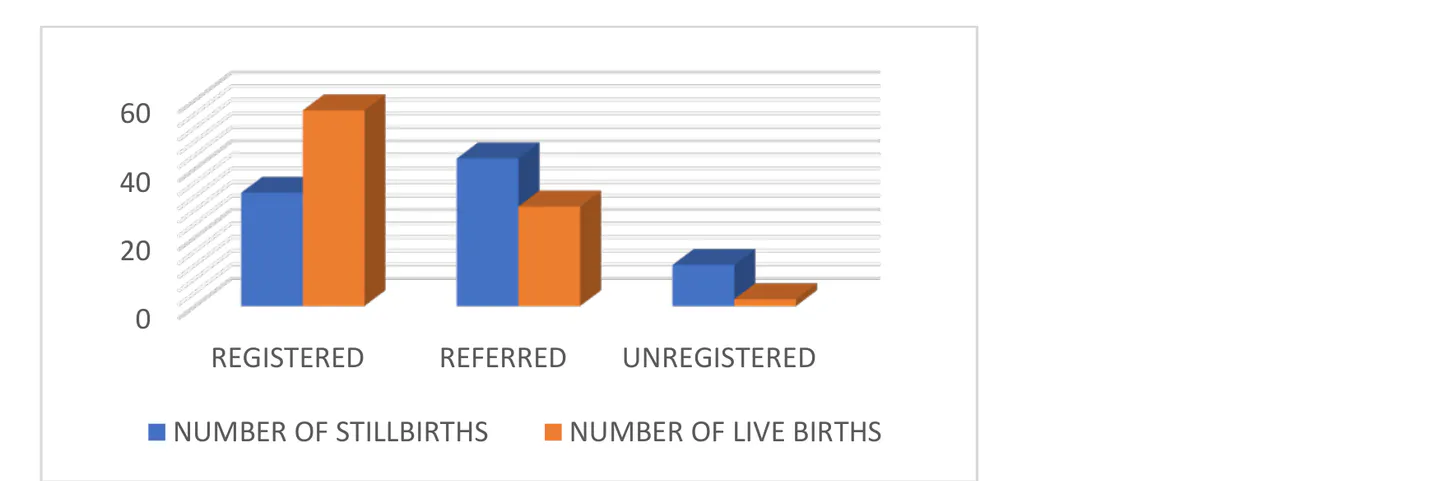
| Registration Status | Stillbirths | Livebirths |
|---|---|---|
| Registered | 33 (37.50%) | 57 (64.77%) |
| Referred | 43 (48.86%) | 29 (32.95%) |
| Unregistered | 12 (13.63%) | 2 (2.27%) |
Antenatal Care (ANC) Registration Status
Antenatal Care (ANC) Registration Status
The percentage of unregistered patients was higher in stillbirths (13.63%) compared to live births (2.27%).
By Chi-square test: (), which is statistically significant.
BMI (Body Mass Index)
| BMI () | Stillbirth | Livebirth |
|---|---|---|
| Lean () | 5 (5.68%) | 6 (6.81%) |
| Normal () | 42 (47.72%) | 48 (54.54%) |
| Overweight () | 28 (31.81%) | 30 (34.09%) |
| Obese () | 13 (14.77%) | 4 (4.54%) |
Distribution According to Body Mass Index (BMI)
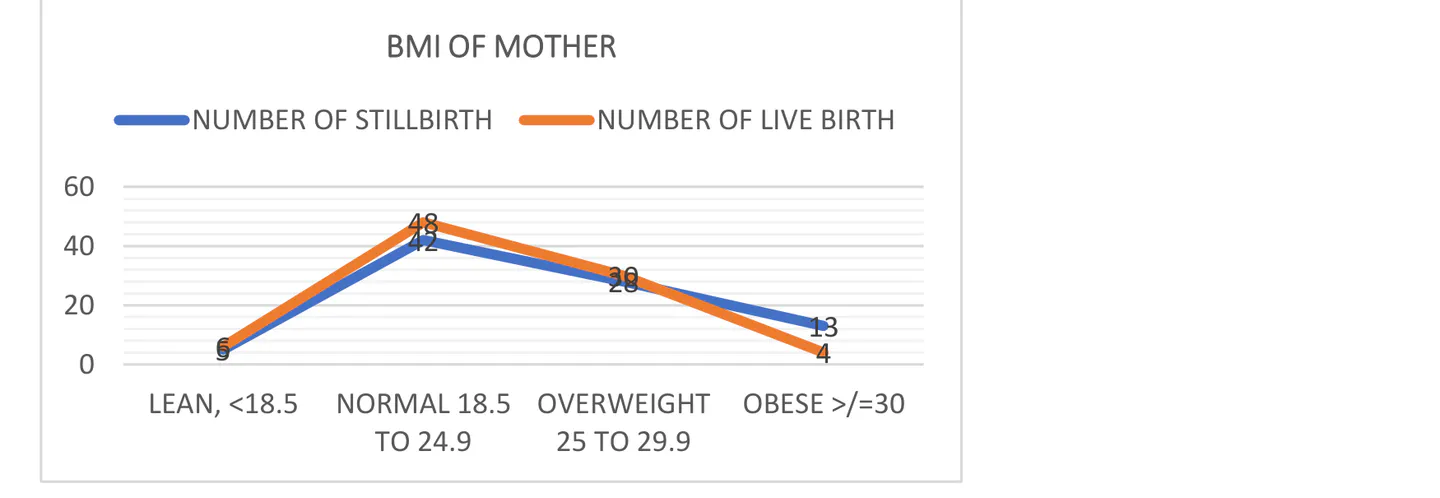
BMI of Mother
The percentage of obesity was higher in stillbirths (14.77%) compared to live births (4.54%).
By Chi-square test: ().
Gestational Age at Delivery
| Gestational Age (weeks) | Stillbirths | Live Births |
|---|---|---|
| 24–27 | 13 (14.65%) | 1 (1.13%) |
| 28–31 | 17 (19.16%) | 4 (4.54%) |
| 32–33 | 12 (13.63%) | 4 (4.54%) |
| 34–36 | 21 (23.86%) | 12 (13.63%) |
| 37–38 | 11 (12.50%) | 32 (36.36%) |
| 39–40 | 10 (11.36%) | 34 (38.63%) |
| 4 (4.54%) | 1 (1.13%) |
Distribution According to Gestational Age at Delivery
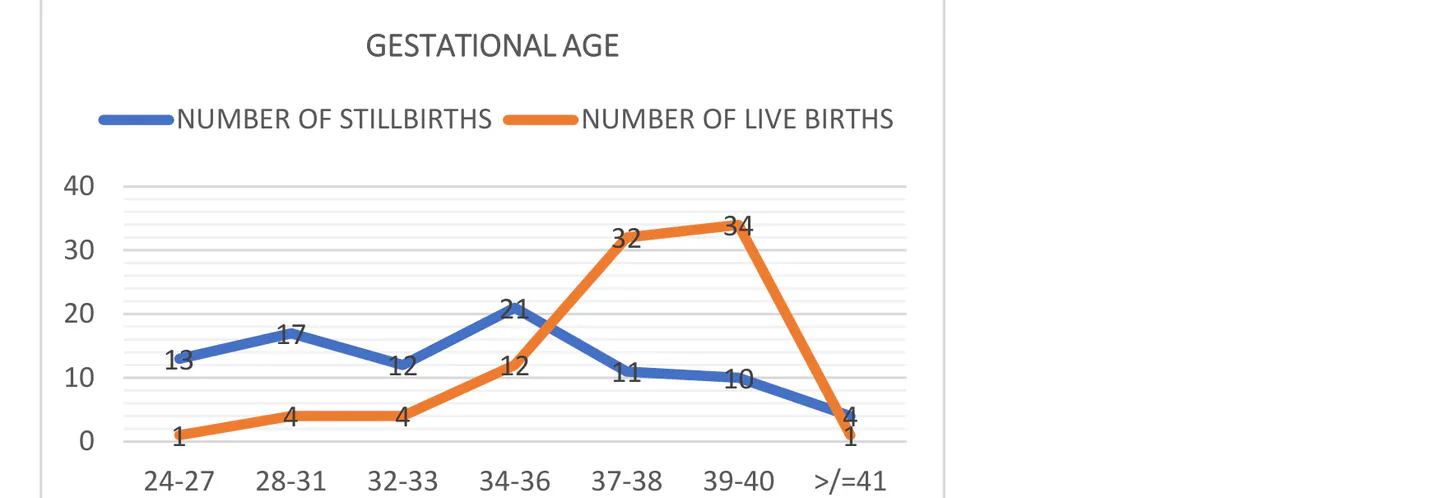
Gestational Age at Delivery
Stillbirths were more prevalent in preterm deliveries and postdatism ( weeks).
| Category | Stillbirths | Live Births |
|---|---|---|
| Preterm and Postdatism | 67 | 22 |
| Term | 21 | 66 |
Comparison of Preterm/Postdatism vs Term Deliveries
By Chi-square test: (), statistically significant.
Fetal Birth Weight
| Fetal Birth Weight (g) | Stillbirth | Live Births |
|---|---|---|
| 500–1000 | 23 (26.13%) | 2 (2.27%) |
| 1001–1500 | 18 (20.45%) | 2 (2.27%) |
| 1501–2000 | 9 (10.22%) | 9 (10.22%) |
| 2001–2500 | 14 (15.90%) | 12 (13.60%) |
| 2501–3000 | 9 (10.22%) | 33 (37.50%) |
| 3001–3500 | 13 (14.77%) | 21 (23.86%) |
| 3501–4000 | 2 (2.27%) | 6 (6.81%) |
| 0 (0%) | 1 (1.13%) |
Distribution According to Fetal Birth Weight
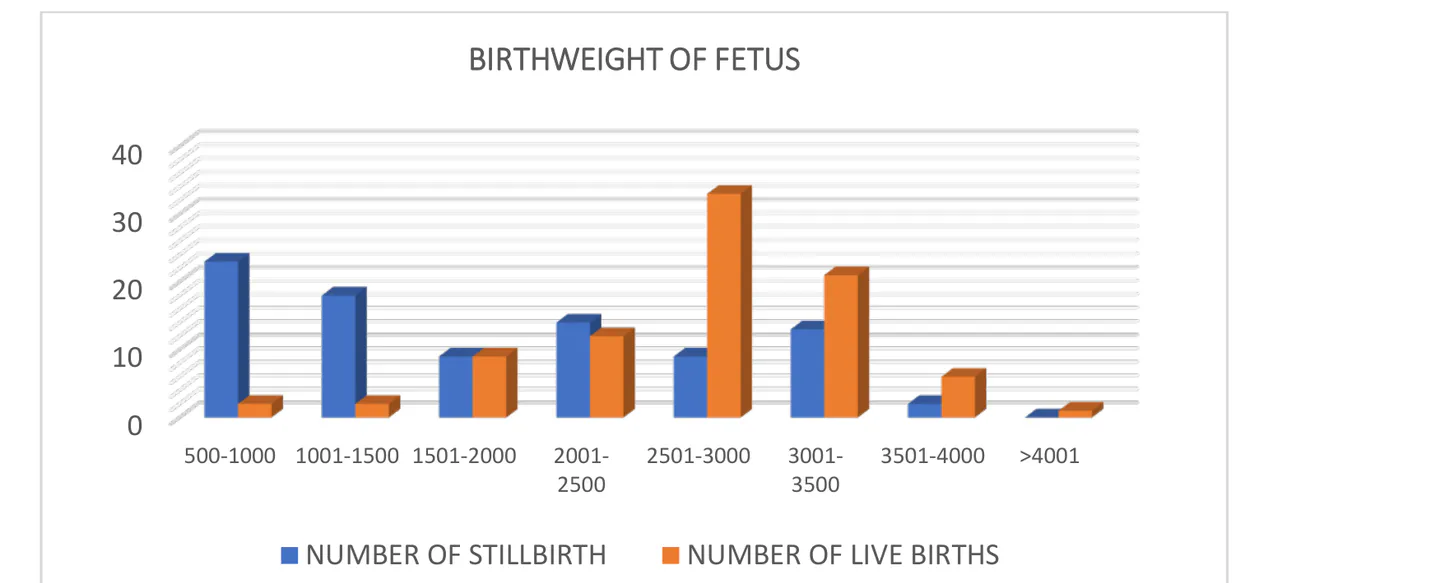
Birth Weight of Fetus
The highest percentage of stillbirths (26.13%) weighed in the range of 500–1000 g, whereas among live births, the maximum proportion (37.50%) weighed between 2501–3000 g.
By Chi-square test: (), statistically significant.
Fetal Congenital Anomalies
| Congenitally Anomalous Fetus | Stillbirths | Live Births |
|---|---|---|
| Yes | 9 (10.22%) | 2 (2.27%) |
| No | 79 (89.77%) | 86 (97.72%) |
Prevalence of Fetal Congenital Anomalies
By Chi-square test: (), which is statistically significant.
Stillbirth is significantly associated with congenital anomalies of the fetus.
Maternal Comorbidities
| Maternal Comorbidities | Stillbirths | Live Births |
|---|---|---|
| Yes | 56 (63.13%) | 30 (33.82%) |
| No | 32 (36.07%) | 58 (65.38%) |
Distribution of Maternal Comorbidities
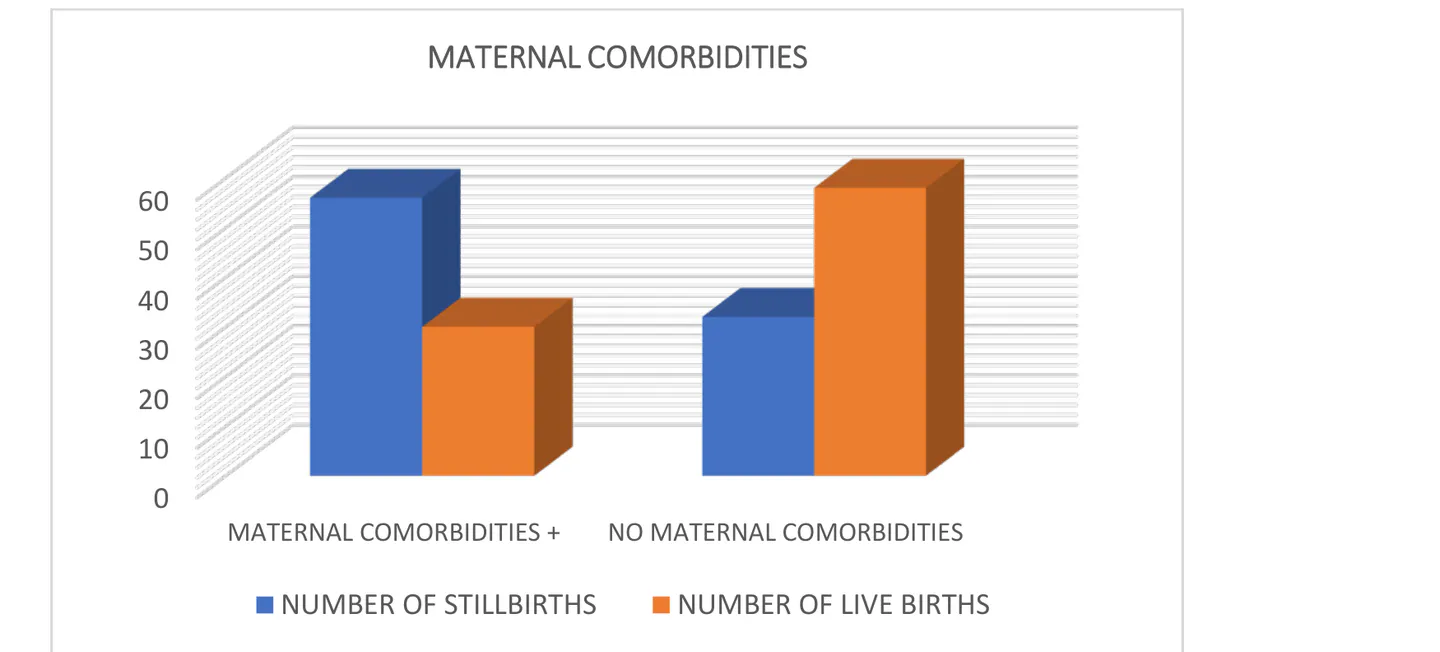
Distribution of Maternal Comorbidities
Among stillbirths (63.13%), the percentage of cases with comorbidities was significantly higher than that of live births (33.82%).
By Chi-square test: (), statistically significant.
| Comorbidities | Stillbirths |
|---|---|
| Anemia alone | 5 (5.68%) |
| Hypertension alone | 16 (18.18%) |
| Diabetes alone | 6 (6.81%) |
| Antepartum hemorrhage | 1 (1.13%) |
| Multiple comorbidities | 21 (23.86%) |
| Others | 5 (5.68%) |
Types of Comorbidities and Association with Stillbirth
In total, 63.13% of patients with stillbirth had comorbidities, such as anemia, preeclampsia, eclampsia, chronic hypertension, overt/gestational diabetes mellitus, hypothyroidism, cholestasis of pregnancy, and infections (including HIV, HBsAg, Dengue, Malaria).
| Status | Stillbirths | Livebirths |
|---|---|---|
| Non-diabetic | 77 (87.50%) | 83 (94.31%) |
| GDM | 5 (5.68%) | 4 (4.54%) |
| Overt DM | 6 (6.81%) | 1 (1.13%) |
Percentage of Overt DM and GDM Among Patients with Stillbirths and Live Births
Stillbirths and live births have almost equal distribution in GDM. However, Overt DM is 6 times more prevalent in patients with stillbirths.
USG Obstetrics Abnormality
| Previous USG Abnormality | Stillbirths | Live Births |
|---|---|---|
| Yes | 38 (43.18%) | 21 (23.86%) |
| No | 50 (56.81%) | 67 (76.13%) |
Prevalence of Previous USG Obstetrics Abnormality
USG abnormality includes abnormality in liquor volume, fetal weight (FGR/SGA/LGA), abnormal Doppler studies, and placental abnormalities.
By Chi-square test: (), statistically significant.
Stillbirth is significantly associated with abnormal ultrasound findings.
Discussion
The present study is an observational, descriptive case-control study conducted in the Department of Obstetrics and Gynecology, including 88 cases (stillbirths) and 88 controls (live births).
As per this study, the mean age of patients with stillbirths was 28.36 years. At extremes of age (below 20 and above 40 years), the stillbirth rate was higher than live births. In comparison, a 2022 study by Cande V. Ananth found that the highest rates of stillbirth occurred in the 25–29 age group, while also showing that both very young (12–19 years) and older women (35 years and above) were associated with a higher stillbirth rate.5
In this study, stillbirth was not significantly associated with parity of the patient. However, the percentage of grand multiparity was comparatively higher in stillbirths (4.54%) than live births (3.40%), though not statistically significant.
This study showed a significant difference in ANC registration between stillbirths and live births. Patients with stillbirths had a higher percentage of being unregistered. In a 2020 study by Gwako et al., the odds of stillbirth were four times higher among those who did not attend antenatal care.6
Obesity was found to be associated with stillbirths. Among stillbirths, 14.77% were obese (BMI ), which was significantly higher than in live births (4.54%). A study by Bodnar et al. regarding maternal prepregnancy obesity and cause-specific stillbirth showed that the rate of stillbirth among lean, overweight, obese, and severely obese women was 7.7, 10.6, 13.9, and 17.3 per 1000 live-born and stillborn infants, respectively.7
In the present study, stillbirths and live births were grouped according to their gestational age at delivery. Stillbirth deliveries peaked at 34–36 weeks gestational age, followed by 28–31 weeks, whereas among live births, the peak was at 39–40 weeks of gestation. The percentage of preterm delivery was much higher in stillbirths than live births. According to a study by Lawn and Blencowe et al., stillbirth risk was highest for SGA pregnancies prior to 29 weeks of gestation, remained stable between 30 and 34 weeks, and increased gradually from 35 weeks to a peak rate of 8.4 per 1000 fetuses at risk at weeks.8
Grouping by fetal birth weight showed that stillbirths usually had low birth weight of less than 1000 g compared to live births. A study by Martínez-Varea et al. (2024) also showed that SGA and FGR were significantly associated with stillbirth in singleton pregnancies across all gestational ages at delivery.9
Male stillbirths were slightly more frequent than female stillbirths, but the difference was not statistically significant and sex of the fetus was not identified as an independent risk factor for stillbirth.
Congenital anomalies were identified as a significant risk factor for stillbirth. The percentage of congenitally anomalous fetuses was higher in stillbirths than live births (10.22% vs 2.27%, ). This compares to a study by Son et al. (2021), where 23.4% of singleton stillbirths had one or more major anomalies compared to 4.3% of live births.10
Of the total 88 patients having stillbirths, 33% were intrapartum stillbirths and 67% were antepartum stillbirths. The prevalence of antepartum stillbirth was higher compared to intrapartum stillbirth. A study by Boo et al. (2024) similarly showed a higher percentage of antepartum stillbirth (77.8%) compared to intrapartum stillbirth (22.2%).11
Maternal comorbidities were a major risk factor for stillbirth. Among stillbirths, 63.13% presented with maternal comorbidities, significantly higher than live births (33.82%). This aligns with a study by Nyarko et al. (2024), which reported a rate of severe maternal morbidity during delivery of 791 cases per 10,000 deliveries for stillbirths compared to 154 cases per 10,000 for live births.12
Among the 56 patients with stillbirth who had comorbidities, 23.86% had multiple comorbidities including anemia, preeclampsia/eclampsia, chronic hypertension, overt/gestational DM, hypothyroidism, cholestasis of pregnancy, and infections such as HIV, HBsAg, Dengue, and Malaria.
The percentage of previous USG obstetric abnormalities was 43.18% in stillbirths versus 23.86% in live births, which was statistically significant.
Vaginal delivery occurred in 68% of stillbirths and LSCS in 26%, whereas among live births, 51% had vaginal delivery and 47.7% had Cesarean section. This reflects a lower rate of Cesarean section among stillbirths, similar to findings by Buinoiu et al. (2017), where Cesarean section rates were 41.7% for live births versus 17.24% for stillbirths.13
Complications occurred in 27.27% of stillbirth cases (1.4 times higher than live births at 11.36%). Wall-Wieler et al. (2021) similarly reported that the risk of postpartum readmission for women with stillbirths was nearly 1.5 times greater compared to live births, with common indications including uterine/pelvic infections, psychiatric conditions, hypertensive disorders, and urinary tract infections.14
Therefore, maternal age, BMI, comorbidities, gestational age, and ANC registration are key risk factors for stillbirth. Fetal factors such as birth weight, congenital anomalies, and ultrasound abnormalities are also major risk factors.
BMI, ANC registration, and manageable comorbidities represent modifiable risk factors that can be targeted for prevention. In contrast, maternal age, gestational age, birth weight, and fetal structural anomalies represent non-modifiable risk factors.
Conclusion
In this study, stillbirths occurring before labor (MSB) were more common than those occurring during labor (FSB). The study highlights both modifiable and unmodifiable risk factors. Modifiable factors include BMI, maternal health conditions such as anemia, hypertension, and diabetes, as well as proper registration at a healthcare center and adherence to iron and folic acid supplementation. On the other hand, unmodifiable factors encompass mother’s age at conception, congenital anomalies of the fetus, gestational age at delivery, and birth weight.
Hence, to prevent adverse pregnancy outcomes, pre-conceptional management of comorbidities prior to planning pregnancy is essential. Preconceptional folic acid supplementation helps reduce complications such as neural tube defects. For diabetic patients, achieving target HbA1c levels and glycemic control before pregnancy, correcting TSH levels in thyroid dysfunction, correcting anemia, and weight optimization are recommended.
Additionally, early pregnancy support with micronized progesterone, low-molecular-weight heparin (LMWH), and low-dose aspirin is advisable in high-risk pregnancies.