





1. Introduction
The rise of e‑Governance in India reflects a broader global trend toward leveraging information and communication technologies (ICTs) to improve public service delivery, enhance transparency, and strengthen accountability in public administration. Over the past two decades, governments worldwide have increasingly recognized the transformative potential of digital platforms in bridging the gap between citizens and state institutions. The United Nations (UN) has consistently emphasized digital governance as a cornerstone of sustainable development, highlighting its role in achieving the Sustainable Development Goals (SDGs), particularly those related to institutional effectiveness, inclusivity, and innovation (United Nations, 2020) [11]. Similarly, the World Bank has underscored ICT adoption as a critical enabler of governance reforms, capable of reducing bureaucratic inefficiencies and curbing corruption (World Bank, 2020) [13].
In India, the trajectory of e‑Governance has been shaped by both national policy frameworks and state‑level innovations. The National e‑Governance Plan (NeGP), launched in 2006, provided a blueprint for integrating ICTs into service delivery across departments and states (Bhatnagar, 2004). The plan emphasized citizen‑centricity, transparency, and efficiency as guiding principles. Within this framework, several pioneering initiatives emerged, including Bhoomi in Karnataka, which digitized land records to reduce corruption and improve accessibility (Madon, 2009), and e‑District projects across multiple states, which sought to streamline access to certificates and utility services. These initiatives demonstrated the potential of ICTs to transform governance, but they also revealed persistent challenges in infrastructure, institutional coordination, and citizen awareness.
Against this backdrop, Andhra Pradesh’s Mee Seva programme (“At Your Service”) stands out as a flagship initiative in citizen‑centric digital governance. Launched in 2011, Mee Seva was designed as a single‑window platform to provide citizens with easy access to government certificates, records, and utility services. By integrating front‑end service centers with back‑end departmental processes, Mee Seva sought to reduce bureaucratic hurdles, minimize rent‑seeking behavior, and enhance citizen satisfaction. Its design reflects a deliberate attempt to embed transparency and accountability into governance systems, aligning with both national priorities and global discourses on digital transformation.
The significance of Mee Seva lies not only in its scale and scope but also in its policy value as a replicable model for other states. With over 300 services offered through thousands of centers across Andhra Pradesh, Mee Seva has become a critical interface between citizens and the state (Government of Andhra Pradesh, 2019) [4]. Its success in streamlining service delivery has been widely acknowledged, yet persistent challenges remain. Infrastructure bottlenecks, such as unreliable connectivity and frequent power failures, continue to hinder service delivery. Operator‑level errors and limited capacity building have affected the quality of services, while inter‑departmental coordination gaps have slowed the pace of integration. Moreover, citizen awareness campaigns have been insufficient, leading to continued reliance on intermediaries and repeated visits to service centers (Mishra, 2019).
Globally, Mee Seva can be situated within comparative debates on digital governance. Estonia’s e‑Residency programme, for instance, exemplifies how ICTs can enable seamless citizen‑state interactions across borders (OECD, 2019); the United Kingdom’s GOV.UK platform demonstrates the importance of centralized digital portals in enhancing accessibility and reducing administrative complexity (Heeks, 2006). These cases highlight the relevance of institutional convergence, continuous monitoring, and citizen engagement in sustaining digital governance reforms. Mee Seva, while rooted in the Indian administrative context, offers lessons that resonate with these global experiences.
The introduction of Mee Seva also reflects broader shifts in public administration theory. Traditional models of bureaucratic governance, characterized by hierarchical structures and procedural rigidity, have increasingly been challenged by demands for responsiveness, transparency, and citizen‑centricity (Dwivedi & Bhargava, 2017). Digital governance initiatives such as Mee Seva embody this shift, representing a move toward networked governance where ICTs facilitate coordination across departments and foster participatory engagement with citizens. This transformation underscores the importance of policy innovation in embedding accountability and responsiveness into governance systems.
This paper evaluates Mee Seva as a case study in citizen‑centric digital governance, situating it within national and international debates on public administration reform. By critically examining its design, implementation, and outcomes, the study seeks to highlight both its achievements and its challenges. The analysis draws on administrative data, secondary literature, and comparative insights from other e‑Governance initiatives. In doing so, it underscores the importance of institutional convergence, continuous monitoring, and citizen awareness campaigns in sustaining digital governance reforms. Ultimately, Mee Seva’s relevance lies in its potential to serve as a model for embedding transparency and responsiveness in governance systems, both within India and globally.
2. Purpose
This study critically examines the Mee Seva programme as a case of citizen‑centric digital governance in India. While numerous e‑Governance initiatives have been launched nationwide, Mee Seva is distinctive for its scale, scope, and explicit focus on citizen satisfaction. Conceived not merely as a technological intervention but as a governance reform, it sought to embed transparency, accountability, and responsiveness into everyday citizen-state interactions. By situating Mee Seva within broader debates on public administration and policy innovation, the study highlights its relevance as both a state‑level experiment and a potential model for replication.
The rationale for focusing on Mee Seva is threefold. First, Andhra Pradesh has historically pioneered administrative innovation, with initiatives such as e‑Procurement and land record computerization preceding Mee Seva (Bhatnagar, 2004). Second, its design as a single‑window platform reflects a deliberate attempt to reduce bureaucratic hurdles and minimize rent‑seeking behavior, long‑standing issues in Indian public administration (Heeks, 2006). Third, its outcomes, achievements and challenges alike, offer insights into the sustainability of digital governance reforms in contexts marked by infrastructural constraints and institutional complexity.
Guided by the principle of citizen‑centricity, the study evaluates Mee Seva’s design, implementation, and outcomes. As Mishra (2019) argues, citizen‑centric governance requires not only technological innovation but also institutional convergence, capacity building, and awareness campaigns. The analysis therefore derives lessons for sustainable reforms.
The study also contributes to debates on public administration reform. Traditional hierarchical governance models are increasingly challenged by demands for transparency and responsiveness (Dwivedi & Bhargava, 2017). Digital initiatives such as Mee Seva embody this shift toward networked governance, where ICTs foster coordination and participatory engagement.
Finally, comparative perspectives, such as Estonia’s e‑Residency and the UK’s GOV.UK platform, demonstrate the importance of institutional convergence and citizen engagement in sustaining reforms (OECD, 2019; United Nations, 2020). By comparison, Mee Seva underscores its policy value as a replicable framework for embedding citizen‑centricity into governance systems.
3. Objectives
The objectives of this study provide a structured framework for evaluating the Mee Seva programme as a citizen‑centric digital governance initiative. Each objective captures a distinct dimension of its contribution to public administration reform while identifying challenges to sustainability.
Objective 1: Assess service delivery outcomes: This objective evaluates whether Mee Seva has reduced bureaucratic hurdles, minimized rent‑seeking, and enhanced citizen satisfaction. Service delivery outcomes are key indicators of e‑Governance effectiveness, assessed through administrative data and citizen feedback (Mishra, 2019; Government of Andhra Pradesh, 2019).
Objective 2: Identify implementation challenges: The study examines infrastructural, institutional, and human resource constraints, including unreliable connectivity, power failures, operator errors, and official resistance (Heeks, 2006). Documenting these barriers highlights the need for capacity building, infrastructure investment, and change management.
Objective 3: Examine policy value: Mee Seva’s policy value lies in embedding transparency and accountability into governance systems. Citizen‑centric reforms require institutional convergence and monitoring (UNDP, 2018). Situating Mee Seva within broader debates underscores its relevance as a replicable model for other contexts.
Objective 4: Generate recommendations: Finally, the study develops recommendations for sustainable reforms, emphasizing district‑level monitoring, ICT infrastructure, operator training, sensitization of officials, and citizen awareness campaigns. These measures provide actionable insights for policymakers (Dwivedi & Bhargava, 2017; OECD, 2019).
4. Literature review
The literature on e‑Governance has expanded significantly over the past two decades, reflecting the growing role of ICTs in public administration. Scholars, policymakers, and international organizations have examined how digital platforms enhance transparency, accountability, and citizen satisfaction. This review synthesizes global frameworks, Indian experiences, and comparative case studies, situating Andhra Pradesh’s Mee Seva programme within these debates.
International organizations emphasize citizen‑centricity as a cornerstone of digital governance. The UN’s E‑Government Survey 2020 highlights ICTs as critical to achieving the Sustainable Development Goals, particularly in fostering inclusive institutions and responsive governance (United Nations, 2020) [11]. Similarly, the World Bank (2020) underscores ICT adoption as a means of reducing inefficiencies and curbing corruption, noting that digital platforms minimize discretion and strengthen transparency.
Scholars such as Heeks (2006) argue that e‑Governance marks a paradigm shift from hierarchical bureaucracies to networked governance, emphasizing departmental coordination, citizen participation, and continuous monitoring. The OECD (2019) reinforces this view, drawing on Estonia’s experience to highlight institutional convergence and citizen engagement as essential for sustaining reforms.
India’s e‑Governance trajectory reflects both national frameworks and state‑level innovations. The National e‑Governance Plan (NeGP) (2006) provided a blueprint for ICT integration, stressing citizen‑centricity and efficiency (Bhatnagar, 2004). Within this framework, pioneering initiatives emerged: Bhoomi in Karnataka digitized land records to reduce corruption (Madon, 2009); e‑District projects streamlined access to certificates and utilities; and e‑Procurement in Andhra Pradesh enhanced transparency in contracting (Bhatnagar, 2004). These initiatives demonstrated ICTs’ potential but also revealed persistent infrastructural bottlenecks, institutional resistance, and limited citizen awareness (Singh & Sharma, 2021).
As a flagship initiative, Mee Seva has attracted scholarly and policy attention. Mishra (2019) highlights its success in reducing rent‑seeking and improving satisfaction, while noting challenges such as unreliable connectivity, operator errors, and weak departmental coordination. Singh and Sharma (2021) emphasize the need for capacity building and awareness campaigns to sustain effectiveness. Government reports further document achievements: the Mee Seva Annual Report (Government of Andhra Pradesh, 2019) [4] records service expansion and rising satisfaction, but also acknowledges infrastructural and monitoring gaps.
Comparative literature offers valuable insights. Estonia’s e‑Residency illustrates seamless digital interaction across borders (OECD, 2019), while the UK’s GOV.UK portal demonstrates the benefits of centralized access (Heeks, 2006). These cases highlight institutional convergence, monitoring, and citizen engagement as critical to reform sustainability.
By situating Mee Seva within these perspectives, scholars underscore its relevance as a replicable model. Its single‑window design reflects global best practices, while its challenges reveal the contextual constraints of digital governance in developing countries. Despite extensive scholarship, gaps remain: limited empirical research on rural citizen experiences, insufficient contextualized comparative studies, and a lack of longitudinal analyses. Addressing these gaps will deepen understanding of Mee Seva’s policy value and its contribution to governance innovation.
5. Methodology
Evaluating the Mee Seva programme requires a framework that captures both quantitative service outcomes and qualitative citizen experiences. Given the complexity of governance reforms, this study adopts a mixed‑methods approach, combining field interactions, administrative data analysis, policy document review, and comparative case studies. This design ensures a holistic understanding of Mee Seva’s achievements, challenges, and policy value.
The study is structured as a case study, well suited for examining complex reforms through in‑depth exploration of design, implementation, and outcomes (Yin, 2014). It covers all 23 districts of composite Andhra Pradesh, where Mee Seva initially offered 38 G2C services. Feedback was collected from 1,370 Common Service Centre operators and 10,576 users, including 2,335 contacted in person (100 per district) and 8,241 via telephone.
Qualitative methods included semi‑structured interviews with citizens, operators, and officials to capture everyday experiences. These interactions provided insights into awareness levels, operator capacity, and resistance among officials (Creswell, 2018).
Quantitative analysis focused on administrative data such as certificates issued, processing times, and satisfaction levels, drawn from government records (Government of Andhra Pradesh, 2019) [4]. Statistical analysis identified trends in service delivery outcomes and highlighted persistent challenges, including delays linked to infrastructural bottlenecks.
Policy document review encompassed government reports, guidelines, and evaluation studies, situating Mee Seva within broader frameworks such as the National e‑Governance Plan (NeGP) and Digital India (Bhatnagar, 2004).
Comparative analysis examined Indian initiatives like Bhoomi in Karnataka and e‑District projects (Madon, 2009), alongside global models such as Estonia’s e‑Residency and the UK’s GOV.UK portal (OECD, 2019; United Nations, 2020). This perspective highlights best practices in institutional convergence and citizen engagement, underscoring Mee Seva’s replicability.
Limitations include restricted qualitative coverage across districts, potential reporting biases in administrative data, and contextual differences that constrain comparative analysis. These limitations call for cautious interpretation and point to areas for future research.
6. Results and Discussions
Mee Seva ("At your service") is a pioneering e-governance initiative in Andhra Pradesh designed to provide citizen-centric services through Citizen Service Centres (CSCs). By consolidating services like income, caste, and residence certificates under a single portal. Mee Seva aims to enhance efficiency, transparency, and accountability in public service.
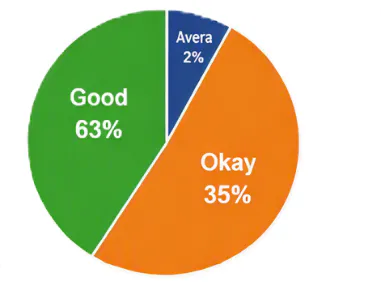
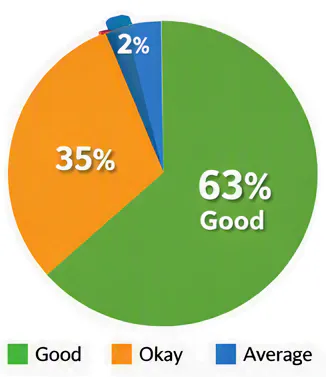
Overall, the survey results indicated a high level of satisfaction with Mee Seva services. 63% of respondents rated services as "Good," 35% as "Okay," and only 2% as "Average." This shows that a significant majority of citizens are pleased with the services provided.
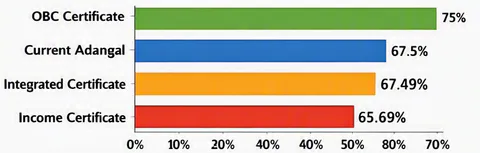
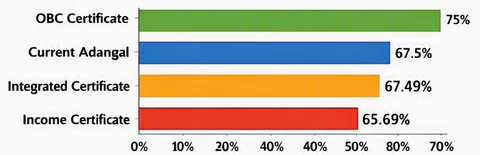
The most highly rated services were the OBC Certificate at 75%, Current Adıangal at 67.5%, Integrated Certificate at 67.49%, and Income Certificate at 65.69%. These services were particularly valued by citizens for their reliability and access.

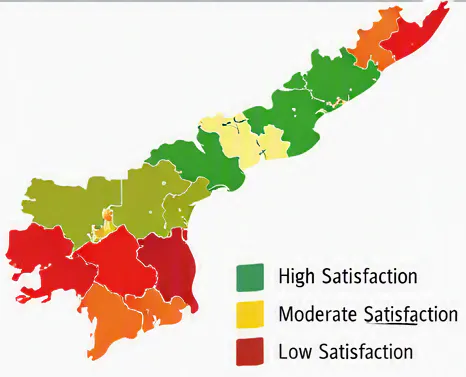
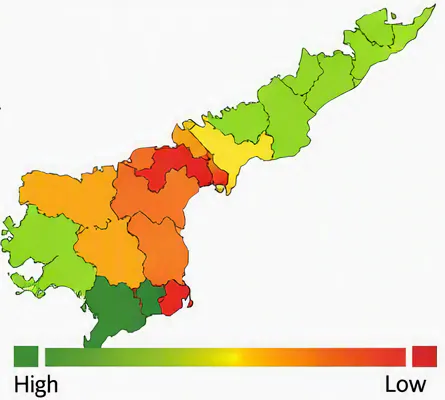
District-level analysis revealed significant variations in satisfaction levels across the state. Visakhapatnam, Nalgonda, and Mahbubnagar reported high satisfaction, while Nellore, Guntur, and Warangal had much lower levels of satisfaction.
The survey conducted to assess the Mee Seva initiative revealed a strong level of overall satisfaction among users. A significant majority, 63% of respondents, rated their experience with Mee Seva services as "Good," indicating a high level of approval for the initiative’s performance. Additionally, 35% of participants described their experience as "Okay," reflecting a generally positive but somewhat reserved satisfaction. Only a small fraction, 2%, rated the services as "Average," showing minimal dissatisfaction among the users.
Service Highlights
The analysis of specific services within Mee Seva identified the top-performing offerings that garnered the highest levels of satisfaction among users. The OBC Certificate emerged as the most highly rated service, with 75% satisfaction. Following closely were the Current Adangal service with 67.5% satisfaction, the Integrated Certificate with 67.49%, and the Income Certificate with 65.69%. These services are particularly valued by citizens for their importance in accessing scholarships, subsidies, and various welfare schemes.
Overall Satisfaction
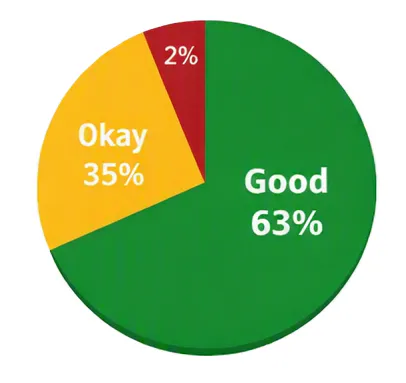
The survey results indicate strong approval of Mee Seva services across the state. A significant 63% of respondents rated the services as "Good," while 35% described them as "Okay," and only 2% rated them as "Average." This demonstrates that nearly two-thirds of the participants have a positive view of the services, with minimal dissatisfaction.
Service Highlights
Among the various services offered by Mee Seva, the most highly rated were the OBC Certificate with 75% satisfaction, the Current Adangal with 67.5%, the Integrated Certificate with 67.49%, and the Income Certificate with 65.69%. These services are particularly important for citizens seeking scholarships, land records, and income verification.
District Trends
Satisfaction levels varied significantly across districts. Visakhapatnam, Nalgonda, and Mahbubnagar reported high satisfaction, while Nellore, Guntur, and Warangal had notably lower satisfaction.
Corruption and Visits
Corruption levels varied across districts. Mahbubnagar and Visakhapatnam reported negligible corruption, while Cuddapah and Adilabad showed higher percentages exceeding 12 percent. Efficiency was also reflected in the number of visits required: in districts such as Mahbubnagar, Nalgonda, and Visakhapatnam, most respondents received services in a single visit. In contrast, districts like Krishna and Hyderabad often required multiple visits, lowering satisfaction.
The analysis underscores three key insights. First, transparency has improved significantly, with most districts reporting negligible extra payments. Second, efficiency correlates strongly with single‑visit service delivery, which boosts satisfaction. Third, regional disparities remain, with districts such as Nellore and Guntur requiring targeted interventions to improve performance. Overall, Mee Seva has strengthened citizen trust in government responsiveness.
7. Findings
The evaluation of the Mee Seva programme reveals a balance of achievements and persistent challenges. While the initiative has enhanced citizen satisfaction and streamlined service delivery, infrastructural, institutional, and awareness‑related issues continue to limit its full potential. The findings are presented under four themes: achievements, challenges, citizen awareness, and monitoring mechanisms.
Achievements
Mee Seva has transformed service delivery in Andhra Pradesh by offering a wide range of services, such as birth and death certificates, income and caste certificates, utility bill payments, and land records, through a single‑window platform. This integration reduced bureaucratic hurdles and rent‑seeking, thereby strengthening transparency and accountability (Mishra, 2019). Administrative data shows rising citizen satisfaction, with millions of transactions processed annually and reduced processing times (Government of Andhra Pradesh, 2019) [4]. These outcomes align with global evidence that ICT adoption enhances efficiency and curbs corruption (World Bank, 2020) [13]. The programme also fostered institutional convergence, integrating front‑end centers with back‑end processes to streamline workflows and coordination (UNDP, 2018).
Challenges
Despite successes, Mee Seva faces infrastructural bottlenecks. Frequent power failures and unreliable connectivity, especially in rural areas, disrupt service delivery and erode trust (Heeks, 2006). Operator‑level errors and limited training further hinder effectiveness, while resistance among officials slows reform adoption. These issues underscore the importance of capacity building and change management (Singh & Sharma, 2021). Inter‑departmental silos also impede integration, limiting the platform’s comprehensiveness (Dwivedi & Bhargava, 2017).
Citizen Awareness
Awareness campaigns have been insufficient, leaving many citizens, particularly in rural areas, unaware of available services. This gap fosters reliance on intermediaries who exploit users by charging for free services (Mishra, 2019). Such practices undermine citizen‑centricity, highlighting the need for sustained awareness initiatives to empower citizens (UNDP, 2018).
Monitoring Mechanisms
Weak monitoring has allowed malpractices such as overcharging and delays to persist. District‑level oversight remains inadequate, reducing accountability (Government of Andhra Pradesh, 2019) [4]. Comparative insights from Estonia’s digital governance stress the importance of real‑time monitoring and feedback systems to ensure transparency (OECD, 2019).
Policy Value
Mee Seva demonstrates the policy value of embedding transparency, accountability, and citizen‑centricity into governance. Its design as a single‑window platform reflects global best practices, while its challenges highlight the contextual constraints of digital governance in developing countries. Sustaining reforms requires investment in ICT infrastructure, continuous operator training, citizen awareness campaigns, and robust monitoring. As Dwivedi & Bhargava (2017) note, such initiatives embody the shift from hierarchical bureaucracies to networked governance, fostering responsiveness and participatory engagement. Mee Seva’s experience thus contributes to broader debates on public administration reform and offers lessons for replication in other states and countries (United Nations, 2020) [11].
8. Conclusion
The evaluation of the Mee Seva programme underscores its significance as a pioneering initiative in citizen‑centric digital governance in India. Launched in Andhra Pradesh, Mee Seva transformed the citizen-state interface by offering a single‑window platform for certificates, records, and utility services. Its achievements in enhancing transparency, reducing bureaucratic hurdles, and improving satisfaction demonstrate the transformative potential of ICTs in public administration.
At the same time, persistent challenges remain (Mishra et al., 2016). Infrastructural bottlenecks such as unreliable connectivity and frequent power failures continue to hinder service delivery, particularly in rural areas (Heeks, 2006). Operator‑level errors and limited training affect service quality, while inter‑departmental silos slow integration. Inadequate citizen awareness campaigns have led to reliance on intermediaries and repeated visits (Mishra, 2019). Weak monitoring mechanisms further undermine accountability, allowing malpractices to persist (Government of Andhra Pradesh, 2019) [4].
The policy value of Mee Seva lies in its replicability and sustainability. By integrating front‑end centers with back‑end departmental processes, the programme exemplifies institutional convergence, a critical determinant of digital governance success (OECD, 2019). Its design reflects global best practices, aligning with initiatives such as Estonia’s e‑Residency and the UK’s GOV.UK platform (United Nations, 2020) [11]. However, sustainability requires continuous investment in infrastructure, operator capacity building, and citizen awareness. Without these measures, reforms risk losing trust and failing to achieve intended outcomes.
Mee Seva also contributes to broader debates on public administration reform. Traditional hierarchical governance models, marked by rigidity, are increasingly challenged by demands for transparency and responsiveness (Dwivedi & Bhargava, 2017). Digital initiatives such as Mee Seva embody this shift toward networked governance, where ICTs enable coordination across departments and foster participatory engagement. By embedding transparency and accountability, Mee Seva illustrates the policy value of digital innovation in transforming governance.
In sum, Mee Seva represents both achievement and challenge. Its successes in streamlining service delivery highlight ICTs’ potential to transform governance, while its limitations underscore the need for sustained investment in infrastructure, training, awareness, and monitoring. Addressing these issues will allow Mee Seva to serve as a replicable model for embedding transparency and responsiveness into governance systems in India and globally. Ultimately, its legacy lies in demonstrating that citizen‑centric digital governance is not merely a technological innovation but a policy imperative for sustainable development.


