Introduction
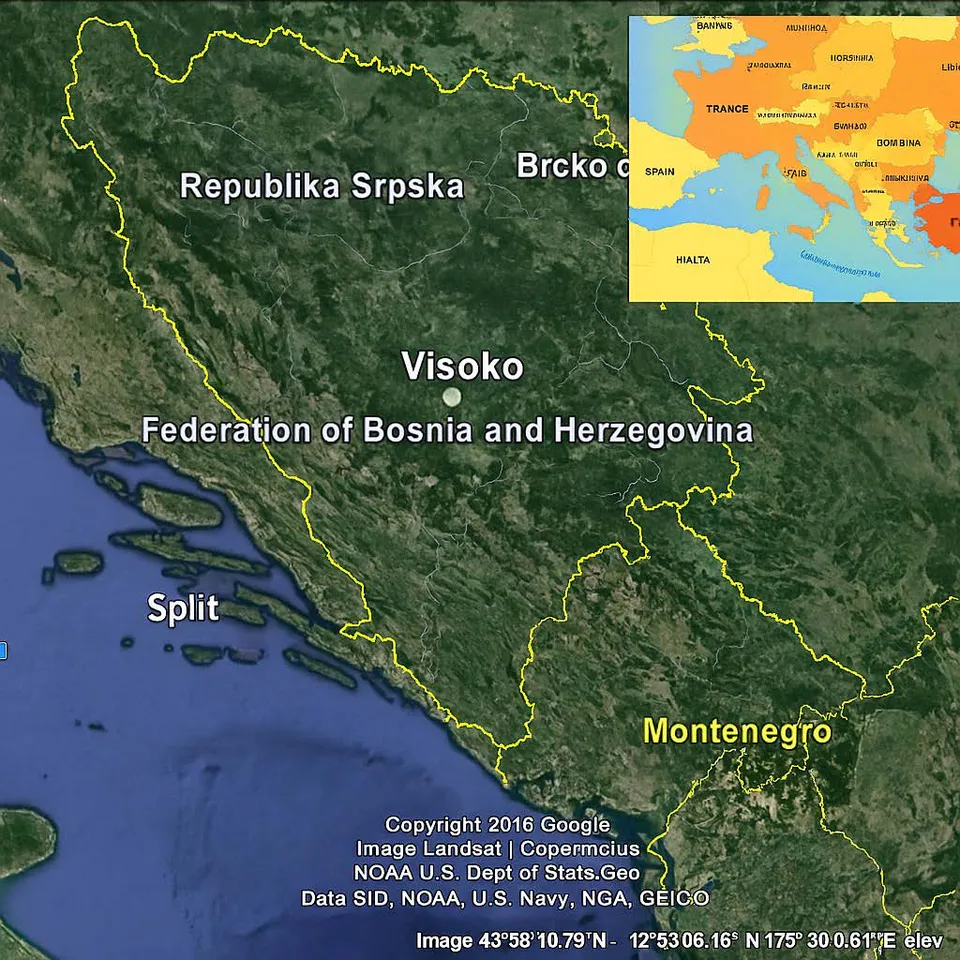
Ravne 3 is one of several interconnected tunnel branches with Ravne, Ravne 2, Ravne 4, Ravne 5 and Ravne 6 - excavated in the Ravne Valley conglomerate near Visoko since exploration began in 2005. It was identified in July 2018 and has been under continuous excavation since, led in the field by archaeologist Amna Agić (2018–2024) with geological support from Richard Hoyle (2018–2021).
This paper covers the metal artifacts only. Ceramics from the same excavations - more than 3,100 sherds are treated in detail elsewhere, as part of a regional synthesis of ceramic evidence from the Visoko region (Osmanagich, 2026c); here they are cited only where they help date or contextualize a metal find. Lithic material from the wider Ravne tunnel system, likewise not part of the Ravne 3 metal or ceramic assemblage discussed here, is treated separately in a regional synthesis of lithic evidence from the Visoko region (Osmanagich, 2026d). The scope of the present paper is Ravne 3 specifically, not the wider Ravne complex, and not a synthesis of metalwork from other tunnels.
One thing is worth saying up front. The metal assemblage is small - a dozen or so objects, most corroded past secure identification. That is normal for damp, unlined underground contexts, and it does not make the finds less useful; it just means conclusions here are cautious.
Site and Archaeological Context
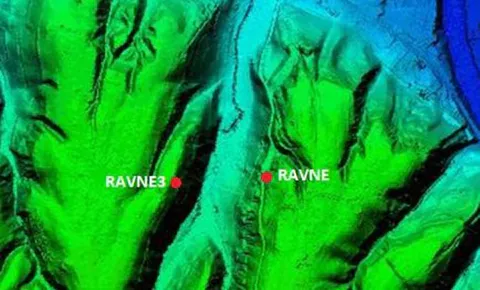
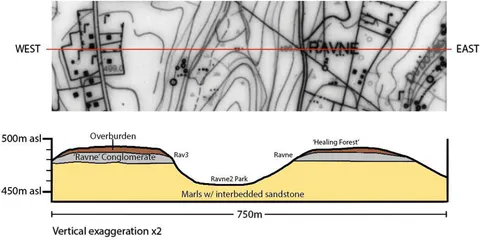
Ravne 3 sits on the opposite slope of the valley from the main Ravne tunnel entrance, about 200 m away, at nearly the same latitude. The tunnel is cut into the Ravne Conglomerate - rounded river cobbles in a sandy-clay matrix - which sits unconformably over older Miocene marls. Geodetic survey (Topcon GTS 105N total station, Trimble 5700 GPS) has confirmed the alignment between Ravne and Ravne 3 but has not found a physical connection between them.
Five dry-stone wall segments (suhozidi) have been documented in Ravne 3, built from unmortared river cobbles, mostly at the ends of side passages and cavities. As in the rest of the Ravne complex, unconsolidated fill inside the tunnel - poorly sorted, easily dislodged by hand is sharply distinguishable from the surrounding lithified conglomerate. The metal artifacts described below come out of this fill, not from primary living surfaces.
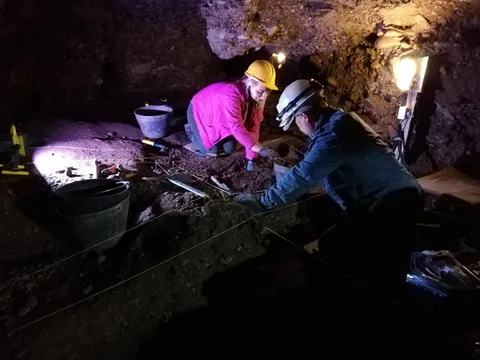
Most finds ceramic and metal alike were recovered from a slightly raised zone of the tunnel floor in Chamber R3-1, excavated as a 1 × 1 m test trench. This elevated area may have functioned as a deposition zone at some point in the tunnel's history, or it may simply be where fill collected; either way, it is where nearly all the diagnostic material comes from, and objects from it should be read as secondary deposits rather than in-situ occupation debris.
The radiocarbon-dated charcoal sample discussed in Section 6 (TÜBİTAK-3259, sample S001) and the metal and ceramic assemblage described below derive from the same depositional unit within Chamber R3-1: both come from the raised, secondary-deposit floor zone that also contains the 1 × 1 m test trench, and the charcoal was recovered at the interface of one of the five dry-stone wall segments documented in that same chamber. This shared context is recorded in the excavation documentation underlying the site's stratigraphic report (Osmanagich, 2025), which describes the trench profile, the dry-stone wall segments, and their fill relationships in Chamber R3-1. Although a centimeter-precision surveyed section has not yet been prepared, the excavation records, trench documentation, stratigraphic profiles, and dry-stone wall mapping consistently place the dated charcoal sample and the metal/ceramic assemblage within the same secondary depositional unit of Chamber R3-1. This qualification is carried through into the discussion in Section 6.
Materials and Methods
All excavation was manual; no mechanical equipment was used. Work followed stratigraphic units rather than fixed spits, with particular attention to the boundary between soft fill and the hard host conglomerate. Contexts were recorded with written descriptions, scaled photography and measured drawings, and finds were bagged and labeled by stratigraphic unit.
Two independent radiocarbon laboratories were used for organic samples from Ravne 3: the Conventional Radiocarbon Dating Laboratory in Kiev, and the TÜBİTAK Marmara Research Center in Turkey. A stalagmite sample from Chamber R3-2 - a separate chamber from the R3-1 deposit that produced the metal assemblage was also submitted for uranium-thorium dating to the Institute of Geological Sciences, Polish Academy of Sciences, with isotopic measurement at the Institute of Geology, Czech Academy of Sciences. This result (c. 5.9 ± 0.3 ka BP) dates the formation of the speleothem itself and, by extension, provides a terminus post quem for the excavation of the void in that part of the tunnel; it has no bearing on the age of the metal or ceramic material recovered from the R3-1 fill and is not used anywhere below as a chronological anchor for the metal assemblage. It is discussed further, on its own terms, in Section 6.
Metal objects were identified typologically by comparison with published Roman and medieval parallels; none has yet had archaeometallurgical analysis (alloy composition, metallography) or X-radiography, both of which are recommended before any final attribution is published.
Results
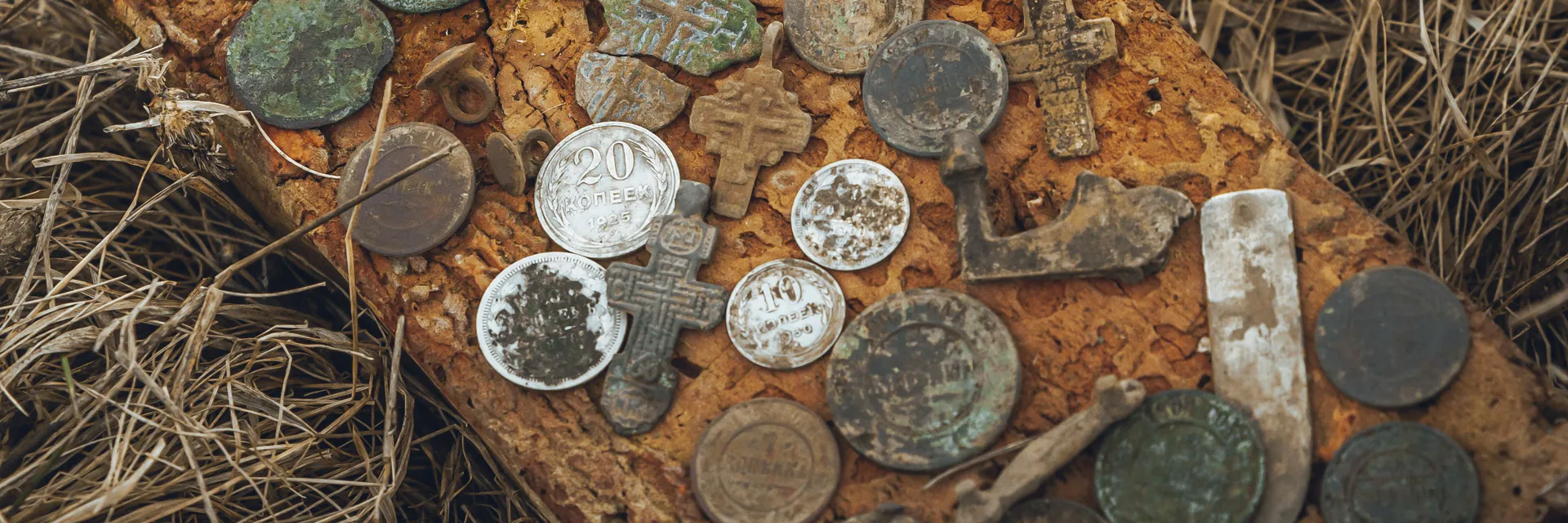
The metal assemblage from Ravne 3 is modest - an iron hooked blade tool, two iron nails, a bronze pendant, and several corroded bronze coins. Preservation is uneven: iron is badly degraded, bronze considerably better. Nothing in the metal assemblage was found in a sealed, single-period deposit; all of it comes from the same mixed, secondary fill as the ceramics.
Iron hooked-blade tool (hedge bill / billhook type)
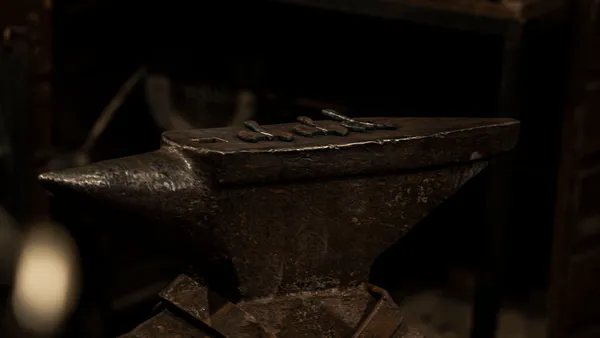
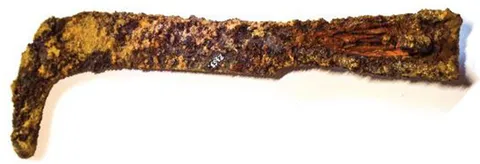
A corroded iron implement, 28.5 cm long, with a hooked, single-edged blade and wooden residue preserved in the handle area, indicating a wood-and-iron composite tool. Morphologically it belongs to the broad class of hooked agricultural implements - hedge bills, billhooks, pruning hooks - related to the Roman falx and its many regional descendants. On typological grounds it is provisionally attributed to the Roman period, following comparison with Busuladžić's (2014) catalogue of Roman-period iron tools and implements from Bosnia and Herzegovina, Manning's (1985) British typology, and Rupnik's (2015) study of Roman-age iron tools from Pannonia (developed fully in Section 5.1). The excavation and initial documentation of the object are reported in Osmanagich, Hoyle, Agić & Delibašić (2023); that excavation report is not itself treated here as the basis for the period attribution, which rests on the published comparanda cited above.
Bronze pendant
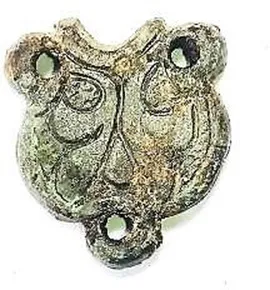
A small bronze pendant, about 1.5 cm in diameter, with a symmetrical, low-relief, abstract motif in a style associated with Celtic ornamental traditions. It has three perforations. Tentatively dated to the Roman period, though the decorative style likely carries older, pre-Roman stylistic influence not unusual in Balkan provincial metalwork, where local ornamental traditions persisted well into the Roman period. Three plausible functions exist: a decorative clothing or harness fitting, or a personal amulet. Given the ambiguity, none of these should be stated as settled without closer comparison to illustrated parallels.
Bronze coins
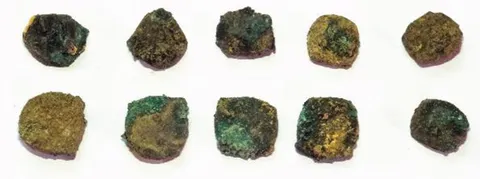
A group of small bronze coins, 1.0–1.5 cm in diameter, heavily corroded - surfaces obscured by verdigris and oxidation. The coins remain indeterminate pending conservation.
Iron nails
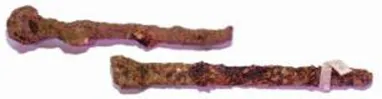
Two hand-forged iron nails, roughly 11–12 cm long. Based on typological comparison with regional medieval ironwork, these are attributed to the medieval period. As with most ferrous material from the site, corrosion has removed fine surface detail.
Preservation and Corrosion
Iron objects from Ravne 3 have fared badly. Most of the ferrous material recovered is too corroded to identify at all, a direct consequence of the moisture and soil chemistry inside the raised floor zone in R3-1. Bronze has survived considerably better, which is why the pendant retains its motif while the iron blade tool's edge profile is largely lost under a corrosion crust. Before any of the objects are cleaned further, X-radiography is recommended, since mechanical cleaning risks destroying surface detail that radiography can recover non-destructively.
Comparative Discussion
Two objects carry enough diagnostic detail to be worth placing in a wider comparative frame: the hooked iron blade tool, and the bronze pendant. Both get real space here, because both can support more than a paragraph of typology. A brief note on the Neolithic/Eneolithic ceramic fraction closes the section.
A note on the comparative plates below: Figs. 7, 9 and 10 are original schematic silhouettes, drawn to illustrate general typological form and its change over time - they are not tracings or photographs of specific catalogued museum objects. Fig. 8 is different: it reproduces two genuine 20th-century trade catalogue plates (Isaac Nash & Sons, 1939; Brades Nash Tyzack) and documents real, named commercial tool patterns rather than illustrative reconstruction.
The Hooked Blade Tool: from Neolithic Harvesting Knife to Medieval Billhook
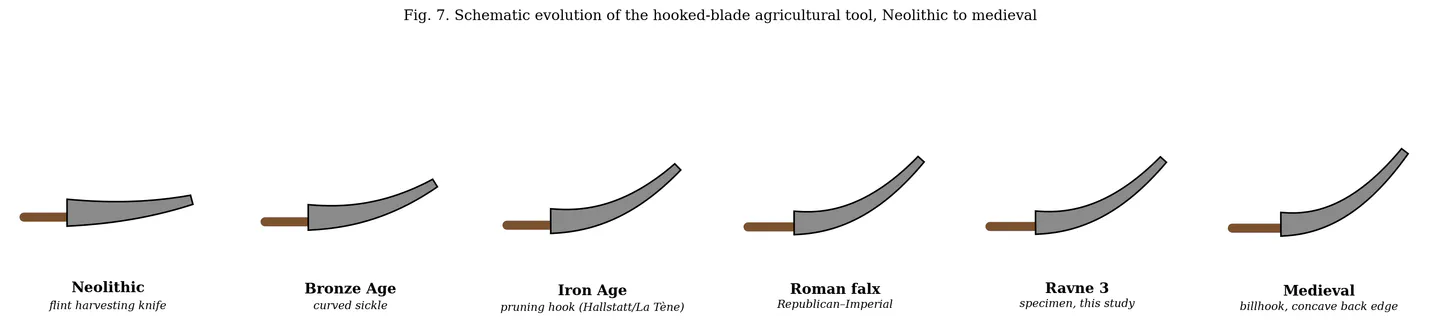
Considered independently of its Roman attribution, the tool is a curved, single-edged blade hafted to a wooden handle - a form with one of the longest continuous histories of any tool type in the archaeological record.
The archaeological record indicates that this basic morphology predates the introduction of iron implements. Flint-bladed harvesting knives - a straight or gently curved cutting edge hafted into wood or bone - appear across the Neolithic eastern Mediterranean and Egypt, used for cutting reeds, cereals and vine growth before iron was worked. The curve is functional, not stylistic: a hooked edge lets the user draw the blade through stems in one motion rather than sawing.
Bronze Age sickles sharpen the same logic in metal. Cast bronze sickles with a pronounced inward curve are known from the Aegean, Italy, Greece and Cyprus, and by roughly 1000 BC bronze examples with a hooked, billhook-like profile occur in Egypt. The hafting changes - socketed or riveted rather than simply bound - but the working geometry, a curved edge on the concave side of the tool, stays constant. A recent study of Bronze Age and Early Iron Age flint and metal sickle forms from northern Bulgaria documents the same regional pattern within the Balkans specifically, including the emergence of large curved blades (c. 15 cm) in the Late Bronze Age that persisted into the Early Iron Age. Craft-trade literature on the billhook places its origin in the same period and region - bronze examples cast in Ancient Egypt roughly 3,000 years ago, with pre-Roman examples also documented in England - which, while not a peer-reviewed source, corroborates the academic sequence given here in general outline.
The Iron Age is where the specifically hooked billhook form, as opposed to the open sickle, becomes well documented. In Britain, the British Museum holds Iron Age pruning hooks from the hillfort of Hod Hill in Dorset, and Romano-British examples (Manning's Type 2) are explicitly catalogued as deriving from Late Iron Age prototypes, with direct parallels from Bigbury (Kent) and Camulodunum (Colchester). On the Continent, the same tool class is documented under local names that survived into modern usage - Hippe or Sechsle in Germany, Gertel in Switzerland a persistence of both the tool and its name across the Hallstatt and La Tène periods and into the historic record. In Italy, the same period (Early Iron Age Etruria) has produced what a recent synthesis of Roman and pre-Roman viticulture describes as "prototypical billhook forms," alongside comparable Iron Age vine-tools from Grotta del Malconsiglio near Sybaris and from Benevento - direct evidence that the Roman falx did not appear from nowhere but formalized an already-established Italian tool tradition.
Roman writers give the clearest functional picture, because unlike prehistoric examples, Roman tools come with a vocabulary attached. Cato and Columella distinguish several purpose-built variants: falx vinitoria for vine-pruning, falx arboraria or silvatica for woodland cutting, falx messoria for reaping, and the smaller falcula for picking grape bunches. The larger falx vinitoria itself was a multipurpose blade a paring edge for pruning, a pointed projection for gouging bark, and sometimes a small axe blade on the back and surviving iron examples come from Pompeii, from Roman Britain (the London and Lakenheath finds catalogued by Manning), and from provincial military and civilian contexts across Pannonia, Dalmatia and Gaul. Republican-period tools tend toward simpler, single-function blades; by the Imperial period, regional workshops were producing the more elaborate composite forms Cato and Columella describe, though the basic curved-blade geometry never changed.
Two regional studies bring this closer to Ravne 3 specifically. Busuladžić's (2014) catalogue of Roman-period iron tools and implements from Bosnia and Herzegovina, held by the National Museum in Sarajevo, remains the standard reference for exactly this class of material within the country, and is the primary basis for the period attribution proposed above (Section 4.1). Rupnik's (2015) study of Roman-age iron tools from Pannonia - the Roman province immediately north of the Bosnian Balkans, across the Sava - documents a broadly similar toolkit dominated by sickles and woodworking implements, situated within a provincial economy geared toward grain cultivation and deforestation. Together, these two studies place the Ravne 3 tool within an actual regional research tradition, not only a western European one.
The form did not stop at the fall of the Western Empire. Iron tools are rare from the early medieval period - recyclable metal rarely survives - but the tool's continued use is documented indirectly through illuminated manuscripts. From the 10th to the 16th century, Books of Hours and similar texts repeatedly illustrate vine-pruning scenes in February or March, and the tool shown is functionally identical to the Roman falx vinitoria: a wooden handle, a curved, single-edged blade, sometimes with a straight secondary edge on the back. One of the earliest printed illustrations, in Leonard Mascall's 1572 gardening manual, shows several dedicated pruning and grafting hooks that would not look out of place next to a Roman example.
The continuity runs further than the medieval period, in fact - right into living commercial memory. British edge-tool manufacturers were still producing dozens of named regional billhook patterns well into the 20th century, each tied to a specific county or trade and each recognizably the same basic tool: a curved, hooked, single-edged blade on a wooden handle. Isaac Nash & Sons' 1939 catalogue alone lists over twenty regional patterns - Hampshire, Dorset, Bath, Tetbury, Swindon, Salisbury, Shropshire, West of England, among others - differing mainly in the degree of curve and the shape of the back edge, not in the underlying design. A contemporary Brades Nash Tyzack catalogue shows the same picture: named patterns (Tenterden, Oxford, Pontypool, Aberayron) sold as functionally interchangeable variants of one tool. That degree of regional naming diversity around one stable functional form is exactly the pattern already seen in the Roman provincial material above, and it did not stop being true after Rome - it is still true in a 20th-century hardware catalogue.
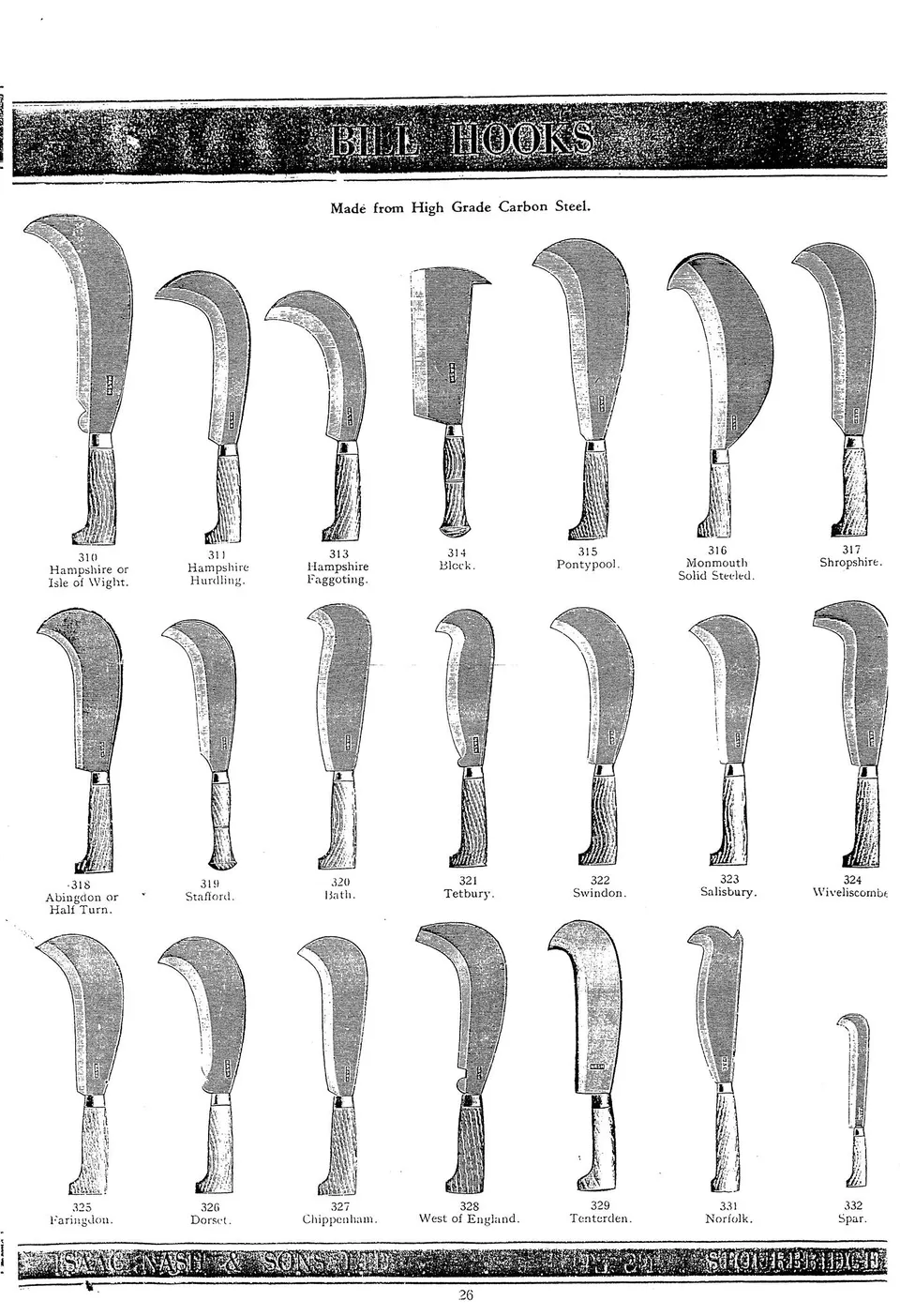
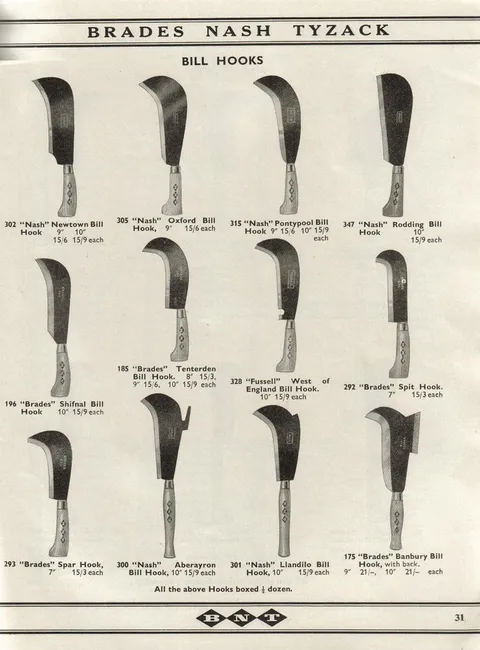
Placed against this sequence, the Ravne 3 tool sits comfortably within the Roman-period end of a very long typological continuum:
Table 1. Comparative sequence of hooked-blade agricultural tools
| Period | Comparative Examples |
|---|---|
| Neolithic | Flint-bladed harvesting knives, eastern Mediterranean and Egypt |
| Bronze Age | Cast bronze sickles, Aegean/Italy/Greece/Cyprus; hooked bronze examples, Egypt, c. 1000 BC |
| Hallstatt / early Iron Age | Early Iron Age Etruria ("prototypical billhook forms"); Grotta del Malconsiglio, Benevento |
| La Tène / Late Iron Age | Hod Hill (Dorset), Bigbury (Kent), Camulodunum (Colchester); Continental Hippe/Sechsle/Gertel tradition |
| Republican Roman | Simpler single-function blades, Italy - direct continuation of Iron Age Etrurian forms |
| Imperial Roman | Pompeii; London, Lakenheath (Manning 1985 typology); Pannonia, Dalmatia, Gaul |
| Ravne 3 | 28.5 cm hooked iron blade, wooden handle residue - provisionally attributed to the Roman period on typological grounds, pending direct dating of the handle residue |
| Medieval | Illuminated-manuscript vine-pruning scenes, 10th–16th c.; Mascall (1572) printed tool illustrations |
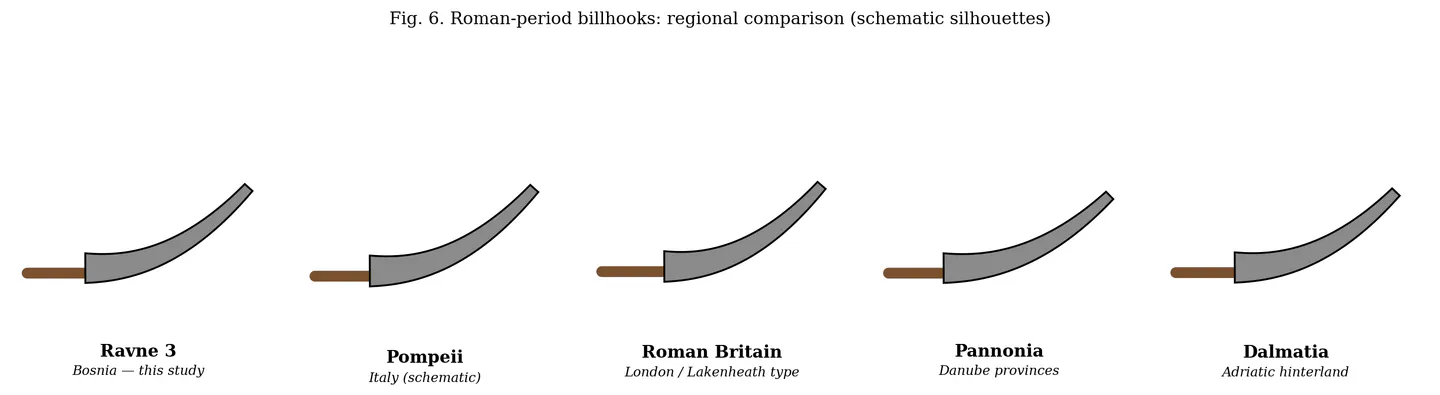
Two things follow from laying the sequence out this fully. First, the tool type is a genuinely weak chronological marker on its own it changed remarkably little across two or three thousand years, so shape alone cannot distinguish an Iron Age example from a fifteenth-century one. Second, and more usefully: the near-identical morphology across every period and every region in the table above is itself the finding. It shows a functional design that got fixed early and stayed fixed, because curved, hooked pruning blades solve the same physical problem the same way regardless of who is holding one. The Ravne 3 tool's Roman attribution rests on typological comparison with the Manning catalogue and regional Bosnian parallels; it would be worth confirming further through direct dating of the surviving wooden handle residue, which organic material like this usually allows. Pending that confirmation, the Roman attribution should be read as the most probable interpretation on present typological evidence, not as a settled determination.
The Bronze Pendant: function and Attribution
The bronze pendant raises several questions concerning manufacture, function, and cultural attribution, best addressed separately: is the object Celtic in manufacture, Romano-Celtic in the sense of a provincial hybrid, a piece of military equipment, or none of those - a purely civilian ornament with a decorative scheme that happens to look Celtic? Conflating these questions is exactly how a cautious identification turns into an overconfident one.
On manufacture: nothing about the object argues for pre-Roman Celtic manufacture specifically. What can be said is that its abstract, low-relief, symmetrical motif belongs to a decorative vocabulary - curvilinear, scroll-based ornament - that originates in La Tène Celtic art and persisted as a recognizable style long after any independent Celtic political presence in the region had ended. That persistence is well documented: Roman-provincial horse-harness equipment is, in a direct sense, descended from earlier Celtic horse and chariot decoration, carried forward into the Roman period but reworked in Roman style. So "Celtic-looking" and "Roman-made" are not competing explanations here - they are close to being the same explanation, which is precisely why the pendant is hard to date tightly on style alone.
On function, the most useful published framework is Bishop's (1988) typology of Roman horse-harness pendants, later supplemented by Nicolay (2007), which shows that such pendants were suspended either from a loop or a hook, and that a genuinely wide range of forms was in circulation - the type is common enough as a class but, as the Finds Recording Guides note, surprisingly rarely recovered by fieldwork, which makes any well-preserved example worth documenting carefully rather than assigning to the first plausible category. The chronological development of Roman harness pendants is reasonably well established: Julio-Claudian and early Flavian equipment (1st century AD) derives fairly directly from Celtic prototypes, with large phalerae serving as strap junctions and silvered leaf or bird-shaped pendants hanging from them. From the Antonine into the Severan period (mid-2nd–early 3rd century AD), openwork Celtic "trumpet" motifs (Trompetenmuster) become common on harness straps and mounts, and smaller leaf and heart-shaped pendants - sometimes openwork, sometimes bearing a portrait medallion - become especially frequent in the 3rd century AD.
Against that framework, three readings of the Ravne 3 pendant remain live.
A directly regional parallel is worth noting here. A fragmentary bronze harness pendant with an ajouré (openwork) frame, recovered at Gardun near Trilj the site of the Roman legionary fortress of Tilurium in Dalmatia, now held by the Cetina Regional Museum in Sinj - belongs to the same general class of riding-harness pendant discussed above, and its excavators note that comparable examples are known from Hispania, southern Gaul, northern Italy, Pannonia and Dalmatia, but remain rare finds anywhere in the Empire (Ashley, 2024). That rarity cuts both ways: it means a well-preserved Balkan example like the Ravne 3 pendant is worth publishing carefully, but it also means the regional comparative sample is thin enough that any functional attribution should stay provisional.
Horse-harness fitting - consistent with the size, the perforation pattern, and the general decorative class; the commonest published category for objects of this general form, though rarely recovered archaeologically relative to how common they evidently were in use.
Belt or clothing fitting - small perforated bronze mounts of comparable size and decorative treatment are also documented as belt or strap furniture in both Celtic and Roman-provincial contexts, and the boundary between "belt fitting" and "small harness pendant" is not always sharp in the published material - several of the sources above note this ambiguity explicitly rather than resolving it.
Personal ornament / amulet - the least archaeologically supported of the three readings, but not excludable; small perforated bronze pendants with apotropaic or purely decorative motifs are known from domestic contexts throughout the Roman provinces, worn rather than mounted on equipment.
Specifically military reading a fitting from a soldier's own equipment rather than horse tack or civilian dress is not well supported here. Military-associated harness phalerae in the literature tend to be larger, more standardized in form, and more often found in fort or frontier contexts; nothing about the Ravne 3 find context (a mixed secondary tunnel fill, not a military site) pushes toward that reading, and it should not be adopted by default just because Roman military equipment is a well-published comparative category.
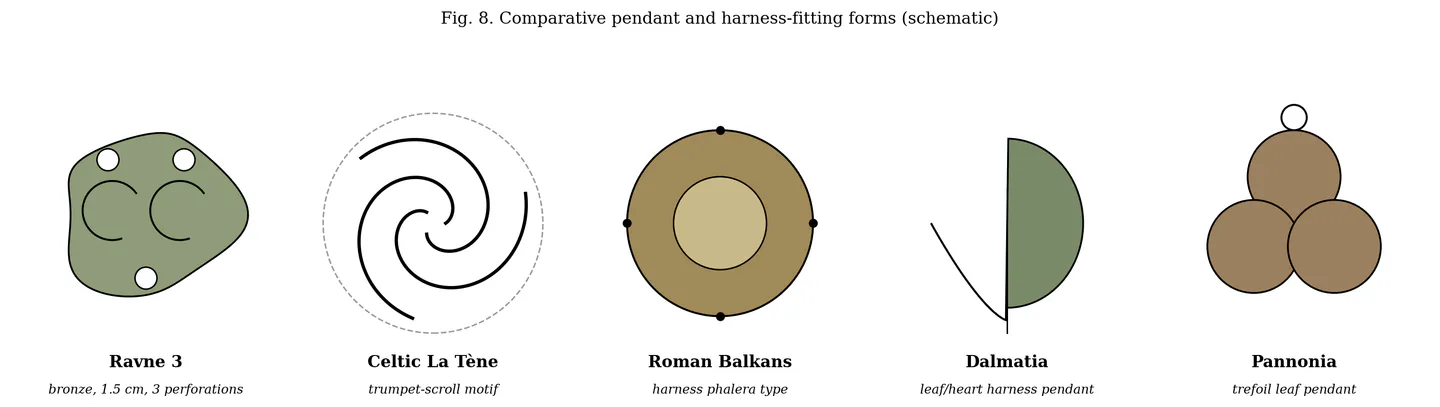
None of this settles the question. What it does is replace a vague "could be several things" with a ranked, sourced set of live possibilities: harness fitting most likely on typological grounds, belt/clothing fitting a close second, personal ornament possible but least supported, and a military fitting unlikely given context. Pending conservation and direct comparison against illustrated Bishop/Nicolay type-plates, the most probable interpretation is a horse-harness or belt/clothing fitting; a firmer determination awaits closer examination of the suspension method once the object can be safely handled.
A Note on the Neolithic/Eneolithic Fraction
About 5% of the Ravne 3 ceramic assemblage has been provisionally flagged as Neolithic or Eneolithic, pending full typological review. That component falls well outside this paper's scope - a gap of four to five thousand years separates it from the Roman and medieval metal objects discussed above, and it has no technological connection to them. It is mentioned here only so the ceramic percentages elsewhere in this paper make sense; if that attribution is confirmed, the right comparative context is regional Neolithic material (the Butmir culture of the nearby Visoko basin, and its Starčevo/Kakanj antecedents), and that comparison belongs in a dedicated ceramics paper, not here - see Osmanagich (2026c) for a regional synthesis of ceramic evidence from the Visoko region, including material from Ravne 3.
Archaeological Implications
Three points follow from the metal assemblage, read together with the ceramic and radiocarbon evidence from the same tunnel.
First: The mix of object types - Roman-period ornament and possibly a Roman tool, alongside medieval nails - matches the ceramic pattern from the same context (roughly 12% Roman, 83% medieval, 5% earlier) and points the same direction: more than one period of activity, not one.
Second: The radiocarbon date on charcoal at a dry-stone wall interface in Ravne 3 - TÜBİTAK-3259, sample S001, 1677 ± 23 BP, calibrating to 261–423 CE at 95.4% probability (85.8% of that within 340–423 CE) - gives one Late Roman activity phase an actual number, rather than resting on typology alone. That date does not itself date the pendant or the hooked blade tool - it dates a burn event at a wall - but it confirms that Roman-period human presence in the tunnel is not merely inferred from artifact style. Although the charcoal date may in principle be affected by the "old wood" effect or by redeposition of already-charred material, it nevertheless provides independent evidence that burning activity occurred during the Late Roman period. The date should therefore be interpreted as documenting one phase of human activity in the tunnel, rather than as fixing the manufacture or deposition age of the associated metal artifacts.
Third, and worth repeating: None of this dates the tunnel's original construction. A Roman object recovered from tunnel fill tells you Romans were in that space at some point - not when the space was first cut. That distinction matters more here than usual, because Ravne 3's U-Th speleothem date (c. 5.9 ± 0.3 ka BP, from a different chamber, R3-2) dates the geology of that void, not the fill or the artifacts in R3-1, and implies only that the wider tunnel system may in places be far older than any of the datable metal or ceramic material recovered from the R3-1 fill. The metal objects document use, not origin, and the U-Th result is not used here as a chronological frame for them.
Conclusions and Future Work
The Ravne 3 metal assemblage is small but not uninformative. This paper has treated it primarily as a typological and comparative problem: a hooked iron blade tool, a bronze pendant with a Celtic motif, corroded bronze coins, and two iron nails, considered against published Roman and medieval parallels. Read together with the ceramic evidence and the one available radiocarbon date, the assemblage is consistent with a pattern of episodic use of the tunnel - Roman, then medieval - but the chronological claims made here are deliberately limited to what typology, the single radiocarbon date, and stratigraphic association can support.
Several things should happen before any of this goes further. First, the coins need conservation before anything beyond "bronze, corroded, indeterminate" can be said about them. Second, the billhook's handle residue and the pendant's suspension method both warrant direct examination once conservation allows. Third, future work may include a centimeter-precision surveyed stratigraphic section tying the dated dry-stone wall interface to the R3-1 test trench. Such documentation would further refine the existing excavation record but is not required for the stratigraphic interpretation presented here. Fourth, if the roughly 5% Neolithic/Eneolithic ceramic fraction from the same tunnel is confirmed by a specialist, that is a genuinely separate research thread - worth pursuing through comparison with Butmir/Kakanj material from Okolište and the wider Visoko basin, not folded into a paper about Roman and medieval metalwork.
Field excavation and artifact documentation at Ravne 3 (2018–2024) was led by archaeologist Amna Agić, with geological support from Richard Hoyle (2018–2021) and geodetic survey by Eng. Tarik Harbaš and Eng. Tarik Sokolović. Radiocarbon analysis was conducted by the Conventional Radiocarbon Dating Laboratory, Kiev, and by the TÜBİTAK Marmara Research Center, Gebze, Turkey. Uranium-thorium dating of speleothem material was conducted by the Institute of Geological Sciences, Polish Academy of Sciences, with isotopic measurement at the Institute of Geology, Czech Academy of Sciences.