Method for Assessing the Instability of Technological Parameters of Nuclear Power Plant Unit Electrical Equipment Using Information and Control Systems
## I. INTRODUCTION
Nuclear energy is one of the key areas for ensuring global energy security, as it allows the production of large amounts of electricity with minimal carbon dioxide emissions into the atmosphere. However, the safety and efficiency of nuclear power plant (NPP) operations remain significant challenges for modern science and engineering.
In the context of the global increase in energy demand and the need to transition to environmentally friendly energy sources, optimizing the operation of NPP units, enhancing their reliability, preventing emergency situations, and improving methods for predicting potential deviations in their operation are critical issues. To address these challenges, it is essential to apply modern mathematical methods for analyzing complex dynamic systems, such as fractal methods. These methods enable the study of multifactorial processes in NPP units, the identification of hidden patterns in system state changes, and the prediction of potential disturbances in their operation.
The use of such approaches is necessary for the development of information and control systems of software-technical complexes (STC) within the automated control systems of technological processes (ACS TP) of NPP units, which are crucial elements for ensuring the safe operation of nuclear power plants.
Research in this field has significant practical implications. First, it contributes to improving methods for monitoring and diagnosing NPP unit conditions, enabling the timely detection of potential threats and preventing emergency situations. Second, the obtained scientific data can be used to create intelligent control systems that enhance automation levels at NPPs and reduce the influence of the human factor on the operation of critical systems. Furthermore, fractal analysis methods can be integrated into modern machine learning and artificial intelligence algorithms, increasing the accuracy of energy system state predictions.
Thus, research dedicated to applying fractal methods for analyzing and forecasting changes in NPP unit states is highly relevant, as it enhances the efficiency and safety of nuclear energy under current conditions.
## II. ANALYSIS OF LITERATURE DATA AND PROBLEM STATEMENT
Monitoring the condition of technological equipment at nuclear power plants is one of the key research areas in technical diagnostics, failure prediction, and improving operational efficiency. Modern studies focus on analyzing time series of technological parameters, developing mathematical models to assess technical condition, and integrating these models into automated monitoring systems.
Common methods for analyzing equipment condition include spectral analysis, statistical models, and correlation analysis. For instance, [1] discusses the use of Fourier and wavelet transforms to assess changes in technological parameter behavior. However, despite their effectiveness, these methods have limitations, such as low accuracy in chaotic processes and reliance on prior knowledge of signal spectral distribution.
Regression and correlation analyses [2] are applied to establish relationships between equipment parameters but fail to account for nonlinear dynamic effects that might precede failures. Traditional statistical methods [3] often overlook subtle changes in parameter behavior, which could be early signs of equipment degradation.
Machine learning methods, including neural networks [4], are attracting significant attention for their high diagnostic accuracy, adaptability to new data, and ability to analyze complex nonlinear processes. However, as noted in [5], their application requires large amounts of training data and computational resources, complicating integration into industrial systems.
Fractal analysis is increasingly recognized as an effective method for assessing technological process dynamics. Studies [6-8] justify the use of fractal dimensions as indicators of equipment performance changes, allowing for instability detection before critical states occur. Research [9] demonstrates the use of fractal analysis to evaluate temperature fluctuations and mechanical vibrations in turbomachinery, highlighting its efficiency in detecting hidden signs of equipment degradation.
Attention is also given to detrended fluctuation analysis, considered a promising tool for predicting the technical condition of complex systems operating in unstable modes [10, 11]. However, researchers [12, 13] note challenges in automating this approach and adapting it to real-time applications. Research [14] focuses on developing algorithms for automatic processing of fractal characteristics, crucial for integrating these methods into information and control systems. Combining fractal analysis with machine learning methods [15] is a promising direction, significantly enhancing failure prediction accuracy. However, standardized approaches for interpreting fractal characteristics within automated process control systems are needed.
A review of scientific literature highlights that, despite the potential of fractal methods in diagnosing equipment condition, several open issues remain. These include improving real-time processing algorithms, adapting them to changing operational conditions, and ensuring effective integration into NPP information and control systems.
The approach proposed in this work aims to address these challenges by developing new analysis algorithms and adapting them to real-world equipment operating conditions.
## III. PURPOSE AND OBJECTIVES OF THE STUDY
The purpose of the research is to develop and improve methods for analyzing the fractal characteristics of time series data on technological parameters to assess the condition of the electrical equipment in NPP units. This will enhance the efficiency of automated monitoring systems, enable early detection of faults in the operation of electrical equipment, and reduce the risks of emergency situations.
The study focuses on identifying patterns in changes to the fractal characteristics of technological parameters that reflect equipment degradation processes. The proposed methods aim to expand understanding of the interrelationship between fractal dimension, fractal time, and the fractal dimension of time with the dynamics of technological systems.
The practical significance of the work lies in integrating the developed methods into the information and control systems of the STC of the ACS TP of NPP units. This will contribute to improving monitoring, failure prediction, optimizing maintenance schedules, and reducing operational costs.
To achieve this purpose, the following objectives must be addressed:
- Develop a method for fractal analysis of time series within the monitoring system for the condition of NPP unit technological equipment;
- Design an algorithm for processing fractal characteristics using the information and control systems of the STC of the ACS TP of NPP units;
- Enhance the model for assessing the instability of technological parameters of electrical equipment within the information and control systems of the STC of the ACS TP of NPP units.
# IV. RESULTS OF RESEARCH ON THE FRACTAL CHARACTERISTICS OF THE CONDITION OF NPP
The condition of NPP unit can be described through various categories reflecting its operational modes and changes in system parameters. The nominal (normal) mode represents the most stable and efficient state, where all indicators are within standard values, ensuring optimal electricity production with minimal fuel consumption and equipment wear. Any deviation from this mode may signal the onset of transitional processes, which include startups, shutdowns, and power changes. These processes are accompanied by significant thermal and mechanical loads, potentially affecting the durability of key system elements. Therefore, analyzing these processes is vital for identifying potential issues related to thermal shocks and uneven load distribution in reactor and turbine structures.
If the normal operational mode is disrupted, the unit may transition into an emergency mode, which can result from equipment failures, human factors, or external influences. This state poses a threat to the safe operation of the NPP, making it essential to understand the fractal structure of emergency processes. Such an understanding can help develop strategies to mitigate risks and enhance system reliability. Another operational mode involves maintenance, during which the unit is shut down for scheduled or unscheduled repair work. Fractal analysis allows for more effective planning of preventive measures, reducing the risk of unplanned shutdowns and extending the lifespan of equipment.
The fractal structure of emergency processes within an NPP unit reflects the complex, multi-level organization of changes occurring during the development of emergency situations. These processes are neither linear nor uniform - they follow specific patterns that can be described using the concept of fractal analysis. One of the key features of emergency processes is their irregularity in time and space, which complicates their prediction and control. Their dynamics exhibit self-similar properties: similar patterns are observed at the level of individual system components and across the entire unit. This indicates that even minor disruptions in the operation of specific elements can lead to large-scale failures of the entire unit through a cascading effect.
Fractal dimension is used to assess the complexity of the dynamics of emergency processes. High values of this parameter indicate a complex failure development structure, which cannot be described by simple deterministic models. For instance, an emergency may start with microscopic material defects that gradually accumulate under local thermal and mechanical loads, forming cracks that eventually result in the sudden failure of critical components. Another important indicator is the informational fractal dimension, employed to analyze data streams from sensors and monitoring systems. Prior to an emergency, these streams often show local informational irregularities - sharp fluctuations, irregular spikes in parameters, or even chaotic changes. If these changes have a fractal nature, they can be detected and identified at early stages of failure development. Additionally, fractal time aids in assessing the pace of emergency progression. In some cases, parameter changes occur gradually, and fractal analysis helps uncover hidden processes signaling growing threats. In other cases, the system transitions abruptly into an unstable state, accompanied by a sudden increase in the fractal dimension of time series. Such a spike may indicate a shift to a critical state, where the emergency unfolds rapidly and requires immediate intervention.
Another significant tool is the fractal dimension of time, which assesses the irregularity of parameter changes and reveals hidden patterns in the development of emergency processes. For example, by analyzing time series of temperature changes in the reactor or pressure in the cooling circuit, deviations from the normal mode can be detected before they exceed critical thresholds. The application of fractal analysis for evaluating emergency processes significantly enhances predictive safety systems, reduces response times to deviations, and helps minimize the risk of severe accidents. This allows not only effective responses to ongoing emergency processes but also prevention of their development at early stages, which is a crucial aspect of improving the safety of nuclear power plants.
a) A. Fractal Analysis of Time Series in the Monitoring System of Technological Equipment in NPP Units
Monitoring the condition of NPP equipment is a critically important task for ensuring reliability and operational safety. Changes in technological parameters such as temperature, pressure, and mechanical loads often exhibit complex, nonlinear behavior. To analyze these effectively, methods of fractal geometry are well-suited, as they allow the assessment of signal complexity, temporal irregularities, and instabilities.
Real-time fractal analysis can facilitate early detection of deviations through the determination of fractal dimension $D_{f}$, fractal time $t_f$, and fractal time dimension $\tau_f$. Utilizing these characteristics enhances the efficiency of monitoring systems and improves the prediction of emergency situations.
The analysis of time series of technological parameters in NPP units can be conducted using detrended fluctuation analysis, a method that evaluates fractal properties of a signal and its instability. For this purpose, a generalized formula (1) is applied, considering fractal dimension $D_{\mathrm{f}}$, fractal time $t_{\mathrm{f}}$, and fractal time dimension $\tau_{\mathrm{f}}$:
$$
F(s) = \sqrt{\frac{1}{N} \sum_{i=1}^{N} (x_i - X_T(i))^2} \cdot D_f^{\tau_f} \cdot t_f^{\tau_f}
$$
where $F(s)$ is the average fluctuation deviation from the local trend at scale $s$; $N$ represents the number of points in the time series; $x_i$ is the value of the parameter at the $i$ -th step; and $X_T(i)$ is the smoothed value of the parameter obtained through approximation (e.g., using polynomial regression).
Fluctuation deviation $F(s)$ is defined relative to the local trend $X_{T}(i)$, which is obtained by fitting data within a time window. This approach avoids relying on the global average parameter value, which may overlook local signal features.
Time series analysis using this model allows the identification of critical changes in equipment condition, enabling timely responses to potential issues and enhancing system reliability. If the fractal dimension $D_f$ has high values ( $D_f > 2$ ), it indicates a high level of chaos in the signal, which may suggest instability in the technological process. A decrease in $D_f$ to values close to 1 signifies regularity and predictability in the process. High values of fractal time $t_f$ reflect slow degradation processes in equipment. A sharp decline in $t_f$ may indicate a rapid transition into a critical state.
An increase in the fractal time dimension $\tau_{f}$ suggests irregularity in the time series, potentially indicating the development of an emergency situation. Stability of $D_{f}$ within certain limits implies controlled dynamics in parameter changes.
The proposed approach enables efficient real-time analysis of time series for technological parameters, leveraging fractal characteristics. Using fractal dimension, fractal time, and fractal time dimension in a formalized model allows for a more accurate assessment of equipment instability and enhances failure prediction. Integrating these methods into the information and control systems of the STC within the ACS TP of NPP units can significantly improve automated anomaly detection and enhance the operational safety of power units.
### b) Method for Processing Fractal Characteristics Using Information and Control Systems of STC ACS TP in NPP Units
Integration of fractal analysis into equipment condition monitoring systems requires efficient algorithms for time series processing. The main methods for determining fractal parameters include:
- The Box-Counting Method for evaluating fractal dimension $D_{f}$;
- The detrended fluctuation analysis method is used to determine fractal time $t_{\mathrm{f}}$;
- The wavelet transform method for analyzing irregularities in time series and calculating the fractal time dimension $\tau_{f}$.
For each of the mentioned methods, numerical algorithms have been developed to enable automated signal processing in real-time. The formalization of the monitoring process involves the sequential execution of several key stages. First, data collection and preliminary processing are carried out, including signal filtering to remove noise and parameter normalization to unify measurement scales. Next, the calculation of fractal characteristics is performed, including determining local fractal dimension, evaluating changes in fractal time at different time scales, and calculating the fractal time dimension to assess irregularities in parameter changes. Local fractal dimension is an indicator that characterizes the complexity and fractality of a signal or object in a specific local area. Unlike informational fractal dimension, which evaluates fractality across the entire object or signal, local fractal dimension allows for the analysis of fractal structure at different scales and in various parts of the object.
The next stage involves comparing the obtained characteristics with reference models, which includes using a database of benchmark values for normal and emergency states, as well as applying machine learning methods to classify the current condition of the equipment. The final stage is forecasting possible failures by analyzing trends in changes to fractal parameters and identifying critical instability points.
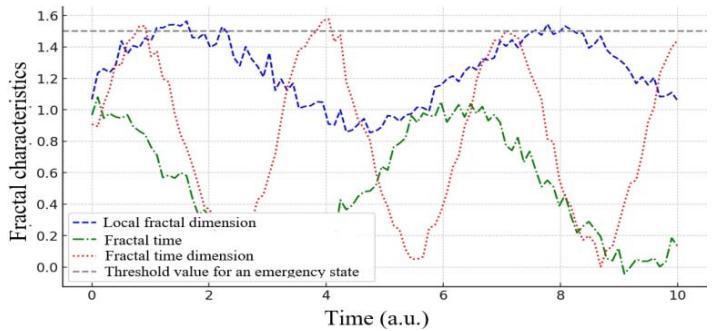
Fig. 1: Monitoring of Changes in Fractal Characteristics in the Information and Control System of the ACS TP of NPP Units
Table 1: Numerical Values of Fractal Characteristics
<table><tr><td>Time (a.u.)</td><td>Fractal dimension</td><td>Fractal time</td><td>Fractal dimension of time</td></tr><tr><td>0.0</td><td>3</td><td>0.5</td><td>0.8</td></tr><tr><td>2.5</td><td>2.85</td><td>0.6</td><td>1</td></tr><tr><td>5.0</td><td>2.7</td><td>0.75</td><td>1.3</td></tr><tr><td>7.5</td><td>2.55</td><td>0.9</td><td>1.6</td></tr><tr><td>10.0</td><td>2.4</td><td>1.1</td><td>1.8</td></tr></table>
The fractal dimension $D_{f}$ is approximately $\approx 3.0$ under normal conditions but decreases when signs of an emergency appear. The fractal time $t_{f}$ reflects the temporal variability of processes and increases as the system approaches an emergency state. The fractal dimension of time $\tau_{f}$ grows with increasing instability in the system. To assess the complexity of the behavior of time series during the monitoring of technological parameters, a generalized instability metric has been introduced, represented by formula (2):
$$
S _ {i n s t} = D _ {f} \cdot \left(\frac {t _ {f}}{\tau_ {f}}\right) ^ {\gamma} \tag {2}
$$
where $S_{inst}$ represents the indicator of instantaneous system instability, providing a quantitative assessment of the level of parameter deviations over time; $D_f$ is the fractal dimension of the signal; $t_f$ is the fractal time that defines the characteristic time scales of parameter changes; $\tau_f$ reflects the temporal unevenness of changes, i.e., how predictable the signal oscillations are; $\gamma$ is a correction coefficient that accounts for the unique features of the specific system and may depend on the physical operating conditions. The fractal dynamics of parameter changes over time are described by formula (3):
$$
\frac {d S}{d t} = \alpha D _ {f} \cdot \left(\frac {t _ {f}}{\tau_ {f}}\right) ^ {\gamma} - \beta S \tag {3}
$$
where $S-$ is the current state of the system, which changes due to the influence of fractal characteristics; $\alpha-$ is the parameter reflecting the impact of fractal characteristics, determining the rate of changes in the instability indicator; $\beta-$ is the damping coefficient responsible for stabilizing the system, preventing uncontrolled growth of instability.
The presence of S on both the right and left sides of the equation indicates a balance between the processes of growth and decay of instability in the system. The left-hand term dS/dt represents the rate of change of instability over time - essentially, how the system evolves or stabilizes. The first term on the right-hand side $\alpha D_f \cdot \left( \frac{t_f}{\tau_f} \right)^{\gamma}$ signifies the source of instability, illustrating how the fractal characteristics of the system influence its state:
- The higher the value of $D_{f}$, the more complex the signal structure and the greater the chaotic changes;
- The greater the value of $t_f$, the slower the system characteristics change, which may indicate gradual degradation;
- The smaller the value of $\tau f$, the stronger the unevenness of changes, indicating instability.
- $y$ defines the sensitivity of the system to these parameters.
The second term, $\beta S$, is the damping (stabilizing) component. It describes how instability either dissipates on its own or accumulates.
- If $\beta S$ is large, the system attempts to return to a stable state;
- If the effect of the stabilizing component is weak (low $\beta S$ ), the system may remain in an excited state for a longer time or even become uncontrollable.
Thus, the equation balances two processes: the growth of instability due to the system's internal dynamic characteristics (the first term) and the attenuation of instability through stabilizing mechanisms (the second term). If the instability exceeds the critical level $S_{c^p}$, the system transitions into an instability mode, which may indicate an emergency state.
c) Improved Model for Assessing the Instability of Technological Parameters in Information-Control Systems of the STC of the ACS TP of NPP units In information-control systems of the STC of the ACS TP of NPP units, technological parameters of electrical equipment are monitored, which influence its performance and stability. The key parameters include: voltage and current of electrical machines and transformers, network frequency and harmonic distortion levels, temperature of windings, bearings, and cooling systems, vibration of generators, motors, and pump equipment, partial discharge levels in high-voltage equipment, among others. The instability indicator S, which characterizes the degree of deviation of the technological parameters of electrical equipment from nominal values, is calculated using formula (4):
$$
S = \frac{\left| X - X _ {\text{norm}} \right|}{X _ {\text{norm}}}, \tag{4}
$$
where $X$ – the current value of the monitored parameter (voltage, current, temperature, vibration, etc.); $X_{\text{norm}}$ – the nominal value of a technological parameter, determined for normal operating conditions.
Range: S≈0 - The technological parameter is within permissible limits, and the system is stable; S→1 - the technological parameter deviates significantly from the norm, indicating potential transient processes or emergencies.; S > 1 - a critical level of instability requiring intervention (e.g., if the generator winding temperature increases by 10% above the nominal value, this may indicate cooling degradation, or if the partial discharge levels in the transformer exceed the norm by a factor of 2, there is a risk of insulation breakdown).
The influence coefficient $\alpha$, which characterizes the speed of the technological parameter's response to changes in operating mode or external impacts, can be expressed by equation (5):
$$
\alpha = 1 / T_{\text{reaction}}
$$
where $T_{\text{reaction}}$ - the average time required for a technological parameter to change in response to variations in input conditions (such as load, temperature, frequency, etc.).
Range: 10-3...10 s-1 (for example: generator voltage changes within milliseconds, so $\alpha$ will be high; the temperature of a turbo generator stator changes over minutes or hours, so $\alpha$ will be low). The damping coefficient $\beta$, which characterizes the ability of electrical equipment to return to its normal state after disturbance, is described by formula (6):
$$
\beta = 1 / T_{\text{atten}} \tag{6}
$$
where $T_{\text{atten}}$ – the time it takes for the deviation of a technological parameter to return to normal after a disturbance or overload. Range: 10-3...102s-1 (if the system has efficient stabilization mechanisms (such as the automatic excitation control system of a generator), $\beta$ is high; if the system is inertial (such as the cooling of a transformer with an oil circuit), $\beta$ is low. For example: if, after a voltage spike, the generator stabilizes within 0.5 seconds, $\beta \approx 2$; if, after overheating, the transformer winding cools down in 10 minutes, $\beta \approx 0.0016$.
The sensitivity coefficient of instability $\gamma$, which evaluates how the change in a technological parameter affects the overall instability of the system, is determined by formula (7).
$$
\gamma = \frac {\ln \left(S _ {e m e r} / S _ {n o r m}\right)}{\ln \left(P _ {e m e r} / P _ {n o r m}\right)} \tag {7}
$$
where $S_{\text{emer}}$, $S_{\text{norm}}$ – the level of instability in critical and normal modes.; $P_{\text{emer}}$, $P_{\text{norm}}$ – the value of a technological parameter that changes (e.g., temperature, vibration, load level).
Range: $\gamma \approx 0.5\ldots 2$ depending on the sensitivity of the equipment (if a small change in voltage causes sharp fluctuations in current, $\gamma > 1$; if the temperature rises slowly and does not significantly affect processes, $\gamma < 1$ ).
By substituting expressions (7)-(4) into formula (3), we obtain the model of fractal dynamics for changes in technological parameters over time (8):
$$
\frac{d}{d t} \left(\frac{\left| X - X _{\text{norm}} \right|}{T X _{\text{norm}}}\right) = \frac{1}{\text{reaction}} D _{f} \left(\frac{t _{f}}{\tau_ {f}}\right) ^{\frac{\ln \left(S _{\text{emer}} / S _{\text{norm}}\right)}{\ln \left(P _{\text{emer}} / P _{\text{norm}}\right)}} - \frac{1}{T _{\text{atten}}} \frac{\left| X - X _{\text{norm}} \right|}{X _{\text{norm}}} \tag{8}
$$
The left-hand side describes the rate of change of instability of the technological parameter $X$, expressed through its relative deviation from the norm. The first term on the right-hand side accounts for the growth of instability and considers: the fractal characteristics of the process $D_{h}$, $t_{h}$, $\tau_{h}$; the sensitivity of instability to parameter changes (via coefficient $\nu$ ); and the system's response speed to parameter changes $T_{reaction}$. The second term on the right-hand side accounts for the attenuation of instability through the stabilizing mechanisms of the system (damping), which is determined by the parameter $T_{atten}$.
This model makes it possible to predict the behavior of technological parameters of electrical equipment (such as voltage, current, temperature, and vibration) and assess the risk of these parameters exceeding safe limits, which is critically important for the reliable operation of a NPP power unit.
## V. DISCUSSION OF THE RESEARCH FINDINGS
The research results confirm that fractal analysis is an effective tool for assessing the condition of power equipment in a NPP power unit. The use of fractal characteristics such as fractal dimension, fractal time, and time fractal dimension enables the identification of patterns in the dynamics of technological parameters and early recognition of failure signs or unstable operating modes.
Time series analysis showed that changes in technological parameters occur before deviations from standard operating conditions, which are not always detectable by traditional methods. The proposed method of processing fractal characteristics, integrated into the process control system of a NPP, allows not only data analysis but also the prompt detection of critical changes in equipment parameters, significantly enhancing diagnostic speed and accuracy. Traditional methods, like spectral or correlation analysis, though effective under certain conditions, proved less sensitive to chaotic changes typical of pre-emergency situations. In addition, the proposed instability assessment model not only monitors the equipment's current state but also forecasts potential failures. A sharp rise in the instability metric is a clear signal of the system transitioning to a hazardous state. Nonetheless, the study has limitations. The proposed methods require customization for specific equipment types as processes differ between NPP. Fractal analysis is sensitive to the quality of input data, necessitating prior noise filtering. Furthermore, the study was conducted on a limited data set, meaning broader testing is required for conclusive validation. Despite these limitations, the research highlights the potential of fractal analysis in automated monitoring systems for power equipment. Future efforts could focus on improving algorithms for faster data processing, combining fractal analysis with machine learning technologies to enhance predictive accuracy, and adapting the method for other energy sector facilities. Overall, the study proves fractal analysis to be an effective tool for early detection of instability in power equipment, enabling timely response and failure prevention- an essential step in improving NPP safety and reliability.
## VI. CONCLUSIONS
1. A methodology for fractal analysis of time series in the monitoring system of NPP equipment has been developed. It was established that changes in fractal dimensionality, fractal time, and fractal dimensionality of time enable early identification of equipment instability long before its critical manifestation. An increase in the fractal dimensionality of signals indicates a complication in process dynamics, while a sharp reduction in fractal time precedes pre-emergency and emergency modes. The proposed approach provides higher prediction accuracy compared to traditional spectral and correlation analysis methods, as it accounts for nonlinear and chaotic processes in equipment operation.
2. A method for processing fractal characteristics using the information-control system of the STC of the ACS TP of NPP units has been developed. The proposed approach ensures automated identification of parameter deviations in real-time. It was established that the use of detrended fluctuation analysis and the box-counting method increases the sensitivity of the monitoring system to early signs of instability. The analysis revealed that integrating fractal analysis into the information-control systems of the STC of the ACS TP of NPP units allows for a $20 - 30\%$ reduction in the average time for detecting potentially dangerous changes in equipment parameters compared to traditional time series analysis methods
3. A model for evaluating the instability of technological parameters of electrical energy equipment within the information-control system of the STC of the ACS TP of NPP units has been developed. The model enables a quantitative assessment of equipment instability, identifying risks of accident development based on changes in fractal characteristics. Research demonstrated that a sharp increase in the instability index due to a $40\%$ rise in fractal dimensionality of time is a reliable marker of the system approaching a critical state. Comparing the proposed model with traditional failure prediction methods showed its higher accuracy and adaptability to changing equipment operating conditions.
Generating HTML Viewer...
References
15 Cites in Article
C Chin,S Abdullah,A Ariffin,S Singh,A Arifin (2024). A review of the wavelet transform for durability and structural health monitoring in automotive applications.
Jinsoo Choi,Jong-Il Yun (2025). Optimization of water chemistry to mitigate corrosion products in nuclear power plants using big data and multiple linear regression in machine learning.
S Shi,Y Liu,I Yilgor,P Sabharwall (2022). A two-phase three-field modeling framework for heat pipe application in nuclear reactors.
M El-Sefy,A Yosri,W El-Dakhakhni,S Nagasaki,L Wiebe (2021). Artificial neural network for predicting nuclear power plant dynamic behaviors.
P Budanov,Yu Oliinyk,A Cherniuk,K Brovko (2024). Fractal approach for the researching of information emergency features of technological parameters.
Pavlo Budanov,Eduard Khomiak,Ihor Kyrysov,Kostiantyn Brovko,Sergiy Kalnoy,Oleh Karpenko (2022). Building a model of damage to the fractal structure of the shell of the fuel element of a nuclear reactor.
Pavlo Budanov,Yuliia Oliinyk,Artem Cherniuk,Kostiantyn Brovko (2024). Dynamic Fractal Cluster Model of Informational Space Technological Process of Power Station.
A Koraniany,G Ansarifar (2025). Neutronic design and optimizing the mixed core of VVER-1000 nuclear reactor via ANN-GA approach as machine learning method.
Feng Li,Lushuai Xu,Shaohua Dong,Dongying Wang,Xiujuan Dong,Biao Pan,Quan Liu (2025). Multi-scale contact characteristics and leakage prediction of flange seal based on fractal geometry.
Junyong Bae,Geunhee Kim,Seung Lee (2021). Real-time prediction of nuclear power plant parameter trends following operator actions.
Hyojin Kim,Jonghyun Kim (2025). Long-term prediction of safety parameters with uncertainty estimation in emergency situations at nuclear power plants.
J Park,T Kim,S Seong,S Koo (2022). Control automation in the heat-up mode of a nuclear power plant using reinforcement learning.
T Kim,J Park,B Lee,S Seo (2019). Deeplearning-based alarm system for accident diagnosis and reactor state classification with probability value.
Zilong Zhou,Congcong Zhao,Xin Cai,Yinghua Huang (2022). Three-dimensional modeling and analysis of fractal characteristics of rupture source combined acoustic emission and fractal theory.
Jun Chen,Zhonghai Zhao,Yuanjiang Yang,Chenglu Li,Yechang Yin,Xiang Zhao,Nan Zhao,Jingwei Tian,Haina Li (2024). Metallogenic prediction based on fractal theory and machine learning in Duobaoshan Area, Heilongjiang Province.
No ethics committee approval was required for this article type.
Data Availability
Not applicable for this article.
How to Cite This Article
Kostiantyn Brovko. 2026. \u201cMethod for Assessing the Instability of Technological Parameters of Nuclear Power Plant Unit Electrical Equipment Using Information and Control Systems\u201d. Global Journal of Research in Engineering - F: Electrical & Electronic GJRE-F Volume 25 (GJRE Volume 25 Issue F1): .
Explore published articles in an immersive Augmented Reality environment. Our platform converts research papers into interactive 3D books, allowing readers to view and interact with content using AR and VR compatible devices.
Your published article is automatically converted into a realistic 3D book. Flip through pages and read research papers in a more engaging and interactive format.
Our website is actively being updated, and changes may occur frequently. Please clear your browser cache if needed. For feedback or error reporting, please email [email protected]
Thank you for connecting with us. We will respond to you shortly.
Lorem ipsum dolor sit amet, consectetur adipiscing elit. Ut elit tellus, luctus nec ullamcorper mattis, pulvinar dapibus leo.
Method for Assessing the Instability of Technological Parameters of Nuclear Power Plant Unit Electrical Equipment Using Information and Control Systems
Kostiantyn BrovkoV. N. Karazin Kharkiv National University