I. INTRODUCTION
The Mixteca Region (noreast of Guerrero, northeast of Oaxaca and south of Puebla states) was studied by many geologist (e.g. Wieland 1909; 1914-1916; 1926; Burckhardt, 1927; Guzman, 1950; Cortes-Obregon et al., 1957; Alencaster, 1963; Ochoterena-Fuentes, 1960; Pérez-Ibarguengoitia et al., 1965; Ojeda-Rivera, 1975; Ortega-Gutierrez, 1978; Westermann, 1983, 1984; López-Ticha, 1985; Morán-Zenteno et al., 1994; Menezes-Rocha et al., 1994; Ortiz-Martínez et al., 2013). One of the most important because of its paleontology and stratigraphy is Burckhardt (1927) which is the first and initial full- monography with descriptions and plates of fauna fossil, this work is basis of the Middle Jurassic paleontology of Mexico; Erben (1956) did the first stratigraphy of the Jurassic for the region, which includes the following lithostratigraphic units for the Tecocoyunca Group: Zorrillo, Taberna, Simon, Otatera and Yucñuti Formations. However, the system on which it is based includes somewhat deficient formalational descriptions (e.g. vagueness, characterization by fossil content and insufficient cartographic discrimination).
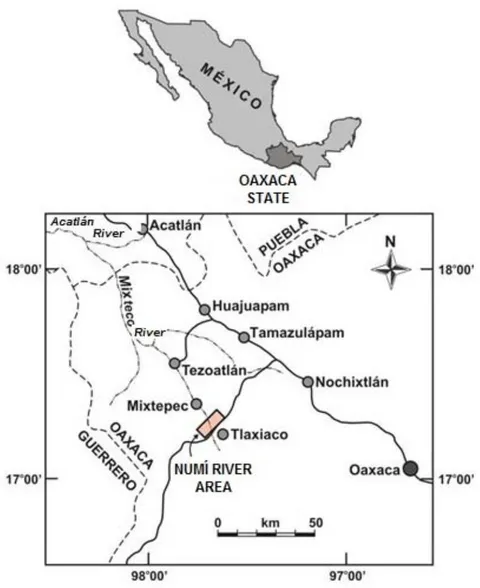
Moreover, the Erben (1956) stratigraphic units had been used, since then, for geologic studies; in this sense the Tecocoyunca Group (Middle Jurassic) had been identified commonly in the Mixteca. That is why, was considered convenient the study of this group of rocks at the Numí Riber area, close Tlaxiaco, which is next to Diquiyu area, Tezoatlán, Oaxaca (Fig. 1). Outcrops of this group show clearly stratigraphic and paleontologic characteristics, this information permit us to make full descriptions of the Jurassic lithostratigraphic units, and contribute for best knowledge of the regional geology. Also in this area there are Jurassic coal beams (Ramírez, 1882; Birkinbine, 1911; Cortés- Obregón at al., 1957), which give to the area economic interest.
Study area. The study area is at both sides of the Numí Riber, in the Mixteca Region, northwest of Oaxaca state, which is 10 km long and 4 km width, distributed NW-SW, almost inside the followings coordinates as: - N and - W (Fig. 1) and 2000-2200m over sea level; next locality is Santiago Nundichi, which is arrived by a No.125 second class highway, also it is 5 km NE of Tlaxiaco.
II. MATERIAL AND METHODS
Cartographic material used includes: Topographic map E14D34 Tlaxiaco, scale 1: 50 000 (INEGI, 2000); Geologic and Mines map E14D34 Tlaxiaco scale 1: 50 000 (SGM, 2000), and Geologic Map Oaxaca E14-9 scale 1: 250 000 (INEGI, 1994). Field geology methodology was applied using maps (Finkl, 1988). It was searched prior geologic information in order to know available reports and elaborate a preliminary map to be used as initial field geologic map. The geologic cartography was mapped following geologic contacts by foot and the structural stratigraphic sections also were mapped. The lithostratigraphy described have been done following the North American Stratigraphic Code (2005), spanish version (Barragan et al. 2010).
Petrographic and lithologic descriptions were done by geologic observations and field pictures, this is basically supported by 80 lithic samples and 60 thin sections; petrographic and lithologic terminology came from Folk (1974) and Boggs (2009). Fossils were collected during field geology.
III. DISCUSSION AND RESULTS
a) Lithostratigraphy
i. Tecocoyunca Group
The Tecocoyunca Group name, Erben (1956) is corresponding to a sequence of sandstones, siltstone, carbonaceous shales and limestones that are outcropping in the Mixteca Region, its Type Locality is a homonymous creek, located between Cualac and Huamuxtitlan, Guerrero state ( 150 km west of Numí area), since then was designed as Middle Jurassic age, also at the same time was indicated that consisted of five Formations as follow: Zorrillo, Taberna, Simón, Otatera and Yucuñuti. This author also recognized the same units at Diquiyú area, Tezoatlán region, which is 70 km west of the study area. He pointed out that both Jurassic areas are very similar, which complement Numí River lithologic descriptions.
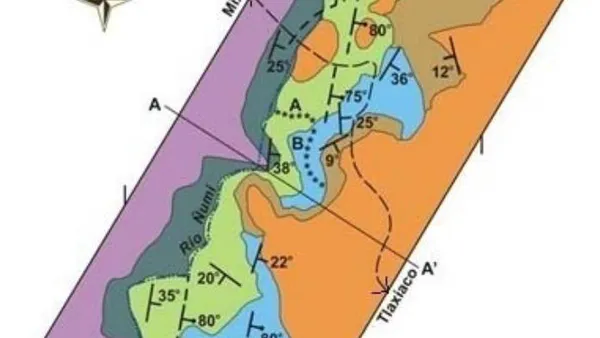
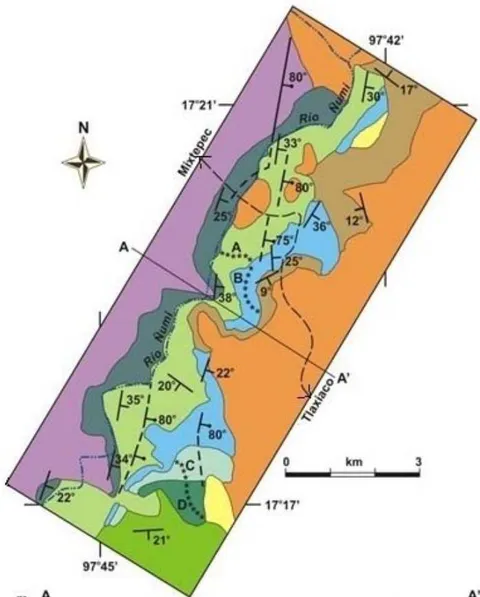
In the studied area, the Tecocoyunca Group it is outcropping both sides the Numí River (Fig. 3) and is thick; the geologic structure observed is the flank of a syncline NNE-SSW direction and dip, through ESE direction; also is affected by faults at 90 degrees respect to the synclinal flank (Fig. 3). Lithostratigraphy units is as follow.
ii. Zorrillo/Taberna "Unit"
Erben (1956) gave the name to the Zorrillo Formation, he toke the name from the Zorrillo hill west of San Juan Diquiyú, Tezoatlán region, Oaxaca state, and also assigned Type Locality and lower Bajocian age. The Taberna Formation also was described by Erben (1956), reported the Tierra Amarilla Hill as Type Locality which is located at side south of the Taberna stream, northeast of San Juan Diquiyú, giving Middle Bajocian to Lower Bathonian age.
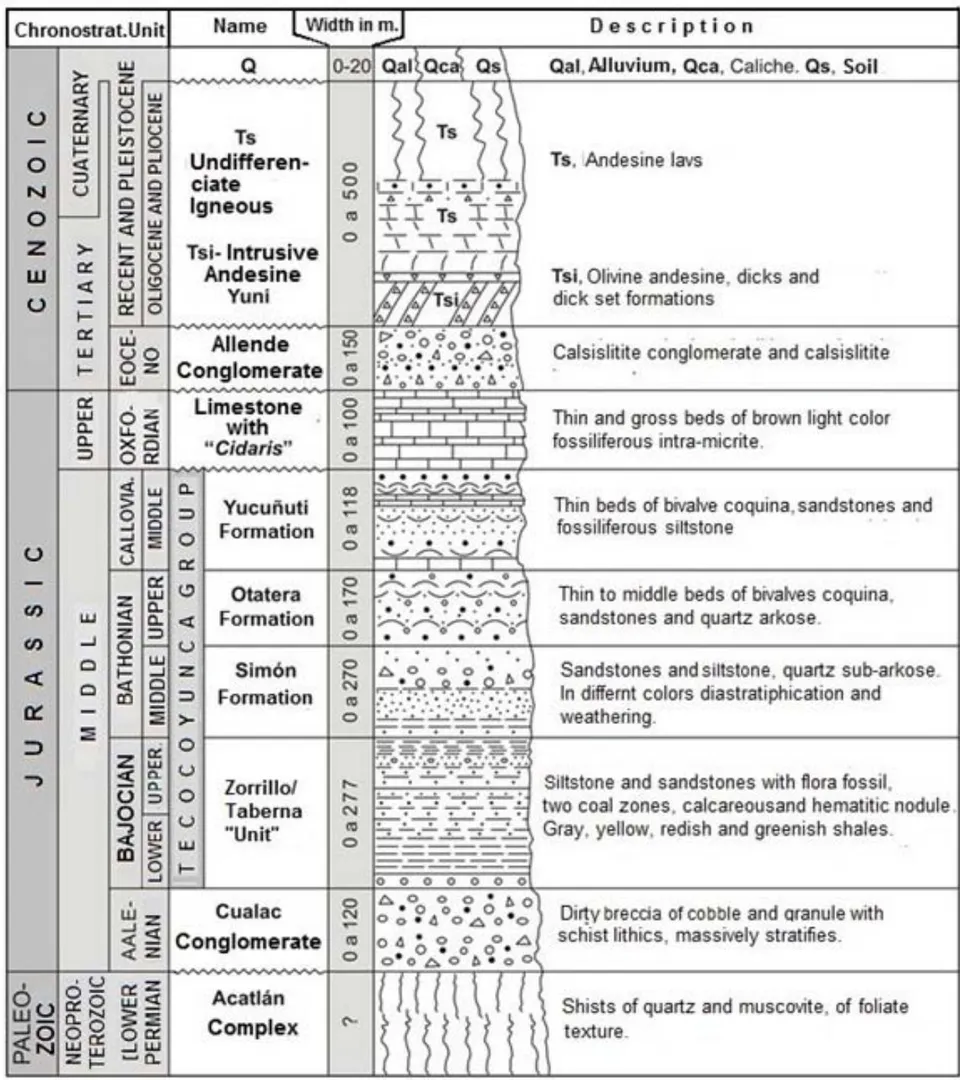
Lithologic descriptions of both formations are very similar and they are related transitional, this circumstance make to be difficult recognize them out the type area. This is the reason why were not possible to be recognized at Numí area. As a consequence, was decided to be considered together in one stratigraphic association called Zorrillo/Taberna "Unit", and as a result those formations were not considered individual (Figs. 2 and 3).
Outcrops of this "Unit" are very close to northwest side of Numí Riber, and are recognized with very similar lithologic and stratigraphic sequences outside in the study area.
Lower contact is transitional with Cualac Conglomerate, upper contact also is transitional with the base of Simón Formation. Total thick of this unit show variations, however an average overall from the geologic work done during this study is of . The Reference Section was measure at the Yuticuani Stream (Fig. 4A).
Lithology: Main rocks of the Zorrillo/Taberna "Unit" are carbonaceous siltstone (Fgi. 5A, B, C y D) and invertebrate and plants fossils. Is clear grey and dark grey color, predominantly first. The stratifications beds are middle to thick (30 to 40 cm width); upper beds are alternatively sandstone and argillaceous siltstone.
Coal zones indicate marsh environment conditions, where tectonic and geographic conditions giving rise to peat accumulation. Two coal beams indicate cyclic of tectonic and sedimentary conditions. Were identified three follow lithology varieties:
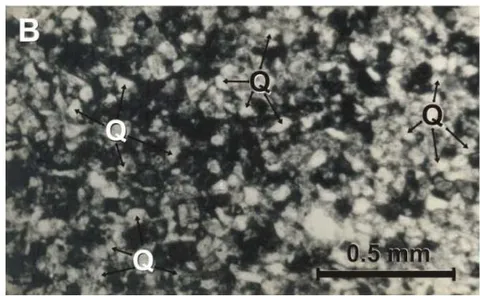
- Phyllite and carbonaceous siltstone (Fig. 6A). It is main variety of the Zorrillo/Taberna "Unit". Consists of clastic grains of the sediment, its size is from fine silt to very fine sand, predominantly middle silt; grains are sharp to sub-sharp, are well classified to middle well classified, some grains show bimodal distribution. Mostly of grains are of quartz (75%); symmetrical and elongate shape; 10%
show wave extinction which indicate metamorphic origin. The left grains show parallel or little wave extinction, it contains inclusion as bubbles. Probably alkaline feldspar is present in 5 to of grains mostly argillaceous altered.
Grains of mica are in 10 to , mostly of which are reddish or bluish color biotite with 40 to size. There is calcite of secondary origin. Sparing carbonaceous material consists of polymorphs and kerogeno. is matrix material, it consists of kaolin, chlorite,?illite and not identified ferromagnesian
(?hiperstene). With X ray diffraction equipment was identified chlorite and kaolin (done free by Mexican Geological Survey).
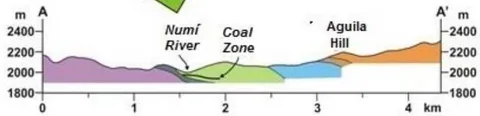
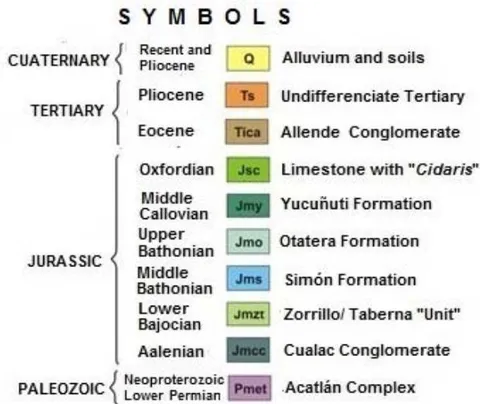
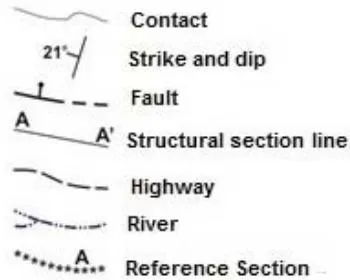
- Not continuos line indicate inferred
Remarks
Geographic information was taked from'. Topographic Map 1:250,000,Oaxaca, E14-9 INGEI Edition.
Underground information was taked from Mexican Geological Survey (before Consejo de Recursos Minerales)
- Quartzite - phyllite mudstone (Fig. 6B). Consist of clastic material included in an abundant argillaceous matrix (30-40%). Grains are 60-70% of the sediment, its size is from middle silt to very small sand with predominance of gross silt. Mostly of gains are sharp and unclassified. This variety mineralogy is mainly of quartz (80-90%), grains are mostly elongate and with parallel extinction, bubbles rare. Mica grains (10 to 20%) are almost completely altered, they do not have regular shape, brown reddish and brown bluish color. Matrix consists of unidentified clay and ferruginous material.
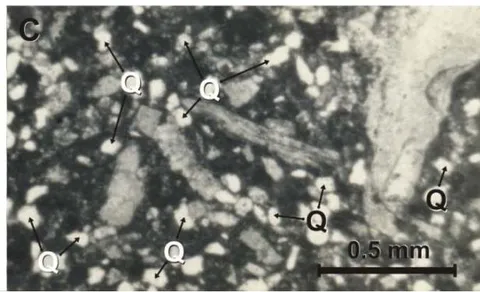
- Quartzite - phyllite subarkose sandstone (Fig. 6C). Grains of quartz are 80 to of rock classified as middle sand. Mostly of grains are sub-spherical, almost well classified. Shape of grains is almost equigranular to elongate; third part of grains of wave extinction, left grains show parallel extinction. Bubbles are rare. Grains of feldspar (15 to ) show not-regular shape and alteration to clay.
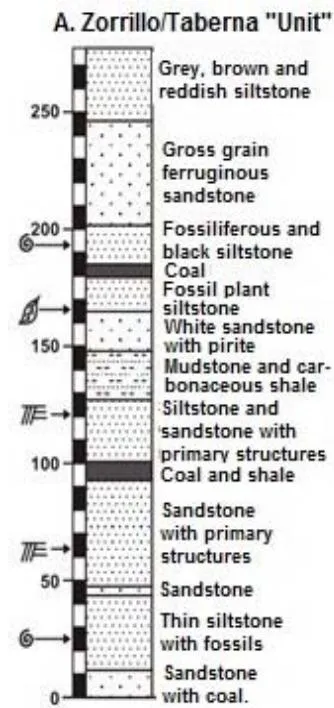
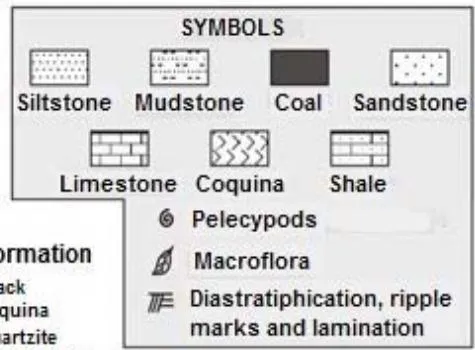
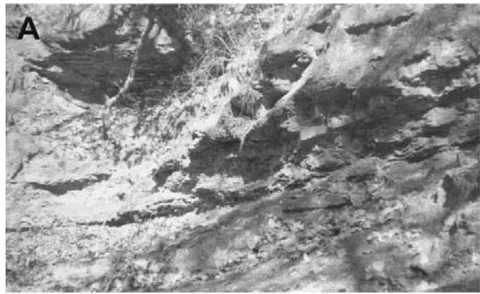
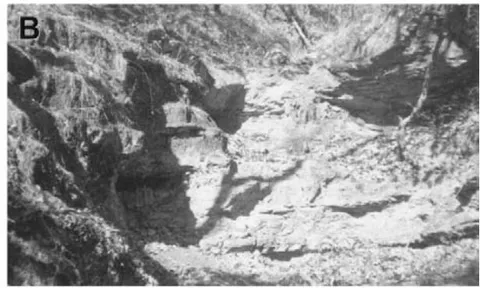
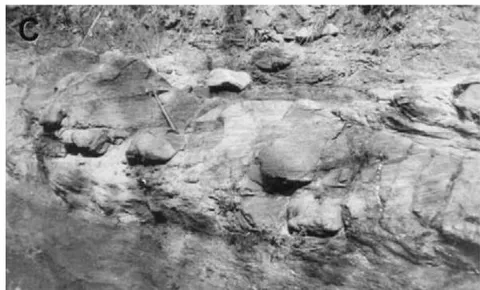
Deposit environment. Sedimentological characteristics observed in the Zorrillo/Taberna "Unit" (e.g. spherical fragments, well to almost well classified – i.e., shoe string) suggest that this formations was deposited during fluvial channels belonged to a delta system. The environment interpretation became because of the sedimentological texture, showed by the carbonaceous siltstone which belonged to a transitional deposit with fluvial and marine influence. The abundant organic material indicate marsh conditions. The argillaceous siltstone was deposited in similar environment, also green and rose color of beds indicate some aerial expositions of the deposit. The relatively thickness unit indicate constant slow downfall of the basin, also quite tectonic conditions.
Additionally, the mineral conditions as: quartz of wave extinction, clay and mica less abundant, point out to a metamorphic source which probably was the Acatlán Complex Formation which holds granite.
At the same time findings of argillaceous feldspar fragments suggests strong weathering of sediments before were deposited; this was happening easily with humid and hot weather climate of the source area. From middle to long distance of transport are suggested by taking account texture and silty argillaceous sediments.
As a summary the observed features give the conclusion that the Zorrillo/Taberna "Unit" represent two deposit environments: Main one was coastal marsh and the other less sized fluvial; at the same time both were part of a deltaic system (see Reineck and Singh, 1980; Howard and Reineck, 1981; Reading, 1996).
Moreover, the two coal seams that were founded in this "Unit" indicate that happening following conditions (Stach, 1975; Tatsch, 1980): a) Constant and slowly slowdown, b) Marsh protected by beach and sand dikes, also natural dykes against marine inundations and river inundations, c) An slow energy environment of the continent and slowly sediment deposit, otherwise were not be possible peat deposits.
Fossil collected. Mollusks fauna collected was pelecypods (see Fig. 13E-H) such as: Lucina cf. L.bellona, Astarte sp, Vaugonia (Vaugonia) v. costata var. Mexicana, Trigonia (Indotrigonia) impressa (Alencaster, 1963; Alencaster and Buitrón, 1965) which were of cosmopolitan distribution from marine or brackish environment. The continental macro flora collected are taxa such as: Zamites oaxacensis, Zamites lucerensis, Williamsonia netzahualcoyotli, Ptillophyllum acuiforme (see Fig.13A-D) well known from the Mixteca Region, they belonged to humid and hot weather environment of continental flora (Wieland, 1914-1916; Silva - Pineda,1970;Silva-Pineda et al, 1986a,b; Pearson, 1976; Ortiz-Martínez et al., 2013).
Age. The fossils taxa stratigraphic lapse collected in the Río Numí area is as follow: The bivalve are from Bajocian to Callovian age. Stratigraphic lapse of flora fossil founded is longest (Pearson, 1976; Sandoval and Westermann, 1986; Carrasco-Ramírez, 1999).
However taking in consideration that Mixtepec and Río Numí areas are next, also because the Taberna Formation hold ammonites of Early to Late Bajocian age, is deigned this age to the Zorrillo/Taberna "Unit".
iii. Simón Formation
Erben (1956) described this unit, and assigned to the Middle Bathonian age, selected as Type Locality the Stream of Simón at the Carrizo cliff, noreast of San Juan Diquiyú, in the Tezoatlán region, Oaxaca.
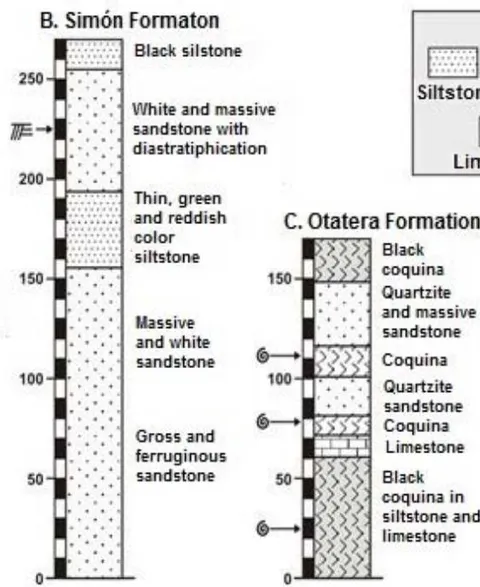
At the study area, Simón Formation is outcropping mainly in the Allende Stream where was measured the Reference Section (Fig. 4B). The lower contact is transitional with Zorrillo/Taberna "Unit", upper contact is not transitional but concordant with the Otatera Formation. The Simón Formation thickness is .
Litology: Main part of the Simón Formation is a middle to gross grain subarkose sandstone, grey to white color, with beds of 0.40 to and to when grain size increase, this beds belonged to a group of beds mainly of reddish or bluish siltstone, which thickness is from 10 to . There are some red ferruginous nodules. There is mainly diastratification as primary structure (Figs 7A-7B). Description of the common lithology identified is as follow:
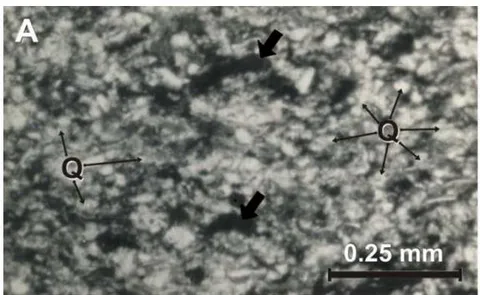
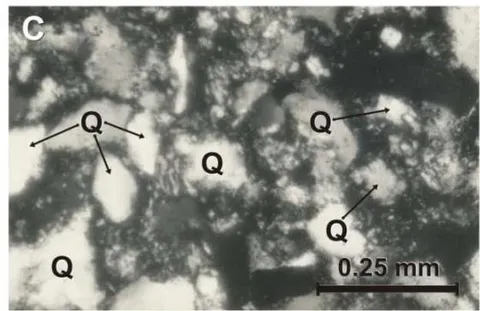
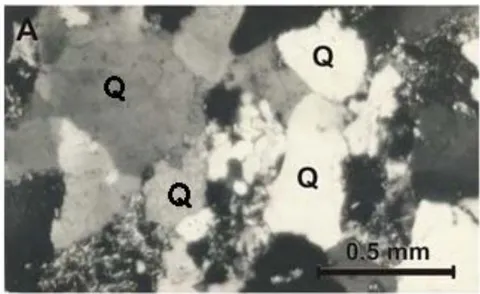
Middle grain quartzite-subarkose sandstone. This lithologic variety is main part of this formation (Fig. 8A). are made of grains which are of quartz, from this show wave and composed extinction, which suggest metamorphic provenience, left of grains show parallel extinction. Irregular grains of? Alcaline feldspar (15 to ) show fractures well done. Weathering not permit good identification. Were found trace of mica mainly biotite and of heavy minerals as garnet and turmaline; last are suggesting schists and pegmatite rocks provenience (see Folk, 1974). Matrix is of rock which is of middle silt made of argillaceous mica and clay; secondary minerals are hematite and calcite, this last is cement and is filling porous places.
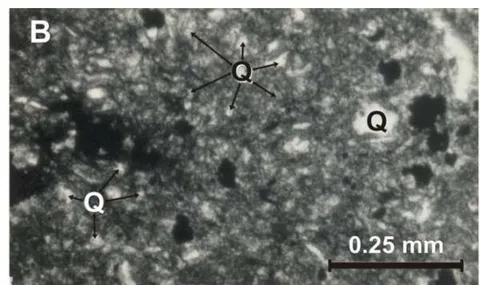
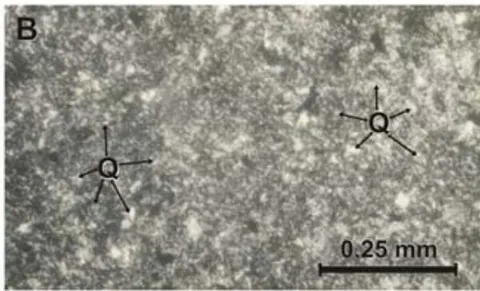
Phyllitic siltstone. Clay or fine silt texture, it is made of grains of quartz with wave extinction, argillaceous
mica and ferromagnesian alteration; its matrix is argillaceous (Fig. 8B).
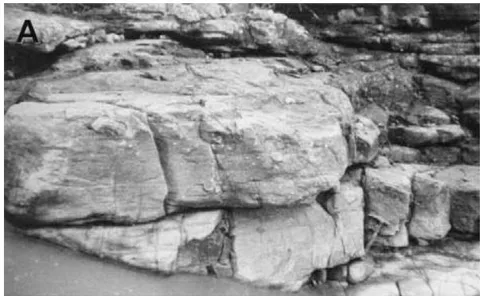
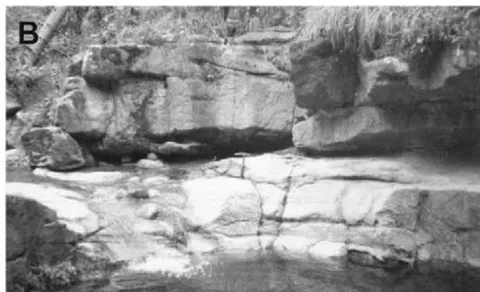
Deposit environment. Wave extinction of quartz, suggest that provenience area was metamorphic rocks, probably the Acatlan Complex. Grains of quartz of parallel extinction indicate that provenience area was formed by igneous rocks (?granite). Besides, size of grains (fine silt) indicate middle length to too long transport; also diastratification indicate fluvial environment (inundations plains and front of delta facies); at the same time reddish colorations indicate this deposits were exposed to aired oxidation (see Reineck and Sing, 1980; Reading, 1996). As a summary we can said that Simón Formation had a sedimentation development similar to Zorrillo/Taberna "Unit"; Simón Formation sedimentation was fluvial but mainly beach environment.
Age. There is not paleontologic or radiometric information that support age of this unit, at this circumstance the stratigraphic relationship is useful. The
Simón Formation transitionally overlay the Zorrillo/Taberna "Unit" which is of Bajocian age and its upper contact is concordant with Otatera Formation of Late Bathonian age (Fig. 9). So, Simón Formation is probably Late to Middle Bathonian age.
iv. Otatera Formation
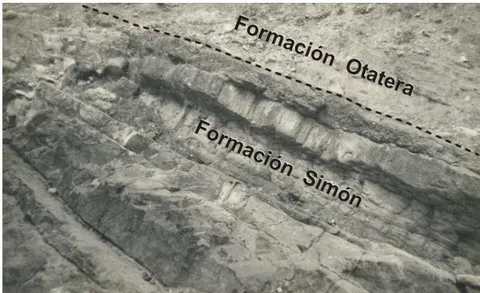
Erben (1956) gave the name to this sedimentary rocks which have their Type Locality at central and southcentral of the Otatera creek, Rosario River in the Tezoatlán region, Oaxaca, giving Late Bathonian age. Its distribution is small area in the Doña Chona Stream, south of the study area (Fig. 3), it consists of width of sandstones and coquina (Figs 2 and 9) and is interlayered with basal beds of the Simón Formation, upper part is over layered by the Yucñuti Formation. Reference Section was measure at Doña Chona Stream (Fig. 4C).
Lithology: Mostly of Otatera Formation is constituted by beds of black coquina of following genus of bivalves: Eocallista, Pleuronya, Crenotrapezium and ostracoda (Gryphaea), with sparite cement (Fig. 9). Coquina beds are mainly interlayered with calcareous beds of brown grey color, which consists of small fragments of calcspar and black color shells. Whole group of coquina are interlayered by thin beds of limestones from 4 to 5 cm width. Upper part is constituted of thin beds (1 to 20 cm width) of fine and gross grains of sandstones.
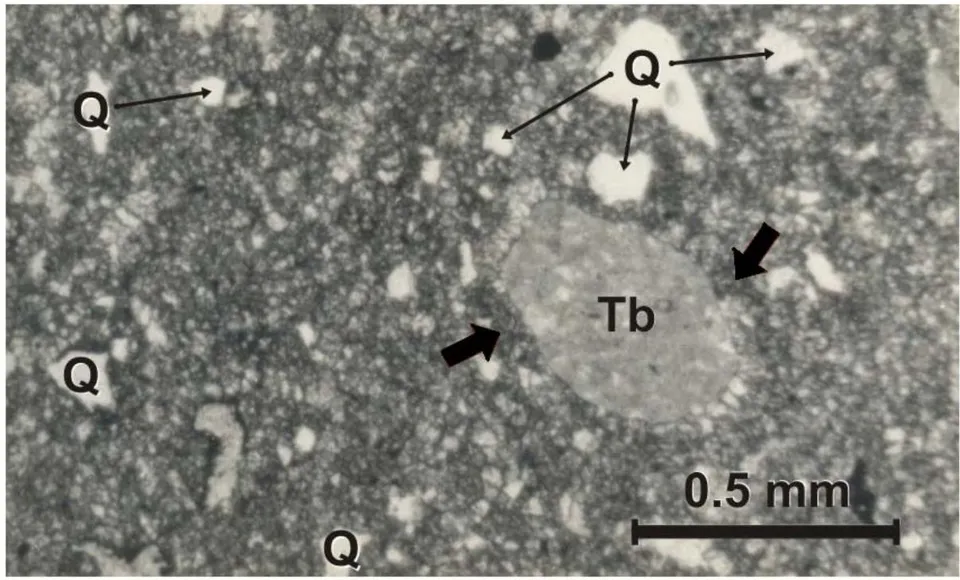
The Otatera Formation include few lithic variation, most common is sparite (Fig. 10). This is sub mature calcarenite, it contains few lithic fragments (gross sands size), constituted by tuffs , subarkose , quartz and probably alkaline feldspar . Grains are cemented by sparite calcspar , which crystals are 5 to .
Deposit environment. Sedimentary features of this unit indicate a shallow marine environment (neritic) with short terrigenous deposit, where water movement was able to erode unconsolidated microcrystalline calcite and re-deposit it as sparite. Relative close terrigenous material, indicate topographic high. It is important to know that upper middle of this unit are thin beds that consists of sandstones (fine to gross grains) become thick as increase grain size. This deposit characteristics suggest probably beach environment.
Moreover, coquina beds indicate continuous buried, which not permit groups of bivalve subaerial destruction; only relatively fast sinking of the basin could be the reason.
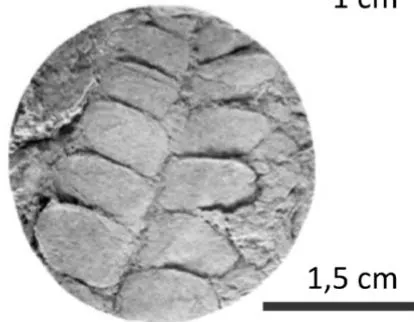
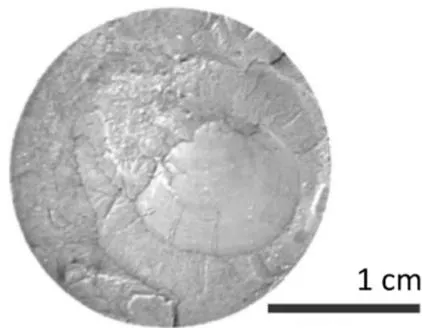
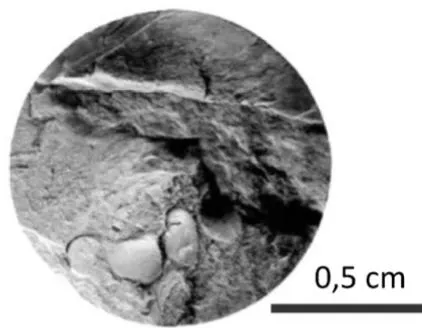
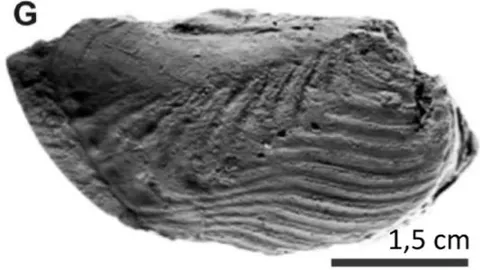
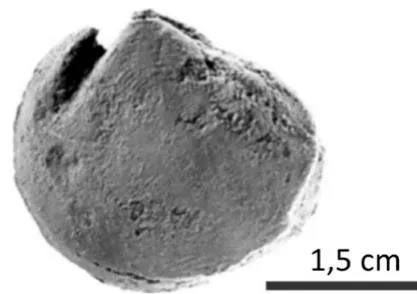
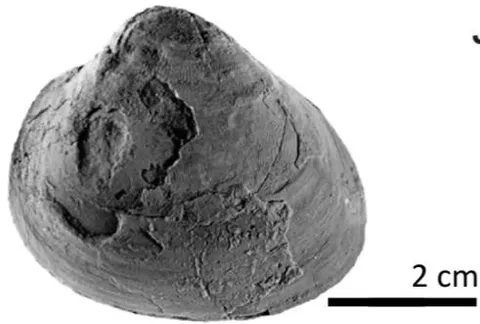
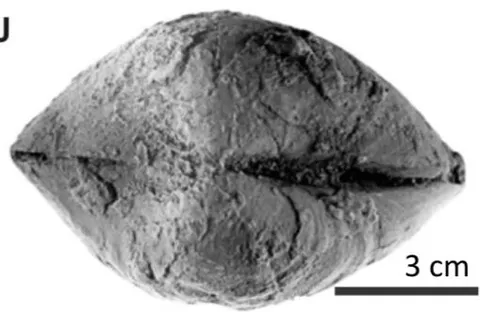
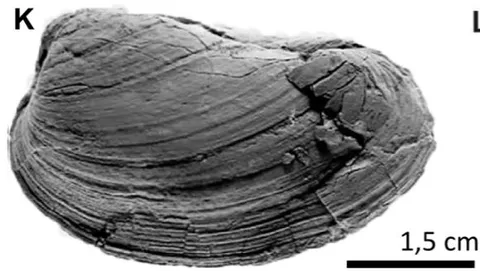
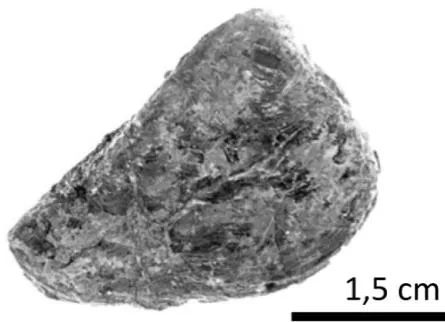
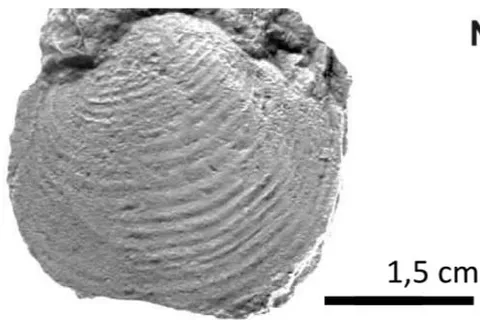
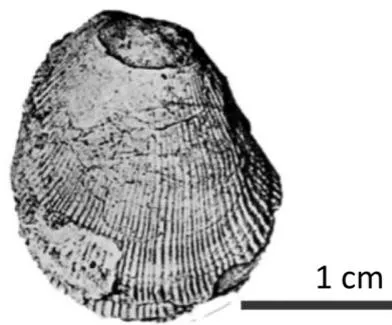
Fossil collected. Were collected mainly bivalves of the genus Eocallista, Pleuromya, Crenotrapezium (Fig. 14 I-L) (Alencaster, 1963; Alencaster and Buitrón, 1965) which were living in tide zone environment (Reineck and Singh, 1980); consolidated remains of this mollusks made coquina.
Age. Stratigraphic extension of taxa collected is large and is not possible to be assigned Jurassic age to this formation. However, in Tezoatlán area, the Otatera Formation hold ammonites among which is Epistrenoceras paracontrarium from Late Bathonian age (Erben, 1956), this make possible to be assigned same age to this unit.
v. Yucunuti Formation
Erben (1956) designed as Yucñuti Formation a sedimentary sequence outcropping at the (homonymous) Yucñuti Stream (chose as Type Locality), located east of Santa Maria Yucñuti, Tezoatlán region, Oaxaca, and assigned Callovian age.
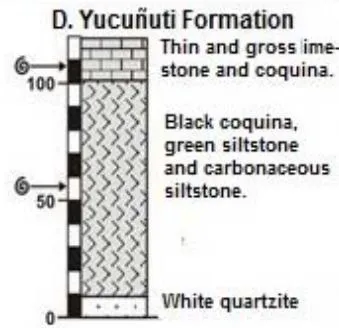
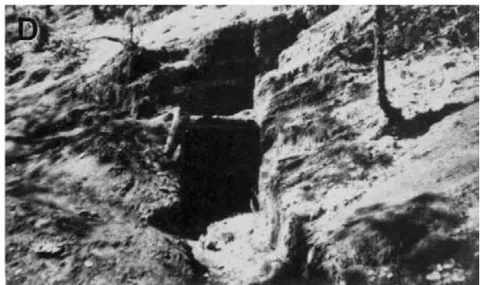
In the Numí River area this formation is located at south position, particularly where the Doña Chona Stream is. Its covering is short (Fig. 3). Lower beds interlayered with Otatera Formation and upper beds are discordantly overlay by Limestone with "Cidaris"; it is m width (Fig. 2). Reference Section was measured in the mentioned stream (Fig. 4D).
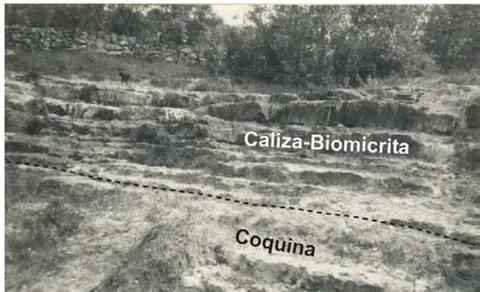
Lithology. The Yucuni Formation is a sequence that starting with fine grains of whitish and rose colors sandstones (Fig. 11); middle part consists of black color ostracods coquina interlayered by light grey siltstone with several burrows. Upper parts consist of middle thick beds (20 to ) of fossiliferous limestones interlayered by thin beds of Lucina coquina. Restricted beds of coquina alternate with ostracoda and pelecypod species. Main identified lithology are described as follow:
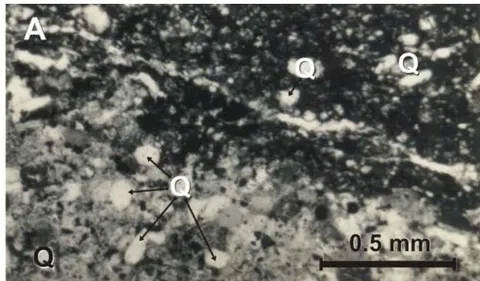
- Quartzite siltstone. Is gross siltstone, middle classified, with sub mature texture (Fig. 12A). Grains are of rock volume, its constitution is of quartz with parallel or wavy extinction; grains size are . Besides there is argillaceous matrix of rock); sparite is cement and fill micro structures and hollows.
Quartzite - subarkose siltstone. Rock constitution is of grains with argillaceous matrix short abundant (20-30% of rock), which give a sub mature texture (Fig. 12B). Grains are constitute by quartz , sharp grains with parallel extinction (wavy extinction are rare), size typically is bimodal and . Left grains (20 to ) are constitute by feldspar (?alcaline), crystals are fractured and change, its average size is . Matrix consists of clay, mica and calcite micro-crystals. Plutonic origin suggested by quartz type.
Biomicrite with silt quartzite. This characteristic variety, consists of bio clasts (30%) and micrite (40%) (Fig. 12C). Bio clasts typically are fragments of bivalves. Terrigenous clasts are size, they include parallel and wavy extinction quartz as well as lithic clasts (?ignimbrite).
Deposit environment. Lithic variety suggest a shallow marine/transitionally deposit environment, 1) and 3) varieties are of neritic environment, meanwhile variety 2) indicate terrigenous supply at plain stagnation water basin. Mineral composition and texture of described lithic varieties suggest that supply area, could consists mainly of igneous (?granite) and metamorphic bodies, which were located relatively far from the sedimentary basin.
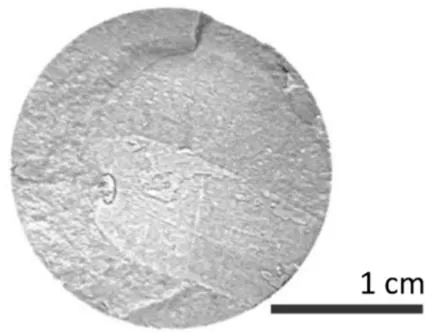
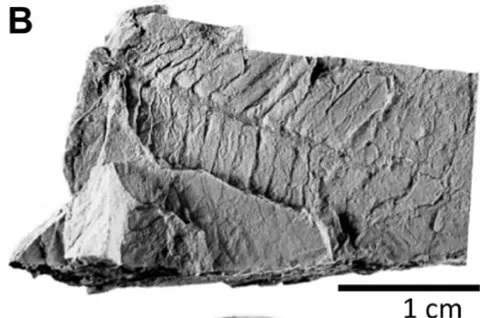
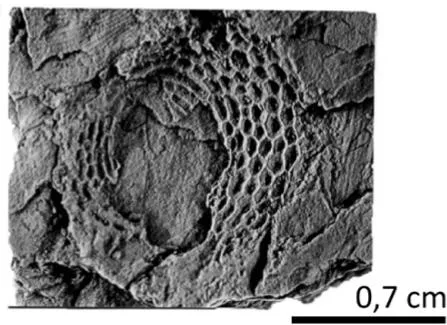
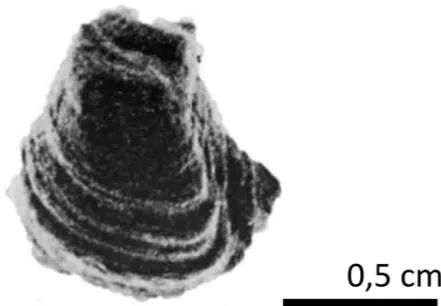
Fossils collected. In the Yucñuti Formation were collected cosmopolite mollusks such as genus: Lucina, Astarte, Vaugonia, Gryphaea, Eocallista, Crenotrapezium, Pleuromya, and Lima, (Fig. 14 M - N) (Alencaster, 1963; Alencaster and Buitrón, 1965) which belonged to a marine or saline environment.
Age. The stratigraphic length of mollusks do not give age to this formation. However in the Mixtepec area Carrasco-Ramírez (2003) collect Middle Callovian ammonites; moreover in Mixtepec and Numí River areas outcrop same stratigraphic sequences, this circumstance give age to the Yucuñuti Formation.
IV. CONCLUSIONS
Tecocoyunca Group in the Numí River area, Tlaxiaco region, Oaxaca, consists at its lower part of the Zorrillo/Taberna "Unit" of Lower (late part) Bajocian and Late Bajocian (begin part) age, transitional is overlaying Cualac Conglomerate of Aalenian age, they are m thick constituted by carbonaceous siltstone, mudstone, subarkose, very fine grained sandstone and siltstone, hold bivalves and fossil flora, as well as two coal beams, one at the lower part and the other at middle of upper part. The inferred deposit environment of this unit is a delta complex, composed by coastal marsh and fluvial contributions. This units are overlaying by Simón Formation, of Middle-Late Bathonian age, which is constituted by of thin and gross beds of siltstone and subarkose set; its deposit environment inferred is transitional (beach zone). The Simón Formation is transitionally overlay by Otatera Formation of Late Bathonian age, which consists of pelecypods coquina with interlayers of spathite limestone strata of thick; the inferred deposit environment of this unit is shallow marine, and some contribution of beach. This unit is concordantly overlay by Yucuñuti Formation of Middle Callovian age, which is constituted by fine grain sandstone, coquina and biomicrita m thick, holding bivalves; the inferred deposit environment is transitional (flood plain, coastal marsh and shallow neritic zone); this unit is discordant overlay by Limestone with "Cidais" of Oxfordian age.
Taking in consideration detailed descriptions of the Tecocoyunca Group formations, is de facto redefinition advance work for the Middle Jurassic units of the Mixteca Region (see NACSN, 2005, Art. 18, Remark b).
ACKNOWLEDGMENTS
I thank economic support of CONACyT during my degree studies. Thanks to Dr. Ismael Ferrusquía and colleagues from Instituto de Geología, UNAM, for their manuscript revision. Also Drs. Gilloria Alecaster and
Blanca Buitrón help me identify mollusks collected. Dra. Alicia Silva studied and identified fossil flora for this research work. Other persons support and help me without any interest, to them all, I deeply thankful.