I. INTRODUCTION
Using the arts to reflect upon issues of memories, identities, responsibilities and obligations brings about ethical and aesthetic considerations.
The arts have the ability to bridge between time and place as between political and intimate spheres. The arts manifest infinite inquires and propositions some are also of revolt and of memories, affecting reconstructions and resiliencies.
Within memories one also finds disaster and mourning.
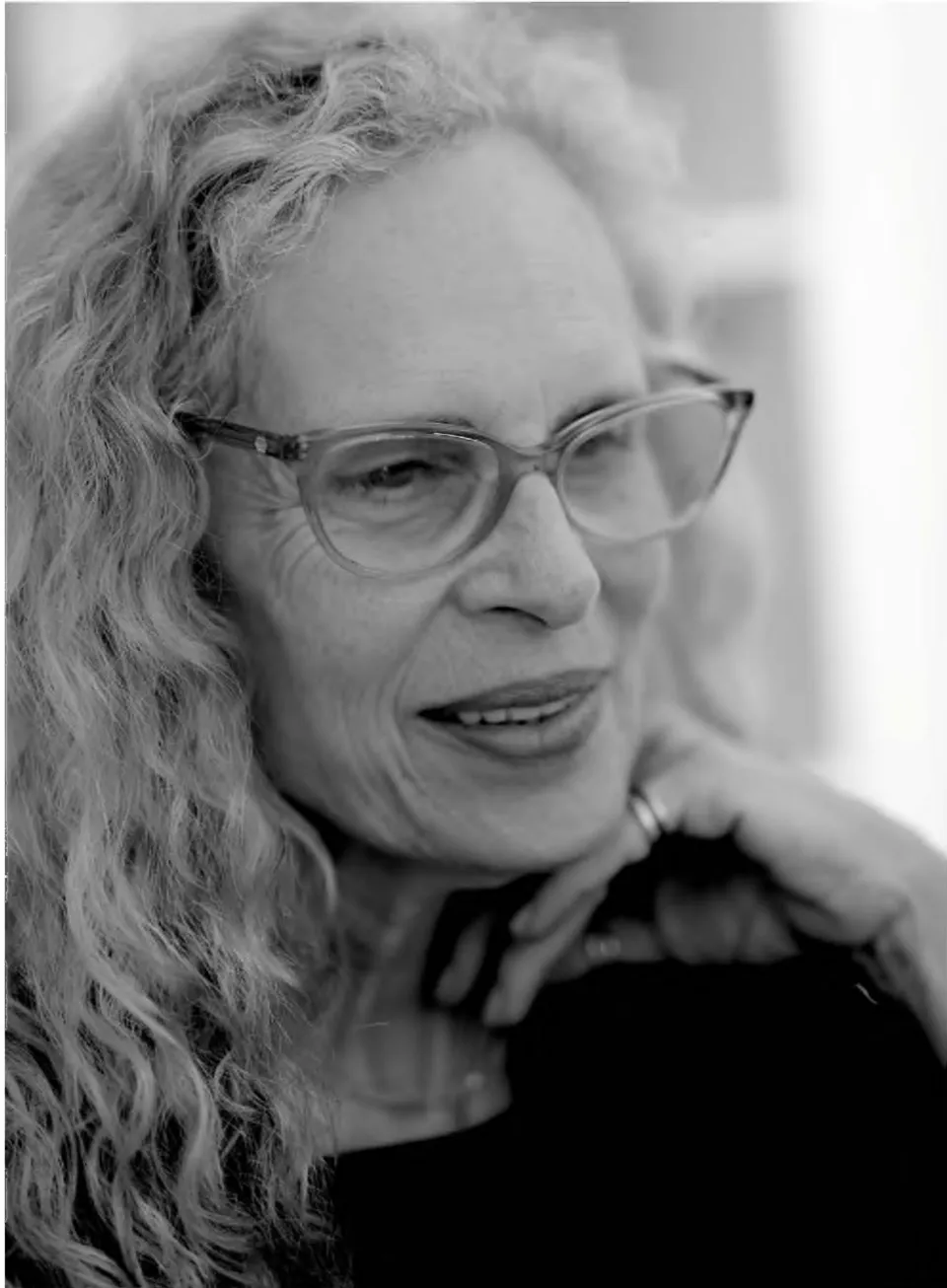
I was born in Israel-Palestine to parents Holocaust survivors, and a collective prolonged mourning had become our raison d'etre, along with the imperative Never again as a joint life motto. Memory was a crucial part of our lives. Everyone, from the youngest to the oldest, pays tribute to the stories of our people.
For all the children, of all origins, education is a primary vehicles also through schooling as via the public media . A culture of memories building identities is continuously fed by successive holidays and commemorations. Individual identities and collective memories are based on shared historical elements. The problem is that education rarely offer perspective on the history of the «Other».
I was nine years old during the Six Day War. Frightened by the war, like all children, and emboldened by the imperative «Never again» I told my father who came back from the front: «We should kill all the Arabs». Ferocious, he replied: «A Jewish mother and an Arab mother will cry the same for their child».
That was the first time I became aware of the «Other» yet, just like me- a person, with plural identities, culture and (hi)stories. It opened me up to an entirely new parallel reality, and so in the midst of war and through the war itself, I understood that my upbringing and my history were relative.
Our collective mourning extends beyond our individual lives and culture, and participates in the human relationships between all identity type groups as between Israelis and Palestinians, or between Israelites and the rest of the world.
Later, the discovery and learning of the other became the driving theme of my own research and work, and I sought to become aware of (all) «others» living and things – as the peoples of Africa and the Black American, the peoples of Vietnam, China, Cambodia, Yugoslavia, Rwanda.... The list is long, and leads to questions about the human species and its ability to understand attributed concepts of the humanities and or of universal issues.
The history of Israel is based on the individual and collective memories of genocide.
This culture of mourning generates a living memory but it also leads to endless grieving.
II. REMEMBER
The day of remembrance is called «IZKOR» in Hebrew and «AZKOR» in Arabic, which means «remember».
This collective memories are imprinted in the plural identities of each Hebrew and as well as in that of each Palestinian; it thus hinders a more individual and subjective memories, which could be constructed more independently from the collective.
It becomes the reason for our daily sacrifices, justifying our dead children, martyrdom and murder. Thus, it becomes a dangerous and manipulative, but effective, alibi in fabricating children who are ready and willing to die.
Parents normalize sacrifice, war, and eventually the horrible reason for the death of their children; and each new generation is eager to protect the collective with factual and strong sentimental remembering by sacrificing their future.
This permanent state of mourning, in all cultures, unlike a human process of accepting the death, is breeding insecurity, grief, danger, and fear of the «other».
It becomes a tool enabling racism, pre-justice, bias behaviours, and discrimination, that undermines actual human relationships and it compromises the ability to live together in respect. Prolonged grief provoke an unending bereavement which become contrary to a true cognitive and mental process of the reason of mourning.
In Hebrew, the Shoah means disaster and catastrophe, and it kept alive through rites and symbols.
In Arabic, the respondent is the Naqueba, which means disaster and catastrophe as well.
These disasters and catastrophes are carried in parallel, and in a collective ways, by the all generations, and are inscribed in their lives.
Can our identity only be defined by this past?
The mourning that has become interminable justifies its renewal; it produces an escalation of death, not its acceptance, and makes healing unattainable.
III. THE ARTS, A PATH TO HEALING
The arts are an Engage journey in the project of building a future, using memories as living material, creating memories for the future, generation the memories of the future.
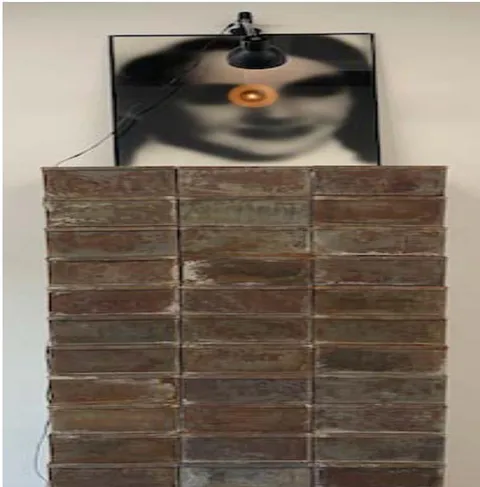
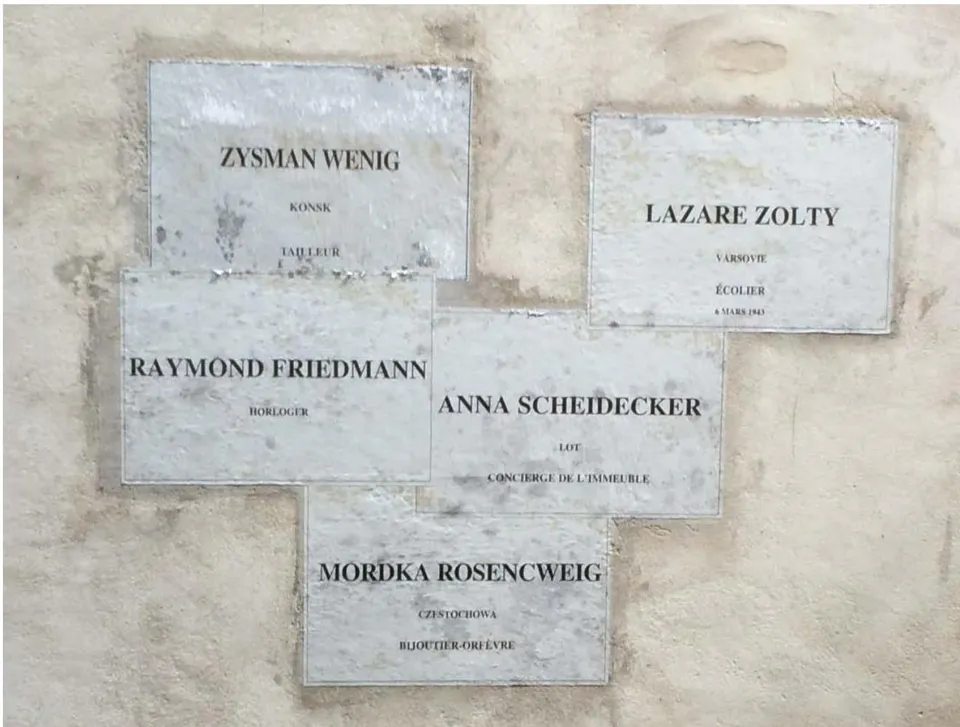
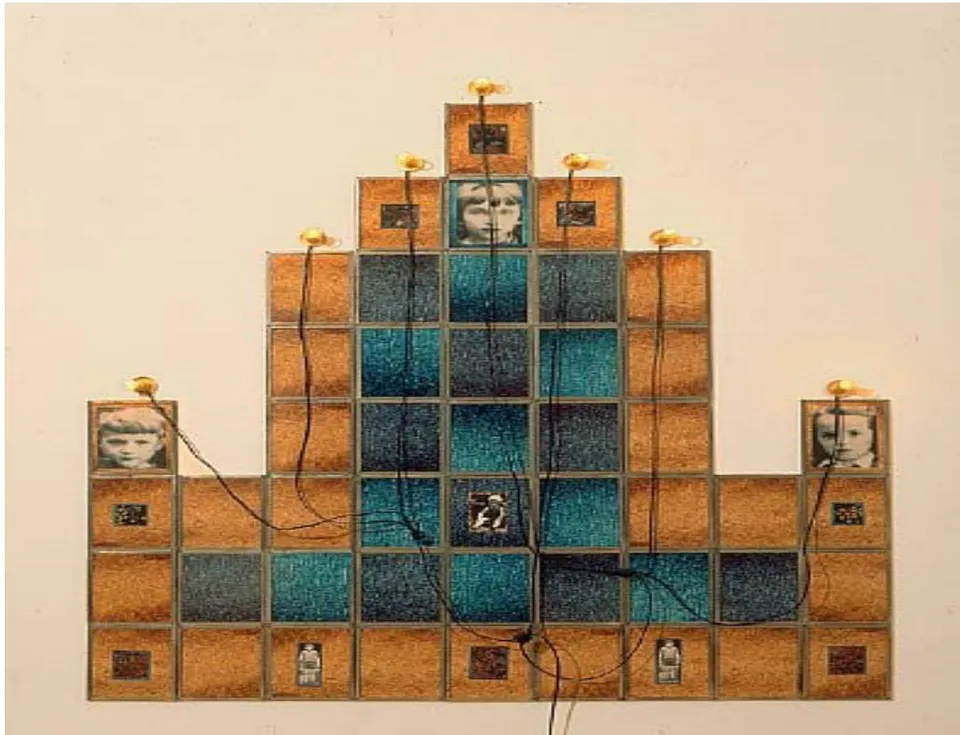
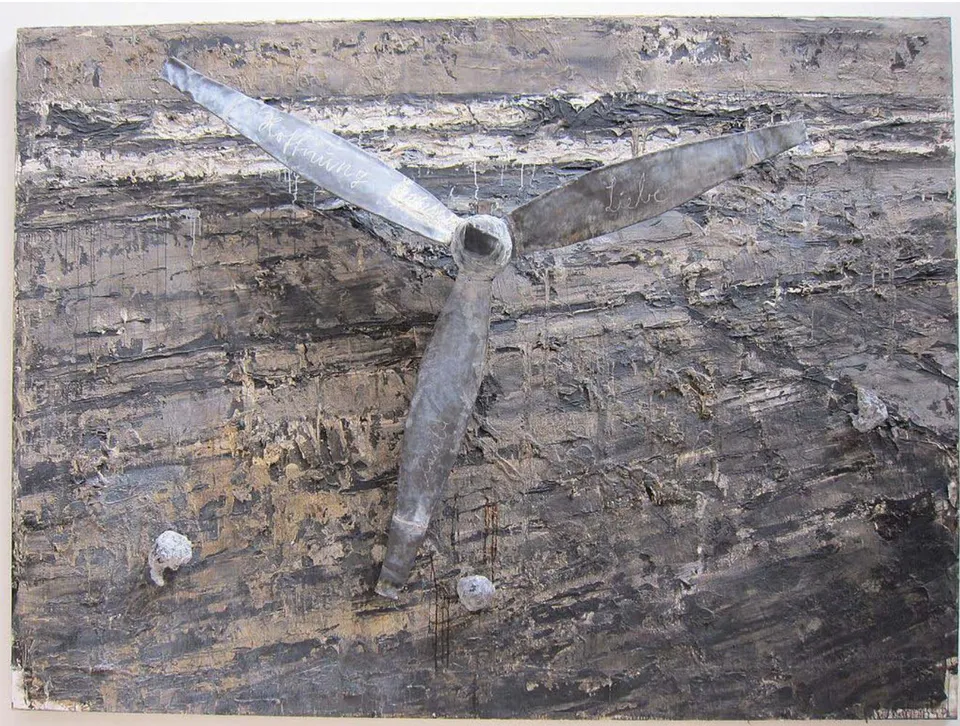
Among many personalities that may be used as example I would like to point out in this short essay the influence of two artists in particular: Christian Boltanski and Anselm Kiefer.
It is in the flow of memories, Christian Boltanski, a French artist, finds the bricks on which are inscribed the essential elements of the past, of childhood and of mourning.
He reconstructs the memories of the «future», in other words, he expresses artistically how the mortiferous past composes the experience of the living.
He assembles objects and photos that belonged to people who are presented anonymously. This revision of the past proposes an idea that reminds us of the permanence of what was once there and is no longer. Nevertheless, they existed!
Christian Boltanski gathers and recomposes the pieces of a puzzle and brings to light the past, the history of families and reconstructs identity. It is like a non-personal theatrical performance, a demonstration of a collective identities made from various human dramas: the Shoah (holocaust), homelessness, illness, etc. Death is very tangible in the memories of the Holocaust.
"You can tell the truth more truthfully than with the truth itself." wrote Christian Boltanski Anselm Kiefer, a German artist, is inspired by the great tragedies of the 20 th century.
His work involves sand, branches, hair, celestial bodies, poetic, mystical or scientific texts and materials extracted from ruins and waste. His creations evoke the catastrophe and destruction of the Second World War, in particular the Shoah. He tackles a major question: how, after the Holocaust, can one be an artist inscribed in the German tradition?
Thus, he produces an existential work of memories and mourning, a spiritual quest nourished by great myths and Kabbalistic mysticism. It evokes the place of the living dead, solitude, determination and courage. Through this work, one can only see that the construction of Europe paradoxically, truly is of Israel's concern.
IV. THE ARTS
Mourning, as all other emotions, is one theme inseparable from the act of creating. In this context of bring forth fear and endless grieving which I shared with my family and with my entire birth land, I asked myself how to contribute to the fight against ignorance, as the main cause for all stereotypes and prejudice. How to improve the access to knowledge of the other, the one I am "afeared" of, and how could I participate within the human enlarge circle of all cultural diversities, with my own individual and collective identities?
My relationship to the arts comes from the intimate and intuitive conviction that I can with the arts freely express because of what I share with the Other. The Arts are the only tool that allows us to examine the relationship of the mind with the world.
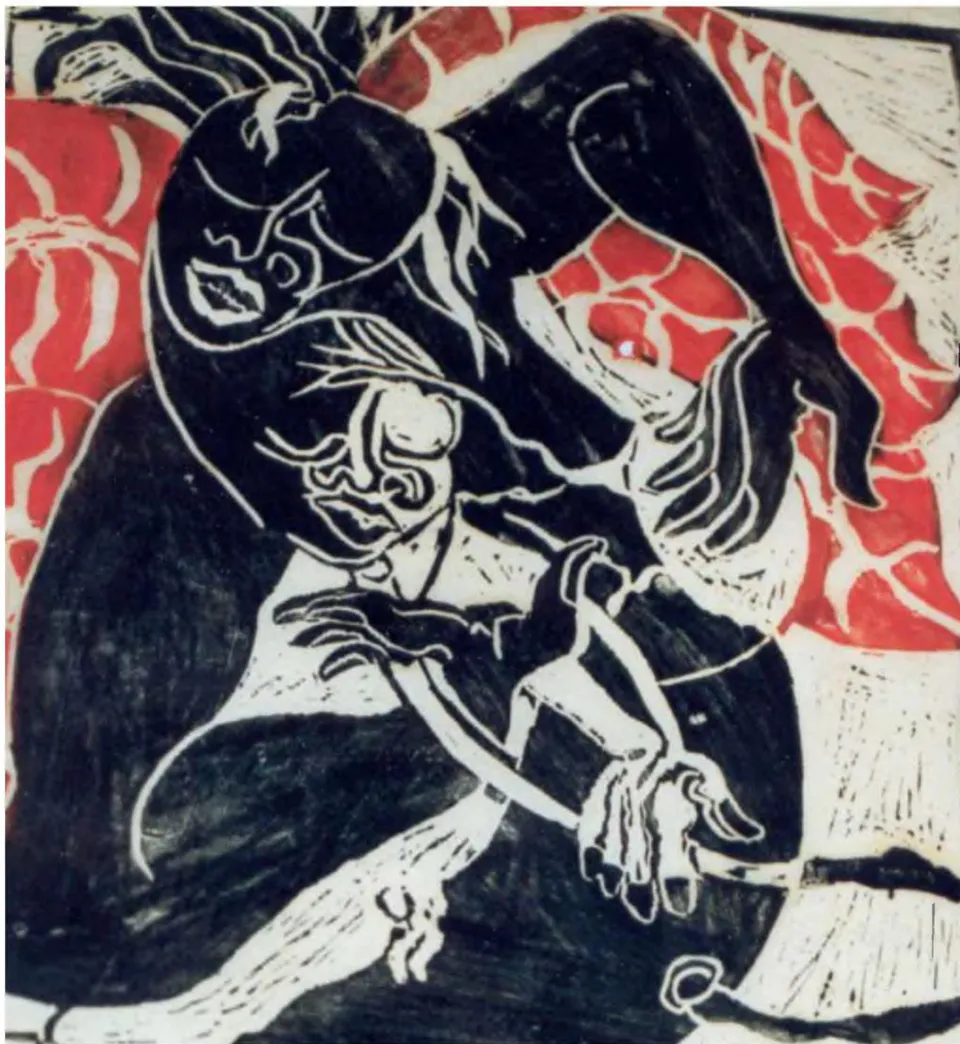
My commitment as an artist does not only subsist of the aesthetic impact of an art work but also in its message, its reception, its influence, its provocation and its critical attribute.
The arts consider it essential to offer people means to discover themselves, the other and the world better and perhaps even to ensure that the other, within their differences, are no longer seen as intruders and nor as opposition.
We are all different, but also similar, errant, anthropomorphic and earthly, within a world that is in fact beyond all imposed borders. Than, Far from paralysing the living, mourning must be experienced as a necessary step in recovery.
This progressive thought is inscribed in the Hebrew language. The Sumerian and Hebrew languages have been nourished by the understanding of the sentient (animate) worlds. Hence, the Hebrew (Semitic) words Gilgoule meaning cycle and Nishamots meaning spirits (souls) are used to describe the re incarnation movements of life. This is an aesthetic and symbolic quest for the nature of the universe.
The question of mourning, then, in the Hebraic culture, is placed in the belief of the movements after death, a strong metaphors and a poetic artistic expressions.
The human skull, a recurring image in the arts, is translated into Hebrew by the word Goulegoleth, and has the root 'Agole' meaning Round.
Since Gilgoule is a cycle in motion, and it has for a root the word Agole, it implement the geometrical notion attached to the form of infinity, a circle.
From the same root: the word 'Gal' means a 'Wave of the sea'. The movement of Wave, the gal, produces the word Galgal, as a a wheel the turn on itself, and refer to the Goulegoleth – the head.
The same root is used to say Gal-Aad which literally means eternity and is the word to say memorial. The Gal-Aad is composed of non polished stone(s), placed as a memorial place for the dead.
It is through these words, Gal, Galgal, Goulegolet, Gilgol, Gal-Aad, Gilgoul Neshamot that the philosophical spirit of my mother-tongue has incited me to seek and discover the hidden senses in other traditions, using cultural references and the arts.
Approaching the arts and more specifically the artistic languages allowed me to approach the archaic, universal & amp; symbolic thought that bring forth and reflect upon endless pluralism and diversities.
Since the dawn of time, human has felt the need to express existential questions, such as birth, celebrations, unity, death, and mourning.
The way human beings could comprehend the wonders of the world has produced languages to communicate also emotions, as concepts and thoughts, moving from the particular to the universal, while generating beliefs, doubts, knowledge and (hi)stories.
V. TO CONCLUDE
In one of his last publication, 'Moi, laminaire', Aimé Césaire wrote:
I cannot imagine that the artist could remain an indifferent spectator, refusing to take an option. (...) Being engaged means, for an artist, to be inserted in its social context, be the blood & flesh of the people, experience the problems of his land with intensity and testify.
Purpose
A journey through the world of abstract signs, symbols and images is an attempt to comprehend the process of constitution of memories, of cultures, of realities.
FURTHER READING
- Boltanski C. 2017, Memory and Mortality, available at Art world: https://www.artdex.com/ memory-and-
mortality-christian-boltanski/accessed last 20052 023.
RFI, 2021, Christian Boltanski, French artist haunted by memory and loss, dies aged 76 available at https://www.rfi.fr/en/culture/20210715-christian-bolt anski-french-artist-haunted-by-memory-and-loss-dies-aged-76, last accessed 20052023.
Solomon-Godeau A. 1998, Mourning or Melancholia: Christian Boltanski 's " Missing House & quot; available at Oxford Art Journal Vol. 21, No. 2 (1998), pp. 1-20 (20 pages), Published By: Oxford University Press, https://www.jstor.org/stable/1360612 last accessed 20052023
ALYCE MACMICHAE KRISTINE 2020 MEMORY AND DEATH: AN ANALYSIS OF CHRISTIAN BOLTANSKI'S ART, Department of Art History, Curating, and Visual Studies College of Arts and Law, University of Birmingham, available at https://etheses.bham.ac.uk/id/eprint/11388/2/Macmi chael2021PhD.pdf, accessed last 20052023.
Kiefer, A., Lauterwein, A. 1969, Anselm Kiefer/Paul Celan: myth, mourning and memory/PUBLISHED London: Thames & Hudson, 2007 ISBN 0500238367 9780500238363.
Posted by O'LIVE TO TRAVEL, 2012, Cultural Healing/Heritage through Memory, available at https://o-live2travel.com/2012/10/18/anselm-kiefer-cultural-healing-through-memory/ acceded last 20022023.