An experiment involving 12 genotypes of Gram (Cicer arietinum L) was carried out at B. R. D. P. G. college farm to select varieties close to ideal plant types through a multi-criteria selection. These genotypes were grown in three replications under standard package of practices to raise a good crop. These genotypes were evaluated on 12 characters namely, plant height, days to 50% flowering, primary branches/plant, secondary branches/plant, days to maturity, number of pods/plant, number of seeds/plant, biological yield/plant, seed yield/plant and the harvest index. The normalized cumulative rank analysis was used to find out a preference order of these genotypes. The preference order is PUSA 362, P-3719, CSG-151, E-100YM, ICCI6015, GNG1581, RADHA, IPC 94-94, ICC15850, ICC 3535, ICC1009 and KWR 108. The top five genotypes from these could be recommended to farmers for cultivation in this region. A single table is enough to present the results of such experiments.
## I. INTRODUCTION
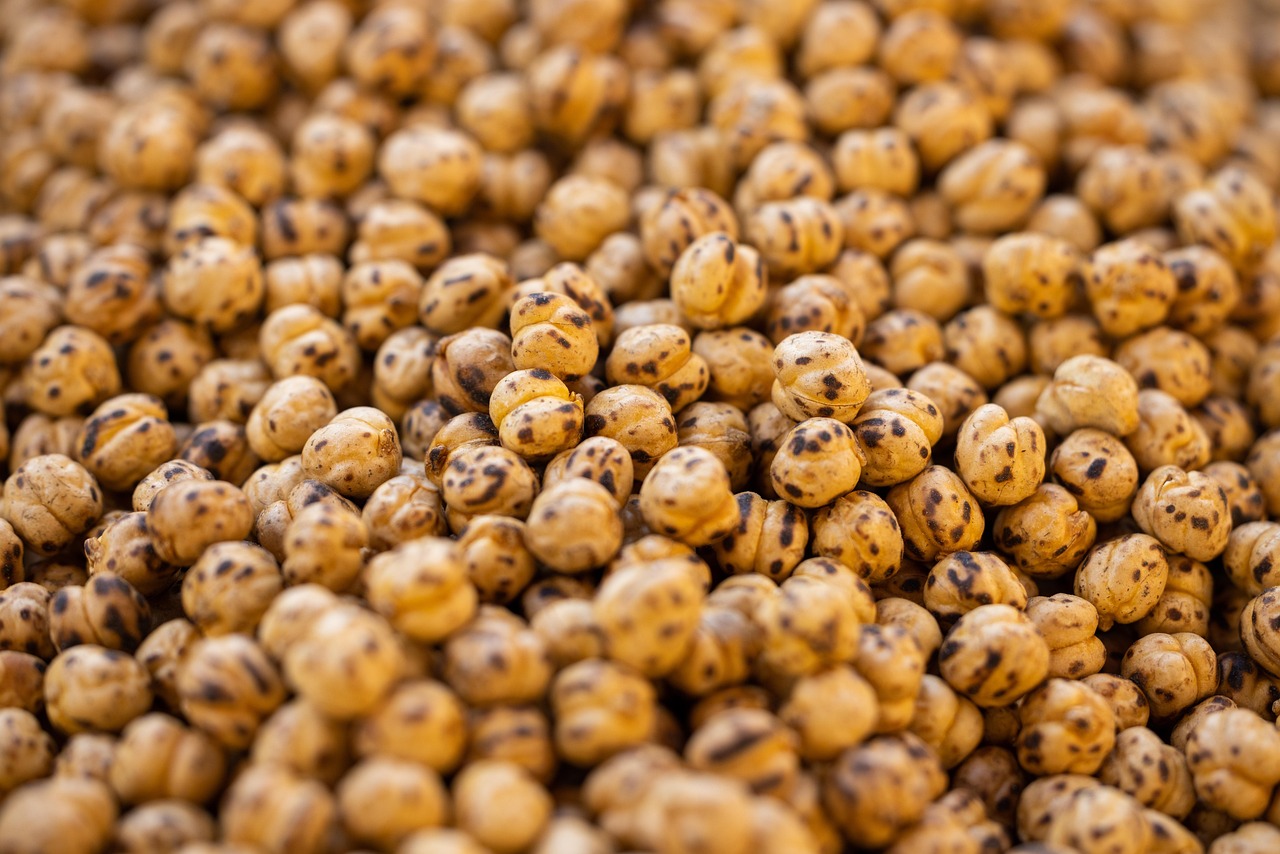
Chickpea (CicerarietinumL., $2n = 2x = 16$ ) globally ranks third among the pulse crops and accounts for production of 10.1 million tons annually. This ranking places chickpea behind beans (21.5 billion tons) and peas (10.4 million tons). These three pulses (beans, peas, and chickpeas) account for about $70\%$ of global pulse production with chickpea accounting for approximately $17\%$ of the total annual production. Production of chickpea in terms of harvested area from 1961 to 2013 ranged from a low of 8.9 million hectares in 1981 to a high of 13.5 million hectares in 2013. These global acreage and production figures gave a productivity of $748~\mathrm{kg / ha}$. Chickpea is produced in over 50 countries with India being the largest producer. Other chickpea producing major countries after India are Pakistan, Turkey, Australia, Ethiopia, Malawi, Mexico, Morocco and Syria. The top chickpea producing states in India in descending order have been Madhya Pradesh, Maharashtra, Karnataka, Andhra Pradesh, Rajasthan, Chhattisgarh, Uttar Pradesh and Gujarat. Chickpea is divided into two distinct types. The most prominent type is referred to as "Desi" and is characterized by relatively small seeds that range from light tan to black and with many variations including various markings of anthocyanin pigmentation. The relatively small seeds have rather thick seed coats and yellow cotyledons. The second type is "Kabuli" with bold and big seeds that are relatively white. It is important to study the traits of chickpeas based on which suitable plant types could be selected for higher yields and other improvements. The present investigation was undertaken with the twin objectives of designing an objective way of selection and advocating precise varietal recommender system in chickpeas. This system is an effort to materialize the idea of crop ideotype of chickpea. Ideotype concept was given by Donald 1968.
## II. MATERIALS AND METHODS
A field experiment was conducted during Rabi season 2021-2022 with twelve germplasm lines of chickpea namely CSG 515, E-100YM, GNG 1581, ICC 1009, ICC 15850, ICC 16015, ICC 3535, IPC 94-94, KWR 108, P- 3719, PUSA 362, and RADHA that were procured from IIPR Kanpur, U. P., India for growing in BRDPG College, Deoria. These genotypes were grown in three replications in a randomized block design. Standard package of practices was adopted to raise a good crop. These lines were evaluated on 12 parameters viz., days to $50\%$ flowering(D $50\%$ F), days to $50\%$ podding (D $50\%$ P), plant height(PH (CM)), primary branches/plant (PBPP), secondary branches /plant (SBPP), days to maturity (D 2 M), number of pods/plant (NPPP), number of seeds/plant (NSPP), biological yield/plant (BYPP), seed yield/plant (SYPP), harvest index $(\mathsf{HI}\%)$ and the hundred seed weight (100 SEED WT). Observations were recorded on five randomly selected plants and tagged to record the observation from each replication in each row on twelve parameters. Means of three replications were calculated. These average data were subjected to normalized cumulative ranks analysis as used by Singh 2017, Singh et al., 2018, Yadav et al., 2020 and Kumar 2021. The results of the NCR analysis are being given in five tables to comprehend the NCR analysis step-by-step, although a single table (Table 5) is enough to present the results of such experiments as given in many theses of research students and many papers of this college for the sake of precision and paper economy.
## III. RESULTS AND DISCUSSION
The mean data of the three replications are given in Table 1.
Table 1: The Mean Data of three Replications
<table><tr><td>SN</td><td>VARIETY↓</td><td>D 50% F</td><td>D 50% P</td><td>PH(CM)</td><td>PBPP</td><td>SBPP</td><td>D 2 M</td><td>NPPP</td><td>NSPP</td><td>BYPP</td><td>SYPP</td><td>HI%</td><td>100 SEED WT</td></tr><tr><td colspan="2">Sort Order→</td><td>1</td><td>1</td><td>0</td><td>0</td><td>0</td><td>1</td><td>0</td><td>0</td><td>0</td><td>0</td><td>0</td><td>0</td></tr><tr><td>1</td><td>CSG 515</td><td>89</td><td>114</td><td>43.89</td><td>5.33</td><td>12.8</td><td>129.67</td><td>17.87</td><td>18.47</td><td>9.88</td><td>3.94</td><td>37.07</td><td>17.83</td></tr><tr><td>2</td><td>E-100YM</td><td>89</td><td>116</td><td>61.87</td><td>4.63</td><td>5.53</td><td>130</td><td>22.8</td><td>25.4</td><td>12.17</td><td>3.36</td><td>27.64</td><td>18.3</td></tr><tr><td>3</td><td>GNG 1581</td><td>90</td><td>118</td><td>43.57</td><td>5.33</td><td>10.87</td><td>130</td><td>15.73</td><td>15.9</td><td>9.49</td><td>3.19</td><td>32.18</td><td>20.73</td></tr><tr><td>4</td><td>ICC 1009</td><td>98</td><td>115.33</td><td>44.65</td><td>4.4</td><td>7</td><td>128</td><td>13.21</td><td>15.05</td><td>6.4</td><td>2.45</td><td>37.91</td><td>16.8</td></tr><tr><td>5</td><td>ICC 15850</td><td>90</td><td>114</td><td>38.77</td><td>5.2</td><td>7.33</td><td>128.33</td><td>8.87</td><td>7.6</td><td>8.46</td><td>2.36</td><td>23.27</td><td>22.46</td></tr><tr><td>6</td><td>ICC 16015</td><td>89</td><td>114</td><td>43.19</td><td>3.67</td><td>8</td><td>129</td><td>15.45</td><td>19.67</td><td>9.54</td><td>3.58</td><td>34.37</td><td>18.83</td></tr><tr><td>7</td><td>ICC 3535</td><td>92</td><td>114.67</td><td>42.51</td><td>4.73</td><td>8</td><td>128.67</td><td>12.73</td><td>14.82</td><td>5.62</td><td>3.03</td><td>41.72</td><td>17.6</td></tr><tr><td>8</td><td>IPC 94-94</td><td>92</td><td>115.33</td><td>39.19</td><td>5.07</td><td>5.47</td><td>128</td><td>15.6</td><td>16.33</td><td>6.98</td><td>2.38</td><td>37.84</td><td>19.6</td></tr><tr><td>9</td><td>KWR 108</td><td>92</td><td>115.67</td><td>42.28</td><td>17.93</td><td>5.07</td><td>130</td><td>6.47</td><td>6.33</td><td>7.86</td><td>2.19</td><td>23.47</td><td>23.81</td></tr><tr><td>10</td><td>P- 3719</td><td>90</td><td>114</td><td>47.69</td><td>4.53</td><td>5.67</td><td>128.67</td><td>20.93</td><td>26.87</td><td>10.78</td><td>4.57</td><td>40.36</td><td>18.03</td></tr><tr><td>11</td><td>PUSA 362</td><td>89</td><td>112</td><td>49.89</td><td>4.87</td><td>5.03</td><td>129.33</td><td>20.95</td><td>20.82</td><td>14.15</td><td>4.47</td><td>34.44</td><td>25.6</td></tr><tr><td>12</td><td>RADHA</td><td>88</td><td>115</td><td>44.65</td><td>4.4</td><td>4.73</td><td>128.33</td><td>15.27</td><td>13.93</td><td>11.13</td><td>2.54</td><td>19.81</td><td>23.4</td></tr></table>
The ranks, cumulative ranks and normalized cumulative ranks are given in Table 2.
Table 2: Ranks, Cumulative Ranks (CR) and the Normalized Cumulative Ranks
<table><tr><td>SN</td><td>VARIETY</td><td>D 50% F</td><td>D 50% P</td><td>PH(CM)</td><td>PBPP</td><td>SBPP</td><td>D2M</td><td>NPPP</td><td>NSPP</td><td>BYPP</td><td>SYPP</td><td>HI%</td><td>100 SEED WT</td><td rowspan="2">CR</td><td rowspan="2">NCR</td></tr><tr><td colspan="2">Sort Order→</td><td>1</td><td>1</td><td>0</td><td>0</td><td>0</td><td>1</td><td>0</td><td>0</td><td>0</td><td>0</td><td>0</td><td>0</td></tr><tr><td>1</td><td>CSG 515</td><td>2</td><td>2</td><td>6</td><td>2</td><td>1</td><td>9</td><td>4</td><td>5</td><td>5</td><td>3</td><td>5</td><td>10</td><td>54</td><td>1.2</td></tr><tr><td>2</td><td>E-100 YM</td><td>2</td><td>11</td><td>1</td><td>8</td><td>8</td><td>10</td><td>1</td><td>2</td><td>2</td><td>5</td><td>9</td><td>8</td><td>67</td><td>1.49</td></tr><tr><td>3</td><td>GNG 1581</td><td>6</td><td>12</td><td>7</td><td>2</td><td>2</td><td>10</td><td>5</td><td>7</td><td>7</td><td>6</td><td>8</td><td>5</td><td>77</td><td>1.71</td></tr><tr><td>4</td><td>ICC 1009</td><td>12</td><td>8</td><td>4</td><td>10</td><td>6</td><td>1</td><td>9</td><td>8</td><td>11</td><td>9</td><td>3</td><td>12</td><td>93</td><td>2.07</td></tr><tr><td>5</td><td>ICC 15850</td><td>6</td><td>2</td><td>12</td><td>4</td><td>5</td><td>3</td><td>11</td><td>11</td><td>8</td><td>11</td><td>11</td><td>4</td><td>88</td><td>1.96</td></tr><tr><td>6</td><td>ICC 16015</td><td>2</td><td>2</td><td>8</td><td>12</td><td>3</td><td>7</td><td>7</td><td>4</td><td>6</td><td>4</td><td>7</td><td>7</td><td>69</td><td>1.53</td></tr><tr><td>7</td><td>ICC 3535</td><td>9</td><td>6</td><td>9</td><td>7</td><td>3</td><td>5</td><td>10</td><td>9</td><td>12</td><td>7</td><td>1</td><td>11</td><td>89</td><td>1.98</td></tr><tr><td>8</td><td>IPC 94-94</td><td>9</td><td>8</td><td>11</td><td>5</td><td>9</td><td>1</td><td>6</td><td>6</td><td>10</td><td>10</td><td>4</td><td>6</td><td>85</td><td>1.89</td></tr><tr><td>9</td><td>KWR 108</td><td>9</td><td>10</td><td>10</td><td>1</td><td>10</td><td>10</td><td>12</td><td>12</td><td>9</td><td>12</td><td>10</td><td>2</td><td>107</td><td>2.38</td></tr><tr><td>10</td><td>P-3719</td><td>6</td><td>2</td><td>3</td><td>9</td><td>7</td><td>5</td><td>3</td><td>1</td><td>4</td><td>1</td><td>2</td><td>9</td><td>52</td><td>1.16</td></tr><tr><td>11</td><td>PUSA 362</td><td>2</td><td>1</td><td>2</td><td>6</td><td>11</td><td>8</td><td>2</td><td>3</td><td>1</td><td>2</td><td>6</td><td>1</td><td>45</td><td>1</td></tr><tr><td>12</td><td>RADHA</td><td>1</td><td>7</td><td>4</td><td>10</td><td>12</td><td>3</td><td>8</td><td>10</td><td>3</td><td>8</td><td>12</td><td>3</td><td>81</td><td>1.8</td></tr></table>
After sorting table 2 on the basis of CR or NCR in increasing order we get Table 3 which gives the preference order of varieties under investigation.
Table 3: The Preference Order of Varieties based on CR or NCR Values
<table><tr><td>SN</td><td>VARIETY</td><td>D 50% F</td><td>D 50% P</td><td>PH(CM)</td><td>PBPP</td><td>SBPP</td><td>D2M</td><td>NPPP</td><td>NSPP</td><td>BYPP</td><td>SYPP</td><td>HI%</td><td>100 SEED WT</td><td rowspan="2">CR</td><td rowspan="2">NCR</td></tr><tr><td colspan="2">Sort Order→</td><td>1</td><td>1</td><td>0</td><td>0</td><td>0</td><td>1</td><td>0</td><td>0</td><td>0</td><td>0</td><td>0</td><td>0</td></tr><tr><td>1</td><td>PUSA 362</td><td>2</td><td>1</td><td>2</td><td>6</td><td>11</td><td>8</td><td>2</td><td>3</td><td>1</td><td>2</td><td>6</td><td>1</td><td>45</td><td>1</td></tr><tr><td>2</td><td>P-3719</td><td>6</td><td>2</td><td>3</td><td>9</td><td>7</td><td>5</td><td>3</td><td>1</td><td>4</td><td>1</td><td>2</td><td>9</td><td>52</td><td>1.16</td></tr><tr><td>3</td><td>CSG 515</td><td>2</td><td>2</td><td>6</td><td>2</td><td>1</td><td>9</td><td>4</td><td>5</td><td>5</td><td>3</td><td>5</td><td>10</td><td>54</td><td>1.2</td></tr><tr><td>4</td><td>E-100 YM</td><td>2</td><td>11</td><td>1</td><td>8</td><td>8</td><td>10</td><td>1</td><td>2</td><td>2</td><td>5</td><td>9</td><td>8</td><td>67</td><td>1.49</td></tr><tr><td>5</td><td>ICC 16015</td><td>2</td><td>2</td><td>8</td><td>12</td><td>3</td><td>7</td><td>7</td><td>4</td><td>6</td><td>4</td><td>7</td><td>7</td><td>69</td><td>1.53</td></tr><tr><td>6</td><td>GNG 1581</td><td>6</td><td>12</td><td>7</td><td>2</td><td>2</td><td>10</td><td>5</td><td>7</td><td>7</td><td>6</td><td>8</td><td>5</td><td>77</td><td>1.71</td></tr><tr><td>7</td><td>RADHA</td><td>1</td><td>7</td><td>4</td><td>10</td><td>12</td><td>3</td><td>8</td><td>10</td><td>3</td><td>8</td><td>12</td><td>3</td><td>81</td><td>1.8</td></tr><tr><td>8</td><td>IPC 94-94</td><td>9</td><td>8</td><td>11</td><td>5</td><td>9</td><td>1</td><td>6</td><td>6</td><td>10</td><td>10</td><td>4</td><td>6</td><td>85</td><td>1.89</td></tr><tr><td>9</td><td>ICC 15850</td><td>6</td><td>2</td><td>12</td><td>4</td><td>5</td><td>3</td><td>11</td><td>11</td><td>8</td><td>11</td><td>11</td><td>4</td><td>88</td><td>1.96</td></tr><tr><td>10</td><td>ICC 3535</td><td>9</td><td>6</td><td>9</td><td>7</td><td>3</td><td>5</td><td>10</td><td>9</td><td>12</td><td>7</td><td>1</td><td>11</td><td>89</td><td>1.98</td></tr><tr><td>11</td><td>ICC 1009</td><td>12</td><td>8</td><td>4</td><td>10</td><td>6</td><td>1</td><td>9</td><td>8</td><td>11</td><td>9</td><td>3</td><td>12</td><td>93</td><td>2.07</td></tr><tr><td>12</td><td>KWR 108</td><td>9</td><td>10</td><td>10</td><td>1</td><td>10</td><td>10</td><td>12</td><td>12</td><td>9</td><td>12</td><td>10</td><td>2</td><td>107</td><td>2.38</td></tr></table>
For the sake of precision and brevity Tables 1& 2 were combined to get Table 4.
Table 4: Combining Tables 1 and 2 Together
<table><tr><td>SN</td><td>VARIETY</td><td>D 50% F</td><td>D 50% P</td><td>PH(CM)</td><td>PBPP</td><td>SBPP</td><td>D2M</td><td>NPPP</td><td>NSPP</td><td>BYPP</td><td>SYPP</td><td>HI%</td><td>100 SEED WT</td><td rowspan="2">CR</td><td rowspan="2">NCR</td></tr><tr><td colspan="2">Sort Order→</td><td>1</td><td>1</td><td>0</td><td>0</td><td>0</td><td>1</td><td>0</td><td>0</td><td>0</td><td>0</td><td>0</td><td>0</td></tr><tr><td>1</td><td>CSG 515</td><td>89(2)</td><td>114(2)</td><td>43.89(6)</td><td>5.33(2)</td><td>12.8(1)</td><td>129.67(9)</td><td>17.87(4)</td><td>18.47(5)</td><td>9.88(5)</td><td>3.94(3)</td><td>37.07(5)</td><td>17.83(10)</td><td>54</td><td>1.2</td></tr><tr><td>2</td><td>E-100 YM</td><td>89(2)</td><td>116(11)</td><td>61.87(1)</td><td>4.63(8)</td><td>5.53(8)</td><td>130(10)</td><td>22.8(1)</td><td>25.4(2)</td><td>12.17(2)</td><td>3.36(5)</td><td>27.64(9)</td><td>18.3(8)</td><td>67</td><td>1.49</td></tr><tr><td>3</td><td>GNG 1581</td><td>90(6)</td><td>118(12)</td><td>43.57(7)</td><td>5.33(2)</td><td>10.87(2)</td><td>130(10)</td><td>15.73(5)</td><td>15.9(7)</td><td>9.49(7)</td><td>3.19(6)</td><td>32.18(8)</td><td>20.73(5)</td><td>77</td><td>1.71</td></tr><tr><td>4</td><td>ICC 1009</td><td>98(12)</td><td>115.33(8)</td><td>44.65(4)</td><td>4.4(10)</td><td>7(6)</td><td>128(1)</td><td>13.21(9)</td><td>15.05(8)</td><td>6.4(11)</td><td>2.45(9)</td><td>37.91(3)</td><td>16.8(12)</td><td>93</td><td>2.07</td></tr><tr><td>5</td><td>ICC 15850</td><td>90(6)</td><td>114(2)</td><td>38.77(12)</td><td>5.2(4)</td><td>7.33(5)</td><td>128.33(3)</td><td>8.87(11)</td><td>7.6(11)</td><td>8.46(8)</td><td>2.36(11)</td><td>23.27(11)</td><td>22.46(4)</td><td>88</td><td>1.96</td></tr><tr><td>6</td><td>ICC 16015</td><td>89(2)</td><td>114(2)</td><td>43.19(8)</td><td>3.67(12)</td><td>8(3)</td><td>129(7)</td><td>15.45(7)</td><td>19.67(4)</td><td>9.54(6)</td><td>3.58(4)</td><td>34.37(7)</td><td>18.83(7)</td><td>69</td><td>1.53</td></tr><tr><td>7</td><td>ICC 3535</td><td>92(9)</td><td>114.67(6)</td><td>42.51(9)</td><td>4.73(7)</td><td>8(3)</td><td>128.67(5)</td><td>12.73(10)</td><td>14.82(9)</td><td>5.62(12)</td><td>3.03(7)</td><td>41.72(1)</td><td>17.6(11)</td><td>89</td><td>1.98</td></tr><tr><td>8</td><td>IPC 94-94</td><td>92(9)</td><td>115.33(8)</td><td>39.19(11)</td><td>5.07(5)</td><td>5.47(9)</td><td>128(1)</td><td>15.6(6)</td><td>16.33(6)</td><td>6.98(10)</td><td>2.38(10)</td><td>37.84(4)</td><td>19.6(6)</td><td>85</td><td>1.89</td></tr><tr><td>9</td><td>KWR 108</td><td>92(9)</td><td>115.67(10)</td><td>42.28(10)</td><td>17.93(1)</td><td>5.07(10)</td><td>130(10)</td><td>6.47(12)</td><td>6.33(12)</td><td>7.86(9)</td><td>2.19(12)</td><td>23.47(10)</td><td>23.81(2)</td><td>107</td><td>2.38</td></tr><tr><td>10</td><td>P-3719</td><td>90(6)</td><td>114(2)</td><td>47.69(3)</td><td>4.53(9)</td><td>5.67(7)</td><td>128.67(5)</td><td>20.93(3)</td><td>26.87(1)</td><td>10.78(4)</td><td>4.57(1)</td><td>40.36(2)</td><td>18.03(9)</td><td>52</td><td>1.16</td></tr><tr><td>11</td><td>PUSA 362</td><td>89(2)</td><td>112(1)</td><td>49.89(2)</td><td>4.87(6)</td><td>5.03(11)</td><td>129.33(8)</td><td>20.95(2)</td><td>20.82(3)</td><td>14.15(1)</td><td>4.47(2)</td><td>34.44(6)</td><td>25.6(1)</td><td>45</td><td>1</td></tr><tr><td>12</td><td>RADHA</td><td>88(1)</td><td>115(7)</td><td>44.65(4)</td><td>4.4(10)</td><td>4.73(12)</td><td>128.33(3)</td><td>15.27(8)</td><td>13.93(10)</td><td>11.13(3)</td><td>2.54(8)</td><td>19.81(12)</td><td>23.4(3)</td><td>81</td><td>1.8</td></tr></table>
Table 5: Same as Table 4 but after Sorting on CR or NCR Values in Increasing Order
<table><tr><td>SN</td><td>VARIETY</td><td>D 50% F</td><td>D 50% P</td><td>PH(CM)</td><td>PBPP</td><td>SBPP</td><td>D2M</td><td>NPPP</td><td>NSPP</td><td>BYPP</td><td>SYPP</td><td>HI%</td><td>100 SEED WT</td><td rowspan="2">CR</td><td rowspan="2">NCR</td></tr><tr><td colspan="2">Sort Order→</td><td>1</td><td>1</td><td>0</td><td>0</td><td>0</td><td>1</td><td>0</td><td>0</td><td>0</td><td>0</td><td>0</td><td>0</td></tr><tr><td>1</td><td>PUSA 362</td><td>89(2)</td><td>112(1)</td><td>49.89(2)</td><td>4.87(6)</td><td>5.03(11)</td><td>129.33(8)</td><td>20.95(2)</td><td>20.82(3)</td><td>14.15(1)</td><td>4.47(2)</td><td>34.44(6)</td><td>25.6(1)</td><td>45</td><td>1</td></tr><tr><td>2</td><td>P-3719</td><td>90(6)</td><td>114(2)</td><td>47.69(3)</td><td>4.53(9)</td><td>5.67(7)</td><td>128.67(5)</td><td>20.93(3)</td><td>26.87(1)</td><td>10.78(4)</td><td>4.57(1)</td><td>40.36(2)</td><td>18.03(9)</td><td>52</td><td>1.16</td></tr><tr><td>3</td><td>CSG 515</td><td>89(2)</td><td>114(2)</td><td>43.89(6)</td><td>5.33(2)</td><td>12.8(1)</td><td>129.67(9)</td><td>17.87(4)</td><td>18.47(5)</td><td>9.88(5)</td><td>3.94(3)</td><td>37.07(5)</td><td>17.83(10)</td><td>54</td><td>1.2</td></tr><tr><td>4</td><td>E-100 YM</td><td>89(2)</td><td>116(11)</td><td>61.87(1)</td><td>4.63(8)</td><td>5.53(8)</td><td>130(10)</td><td>22.8(1)</td><td>25.4(2)</td><td>12.17(2)</td><td>3.36(5)</td><td>27.64(9)</td><td>18.3(8)</td><td>67</td><td>1.49</td></tr><tr><td>5</td><td>ICC 16015</td><td>89(2)</td><td>114(2)</td><td>43.19(8)</td><td>3.67(12)</td><td>8(3)</td><td>129(7)</td><td>15.45(7)</td><td>19.67(4)</td><td>9.54(6)</td><td>3.58(4)</td><td>34.37(7)</td><td>18.83(7)</td><td>69</td><td>1.53</td></tr><tr><td>6</td><td>GNG 1581</td><td>90(6)</td><td>118(12)</td><td>43.57(7)</td><td>5.33(2)</td><td>10.87(2)</td><td>130(10)</td><td>15.73(5)</td><td>15.9(7)</td><td>9.49(7)</td><td>3.19(6)</td><td>32.18(8)</td><td>20.73(5)</td><td>77</td><td>1.71</td></tr><tr><td>7</td><td>RADHA</td><td>88(1)</td><td>115(7)</td><td>44.65(4)</td><td>4.4(10)</td><td>4.73(12)</td><td>128.33(3)</td><td>15.27(8)</td><td>13.93(10)</td><td>11.13(3)</td><td>2.54(8)</td><td>19.81(12)</td><td>23.4(3)</td><td>81</td><td>1.8</td></tr><tr><td>8</td><td>IPC 94-94</td><td>92(9)</td><td>115.33(8)</td><td>39.19(11)</td><td>5.07(5)</td><td>5.47(9)</td><td>128(1)</td><td>15.6(6)</td><td>16.33(6)</td><td>6.98(10)</td><td>2.38(10)</td><td>37.84(4)</td><td>19.6(6)</td><td>85</td><td>1.89</td></tr><tr><td>9</td><td>ICC 15850</td><td>90(6)</td><td>114(2)</td><td>38.77(12)</td><td>5.2(4)</td><td>7.33(5)</td><td>128.33(3)</td><td>8.87(11)</td><td>7.6(11)</td><td>8.46(8)</td><td>2.36(11)</td><td>23.27(11)</td><td>22.46(4)</td><td>88</td><td>1.96</td></tr><tr><td>10</td><td>ICC 3535</td><td>92(9)</td><td>114.67(6)</td><td>42.51(9)</td><td>4.73(7)</td><td>8(3)</td><td>128.67(5)</td><td>12.73(10)</td><td>14.82(9)</td><td>5.62(12)</td><td>3.03(7)</td><td>41.72(1)</td><td>17.6(11)</td><td>89</td><td>1.98</td></tr><tr><td>11</td><td>ICC 1009</td><td>98(12)</td><td>115.33(8)</td><td>44.65(4)</td><td>4.4(10)</td><td>7(6)</td><td>128(1)</td><td>13.21(9)</td><td>15.05(8)</td><td>6.4(11)</td><td>2.45(9)</td><td>37.91(3)</td><td>16.8(12)</td><td>93</td><td>2.07</td></tr><tr><td>12</td><td>KWR 108</td><td>92(9)</td><td>115.67(10)</td><td>42.28(10)</td><td>17.93(1)</td><td>5.07(10)</td><td>130(10)</td><td>6.47(12)</td><td>6.33(12)</td><td>7.86(9)</td><td>2.19(12)</td><td>23.47(10)</td><td>23.81(2)</td><td>107</td><td>2.38</td></tr></table>
On sorting the table 4 on CR or NCR in increasing order we get Table 5 which is enough to sum up the findings of this experiment. Thus, this single table (Table 5) is enough for poster as well as paper presentation of such experiments.
From tables 3 & 5, it is clear that the preference order of evaluated chickpea genotypes is PUSA 362, P-3719, CSG 515, E-100YM, ICC 16015, GNG 1518, RADHA, IPC 94-94, ICC 15850, ICC 3535, ICC 1009 and KWR 108. Top five varieties viz., PUSA 362, P-3719, CSG 515, E-100YM and ICC 16015 could be recommended for cultivation by farmers of this region. Top two varieties were compared with ideal plant type and the graphical presentation shows how close are the top two varieties to the ideal plant type as shown in Figure 1.
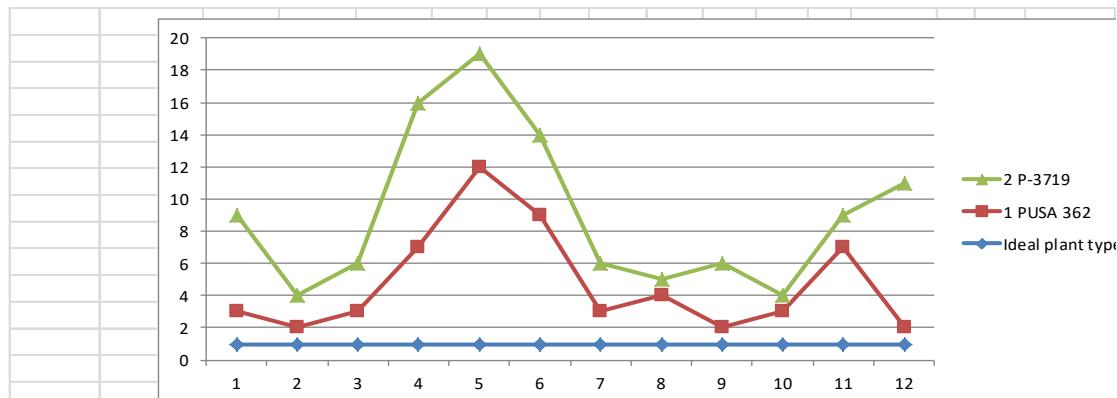 Figure 1: Graphical Comparison of Top Two Gram Varieties with Ideal Plant Type
<table><tr><td>SN↓</td><td>VARIETY↓</td><td>D 50% F</td><td>D 50% P</td><td>PH(CM)</td><td>PBPP</td><td>SBPP</td><td>D2M</td><td>NPPP</td><td>NSPP</td><td>BYPP</td><td>SYPP</td><td>HI%</td><td>100 SEED WT</td><td rowspan="2">CR</td><td rowspan="2">NCR</td></tr><tr><td colspan="2">Ideal plant type</td><td>1</td><td>1</td><td>1</td><td>1</td><td>1</td><td>1</td><td>1</td><td>1</td><td>1</td><td>1</td><td>1</td><td>1</td></tr><tr><td>1</td><td>PUSA 362</td><td>2</td><td>1</td><td>2</td><td>6</td><td>11</td><td>8</td><td>2</td><td>3</td><td>1</td><td>2</td><td>6</td><td>1</td><td>45</td><td>1</td></tr><tr><td>2</td><td>P-3719</td><td>6</td><td>2</td><td>3</td><td>9</td><td>7</td><td>5</td><td>3</td><td>1</td><td>4</td><td>1</td><td>2</td><td>9</td><td>52</td><td>1.16</td></tr></table>
The ideal plant type being visualized here, on the basis of twelve evaluated parameters, is early flowering, early podding, tall, having more primary and secondary branches, early maturing, more pods per plant, more seeds/pod, more biological yield per plant, more seed yield per plant, high harvest index and higher 100 seed weight. From same data set we can select various plant types by changing selection criteria as per our farmers' needs. From this NCR analysis it is also clear that top performer viz., PUSA 362 has scope for future improvement in parameters like secondary branches per plant (SBPP), days to maturity (D2M), harvest index (HI) and primary branches per plant (PBPP). These characters can be improved by crossing PUSA 362 with CSG 515 (ranking first in SBPP), IPC 94-94 or ICC 1009 (both ranking first in D2M), ICC 3535 (ranking first in HI) and KWR 108 (ranking first in PBPP) respectively.
Generating HTML Viewer...
References
5 Cites in Article
C Donald (1968). The breeding of crop ideotypes.
R Kumar (2021). Prescis (e) varietal recommender system: An example with 20 wheat varieties.
S Singh (2017). Normalized Cumulative Ranks for Plant Breeding: An Example.
S Singh,R Sahu,Tarkeshwar (2018). Development of Betalain Producing Callus Lines from Colored Quinoa Varieties (Chenopodium quinoa Willd).
Taramani Yadav,Gajender Yadav,Ashwani Kumar,Dinesh Kumar,R Yadav (2020). Salicylic acid and thiourea mitigate salinity and drought stress in wheat (Triticum aestivum).
Explore published articles in an immersive Augmented Reality environment. Our platform converts research papers into interactive 3D books, allowing readers to view and interact with content using AR and VR compatible devices.
Your published article is automatically converted into a realistic 3D book. Flip through pages and read research papers in a more engaging and interactive format.
An experiment involving 12 genotypes of Gram (Cicer arietinum L) was carried out at B. R. D. P. G. college farm to select varieties close to ideal plant types through a multi-criteria selection. These genotypes were grown in three replications under standard package of practices to raise a good crop. These genotypes were evaluated on 12 characters namely, plant height, days to 50% flowering, primary branches/plant, secondary branches/plant, days to maturity, number of pods/plant, number of seeds/plant, biological yield/plant, seed yield/plant and the harvest index. The normalized cumulative rank analysis was used to find out a preference order of these genotypes. The preference order is PUSA 362, P-3719, CSG-151, E-100YM, ICCI6015, GNG1581, RADHA, IPC 94-94, ICC15850, ICC 3535, ICC1009 and KWR 108. The top five genotypes from these could be recommended to farmers for cultivation in this region. A single table is enough to present the results of such experiments.
Our website is actively being updated, and changes may occur frequently. Please clear your browser cache if needed. For feedback or error reporting, please email [email protected]
Thank you for connecting with us. We will respond to you shortly.