Introduction
Both in Physics itself and in the common consciousness, phenomenological misconceptions have led to the triumph of the illusion that the Quantum-Mechanical Description provides the most complete picture of the Phenomenon and the gaping Peaks of Science. But the modern Quantum-Mechanical Description itself ignored Albert Einstein’s wise remark: "Some (CORRECT) equations of Classical Mechanics can be rewritten in operator form." Furthermore, the profoundly ironic warning of the founder of Quantization, Max Planck, was also ignored: "Apparently, I am not literate enough to understand what has been calculated on the basis of the Quantum Concepts I introduced." Thus, modern Quantum Theory has given rise to a jumble of formulas of the "most rigorous science" - Quantum Electrodynamics, with the "discoveries" of the useless God Particles and Black Holes[1]. In reality, the Schrödinger equation only adequately describes the s-orbitals of hydrogen-like atoms[2]. Nevertheless, this primitive description was also used in Chemistry[3], and it became virtually the primary tool underlying the Quantum Theory of Solid State Physics[4]. At the same time, unproven, arbitrary individuals assumed that these Quantum-Mechanical Models could be directly extended to NANO-effects.
The enthusiasm with which Quantum Mechanics began to be used to explain effects in Solid States somehow obscured the question of the fundamental POSSIBILITY of observing Quantum Phenomena in Macroscopic Dimensions. And new effects discovered on the NANO-scale, believing them to be a linear approximation between the Quantum and Macroscopic, were also taken for granted as OBSERVABLE. With the exception of Thermoelectric Effects, which, based on Boltzmann Thermodynamics, were considered UNOBSERVABLE in principle[5]. Therefore, a TABOO was imposed on the very EXISTENCE of NANO-Thermo-EMF. And their EXISTENCE, as well as their MEASURABILITY, follow from Ilya Prigogine’s Local Entropy Production, discovered by him in Flow Thermodynamics[6]. The registration of NANO-Thermo-EMF demonstrated that between Quantum and Macroscopic Effects, there exist previously unaccounted for ballistic Thermionic Effects[7], which are not inferior in magnitude to Photoelectric Effects (Fig. [fig:fig1]).
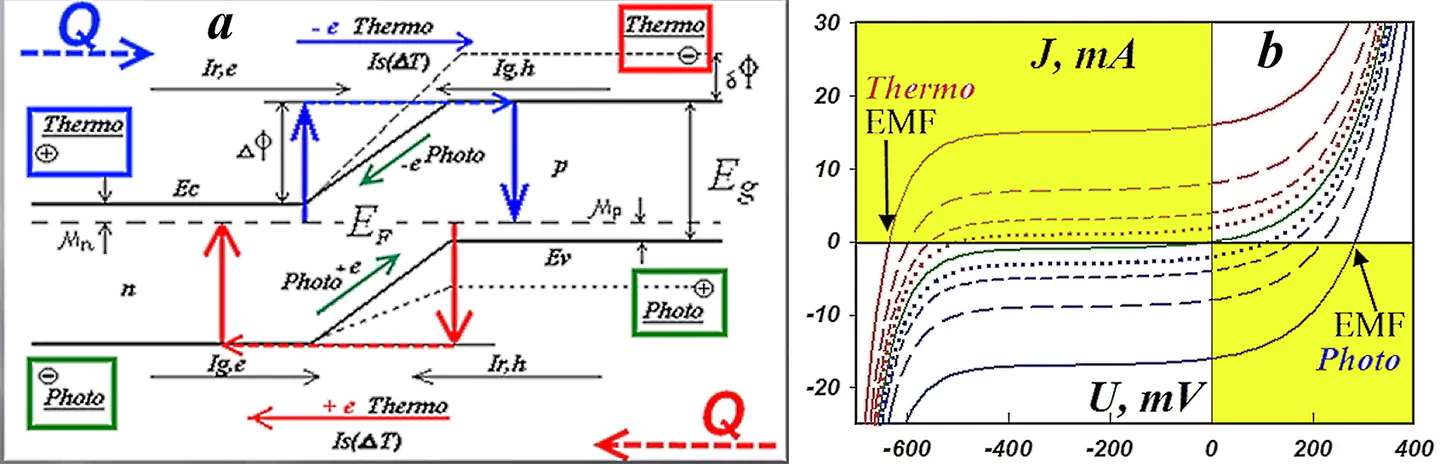
Schematic diagram of the formation of both photo-EMF and local thermal-EMF (left) in the p-n junction, leading to an antiphase shift in the current-voltage characteristics (right).
These recorded powerful thermionic effects directly indicate the need to transform the physics of semiconductor devices at the nanoscale[8], which has not yet been taken into account even in processor design.
However, they indirectly indicate the need to consider local entropy production in manufacturing, in nanotechnologies themselves.
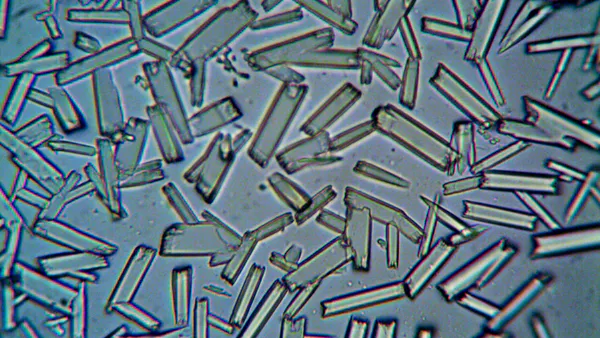
After all, modern nanotechnologies are essentially simply attempting to implement Feynman’s linear approximation: make devices smaller, and then make these devices even smaller (Fig. [fig:fig2]).
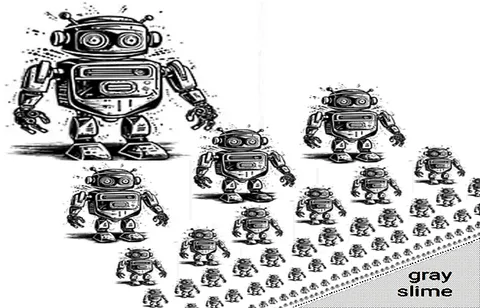
"Dead" NANO-technology, based on models using destructive measurement techniques, from the macro level down to the atoms, according to Feynman’s linear approximation.
And 3D printing of materials—without taking into account chemical bonds, allowed electron orbitals, and resonant states of the material, in general, without considering the NANO-structuring of the created materials—is largely a waste of time. To build NANO-technology, it is necessary to understand that it is described by the boundary between Classical and Quantum Physics[9]. Moreover, new properties of the created NANO-objects must be sought not in mystical changes in Fundamental Characteristics, which contradicts the adiabatic decomposition of Energy, but in NANO-structuring, which leads to gigantic effects. And there’s already a significant experimental and theoretical foundation for this, based on research into midi effects in natural and artificial superstructures, which simply need to be generalized and understood. However, attempts continue to be made to build devices with ever-smaller elements, simply following Feynman’s linear approximation. The developers themselves can’t always understand what they’ve done. This is how, for example, computer processors are made. But then, through programming, they’re effectively corrected. Moreover, after the first release of a "working" processor, an updated BIOS is released almost every month, correcting newly discovered errors.
Yet, Feynman’s "cellular automaton," implemented by dead NANO-technologies, is, in principle, an alternative to the von Neumann-Conway cellular automaton[10,11], confirmed at least by the fact that this model lifted the thermodynamic BAN on the existence of LIFE itself.
But, as was understood, the work of a living cellular automaton results in an increase in the object not at all like the growth of an ideal crystal - linearly, but fractally (Fig. [fig:fig3]).
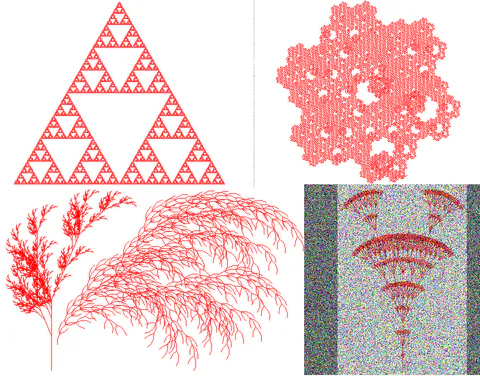
Fractal growth of an object and the superposition of the elementary "Flower" Fractal on Chaos.
So, the dynamics of shrinking a NANO-object using "dead" technology will also collide with the fact that Nature strives to create its OWN (resonant, quantum, according to Planck) structures on the NANO-scale. After all, as living "NANO-technology" clearly demonstrates, simply shrinking a tree will not produce its branch or root, and vice versa – a tree is not simply an enlarged cell (Fig. [fig:fig4]).

Bipolar fractal development of a tree’s crown and roots.
Living NANO-technology begins to build organic matter from the smallest fullerenes, capable of accumulating information about prehistory within their structure. And by transforming the "dead" Boltzmann statistics into "living" statistics with information accumulation, it sets the stage for fractal development. In living nature, the Creator determines whichever fractal first "came to hand"—those trees, vegetables, and organs will grow (Fig. [fig:fig5]).
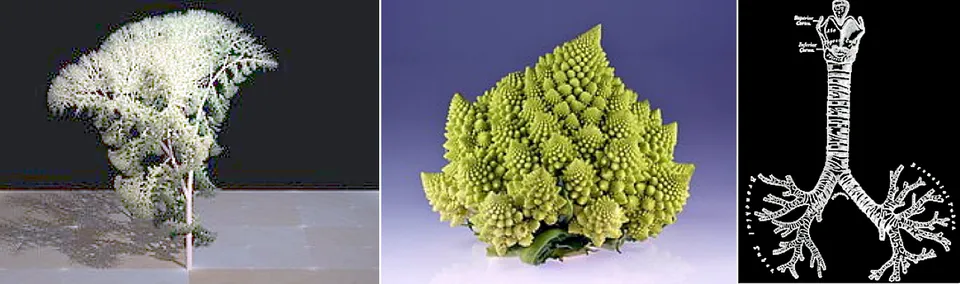
Fractal tree (left), kale (center), trachea (right).
Thus, while "dead" NANO-technology, according to Feynman, ultimately leads only to the destruction of life, living NANO-technology emphasizes that the INDIGENOUS structuring of the material at different scales must be taken into account. Furthermore, it must be taken into account that the artificial structures being created are in a metastable state, which, as is well known from "dead" technologies, leads to structural transformations at certain temperatures. This is most clearly demonstrated by incommensurate crystals. In particular, the quasi-crystal of Higher Manganese Silicide (HMS), which exists in a metastable incommensurate state over a very wide temperature range: 2–100 K[12]. This allows us to trace the dependence of the lattice of concentration solitons arising in it on heat treatment: rapid cooling (Fig. [fig:fig6]a) and slow drawing of the sample through a temperature gradient at the boundary of the solid-phase transition (Fig. [fig:fig6]b).
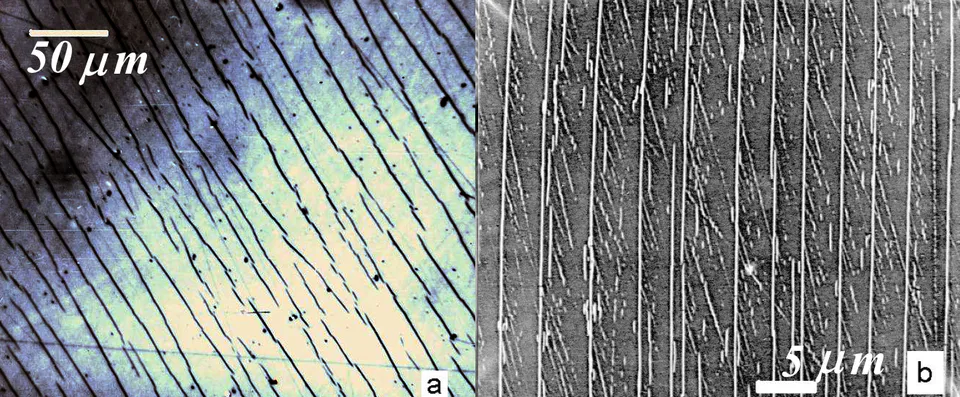
Optical photographs of a plane parallel to the disproportion axis C of an incommensurate HMS quasicrystal: a) during the stochastic formation of concentration precipitates approximately 3 μm thick during rapid cooling; b) during the formation of a regular network of concentration solitons perpendicular to the disproportion axis C, 300 Å thick, during slow cooling.
The rapidly cooled HMS samples (Fig. [fig:fig6], left) had a blurring of the Bragg reflections from the C axis that was almost two orders of magnitude greater than that of highly ordered HMS quasicrystals, which, in the region between concentration solitons, were close to the commensurate superstructure (Fig. [fig:fig6], right). However, judging by the moiré pattern between the concentration solitons (Fig. [fig:fig7]), the disproportion is also preserved in the highly ordered HMS quasicrystal.
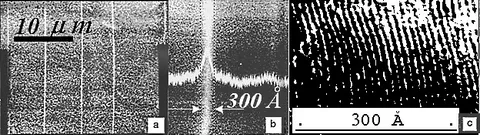
Scanning electron microscopy of the plane of a highly ordered HMS quasicrystal parallel to the C axis: a - overall picture, b - near a concentration soliton, c - transmission electron microscopy of the HMS quasicrystal between concentration solitons.
So, for the reasons noted, using nanotechnology without understanding the fundamental laws of the nanoscale is not only ineffective but also extremely dangerous. In the meantime, they employ a purely empirical approach, driven by bluff companies like the graphene company, which leads to a waste of effort and resources. Meanwhile,
The emergence of gigantic effects at boundary scales is clearly manifested at the nanoscale in the IR reflectance spectra of an incommensurate HMS quasicrystal (Fig. [fig:fig8]).
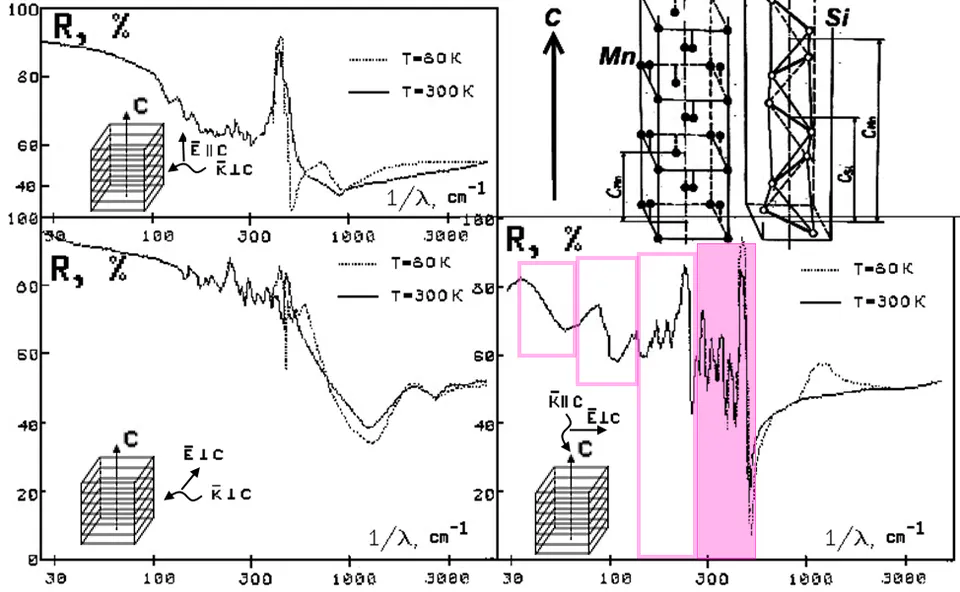
Crystal lattice of an incommensurate HMS quasicrystal (top, right) and the Giant Spatial Dispersion in its polarized IR reflection (the insets schematically indicate the direction of IR radiation propagation and its polarization relative to the concentration solitons in the HMS)[12] .
As can be seen from Fig. [fig:fig8], when IR radiation is polarized parallel to the incommensurate axis C (left, top), only one characteristic powerful lattice oscillator is excited, determined by a local dipole. Therefore, along the incommensurate axis of the HMS quasicrystal, multiple folding of the Brillouin zone, as in commensurate superstructures, does not occur, and the quasicrystal behaves like an amorphous body. While the polarization of IR radiation in the plane perpendicular to the incommensurability axis C (Fig. [fig:fig8], bottom), in the plane, as shown by Bragg reflections, with a clearly defined period of translation of the unit cell of the crystal lattice (Fig. [fig:fig8], top, right), we have a set of oscillators corresponding to the unit crystal lattice (highlighted in solid pink). However, judging by the presence of long-wavelength oscillators at fractional frequencies relative to the high-frequency set of oscillators (highlighted in pink frames), they arise due to the parametric interaction of the high-frequency set of oscillators with oscillations along the incommensurability axis C. Moreover, the contribution of increased conductivity along the layers of concentration solitons is significant only if the light propagates along these layers (Fig. [fig:fig8], bottom, left). Whereas, when light propagates along the C-axis, because the thickness of the concentration solitons is smaller than the skin layer thickness, no plasma reflection is formed (Fig. [fig:fig8], bottom, right).
It is also necessary to consider the influence of the size of nanostructure elements on the energy band structure of the materials used. This influence affects not only the change in the position of the energy bands of macroscopic materials, but also the change in barriers at the boundaries of dissimilar materials due to the Schottky effect (Fig. [fig:fig9]).
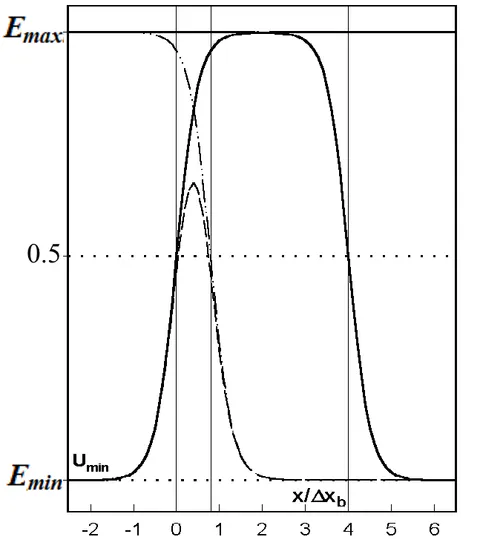
Reduction in the height of the potential barrier between materials when the thickness of the element decreases below the Debye length.
So, even on the path of element reduction using "dead" NANO-technology (moving from above), incommensurate quasicrystals arising due to solid-phase transitions in the crystal lattice in a metastable state demonstrate that the Feynman linear approximation is not observed. Indeed, all created artificial NANO-structures are in a metastable state. The same violation of the linear approximation is demonstrated by living "NANO-technology" on the path from below, from fullerenes, through the fractals shown above, and to microorganisms.
The General Principles of miniaturization of artificial, dead technologies[13] and natural, living technologies found by Nature show that Nature has long mastered the NANO-scale, and with much higher accuracy than we can consciously do (Fig. [fig:fig10]).
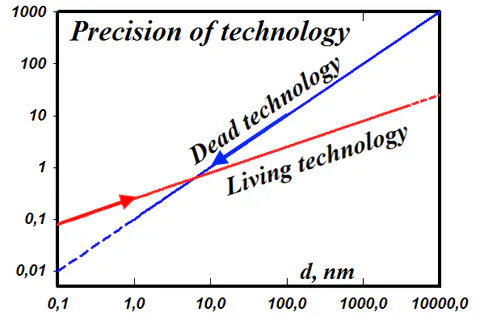
Diagram of the polar development of dead and living technologies.
At the same time, as shown by the dotted lines in Fig. [fig:fig9], the minimum limit of controllable sizes achieved by "dead" NANO-technology is significantly higher than that of living "NANO-technology." However, the upper limit of achieved sizes is the opposite: we have learned to build ships larger than a whale and skyscrapers and bridges larger than an elephant.
Here is a "simplest" example of the reproduction of a living cell and its development into the most complex neuron in our brains (Fig. [fig:fig11]).
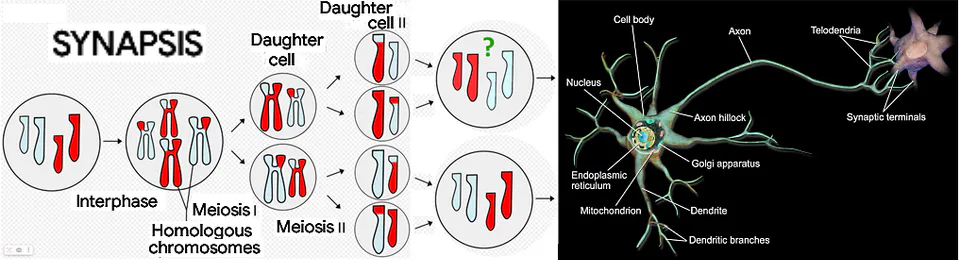
Living "nano-technology" embedded in cell reproduction through fusion and division (on the left is Synapsis—chromosome conjugation, the pairwise temporary convergence of homologous chromosomes, during which an exchange of homologous regions can occur between them).
From the formed cells, organs, nerve fibers, and the entire organism are formed (as demonstrated previously—fractally). But even in the area of UNDERSTANDING living "NANO-technologies," there is still no ELEMENTARY, consistent description. Thus, Fig. [fig:fig11] on the left will not give us the neuron depicted on the right, since its recurrent invariance is violated—it would be too wasteful for "wise Nature" to create an unnecessary anti-cell (marked with a question mark). Of course, this is important not only for constructing physical models, but also for developing medical models and, ultimately, for proper treatment.
So, for now, we have both a loose description of living "NANO-technologies," built on the basis of life-destroying physical methods, and a primitive description of "dead" NANO-technologies, based on crude quantum-mechanical models. Moreover, as has been shown, a fundamentally important aspect of the description of both living and dead Nature has been omitted.
Thus, without actually mastering even the micron scale, by simply reducing the size of components, we have built call centers out of processors that will not only soon consume the majority of the electrical energy produced by humanity, but also define TASKS that are supposedly relevant for all of humanity. And modern consumer society, built on bureaucratic principles, has no way to counter this. And not only does it counter this, but, on the contrary, it is engaged in a race to actively utilize Artificial Intelligence based on the practically used dead NANO-technology.
Thus, NANO-technologies have reached the social level. But the ELEMENTS of Electronics, created without reliance on Fundamental Science, consume billions of times more energy than the receptors and nervous system of a living organism. So, while these unintelligent NANO-technologies are devouring planet Earth, they leave no room for LIFE on it! And Artificial Intelligence only facilitates this.
In fact, what is currently happening in the world is a vortex, sucking all of humanity into complete UNCERTAINTY, which is now fashionably called a Singularity. Although this name is meaningless, as it denotes the same uncertainty, but for the mathematical function being used—i.e., the wrong function is being used to describe the observed process.