The primary idea of the following paper is to identify and analyze posts on Twitter about the origins of the coronavirus and the responses to the pandemic outbreak through the conspiracy theories that place China, communism, and other international social and political players as responsible for the creation and dissemination of the SARS-CoV-2. The theoretical contributions of this article resort to the understanding of conspiracy theories’ production and diffusion considered from a socio-anthropological perspective, bringing into evidence the concept of conspiracy theory. The methodology assumes that the means of experiencing reality and constructing new cognitive and social processes are currently being affected by the internet with its digital platforms, social networks, and new technologies, altering how societies understand the world and its events. The research shows that social networks, such as Twitter, can function as the basis for new social processes of this century. The integration of different generations with new technologies finds on the internet a new space for developing new common-sense knowledge and expressing political, ideological, and social stances.
## I. INTRODUCTION
If in other ages, technology was just an instrument; today, it became a way of creating and interpreting the world, a way that is made into reality generating new social and cognitive processes.
The technology used in social networks comprises a set of applications that allow the creation and sharing of the content generated by the user. Its design and development have been changing the social and cognitive processes by facilitating immediate communication and information sharing, being a new modality of entertainment, and above all, by making freedom of speech and public opinion tangible. In a way, social network users can create, receive and disseminate content, thoughts, and ideas on all subjects.
Amidst the whirlwind of information concerning the COVID-19 pandemic, the collective imaginary, represented by the virtual communities and profiles on the internet's social networks, ideologically identified with right-wing parties and politicians and with Christian-related values, and typically advocates of the former Brazilian president, Jair Bolsonaro, and of the former United States president, Donald Trump[^5][^4],[^3] has been disseminating, without any hesitation, conspiracy theories that claim the thesis of a plot between China,
WHO, communication business corporations and global entities, such as the Gates Foundation, for population control, a world communist domination and the resulting imposition of its moral agenda, which in turn affected the support for the sanitary measures adopted during the global health crisis.
Thus, this paper aims to present part of the research undertaken on the conspiracy theories disseminated in Brazil on Twitter profiles of influencers, journalists, and politicians with office, during the COVID-19 pandemic. The views discussed here place China and communism as the creators of the SARS-CoV-2 virus.
## II. RESOURCES AND METHODS
The chosen methodological approach considers that the means of experiencing reality are currently profoundly affected by social media and technology, changing how societies understand the world and its events. If technology was but an instrument in other ages, today, it became a way of interpreting the world, a way that made it into reality. In this context:
One of the fastest-growing forms of virtual communication is based on social networks. These networks are undoubtedly elements not just of social contacts but primarily represent efficient tools for spreading ideologies, cultures, and identities. (Castro; Spinola, 2015, p. 171).
Social networks host several public personalities' profiles (Twitter, Facebook, Instagram, and others), usually with millions of followers, or yet pages of communities of interests or varied subjects, a few of them gathering millions of people who like, share, and comment on the publications that interest them. In Brazil, the social network Twitter has 41 million users, according to the data from the research of Mídias Sociais Sentiocast[^1] institute done in 2022, which makes the country the second with the largest number of accounts.
Ellison, Steinfeld, and Lampe (2007) analyzed the internet's social networks as a support for social relations. According to the authors, social processes were modified and allowed the retrieval of ties and social bonds that, due to the distance, did not exist anymore. This study shows that the tool enables actors to maintain a social network with which they would no longer have contact. Besides publicizing ideological connections between participants and followers, communities and personal profiles hosted in these networks also allow conceptions and ways of interpreting relevant facts, such as the COVID-19 pandemic, to be exposed without discretion. Thus, the research identified, tracked, and analyzed posts made by political personalities' personal profiles on Twitter (twitter.com), who describe themselves as conservatives, and conservatives' communities and pages on Facebook (facebook.com), all connected with conspiracy theories. However, in this article, the analysis is restricted to those publications made on Twitter by influencers who spread conspiracy theories.
The data collection on conspiracy theories on Twitter was performed using its advanced search tool via keywords, precise sentences, and people's names. Keywords led to previously unknown profiles. Although many profiles had low engagement, examining their contact network (following and followers) made it possible to access profiles with at least 10,000 followers. Another direction the survey took was verifying who had done the initial post by looking at the retweets. The research collected a high amount of data; however, for this study, only posts that associated the SARS-CoV-2 virus with China and that had been continuously shared in the researched profiles were considered. Following this rationale, 16 profiles were chosen, including journalists, influencers, and elected officials.
Table 1: List of profiles surveyed.
<table><tr><td>Profiles</td><td>Twitter address</td><td>Followers</td><td>Occupation</td></tr><tr><td>Bia Kicis (@Biakicis)</td><td>https://twitter.com/Biakicis</td><td>1,000,000</td><td>Congresswoman</td></tr><tr><td>Eduardo Bolsonaro (@BolsonaroSP)</td><td>https://twitter.com/BolsonaroSP</td><td>2,400,000</td><td>Congressman</td></tr><tr><td>Elisa Brom (@brom_elisa)</td><td>https://twitter.com/brom_elisa -</td><td>409,000</td><td>Influencer</td></tr><tr><td>Clau de Luca (@ClaudeLuca_)</td><td>https://twitter.com/ClaudeLuca_</td><td>113,000</td><td>Influencer</td></tr><tr><td>Rosa - Conservador (@Conservadora191)</td><td>https://twitter.com/Conservadora191</td><td>43,000</td><td>Influencer</td></tr><tr><td>Direita Network (@Direita_Network)</td><td>https://twitter.com/Direita_Network -</td><td>24,000</td><td>page</td></tr><tr><td>Dr. Paulo Faria (@drpaulofaria22)</td><td>https://twitter.com/drpaulofaria22 - suspended account</td><td>1,000,000</td><td>Influencer</td></tr><tr><td>Guilherme Fiuza (@GFiuza_Oficial)</td><td>https://twitter.com/GFiuza_Oficial - es</td><td>1,000,000</td><td>Journalist</td></tr><tr><td>Horacio Hudson (@horaciohudson)</td><td>https://twitter.com/horaciohudson -</td><td>24,000</td><td>Influencer</td></tr><tr><td>Jair M. Bolsonaro (@jairbolsonaro)</td><td>https://twitter.com/jairbolsonaro -</td><td>11,000,000</td><td>President (2019-22)</td></tr><tr><td>Janaina Paschoal (@JanainaDoBrasil)</td><td>https://twitter.com/JanainaDoBrasil -</td><td>1,100,000</td><td>State Legislator of São Paulo</td></tr><tr><td>Jornal Brasil sem Medo (@JornalBSM)</td><td>https://twitter.com/JornalBSM</td><td>459,500</td><td>News media</td></tr><tr><td>iva kleber (@lordivan22)</td><td>https://twitter.com/lordivan22 -</td><td>187,000</td><td>Influencer</td></tr><tr><td>Paulo Ritcher (@PauloRitcher2)</td><td>https://twitter.com/PauloRichter2 -</td><td>13,800</td><td>Influencer</td></tr><tr><td>Gazeta Brasil (@SigaGazetaBR)</td><td>https://twitter.com/SigaGazetaBR - 3</td><td>388,000</td><td>News media</td></tr><tr><td>@Rconstantino - Rodrigo Constantino</td><td>account suspended by court order on Dec. 2022 (no active URL)</td><td>800,000</td><td>Journalist</td></tr></table>
During the data analysis, there was a careful checking of what is published and disseminated through websites like Agência Lupa, Fato ou Fake, Pública, E-Farsas, Fake Check, and other news portals. The choice between this news or rumors about the pandemic was due to the social imaginary's strength over conspiracy theories, equating communism and China with powerful capitalist corporations. At the same time, the conservative movement stands on the other side as the gatekeepers of Western world values.
## III. DISCUSSION AND RESULTS
Conspiracy theories have been described as attempts to explain the underlying causes of significant social problems based on secret plots between two or more powerful actors (Empoli, 2019, p.45). Multiple examples can come to mind, such as the unexpected death of a president, extraordinary terrorist attacks, and sudden illness challenging to contain. These theories come into play when a feeling of social uneasiness and a lack of understanding of the world are triggered (Resende; Gouveia; Moizés, 2021, p. 103), as well as when conventional explanations seem not to offer cognitive meaning, that is, a plausible explanation.
In short, the COVID-19 virus appears in circumstances in which critical social events lead to enough uncertainty between social groups, and the conventional explanations are not satisfactory. Therefore, it is essential to clarify that the existence of plots and power ambitions in human groups is not denied; it is enough to observe our immediate surroundings to recognize that people are capable of conspiring for their benefit or a group's benefit, creating plots and having corrupt behaviors. The impact of these conspiracies increases if we take them to scenarios with greater power. However, on the one hand, there is the recognition of these behaviors in the human spectrum; on the other, there is the call for a perpetual conspiratorial explanation of the significant social problems, detrimentally of the multiple causes that intervene in the world's complexity. The profile of a person with conspiratorial beliefs can be very broad ranging. Unlike the questions that can be made to other kinds of views, such as the supernatural ones, conspiratorial beliefs (when they are not supernatural) have more extensive support on reality because they point to conspiracy behavior as something natural and observable in human behavior.
Experimental researches highlight a characteristic particularly relevant in people with conspiratorial reasoning: the remarkable tendency to confuse correlation with causality, to assign a causal explanation even with random or co-occurring events (Crocq, L; Doutheau, C; Sailhan, M, 1993, p. 4). For example, to causally combine the quantity of chocolate consumed by a country with the number of Nobel Prize awards won or to say that presidential deaths in different countries in the same year are evidence of planned secret assassinations.
As Loic (2016) points out, "the conspiratorial reasoning [...] seems to be characterized by the disposition to trace imaginary causal connections between events" (Loic, 2016, p. 258). Another characteristic associated with conspiratorial reasoning is a preference for more intuitive information processing instead of a more analytic one (Oliveira, 2019, p. 4). In other words, people who argue in favor of conspiracy have a higher probability of overestimating the knowledge coming from intuition rather than from a slower and more methodical process.
Although intuition is often a valuable and efficient process, overestimating it at the expense of a careful and detailed analysis can lead to precipitate conclusions without the due contrasts between options required to solve a problem. Therefore, in the face of a significant social event, a menu of options offers multiple explanations; these can also be complex, where many actors are interrelated. The conspiratorial reasoning most likely decides to value more the information that it feels to be the correct one. Although this could be normal for everyone, the difference lies in the lack of commitment to reevaluate this consideration in light of a more rational and analytical process.
The urgency of the SARS-CoV-2 virus outbreak highlighted the need to answer questions about the new disease, its primary symptoms, modes of transmission, how to immunize the population against the virus, and its origin. Thus, it is perceptible that the news exchange flow has increased significantly, something necessary in times of answer scarcity. However, controlling the veracity of each piece of information obtained and shared also becomes a challenging task, even more so when there are many means of distributing and exchanging such news. Social networks such as Facebook and Twitter are today important means that enable interaction between people from different parts of the world. As such, thorough research performed on both websites will guide the investigation of how the exchange of news promoted by profiles and communities has contributed to the substantial increase in theories developed without any study or scientific background about the outbreak of the new SARS-CoV-2 virus in addition to the reasons that lead them to produce it.
It is clear that society seeks answers to each new event that arises in the contemporary world; as such, the development of theories has shown to be necessary in the process of giving explanations to particular phenomena that emerge without any other clear precedent fact, such as the example of a virus outbreak. Even so, the development of these theories does not always possess a scientific background and only seeks to give a quick explanation so that its interpretation seems logical and accessible to other people; this is how conspiracy theories are born. This fact must also be observed as a way that common sense distrusts scientific research considered by these groups as an ally to large pharmaceutical corporations and left-wing government interests.
Twitter's posts analysis presented here is intended to demonstrate the range to which this information reaches, analyzing the user's interaction from its likes, comments, and shares, showing that the content of these publications represents a collective imaginary construction to create responses to the unknown, using the plot thesis as a way to prove its logic.
In fact, seeing a plot (big or small) behind a drama, a disaster experienced, is not irrational in itself, especially when it comes, at first, to seeking appeasement and tranquility by building a feeling of sense, rebuilding ties and causalities, tracing the outline of a fair world order. (Nicolas, 2016, p. 264)
The conspiracy theories produced about COVID-19 put into focus issues that permeate society and have enabled political, social, economic, and health issues from around the world to be raised to make sense of the new virus' origin. Due to its first cases being registered in China, the conspiracists believe the country holds the technology necessary to create the virus in a laboratory. This reasoning was born by relating China to communism's pursuit of world control, joining forces in Brazil with the Worker's Party (PT, in Portuguese). According to the posts below, due to its economic upswing, China would want to control the world's population through vaccines produced to immunize against a virus created by itself.

### Direita Network
$$
@Direita_Network
$$
A origem do Covid-19? O Instituto de Virologia de Wuhan criou umaarma biologica,diz ex-chefe da equipe de investigacao do governo dos EUA. E mais uma do Partido Comunista Chinês, genocida e aliado do PT (21/03/2021) #LulaNaCadeia #coronavirus

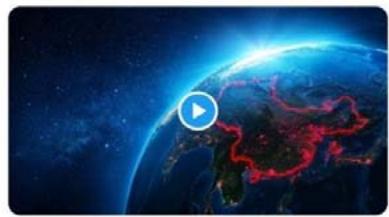 Wuhan Institute of Virology 'highly probably' Figure 12: From: https://twitter.com/direita_network/status/1381716220005744641?s=21.
Retrieved February 15th, 2022
The image above is a post made on Twitter by the "Direita Network" (@Direita_Network) page. The profile can reach 25.4 thousand followers who follow the published tweets, which is a significant number for a page that spreads conspiracy theories and unsourced facts. The high number shows how many people are inclined to receive this information, which turns the virtual into an increasingly insecure field.
The tweet above had a small engagement, with 6 (six) likes and 4 (four) retweets. However, this page has 219 tweets and is followed by politicians such as Eduardo Bolsonaro (@BolsonaroSP), Carlos Bolsonaro
(@CarlosBolsonaro), and Flavio Bolsonaro (@Flavio Bolsonaro), important figures in the Brazilian right-wing spectrum, all of them being sons of the former president of the Republic, Jair Bolsonaro, who led the country between 2019-2022. The support from these people of such importance makes the population believe in the beliefs they advocate, so all information they share is considered trustworthy by their followers.
That way, it is possible to observe that at the same time that the conspiracy theories weave responses to the uncertainties presented, they also raise a distrust based on the interests that China would have to create a virus in a laboratory and its consequent connection with PT (Brazilian Worker's Party), assuming therefore that the party once in charge would be interested in implementing the communism in the country.
As stated in the Twitter page's name, "Direita Network", the posts it shares are of political content, sharing the ideals of the Brazilian right wing; that way, it is possible to think that every conspiracy theory described on the page represents an ideological perspective of the profiles and communities researched. The fact that China currently presents itself as a rising economic power made it potentially responsible for the origin of the SARS-CoV-2 virus. Aligned with global domination of production supply chain thinking, it nurtured common-sense thinking established in the 20th century around communism.

#### Elisa Brom
$$
@brom_elisa
$$

Então quer fazer que o Chefe da Missão Internacional que investiga a origem da COVID-19 enumerated varios motivos para o ter surgido no Laboratório de Wuhan o que foci dito pelo Dep @BolsonaroSP ha 1 ane 5 vezes
O Embaixador ja se manifestou ou seu vassalos brasiliros?
 Figure 24: From: https://twitter.com/brom_elisa/status/1425889446470299654?s=21
The post above was published by an influencer's Twitter profile which identifies herself as Elisa Brom (brom_elise); the content of the publication also presents a conspiracy theory targeting China, stating that the virus had been created in Wuhan's laboratory.
The tweet above also states that the head of the Joint Mission responsible for investigating the COVID-19 origin is gathering data that proves that the virus was created in a lab. Elisa also cites Congressman Eduardo Bolsonaro (@BolsonaroSP), stating that he had already presented a response to the COVID-19 origin, implying that his response had been ignored by the authorities, who are now raising the possibility that the hypothesis is true. In the same publication shared on Twitter by Elisa Brom on March 19th, 2020, the Congressman states that:
Anyone who has seen Chornobyl will understand what happened. Substitute the nuclear power station by the coronavirus and the Soviet dictatorship by the Chinese. [...] Once again, a dictatorship chose to hide something major instead of exposing it with its political costs, which would have saved countless lives. [...] It's China's fault, and liberty would be the solution.
The post engagement has reached over 700 retweets, more than ten tweets with comments, and more than 2,600 likes. Brom's page on Twitter has beyond 200 thousand followers, between them the Congresspeople Bia Kicis (@Biakicis) and Eduardo Bolsonaro (@BolsonaroSP), the councilman of Rio de Janeiro, Carlos Bolsonaro (@CarlosBolsonaro), and the journalist and influencer, Rodrigo Constantino (@Rconstantino), among other influential people in the platform, who express opinions and publish several pieces to increase the number of followers who support the Brazilian right-wing.
To think of a quick response to the unknown with conspiracy theories contributes to placing the public in a position of comfort and raising political questions. As mentioned above, this tool reinforces the negative perception of China, communism, and PT, the latter as a potential ally to the Chinese.
In the tweet below, even after a few months into the pandemic, the Chinese responsibility still populates the internet's social imagination, at least in Brazil:
 Figure 35: From: https://twitter.com/lordivan22/status/1426156814555652099?s=21
#### ivan kleber
@lordivan22
China:China rejeitou proposta para o $20^{\circ}$ estudo na origem da Covid-19.
Pequim recusou na sexta-figura umana novainvestigacao da OMS dizendo que apoiava "materiaientifica" em vez de "interferencia politica" para descobrir como a pandemia mundial de coronavirus
#### 09:20 · 13/08/2021 · Twitter for iPhone
Retrieved February 15th, 2022
The tweet's content is the spread of the conspiracy theory regarding the SARS-CoV-2 virus creation as a deliberate creation. The user states that China had rejected a second survey on the virus' origin, inciting that the country has created the virus and is now preventing the responsible authorities from investigating the COVID-19 origin's veracity. Every post about the conspiracy theories around the SARS-CoV-2 outbreak mentions the current political framework, showing how this factor directly relates to the unusual events that emerge worldwide.
The post above has reached over 828 likes and 161 retweets; the page responsible for the post gathered over 126 thousand followers; among them, there are some known names such as senator Flávio Bolsonaro (@BolsonaroSP), the journalist Augusto Nunes (@augustonunes), and the Congresswoman Bia Kicis (@Biakicis), all of them aligned with the Brazilian right-wing ideological project.
The profiles analyzed range from thousands to millions of followers, who share more than they comment; however, some of these comments are reproduced below since they validate the conspiracy theory thesis about China.
Commentator 1: This virus was methodically planned by China so that the new communist world order would be implemented.
Commentator 2: Cold War, chemicals to reduce the population, starting from the elderly to put an end to micro and small entrepreneurs once and for all. To mix the pandemic with politics was a bad thing.
Commentator 3: But Brazil is weaker; that's why China and the communists want our country so badly.
Commentator 4: The only pandemic is corruption... the disease itself doesn't kill, but this Brazilian parliament does.
Commentator 5: Guys, this is a political game; the more people die, the better for the governors; they're hiding the medicines I saw in a post, so they want the poor people to die; only the strong will survive; it's an anti-Christ thing. It's an anti-Christ preparation to eliminate one-third of the people worldwide.
Commentator 6: And yet, think with me, China is selling overpriced equipment, ventilators of 60 thousand now cost 600 thousand reais, then you believe that they are worried about the world's health? Or with its own economy? The USA and Russia sanctioned China because both distrust the Chinese; another situation is that the Chinese government knew the seriousness of the virus about seven days before, but it chose to shut it down, and then I ask you, what was their intention? It is known that the virus came from a researcher and not from the Wuhan market as they reported, and then I ask you, an experienced man, what do you do to see if your experiment works? They're testing to see its degree of efficiency.
Commentator 7: Masks duly contaminated/infected with COVID-19 to finish fucking with the Brazilians. After all, this country has to be depopulated as soon as possible so that the Chinese can take over; it is as simple as that.
Commentator 8: The issue is not the contamination. There's no such risk! The problem is that Brazil is giving money to these communist motherfuckers. This virus has spread because of China's communist party. Every country should boycott China.
The engagement and the comments on these profiles that share this kind of content are primarily of individuals who identify themselves as ideologically Christians, conservatives, and right-wing, formed by anonymous people and well-known people on the Brazilian internet and television. From the commonsense standpoint, conspiracy theories' mass sharing turns them into truths impossible to refute once they are usually posted and shared by influential people in this new social reality formed mainly through online interaction.
Twitter is one of the leading social networks in the world. There is a very rapid flow of information and amount of posts that connects people from several parts of the planet avid for content that affirms their suspicions and reasserts their moral values. Thus, in this context, simply looking at and retweeting a post is immediate and does not go through any fact-checking. In the world marked by social networks, there is always a rush to pass on content that will fall to the liking of followers.
## IV. FINAL REMARKS
The cases considered here demonstrate that conspiratorial beliefs have become a form of social explanation of everyday knowledge and an increasingly common way of explaining complex issues through simplified thinking, especially in a conflicting political context. Still, it also reveals a distrust regarding the official institutions, global multilateral organizations, and science, all considered to be in a plot with communism and China.
The new situations that have arisen in today's world make it necessary to quickly respond to the unknown, to establish a logic and an explanation about the latest global scale health phenomena. Conspiracy theories produce a feeling of safety by identifying the enemy to be fought; in the case of the COVID-19 pandemic, the danger does not lie in being infected by the virus but rather in the idea that China possesses political and economic interests and will do everything to impose its agenda to the world.
[^2]: Tweet translation: "COVID _(p.4)_
[^3]: The name of the page could be translated as "Right-Wing Network". _(p.4)_
[^4]: Tweet translation: "So, it means that the Head of the Joint Mission that investigates the COVID _(p.4)_
[^5]: Tweet translation: "China: China rejected a proposal of a $2^{\text{a}}$ survey on the COVID _(p.5)_
[^19]: origins. Beijing refused this Friday a new WHO investigation claiming that it supported "scientific inquiry" rather than "political interference" to discover how the coronavirus global pandemic started." _(p.5)_
Generating HTML Viewer...
References
7 Cites in Article
Fernanda Castro,; Meneses De Miranda,Carolina Spinola,De Andrade (2015). Metodologia de pesquisas na internet: breves considerações sobre uma pesquisa qualitativa em turismo nas redes sociais.
L Crocq,C Doutheau,M Sailhan (1987). Les réactions émotionnelles dans les catastrophes.
Nicole Ellison,Charles Steinfield,Cliff Lampe (2007). The Benefits of Facebook “Friends:” Social Capital and College Students’ Use of Online Social Network Sites.
Gustavo Empoli (2021). Os engenheiros do caos.
Loïc Nicolas (2016). As teorias da conspiração como espelho do século: entre a retórica, a sociologia e a história das ideias.
A Rezende,V Gouveia,H Moizéis (2021). Crenças em teorias da conspiração: Uma aproximação desde a Psicologia Social.
Gessyca Rocha,Clara Velasco,Domingos,Roney (2022). Fato ou Fake: criar e compartilhar fake news é crime?. g1.
No ethics committee approval was required for this article type.
Data Availability
Not applicable for this article.
How to Cite This Article
Aparecido Francisco dos Reis. 2026. \u201cNarratives about the Origin of COVID-19 on Twitter with an Emphasis on Conspiracy Theory\u201d. Global Journal of Human-Social Science - H: Interdisciplinary GJHSS-H Volume 23 (GJHSS Volume 23 Issue H2): .
Explore published articles in an immersive Augmented Reality environment. Our platform converts research papers into interactive 3D books, allowing readers to view and interact with content using AR and VR compatible devices.
Your published article is automatically converted into a realistic 3D book. Flip through pages and read research papers in a more engaging and interactive format.
The primary idea of the following paper is to identify and analyze posts on Twitter about the origins of the coronavirus and the responses to the pandemic outbreak through the conspiracy theories that place China, communism, and other international social and political players as responsible for the creation and dissemination of the SARS-CoV-2. The theoretical contributions of this article resort to the understanding of conspiracy theories’ production and diffusion considered from a socio-anthropological perspective, bringing into evidence the concept of conspiracy theory. The methodology assumes that the means of experiencing reality and constructing new cognitive and social processes are currently being affected by the internet with its digital platforms, social networks, and new technologies, altering how societies understand the world and its events. The research shows that social networks, such as Twitter, can function as the basis for new social processes of this century. The integration of different generations with new technologies finds on the internet a new space for developing new common-sense knowledge and expressing political, ideological, and social stances.
Our website is actively being updated, and changes may occur frequently. Please clear your browser cache if needed. For feedback or error reporting, please email [email protected]
Thank you for connecting with us. We will respond to you shortly.