"D'autres après nous encore receivevront sur cette terre le premier soleil, se batront, apprendont l'amour et la mort, consentiront à l'enigma et reviendront chez eux en inconnus. Le don de vie est adorable" (Camus et al., 1965, p. 64)2.
## I. INTRODUCTION
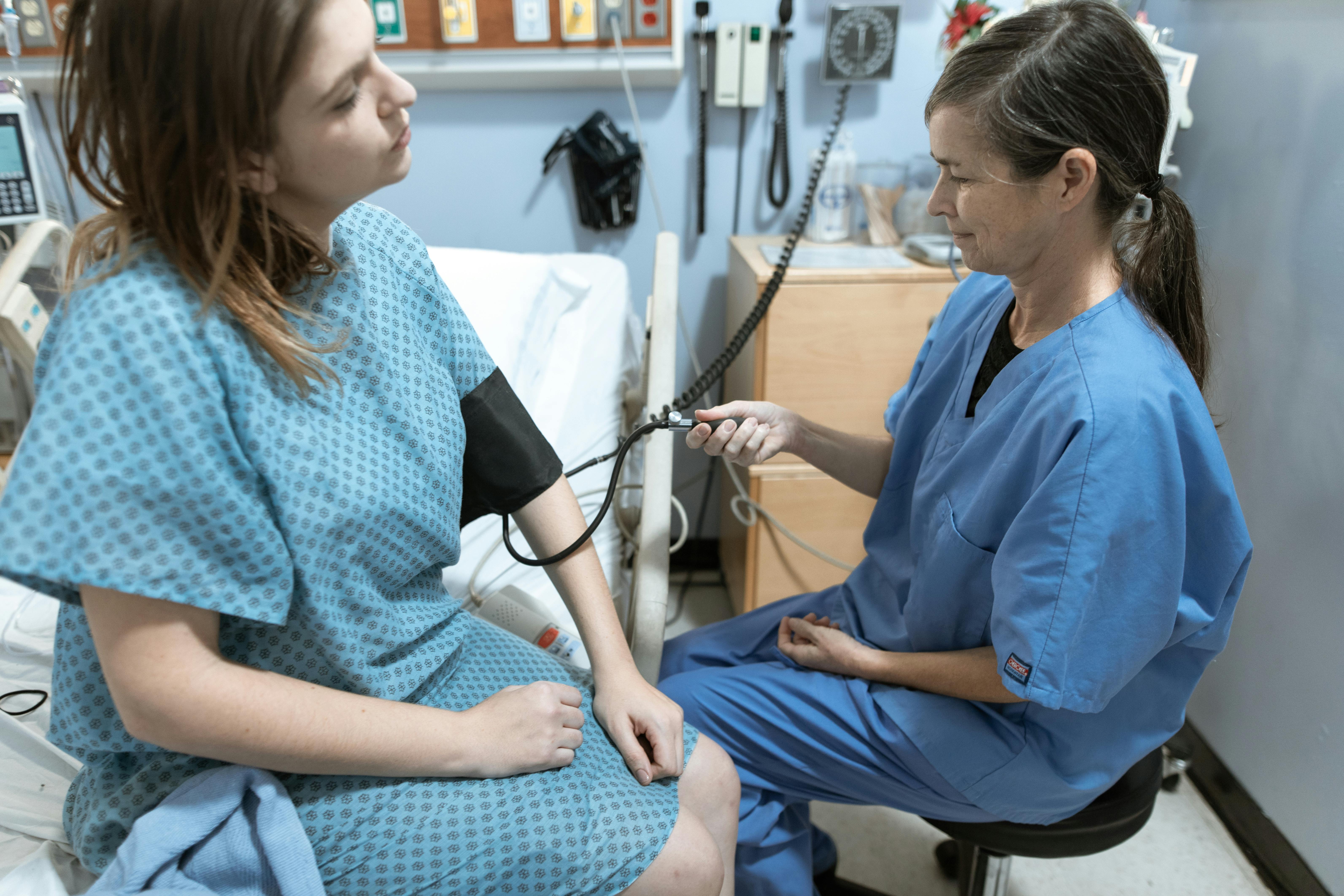
"Bien-traitance" (Well-treatment). Although this term does not appear in our dictionaries, it is nevertheless used in health and medico-social vocabulary. It appeared in the 1990s in the field of childhood protection and was spelled in two words separated by a dash "well-treatment" to signify that the care of very young children is "an issue of humanity" between all the linked partners (Anesm, 2018, p. 13). "Well-treatment" has quickly spread to the sector of care for elderly people living in institutions or at home to mitigate the risk of "mistreatment" or "deprivation" identified in front of "vulnerable" or disabled populations.[^3]
Since 2008, ANESM's recommendations[^4] for good professional practices have emphasized that well-treatment is part of an individual and collective culture that places the acts to be fulfilled by professionals in a process of continuous improvement of care and support.
Despite this obvious intention intended to produce the desired effects, a recent article in the professional press considering[^5] the "training on well-treatment in nursing homes" emphasizes from the very first sentence: "Situations of mistreatment of the elderly and adults with disabilities are on the rise. By $13\%$ in 2018". He added that these figures are likely to be "well below reality". The topicality of this observation invites the trainer who addresses this question to analyze his own contributions and the researcher in educational sciences that we are also to bring his method to investigate the facts to build an understanding that allows him to accompany the progression from the intentions instituted to the acts carried out.
The level of dependency of the elderly in these institutions is steadily increasing from year to year (Libault, 2019, p. 14). Everyone, whether they are concerned or not, can imagine the daily reality of the possibilities in nursing homes and its direct impact on the physical and mental hardship of those involved in the necessary care and support for disoriented people with dementia (and Alzheimer's disease is not the only one $^{6}$ ). In this context (clamors without memory, smells without holiness, damaged bodies carrying the weight of 90, 100 years or more, and behavioral disorders that are difficult to manage), "the risk of trivializing the human is not far away. And this, without any malicious intent, just a lack of awareness, an attenuated or scarce sensitivity, a lack of vigilance" (Hesbeen, 2014).
Does this risk of trivialization sometimes lead to an individual or even collective overabundance of petty negligence, and other times to "acts of mistreatment [which] remain highly individualized according to the person and the context" (Boissières-Dubourg, 2011, p. 129)?
Amid this, it is necessary to "take care" to work in well-treatment. Intentionally, a number of recommendations for good practice are promoted (Anesm, HAS), "Well-treatment" educational kits celebrate more than 12 years of advertising (Ruault et al., 2010), and inspiring books or articles have been reissued or flourish on this subject (Devigne, 2010).
If all these productions sustain the action by means of a thought referenced to the field, P. Svandra testifies:
Yet, like many caregivers, I feel a certain embarrassment about these discourses, especially when they become normative and resemble a disguised form of prescription. Indeed, is the care that is highlighted and praised really the care we know and practice, the one that constitutes the daily life of nurses, nursing assistants or other health professionals? (Svandra, 2011, p. 24)
Therefore, our article will not assert anything based on observations that we have been able to make, or the comments we have collected from people who practice these professions, but it will try to produce a question that only professionals will be able to answer themselves in full knowledge of the facts, in order to face the pragmatic urgency of addressing the challenges associated with well-treatment in nursing homes.
On a first contextual step, we will try to approach well-treatment in the context of the care offered to elderly people in nursing homes and to present how "taking care" would be a humanized medium. Then, our theoretical framework will be essentially made up of Ricoeur's ethical aim (1990) since it associates on the one hand individual intentionas the aim of a "consciousness in the direction of a thing to be done by me" (p. 86) and "the aim of the 'good life', with and for others, in just institutions" (p. 202). Subsequently, our problematic study will object to question the boundary between well-treatment and mistreatment, without seeking a pragmatic defense or functional alibis between the two concepts, from the point of view of the professional act to be carried out, in the process of being carried out or carried out. Next, we will specify the methodology chosen. We will continue by briefly presenting three situations related to key moments of care to have field data specific to the structure of our qualitative analysis. The proposed reflexive analysis will be based on the identification of a major anthropological need, the satisfaction of which promotes well-treatment in the acts of professionals. Finally, we will ask a question, the answer to which will determine the place and the quality of act scarried out between just treatment and mistreatment, which, in our opinion, do not deserve any ethical watering down.
## II. BACKGROUND
### a) EHPAD
In France, this terminology is now adopted by the collective consciousness to name the accommodation and care structures that take care of dependent elderly people. While this acronym may have surprised when it was invented[^7], today everyone knows what it is all about, and this was the case before the media spotlight that the health crisis of March 2020 led to shine on them.
In addition, recent scandals (Orpea on january 2022, Korian on february 2022) paint an even more turbulent context than during the Covid-19 crisis, which reinforces the obligation of ethical reflection on the support of elderly people in institutions (Castanet, 2023). Indeed, media revelations highlight institutional mistreatment resulting from the search for economic profitability to the detriment of care within these private and lucrative groups.
Nevertheless, an EHPAD can be considered as a space that combines three distinct and complementary places.
Indeed, it offers itself as a "living space" for dependent elderly people since they live there 24 hours a day. As a result, it is at the same time a "place of compensation" for dependence. And, by necessity, a "place for the provision of care" for coordinated medical and paramedical attention.
In order to preserve as best as possible the "freedom to come and go" of residents (Lacour, 2012) and respect for their inalienable dignity, the decree of 8 September 2003 relating to the Charter of the Rights and Freedoms of the Person Entered[^6], sets out in its annexes all the articles that each institution must include in its own charter, its dogmatic creed, with a view to promoting well-treatment within it. Before listing more than 20 actions to do or not to do[^9], L. Sokolowski (2013), a geriatrician, states that the charter provides, in his view, "a serene and motivating working environment for caregivers" (p. 284), an assertion that is debatable in relation to P. Svandra (op. cit.), philosophical caregiver.
Considering, like P. Charazac that institutional abuse is already widely documented (2014, p. 41), we will not elaborate on it.
# b) "Care-givers" do
"Prendre soin" is the consensual translation of the Anglo-Saxon term take care. According to F. Collire's (1982) anthropological approach in the context of nursing, "prendre soin" refers to customary and habitual care related to the functions of maintenance and continuity of life, while the term cure refers to reparative care related to the need to repair what is an obstacle to life (Péoc'h, 2011). Between the care required in a nursing home and that required in an emergency department, it is easy to situate the nuance of the approach, even if nowhere do they exclude each other.
Anthropology in the context of nursing makes it possible to question the heart of human experiences and to define concerns about the dimensions of the lives of men and women in situations of dependence.
The care-givers broaden the notion of professional acts and behaviors which, in the health and medico-social field in general, they could not be reduced to "technical gestures" to be applied according to specific "clinical cases". Wouldn't it be more relevant to speak about the care-givers instead of the "taking care" in order to follow the purpose of doing care better like a "to give" even a donation? The correctness of the language translation we have given at the beginning could be debated because the meaning we attach to the terms we use determines the way in which we act. From an interpretative translation "to take" is not "to give" either in verb or in action.
"Care-givers" in gerontology are part of an actancial modality of well-treatment that cares about "human beings" in vulnerable situations (De Broca, 2014).
Of course, I would like to avoid any confusion.
My questioning does not relate to the English language but it underlines the accuracy of the translation that the French have made of it.
It is therefore appropriate to link to this actancial modality the Ricoeurian notion of solicitude leading encounter with the other by responding to his present specificity and in a singular way. In nursing homes, solicitude manifests a concern for attention to others in the sense that "nothing is trivial for those whose bodies and sometimes lives are subjected to the hands of healthcare professionals" (Hesbeen, 2014). It translates into actions the commitment to be obliged to the other in the face of "vulnerability (...) of our lives" (Svandra, 2011, p. 24) increased by advancing into old age.
W. Hesbeen, a nurse and doctor of public health, has developed in the book entitled "Help and care for the elderly: revealing the beauty of practices, a citizen challenge with a view to preserving existence"(Hesbeen (coord.), 2020), variations through which each author illustrates how much caring is a movement of individualization and permanent personalization of action A caregiver who strives to differentiate in practice: "taking care" from "giving care" (1997).
Faced with these characteristics that we have just stated, this author recognizes that:
Everyday life is thus riddled with traps which, despite the intention of doing the right thing, lead to neglecting that the other is another, another who, even if sick or dependent, does not have the function of letting himself be done, another who must be brought into existence, that is to say, to get out of routine and the multitude, so that he feels considered, that he feels "simply" looked at, like a human, that is to say a special person like no other, whatever his state and the reason for his presence (Hesbeen, 2014).
It appears that this benevolent consideration of care is based on a way of being, saying, acting and thinking about care "in relation to the singularizing function of phronesis" (Riccoeur, $^{10}$ op.cit., p. 151).
In nursing homes, this practical wisdom would lead caregivers to develop their questioning, listening and teamwork to better meet the needs of the elderly people entrusted to them because of their own loss of autonomy and because of the "professionality" of those who work there and which we characterized in another research that was based on a similar context (Di Patrizio, 2019, p. 8-9).
The questioning that a professional genuinely addresses himself or herself regarding his or her own actions consists of a positive approach to continuous improvement of practices, the challenge of which is to remain attentive to the risks of mistreatment not only to prevent it but also to promote well-treatment in care relationships tied around the person of the resident in a dependent situation. This principle follows the postulate of the pediatric neurologist and philosopher A. De Broca, namely that "care is an ethic in itself" (op. cit.).
## III. DEFINITION OF RESEARCH
### a) Problem and hypothesis
Given our "multi-referenced posture" (Péoc'h, 2011) (trainer versus researcher), the problem of this research is inspired by an expectation often expressed by trainees in continuing education. For them, it would be a question of succeeding in determining "the limit" of the "antagonism betweenmisand well-treatment" (Charazac, 2014) in order to avoid falling out of preventive recommendations that are always subject to caution.
This questioning of the limit presupposes that there is for caregivers a territory of actions specifically conducive to well-treatment and another contiguous one where mistreatment would shed its weight on the state of physical health and on the psychic, social and identity balance (dignity of the subject) of the person housed in an institution. The limit envisaged therefore questions the nursing activity carried out by its operator.
Doesn't it often seem to follow in the footsteps of an accepted facilitation of work where care is certainly carried out (cure) but solicitute, "care" does not systematically accompany it? The limit concerns the one who crosses it. Some reasons may be explanatory (lack of time or means, fatigue, diminished relationship with a person) but these should never crown the facilitating acts as lesser evil measures.
Deliberate questioning with oneself dismisses habituation to sacrificed or sacrificial acts and gestures; It is a question of building a professional identity and respecting the dignity of the elderly. To convert all the acts, would it be a matter of thinking, understanding, and working in nursing homes as in a community of human existences that requires that in old age an anthropological need must be taken "enough well" into account to promote self esteem, regardless of the severity of the vulnerability?
### b) Methodology and Presentation of Research Data
Our scientific approach comes under philosophical-anthropology because we wish to address the meaning that the working woman or man gives to the care he or she practices in gerontology. Our research is part of an erotetic purpose[^11] since it aims to:
- Formulate a question whose answer given by the subject will place his action on one side or the other of the limit,
- Toinitiate the analysis of activity through the exercise of a thought without defined presuppositions.
Our approach will be ethical, insofar as it will be attentive to the development of a boundary between well-treatment and mistreatment, understood as anenlightening perspective of and for the action carried out by each and all professionals.
The challenge of our research is to question the action simply as we might watch ourselves do it in front of a mirror and observe, then decide: to stay or to cross the limit on the other side, between benevolent attempts and beneficial will.
To obtain usable data within the framework of our hypothesis, we conducted a non-directive interview (45') with a nurse coordinator $^{12}$ working in a nursing home. She described, without ambiguity or hesitation, three situations that she frequently encounters in the practice of the professionals she supervises, and which seem to us to be enlightening regarding our problem. This descriptive approach, of the situations that we specify below, call out the subject of this article and will illustrate in a qualitative way the reflexive analysis that we will submit to try, as we announced above, to "think, understand, and work in nursing homes as in a community of human existences".
The various investigations we have already carried out in the field of gerontology (Di Patrizio, 2019, 2020) have allowed us to make the decision not to resort to further research interviews. The data would have been more plentiful, but not necessarily more useful in the context of our qualitative methodology.
## i. Situation 1: Toilet time
It is a question of care givers who "wash 'instead of' the resident to save time or manage possible unforeseen events in the sector later, rather than helping him just enough" here and now in his gestures and thus participate in the maintenance of his possibilities of future movements.
Quantitatively, it is estimated that this situation occurs frequently.
## ii. Situation 2: The time of "meal time"
Let's give food! "The main thing is that the resident has eaten, they say (implying, the care givers who justify their practice in this way)", it is unfortunately considered that if he feeds himself "He needs too much time and as we have 12 of them, we have no choice!" And the actions follow despite all the good recommendations and my warnings, she said. Quantitatively: frequent.
## iii. Situation 3: Incontinence Management
Even during the day, toileting is not systematic. We prefer to put on a protection and then change it. This choice, which is made with the alibi of time, quickly affects the autonomy of the residents, but it adds technicality to the skills of the caregivers and acts to the working time sometimes defended in a corporatist way.
Quantitatively: frequent.
## IV. REFLECTIVE ANALYSIS
### a) Characterizing the community of existence
The reason for the first aid that a mother gives to her infant indicates this: "we have been 'object of care' before we have been 'subject of care'" (Svandra, 2011, p. 24), and the vulnerability linked to old age cannot justify the care giver imposing a regression of this identity status acquired by the humanity of each person in relationship with the other.
For an elderly person, most doctors will prescribe –in the face of Hippocrates – from their diagnosis. Neuropsychologists will describe the decline in cognitive function, for example. The practitioner, guided by the nursing perspective that philosophical anthropology allows us to discover, will try to identify vulnerability, and in particular that linked to dependency in nursing homes, as an "allure of life" (Canguilhem, 2013, p. 66) since "the deteriorated old man is our equal, he is an integral part of humanity" (Jean, 2015, p. 142). It is based on "being-there", the Heideggerian Dasein of "Being and Time" (1986), which receives its attestation what ever its appearance, through the gaze of the other who cares. The pace of life of the residents and that of the care givers are matched in this community of existences that welcomes and bestows help and support with accuracy.
This accuracy is based on an etymological observation conducive to the enhancement of the support relationship in nursing homes, namely:
To exist (ex-sistere) is to be in a state (sistere) outside of (ex). "To be in a state out of", but out of what? Out of death, indeed. Me, dynamiccc are giver in front of you, dependent resident, we are in the same state that calls for respect for the dignity of the human person.
However, dependence places the person in front of the good use of the other's solicitude for him. This recognition is essential to understand, for example, that:
The acts of the toilet that I "do" fora person who cannot do it by herself, is to take an interest in these acts in the project that they carry meaning for the other and for me. It is to give to these acts of toiletry the turn, the ways of doing things that allow us to grasp them, to admit their constraints, to access them beyond their meaning as acts of hygiene, as acts of care. (Honoré, 2003, p. 49).
By now reconsidering the three situations described above (the time of washing, the time of "mealtime" and the management of incontinence), it is as if "the autonomy of the dependent elderly person" had become, in nursing homes, synonymous with "a life be worth living" (Gaille, 2016, p. 158) or not, as we can deplore the fact that "in cases of disability, it gives rise to a real shame of one self, shame that the elderly often anticipate: shame of existing" (Semaine sociales de France, 2002, p. 146).
Therefore, is it not through the succession of facts carried out by the processionals and according to their way of apprehending or even shaping them that each elderly person will be able to live in an institution with his or her own allure, without confusion, in the gaze of the other who is looking, who is looking at them? cares, who visits a face of life with professionality? Weakened faces but living faces.
The relationship between residents and gerontology's professionals seems to correspond to an encounter between two different aspects of life. There is no doubt that the latter are powerful compared to the weak and vulnerable residents. Isn't this what is appearing in situation 3 when, with the alibi of time, the autonomy of the residents is affected (vulnerability) while the use of the technicality of the nursing profession seems to enhance their skills (power)? For this reason, they are responsible for maintaining the self-esteem and dignity of the elderly, which includes a requirement for recognition. This is clearly defined by P. Ricœur when he states that "it is always personal capacities that demand to be recognized by others" (2005).
In the following chapter, we will identify the anthropological anchoring of this recognition.
### b) An anthropological need
Here we make a link between the three situations we have just analyzed and the seventh study by P. Ricoeur(1990, pp. 199-236) entitled "The Self and the Ethical Aim" when he announces that:
"Suffering is not defined solely by physical pain, or even by mental pain, but by the diminution or even destruction of the capacity to act, of the power to do, which is felt as an attack on the integrity of the self" (p. 223).
This assertion touches on the fundamental need for "self-determination," which refers to being the source of one's own behavior, if only in terms of intentionality. The consequence of satisfying this need is:
- On the one hand, the perception by the very old subject of a lack of focus on his losses and deficits, which maintains his full human dignity. Thus, it appears that "this possibility of living that I hold from others, it is not only true in childhood" (Semainesociales de France, 2002, p. 137), "it
remains constantly vital" (ibid.). A fortiori, for the very old subject who has become dependent on care and attention, and
- On the other hand, despite the seriousness of their loss of autonomy, the elderly person acts in all circumstances as the subject of the "I" at the origin of his action, of his movement. This is to be distinguished from the action and movement made in its place, which only consider "him" as an object of technical cure and which in many respects impacts its identity.
In short, if we take our second situation again, for example, a caring perspectivewill lead each resident, regardless of the level of his or her loss of autonomy, to eat with appropriate help and notto be passively fed to satisfy his or her physiological need. Therefore, the persons included by virtue of their profession in the environment in which the elderlylive,play animportant, major, and anthropological professional role. Arethey"close to" the elderly person by first developing their care with a view to satisfy the need we have just raised, or do they do so, at all costs, "in place of" (situation 1) the person byorganizingfirst, their actions on a temporal dimension that does not necessarily havean equivalent value whether we are residents or professionals. Isn't this what the three situations to which we refer in this analysis highlight? For"the elderly"(Brel, 1986, p. 280), theclock "purrs"and, always individually, "says to them: I'm waiting for you" for the latter,the time ahead of them seemsto always be lacking (Limousin, 2005, p. 195).
Since each professional is a capable being in the sense of P. Ricœur (2005), we believe that taking into account this need for self-determination in order to classify, interpret, distinguish, propose andimprove professionalpracticesin gerontology, will not only enrich a collectiveprofessional identitybut also the identity of the actor through theintermediary of a "I am that being who can evaluate his actions and, by deeming the purpose of some of them good, is capable of evaluating himself, of estimating himself good" (Ricœur, 1990, p. (212) professional.
### c) The concept of time
Present in each of the three situations, the tension of time deserves to be explored as one of the keys to the possibility of remaining in the territory of well-treatment.
By design, it is necessary to understand the modalities of recourse through an illuminating hypostasis. Therefore, it is necessary to assert the meaning of the notion of time by operationalizing 3 references.
- The first concerns time - Chronos -, It has a duration limited by a beginning and an end; it allows to define a quantitative approach to care. In the situations presented, it is the one and only that is
evoked to explain how much actions depend on it. Its lack is therefore reprehensible. So, we must try to gain it (situation 1), to accelerate it (situation 2), to mitigate it (situation 3).
Then, thanks to two other references, we reach the qualitative dimension of the notion under consideration:
- time, such as - Kairos - which has the quality of presence at the moment that often completes the key to the need for self-determination by supporting the timely opportunity for the other at the time "t" of the relation and care, and
- time - Aïnon - which M. Detienne translates as "vital force" (Detienne, 2007, p. 61) which would reach the value of the community of existence, thanks to which humanism is perpetuated in being and acting together. Thus, time becomes dense, it is increased by the succession of teams, the relay of colleagues who take care in the continuity of attention to the other.
Would this temporal hypostasis allow us to approach the passing of time, neither as a victim nor as a persecutor? Would it always legitimize a "doing for" performing actions? Wouldn't the approach to its complexity make it possible to grasp, through an ethical approach, how to take the responsibility of "being with" in proximity and support a humanistic approach to vulnerability and therefore to well-treatment?
## V. SYNTHESIS
We have distinguished two antagonistic ways of supporting a dependent elderly person. On the side of care carried out in the proximity of the relationship in the purpose of attention, that isto say, by taking into account professionally the other asthe subject at the originof his own behaviour (need for selfdetermination),we can say that the care is of theorder of"in vicino[^13] [in theneighbourhood]" which we have already defined in our book entitled "Poetics of Hospitality in Nursing Homes" (Di Patrizio, 2020, p. 141).
On the other hand, we are in the field of care "ad vicem[^14] [in place of]" (ibid.). If it is carried out by technical gestures acquired and carried out with the sole aim of satisfying a need for hygiene, food, orelimination... Indeed, by carrying them out in the place of the elderly person himself, even though the latter could actively participate to the extent of his or her "effective autonomy" (ibid., p. 103) or, at the very least, give his or her decision-making and cooperative agreement through the consideration of his or her "affective autonomy" (Morin & Brief, 1995, p. 207).
In a synthetic way and to show how ambiguous the boundary can be in the daily work and yet it separates so well the two domains considered, we use two Latin locutions close in their phonology (vicino or vicem) to emphasize the ambiguity of acts, and quite distinct by the preposition (in or ad)announcing an unequivocal difference in the quality of therelated support.
We have just clarified that for support in gerontology:
- The in vicino specifies the territory of well-treatment,
- The ad vicem defines the territory of abused care.
In vicino or ad vicem, which side am I on? "This is the question" concerning the limit between well-treatment and mistreatment that we propose at the end of this research. Would this question not be both the place and the moment of an anthropological mediation to care in nursing homes to help understand or even distinguish the implication and the appropriateness of the implication of the professional in gerontology faced to the responsibility of his cure and care actions adequate?
W. Hesbeen, whom we have already quoted, reports an example of voluntary displacement from one territory to another thanks to an intuitive consideration of the need for self-determination of the accompanied subject. Wewill reproduce it in its entirety here for its relevance:
"Until now, when he went to a patient's room to provide treatment, he would say, 'Hello, I'm coming to do your bandage'. And recently, he realized the value of changing his words to say, "Hello, can I do your bandage?" This almost imperceptible change in the choice of words may seem trivial, even superfluous, in a context marked by the requirement for efficiency. And yet, is this not a question of showing thoughtfulness, of expressing a delicacy that is not only linguistic, and of bearing witness to the consideration we have for the subject that is this other by showing us concerned not to reduce him to the object of our good care? Doesnot this change also indicate a different way of conceiving one's profession as a caregiver and the different practices associated with it? Is it a question of going to a patient's room to do something or of going there to meet a person and on the occasion of this meeting to take the actions that can be done? (Hesbeen, 2014, p. 183) As a trigger, the author indicates an awareness that is probably the result of another question but which in any case disposes everyoneto learn to respect the subjects with humanity. In this sense, B. Cadoré recommends on the occasion of the Semainesociales de France "to accept – and this is the characteristic of the interdisciplinary debate – that all disciplines enter in this debate with the conviction that none has the ultimate magisterium of the truth that must be affirmed" (Semaine sociales de France, 2002, p. 86).
Ethical work around the limit in an action situation is part of the framework of "ethical vigilance" (Pandelé & Fiat, 2010) and questions postures and ways of being as so many "human, behavioral, psychological and psychosocial faculties to be developed in caregivers" (Fleury, 2019, p. 25) in order to make possible a renewal of care practices of accompaniment.
It is also question of not burdening the caregiver with the weight of all the responsibility with the risk of his or her own "existential vulnerability" which affects both the accompanist and the accompanied.
Therefore, the well-treatment of nursing homes requires a political commitment in terms of human resources to:
- Fixadditional humanresources,
- Consider reflective creativity in initial and continuing education, and
- Inducing social recognition for professions whose actors often work without a safety net in the face of the concrete and complex realities of old age that affect "the vulnerability of the caregiver". This, should not be ignored (P. Pitaud, "Viewson the suffering of actors", pp. 29-64, in Pitaud, 2018; Zielinski, 2011).
## VI. CONCLUSION
Our research aimed at providing a practical question that, when answered by the subject, would serve as a self-assessment tool for healthcare professionals, enabling them to discern between benevolent and abusive territories. Our guiding principle throughout this reflective journey has been the satisfaction of the anthropological need for self-determination.
In our exploration, we demonstrated that caregiving in nursing homes aligns with the principles of good care when practiced "in vicino" — being with the individuals in need. Conversely, a shift occurs to "ad vicem" when the practitioner opts to "do for" rather than being present with the person. This ongoing questioning and vigilance, specific to each subject involved, aim to cultivate a professional and personal identity that remains in constant evolution. The living libraries within nursing homes emerge as invaluable resources, offering lessons in humility and the profound duty of humanity through conscientious action.
The ethical framework proposed in this study could potentially lead to transformative gestures, beneficial for the training of gerontology professionals. These gestures are not just theoretical; they represent a call to action, a call to bridge the gap between theory and practice, fostering a healthcare environment that prioritizes the dignity and well-being of individuals in their vulnerability.
After this article, I would like to add a pedagogical resource as a point of view to help the essential distinction between territories of accompaniment. The text below pursues this objective.
Well-treatment or mistreatment: a question of territory.
Our interviews with many gerontology professionals (directors of nursing homes, medical co-doctors, health executives, IDE, AS, AES, ASH, facilitators, etc.) allow us to understand their circumspection and sometimes their annoyance about these two terms. Undoubtedly, the plurality of moralizing discourses and the Coué methods or the "yakafokon" of prophetic ideologues who aim more at the profitability of their model than a future where it is good to live, sow confusion among the actors who work in nursing homes and to whom "we" promise ready-made solutions if not being lifesaving!
### Reading of phenomena
Well-treatment in nursing homes or elsewhere is not a theory, nor an ideal. Well-treatment corresponds to acts that concern the accompaniment of elderly people who need help, support or even relief when they enter a nursing home to move forward, in a framework that we would like to be serene, towards the end of their life, which will obviously end in death. That's how life goes!
Mistreatment, on the other hand, also corresponds to a set of acts. But they result from the risk of trivialization of the human being that can appear when 60, 80, 100, 120 or more residents live in an institutional setting.
Specifically, the residents are vulnerable elderly people with a loss of autonomy, and in sometimes cumulative states of physical, psychological, or even emotional dependence, when for some of them there is no or no longer an attentive family.
This context is far from cheerful and itself generates difficulties inherent in the heavy and overwhelming situations that professionals are confronted with day by day.
Faced with the risk of trivializing the human being: doing the choice of ethical vigilance
The risk of trivializing the human being that I am talking about has nothing to do with intentional abuses or malevolent acts of on the part of health professionals. It's obvious! The risk of trivializing the human being is rather linked to the lack of ethical vigilance.
The exercise of ethical vigilance in the professional field of gerontology makes it possible to build:
- "Safeguards" to prevent acts that emerge from the territory of mistreatment, or
- Removable fences to enlarge the territory of well-treatment from which come the true and expected acts of by all humanity.
Ethical vigilance is very concretely linked with the "ethical aim" of P. Ricœur, which constitutes its referential anchor.
The aim of the good life in nursing homes
#### On the one hand.
The ethical aim makes it possible to consider what P. Ricoeur calls "the aim of the good life" by others (professionals) for others (residents) in just, i.e., appropriate, institutions (Ricoeur, 1990; Sclegel, 2017).
So, the question that can be asked is: is the nursing home the appropriate institution?
At some point, we must admit that it becomes so out of necessity compared to home care that reaches its limits with family caregivers who are worn out 24 hours a day.
And that's a fact! The very elderly parent enters a nursing home to live there for the rest of his or her age...
But is the nursing home really that appropriate as a just institution? Or is it just that appropriate as an institution?
#### It's less obvious:
- If we refer to human resources between headcount and absenteeism,
- If we look at material resources and internal structural dysfunctions,
- If we question the functioning or the appropriate recourse to the various intermediary organizational bodies that should, could, bring about improvements to proven shortcomings.
Here is the first aspect of Ricoeur's ethical aim.
#### On the other hand
The second aspect of this ethical aim is on the side of individual intention as a professional conscience in the direction of something to be done by a professional who works "at time t" of the life of a dependent elderly person in an institution. Here, the presence of the professional in his or her support activity is questioned while he or she carries out his or her acts.
#### Towards Ethical Vigilance
Based on this ethical aim, which requires ethical vigilance, nursing homes and the professionals who work there are the spaces and the actors of maintenance of autonomy. To achieve this together, it is necessary to admit that they are above all places and actors of well-treatment.
And to finish on this characterization that combines the professionalism of nursing homes with the professionality of the actors, I would say almost in apotheosis that in these institutions it is the gerontology professionals who make the dependent elderly people EXIST.
This is no understatement when we remember that EXIST is composed of ex- (out of) and sistere (to be in a state). "To be in a state out of...": That's it. But "out of" what?
Of death, yes.
Does not this underline the deep meaning of involvement in the care and support professions in nursing homes?
Therefore, the boundary between the territory of well-treatment and that of mistreatment directly questions the support activity carried out by its operators.
To identify the position occupied, a question.
Do I consider the older person's "need for self-determination" to achieve what I am doing with them? In other words, through my gesture, is the person at the origin of his own behavior?
Right now... at time "t"!
If the answer is no! I do it for him, we don't have time. The elderly person no longer has a living place. I work from the territory of abuse.
Indeed, what if, in my accompaniment activity, I juxtapose technical acts for the elderly persons without meeting them? Implicitly, the resident becomes an object of care that does not exist for himself, but which justifies my actions and him, he is only alone there! Or:
If the answer is yes, and I give myself the opportunity to do so. With my technical acts, I also give my attention (care) to a person whose humanity I do not trivialize at any given moment. I work "in proximity" with this dependent elderly person and I thus invest in the territory of well-treatment from which each professional builds, thanks to his involvement, the meaning of his participation in the humanization of nursing homes as places of life in our society.
Nursing homes are places of life in which two territories are possible at any moment.
Let's be "ethical and vigilant" professionals, it's mostly a question of territory.
[^3]: Cf. The french text of Law No. 2002 _(p.1)_
[^4]: ANESM: National Agency for the Evaluation and the Quality of Social and Medico-Social Institutions and Services (ESSMS). It is a public interest group created by the Social Security Financing Act for 2007 whose main missions were to develop procedures, benchmarks and good practice guides and to develop the culture of continuous quality improvement in ESSMS and to deploy an external evaluation system for these structures. The Social Security Financing Act for 2018 entrusted the High Authority for Health (HAS) ANESM's missions. _(p.1)_
[^5]: Hospimedia, published on 08/05/2021 _(p.1)_
[^7]: The creation of Residential Establishments for Dependent Elderly Persons (Ehpad) dates to the law of No. 97 _(p.2)_
[^6]: Main Types dementia: Alzheimer's disease, vascular dementia, mixed dementia, dementia with Lewy bodies, dementia associated with Parkinson's disease, frontotemporal dementia. Except for vascular dementia (damage to the blood vessels of the brain), these dementias are neurodegenerative. They all affect a deterioration in cognitive functioning. _(p.2)_
[^9]: In this set we can quote for example: "Always knock on the door before entering the room", "Adapt care and dedicate time in accordance with the resident's pace", "Explain to residents what you are going to do, then what you do when you do it", "Meet the resident's needs for communication and personal fulfillment", "Avoid to do for the resident what he can do himself. Just, if necessary, do it with him," Maintain the resident's continence for as long as possible by taking him to the toilet", etc. _(p.3)_
[^11]: *Erotic: this term comes from Greek *eròtesis* which means a request in the sense of questioning. From then, erotic qualifies a procedure of questioning. _(p.4)_
[^13]: Latin phonetics: [in vi'tʃino] _(p.6)_
[^14]: Latin phonetics: [advitfem] _(p.6)_
[^1]: The author relied mainly on French references. In the article, he translated all the quotations into English. _(p.1)_
[^8]: https://www.legifrance.gov.fr/loda/id/JORFTEXT000000244248/ _(p.2)_
[^10]: For P. Ricoeur the Phronesis is the "practical wisdom" that man can use to direct his life and act be careful. _(p.3)_
[^12]: Nurse coordinator: Commonly known as IDEC, is a state-certified nurse (IDE) who performs a supervisory function for the healthcare team without having the status of health manager. _(p.4)_
[^60]: of 24 January 1997. _(p.2)_
Generating HTML Viewer...
References
36 Cites in Article
Anesm (2018). La bientraitance : définition et repères pour la mise en œuvre.
F Boissières-Dubourg (2011). De la maltraitance à la bientraitance.
Jacques Brel (1986). Tout Brel.
A Camus,R Char,G Henriette (1965). La postérité du soleil.
Georges Canguilhem (2013). Le normal et le pathologique.
V Castanet (2023). Les fossoyeurs.
Pierre-Marie Charazac (2014). Regard psychanalytique sur la maltraitance soignante.
M.-F Collière (1982). Soigner : accompagner les grands passages de la vie.
A De Broca (2014). Le soin est une éthique : Les enjeux du consentement ou du refus de soins et de l'obstination déraisonnable.
Marcel Detienne (2007). Les dieux d'Orphée.
Michel Devigne (2010). Produire la bientraitance.
Di Patrizio,G (2019). Les EHPAD entre processus victimaire et rédemption.
Di Patrizio,G (2020). Enjeux de citoyenneté, de connaissances et d’actions dans l’espace social.
Cynthia Fleury (2019). Le soin est un humanisme.
M Heidegger (1986). L'aide et les soins aux personnes âgées : Révéler la beauté des pratiques, un défi citoyen en vue de préserver l'existence.
Walter Hesbeen (1997). Le soin infirmier.
W Hesbeen (2014). Pour une éthique du quotidien des soins.
B Honoré (2003). Pour une philosophie de la formation et du soin : La mise en perspective des pratiques.
Annie Hourcade Sciou (2017). Bientraitance et prise en compte de la vulnérabilité.
A Jean (2015). La vieillesse n'est pas une maladie: Alzheimer, un diagnostic bien commode.
C Lacour (2012). La liberté d'aller et venir en établissement d'hébergement pour personnes âgées dépendantes.
D Libault (2019). Grand âge, le temps d'agir.
Nicole Limousin (2005). Les droits des résidents en établissement : le point de vue des personnes concernées.
S Pandelé,É Fiat (2010). La grande vulnérabilité. Fin de vie, personnes âgées, handicap. Esquisse d’une éthique de l’accompagnement . Sylvie Pandelé, Editions Seli Arslan, Paris, 2008. ISBN 978-2-84276-140-0.
M Gaille (2016). La longévité : Un désir à l'épreuve de la vieillesse ?.
Seli Arslan Unknown Title.
N Péoc'h (2011). Bientraitance et éthique du care... Similitudes et différences autour d'une recension des écrits scientifiques.
P Pitaud (2018). Gérontologie : Aux portes de la souffrance.
P Ricoeur (1990). Soi-même comme un autre.
P Ricoeur (2005). Devenir capable, être reconnu.
Geneviève Ruault,Jean-Pierre Aquino,Sébastien Doutreligne (2010). Bientraitance des personnes âgées dépendantes : la trousse de bientraitance du programme national MobiQual.
J.-L Schlegel (2017). Paul Ricœur, penseur des institutions justes. Introduction.
Michel Hupet,Jean Costermans (2002). Et que ferons-nous du contexte pragmatique de l'énonciation ?.
L Sokolovski (2013). 4.6. Prendre soin de la maltraitance.
Philippe Svandra (2011). Le soin sous tension ?.
Agata Zielinski (2011). La vulnérabilité dans la relation de soin.
No ethics committee approval was required for this article type.
Data Availability
Not applicable for this article.
How to Cite This Article
Dr. Gabriele Di Patrizio. 2026. \u201cNavigating Care Boundaries: Exploring the Limits between Compassionate Care and Neglect1\u201d. Unknown Journal GJHSS-C Volume 23 (GJHSS Volume 23 Issue C7): .
Explore published articles in an immersive Augmented Reality environment. Our platform converts research papers into interactive 3D books, allowing readers to view and interact with content using AR and VR compatible devices.
Your published article is automatically converted into a realistic 3D book. Flip through pages and read research papers in a more engaging and interactive format.
Our website is actively being updated, and changes may occur frequently. Please clear your browser cache if needed. For feedback or error reporting, please email [email protected]
Thank you for connecting with us. We will respond to you shortly.