Neutron Concentrator, a Hypothetical Small Neutron Star based on the Emission of Neutrons in Minerals Such as Granite and Other Commonly Available Objects
## I. INTRODUCTION
In this work we try to examine some aspects of the controversial phenomenon of the generation and emission of neutrons from granite in particular (in materials containing iron) conditions of pressure or breakage of the same. In this report, two types of "circuits" or patterns are examined: the first is the more traditional in principle, i.e. a compression that should concentrate the neutrons generated in a geometrically confined space (covette), in the second instead, we do more, we see if inside it we try to make an ideal experiment in the which the origin of the neutron emission is questioned is due to the defect of the iron lattice; there is a technological gap that must be overcome both for the creation and for the positioning of the rod with the defect of the lattice in a certain position and therefore an attempt is made to compress a small thin film obtained thanks to the overcoming of technological difficulties not yet available.
In order to be able to implement what has just been proposed, reference is made to a principle diagram already described in [7] and represented in the following figure Fig. [1].
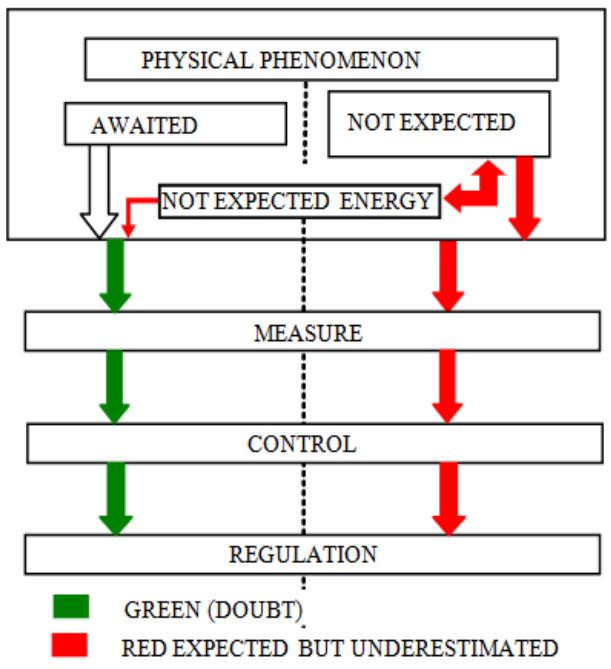 Figure 1: Steps of the process of a measurement, the arrows represent both the energy flow out of each block and the input for the next block, these blocks are intended both in physical and conceptual terms and/or in method
## II. SCHEMES USED
This paragraph will describe two devices visible in Fig. 2 and in Fig. 3 respectively, both have the presumption of being able to produce neutrons and be able to centralize them in a confined space "cuvette" which can be made of quartz or other useful materials in order to contain them [25], [26].
The first device is a traditional version; that is, by compressing small granite cubes with steel disks, neutrons can be emitted which, by symmetry, are concentrated in the cuvette. This first device is very important because it is traditional, there is a controversial principle scheme [9]-[24] and inside the cuvette there may be a measuring instrument or other; this cuvette is led to the center of the device thanks to a string connected to the pliers and which represents the possibility of interaction with the material contained in the confined space with the centralized neutrons allowing us to affirm that the system has radial production and axial control, a condition of interaction difficult to reach however how to release the grippers, represented for simplicity (in gray), which when pressed concentrically allow the cuvette to lower towards the center of the device and at the same time when they are released it moves away therefore, there is a sort of feedback control negative with respect to approaching the material with which the neutrons should interact.
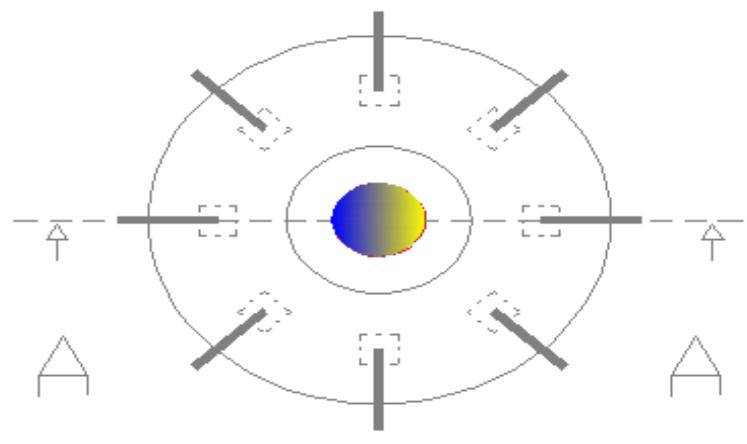 Cuvette Neutron Steel Granite Steel Wire tens
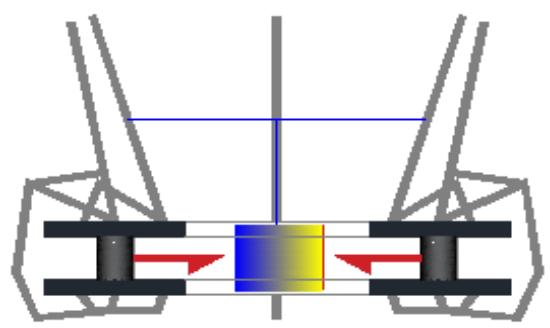 Figure 2: First device that presumably to emit neutrons with axial compression action
This device just described which is compared with the device represented in Fig. 3 in which instead, we try to understand if the emission of neutrons, always concentric by symmetry, without control, can be obtained once the number of revolutions has been reached and these they can also be overcome without any form of feedback. Thanks to the speed reached the emission of neutrons, probable or not, is obtained thanks to the compression of thin films of iron atoms containing the lattice defect [21], [22]. We want to understand if the N emission in the granite quartzes of the first device and in the second roughly correspond to what we expect and this could mean that the neutron emission is due to the defect of the iron lattice. In order for this to be possible, it is necessary to overcome a technological gap, i.e. isolate the pieces of granite that have a percentage of iron with more frequent defects or insert the iron with the defect. These two devices originated from the one present in the appendix, but obviously we repeat: the first device allows radial generation due to compression and with axial feedback, the century instead thanks to the rotation and the centrifugal force the iron is compressed with the defect thanks to the lead and for symmetry the N are concentrated in the center of the device. These two devices have the purpose of verifying if this N emission exists and of measuring and if this emission is mainly due to the defect of the iron grating.
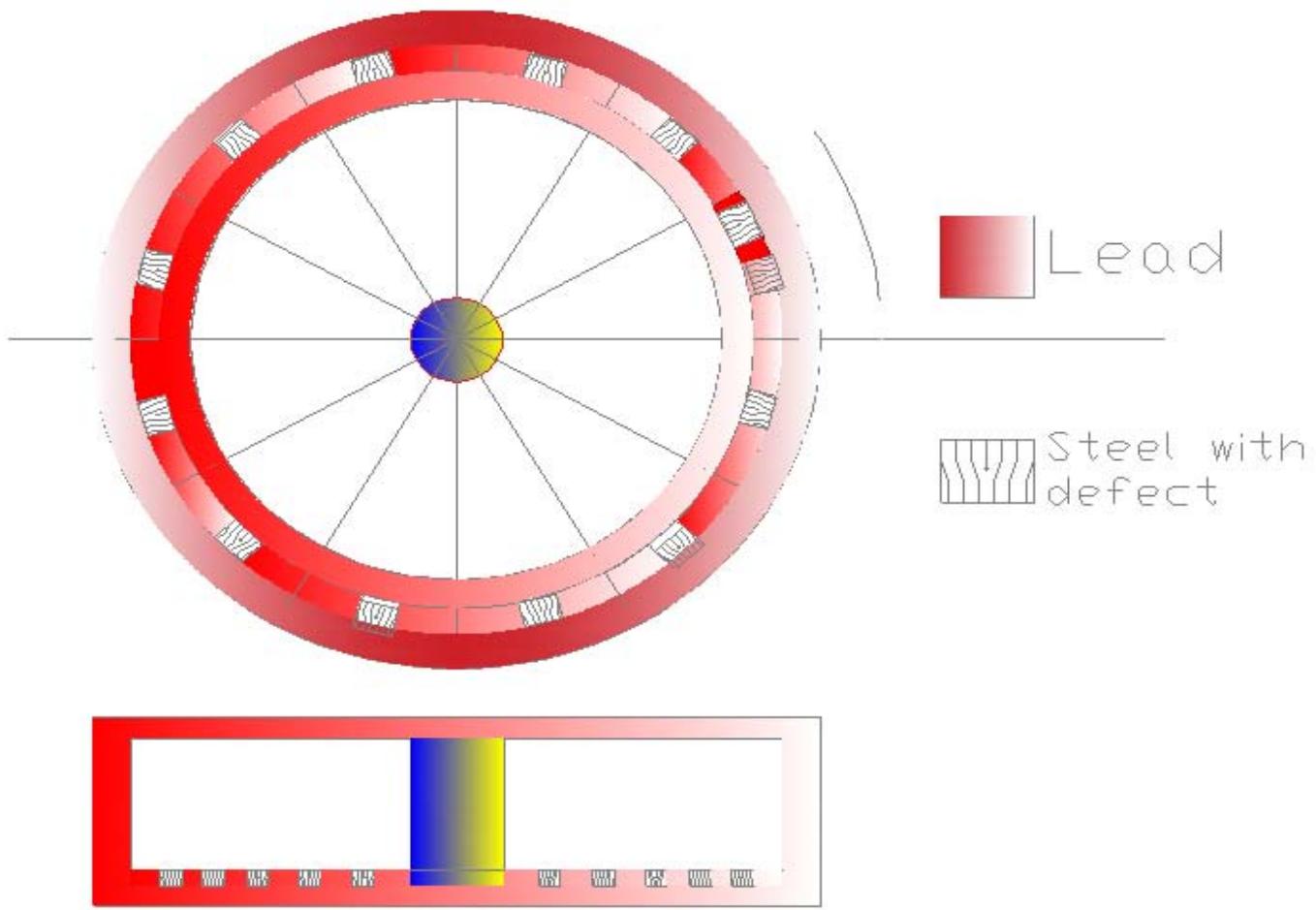 Figure 3: Second device that presumably to emit neutrons with radial compression action
## III. CONSIDERATION
In this work we have taken care of verifying that the production of N can exist thanks to the axial compression or to the compression due to the centrifugal action. The two devices can be made as in figures 2 and 3; the second has a particular expedient which requires the overcoming of certain technical gaps. In this work two methods for N concentration are compared; all this emerged thanks to an original idea visible in appendix A which currently remains a rebus as we initially wanted to combine a neutron generator (split into two devices) that resembled the so-called Hopkinson circuit, and this is still not there for me possible because in addition to being physically disabled a lot of time has passed and therefore the readers are left with the possibility of completing the rebus; that is, what expedients can be implemented to ensure that there is a "Hopkinson" circuit that allows the circulation of the Ns and not only their creation, the graphics of the rebus are present in the appendix.
## IV. CONCLUSION
In this article, in addition to all that has already been exposed, the ambition if the devices should "shine" from the point of view of the generation of N is to represent what is present in a layer of the coat of a neutron star; this is a mystery due to the existence of possible difficulties in realizing the devices while neutron stars are well known to the scientific community. It is also true that this project in reference to figure 0 developed from a grotesque, paradoxical idea which was to plug a black hole (the device in Fig. 2 for black holes without spin and the one in Fig. 3 for those with spin) thanks to the uncontrolled generation of N and consequent "explosion" which undermined the existence of the black hole and its ability to aggregate mass. All this at the beginning seemed paradoxical and simply a source of great imagination, aspects that can be deduced from the rebus, that the reader will find something interesting to think about it further. We have gone from that imaginative, childish, grotesque requirement to that of making sure that a Hopkinson-type circuit could be developed for N leading then to the realization of an experiment that would give "merit" to the defect of the iron lattice, a differential diagnosis of the two devices can be made. In fact in the first the iron is present in the granite in a homogeneous and anisotropic way in the second instead only the iron with the defect in the lattice is compressed. The reader can draw ideas and conclusions that stimulate him suitable for the objectives or for other things.
## V. ACKNOWLEDGMENT
The author Francesco Pia thanks Simona Sardu Philosophical Doct, Silvia Pia, Biagio Pia, Alex Tomasi, Antonio Andrico, Maurizio Andrico, Doct. Vanna Orru my pharmacist doctor, Eng. Massimiliano Piras, Prof. Roberto Ricciu.
### APPENDIX
The main aspect of this work is represented by a personal journey that originated from the basic idea represented by the fig. "0" in the appendix, that is that is a set of normal and common physical objects that should have allowed an excess of energy, in common and inactive materials, thanks to the emission of neutrons and with the defect of the iron lattice inside them. This initial idea resembled the so-called "Hopkinson circuit" for magnetic circuits, but this idea has remained an enigma due to the passage of years, due to some distractions and my state of health it has not been possible for me to fully review this device, i.e. pieces missing, mechanisms, combinations, tricks and therefore for me it remains a rebus and I think it will remain so for the reader too; I wanted to offer it to you because it is the starting idea that allowed us to reflect on the continuation of this work that led to the two devices represented in figures 1 and 2. This aspect is not insignificant because it represents a peculiarity that should characterize every researcher, scientist and popularizer, or sincerity. It all started from this rebus represented in fig. 0, and the more one thinks about it, the more perhaps one arrives at the solution by obtaining the phantom neutron generator with or without control. Instead, the two devices are the "necessary" becoming of the original idea that I got from myself.
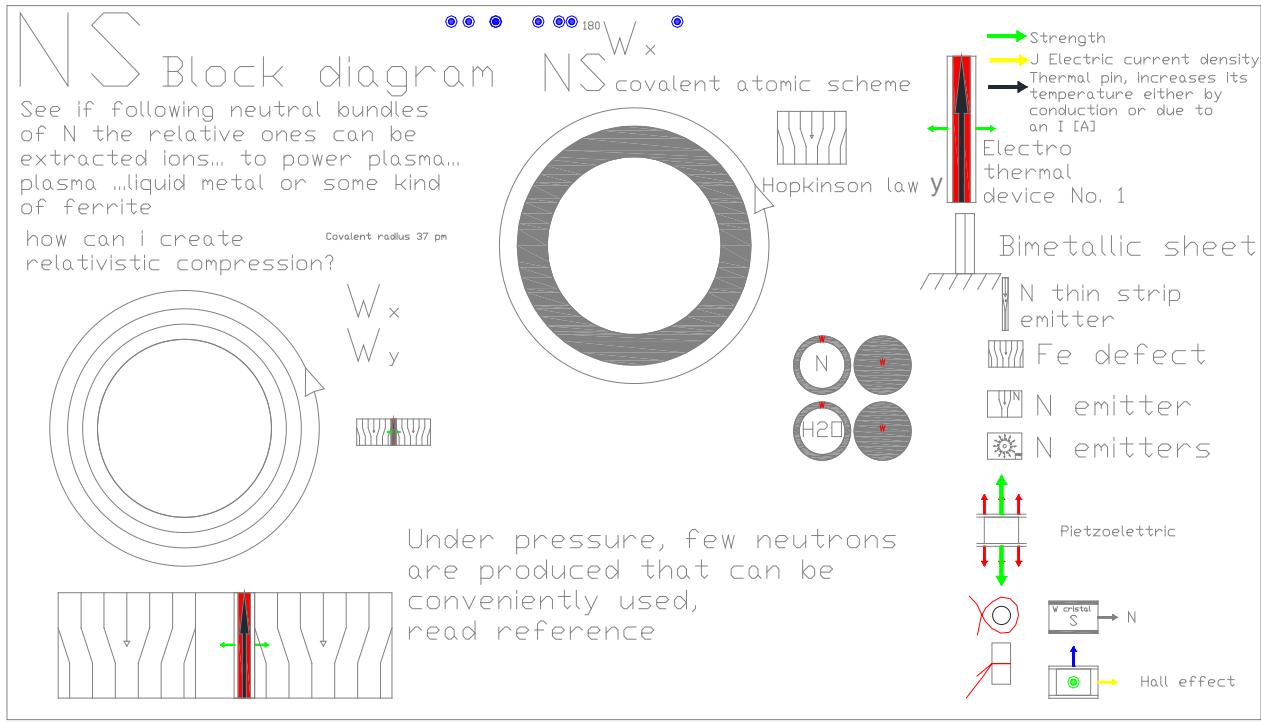 Figure 0: Graphic representation of the primordial idea
Generating HTML Viewer...
References
30 Cites in Article
Francesco Pia (2019). I will be back.
Francesco Pia (2019). The liar knee.
Francesco Pia (2019). Genetic geometry.
Francesco Pia (2021). Reviewers.
Francesco Pia (2022). How to Try to Get Antigravity From Electrical Circuits by an Almost Magnetic Monopole or from Anti Matter.
Francesco Pia (2022). New antigen presentation system based on retroviral-like particles; baculovirus or Semliki-Forest virus-based vector virus-like particle expression in host cell for e.g. HIV virus, Epstein-Barr virus and herpes virus vaccine generation.
Francesco Pia (2022). Special Issue Announcement: Molecular Microbiology of Microbiomes.
Francesco Pia (2023). A Symmetry of Cosmological Model Named Jewell That Allows Re Entry Into The Starting Parallel Universe With Adequate Teleportation Based on Creation of Useful Stellar Object Like Black, Withe Holes.
Fabio Cardone (2016). La futura energia. Dall'atomica alle reazioni nucleari ultrasoniche.
F Cardone,A Carpinteri,G Lacidogna (2009). Piezonuclear neutrons from fracturing of inert solids.
Fabio Cardone,Roberto Mignani,Andrea Petrucci (2009). Piezonuclear decay of thorium.
Honglai Tan,Wei Yang (1996). Catastrophic fracture induced fracto-emission.
G Ericsson,S Pomp,H Sjöstrand,E Traneus (2009). Piezonuclear reactions – do they really exist?.
G Ericsson,S Pomp,H Sjöstrand,E Traneus (2009). Comment on "Piezonuclear decay of thorium.
Kowalski (2009). Piezonuclear decay of thorium.
Fabio Cardone,Roberto Mignani,Andrea Petrucci (2009). Reply to “Comment on ‘Piezonuclear decay of thorium’ [Phys. Lett. A 373 (2009) 1956]” [Phys. Lett. A 373 (2009) 3795].
Fabio Cardone,Roberto Mignani,Andrea Petrucci (2009). Reply to “Comment on ‘Piezonuclear decay of thorium’ [Phys. Lett. A 373 (2009) 1956]” [Phys. Lett. A 373 (2009) 3795].
G Ericsson (2009). Supplementary file 1. Previous proteomic studies of HIV-infected cells..
G Ericsson,S Pomp,H Sjöstrand,E Traneus (2009). Comments on the "Reply to 'Comment on "Piezonuclear decay of thorium.
(2009). Unknown Title.
(2009). Contents: Laser Phys. Lett. 11/2009.
F Cardone (2009). Supplementary file 1. Previous proteomic studies of HIV-infected cells..
Marco Cattaneo (2007). ADP Receptor Antagonists.
Ferdinando Parente (2020). I diritti umani di quarta generazione: il brevetto su materiale biotecnologico e sull’embrione umano.
Sylvie Coyaud Unknown Title.
A Bandini Buti,M Bertolini (1978). Elettrotecnca Pratica, elementi fondamentali, 1.
A Bertetto,B Grosso,R Ricciu,D Rizzu (1188). Anisotropic and impulsive neutron emissions from brittle rocks under mechanical load.
Alberto Carpinteri,Giuseppe Lacidogna,Amedeo Manuello,Oscar Borla (2013). Piezonuclear Fission Reactions from Earthquakes and Brittle Rocks Failure: Evidence of Neutron Emission and Non-Radioactive Product Elements.
Roberto Li Voti,Grigore Leahu,Simone Gaetani,Concita Sibilia,Vittorio Violante,Emanuele Castagna,Mario Bertolotti (2009). Light scattering from a rough metal surface: theory and experiment.
Sylvain Petitgirard,Christoph Sahle,J Wim,Georg Malfait,Ingrid Spiekermann,Eleanor Blanchard,Marine Jennings,Motohiko Cotte,Murakami (2022). Anomalous density, sound velocity, and structure of pressure-induced amorphous quartz.
No ethics committee approval was required for this article type.
Data Availability
Not applicable for this article.
How to Cite This Article
Dr. Francesco Pia. 2026. \u201cNeutron Concentrator, a Hypothetical Small Neutron Star based on the Emission of Neutrons in Minerals Such as Granite and Other Commonly Available Objects\u201d. Global Journal of Research in Engineering - E: Civil & Structural GJRE-E Volume 23 (GJRE Volume 23 Issue E1): .
Explore published articles in an immersive Augmented Reality environment. Our platform converts research papers into interactive 3D books, allowing readers to view and interact with content using AR and VR compatible devices.
Your published article is automatically converted into a realistic 3D book. Flip through pages and read research papers in a more engaging and interactive format.
Our website is actively being updated, and changes may occur frequently. Please clear your browser cache if needed. For feedback or error reporting, please email [email protected]
Thank you for connecting with us. We will respond to you shortly.
Lorem ipsum dolor sit amet, consectetur adipiscing elit. Ut elit tellus, luctus nec ullamcorper mattis, pulvinar dapibus leo.
Neutron Concentrator, a Hypothetical Small Neutron Star based on the Emission of Neutrons in Minerals Such as Granite and Other Commonly Available Objects