INTRODUCTION
The discussion on the advantages and disadvantages of simple (Mitev and Petrov, 1999) and complex (Hector, 1998) mixed grasslands and their comparison with a monoculture has had a long history (Darwin, 1872; Mitev and Petrov, 1999). It has continued over the years with unceasing power (Sanderson et al., 2004). Global climate changes require the selection of specific combinations of species to provide such diversity in grasslands that they can withstand extreme environmental habitat conditions (Ives et al., 2000). Grassed areas occupy a significant share in the roughage production of, which in turn forms a positive return rate in agriculture (Totev et al., 2000).
Grasslands allows to cross traditional boundaries in common agriculture, ecology, conservation and land management, and to include sustainable development, reduction of pesticides and artificial fertilizers, soil protection (Krueger et al., 2002; Mitev and Naydenova 2008a). The change in the transfer of nutrients and the decomposition of the created organic mass (Koukoura, 1998) allows to look for a "conservation approach in the restoration of degraded terrains" (Ene and Mocanu 2013; Mitev and Naydenova 2008b), which have been registered in some regions of Bulgaria. Several studies conducted in Bulgaria have shown the impossibility of imported seeds to create qualitative and long-lasting meadow grasslands(Totev, 1984; Mitev, 1997; Stoeva 2001, etc.). The latter differs from the idea of realization of the Evolution of Increased Competitiveness (Bossdorf et al., 2005). Sometimes, introduced species can create enormous economic hardship (Perrings et al., 2000). We establish a difference (Goranova-Naidenova, 2002; Mitev, 1997, etc.) with the authors mentioned above (Bossdorf et al., 2005; Perrings et al., 2000, etc.), concerning meadow grasses, necessitated conducting of a wide-ranging selection program to create cultivars of meadow grasses of local origin suitable for habitat conditions. Species of local origin are a considerable source for creating new cultivars (Goranova-Naydenova, 2002; Mitev, 1997, etc.). Many regions on the Balkan Peninsula in general, and Bulgaria in particular, include several secondary centers of species formation, directly related to the main one of the Alps. All of them are part of the common Balkan formative center (Kozhuharov, 1986). This leads to the formation in Bulgaria of some of the mostaffluent natural and semi-natural communities in the world (Martinkova et al., 2018). Each particular region is distinguished by a specificity that can make it ecologically unique (Sanderson et al., 2004; Wardle et al., 1987). The impact of species diversity on grassland production is highly complex (Schmid, 2002). Different authors prefer to focus on one of them. The cultivation of monoculture crop or mixed grasslands, with a smaller or larger number of components, is determined by the specific habitat conditions (Sanderson et al., 2004).
Red fescue (Festuca rubra L. var. genuina Gr. et Good), the subject of the author's selection (Mitev, 1996), is a structure-determining component in the grasslands in the region, grown as a monoculture or in a mixture (Mitev, 1997; 2014; Mitev and Naydenova, 2012, etc.). It is a xeromesophytic species (Adoyan, 1984), which allows it to be successfully grown in Bulgaria, both in areas characterized by heavier droughts (Stoeva, 2001) and in the wetter conditions of the mountains (Mitev, 1997; 2014, etc.). There are diverse interconnections between a monoculture crop that was created and the germinating seeds of different species that had already been in the soil, (Mitev et al., 2013; Tracy and Sanderson 2004).
The significance of the impact of interrelations among species on the performance of grasslands is accepted (Schmid, 2002). A point of discussion here is what is decisive in this case: Do the interrelations among plants influence the consumption of environmental resources (Bostan et al. 2012; Virteiu, Ana Maria, 2015, etc.), or do their consumption form them (Luo et al. 1995)? The synthesis of allelopathic compounds requires sufficient energy and nutrients in plants. If these by-products can change the conditions for competition and those of the environment, they are obviously of evolutionary significance (Luo, 2005). Some authors categorically reject the role of allelopathy in the interrelations among plants (Delgado et al., 2014). The biotest is an integral part of studying the nature of allelopathy (Oliveira, 2006, cited in Bostan et al., 2012). During research, an interaction was found between several grass and legume meadow species, even when their seeds germinated together (Mitev, 1995a). An allelopathic effect was established through fog, dew and rain (Mitev 1995b; c, etc.). There are cultivar characteristics in the allelopathic effect. The power of impact is greater, the more geographically distant are the studied cultivar (Mitev, 1995c; e). The presence of genetic control on the synthesis of compounds with allelopathic effects has been established (Wang Ying et al., 2013, etc.). One-sidedness in research needs to be overcome. There are quite a lot of studies that focus only on allelopathy, others on the struggle for environmental resources, etc. The complexity of the processes requires the combined efforts of biochemists, ecologists, molecular biologists, microbiologists, soil scientists. The nature of the study will determine the type of cooperation required (Romeo, 2000). Besides laboratory, pot, and field experiments were also conducted with cultivars and populations of meadow grasses created by the author (Mitev, 1997; 1998; 2000, etc.). There is a tendency to develop cultivars with increased allelopathic potential that will allow them to successfully cope with local habitat conditions (Georgieva et al. 2015). The idea arises to find another approach in this direction. The studies have shown that the increased allelopathic potential leads to overexpenditure of resources and, accordingly, lowers the productivity of grasslands (Mitev and Belperchinov, 1996; Mitev and Yasheva, 1998). It is possible to create more productive and sustainably developing meadow associations based on the existing potential. This is achieved through differentiated sowing of the components of the grasslands for the conditions of the Central Balkan Mountain. Each of them (grass or legume) is sown in the period suitable for it, perpendicular to the previously sown component (Mitev(3), unpublished), which creates a specific "protective umbrella" against the local weed complex. In the experiments mentioned above (Mitev and Belperchinov, 1996; Mitev and Yasheva, 1998), the interaction among plants was established without any direct contact with their vegetative parts. There is only a probable explanation on what basis this takes place. The location of the mixed grasslands of grass and legume species on the mountain slopes, with an orientation depending on the main directions of the world (Mitev unpublished), is essential for the productivity, longevity, protection of the associations from the impact of the local weedmixture.
Our research activity led to the patenting of a utility model of "Grass mixture for hay use on gray forest soils," No. 97250
The problem with "eagle fern" (Pteridium aquilinum (L). Kuhn) (photo #2) is relevant in more than 165 countries of the world in several aspects: business, economic, social and ecological. It is one of the five most common plant species in the world. Until now, there is still no evidence of its presence in Antarctica (Gilda Costa et al., 2012). It has been established that allelopathy in the eagle fern is a major limiting factor for the growth and development of other plant species in the community (Guerin and Sociedad, 2015; Mitev and Petrov, 1997; Petrov and Mitev, 1988; etc.). The predominant water-soluble biochemicals found in the fern are phenolic-based. In some cases, the allelochemicals identified (Mitev and Petrov, 1997) differ from those known in the literature (Granados et al., 2003; etc.). Our research on the effect of eagle fern on meadow grasses follows the sequence mentioned above, such as biotest, pot experiments, field experiments (Mitev and Petrov 1997; Mitev and Petrov (1) (unpublished), Petrov and Mitev 1989, etc.)
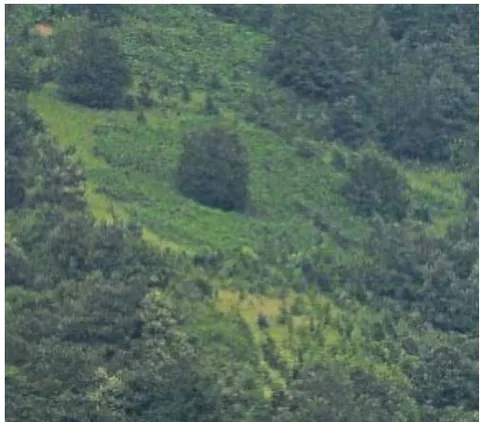
The different parts of the eagle fern (leaves, rhizomes) have allelopathic effects of varying strength. Red fescue, compared to other studied grasses, was found to have a higher tolerance to eagle fern's effects (Petrov and Mitev, 1989). Its tolerance to the toxins released by the eagle fern was also higher in the pot experiments (Petrov and Mitev, 1987). The experiments on the impact of meadow grasses on the manifestations of the eagle fern are impressive. During pot experiments, the effect of Kashubian vetch (Vicia cassubuca Scop.) grown as a monoculture crop and in a mixture with several meadow grasses, on the sprouting and growth of dormant buds of eagle fern was established (Mitev and Petrov unpublished). Experiments were conducted to establish the suitability of several meadow grasses for cultivation in areas weeded with eagle fern (Mitev and Petrov, 1995; 1997; Mitev and Petrov unpublished; Petrov and Mitev, 1985, etc.). The conducted field experiments show the opportunity to solve environmental and production tasks in parallel. The condition of the leaves of this weed under the influence of Kashubian vetch (Vicia cassubuca Scop.) suggests impaired sporulation. This manifestation is considered a very favourable development in that «problem»! Weak seed formation in
Kashubian vetch, in our opinion, does not allow the application in practice of a patented invention under No. 43196 of a «method of biological control against eagle fern» (Petrov et al., 1987), No.
No available information has been found in the literature about the adverse effects of phenolic compounds on human health and farm animals. There has been uniformity in a series of phenolic compounds indicated in the eagle fern (Granados et al., 2003, Mitev and Petrov, 1997, etc.), grasses (Bostan et al., 2012; Mitev and Petrov, 1997,etc.), fruits (Dimkova at al. 2017; Mihova, 2016, etc.), grapes and wine (Kennedy et al., 2002; Singleton et al., 1986 etc.).
The development of technologies for research and identification (of biochemical substances extracted from plants) allows the attention of researchers to be reoriented over time (Andersen and Markham. 2006; Figueiredo, 2009, etc.). It is considered as necessary to note the impact of the eagle fern not only on other plants, but also on people and some animal organisms (Peev, 2016, etc.). The causes of toxicity in this direction are already specified qualitatively and quantitatively (Gil. da Costa et al., 2012; Peev, 2016; Rasmussen et al., 2015, etc.). Its impact can be carcinogenic (Gil da Costa et al., 2012), mutagenic (Schmid et al., 2005) or teratogenic (Evans et al., 1982). The effects mentioned above of the eagle fern do not cover all the available information, nor do they shedlight on the problem itself. This is not the goal of the current work of the author. It only hints at the possible problems, especially in the animal organism.
The understanding of the interconnection between the energy essence of Nature and the state of specific "structural units" (...,species, population, variety,...) was developed in someauthor's publications (Mitev and Belperchinov, 1996; Mitev and Yasheva, 1998; Mitev and Naydenova 2012; 2016; , unpublished, etc.). The opinion is expressed that their behavior in the environment is determined by the reached "level of energy saturation." Its change leads to contraction or expansion in the distribution area, i.e. creation of new forms of structures (Mitev and Yasheva, 1998). All living things on the planet Earth obey a certain rhythm of energy impact (on behalf) of the Universe. The time of ripening of the seeds, their harvesting, storage and sowing dates have a great impact. The latter understanding led to the study of the behavior of successively created grasslands, with some of the seed progeny of red fescue (Mitev and Naydenova, 2012). The estimation of the genotypic variance shows that the observed differences in productivity are because of a proven genotypic influence, i.e., individual offspring/ generations behave as different cultivars. With a great deal of convention (given the shortness of the covered period of 10 years), it could be said that the tested offspring formed grasslands that "anticipate" the environmental changes. The comparison of the results and especially of the "contradictions" with what has been indicated by other authors (Baggott, 2000; Wong, 1997; etc.), points to the thought that the difference in the behavior of the plant material is due to inequality concerning Time -it is different for each variant, with all the consequences that follow. One of them is probably the transfer of genetic material. Each "structural unit" (... species, population, cultivar, variant,...) is likely to be distinguished by a specific "energy configuration." The manifestation results in "sliding and accumulation of past and future in the present moment" (Mitev and Naydenova, 2012). The principles of symmetry of Time (equivalent to the directions "future"-past" for each moment) point directly to the law of conservation of energy (Mitrani, 1989), as they have an impact on productivity, longevity, sustainability of development, self-recovery, self-purification of weeds, etc. in the cases we have discussed. From this point of view, Evolution is "happening right now," however long it may otherwise be. In this sense, there is a possibility that It (theoretically) will "repeat." Each particular "unit" probably represents a kind of "projection in Time," which determines its ability to "locate in it." This forms the specificity in the means of expression. It can easily be assumed that access to environmental factors is variable. Probably there are "specific zones," which become available to the specific genetic material, depending on the presence or absence of synchrony with the rhythm in Nature (Mitev and Naydenova, 2012). A series of different grasslands, arranged eight times in a certain repeating pattern, on the mountain slopes were studied. They have a different level of soil gleying and exposure compared to the main directions of the world. The presence of a certain rhythm in the formation of the fodder mass was established. The yields were higher in the odd years (1995, 1997, 1999, 2001) compared to the even ones (1996, 1998, 2000). The sequence changed in 2002, 2004, 2006, 2008, 2010. The yields were again higher in the odd years (2011, 2013) than 2012. Certain shades in this direction were found by habitat. For the experimental conditions, the variation in productivity by variants and years was significantly reduced as a result of the inclusion of red fescue in the mixtures (Mitev, 2020). Red fescue grown as a monoculture in this experiment also shows another peculiar characteristic. On south-east facing, highly gleyed soils, the average dry matter was more for a 13-yearperiod, compared to seven different types of mixed grasslands. This is how the debate about the advantages and disadvantages of grasslands with a monoculture or mixed crops has been renewed repeatedly (Darwin, 1872; Mitev and Petrov, 1999; Sanderson et al., 2004, etc.). Given the early dropping out vegetation) of other meadow grasses sown together with it, in a specific variant (bird's-foot-trefoil, red clover, cock's foot), it is believed that the obtained (at most in this case) production over 20 years confirms our hypothesis for a change in the access of genetic material to "specific zones" of environmental factors. Other manifestations, different from those traditionally accepted, in the species' behavior were also found. Tracking the results in the present experiment, as well as those described in previous publications (Mitev and Naydenova, 2016; Mitev and Yasheva 1998, Naydenova and Mitev 2010a, b, etc.) creates the impression of a kind of "pulsation of the systems." The factors of environment (soil, climate, space, etc.) differ depending on the exposure and the location on the slope. Within each specific habitat, they are the same. What then forms the variety of behavior by variants?
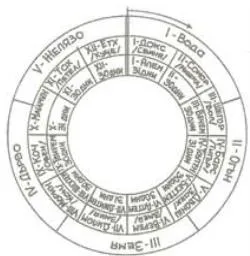
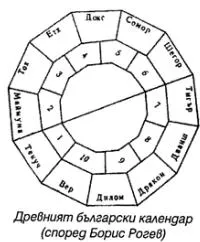
A probable hypothetical explanation is that each "structural unit" (... species, population, cultivar,...) is a "unique projection in Time" (Mitev, 2004; Mitev and Naydenova, 2012). It is believed that the diversity in the behavior of plant material is due to a difference in the attitude towards it. It is perfectly acceptable for the interaction among them to take place on a "time level", with all the ensuing consequences (Mitev and Naydenova, 2014; 2015b). The "time resource" available to the "structural units" probably determines their behavior in the specific habitat, the consumption of environmental factors, the exchange of biologically active compounds, the result of their physiological activity, etc. We believe that Time in the organismic world is relative and differs from its physical quantity. The change in its "configuration" causes an adequate response in the genome of organisms and their corresponding state. In this way, the realizing of a kind of "guided natural selection" could be influenced. This idea has been discussed in some publications (Borza and Coste, 2002 - cited in Bostan et al. 2012; Evans et al., 1989; Mitev and Yasheva, 1998), but now it receives a specific interpretation. The subtle strength of selection, relative to neighbor specificity (Turkington et al., 1977), found when examining meadow grass interrelations, is likely consistent with this idea. Each community can only be composed based on interacting coexistent selected individuals (from individually selected coexisting species) (Borza and Coste, 2002 - cited by Bostan et al. 2012). Probably this is an opportunity to get an answer to the question "in what manner and which hereditary information is transmitted in time." (Mitev and Yasheva 1998). It is known that under the influence of biologically active compounds isolated from some weeds belonging to the genus Centaurea (Centaurea maculosa Lam.; Centaurea diffusa Lam.), there was a change in the genome of the neighboring meadow species that receive them. In this way, their basic life processes are blocked. Thus Bais et al. (2003) argued against the traditional understanding of the role of allelopathy mainly in competition for environmental resources. It could be assumed that the same occurs in the interaction between the individual meadow species, as a result of the biologically active compounds they release with allelopathic effect. The influence of weeds on cultivated species is usually studied (Ali Zohaib et al., 2014) and less often the opposite (Georgieva and Kirilov, 2016; Petrov and Mitev, 1994). According to the author's understanding, each "structural unit" is a kind of "energy information system" (Mitev and Naydenova 2015b), which in the conditions of formed communities, enters into specific interactions with others, according to the rhythm in Nature, which determines the general status. The understanding of ancient people is that the Earth is subjected to a constant energy impact with a certain rhythm. Its change determines an adequate reaction in Nature (Baggott, 2000; Bakhshi Iman, 1680, cited by Madzharov et al. 2002; Wong, 1997, etc.). Each species is subject to various interdependencies (Kunz et al., 2011, etc.). At the same time, there are irrevocable rules that led to the creation of the calendars of some ancient people. People's oldest ideas about cosmogony found their final form in the "Book of Changes" (I CHING, 1996), and the structure of the ancient Bulgarian calendar shows a direct connection with them (Velev, 2000). Each specific year obeys a corresponding constellation and trigram (Fig. 1) (Bakhshi Iman, 1680, cited by Madzharov et al., 2002). Trigrams reflect fundamental concepts in the ancient knowledge of the
world (I CHING, 1996). The ancients assumed that all phenomena in the Universe stem from the law of energy change. It distinguishes "five rotations/elements" (Fig. 2) ("water"; "fire"; "earth"; "wood"; "metal"). The "five rotations" are degrees of qualitative changes in energy that depend on the change of the "five elements." After the completion of each cycle, there is a new genesis. The term "rotation" speaks of the cyclical nature of the changes. The calendar is made up of 10 "heavenly trunks" and 12 "earthly branches" (Madzharov et al., 2002). The ten "trunks" are characterized by the turning of positive beginnings into negative ones and vice versa: odd "trunks" are positive (with an excess), and even ones are negative (with a shortage of a given energy). The "trunks" characterize the heavenly energy, whereas the "branches" - the earthly. The ten "heavenly trunks" (Fig. 2) are combined with the twelve "earthly branches" (Fig. 3) in a 60-year cycle (Madzharov et al., 2002). Depending on the complete rotation of the axis of the Earth in space, a period of 20160 years can be covered (Valchev, 1986). There is an impressive coincidence of the boundary year between two decades with the change in the rhythm of fodder mass formation during the studied period (Mitev, 2020). Our notion of the essence of Nature gives birth to the idea to start a research program to predict and model the behavior of crops. In this way, there is an opportunity to touch the knowledge of the ancient Bulgarians. Gradually, one comes to the classic question of what is primary in Nature. The answer could be found 2000 year ago in the Gospel according to John (1:1): "In the beginning was the Word (the information); And the word was with God; and the Word was God" (Bible, 2001). There are some exciting arguments of Borza and Coste (2002) (cited by Bostan et al. (2012) that the interactions among plants can be achieved at least in three aspects: substantial, energy, and informational. The most important aspect seems to be significant for two reasons: 1) because substances in the developing interaction can provide energy and information; 2) because in any case, at a particular moment of information impact, each signal is transformed into a changed molecular structure of life. There is an energy information impact of DNA (deoxyribonucleic acid) on the status of higher organisms (Gariaev, 1997). It is believed that the strength of energy information fields exceeds that of the genetic code (Lazarev, 1996). When Information passes into matter gives birth to energy in a broader sense. Energy becomes a substance that seeks to accumulate energy and information. All this is within a natural cyclic sequence (Lazarev, 1997). Information, respectively, in a little different aspect as an enigma is neither a matter, nor energy, but it's a bearer of matter and energy. On a larger scale, it is a quantum elativus self-bearer of matter and energy (Mateev, 2004).

Water receives, preserves, and transmits information (Emoto, 2006). It is well known that it prevails in the cells (in this case) of plants. It is believed that its chemical formula contains and exhibits only part of a number of its specific properties (Deunov, 1940, cited by Mihailov, 2002). It can be focused on the idea of the energy information impact of DNA (Garyaev, 1997) and then that the energy information fields are inherent in biological beings (Lazarev, 1996). The manifestations of Time and Space are mutually determining and are an inseparable relation within them. To understand the essence of the biofield, it is necessary to establish the difference between living space and non-living space. It turns out that it is possible to approach their study as a phenomenon with a structure (Vernadsky, 1975). The essence is that all living beings form a thin biological layer in which they interact. In addition to what has just been presented, the understanding can be developed that their biofield contains information about Evolution that happens in Time. Thus, a more comprehensible form is given about the understanding shared in a previous publication that (theoretically) Evolution can be repeated (Mitev and Naydenova, 2012). On a more general (Universal) level, the existing information could materialize again under certain circumstances.
The reader is suggested to take into account one's understanding of the essence of Nature and reflect on the thesis of Borza and Coste (2002) (cited by Bostan et al. 2012), enriched with that of Bais et al., (2003) and added by Garyaev, (1997); Lazarev, (1996; 1997); Mateev, (2004), including the discussion moment in this publication.