The discrepancy between the laws of conservation of impulse and its momentum to the nature of the evolution of the Universe is revealed. Based on a strict definition of the conserved quantity, the incompatibility of the laws of conservation of quantitative measures of carriers of various forms of energy with the law of its conservation is revealed. It is shown that in the general case of nonequilibrium multivariate systems, these laws give way to the principle of interconversion of pulses of translational, rotational, and oscillatory motion of various energy carriers. Experimental confirmation of the possibility of creating on this basis new types of ground and space propulsion systems is given.
## I. INTRODUCTION
It is believed that the laws of conservation of energy, mass, charge, momentum, and momentum form the foundation of modern natural science [1]. In this case, checking the reliability of this foundation becomes necessary at every new stage in the development of science, when doubts arise about the validity of at least one of them. Once again, such a need arose in connection with the advent of propulsion systems running in violation of Newton's laws, as well as the discovery of the accelerated expansion of the Universe, showing a spontaneous increase for motion in it.
This forces us to return again and again to the origins of the laws mentioned. This retrospective analysis takes us back to R. Descartes [2], whose worldview influenced the way of thinking of scientists of many later generations. His first law of nature said the conservation of momentum of the studied set of moving bodies. For each of the bodies in this collection, the amount of motion was determined by the product of the amount of matter in it M (later called its mass) by the modulus of its velocity $\mathfrak{v}$, not only because vector algebra did not yet exist in those days, but because only then the total amount of motion did not depended on the direction of movement of these bodies and remained constant during the transformation of ordered (observable) movement into hidden (unobservable). Subsequently, this law led to the concept of energy as a general measure of all forms of motion and to the understanding of heat as a measure of hidden (chaotic) motion.
At the same time, without considering the direction of movement, the concept of momentum $M_0$ was clearly insufficient. Even G. Galileo, through his experiments with cylindrical bodies sliding and rolling down an inclined plane, showed that under the influence of the same "dead force" (gravity), sliding bodies buy a lower speed than sliding ones. This showed the dependence of the amount of motion on its direction. Much confirmation of this was provided by the study of indirect and inelastic impact, when the experimental results turned out to depend on the direction of the velocity, the point of application of the force and the nature of the interaction. As G. Leibniz showed [3], the conserved quantity in these cases is not the total amount of internal motion of the i-th bodies $\Sigma_i M_i v_i$, but their "living force" $\Sigma_i M_i v_i^2$.
The resulting dispute about the true measure of momentum could not be resolved by Newtonian mechanics [4]. It went ahead from the laws of motion of a material point devoid of spatial extension. Therefore, for her, not only the concept of internal, but also external rotational motion of a point did not make sense. This significantly simplified the study, making the "applied" force $F = \frac{dP}{dt}$ the only reason for the change in momentum $P = Mv$, cutting the need to take into account the angular momentum. In this case, the constancy of the momentum in a closed system ( $F = 0$ ) at once followed from the very definition of force, which was consistent with the views of Descartes.
The concept of "force impulse" Fdt = dP or simply "impulse" P = Mv as a vector quantity began to be used only with the advent of vector algebra (W. Hamilton, 1845). This made it easier to distinguish between the concepts of "impulse" (vector) and "quantity of motion" (scalar), with the concept of "living force," which was later replaced by the concept of "energy" (T. Jung, 1807). As a result, the incompatibility discovered by Leibniz in a number of experiments between two measures of motion $\Sigma_{i}M_{i}v_{i}$ and $\Sigma_{i}M_{i}v_{i}^{2}$ was explained by the difference in the processes that conduct the transfer and transformation of mechanical energy. The position of G. Leibniz also strengthened, which later resulted in the law of conservation of the sum of potential En and kinetic Ek energy as successors to the concept of "dead" and "living" forces [1]. However, fierce discussions about the incompatibility of the law of conservation of energy with the laws of conservation of momentum and its angular momentum have not stopped to this day and from time to time spill out onto the pages of not only scientific forums, but also magazines and books [5...14] contrary to the theorem of E. Noether, which classified them as a consequence of the homogeneity and isotropy of space and time [15].
The fundamental importance of the question of the status of the laws of conservation of energy and quantities of motion of various kinds forces us to look for new ways to resolve this protracted dispute. In this article, the question of the status of conservation principles will be considered from the standpoint of the thermodynamics of irreversible processes [16...18], which made the difference in flows and impulses of energy and its energy carriers especially distinct.
## II. GENERAL CRITERIA FOR ENERGY CONSERVATION
Differential balance equations for any extensive quantity $\Theta_{i}$ (mass M, number of moles of kth substances $N_{k}$, charge Z, entropy S, etc.), a material carrier of energy (for short, an energy carrier), play a key role in field theory [17]. If the local density $\rho_{i}(r,t) = d\Theta_{i} / dV$ of any energy carrier $\Theta_{i}$ is arbitrarily distributed in a given volume V, then its change in time $d\Theta_{i} / dt$ can be due to two reasons: its transfer across the boundaries of the system $d_{c}\Theta_{i} / dt = -\int j_{i}\cdot df$ (where $j_{i}$ is the density of its flux through the vector element df of the closed surface of the system in the direction of the external normal n), or the presence inside volume V of sources or sinks of this quantity $d_{i}\Theta_{i} / dt = \int \sigma_{i}dV$ (where $\sigma_{i}$ is the density of this source). If we use the Gauss-Ostrogradsky theorem $\int j_{i}\cdot df = \int \nabla \cdot j_{i}dV$, this obvious position can be expressed in a simple differential form:
$$
\mathrm{d}\rho_{\mathrm{i}}/\mathrm{d}t + \nabla\cdot\mathbf{j}_{\mathrm{i}} = \sigma_{\mathrm{i}}
$$
According to (1), any physical quantity $\Theta_{i}$ remains unchanged in an isolated system (where $\nabla \cdot \mathbf{j}_{\mathrm{i}} = 0$ ) if there is no source in the system ( $\sigma_{\mathrm{i}} = 0$ ). The question of whether any energy carrier obeys this law can be resolved exclusively experimentally [17]. In particular, the law of conservation of internal energy $U$, written following N. Umov (1873) in the form \[19\]:
$$
\mathrm{d}U/\mathrm{d}t + \int\mathbf{j}_{\mathrm{e}}\cdot\mathrm{d}\mathbf{f} = 0
$$
(where je is the energy flux density through the vector element df of the closed surface of a system of constant volume V in the direction of the external normal n), the balance equation without sources corresponds:
$$
\mathrm{d}\mathbf{p}_{\mathrm{e}}/\mathrm{d}t+\nabla\cdot\mathbf{j}_{\mathrm{e}}=0
$$
This expression reflects the experimental fact that internal energy $U$ does not simply disappear at some points in space and appear at others but is transferred across the boundaries of the system by an energy flow with density je, W m $^{-2}$ (Figure 1).
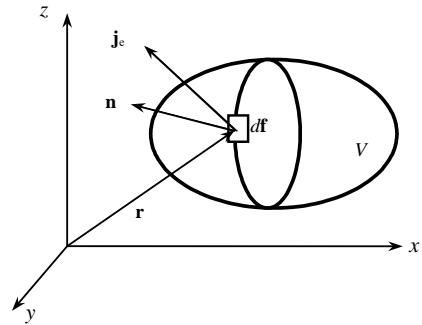 Fig. 1: The flow of energy across system boundaries
To connect the energy flow je with the energy carrier flows ji, we express it through its components jei, presenting each of them as a product of the specific energy value (potential) $\psi_{\mathrm{i}} = \partial U / \partial \Theta_{\mathrm{i}}$ by the energy carrier momentum flux density $j_{i} = \rho v_{i}$, where $\rho = dM/dV$ is the density of the system, vi is the transfer speed of the corresponding energy carrier in a fixed coordinate system \[18\]:
$$
j_{\mathrm{e}} = \Sigma_{i} j_{\mathrm{e i}} = \Sigma_{i} \psi_{i} j_{i},\\mathrm{B\,T\,m}^{-2}
$$
Flows ji also have the meaning of the momentum of thei-th energy carrier, which makes it necessary to distinguish between the concepts of momentum density $\rho v$ (scalar) and its momentum $\rho v$ (vector). After decomposing $\nabla \cdot \mathbf{j}_{\mathrm{e}} = \Sigma_{\mathrm{i}}\nabla \cdot (\psi_{\mathrm{j}}\mathbf{j}_{\mathrm{i}})$ into terms $\Sigma_{\mathrm{i}}\psi_{\mathrm{i}}\nabla \mathbf{j}_{\mathrm{i}} + \Sigma_{\mathrm{j}}\mathbf{j}_{\mathrm{i}}\cdot \nabla \psi_{\mathrm{i}}$, the energy conservation law (3) will take the form \[18\]:
$$
\mathrm{d}\rho_{\mathrm{e}}/\mathrm{d}t = -\Sigma_{\mathrm{i}}\psi_{\mathrm{i}}\nabla\cdot\mathbf{j}_{\mathrm{i}} + \Sigma_{\mathrm{i}}\mathbf{x}_{\mathrm{i}}\cdot\mathbf{j}_{\mathrm{i}} = 0,
$$
where $x_{i} \equiv -\nabla \psi_{i}$ are intensive parameters of the system's heterogeneity, characterizing the "strength" of the potential field $\psi_{i}$ (thermal, baric, chemical, electrical, etc.) and called "thermodynamic forces in their energy representation" [17].
From this law it directly follows the connection of sources $\sigma i$ of various energy carriers $\sigma i$ with energy dynamic forces $x_{i}$ and flows $j_{i}$:
$$
\Sigma_ {i} \psi_ {i} \sigma_ {i} = \Sigma_ {i} \times_ {i} \cdot j_ {i}.
$$
This relationship is fundamentally different from the dissipative function $\mathbf{T}\sigma_{\mathrm{s}}$ in the thermodynamics of irreversible processes (IP) [16]
$$
\mathrm{T}_{\cdot\mathrm{S}} = \sum_{\mathrm{i}} \mathrm{X}_{\mathrm{i}} \cdot \mathrm{J}_{\mathrm{i}}
$$
(where $\mathrm{X_i} \cdot \mathrm{J_i}$ are thermodynamic forces and flows) in that it does not make entropy a "scapegoat" for any relaxation processes in a nonequilibrium system. It emphasizes that internal sources exist not only for entropy $\sigma_{s}$, but in principle for all forms of partial energy $U_{i}$, including chemical elements and countless of their compounds that arise or disappear during chemical reactions. They also exist for polarization charges arising under the influence of an external field, as well as for electrons and positrons, as evidenced by the predominance of the latter in fluxes of cosmic particles [20]. Sources also appear in various phases of matter, including baryonic matter as a product of "condensation" of non-baryonic (hidden) matter. Thus, from the law of conservation of energy it follows that it is possible to interconvert not only any forms of partial energy, but also their energy carriers. In this case, a natural question arises about the origin of statements of an opposite nature, moreover, claiming to be laws of nature.
## III. INCONSISTENCY OF THE LAWS OF CONSERVATION OF MOMENTUM AND MOMENTUM
It is known that Newtonian mechanics did not consider internal processes occurring in accelerating bodies (material points), believing that they remained in a state of internal equilibrium. In this case, $\square \square \mathrm{ji} = 0$ for any energy carrier, and the only reason for the change in momentum $P = M\upsilon$ was the external force $F$ \[4\]:
$$
F = \mathrm{d}P/\mathrm{d}t.
$$
However, by (1), this expression refers to the source of momentum $\int p \, dV = d_{\mathrm{c}}p./dt$. Indeed, in the general case of open systems (exchanging matter with the environment), a change for internal motion in the system $M_0$ is also possible through the diffusion of matter at a rate different from $v$. Thus, in reality, I. Newton from the very beginning limited himself to the case when the change in the momentum of bodies $M_0$ is caused exclusively by long-range forces $F$, i.e., in a way different from the "convective" exchange of it with the environment. Hence Newton's definition of force (8), relating it to the source of momentum $\sigma_i$, and not to its convective term $\nabla \cdot j_i$. Such sources $\sigma_i$ should be called "external" $\sigma_i$ in contrast to "internal" sources $\sigma_{ii}$, caused by the action of thermodynamic (internal) forces $X_i$. In this case, the correspondence of the momentum $M_0$ to the balance equation (1) with sources, i.e., its belonging to non-conserved quantities, would not raise any doubts.
Let us now show that the law of conservation of momentum $\mathbf{P} = \mathbf{M}\mathbf{v}$ at $\mathsf{F} = \mathsf{d}\mathsf{P} / \mathsf{d}t$ does not exist in nature. Formally, this becomes clear already when applying the balance equation (1) to the components $\mathbf{P}_{\alpha} = \mathbf{M}\mathbf{v}_{\alpha}$ of the impulse $\mathbf{M}\mathbf{v} (\alpha = 1,2,3)$, in which in this case the terms $\sigma_{\alpha}^{\mathrm{c}}$ of the external source of impulse appear. The same is true for the components of angular momentum
$L = I_{\omega}\omega$, expressed as the product of the moment of inertia $I_{\omega}$ and the angular velocity $\omega$
However, it may seem that to preserve energy carriers $\Theta_{i}$, the homogeneity of the system $(x_{i} = 0)$ is sufficient. In this case, equation (4) takes the form:
$$
\mathrm{d}\rho_{\mathrm{e}}/\mathrm{d}t = -\Sigma_{\mathrm{i}}\psi_{\mathrm{i}}\nabla\cdot\mathbf{j}_{\mathrm{i}}
$$
Since in homogeneous systems the potentials $\psi_i$ are identical at any point in the volume of the system $V$ and can be taken out of the integral sign (2), and $\int \nabla \cdot \mathbf{j}_i \, dV = \int \mathbf{j}_i \cdot d\mathbf{f} = d\Theta_i / dt$ in accordance with equation (6), then in integral form this expression is a combined equation of the 1st and 2nd principles of classical thermodynamics in the form of the generalized Gibbs relation:
$$
d U = \Sigma_ {i} \psi_ {i} d \Theta_ {i}. \tag {10}
$$
In such systems, energy carriers $\Theta_{i}$ can change due to their transfer across the system boundaries $(\int \nabla \cdot \mathbf{j}_i dV \neq 0)$, which does not contradict the balance equations (1). However, this does not exclude the presence of external forces $F_{i}$ and their internal sources $\sigma_{ii}$, i.e., violation of conservation laws. To verify this, let us write relation (6) in integral form, having previously taken out a certain average value $X_{i} = -\overline{\nabla} \psi_{i}$ force $x_{i}$ from the integral sign (6):
$$
\mathrm{d}U/\mathrm{d}t = \Sigma_{i} \int \psi_{i} \sigma_{i} \mathrm{d}V = \Sigma_{i} X_{i} J_{i},
$$
where $J_{i} = \int j_{i}\mathrm{d}V$ is the impulse of the system as a whole.
It follows that the movement of the system as a whole $(\mathsf{J}_i\neq 0)$ can only occur if the main vector $\mathbf{X}_{\mathrm{i}}$ of internal forces xi is not equal to zero, i.e., there are external forces causing this movement. This position is fully consistent with Newtonian mechanics, but again emphasizes the presence of internal sources of oii, i.e., a violation of conservation laws.
This conclusion seems to contradict the well-known theorem of E. Noether [15], according to which the laws of conservation of momentum and its momentum are a consequence of the homogeneity and isotropy of space. However, we should not forget that these properties of space do not at all mean that the distribution of mass filling this space is uniform. It is known that the density of matter in the space of the universe ranges from $10^{-31}$ g cm $^{-3}$ in space free from celestial bodies to $10^{18}$ g cm $^{-3}$ in celestial bodies such as "white dwarfs". Therefore, by general relativity, the properties of space (its curvature and the associated energy-momentum tensor) depend on the distribution of matter in it. Consequently, in real outer space, where the density of matter differs by tens of orders of magnitude, there can be no talk of homogeneity of space.
The above does not apply to the law of conservation of energy, which, by Noether's theorem, follows from the homogeneity of time and therefore has no direct relation to the homogeneity of space. This makes the law of conservation of energy the only law of nature that has no restrictions.
## IV. THE PRINCIPLE OF MUTUAL CONVERSION OF IMPULSES OF TRANSLATIONAL, ROTATIONAL, AND OSCILLATORY MOTION
Let us now show that the laws of conservation of any energy carriers, including momentum and momentum, must give way to the principle of their interconversion. It is known that the velocity vector $\mathbf{v}$ can be decomposed into translational w and rotational $\omega$ components:
$$
v = w + R \times \omega , \tag {12}
$$
where $R$ is the instantaneous radius of their rotation.
So, the impulse $\mathrm{J} = \mathrm{P} = \mathrm{M}\nu$ includes, along with the translational $\mathrm{J}^{\mathrm{w}} = \mathrm{M}\mathrm{w}$, the rotational part $\mathrm{J}^{\omega} = \mathrm{MR} \times \omega$, called angular momentum. Therefore, the law of conservation of momentum (dP/dt = 0 at F = 0) refers to the sum of the impulses $\mathbf{P}_i^{\mathrm{w}}\mathbf{P}_i^{\omega}$ and $\mathbf{P}_i^{\omega}$, i.e., it does not exclude the possibility of mutual transformation of the local momentum and its momentum. For the same reasons, the law of conservation of angular momentum loses its independent status.
The number of processes of inter conversion of impulses cardinally expands when considering the oscillatory motion of energy carriers. The simplest of these processes is wave formation caused by the transfer of a certain amount $\Theta^\prime$ of the energy carrier $\Theta$ (in this case, mass M) from a position with a radius vector $r^\prime$ to a position $r^\prime\prime$, i.e. its displacement by a halfwavelength $\lambda/2$ (Figure 2). This reciprocating displacement of the energy carrier $\Theta$ by a distance $\Delta r$ occurs twice during the oscillation period $\tau$, the reciprocal of its frequency $\nu$, and proceeds with an average speed $c_{i} = \overline{v}_{i} = 2|\Delta r| / \tau = \rho v$, equal to the product of its length $\lambda$ and frequency $\nu$, i.e. the speed of wave propagation $c$ in a given medium. The kinetic energy density of these waves is decided by the well-known expression $\rho_{\nu} = \rho_{i}c^{2} / 2$. If we take $|\Delta r|$ for the amplitude $A_{\nu}$ of a longitudinal wave with frequency $\nu$, then we directly come to the well-known expression for the energy density of a traveling wave \[21\]:
$$
\rho_{\mathrm{v}} = \rho_{\mathrm{i}} A^{2} v^{2} / 2.
$$
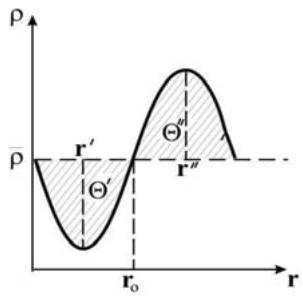 Fig. 2: Wave formation
In accordance with (13), the momentum density of oscillatory motion is determined by the value $j_{i}^{v} = \rho_{i}c$. Taking this into account, the momentum density of the i-th energy carrier $j_{i} = \rho_{i}v_{i}$ already includes three components: translational $j_{a}^{w} = \rho_{i}w_{i}$, rotational $j_{i} = \rho_{i}R_{i} \times \omega_{i}$ and oscillatory $j_{i}^{v} = \rho_{i}c$. Then
$$
dU/dt = \Sigma_{i} f x_{i} (j_{a}^{w} + j_{i}^\omega + j_{i}^{v}) dV = 0
$$
According to this expression, when $x_{i} \neq 0$ the sum of all i-the energy carriers of a heterogeneous system vanishes, but not each of them individually. This implies the possibility of mutual transformation of not only different forms of energy, but also impulses of the same mechanical form, including impulses of translational, rotational, and oscillatory mechanical motion.
## V. TRANSFORMATION OF VIBRATIONAL IMPULSE AS THE BASIS OF THE PROCESSES OF THE EVOLUTION OF THE UNIVERSE
If the fate is that at least $95\%$ of the matter of the Universe is "hidden mass" (non-baryonic matter), which does not participate in any interactions other than gravitational (and therefore is unobservable), then the beginning of the process of its evolution should be associated with it. Which leads to the formation of all forms of baryonic matter in the Universe (elementary particles and atoms, molecules and gas-dust clouds, small and large celestial bodies, stars, and galaxies). The process of formation of baryonic matter begins with the appearance of self-oscillations in any part of non-baryonic matter, caused by the instability of the inhomogeneous distribution of its density in the space of the Universe. This process of excitation of vibrations is accompanied by the internal work $\mathrm{dW}_{\nu} = \overline{v}_i\mathrm{d}(M_o\overline{v}_i)$ performed on this part of $M_{o}$ by the hidden mass and the acquisition of vibrational energy by it
$$
U^{k}=W_{\mathrm{v}}=\int c\,\mathrm{d}M_{\mathrm{bl}}\,c=M_{\mathrm{o}}c^{2},
$$
decided by the average speed of this movement $\overline{v_i} = \mathfrak{c}$. In the absence of dispersion of the speed of light in the cosmic environment (i.e., with $c =$ const), this energy $U^k$ is proportional to the mass $M_o$ involved in the oscillatory process, which served as the basis for the conclusion of the SRT about their equivalence. Meanwhile, this proportionality was set up long before the advent of STR (N. Umov, 1873; J. Thomson, 1881; O. Heaviside, 1990) [22] and expressed the energy that baryonic matter buysas a result of the "condensation" of the ether. Part of this energy $\rho_v = \rho_o c^2 / 2$ is spent on radiation, the other - on the formation of new structural elements of matter. This is how nuclear, atomic, chemical, thermal, electrical, magnetic, and other forms of internal energy of condensed matter arise successively. Each of these forms is distinguished by the structural features of their material carrier $\Theta_i$, its quantity $M_i$ and the impulse of internal movement $P_i = M_i v_i$. This sequence of energy conversion processes is confirmed by the fact that the speed of light propagation in baryonic matter decreases (it has a refractive index $n_i = c / c_i > 1$ ), as well as the direct detection of the so-called "baryon acoustic oscillations of the primary plasma of the Universe" [23]. Thus, without the interconversion of impulses and the presence of sources for all forms of energy, the evolution of the Universe would be impossible.
It is easy to verify that these oscillations propagate in outer space in the form of matter density waves by representing the total derivative of the wave energy density $\rho_{\mathrm{v}}$ as the sum of the convective $(\mathbf{c}\cdot \nabla)\rho_{\mathrm{v}}$ and local $+\left(\partial \rho_{\mathrm{v}} / \partial t\right)_{\mathrm{r}}$ components:
$$
\mathrm{d}\rho_{\mathrm{v}}/\mathrm{d}t = (\mathbf{c}\cdot\nabla)\rho_{\mathrm{v}} + (\partial\rho_{\mathrm{v}}/\partial t)_{\mathrm{r}}
$$
It is easy to give this expression the form of a wave equation in its so-called "single wave" approximation:
$$
\partial \rho_ {v} / \partial t + c (\partial \rho_ {v} / \partial r) = d \rho_ {v} / d t, \tag {17}
$$
in which the term $\mathrm{dpv} / \mathrm{dt}$ characterizes the wave attenuation rate. This equation describes a density wave traveling in one direction (away from the source). It is usually called "kinematic" (in contrast to the "dynamic" second order equation, which describes two waves diverging in opposite directions.
Using expression (17), it is easy to imagine the convective part (16) as the product of the driving force of radiative energy exchange $\mathbf{x}_{\mathrm{v}} = -\nabla \psi_{\mathrm{v}}$ by the radiant energy flux density $\mathrm{j_v} = \rho_o\mathrm{A_vvc}$:
$$
(\mathbf{c} \cdot \nabla) \rho_{\mathrm{v}} = \mathbf{x}_{\mathrm{v}} \cdot \mathbf{j}_{\mathrm{v}}
$$
It follows that radiant energy exchange obeys the same transfer laws as the processes of thermal conductivity, electrical conductivity, diffusion, etc.:
$$
j _ {v} = L _ {v} x _ {v}, \tag {19}
$$
where $\psi_{\mathrm{v}} = A_{\mathrm{v}}\nu$ is the wave potential, which we call amplitude-frequency [24]; $L_{\mathrm{v}}$ is the coefficient of "radiation conductivity" of the medium, like the coefficients of its thermal conductivity, electrical conductivity, diffusion, etc.
According to this expression, a flow of vibrational (radiant) energy occurs when the amplitude or frequency of natural oscillations of baryonic matter becomes less than the corresponding parameters in the source. Since $c_{i} < c$, such conditions really exist, which decides the ongoing process of its condensation of nonbaryonic matter and its transformation into baryonic matter. The new structural elements of baryonic matter formed in this process have a natural oscillation frequency that is different from the background one, which makes the baryonic matter visible (observable).
An imbalance between absorbed and emitted energy, along with the accretion and ongoing compaction of baryonic matter, leads to concentration of energy in it, heating, synthesis of increasingly "heavy" and complex chemical elements, up to the occurrence of thermonuclear reactions in it and the transformation of planets into stars. All these processes would be impossible in the absence of the transformation of the oscillatory impulse into a rotational and translational one. It is the emergence of new degrees of freedom that leads to an increase in internal pressure and the emergence of a singularity (a state in which known physical laws become invalid). This leads to explosions of so-called "supernovae," the dispersion of matter and its "rupture") with the repetition of the showed "synthesis-decay" cycle in another region of the unlimited space of the Universe. This ensures its permanent development, bypassing the state of equilibrium [25].
## VI. EXPERIMENTAL CONFIRMATION OF THE POSSIBILITY OF INTERCONVERSION OF IMPULSES
The possibility of mutual conversion of impulses of translational and rotational mechanical motion was experimentally proven by the American self-taught N. Dean back in 1956 in his lift, which he directly called "a device for converting a rotational motion impulse into a translational one" [26]. During testing, his car developed a vertical thrust of $2400\mathrm{kg}$ with a 150 hp engine. With.
This was followed by a public demonstration in 1974 of the effect of the emergence of "gyroscopic thrust" by E. Laithwaite [27]. In his experiments, a spinning gyroscope weighing $10\mathrm{kg}$ was suspended from one end of the rotor to a vertical string and, when released, began to move in a spiral, causing the suspension to deviate from the vertical.
A similar phenomenon was seen during demonstrations of "Tolchin's cart" (1976), which he called "inerzoid" [7], as well as in its numerous replications. This is, in particular, the "4-D gyroscope" of the Russian G. Shipov [9], manufactured at the Research Institute of Space Systems [28]. During testing, this version of the inerzoid, called by journalists a "gravity trap," developed a thrust of 1-3 g with dimensions of $200 \times 82 \times 120 \mathrm{~mm}$, weight of $1.7 \mathrm{~kg}$ and power consumption of 6-8 W. The device was installed on the Yubileiny satellite, launched in 2008, into the space. However, at the insistence of the Russian Academy of Sciences, it was never tested due to fears that "an experiment in space with the inclusion of a new engine would damage the prestige of Russia due to the "contradiction of the principle of operation of the engine with the fundamental laws of mechanics" [29].
Meanwhile, such converters of rotational motion impulse into translational motion are known not only for mechanical systems. In 2003, British engineer Roger Scheuer introduced the world to a propulsion system called "EmDrive". In the closed conical resonator of this device, a rotating electromagnetic field was created by a conventional magnetron, which during tests in 2006 created a small thrust of 16 millinewtons [30]. Research in this direction received government support, and in August 2013, a message appeared on the official NASA website about evaluating a model of the "corrective" space engine "Cannae Drive" by the American inventor Guido Fett [31]. For eight days, a group of researchers from the Johnson Space Center in Houston (USA) evaluated this engine in various modes and became convinced of its ability to create a thrust of 30-50 millinewtons [32].
A little earlier (in 2009, 2014), in the private Russian campaign "Kvanton", the engine of the Russian V.S. Leonov was evaluated, which he called "quantum" [33]. His device, with a mass of $54\mathrm{kg}$ and an electrical power consumption of $1\mathrm{kW}$, created a vertical thrust impulse of more than $100\mathrm{N/kW}$ during testing and ensured its vertical take-off along guides with an acceleration of $10...12\mathrm{g}$, which is more than 100 times higher than the best liquid-propelled ones. rocket engines.
In 2009-2010, a Chinese research group from Northwestern Polytechnical University, Xi'an, China, led by Prof. Yang Juan built an analogue of the "EmDrive" and confirmed that the engine thrust reached 720 millinewton [34]. In 2016, this engine was evaluated in space on one of the satellites and proved that its thrust is quite enough to correct its orbit.
Despite all this, most physicists still exclude the possibility of creating such installations, since they violate the "laws" of Newtonian mechanics. This gives the analysis of the epistemological reasons given in this article for such a persistent misconception an enduring significance.
## VII. CONCLUSION
As shown above, the laws of evolution, understood as the development of a system, its complication, the acquisition of new properties and forms of motion, etc., conflict with the laws of their conservation, which exclude the emergence of sources in the material carriers of these forms of motion. This incompatibility served as the basis for a more careful study of the origin of conservation laws, which revealed their complete inconsistency. This is especially obvious in relation to momentum, which, with the advent of vector algebra, gave way to the concept of momentum and momentum as measures of ordered translational and rotational motion. Under these conditions, the law of conservation of scalar momentum in any system, put forward by Descartes as the first fundamental law of nature, acquired a different meaning, which does not contradict the principle of conservation of energy in isolated systems only if energy is understood as a quantitative measure of all forms of motion (both observable and hidden). However, modern ideas about energy are very ambiguous and far from this due to the assumption of the existence of purely potential fields [35]. This law also lost force in Newtonian mechanics, since it was limited to closed systems and, in essence, postulated the law of conservation of momentum $M_0$ by the very definition of force. This deprived the basis for classifying this law as the basic principles of natural science. As for the law of conservation of momentum of internal motion, in closed systems it is always equal to zero, so the very formulation of the problem of its constancy is meaningless. Moreover, external forces in mechanics refer to sources of impulse, which removes the question of the conservation of mechanical impulse and its moment.
A deductive approach to the problem of conservation (from the general to the particular) and the use of strict criteria for the conservation of any field value reveal that the law of conservation of momentum of any energy carrier must give way to the principle of mutual conversion of impulses of internal translational, rotational and oscillatory motion in any polyvariant system. From this principle it follows that the impulse belongs to the emergent properties of the system, allowing the possibility of both its emergence or disappearance, and mutual transformation, like various forms of energy.
The justification of this principle proposed in the article, based on the law of conservation of energy, and its experimental confirmation given in it give it the status of a law of nature and opens up prospects for creating on this basis new devices that carry out movement due to the transformation of the impulse of various forms of energy [36].
Generating HTML Viewer...
Funding
No external funding was declared for this work.
Conflict of Interest
The authors declare no conflict of interest.
Ethical Approval
No ethics committee approval was required for this article type.
Data Availability
Not applicable for this article.
Valeriy Etkin. 2026. \u201cOn the Incompatibility of the Laws of Energy and Pulse Conservation\u201d. Global Journal of Science Frontier Research - A: Physics & Space Science GJSFR-A Volume 24 (GJSFR Volume 24 Issue A4): .
The discrepancy between the laws of conservation of impulse and its momentum to the nature of the evolution of the Universe is revealed. Based on a strict definition of the conserved quantity, the incompatibility of the laws of conservation of quantitative measures of carriers of various forms of energy with the law of its conservation is revealed. It is shown that in the general case of nonequilibrium multivariate systems, these laws give way to the principle of interconversion of pulses of translational, rotational, and oscillatory motion of various energy carriers. Experimental confirmation of the possibility of creating on this basis new types of ground and space propulsion systems is given.
Our website is actively being updated, and changes may occur frequently. Please clear your browser cache if needed. For feedback or error reporting, please email [email protected]
×
This Page is Under Development
We are currently updating this article page for a better experience.
Thank you for connecting with us. We will respond to you shortly.