
I. INTRODUCTION
Coronaviruses are enveloped non-segmented positive-sense RNA viruses belongs to the family Coronaviridae and distributed in humans and other mammals. Six coronavirus species are known to cause human disease. Four viruses; 229E, OC43, NL63, and HKU, are prevalent and typically cause common cold symptoms in immune-compromised individuals. The two other strains; severe acute respiratory syndrome coronavirus (SARS-CoV) and middle east respiratory syndrome coronavirus (MERS-CoV) are zoonotic in origin and have been linked often to fatal illness.
The coronavirus disease 2019 (COVID-19), which was originated in late December 2019, in Wuhan, China, has been declared a public health emergency of international concern by the World Health Organization (WHO). The disease was caused by a member of the family of coronaviruses, severe acute respiratory syndrome coronavirus 2 (SARS-CoV-2). The spectrum of this disease ranges from mild fatigue, myalgia, fever, dry cough, and dyspnea to severe manifestations like acute respiratory distress syndrome (ARDS), septic shock, Disseminated Intravascular Coagulation (DIC), and acute renal failure. On July 11, 2020, there were over 12 million confirmed cases and more than 5,62,000 deaths globally due to COVID-19. On July 18, 2020, there were a total of 17,502 confirmed cases and 40 deaths due to COVID-19 in Nepal. There is no proven treatment or vaccination against SARS-CoV-2 so far. Hence, applying preventive measures to control COVID-19 infection is the most critical intervention. Recommended measures to prevent spread infection include frequent hand washing, maintaining physical distance, covering coughs and sneezes with a tissue or inner elbow, and avoid frequent face touch with unwashed hand. Health Care Workers (HCWs) are directly in contact with patients and are exposed to infected cases in health care settings; so they are expected to be at high risk of infection. In several instances, misunderstandings among HCWs leads to controlling efforts to provide necessary treatment in vain. Misinformation, misunderstanding, lack, or inadequate awareness among people, non-compliance to basic sanitation procedures could lead to the rapid transmission of infection in the community. Therefore, for the effective implementation of preventive measures, it is important to examine the level of the knowledge and perception towards COVID – 19 as well as the source of information among the Nepalese HCW and health students during this global health crisis. The main objective of this study is to study the source of information and knowledge and perception of HCWs and students towards COVID-19.
II. METHODS
a) Study Design and Population
A web-based, cross-sectional survey was conducted for a week from June 27 to July 03, 2020, among HCWs and health students from the medical and paramedical field, i.e., Doctor, Pharmacist, Nurse, Dentist and Lab Technician in Nepal. Convenient non-probability sampling was used as interested participants could self-participate.
b) Study Tool
The survey instrument comprised closed-ended questions that were developed in Google forms and took approximately five (5) minutes to complete. The question was divided into different section including participant characteristics, awareness on COVID-19, source of information (4 statements/4-point Likert scale: 1 for least used to 4 for most used), knowledge about symptoms of COVID - 19 infected patients, different modes of transmission, precautions and risk prevention (3 items) and perceptions of COVID - 19 (7 items/true or false questions).
Knowledge was assessed by a questionnaire focusing on COVID-19 etiology, signs and symptoms, transmission, and risk prevention. Each response was scored as "1" (correct) and "0" (wrong), with scores ranging from 1 to 7. A cutoff level of was considered to indicate poor knowledge about COVID – 19, whereas >4 was considered adequate knowledge about COVID 19.
Perceptions toward COVID-19 were assessed using seven (7) items, and each question was labeled as good (scored as "1") or poor perception (scored as "0"). Scores ranged from 0 to 7. The participants' perceptions are classified as good (score >5) or poor (score ≤5).
c) Statistical Analysis
The obtained data were coded, validated, and analyzed using SPSS version 16. Descriptive analysis was applied to calculate frequencies and proportions.
The chi-square test was used to investigate the level of association among variables. A p value of less than.05 was considered statistically significant.
d) Ethical Considerations
This study was approved by the Ethical Review Board (ERB) of the Nepal Health Research Council (NHRC). Confidentiality of personal information was maintained throughout the study by making participants' information anonymous and data secured properly. Eligible HCWs' and students who participated in this survey were voluntary and were not compensated. Electronic informed consent was shown on the initial page of the survey. The study was performed following the Declaration of Helsinki, as revised in 2013. The study was conducted following the Checklist for Reporting Results of Internet E-Surveys (CHERRIES) guidelines.
III. RESULTS
a) Socio-demographic Characteristics of the Participants
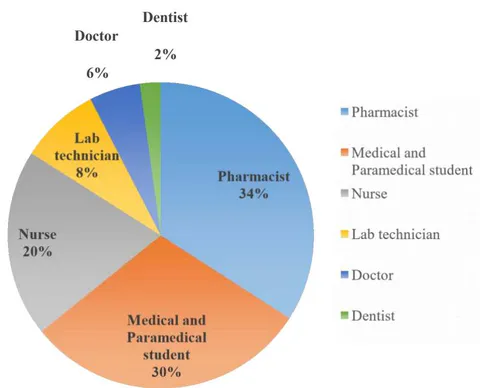
Of the total 501 participants, most of the participants were HCWs, i.e., 350 (69.9%) illustrated in fig 1 below. Two third of the participants, 334 (66.7%) were female, and 18-24 years, 277 (55.3%) were the most common age group. The highest frequency of participants was from province 4 and 3 accounting to 224 (44.7%) and 115 (23.0%), respectively. All participants were aware of COVID 19. However, only 288 (57.5%) attended lectures and discussions about COVID 19. The socio-demographic characteristics of the participants are presented in Table 1.
| Characteristics | Total (N=501) | HCWs(n=350) | students (n=151) | ||||
| Gender | |||||||
| Male (n=178) | 167 (33.3%) | 114 (22.8%) | 53 (10.6%) | ||||
| Female (n=175) | 334 (66.7%) | 236 (47.1%) | 98 (19.6%) | ||||
| Age (years) 18-24 | |||||||
| 277 (55.3%) | 158 (31.5%) | 119 (23.8%) | |||||
| 25-34 | 212 (42.3%) | 182 (36.3%) | 30 (6%) | ||||
| 35-44 | 7 (1.4%) | 6 (1.2%) | 1 (0.2%) | ||||
| 45-54 | 4 (0.8%) | 4 (0.8%) | - | ||||
| 55-64 | 1 (0.2%) | - | 1 (0.2%) | ||||
| Heard about COVID19 (Yes) | 501 (100%) | 350 (69.9%) | 151 (30.1%) | ||||
| Attended lectures/discussions of COVID-19(Yes)* | 288 (57.5%) | 187 (37.3%) | 101 (20.2%) | ||||
| Province | 1 | 2 | 3 | 4 | 5 | 6 | 7 |
| Number (%) | 22(4.4%) | 23(4.6%) | 115(23%) | 224(44.7%) | 86(17.2%) | 12(2.4%) | 19(3.8%) |
Source of information
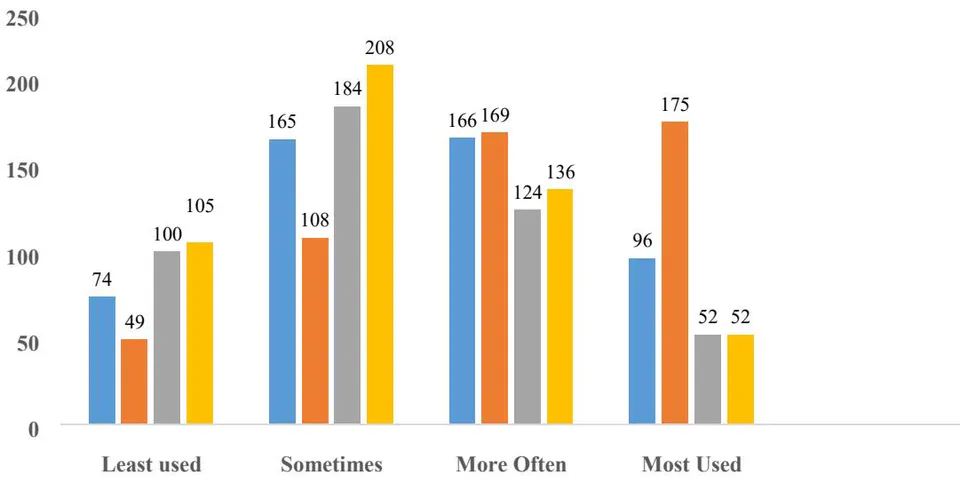
Fig. 2: Source of Information about COVID-19
The findings of the study primarily depend on the source, which disseminates the information to the public as well as the participants of our study. The various medium of information such as news media, social media, and official government website has been proactively providing information nowadays. In our study, more than half of the participants depending on social media like Facebook, Twitter, and Instagram as the main source of information about COVID – 19, as shown in Fig.2.
b) Knowledge about COVID-19
The knowledge about COVID - 19 among HCWs and Health students is presented in Table 2. From our survey, we observed that there is no significant gap in knowledge between HCWs and students. Correct responses about the origin of COVID - 19 were obtained from 413 (82.4%) participants, among which 287 (82%) were HCWs, and 126 (83.4%) were students. Most of the participants agreed headache, fever, cough, sore throat, and flu as the symptoms of COVID – 19, which lead to pneumonia, respiratory failure, and death. Similarly, most of the participants agreed on supportive care as the current treatment approach for COVID - 19. The response related to the mode of transmission, incubation period, and current treatment of COVID - 19 were poor in both HCWs and students.
| Knowledge | Correct responses | HCWs (n=350) | Students (n=151) | p - value* |
| COVID - 19 is thought to be originated from bats | 413 (82.4%) | 287 (82%) | 126 (83.4%) | 0.697 |
| COVID-19 is transmitted through air, contact, fecal-oral routes | 260 (51.9%) | 187 (53.4%) | 73 (48.3%) | 0.296 |
| Headache, fever, cough, sore throat, and flu are symptoms of COVID - 19 | 431 (86%) | 296 (84.6%) | 135 (84.6%) | 0.152 |
| The incubation period of COVID - 19 is 2 to 14 days | 231 (46.1%) | 152 (43.4%) | 79 (52.3%) | 0.067 |
| COVID - 19 leads to pneumonia, respiratory failure, and death | 405 (80.8%) | 285 (81.4%) | 120 (79.5%) | 0.609 |
| Supportive care is the current treatment for COVID - 19 | 319 (63.7%) | 229 (65.4%) | 90 (59.6%) | 0.213 |
| Hand hygiene, covering nose and mouth while coughing, and avoiding sick contact can help in the prevention of COVID - 19 transmission | 484 (97%) | 338 (96.8%) | 146 (97.3%) | 0.771 |
c) Perception of COVID - 19
The perception of COVID - 19 among HCWs and Health students are presented in Table 3. There is no significant gap in perception between HCWs and students. The majority of participants 443 (88.4%), perceived COVID - 19 incubation period as 2 to 14 days which is correct, 479 (95.6%) responded that flu vaccination is not sufficient for preventing COVID - 19, and 452 (90.2%) felt that eating well-cooked and safely handled meat is safe. Additionally, 486 (97%) of the participants agreed that patients should share their recent travel history with health care professionals, and 498 (99.4%) that washing hands with soap and water can help in the prevention of COVID-19 transmission, however, only 152 (30.3%) participants were aware that COVID - 19 is not fatal.
| Perception | Correct responses | HCWs (n=350) | Students (n=151) | p - value* |
| COVID-19 symptoms appear in 2-14 days | 443 (88.4%) | 308 (88%) | 135 (89.4%) | 0.652 |
| COVID-19 is fatal | 152 (30.3%) | 102 (29.1%) | 50 (33.1%) | 0.375 |
| Flu vaccination is not sufficient for preventing COVID-19 | 479 (95.6%) | 332 (94.9%) | 147 (97.4%) | 0.211 |
| During the outbreak, eating well-cooked and safety handled meat is safe | 452 (90.2%) | 313 (89.4%) | 139 (92.1%) | 0.364 |
| Sick patients should share their recent travel history with health care professionals | 486 (97%) | 338 (96.6%) | 148 (98%) | 0.420 |
| Disinfect equipment and working area in wet markets at least once a day | 456 (91%) | 322 (92%) | 134 (88.7%) | 0.242 |
| Washing hands with soap and water can help in the prevention of COVID-19 transmission | 498 (99.4%) | 349 (99.7%) | 149 (98.7%) | 0.167 |
The level of knowledge was categorized as poor ( ) and good (>4). Among all participants, 253 (72.3%) HCWs and 112 (74.2%) students had a good level of knowledge on COVID - 19. Similarly, the level of perceptions was categorized in positive (>5) and negative ( ). Only 185 (52.9%) HCWs and 77 (51%) of students showed a positive perception towards COVID - 19. There was no significant difference in knowledge between HCWs and students regarding the knowledge and perceptions of COVID-19. The detail of the level of knowledge and perception of COVID - 19 is given in Table 4.
| Total | HCWs | Medical students | p - value | |
| Knowledge | 0.743 | |||
| Poor (≤4) | 136 (27.1%) | 97 (27.7%) | 39 (25.8%) | |
| Good (>4) | 365 (72.9%) | 253 (72.3%) | 112 (74.2%) | |
| Perception | 0.702 | |||
| Positive (>5) | 262 (52.3%) | 185 (52.9%) | 77 (51%) | |
| Negative (≤5) | 239 (47.7%) | 165 (47.1%) | 74 (49%) |
IV. DISCUSSION
The WHO recognized COVID - 19 as pandemic on March 11, 2020. Globally, the mortality rate of COVID - 19 was found to be about 7% progressively spreading among more than 200 countries. Participants had good general knowledge and mixed perceptions about the disease in the current study, and there was no significant difference in knowledge between HCWs and students.
We found that more than half of the participants depended on Social media like Facebook, Twitter, and Instagram as the main source of information about COVID - 19. This differs from the findings on previously published studies , where most of the HCWs depended on Government websites and news bulletin to obtain COVID - 19 related information. Obtaining information from social media is a major concern because of the difficulty of determining the validity and authenticity of the available information.
Our study highlights that all the HCWs and students are knowledgeable of COVID - 19. Majority of the participants 365 (72.9%) had good knowledge of COVID - 19 which was similar to the finding of the study conducted in Nepal , China , USA and UK , and Egypt .
The present finding suggests that there was inadequate information regarding mode of transmission and incubation period among the participants corresponding to the study done by Bhagavathula et al., but still, in contrast to Farhana and Mannan et al. Regarding the treatment, 319 (63.7%) had the correct responses which were similar to the finding of the study of Nepal, 597 (68.5%) . There was no significant gap in knowledge between HCWs and students in our study. However, to further update the knowledge among HCWs and students, there should be a continuous effort from the government and health authorities.
In our study, most of the HCWs and students showed a positive perception regarding COVID - 19. Majority of the participants were knowledgeable of 2-14 days incubation period of COVID - 19, flu vaccination is not sufficient for preventing COVID - 19, eating well-cooked and safety handled meat is safe, sick patients should share their recent travel history with health care professionals, disinfect equipment and working area in wet markets at least once a day and washing hands with soap and water can help in the prevention of COVID - 19 transmission. These results are comparable with the study conducted by Bhagavathula et al. and Farhana and mannan et al. . Whereas the correct response for COVID - 19 as fatal, accounting to 152 (30.3%), which was low and different from the previous study of Nepal and Bangladesh . To strengthen preventive strategies and raise awareness regarding the COVID - 19, the WHO initiated several online training sessions and materials in various languages, which can be utilized to reduce misinformation and misunderstanding regarding the disease.
V. CONCLUSION
We identified that there was no significant gap between HCWs and health students regarding the knowledge and perceptions of COVID - 19. The global struggle to tackle the COVID - 19 pandemics will be successful by ensuring the accurate knowledge and perception among HCWs and the Health students. Strategies should be adapted for effective dissemination of the information regarding COVID -19, among HCWs and students.
ACKNOWLEDGMENTS
The authors would like to thank study participants for their voluntary participation and for providing essential information. The authors also wish to thank Akshaya Srikanth Bhagavathula, PharmD, Institute of Public Health, College of Medicine and Health Sciences, United Arab Emirates University, Abu Dhabi, the United Arab Emirates, for sending questionnaires through airmail, encouragement, and support during this research work.