The aging process of the face is characterized by transformations in the skin, bone, and adipose tissue. As the understanding of these changes has expanded, so too has the range of available filler products in the market. To maximize the effectiveness of hyaluronic acid, it is crucial to have a comprehensive understanding of its rheological properties. The numerous commercially available brands of hyaluronic acid differ in several aspects, such as the purity of their raw materials, methods of manufacturing, concentration of hyaluronic acid, presence and level of cross-linking, and ability to provide volume and withstand degradation. Aiming at the most assertive use of this product, features as viscosity (η), complex modulus (G*), elastic modulus (G”), tan d, cross-linking, concentration and swelling factor must be addressed, correlating them with their expected clinical effects.
## I. INTRODUCTION
Increased understanding of facial aging has led to the introduction of several products for aesthetic use. Hyaluronic acid (HA) - based fillers have expanded in proportion to knowledge in availability and manufacturer diversity.
HA fillers currently account for about $80\%$ of all fillers used for rejuvenation and volume correction [1]. These products have low complication rates, good durability, are relatively inexpensive, may be broken or degraded through a mechanism of enzymatic action (lysis) by injection of hyaluronidase[1, 4, 6].
HA is a natural linear polysaccharide of high viscosity and high molecular weight, found in the extracellular matrix, vitreous humor, and cartilage [4, 13, 17]. Its total amount in a $70\mathrm{kg}$ individual is approximately $15\mathrm{g}$, and its average turnover rate is $5\mathrm{g/d}$. Approximately, $50\%$ of its amount in the human body is concentrated in the skin and has a half-life of 24-48 hours. The natural process of degradation involves mainly two mechanisms: enzymatic degradation and degradation by free radical action [4,13].
Molecule of HA consists of alternating units of N-acetyl-D-glucosamine and glucuronic acid. This molecule is part of almost every tissue in vertebrates. Chemically, it is a hydrophilic macromolecule with -COOH and -OH functional groups (hydroxyl and carbosyl group). Its solubility in water is high, and it forms highly viscous solutions. In physiological conditions, the carboxyl group (-COOH) interacts with sodium ion $(\mathrm{Na}^{+})$ [4], attracting water molecules, so it is considered a hygroscopic molecule, so cross-connections formed the reticulation of the molecule, expanding according to its absorption of water. From this phenomenon the viscoelasticity occurs [28].
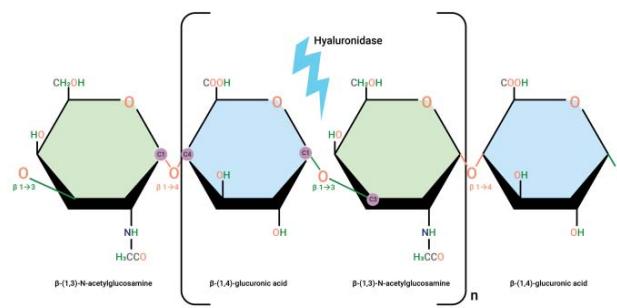
The functional group -OH (hydroxyl) is linked to the GLCNac anomeric carbon that donates a proton $(\mathsf{H}+)$ to -OH from the GLCA anomeric carbon (C1), and thus the C1 OH is now positively loaded oxygen and oxygen C3 is negatively charged, he attacks carbon C1 and releases H2O, thus forming the HA disaccharide (Figure 1. HA is a linear macromolecule composed of repeating disaccharide units) [29].
Such solutions show unique viscoelastic properties. It is synthesized by a class of integral membrane proteins known as HA synthases, which lengthen HA by repeated addition of glucuronic acid and N-acetyl-d-glucosamine groups to the growing sugar (Figure 1. HA is a linear macromolecule composed of repeating disaccharide units). They can form intramolecular hydrogen bonding, which leads to three-dimensional structures. HA can trap water within its structure and can form gels, which inside the body can provide flexibility to the animal tissue and lubrication the set of bundles surrounded by dense connective tissue, in muscular tissues. Its role in the body is strictly connected with its properties, it plays an important role in ECM (extracellular matrix) by several specific and non-specific interactions.
The role of HA usually depends on its molecular weight. For example, low weight HA is essential in healing and scar formation, whereas high molecular weight HA may support tissue integrity [20]. It can be used in tissue repair because it is able to promote
Mesenchymal and epithelial cell migration and differentiation. It is also helpful for the growth of epithelial tissue cells, eosinophils, macrophages, and a few animal tissue cells[20, 27]. Biological properties make it very good material for tissue engineering[20].
HYALURONIC ACID (Repeating disaccharide)
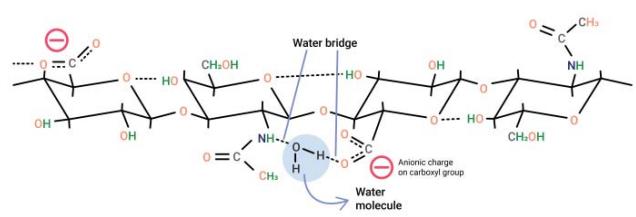
Figure 1: HA is a linear macromolecule composed of repeating disaccharide units. Each disaccharide unit consists of two sugar molecules: glucuronic acid (C1) and N-acetylglucosamine (C3 and C4), represented in brackets. The chemical bonds between units are called glycosidic bonds, which occur between carbon 1 (C1) of one unit and carbon 4 (C4) of the next unit. The molecular structure of HA is highly hydrophilic, meaning it has a natural affinity for water. This is because of the functional hydroxyl groups (-OH) and carboxyl groups (-COOH), which are highly polar, meaning they have an unequal distribution of electrical charge, with a partial positive charge on hydrogen and a partial negative charge on oxygen and carbon. Water is also a polar molecule, with an uneven distribution of electrical charge due to its H2O structure. The hydrogen atoms in the water molecule have a partial positive charge, while the oxygen atom has a partial negative charge. This polarity causes water molecules to interact attractively with HA molecules. Hyaluronidase is an enzyme naturally present in the human body that breaks glycosidic bonds in HA. It acts by cleaving the $\beta(1\rightarrow 4)$ bonds between disaccharide units, converting HA from its viscous, high-molecular-weight form into lower-molecular-weight fragments.
a) The structure of the skin and forces acting on HA fillers
The skin has many vital functions, including protection against external physical, chemical and biological aggressors, as well as preventing the body from excessive water loss and a role in thermoregulation [15]. The integumentary system is formed by the skin and its derived structures, divided in three layers: the epidermis, the dermis, and the subcutaneous tissue. These layers are referred to as an epidermis of stratified squamous epithelium, a basement membrane zone (BMZ) and a fibrous neurovascular dermis which supports on a hypodermis or subcutaneous fat [16].
At the outermost level, the epidermis is mainly composed of sheets of keratinocytes (Figure 2. Skin Structure and Appendages) but also contains nonepithelial cells, including antigen-presenting dendritic
Langerhans cells as well as melanocytes and Merkel cells[16, 21]. Reinforcing the epidermis is to the dermis, that accommodates the vascular, neural, lymphatic and adnexa of the skin (Figure 2. Skin Structure and Appendages) [21].
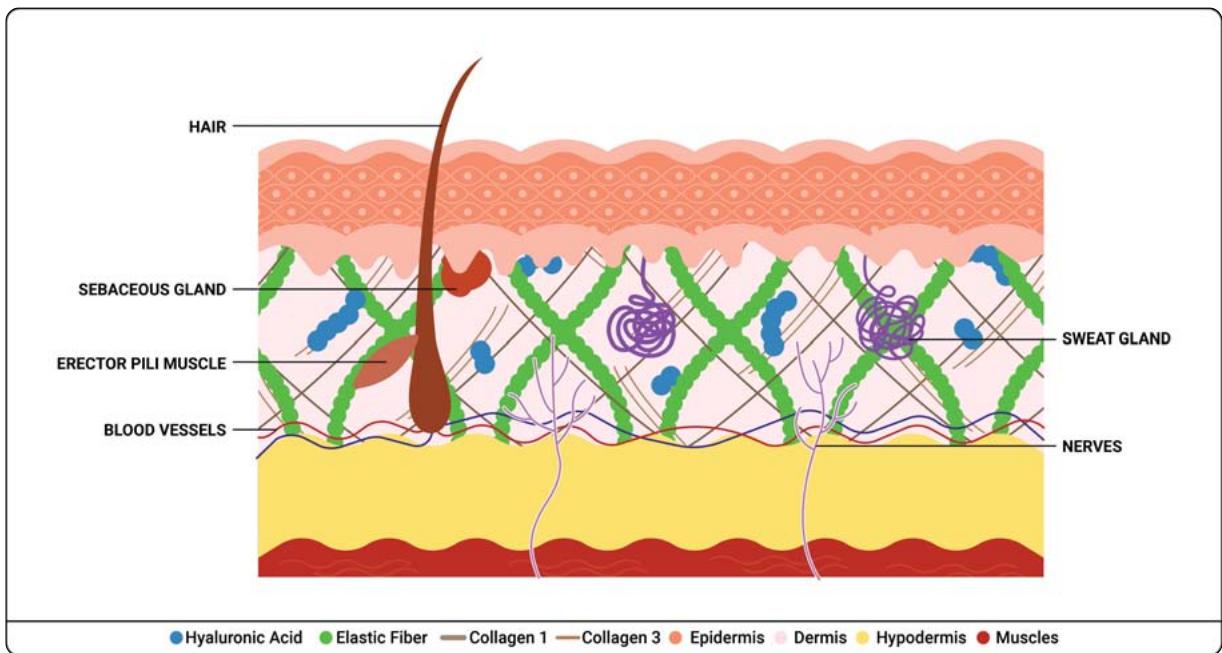
Figure 2: Skin Structure and Appendages: Epidermis: it is the outermost layer of the skin, composed of several layers of epithelial cells. It provides a protective barrier against environmental factors and pathogens. Dermis: it is the layer beneath the epidermis and consists of connective tissue. It contains blood vessels, lymphatics, nerves, and various structures like hair follicles, sweat glands, and sebaceous (oil) glands. Collagen and elastin fibers in the dermis provide strength and elasticity to the skin, still HA free provides hydration, wound healing, nutrient transport, protection, volume and elasticity. Subcutaneous Tissue (Hypodermis): this tissue lies below the dermis and is mainly composed of fat cells (adipocytes).It acts as an insulator and provides cushioning and energy storage.
The middle layer, the dermis, is connective tissue itself which are the cells and the fibers that compose them. Such cells are: fibroblasts, fibrocytes, macrophages, lymphocytes, plasmocytes, mast cells and adipose cells. Its papillary layer is the most superficial and thin, made up of loose connective tissue. The reticular layer, deepest and thicker, consists of dense non-patterned connective tissue. The primary cell type is the fibroblast, which produces matrix extracellular structural proteins, glycosaminoglycans (which hydrate the tissue due to the high-water binding capacity of hyaluronic acid), collagen and elastin fibers (Figure 2. Skin Structure and Appendages). Both contain many fibers and elastic, responsible, in part, for the elasticity of the skin. In addition to blood and lymphatic vessels and nerves, the following structures are also found in the dermis: hair, sebaceous and sweat glands [21].
The hypodermis is situated within the subcutaneous tissue, primarily composed of loose connective tissue. It plays a crucial role in facilitating the smooth movement of the skin over the underlying structures. Depending on an individual's nutritional status and overall health, this layer may exhibit varying amounts of adipose tissue. Their consists of small clusters of fat cells known as adipocytes (Figure 2. Skin Structure and Appendages). The thickness of the subcutaneous layer can vary significantly depending on the specific anatomical location of the body [21].
The Superficial Muscle Aponeurotic System (SMAS) connects the facial muscles to the dermis and aims to transmit, distribute and amplify the activity of all facial muscles. True ligaments are easily identifiable structures that connect the skin to the underlying periosteum (the membrane that covers the outer surface of the bone). And false retention ligaments are more diffuse condensations of fibrous tissue that connect the superficial and deep fascia to the skin [30]. In muscle tissues, HA can retain water, which provides lubrication to the dense connective tissue (Epimysium, Perimysium, and Endomysium) that surrounds its fibers.
After injection, the fillers are subjected to compression, shear, stretching, torsion by muscle movements, weight of soft tissue, pressure on external surfaces (e.g., face while sleeping), and gravitational force. All these forces modify the shape, distribution, time and the degree of correction of the filled defect (figure 5. This schematic representation illustrates the relationship between cohesiveness and viscosity in an HA gel, emphasizing their effects on the gel's behavior and shape when injected into the dermis and figure 6. Schematic representation of the cohesion and viscosity of an HA gel reveals a pivotal correlation). The gel's fluidity is greatly enhanced by its low viscosity and low cohesiveness, which results in a lack of unity. On the other hand, a gel that has low viscosity but high cohesiveness maintains its structural integrity while still remaining fluid. This balance also influences the level of force necessary to extrude the gel through a syringe and needle. When examining a filler with high viscosity and strong cohesiveness, it manifests as a denser and more cohesive gel, demanding greater force for extrusion. Conversely, in the absence of cohesiveness, the gel fails to maintain its unity after being injected into the dermis. In summary, the delicate balance between viscosity and
cohesiveness significantly influences both the physical properties of the gel and its performance during injection, shaping the final outcome in dermal applications) [1,11].
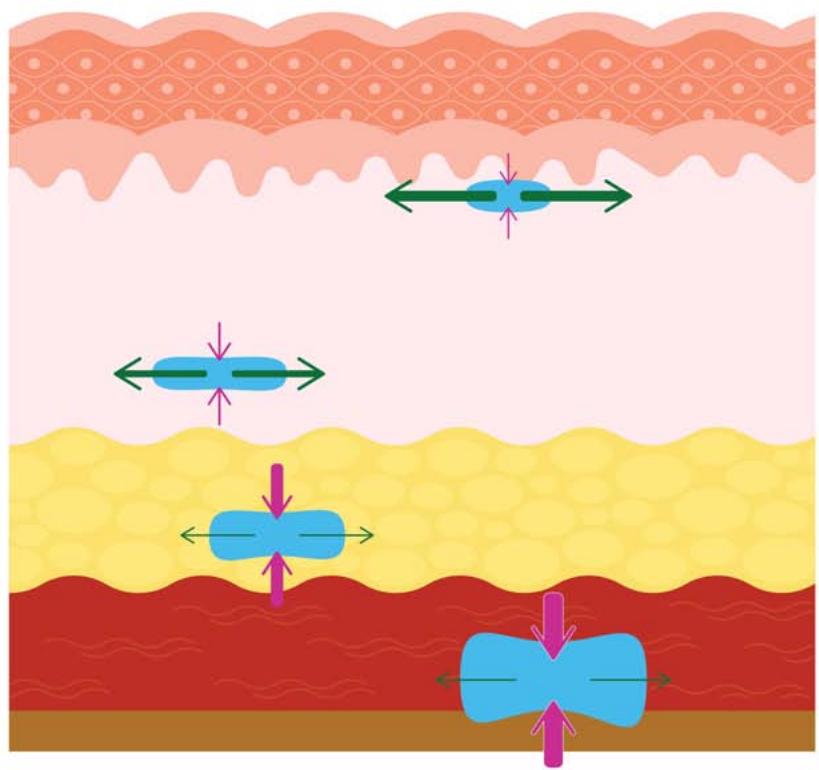
Figure 3: Dynamic forces of the HA in different planes of the dermis. Superficial Dermis: when it is injected into the superficial dermis, it remains close to the skin's surface. The forces acting on it are primarily associated with facial expressions and muscle movements. It in this plane can help address fine lines and superficial wrinkles, providing subtle volume enhancement. Mid-Dermis: injecting it into this plane allows it to interact with collagen and elastin fibers, which provide structural support. Forces in this plane involve both muscle movement and the skin's natural tension. It placed here can help restore volume, correct moderate wrinkles, and enhance facial contours. Deep Dermis or Subcutaneous Tissue: it injections in the deep dermis or subcutaneous tissue reach areas with more robust support structures, including fat compartments and ligaments. The forces acting on it in this plane relate to the underlying bone structure and the pull of facial muscles. It is suitable for addressing deeper wrinkles, volume loss, and providing structural support for facial features.
Hyaluronic Acid Gel $\downarrow$ Strech and Compression Shear and Torsion Epidermis Dermis Hypodermis Muscles Bones
Considering the previous statement, depending on the region of the face where the HA is implanted, it will be submitted to 2 types of forces, each one causing a product deformation in a different plane. The first, in a horizontal plane parallel to the skin surface, is the shear or torsion force. The second, which is the compression/stretching force, is applied in a vertical plane perpendicular to the surface. Mechanical facial strains involve a combination of these 2 types of forces, and depending on the region in concern, one type of strain may be predominant (Figure 3. Dynamic forces of the HA in different planes of the dermis) [13, 14]. To what extent these forces act on the product depends on several factors, such as the plane of injection (i.e., superficial versus deep) and anatomical location. Although the indications and instructions for use by the manufacturer are important, the skills required to create an aesthetic effect is dependent on the accuracy of the person performing the facial analysis and performing the filler [19].
# b) The Rheology
Rheology is a section of mechanics which studies the deformation and flow of matter, particularly in light of its limits of resistance to deformation. Introducing this concept is important to understand the application of HA from the perspective of this property, as will be listed and explained below.
Understanding the rheological and biophysical fundamentals will result in clinical implications that facilitate the appropriate choice for Orofacial harmonization treatments [1,2,10]. For example, the HA filler applied when the aim is to restore volume has different rheological characteristics from those indicated for the treatment of fine skin lines. Therefore, the fillers indicated for each aim and area will have different properties.
Several studies can provide insights into material behavior under different temperature stresses. Therefore, the study of a new formulation requires multiple steps to demonstrate safety, efficacy and stability to ensure consumer protection and satisfaction. During formulation of fillers, use and storage time, exposure to possible external factors such as physical damage, microbiological and chemical influences can.
These features influence the integration between the HA and the surrounding soft tissues and they determine the filler's ability to modify the anatomical layer volume, based on this statement, clinical planning can show different HA for different anatomical areas and even the same areas with different goals.
The objective of this study is to carry out a review on the rheology of HA fillers, characterizing and understanding the mechanical and viscoelastic properties of this polysaccharide in various contexts, including its concentration, temperature, and the presence of other components. This research will facilitate enhanced utilization of the product across a range of applications within tissue engineering and aesthetics area, leading to more effective and personalized clinical applications. As we delve deeper into understanding hyaluronic acid and its role in facial harmonization, the subsequent sections of this article will explore various aspects, starting with the manufacturing technology, followed by an examination of its physical-chemical properties and will culminate in a detailed exploration of its rheological features. These sections collectively shed light on the multifaceted aspects of HA-based fillers and their applications in clinical practice.
## II. MANUFACTURING TECHNOLOGY
HA is made naturally in the human body, has a half-free radical action. For this reason, the HA used as a filler needs to be modified through a process called crosslinking. HA fillers differ in their manufacturing technologies, formulations, additives, and clinical indications [2]. The HA used for the manufacture of fillers is mainly produced with biotechnology, from the fermentation of microorganisms, such as the genus of Streptococcus aerobic bacteria. This is biocompatible with the human body, as the structure of HA is highly conserved in different species [8].
Bacterial fermentation produces non-crosslinked HA of varying lengths. HA chains must undergo a stabilization process to avoid rapid enzymatic and oxidative HA 9 adapted resorption [1, 4, 8]. To achieve this goal, the HA polymerization is enhanced by a crosslinking process that adds a molecule, called BDDE (1,4-butanediol diglycidyl ether) linking the polymer chains to each other [1,4, 17,18](Figure 3. Dynamic forces of the HA in different planes of the dermis). BDDE is the crosslinking agent with the lowest toxicity, its amount is limited by the FDA (Food and Drug Administration) to a residual level of unreacted BDDE $<2$ parts per million (ppm) [1]. BDPE, which stands for "1,4-butanediol di-(propan-2,3-diolyl)ether," is derivatives formed through of nucleophiles during the cross-linking process the epoxide groups of BDDE. This results in the formation of a three-dimensional network that prevents rapid dissolution to improve the mechanical and physical properties. This processes, crosslinking significantly reduces the rate at which the body metabolizes the filler, prolonging its presence in the treated area. This results in longer-lasting effects and improved structural support. Additionally, crosslinked fillers are better equipped to resist degradation, maintaining their shape and volume over time. Crosslinked HA has been used for over 15 years and it is well tolerated. It has structural properties similar to native tissue, excellent biocompatibility and good integration [2, 1]]. Over time, unreacted BDDE is degraded through hydrolysis [4].
Crosslinked HA has structural properties similar to native tissue, excellent biocompatibility and good integration. In areas where long-lasting results are desired, such as the midface or temples, fillers with higher cross-linking are preferred [4].
Hyaluronidase naturally occurs in various organs (such as the testis, spleen, skin, eyes, liver, kidneys, uterus, and placenta) and body fluids (tears, blood, and semen). There are six known types of hyaluronidase (hyaluronidase 1-4, PH-20, and HYALP1). Hyaluronidase 1, encoded by the HYAL1 gene, is prevalent in major organs
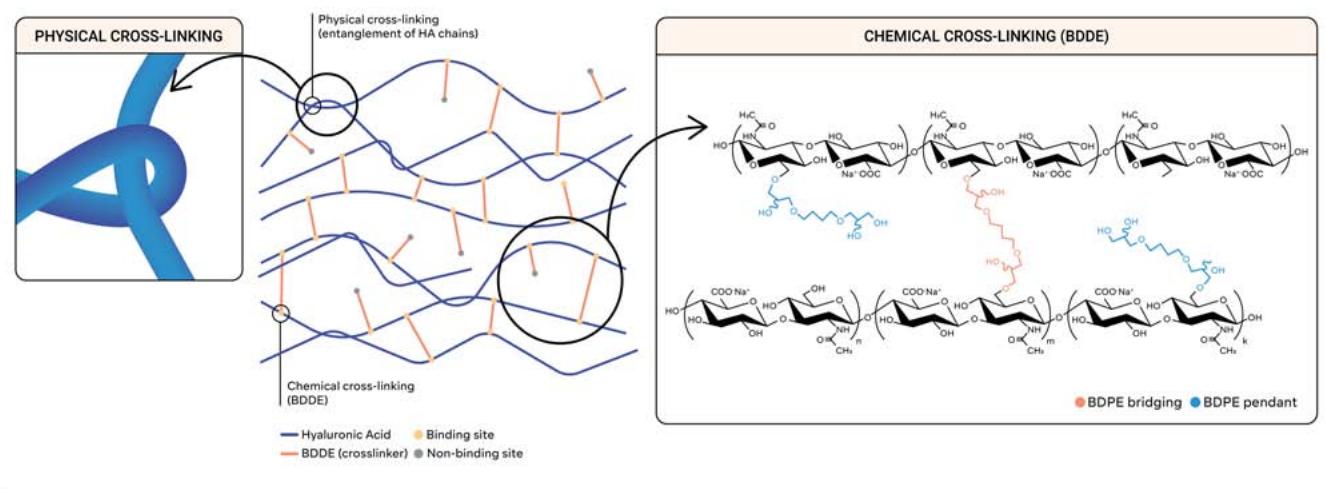
Figure 4: This schematic representation illustrates the differences between natural, cross-linked HA and the process of physical crosslinking. Natural HA: represented by the blue line as a linear molecule composed of repeating disaccharide units. Cross-Linked HA: represented by the blue line connected by the orange, at higher magnification, in which there are additional, BDDE ou BDPE connecting bonds between HA chains. These bonds, often formed through chemical processes, create a network or matrix. Crosslinking enhances the stability and longevity of HA fillers when used for cosmetic purposes. The degree of cross-linking can vary, influencing the gel's cohesiveness and resistance to degradation. Physical Crosslinking: is a technique that allows for HA modification without the use of chemical agents, such as changes in temperature, pH, or the application of external forces to induce cross-linking.
However, the natural linear form of HA molecules is susceptible to rapid degradation by hyaluronidase, rendering it unsuitable as a filler due to its inadequate consistency and short half-life. To overcome this limitation, it is essential to modify the physical properties of HA to increase its resistance to in vivo degradation [7]. In practice, dermal HA is composed of both unmodified HA (without crosslink) and crosslinked HA (with crosslink), forming a polymeric network that achieves the desired durability and stability [6,7].
Unlike the linear polymer, the crosslinked network is able to swell in aqueous media without dissolving, it behaves rheologically as a gel-like material, shows a viscosity that decreases with shear rate under flow conditions, and it is less sensitive to degradation by hyaluronidase. It thus gives the injected HA gel hydration, projection (filler effect), injectability, and a longer tissue permanence than linear HA[18].
Production methods are used to alter the molecular technologies available on the market with their respective manufacturers, indications for use, type of filler marketed, and HA concentration (mg/ml) [11,19]. The technology manufacturing too will influence in the action of the natural hyaluronidase, to action order for it to dissolve a HA filler, it must be able to access the intramolecular bonds. Interfer in this access include the number of crosslinks and the concentration of HA. The more crosslinking, the more difficult it is for hyaluronidase to access its binding inside the HA filler. For this reason, fillers with high crosslinking require a long time to dissolve with by this enzyme action. In addition, the higher the concentration of HA, the slower it will be dissolved by hyaluronidase [22].
It is important to remember that the hyaluronic acid gel will always be degraded by the action of the hyaluronidase enzyme, and it is important to pay attention to the amount of hyaluronic acid injected versus the dose of hyaluronidase, which can directly determine the final degradation time of the product (dose-dependent responses). Its use has safety implications in the context of HA filler procedures. It serves as an important tool in managing filler-related complications, such as overcorrection or vascular occlusion. However, its use must be carefully considered and administered by trained professionals to minimize potential risks, including allergic reactions or tissue damage [23].
Manufacturing parameters such as high temperatures and strong acidic and alkali pH are sensitive for the HA chains. Indeed, the usual manufacturing conditions (heat, alkali pH, and sterilization) are prone to degrade HA gels and release low-Mw soluble HA (sHA) [11]. Therefore, it is necessary to explain the manufacturing processes available. XpresHAn technology, which has varying degrees of crosslinking to provide different levels of flexibility and support while maintaining natural movement in areas of dynamic expression. The NASHA technology (Non Animal Stabilized Hyaluronic Acid) produces firmer gels based on molecular entanglements and small amounts of chemical crosslinking, with controlled particle sizes at different levels. The OBT technology (Optimal Balance Technology) is based on four different levels of crosslinking, producing gels from very soft to intermediately firm, providing different levels of tissue support [24]. Vycross technology, which combines low-molecular weight and high-molecular weight HA to improve the crosslinking efficiency of the HA chains. Preserved Network technology, designed with reduced
synthetic crosslinking due to preserved natural HA polymers [25]. Cohesive polydensified matrix (CPM) HA is also characterized by a higher mean molecular weight of non-cross-linked (soluble) HA than in other currently available products, the variable cross-linking is intended to confer resilience and retention of structural integrity [26].
Table 1: Classification of dermal fillers according to manufacturers, manufacturing technology, HA concentration, product type and indications [11,19].
<table><tr><td>Manufacturer</td><td>Manufacturing Technology</td><td>Concentration (mg/mL)</td><td>Type</td><td>Indication</td></tr><tr><td>Galderma</td><td>NASHATM</td><td>20</td><td>Restylane® SkinboostersTM Vital</td><td rowspan="6">Fine lines. Superficial dermis</td></tr><tr><td>Galderma</td><td>NASHATM</td><td>16</td><td>Restylane® SkinboostersTM Vital Light</td></tr><tr><td>Allergan</td><td>VycrossTM</td><td>12</td><td>Juvederm® VoliteTM</td></tr><tr><td>Allergan</td><td>VycrossTM</td><td>15</td><td>Juvederm® VolbellaTM</td></tr><tr><td>Teoxane</td><td>Preserved Network</td><td>15</td><td>TEOSYAL® RHA 1</td></tr><tr><td>Merz</td><td>CPMTM</td><td>20</td><td>Belotero® Soft</td></tr><tr><td>Galderma</td><td>NASHATM</td><td>20</td><td>Restylane® Lido</td><td rowspan="8">Fine and medium lines, lips; Superficial to mid dermis</td></tr><tr><td>Galderma</td><td>OBTTM/ XpresHAnTM Technology</td><td>20</td><td>Restylane® RefyneTM</td></tr><tr><td>Galderma</td><td>OBTTM/ XpresHAnTM Technology</td><td>20</td><td>Restylane® DefyneTM</td></tr><tr><td>Galderma</td><td>OBTTM/ XpresHAnTM Technology</td><td>20</td><td>Restylane® VolymeTM</td></tr><tr><td>Allergan</td><td>VycrossTM</td><td>17.5</td><td>Juvederm® VoliftTM</td></tr><tr><td>Teoxane</td><td>Preserved Network</td><td>23</td><td>TEOSYAL® RHA 2</td></tr><tr><td>Teoxane</td><td>Preserved Network</td><td>23</td><td>TEOSYAL® RHA 3</td></tr><tr><td>Merz</td><td>CPMTM</td><td>22.5</td><td>Belotero® Balance</td></tr><tr><td>Galderma</td><td>NASHATM</td><td>20</td><td>Restylane® LyftTM Lido</td><td rowspan="5">Volume (restoration, sculpting)-subcutaneous and supraperiosteal</td></tr><tr><td>Allergan</td><td>Vycross®</td><td>20</td><td>Juvederm® VolumaTM</td></tr><tr><td>Teoxane</td><td>Preserved Network</td><td>23</td><td>TEOSYAL® RHA 4</td></tr><tr><td>Merz</td><td>CPMTM</td><td>26</td><td>Belotero® Volume</td></tr><tr><td>Merz</td><td>CPMTM</td><td>25.5</td><td>Belotero® Intense</td></tr></table>
## III. PHYSICAL-CHEMICAL PROPERTIES
In the context of clinical orofacial harmonization procedures, understanding the composition and concentration of hyaluronic acid (HA) in dermal fillers is of paramount importance. Manufacturers often provide the total HA concentration in the gel, but they usually do not distinguish between the amount of insoluble crosslinked HA and soluble non-cross-linked HA within the biopolymer. The soluble portion of HA is intentionally included to optimize the filler's viscosity, making it easier to inject through a needle. It's worth noting that this soluble HA is readily metabolized by the body. As a result, the total concentration stated for commercially available fillers should be viewed as more of a reference value rather than an absolute measurement [1].
Soluble HA enhances the filler's viscosity, which makes it more fluid and easier to extrude through a needle during the injection process. This improved injectability allows for smoother and more precise placement of the filler in the target area. Also contributes to the initial volume of the filler, allowing it to provide immediate results in terms of volume enhancement and wrinkle reduction[1, 33, 34].
However, the presence of it also has implications for the longevity of the filler, because is easily metabolized by the body, which means that over time, may gradually break down and lose its volume-enhancing effects and this can vary from person to person but typically occurs over several months[14].
The ideal concentration of hyaluronic acid (HA) is $20\mathrm{mg/mL}$ or higher. This concentration enables significant volume expansion when the filler is injected into the target tissue, resulting in a prolonged effect that enhances its structural integrity. Furthermore, it retards the rate at which the body metabolizes the filler. This concentration should demonstrate a viscosity that strikes a balance between ease injection for delivering adequate support and structure to the treated area of the face [1, 7].
Therefore, this concentration it presents better cost-effectiveness, because can achieve the desired results with smaller volumes, patients may require less product, and clinicians can achieve their treatment goals with fewer syringes of filler. Then it offers a balance between ease of injection, longevity of results, and cost-effectiveness [1, 7].
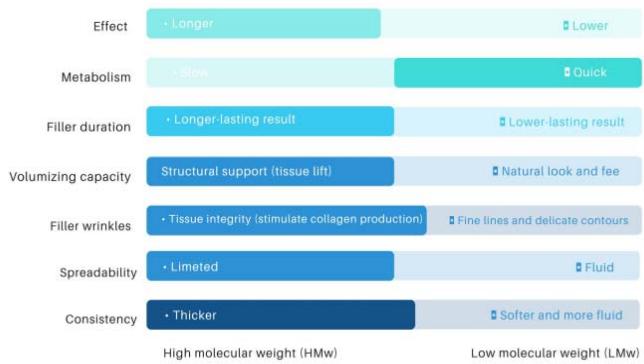
In clinical practice, dermal fillers primarily consist of high molecular weight HA (HMw). These fillers exhibit unique viscoelastic and biophysical properties based on their chemical compositions, including HA concentration, Mw of HA, and the specific crosslinker used in their formulation. The molecular weight of HA plays a pivotal role in providing structural and physicochemical integrity to the filler, and it directly influences its viscosity, in addition can influence how it behaves in various facial areas during injection [33]. HMw and Low molecular weight HA represent two distinct options in dermal fillers. HMw HA offers several advantages, including its tendency to provide longer-lasting results when compared to LMw fillers. It is metabolized more slowly by the body, contributing to its durability. Also offers robust structural support, effectively addressing deeper wrinkles and areas with volume loss and diminished tissue integrity. Additionally, it can promote tissue integrity by stimulating collagen production. On the other hand, LMw HA provides a more natural appearance and offers a softer and more fluid texture, making it particularly suitable for areas with fine lines and delicate contours. Furthermore, it facilitates easier injection and yields quicker results [34, 34].
Both also have disadvantages, as HMw HA fillers look less natural in the treated area due to their thicker consistency and have limited spreadability. While LMw HA fillers are less durable, they provide limited structural support and are metabolized more quickly. Therefore, the choice between HMw and LMw AH fillers depends on the patient's specific aesthetic goals and treatment area (graphic 1) [33, 34].
Comparison of HMw and LMw HA in Dermal Fillers
Graph 1: This chart illustrates the advantages and disadvantages of using HMW-HA and LMW-HA in dermal fillers across various characteristics. The comparison covers factors such as effect, metabolism, filler duration, volumizing capacity, wrinkles filler, spreadability and consistency of the gel. HMW-HA offers extended longevity and robust structural support but may be less suitable for fine corrections. LMW-HA, on the other hand, excels in ease of spreading, making it ideal for fine lines and precise results. However, it tends to have a shorter duration and may require more frequent touch-up sessions.
This understanding of HA characteristics and concentration is crucial for clinicians aiming to achieve optimal results in facial harmonization and other aesthetic procedures.
## IV. RHEOLOGICAL FEATURES
Rheology, a subfield of physical chemistry, delves into the study of how different materials respond to deformation and flow, whether they are solid, semi-solid, or liquid. It examines the ability of matter to maintain its shape, which is a defining characteristic of solids, and this property is known as stiffness. Stiffness is evaluated using elasticity, which measures a material's resistance to deformation. Hooke's law establishes a mathematical relationship between the elastic strength, stress applied, and deformation induced in a material. This understanding of rheology is fundamental in exploring how substances deform and flow [1, 2].
To analyze a gel for injection into the skin layers the most main features are viscosity $(\eta)$, complex modulus $(G^{\star})$, elastic modulus $(G')$, tan delta - $\delta$ $(G'')$, cross-linking, concentration and the swelling factor (the absorption factor) [2,6,7,19].
Fluids are shapeless, thus they are unable to resist deformation. They have an intrinsic and specific feature: viscosity $(\eta)$. It can be defined as the ability of a fluid to resist flow [1,3]. This tells the pressure required to determine the flow of a fluid (for example: water and honey) [1].
Viscosity is a measure of a fluid's resistance to flow. It determines how easily a substance flows or moves when subjected to an applied force. Liquids with high viscosity are thick and flow slowly, while those with low viscosity are thin and flow more easily. Viscosity is influenced by factors such as temperature and the internal friction of the fluid's molecules [12].
The viscosity of a dermal filler is related to the concentration of non-crosslinked and crosslinked HA, the degree of crosslinking, the molecular weight distribution, the average particle size of the gel, and the manufacturing process. It is crucial that hydrogels have low viscosity at high shear (100 s-1), so that they can be extruded through a small-caliber needle. High viscosity under low shear is in fact comparable to the condition of the hydrogel after injection or when resting in the package [12]. If the viscosity is too high, the injection of the fillers becomes difficult to apply. Adding free HA reduces the viscosity, because hydration effect increases the overall viscosity of the filler, making it thicker and more gel-like, it trap water within its structure, lead to the formation of gels, enhances its volumizing capacity can influence the texture and consistency of the filler. However, professionals lack information on the amount of free HA present in the product (i.e. soluble and insoluble fractions). The total concentration of commercially available HA is a reference value, so this parameter is not absolute for assessing the filler's performance[13].
From a clinical perspective, it is crucial for these fillers to demonstrate low viscosity when subjected to high shear forces. This characteristic enables smooth extrusion through a fine-gauge needle during the injection process, ensuring precise and controlled injection in target tissues. This, in turn, reduces discomfort for the patient during the injection and facilitates even distribution of the filler. Achieving even distribution is essential for achieving natural-looking results, particularly in delicate facial areas.
Conversely, high viscosity under low shear conditions is like the state of the hydrogel within the product vial or after injection into the target area. This condition, after injection ensures that the filler maintains its shape and position over time, it provides structural support and volume, helping to lift and restore sagging or deflated areas of the face and minimized migration. Lower viscosity is often preferred, especially in areas with fine lines or where precise distribution is necessary, such as the lips or tear troughs. It allows for smoother and more controlled injection[13].
Complex viscosity is a crucial parameter that assesses the gel's capacity to withstand shear forces within a tissue following injection. In addition, the elastic modulus, another significant factor, gauges the hydrogel's inherent stiffness and its interactions with the surrounding environment. These parameters collectively influence the hydrogel's ability to effectively withstand the tensile forces exerted on it following injection, primarily arising from the dynamic movements of facial muscles [2,6].
These last two parameters directly impact a gel's ability to endure the shear and tensile forces experienced within facial tissues post-injection.
The measure of the total energy needed to deform a material using shear stress is complex modulus, which indicates the overall resistance to deformation of a material, regardless of whether that deformation is recoverable (elastic) or non-recoverable (viscous). This measure is favorite to quantify the gel hardness, being it is a good indicator of projections in clinical applied, in which the stiffness or hardness of the HA filler has direct relation: the higher the magnitude of the complex modulus, the stiffer the material [30].
The complex modulus combines both elastic and viscous responses of a material to deformation. It is used to characterize a material's overall resistance to deformation, considering both its ability to return to its original shape (elastic behavior) and its tendency to flow or deform irreversibly (viscous behavior) when subjected to stress. It is particularly important in the study of materials' response to dynamic forces and shear stress. It is represented as a complex number, often in the form $G^{\star} = G' + G''$, where $G'$ represents the elastic modulus and $G''$ represents the viscous modulus[30].
The complex modulus, referred to as $G^*$, is a comprehensive measure that takes into account both the elastic modulus ( $G'$ ) and viscosity modulus ( $G''$ ). It's crucial to highlight that the filler material should strike a delicate equilibrium between its ability to be pliable, enabling it to flow smoothly through the needle, and its structural robustness, ensuring it retains its intended shape once it's injected into the soft tissues. The injection procedure itself comprises several distinct phases, starting with the material's passage through the needle and culminating in its seamless integration into the adjacent soft tissues. Therefore this filler needs to possess adequate malleability to navigate the needle without resistance while maintaining structural integrity to provide the desired cosmetic enhancement. This balance ensures a successful and aesthetically pleasing outcome. For precise sculpting in areas like the nose or jawline, higher $G^*$ values are beneficial, allowing for better control during injection [30].
Typically, the clinical choice of $G'$ is guided by the extent of correction needed and the treatment plan in place. In cases where a deeper injection plan is warranted to provide robust support for achieving a higher degree of correction, it is advisable to opt for hydrogels with a higher (firmer) $G^*$. These firmer hydrogels excel in their corrective capacity when it comes to deep deposition and the creation of elevations or projections, especially in areas like the malar cheek, chin, and jaw, where they can be strategically placed against the bone for enhanced projection. In such scenarios, they exhibit superior compressive strength, effectively countering the intrinsic forces within the deeper tissue planes [19].
On the other hand, if the injection plan involves shallower planes with less pronounced corrections, hydrogels with a lower $G^*$ (softer) can be a suitable choice. However, it's worth noting that these softer products can also be employed in deeper planes to achieve clinical effects when necessary. Additionally, they can be layered atop higher $G^*$ products to attain the desired outcome [19].
Elasticity, in the context of materials and mechanics, refers to the property of a substance to return to its original shape and size after it has been deformed or stretched[1, 7].
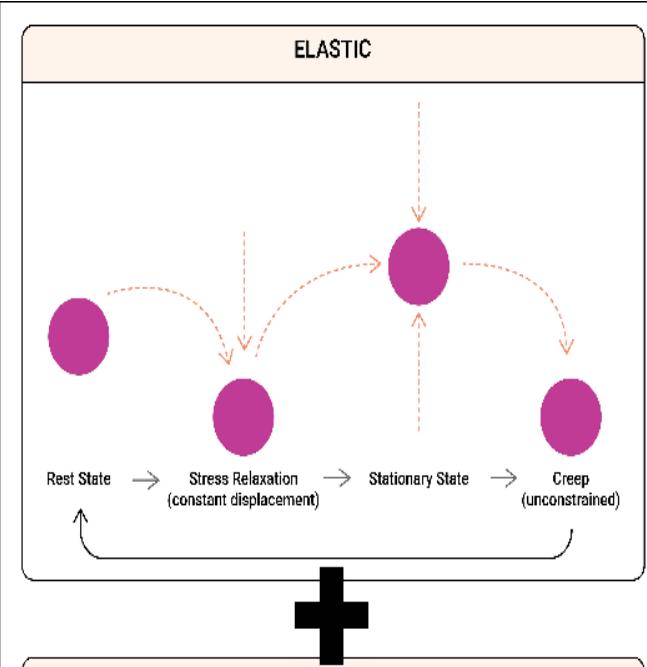
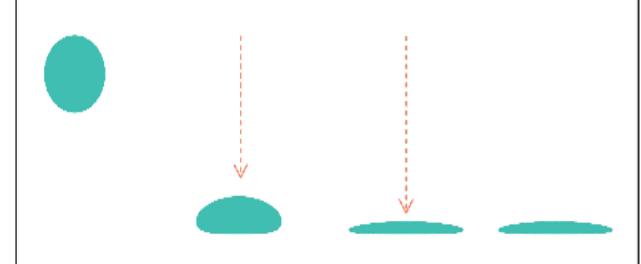
Elastic modulus (E) is the ratio between Stress $(\sigma)$ and Strain $(\varepsilon)$, in other words, it is the stress applied to the material over the strain that induced it. To better understand the concept of stress, if an external compressive force is applied in a solid its molecules are pushed together, and they accumulate a repulsive force. The internal pressure, determined by the repulsive force, is the stress. Therefore, stress is the internal pressure that material is subject to when external forces are applied and this is a measure of how much the dimension of an object has changed [1]. In simpler terms, it quantifies how a material responds to an applied force and how much it deforms under that force. Practitioners need to consider how these materials respond to the forces applied during the injection process and how they behave within the target tissues (Figure 7 Material Properties: Elasticity, Viscosity, and Viscoelasticity)[1, 7].
Elastic modulus (G') is a measure of the stored energy in a material in which shear deformation has been employed. In other words, it can be thought of as the proportion of the total stiffness (the complex modulus - G*) of a material that is attributable to elastic deformation. It represents the fraction of energy G' stored during deformation which can be used to recover its original shape when the deformation is removed. Combined, G' and G'' define the complex modulus, or G*, which represents gel is resistant to deformation [1,7,10]. With higher G*, the material is stronger and less deformable (Figure 3. Dynamic forces of the HA in different planes of the dermis and Figure 5. This schematic representation illustrates the relationship between cohesiveness and viscosity in an HA gel, emphasizing their effects on the gel's behavior and shape when injected into the dermis) [1].
Viscous modulus $(\mathsf{G}^{\prime \prime})$ represents the amount of energy that is absorbed by a substance when it experiences deformation [1,7]. A gel with a higher $\mathsf{G}^{\prime \prime}$ value is more viscous or thicker, which means it demands a greater amount of force to be extruded through a needle [7]. For example, if we have two gels, one with a low $\mathsf{G}^{\prime \prime}$ and another with a high $\mathsf{G}^{\prime \prime}$, and we attempt to push them through a needle, the gel with the higher $G''$ will resist the flow more strongly and require more force to pass through the needle compared to the one with the lower $G''$. This is because the higher $G''$ indicates a greater ability of the gel to absorb and dissipate energy when subjected to strain, resulting in increased resistance to flow.
For professional, a higher $G'$ value indicates that the material is stronger and less prone to deformation. A gel with a higher $G''$ indicate heightened resistance is a result of the higher $G''$, signifying the gel's greater ability to absorb and dissipate energy when subjected to strain. They must be aware of these $G''$ values as they directly impact the ease and precision of material delivery during procedures (Figure5. This schematic representation illustrates the relationship between cohesiveness and viscosity in an HA gel, emphasizing their effects on the gel's behavior and shape when injected into the dermis.).
Tan delta $(\delta)$ is the measure of the elasticity versus viscosity balance in the gel, and it is defined by $G''$ and $G'$ ratio. Gels characterized by a high (d), with values close to one, are predominantly viscous (e.g. honey), while those characterized by a low (d), with values close to zero, are predominantly elastic (e.g. gelatine) [7].
Swelling Factor (hydration capability) occurs due to the insoluble HA and the cross-linking degree can impair the penetration and binding of the water molecule[1]. The expansion after injection adds the volumeizing effect [1, 7] and, if excessive, it may lead to unwanted effects such as becoming palpable and edema [1, 3]. In vivo swelling depends on the structure of the surrounding tissue, its fluid balance and pH value [5].
The closer to the equilibrium state of hydration (saturation) of a gel the smaller the swelling will be after injection. If below equilibrium (unsaturated), it will easily absorb water from the surrounding fluid until it reaches equilibrium. This feature varies from product to product and it depends on the hyaluronic acid concentration and the physical constraints imposed by the cross-linking. Usually, the higher the cross-linking and the $G^{*}$, the lower the swelling factor [19].
This hydration capability is significant because it contributes to the volume-enhancing effect of the filler after injection. However, excessive swelling can result in unwanted side effects, including palpable lumps and edema. In vivo, the extent of swelling following injection is influenced by several factors. These include the structure of the surrounding tissue, the local fluid balance and the pH value of the environment. In cases where the gel is below equilibrium (unsaturated), it will readily absorb water from the surrounding fluid until it reaches the equilibrium state. This property is crucial in areas like the cheeks or nasolabial folds, in which can quickly restore volume in the cheeks, offering an instant rejuvenating effect [19].
Typically, a higher degree of cross-linking and a higher value of $G^{\star}$ (complex modulus) result in a lower Swelling Factor. This means that products with strong cross-linking and higher $G^*$ values tend to exhibit less swelling after injection, which can be advantageous in clinical applications where precise control over volume enhancement and reduced risk of side effects are desired[25].
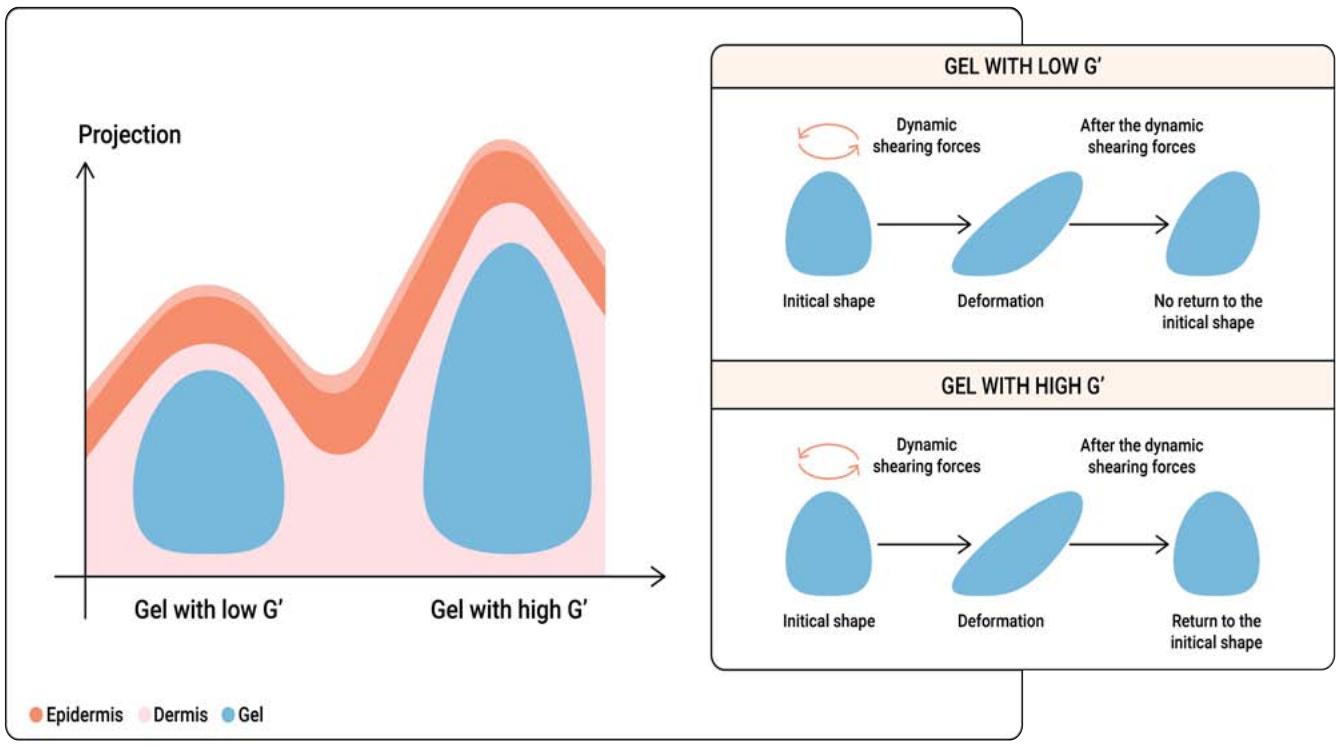
Figure 5: This schematic representation illustrates the relationship between cohesiveness and viscosity in an HA gel, emphasizing their effects on the gel's behavior and shape when injected into the dermis. A highly cohesive gel is represented with robust intermolecular connections, forming a structured network. In the dermis, cohesiveness ensures that the gel maintains its shape, doesn't excessively spread, and provides structural support, as the draw. The increased dermal projection can be observed in the graph. When viscosity is higher, the gel appears as thicker, while lower viscosity results in a more fluid consistency. Therefore plays a significant role in how the gel flows during injection and its ability to conform to dermal contours.
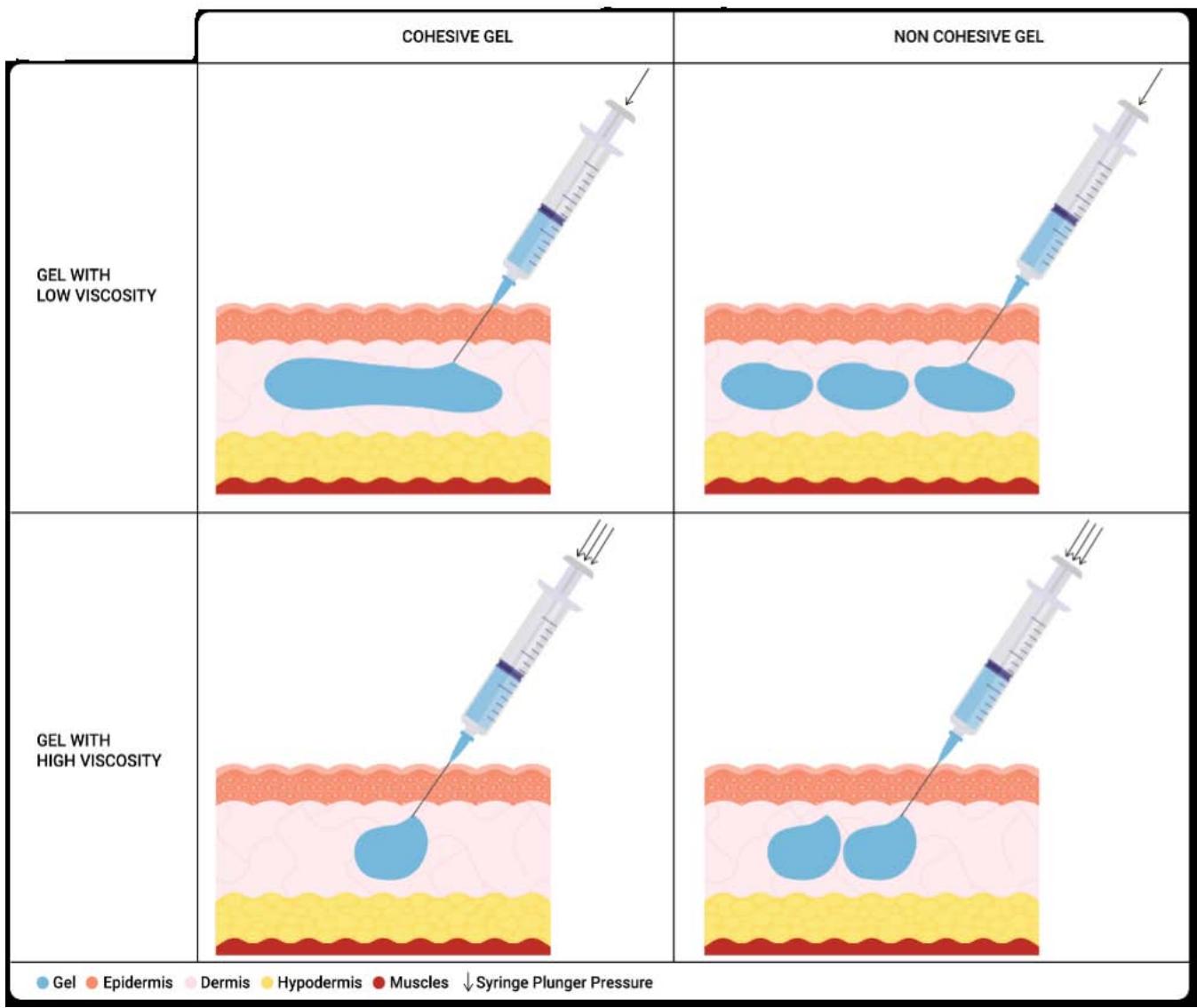
Figure 6: Schematic representation of the cohesion and viscosity of an HA gel reveals a pivotal correlation. The gel's fluidity is greatly enhanced by its low viscosity and low cohesiveness, which results in a lack of unity. On the other hand, a gel that has low viscosity but high cohesiveness maintains its structural integrity while still remaining fluid. This balance also influences the level of force necessary to extrude the gel through a syringe and needle. When examining a filler with high viscosity and strong cohesiveness, it manifests as a denser and more cohesive gel, demanding greater force for extrusion. Conversely, in the absence of cohesiveness, the gel fails to maintain its unity after being injected into the dermis. In summary, the delicate balance between viscosity and cohesiveness significantly influences both the physical properties of the gel and its performance during injection, shaping the final outcome in dermal applications.
Cohesiveness is described as the force between particles in the same substance that acts to bind them together [1,5]. In the case of fillers, cohesiveness is an expression of the internal adhesion forces that hold the individual crosslinked HA units together [25](Figure 5. This schematic representation illustrates the relationship between cohesiveness and viscosity in an HA gel, emphasizing their effects on the gel's behavior and shape when injected into the dermis and Figure 6. Schematic representation of the cohesion and viscosity of an HA gel reveals a pivotal correlation). A high cohesiveness simultaneously with a low viscosity accompanies homogeneous tissue integration [5]. This property contributes to the natural and harmonious appearance of the treated area, such as lip enhancement, cheek contouring, and jawline definition. Less cohesive fillers may spread more easily, potentially causing uneven distribution or migration. In contrast, highly cohesive HA formulations are less prone to migration, reducing the likelihood of irregularities or asymmetry, which can be essential for achieving harmonious facial proportions.
Viscoelasticity is the capacity to undergo deformation up to a certain point when subjected to shear stress and then return to its original shape once the force causing the deformation is removed (see Figure 7. Material Properties: Elasticity, Viscosity, and Viscoelasticity) [1,5]. Subsequently, the types of HA gels can be categorized based on their viscoelasticity and cohesiveness, factors that determine their resistance to mechanical stresses (their ability to flow slowly) and their capability to revert to their original form. Viscoelasticity primarily relates to resistance against deformation in the horizontal plane, such as lateral shear or torsion, whereas cohesiveness pertains to resistance in the vertical plane, encompassing compression and stretching [13, 14]. In essence, it is the amalgamation of these properties that enables AH to be molded during application and, simultaneously, to preserve its shape and volume over time. However, when considering the elastic modulus, it clinically signifies the gel's rigidity and its capacity to maintain its shape post-injection. High viscoelasticity fillers are suitable for cheek augmentation, providing long-lasting volume and contouring[14].
Enhancing the polymer's molecular weight and degree of crosslinking has been a well-established approach to improve mechanical strength and prolonging degradation rates. Depending on its concentration and the extent of crosslinking, the product's shelf life can range between 6 to 18 months. Estimating the post-injection product duration is challenging, given its dependency on numerous factors including skin type, age, patient's lifestyle, the treated area, injection technique, and even aspects of the manufacturing process such as crosslinking [13].
The high degree of crosslinking too reduces the HA's hydrophilicity while increasing its hardness [4]. The gel hardness relates to its resistance to be deformed. It varies with HA concentration, degree of crosslinking, and particle size. Usually, softer gels are suitable for filling surface layers and are generally not intended for lifting or greater volume, for which stiff gels are proposed [14].
Highly crosslinked HA gels with a high $G'$ (elasticity) are recommended in situations where minimizing swelling is crucial. This is particularly important in regions where excessive water absorption might result in unfavorable outcomes or the formation of pockets, they are effective for volumizing the midface, as they provide sustained support and contouring. Than fillers should be used cautiously as they are stiff and not suitable for areas with significant motor skills[14].
 Panel label: VISCOUS.
 Panel label: Rest State.

Stress Relaxation (constant displacement)

Stationary State Creep (unconstrained)
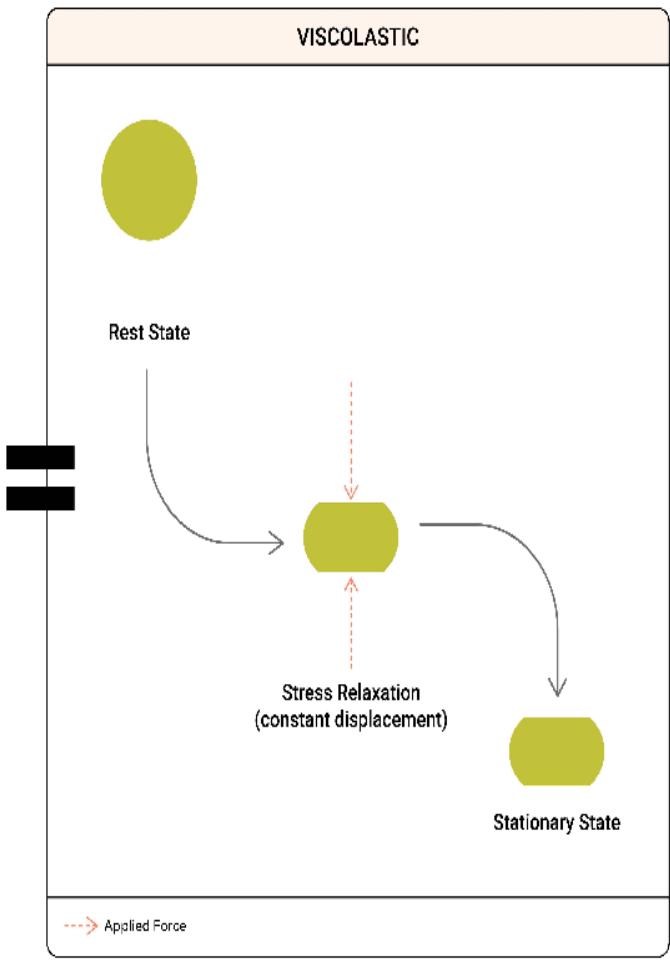
Figure 7: Material Properties: Elasticity, Viscosity, and Viscoelasticity: An elastic material, depicted in the diagram in purple color, exhibits a property known as elasticity. After deformation, when a force is removed, the material promptly returns to its original shape and size. A viscous material, shown in the schematic in cyan color, lacks the elastic property of immediate shape recovery. Instead, it undergoes deformation when a force is applied, and when the force is removed, the material does not return to its original shape. Viscous materials, such as honey, flow continuously under the influence of an applied force. A viscoelastic material, depicted in the diagram in green color, exhibits a combination of both elastic and viscous properties. After deformation, it partially returns to its original shape over time when the force is removed. Understanding the properties helps predict how filler respond to deformation and stress.
The study of a new formulation requires multiple steps to demonstrate safety, efficacy, and stability to ensure consumer protection and satisfaction. During formulation of fillers, use and storage time, exposure to possible external factors such as physical damage, microbiological and chemical influences can lead to instability to varying degrees [12]. For example, a thermal stress can change the product viscosity and the loss of storage modulus (Figure 3. Dynamic forces of the HA in different planes of the dermis). The rheological features influence the integration between the HA and the surrounding soft tissues and they determine the filler's ability to modify the anatomical layer volume, based on this statement, clinical planning can show different HA for different anatomical areas and even the same areas with different goals.
Dermal quality and the degree of correction necessary are references to choice what the product may be selected by $G^{\star}$, however, it is important to emphasize that $G^{\star}$ is just one of the rheological characteristics of hyaluronic acid gel. These variables differ between patients, and their nature will determine what degrees of strength and firmness are appropriate for the filler. It is also important to consider how it will be injected for the best result, whether distributed or punctual. In consensus, products with lower $G^{\star}$ is usually more indicated, because they are softer and easier to distribute in the tissue, in thinner skin, where there is palpability/visibility [19].
Higher G' products are recommended for deeper injection plans, where they offer greater support and corrective capacity, especially in areas such as the malar cheek, chin, and jaw, where the product needs to be placed against bone for projection. On the other hand, lower G' products, which are softer, are typically used for shallower injection planes with less severe corrections. In areas where dynamic facial expressions play a significant role, such as around the mouth, lower G' products may be preferred. These softer fillers can accommodate the natural movement of the muscles without creating an overly rigid appearance. They provide a subtle enhancement while allowing for natural facial expressions. In some cases, a combination of lower G' and higher G' products may be used in layered injections to achieve a balanced and customized result. Ultimately, the choice of G' in dermal fillers, even in areas involving facial motricity, should be tailored to the specific needs and aesthetic goals of the patient, taking into consideration both the depth of injection and the dynamic nature of the facial muscles [19].
The delicate balance between flexibility and structural robustness in HA fillers is crucial for achieving natural-looking results and patient satisfaction. This balance plays a pivotal role, as it ensures that the filler integrates seamlessly into the dynamic facial tissues while providing the necessary support for the desired cosmetic enhancement [20].
Several advantages become apparent how natural-looking results, in which the flexibility allows the filler to adapt and move harmoniously with the facial expressions and muscle contractions; patient comfort, on that the flexibility reduce discomfort or sensations of tightness in the treated area; longevity and satisfaction are verify in robust HA, be can provide enduring support to the tissues, extending the duration of the results; the flexibility of HA fillers allows for versatility in addressing various aesthetic concerns, from fine lines to deep wrinkles and volume loss and reduction risk of overcorrection, are supported on right balance that ensures that the filler doesn't overcorrect or create unnatural contours [20].
HA fillers have varied considerably in terms of concentration, injection strength, particle size and rheological properties. These variations can result from the underlying technology used to create each filler, which in turn impacts its molecular structure and clinical performance [13]. Therefore, practitioners rely on manufacturer's recommended indications when choosing fillers. However, rheological properties are measured under different conditions by different manufacturers. Nevertheless, this information is useful for choosing the type of acid according to your clinical need to obtain satisfactory results with minimal amounts of material.
## V. CONCLUSION
A key aspect of using HA in facial treatments is understanding its rheology, which influences product quantity and offers numerous benefits:
- Treatment Precision: Knowledge of HA rheology aids in precise filler placement, which is crucial for natural-looking results. For example, lip augmentation benefits from low-viscosity HA fillers to evenly distribute product and avoid overcorrection.
- Volume Restoration: High-molecular-weight HA with a hight elastic modulus, often denoted as $G'$, is chosen for areas like the cheeks. This selection is made because it offers exceptional structural support, which helps in achieving long-lasting results. The high $G'$ value indicates increased stiffness and resistance to deformation, ensuring that the filler maintains its shape over time and effectively supports the facial contours.
- Fine Line Correction: Delicate areas, such as crow's feet, benefit from low-viscosity, low-molecular-weight HA fillers to prevent lumps or bumps.
- Combination Therapies: Understanding rheological compatibility is vital when combining treatments like botulinum toxin injections with HA fillers for comprehensive rejuvenation.
- Preventing Vascular Complications: Knowing the flow characteristics of HA fillers helps avoid vascular issues.
- Reduced Product Usage: Selecting the right HA filler minimizes product consumption, lowering treatment costs.
- Lower Risk of Complications: Precise filler selection based on rheology reduces complications, saving costs associated with their management.
- Tailored Treatments: Rheological knowledge enables customized treatments based on each patient's unique needs.
- Patient Education: Educating patients about rheology promotes trust and safety awareness.
In your journey in aesthetic area, remember that knowledge of HA filler rheology ensures safer, more cost-effective, and satisfying treatments for both practitioners and patients.
Generating HTML Viewer...
References
35 Cites in Article
Salvatore Fundarò,Giovanni Salti,Dennis Malgapo,Silvia Innocenti (2022). The Rheology and Physicochemical Characteristics of Hyaluronic Acid Fillers: Their Clinical Implications.
G; Kaya,F Oytun (2021). Rheological Properties of İnjectable Hyaluronic Acid Hydrogels for Soft Tissue Engineering Applications.
Andrea Dodero,Rhodri Williams,Simona Gagliardi,Silvia Vicini,Marina Alloisio,Maila Castellano (2018). A micro-rheological and rheological study of biopolymers solutions: Hyaluronic acid.
Koenraad De Boulle,Richard Glogau,Taro Kono,Myooran Nathan,Ahmet Tezel,Jean-Xavier Roca-Martinez,Sumit Paliwal,Dimitrios Stroumpoulis (2013). A Review of the Metabolism of 1,4-Butanediol Diglycidyl Ether-Crosslinked Hyaluronic Acid Dermal Fillers.
L; Kleine-Börger,R; Meyer,A; Kalies,M Kerscher (2022). Approach to differentiate between hyaluronic acid skin quality boosters and fillers based on their physicochemical properties.
Felipe Carvalho (2013). Utilização de hidroxiapatita de cálcio e ácido hialurônico como preenchedores faciais : relato de caso.
Grace Wu,Joanna Kam,Jason Bloom (2022). Hyaluronic Acid Basics and Rheology.
Arianna Fallacara,Erika Baldini,Stefano Manfredini,Silvia Vertuani (2018). Hyaluronic Acid in the Third Millennium.
Sg; Molliard,Jb; Bétemps,B; Hadjab,D; Topchian,P; Micheels,D Salomon (2018). Key rheological properties of hyaluronic acid fillers: from tissue integration to product degradation.
D; Stocks,H; Sundaram,J; Michaels,Mj; Durrani,Ms; Wortzman,Nelson,Db (2011). Rheological evaluation of the physical properties of hyaluronic acid dermal fillers.
J; Faivre,M; Gallet,E; Tremblais,P; Tr´evidic,F Bourdon (2021). Advanced Concepts in Rheology for the Evaluation of Hyaluronic Acid-Based Soft Tissue Fillers.
Nicola Zerbinati,Maria Capillo,Sabrina Sommatis,Cristina Maccario,Giuseppe Alonci,Raffaele Rauso,Hassan Galadari,Stefania Guida,Roberto Mocchi (2022). Rheological Investigation as Tool to Assess Physicochemical Stability of a Hyaluronic Acid Dermal Filler Cross-Linked with Polyethylene Glycol Diglycidyl Ether and Containing Calcium Hydroxyapatite, Glycine and L-Proline.
Won Lee,Sg; Hwang,W; Oh,Cy; Kim,Jl; Lee,E Yang (2020). Practical Guidelines for Hyaluronic Acid Soft-Tissue Filler Use in Facial Rejuvenation.
Maria C Issa,Andreia Fogaca,Eliandre Palermo,Marina Fontes,Hernane Barud,Alessandra Dametto (2023). A New Cohesive High-Concentrated Hyaluronic Acid Gel Filler: Correlation between Rheologic Properties and Clinical Indications.
Paul Kolarsick,Maria Kolarsick,Carolyn Goodwin (2011). Anatomy and Physiology of the Skin.
J; Ponmozhi,S; Varga-Medveczky Dhinakaran,Z; Fónagy,K; Bors,La Iván,K; Erdõ,F (2021). Development of skin-on-a-chip platforms for different utilizations: Factors to be considered.
J; Ponmozhi,S; Varga-Medveczky Dhinakaran,Z; Fónagy,K; Bors,La Iván,K; Erdő,F (2021). Development of skin-on-a-chip platforms for different utilizations: Factors to be considered.
Gw; Hong,Hj; Moon,Hm; Lee,Dk; Kim,K Lee (2023). Deformation characteristics of hydrogel products based on cross-linked hyaluronic acid.
Al Gatta,E; Bedini,M; Aschettino,R; Finamore,C Schiraldi (2022). Hyaluronan Hydrogels: Rheology and Stability in Relation to the Type/Level of Biopolymer Chemical Modification.
Steven Fagien,Vince Bertucci,Erika Von Grote,Jay Mashburn (2019). Rheologic and Physicochemical Properties Used to Differentiate Injectable Hyaluronic Acid Filler Products.
A; Sionkowska,M; Gadomska,K; Musiał,J Piątek (2020). Hyaluronic acid as a component of natural polymer blends for biomedical applications: a review.
Joseph Abdo,Nikolai Sopko,Stephen Milner (2020). The applied anatomy of human skin: A model for regeneration.
Hyunwook Jung (2020). Hyaluronidase: An overview of its properties, applications, and side effects.
M Landau,Åke Öhrlund (2015). Evaluation of rheometry amplitude sweep cross-over point as an index of flexibility for HA fillers.
Åke Öhrlund (2018). Evaluation of rheometry amplitude sweep cross-over point as an index of flexibility for HA fillers.
Joel Cohen,Jessica Hicks,Alessandra Nogueira,Vanessa Lane,Bill Andriopoulos (2022). Postmarket Safety Surveillance of Delayed Complications for Recent FDA-Approved Hyaluronic Acid Dermal Fillers.
Hema Sundaram,Steven Fagien (2015). Cohesive Polydensified Matrix Hyaluronic Acid for Fine Lines.
Richie Yeung,Raymond Chow,Nabil Samman,Ken Chiu (2006). Short-term therapeutic outcome of intra-articular high molecular weight hyaluronic acid injection for nonreducing disc displacement of the temporomandibular joint.
Ir; De Oliveira,L Fontes (2020). Roadmap Tecnológico do Ácido Hialurônico. Projeto.
T Lehninger,D Nelson,M Cox (2014). Princípios de Bioquímica. 6ª Ed.
Aln; Custódio,Ádl; Lopes,Fc; Figueiredo,Kpm; Gonçalves,Lcs; Contarini,S Dias (2021). SMAS e Ligamentos da face-Revisão anatômica.
Z Lorenc,Å Öhrlund,K Edsman (2017). Factors Affecting the Rheological Measurement of Hyaluronic Acid Gel Fillers.
Petr Snetkov,Kseniia Zakharova,Svetlana Morozkina,Roman Olekhnovich,Mayya Uspenskaya (2020). Hyaluronic Acid: The Influence of Molecular Weight on Structural, Physical, Physico-Chemical, and Degradable Properties of Biopolymer.
Hema Sundaram,Bob Voigts,Kenneth Beer,Melissa Meland (2010). Comparison of the Rheological Properties of Viscosity and Elasticity in Two Categories of Soft Tissue Fillers: Calcium Hydroxylapatite and Hyaluronic Acid.
Lennart Kenne,Suresh Gohil,Eva Nilsson,Anders Karlsson,David Ericsson,Anne Helander Kenne,Lars Nord (2013). Modification and cross-linking parameters in hyaluronic acid hydrogels—Definitions and analytical methods.
No ethics committee approval was required for this article type.
Data Availability
Not applicable for this article.
How to Cite This Article
Antony de Paula Barbosa,. 2026. \u201cOptimizing Hyaluronic Acid: A Comprehensive Review of Rheological Insights for Clinical Practice\u201d. Global Journal of Medical Research - F: Diseases GJMR-F Volume 23 (GJMR Volume 23 Issue F8): .
Explore published articles in an immersive Augmented Reality environment. Our platform converts research papers into interactive 3D books, allowing readers to view and interact with content using AR and VR compatible devices.
Your published article is automatically converted into a realistic 3D book. Flip through pages and read research papers in a more engaging and interactive format.
Subject: Global Journal of Medical Research - F: Diseases
Authors:
Antony de Paula Barbosa,, Juliana do Carmo Públio, Isabela Espasandin, Fernanda Lacerda de Almeida Romanó Peixoto,, Paulo Henrique Bastos (PhD/Dr. count: 0)
The aging process of the face is characterized by transformations in the skin, bone, and adipose tissue. As the understanding of these changes has expanded, so too has the range of available filler products in the market. To maximize the effectiveness of hyaluronic acid, it is crucial to have a comprehensive understanding of its rheological properties. The numerous commercially available brands of hyaluronic acid differ in several aspects, such as the purity of their raw materials, methods of manufacturing, concentration of hyaluronic acid, presence and level of cross-linking, and ability to provide volume and withstand degradation. Aiming at the most assertive use of this product, features as viscosity (η), complex modulus (G*), elastic modulus (G”), tan d, cross-linking, concentration and swelling factor must be addressed, correlating them with their expected clinical effects.
Our website is actively being updated, and changes may occur frequently. Please clear your browser cache if needed. For feedback or error reporting, please email [email protected]
Thank you for connecting with us. We will respond to you shortly.