## I. THE MAIN BODY
### a) Introduction
Brazilian Jiu-Jitsu (BJJ) has rapidly grown in popularity in recent years, with more athletes competing at a high level than ever before. As with any sport, success in BJJ requires a combination of technical skill, tactical acumen, and physical fitness. While technical and tactical training receive significant attention, the importance of strength and conditioning training should not be underestimated[4].
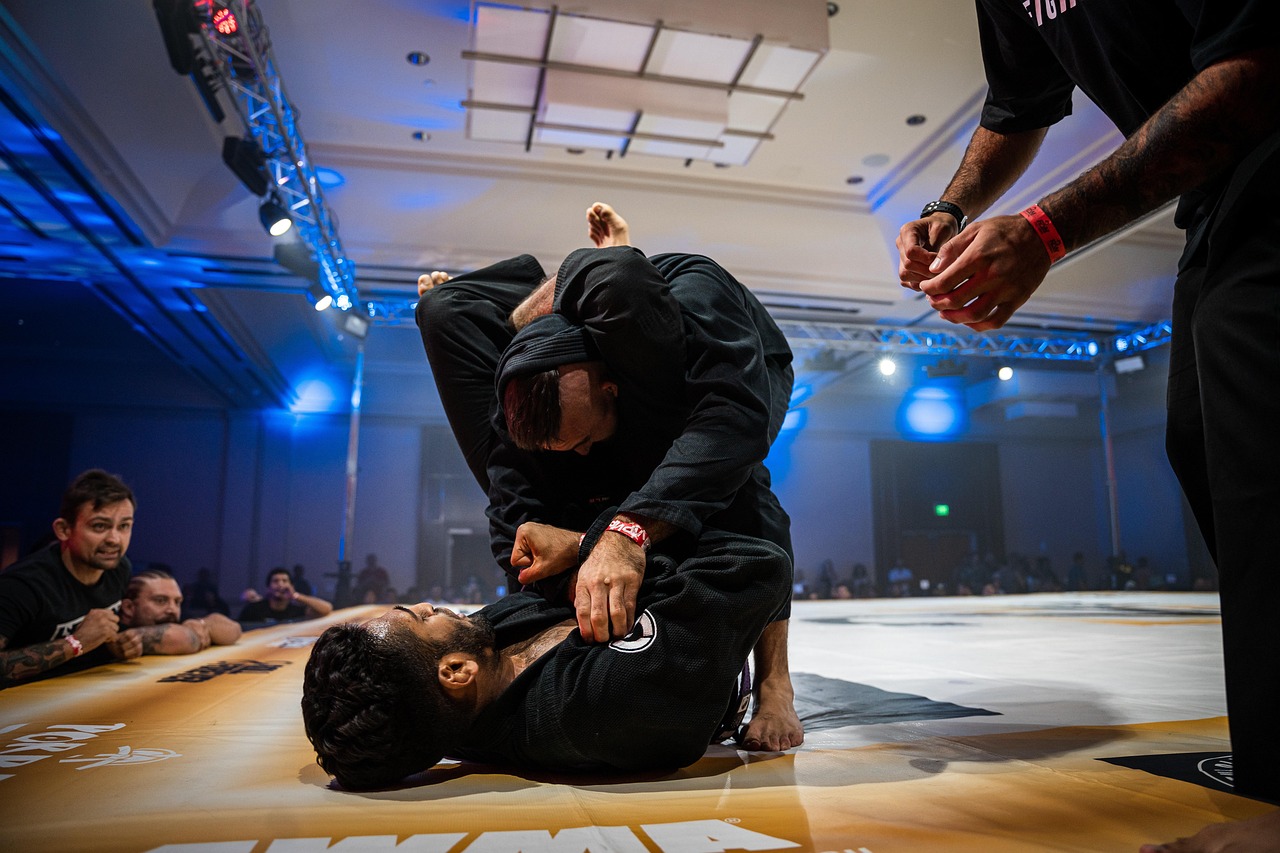
Strength training is a crucial component of any athlete's training program, but it is especially important for BJJ athletes due to the physical demands of the sport. BJJ involves grappling, takedowns, and submissions, all of which require significant physical strength and endurance [5]. In this context, power training, isometric, and endurance strength training have emerged as critical components of a BJJ athlete's training program.
In this article, we provide a comprehensive review of the literature on the importance of power training, isometric, and endurance strength training for BJJ athletes. We discuss the physiological and biomechanical underpinnings of each training component and highlight the practical implications of incorporating these methods into a BJJ athlete's training program. We also provide evidence-based recommendations for optimizing the effectiveness of these training methods in improving BJJ athletes' performance.
By providing a thorough review of the current literature on strength training for BJJ athletes, this article aims to support coaches and athletes in designing more effective training programs that can optimize their performance in BJJ competitions. We hope that this review will provide a valuable resource for BJJ athletes and coaches seeking to enhance their strength and conditioning training and achieve greater success in the sport.
## II. MAIN BODY
### a) Power Training
Power training is an important component of a jiu-jitsu athlete's training program, as it can help to improve explosiveness, speed, and power in movements specific to jiu-jitsu. Power training involves working with heavy weights or resistance for a low number of repetitions, typically no more than 5 reps per set. This type of training is designed to increase neural drive and recruit a greater number of muscle fibers, resulting in improved explosive power and strength[6].
When designing a power training program for jiu-jitsu, it is important to focus on exercises that mimic the movements and positions used in jiu-jitsu. These exercises should be performed explosively, with an emphasis on speed and power[7]. Examples of the power exercises and plyometric exercises that are commonly used in power training for jiu-jitsu athletes:
Power clean: The power clean is a compound exercise that involves explosively lifting a barbell from the floor to the shoulders. This exercise works multiple muscle groups, including the legs, back, and shoulders, and is particularly useful for developing explosive power in movements such as takedowns and throws.
Snatch: The snatch is another compound exercise that involves explosively lifting a barbell from the floor to overhead in one fluid motion. This exercise works multiple muscle groups, including the legs, back, and shoulders, and is particularly useful for developing explosive power in movements such as lifting opponents off the ground.
Jerk: The jerk is a compound exercise that involves explosively lifting a barbell from the shoulders to overhead in one fluid motion. This exercise works multiple muscle groups, including the legs, back, and shoulders, and is particularly useful for developing explosive power in movements such as lifting opponents off the ground.
Box jumps: Box jumps are a plyometric exercise that involves jumping onto a box or platform from a standing position. This exercise is particularly useful for developing explosive power in movements such as jumping guard or taking down an opponent.
Medicine ball throws: Medicine ball throws are another plyometric exercise that involve explosively throwing a medicine ball. This exercise is particularly useful for developing explosive power in movements such as throws and takedowns.
Additionally, proper warm-up and cooldown protocols should be followed, and athletes should always use proper form and technique to avoid injury. Power training can be incorporated into a periodized training program, with specific phases devoted to developing strength, power, and endurance in a systematic and progressive manner[8].
Overall, incorporating these power exercises and plyometric exercises into a jiu-jitsu athlete's training program can help to improve explosiveness, speed, and power in movements specific to jiu-jitsu, ultimately leading to improved performance on the mat.
It is important to note that power training should only be attempted by experienced athletes who have already developed a solid foundation of strength and technique[9].
### b) Isometric Training
Isometric strength is a crucial aspect of grappling strength and conditioning training, but it is often overlooked by many jiu-jitsu practitioners. Isometric strength refers to the ability to hold a position or resist a force without movement. It is heavily used in BJJ, especially in maintaining positions and executing submissions. Isometric strength is developed by holding a muscle under tension without movement. It recruits more muscle fibers than dynamic training and is useful for developing specific muscular endurance for BJJ. Isometric training also improves maximal static strength and strength endurance[10]. However, isometric training is angle-specific. Working on a particular angle will only make your body strong in that position, and strength benefits will only extend to about 30-degree angles in both directions. Therefore, it is essential to do isometric exercises at different angles to develop strength at various positions. Incorporating isometric exercises into a grappling strength and conditioning program can improve a practitioner's ability to hold on tighter for more extended periods, making them more effective in BJJ.
Isometric training involves performing exercises where the muscles are contracted without any significant movement of the joints. This type of training has been shown to be effective in improving strength, muscle endurance, and hypertrophy[11]. In the context of grappling, specific isometric exercises can be used to target the muscles used in various chokes and submission holds. For example, using a foam roller or grappling dummy, individuals can perform isometric chokeholds such as the Rear Naked Choke, guillotine, or D'arce, to improve the strength and endurance of the muscles involved in those particular submissions. Similarly, stability balls can be used to target the inner thigh muscles, which can help improve one's closed guard game. Incorporating specific isometric training exercises into a grappling training program may enhance overall grappling performance by targeting the muscles involved in specific techniques. To optimize the benefits of isometric training for grappling, it is important to follow appropriate programming guidelines. Isometric chokeholds and other specific exercises should be held for no more than 10 seconds per repetition to avoid muscle damage and fatigue. The recommended programming for isometric training is 3-5 repetitions of 3-5 sets per day, performed during 3 weekly training sessions. Following these guidelines can help improve isometric power of the targeted muscles without overloading or overtraining them.
### c) Strength Endurance
Strength endurance is an essential component of Brazilian Jiu-Jitsu training, and it can be divided into two main categories: lactic and alactic training.
Alactic training involves exercises performed at high-intensity levels without the presence of lactic acid. This type of training is characterized by short, high-intensity bursts of exercises that simulate the direction, duration, and velocity of movements performed during a match, such as shooting for a takedown or scrambling[12]. To successfully perform these exercises, athletes must first develop power and explosiveness.
The aim of alactic training is to enable athletes to repeatedly sustain high-level bursts of energy. Alactic capacity circuits typically involve a combination of pushing, pulling, jumping, and twisting movements, such as kettlebell squat jumps, clapping push-ups, rope rows, and Russian twists. Each exercise is performed for 3-6 seconds of all-out effort, followed by 10-20 seconds of rest before moving on to the next exercise. Rest periods of 1-2 minutes are recommended before performing the next circuit.
The scientific principles behind alactic training involve the utilization of the body's immediate energy sources, such as ATP and creatine phosphate, to perform explosive movements[13]. The intensity of the exercises also stimulates the body's nervous system, improving neuromuscular efficiency and increasing power output. Incorporating alactic training into a comprehensive training program can help improve an athlete's ability to sustain high-intensity bursts of energy, ultimately leading to improved performance during matches.
Lactic capacity refers to an athlete's ability to sustain high-level effort for an extended duration, which is crucial in sports such as Brazilian Jiu-Jitsu where matches may involve long scrambles[14]. This type of training involves performing exercises for 30-50 seconds of continuous high-level effort, followed by a 30-second rest period after each exercise. The exercises performed in lactic capacity training are similar to those in alactic capacity training and are designed to enable athletes to work continuously[15].
An example circuit for lactic capacity training may include exercises such as box jumps, medicine ball push-ups, inverted rows, barbell twists, and rowing machine intervals. This circuit is performed for 6-10 minutes, depending on the duration of the athlete's matches.
The scientific principles behind lactic capacity training involve the utilization of the body's anaerobic energy systems, which produce energy without oxygen. During high-intensity exercise, the body produces lactate as a byproduct, which can lead to fatigue and decreased performance if not managed effectively. Lactic capacity training aims to improve an athlete's ability to buffer lactate and delay the onset of fatigue, ultimately leading to improved endurance during matches[16]. Incorporating lactic capacity training into a comprehensive training program can help Brazilian Jiu-Jitsu athletes develop the stamina necessary to compete at a high level.
Incorporating both lactic and alactic training into a comprehensive training program can help Brazilian Jiu-Jitsu athletes develop the strength endurance necessary to compete at a high level. By understanding the scientific principles behind these training methods and tailoring them to an athlete's individual needs, trainers and athletes can maximize their training efforts and improve their performance on the mat.
## III. CONCLUSION
The review highlights the critical importance of power training, isometric, and endurance strength training for BJJ athletes to perform at a competitive level. These fitness components provide the foundation for the physical demands of BJJ, including grappling, takedowns, and submissions. Incorporating these training methods into a periodized program can lead to improved athletic performance in BJJ athletes. The article provides evidence-based recommendations for the effective incorporation of these training methods in a BJJ athlete's training program. Coaches and athletes can use this information to design more effective training programs and optimize their performance in BJJ competitions. The article emphasizes the need to focus on exercises that mimic the movements and positions used in BJJ and the importance of proper warm-up and cooldown protocols to avoid injury. By enhancing their strength and conditioning training, BJJ athletes can achieve greater success in the sport.
Generating HTML Viewer...
References
16 Cites in Article
Leonardo Andreato,Francisco Lara,Alexandro Andrade,Braulio Branco (2017). Physical and Physiological Profiles of Brazilian Jiu-Jitsu Athletes: a Systematic Review.
L Andreato,J Esteves,D Coimbra (2015). Brazilian jiu-jitsu simulation test: a specific performance test for competitive brazilian jiu-jitsu athletes.
C Lima,L Brown,M Wong (2019). Isometric training and long-term adaptations: effects of muscle length, intensity, and intent: a systematic review.
R Gomes,C Capitani,L Picanço (2020). Anthropometric and physical performance characteristics of high-level Brazilian jiu-jitsu athletes: A systematic review.
E De Souza,T De Souza,Feo De Souza,L De Oliveira,R Simão (2019). The effect of a complex training program on strength and agility of Brazilian jiu-jitsu athletes.
P Cormie,M Mcguigan,R Newton (2011). Developing maximal neuromuscular power: Part 2 -Training considerations for improving maximal power production.
G Garcia,R Da Silva,C Lira,M Junior (2018). Effects of power training on muscle strength and serum hormones in Brazilian jiu-jitsu athletes.
V Issurin (2010). New horizons for the methodology and physiology of training periodization.
N Ratamess,B Alvar,T Evetoch,T Housh,W Kibler,W Kraemer,N Triplett (2009). Progression Models in Resistance Training for Healthy Adults.
R O'hara,J Serres,K Traver,B Wright (2012). Changes in static strength and isometric fatigue following four weeks of dynamic constant external resistance training or isometric training.
X Ye,T Beck,J Defreitas,M Stock,C Lockwood (2021). JSCR-08-13218 and JSCR-08-15296 Retraction.
G Nassis,T Gabbett (2016). Is high-intensity interval training more effective on improving cardiorespiratory fitness and endurance performance than other forms of training in athletes?.
A Zafeiridis,K Dipla,V Manou,S Kellis (2005). Recovery during high-intensity intermittent anaerobic exercise is influenced by the off-time duration.
L Dantas,B De Barros,G Araújo,J Santana,G Filho (2016). Acute and chronic effects of strength training on lactate response in Brazilian Jiu-Jitsu athletes.
H Pilegaard,K Domino,T Noland (2003). Effect of high-intensity exercise training on lactate/H+ transport capacity in human skeletal muscle.
M Glaister (2005). Multiple sprint work: physiological responses, mechanisms of fatigue and the influence of aerobic fitness.
Explore published articles in an immersive Augmented Reality environment. Our platform converts research papers into interactive 3D books, allowing readers to view and interact with content using AR and VR compatible devices.
Your published article is automatically converted into a realistic 3D book. Flip through pages and read research papers in a more engaging and interactive format.
Our website is actively being updated, and changes may occur frequently. Please clear your browser cache if needed. For feedback or error reporting, please email [email protected]
Thank you for connecting with us. We will respond to you shortly.