
I. INTRODUCTION
Microbial culture media can be of different types, depending on the nutritional growth requirements of the microorganisms. Microorganisms require about ten macroelements, namely (C, O, H, N, S, P, K, Ca, Mg and Fe). The first six components are needed for the synthesis of Carbohydrates, Lipids, Proteins, and Nucleic acids, and the remaining four exist in the cell as cations and play a variety of roles. Additionally, all microorganisms require several microelements like (Mn, Zn, Co, Mo, Ni, and Cu) that are generally part of enzymes and cofactors. They also require growth factors, which are organic compounds such as vitamins Basu et al. (2015). Uthayasooriyan et al. (2016) stated that the feasibility of evolving alternate culture media to artificial media, namely Potato Dextrose Agar and Nutrient Agar, were assessed by using locally obtain able in expensive materials due to the use of synthetic culture media in colleges, researchal centers and laboratories have limitations in finance. In general, the inexpensive locally obtainable materials such as rice, chickpea, corn, and natural soy flour may serve as replacing rich nutrient media to the growth of bacteria and fungi, and reduce the cost of microbial media. Commercially available media such as Nutrient Agar and MacConkey Agar, which used for the growth of microorganisms but these, are very expensive. Plant-based culture medium is a natural environment that has been introduced for the culturing of rhizobacteria as a sole growth milieu Nour et al. (2012).
In this study, Mentha and Aloe vera extracts were used as a natural medium for isolation and growth of plant growth-promoting rhizobacteria (PGPR). Mentha and Aloe vera are perineal plants that are locally available, cheap plant material, and nutritionally rich. (Mainasara et al., 2018) revealed that the fresh peppermint leaves contained 92.31% carbohydrates, 2.19% protein, 0.50% lipid, 1.5% fiber, 3.57% ash, 89.5% moisture, and the most predominant mineral found was potassium and sodium while the other minerals also found in low values such as calcium, magnesium, and phosphorus. Aloe vera, a succulent plant that grows in arid and subtropical climates, the leaves of this nutraceutical medicinal plant contains numerous vitamins, natural sugars, enzymes, and amino acids Lanka (2018).
The use of chemical fertilizers, especially nitrogenous and phosphorous, led to water, soil, and airpollution. The excessive use of these fertilizers cause harmful effects on rhizospheric microorganisms, effects on the fertility of agriculture lands, pollutes the environment, and also declines the productivity of the crops and yield Kumar et al. (2015) and Ahmad et al. (2016). In addition to its cost, the production of these fertilizers causes shortage in nonrenewable resources like natural gas and oil that used to produce these chemical fertilizers, and poses a lot of environmental and human dangers Prakash and Verma (2016). To achieve a clean agriculture with low cost and produce crops with desired properties, one possibility is to use soil microorganisms (bacteria, fungi, actinomycetes, algae, etc.) that increases the nutrient uptake capacity and water use efficiency. Among these potential soil microorganisms, bacteria known as plant growth-promoting rhizobacteria (PGPR) are the most promising. In this sense, PGPR may be used to enhance plant health and regulate plant growth rates without environmental contaminations (Saharan and Nehra, 2011). Plant Growth-Promoting Rhizobacteria (PGPR) are the rhizospheric bacteria that can positively affect plant growth by several mechanisms like phosphate solubilization, siderophore production, biological nitrogen fixation, production of 1-Aminocyclopropane-1-carboxylate deaminase (ACC), and inhibition of biofilm formation, phytohormone production, exhibiting antimicrobial activity, induction of systemic resistance (ISR), promoting beneficial plant-microbe symbioses, and many others mechanisms Benaissa (2019).
Current studies aimed to develop and evaluate culture media from plants because the synthetic culture media have become very expensive in the local market and, most instances, are not available and also the production of plant growth promoters on this natural medium to use in clean agriculture instead of chemical fertilizers.
II. MATERIALS AND METHODS
a) Sampling sites
Samples from the rhizosphere of Mentha viridis. L and Aloe vera plants were collected from Sirs EL- Layan, El-Menoufia governorate, Egypt, from the upper surface layer of the soil (5 cm), where maximum populations of microorganisms concentrated.
b) Tested plants
The tested plants, Mentha viridis and the succulent plant's Aloe vera, are cultivated in Sirs EL-Layan, El-Menoufia governorate, Egypt. Both plants were perineal and rich in nutrient content, Aloe vera was chosen for its availability in arid and semi-arid environments as well as their copious juicy nature, while Mint is one of the most common herbs traditionally produced in Egypt for hundreds of years and widely distributed and cultivated in the temperate and subtemperate regions of the world.
The chemical compositions and nutritional contents of the tested succulent plant (A. vera) were available by Tiwari and Upadhayay (2018). Therefore, special attention was given to the analysis of the juice of Spearmint (Mentha viridis L) for the application in isolation of rhizobacteria. Macro- and micro-nutrients were detected by atomic absorption analysis, total protein by Tru Spec N instrument AOAC International and Latimer (2012), carbohydrate Dubois et al. (1965), mineral Horwitz (2012) amino acids by performic oxidation method and vitamins by GC/MS/MS analyses Lehotay and Hajs'lova', (2002). Total crude fiber and ash were also determined AOAC International (1998).
c) Preparation of plant-based culture media
Wash the succulent leaves of A. vera and the vegetative parts (leaves and stems) of M.viridis, slice, and then blend with equal aliquots of distilled water (w/v) for 5 min in the blender. The resulting slurry homogenate was coarse-filtered through cheesecloth to obtain plant juice; almost 73–82% of the plant fresh weight was recovered as juice. The plant juices from the tested plants further diluted with distilled water (v/v); 1:10, 1:20, 1:40, 1:80, and 1:100. The pH for M.viridis diluted juices were in the range of 5.8-6.5 and A. vera diluted juices 4-6.2. Exclusively, use these diluted juices to prepare the plant-based agar culture media (2% agar, w/v). Adjust the pH of all media to 7.0, then autoclave at 1.5 atm., 121°C for 20 min.
Use Serial dilution techniques to isolate rhizospheric microorganisms, prepare the suspensions of samples by adding 1g of the rhizospheric soil that obtained from Sirs El-Lian, El-Menoufia governorate, Egypt to 10 ml of sterile distilled water under aseptic conditions and shake vigorously for 10 minutes by using a vortex at 150rpm, then let to settle for a short period of time. Serial dilution sequentially made, started from stock and till . From each diluted tube, 0.1 ml was transferred into the surface of the plant-based agar media at different diluted juice of both Mentha and A. vera (in triplicate) and spread with an alcohol sterilized L shape glass rod then incubated at C for 24 - 48 hours. After the successful growth of microorganisms, pick up the individual colonies and purify them.
d) Comparison between the growth of microbial isolates on plant-based culture medium and synthetic media
Bacterial isolates that developed on plant-based culture were tested to grow in nutrient agar medium at C for 24 – 48hr; on the other hand, actinomycetes isolates also developed on starch nitrate medium at C for 5-7days. After the incubation period, the microbial growth and pigmentation were observed in all plates, and then compared to the plant-based culture medium.
e) Indole acetic acid production by microbial isolates on both plant-based culture and synthetic medium
Estimate the Indole acetic acid (IAA) production quantitatively according to Salkowski method Brick et al. (1991). For bacterial isolates, inoculate the conical flasks (250 ml capacity), that contain 100ml of both plant-based and nutrient broth medium supplemented with (500 g/ml) tryptophan (sterilized by the bacterial filter) with 1 ml of 24 h old rhizobacterial cultures, incubate the flasks on a rotary shaker (150 rpm) 36±2°C for 72 h. Centrifuge the flasks at 4000 rpm for 15 min to separate supernatant. On the other hand, IAA from actinomycetes was quantified using the method of (Rafik et al., 2014). Streak the actinomycetes isolates on plant-based and starch nitrate agar medium and incubate at 28°C. After five days. Transfer the agar discs of actinomycetes mycelia to conical flasks (250 ml capacity) containing 100ml of both plant-based and starch nitrate liquid medium containing 500 g/mL tryptophan. After seven days of culture at 30°C and stirring at 150 rpm, centrifuge at 3000 rpm for 15min. Estimate the production of IAA in the supernatants by using a colorimetric assay. Mix one milliliter of supernatant with 2 ml of the Salkowski reagent, incubate at room temperature for 30min in the dark. The appearance of pink or red color indicates tothe production of IAA.Measure the absorption a spectrophotometrically at 530 nm against control of 1 ml culture medium and 2 ml of Salkowski reagent (Glickmann and Dessaux, 1995). The amount of IAA produced per milliliter culture was estimated using a standard curve.
f) Quantitative assay of phosphate solubilizing activity
Quantitative estimation of P-solubilization was carried out as per standard methodology Mehata and Nautiyal (2001), by inoculating 1 ml of bacterial suspension and discs of actinomycetes in 50 ml of National Botanical Research Institute Phosphate broth (NBRIP) and incubating the flasks for three days at and seven days at respectively. At the end of the incubation period, the cell suspension was centrifuged at 10,000 rpm for 10 min in aliquot 2-5 ml of barton's reagent was added, and after 10 minutes the intensity of color was measured by a spectrophotometer at 420 nm with standard Jackson 1967.
g) Identification of selected bacterial and actinomycetes isolates
The efficient bacterial isolates (MB4), (A6), and actinomycetes isolate (MA6) in IAA production and phosphorus solubilization, respectively, were further identified by 16S rRNA at Sigma Scientific Services Company, 6 of October, El Giza, Egypt.
h) Molecular characterization of bacteria and actinomycetes
DNA extraction: Add 200 l of the sample (liquid media that contain bacteria or actinomycetes) in microcentrifuge tube and add 95 l water, 95 l solid tissue buffer (blue) and 10 l proteinase K. Mix thoroughly and then incubate the tube at 55 C for 2 hours. Mix thoroughly and centrifugation at 15,000 rpm for 1 minute. Transfer supernatant to a 300 l tube. Add 600 l DNA Binding Buffer, and mix thoroughly. Move the mixture to a Zymo-Spin IIC-XL Column in a
Collection Tube. Centrifuge at 15,000 rpm for 60 sec. Discard the collection tube with the flow through. Add 400 l of DNA Pre-Wash Buffer to the column in a new Collection Tube then centrifuge at (15.000 rpm) for 60 sec. Add 700 l gDNA Wash Buffer and centrifuge at (12.000 xg) for 60 sec. Discard the Collection Tube. Add 200 l of DNA Washing Buffer to the column and centrifuge at (15.000 rpm) for 60 sec., get rid of the flow through. Add 30 l of elution buffer then incubate for 5 minutes, and centrifuge at (15.000 rpm) for 60 sec.
i) PCR amplification and phylogenetic analysis
Dissolve the extracted DNA in 20 l TE buffer to be used as a template in the PCR reactions. PCR amplifications is to be performed in a total volume of 50 l by mixing 20 ng of the genomic DNA with 2.5 mM concentrations of each dNTPs (deoxynucleotide triphosphate), 1 mm concentrations of each primer of pA (50 -AGAGTTTGATCCTGGCTCAG-30) and pH (50 -AAGGAGGTGATCCAGCCGCA-30) as described by Edwards et al. (1989). Also, and 3 U of Taq DNA polymerase in 10X Taq buffer A (GeNel) is to be added to the mix. These reactions subjected to initial denaturation of 94°C for 6 min followed by 35 cycles of 94°C for 45 sec, 56°C for 45 sec and 72°C for 60 sec and a final extension step of 72°C for 5 min using GeneAmp® PCR system 9700 (Applied Biosystems). The PCR products separated using 0.8% agarose gel. 16S rRNA gene sequence of the isolate compared with 16S rRNA gene sequences available online by using BLASTN search program in the NCBI website, (http://www.ncbi.nlm.nih.gov). Clustal X used for multiple sequence alignment (Thompson et al., 1997). The method of Jukes and Cantor (1969) used to calculate evolutionary distances. Phylogenetic analysis was constructed by the neighbor-joining manner and tree topologies were evaluated by performing bootstrap analysis of 1,000 data sets using MEGA 3.1.
j) Effect of different incubations periods on the growth of the most efficient isolates on both natural and synthetic medium
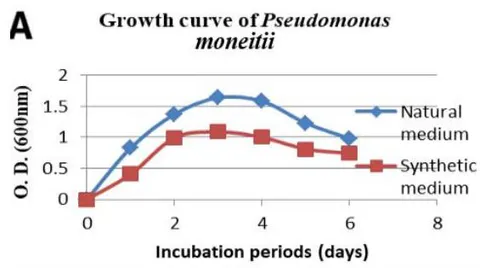
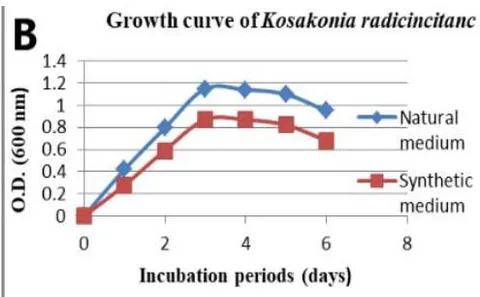
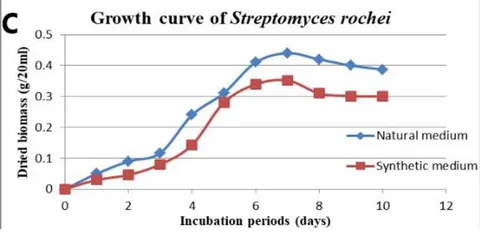
This study was carried out to determine the optimum incubation period at which the selected isolates showed maximum growth on both natural and synthetic medium. Inoculate Pseudomonas monteilii and Kosakonia radicincitans on the natural medium and artificial (nutrient broth) medium with pH to . Incubate the flasks at for different incubation periods (1, 2, 3, 4, 5, and 6 days). Determine the bacterial growth at the end of each incubation period spectrophotometrically by measuring the optical density at 600nm ( ) Koch (1970). Inoculate the conical flasks, that contain 20ml of both Mentha-based broth medium and starch nitrate broth medium with Streptomyces rochei, then incubate it at for 1-10 days, take the culture daily, filtrate, then dry it in oven at for three days to determine the dry weight. The growth, as indicated by dried biomasses plotted against time Sejiny (1991).
k) In-vitro screening of efficient microbial isolates for antagonistic activities against root rot fungi
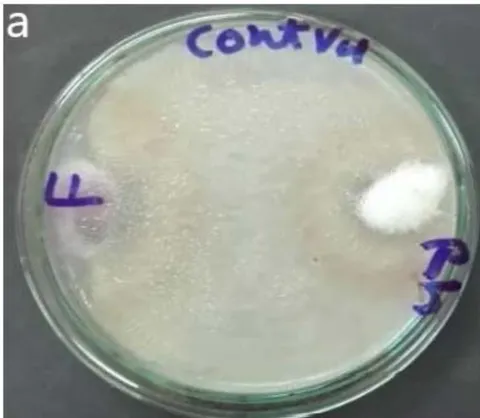
The possible interaction between the selected bacterial strains and pathogenic fungi (Fusarium sp. and Rhizoctonia sp.) which are responsible for root rot in a variety of legume and non-legume crops was monitored on potato dextrose agar (PDA) medium using a modified agar – plate inhibition zone technique (Silosuch et al., 1994). Initially, grow the pathogenic fungi (Fusarium solani, Fusarium oxysporum, and Rhizoctoniasolani) in 15 cm Petri dishes contains PDA medium and incubate at 28°C for 48 hr. Then, cut 0.5 cm disks from the edge of the actively growing colonies, and transferone of themon the center of a Petri dish containing PDA medium amended with (g l ) as follows: 3.0 peptone, 0.2 CaCO , and 0.2 MgSO . Inoculate Pseudomonas monteilii and Kosakonia radicincitans surrounded to the fungus disk. Then, incubate the dishes at 28°C for (4-7 days). Zones of inhibition of fungal growth were observed. On the other hand, Potato dextrose agar plates were prepared and inoculated with Streptomyces rochei by streaking in a single line at the center of the petri dish containing PDA medium. After seven days of incubation at 28°C, seed the plates with a disk of test fungi at an angle of 90° to the actinomycetes isolate and incubate at 28°C for five days, microbial interactions were recognized by the determination of the diameterof inhibition zone (Madigan et al., 1997).
III. RESULTS AND DISCUSSION
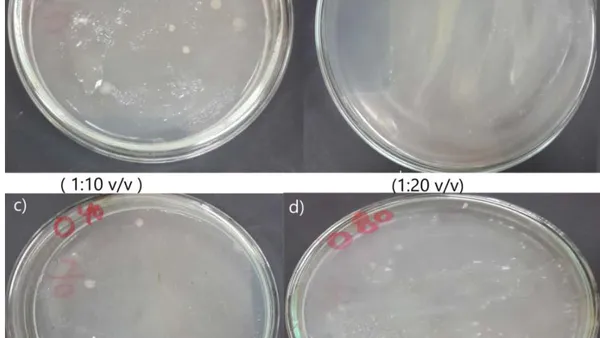
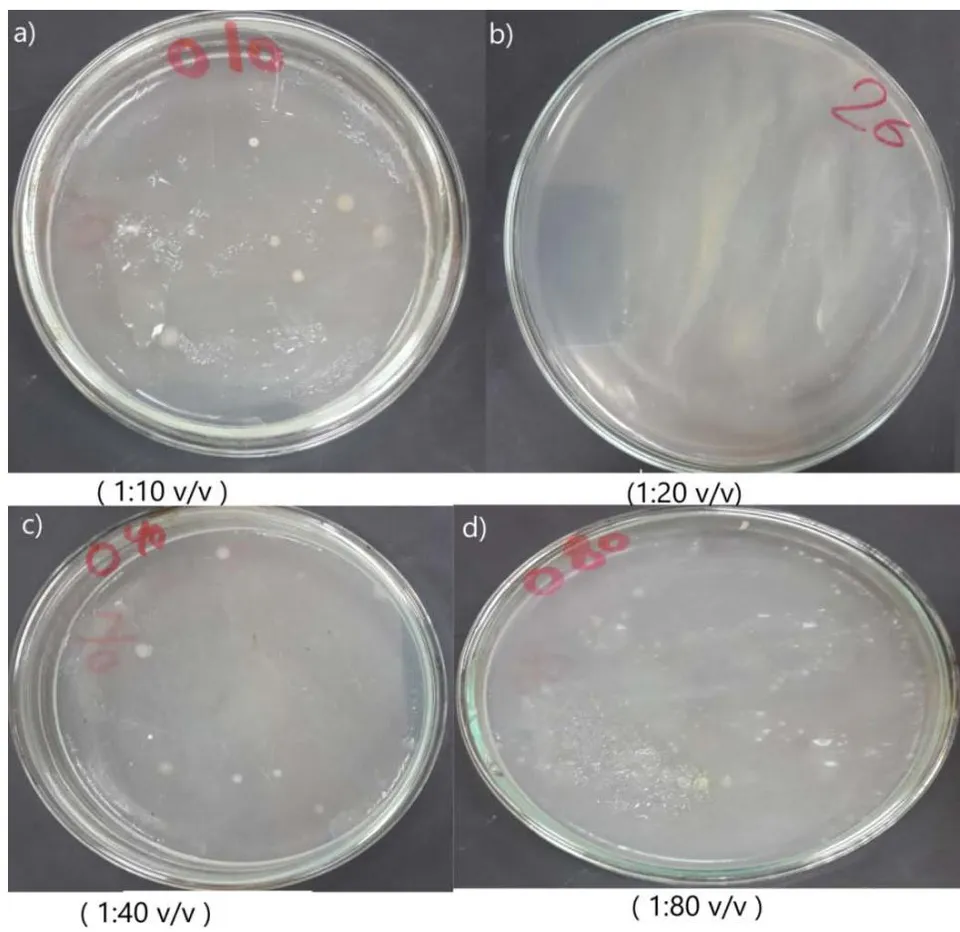
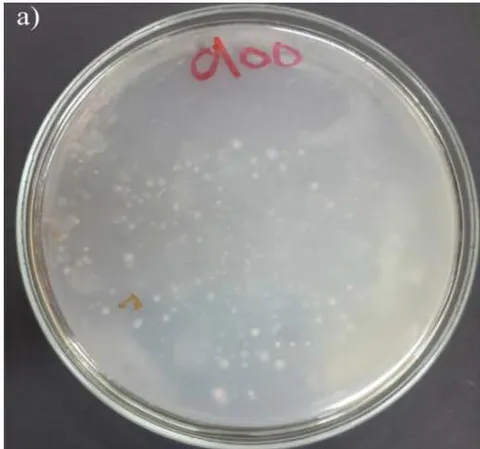
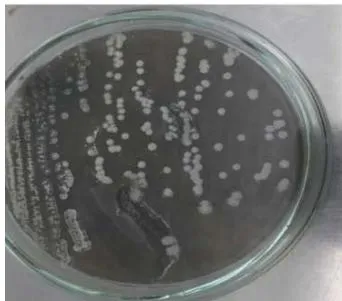
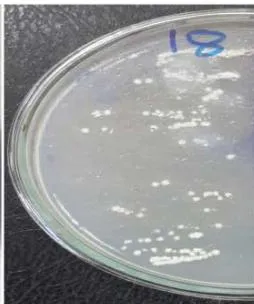
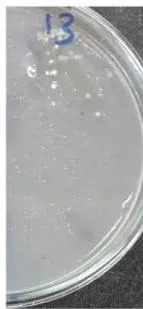
A total of fifteen bacterial isolates were isolated from Aloe vera rhizosphere on Aloe vera-based culture medium with different dilutions 1:10, 1:20, 1:40, 1:80 and 1:100 v/v (juice or sap: distilled water, v/v) (Plate 1a-d and Plate 2a), these results are harmony with
Youssef et al. (2015) who isolated distinctive colonies of rhizobacteria associated with the roots of Aloe vera developed on agar plates of plant-based culture media, that prepared from diluted juices (1:20, v/v) of A. vera. And nine bacterial and nine actinomycetes isolates were rhizosphere of M. viridis were developed on agar plates of Mentha-based culture media prepared from diluted juices (1:10, 1:20, 1:40, 1:80 and 1:100 v/v) of M. viridis (Plate 2b). The results indicated that both Aloe vera and Mentha juices were nutritionally rich enough in Table (1and 2, respectively) to support the better growth of rhizobacterial isolates associated with the rhizosphere of both tested plants. Good bacterial growth was obtained with further dilutions up to 1:100 (juice: distilled water, v/v) (Plate 1a-d and Plate 2a and b). Such a positive dilution effect attributes to decreasing the osmotic effect of concentrated nutrients as well as minimizing the inhibitory effect of antimicrobial compounds present in the juices of tested plants Pellizzoni et al. (2012). The tested Mentha(Table 2) contains abundant nutritional content, and Aloe vera was reported to contain amino acids, anthraquinones, enzymes, steroids, hormones, salicylic acid, minerals, sugars, saponins, and vitamins as main ingredients Upadhyay(2018) that essential for the microbial growth. The results also showed that actinomycetes isolate (Gram-positive) developed on Mentha-based medium rather than Aloe vera-based medium. This may occur due to the presence of steroid, triterpenoid, flavonoid, phenol, tannin, alkaloid, saponin and acid in the Aloe vera juice responsible for its antibacterial activity. An earlier report suggested that a large number of Aloe vera extracts to be active against Gram-positive bacteria McCutcheon et al. (1992), probably due to the absence of the outer of the bacterial cell wall.
| Chemical Group | Constituents |
| Amino Acids | Provides 20 of the 22 required amino acids and 7 of the 8 essential ones. |
| Enzymes | Anthranol, barbaloin, chrysophanic acid, ethereal oil, ester of cinnamonic acid, isobarbaloin, resistannol |
| Anthraquinones | Provides aloe emodin, aloe tic acid, alovin, Anthracine. |
| Steroids | Cholesterol, lupeol, camp sterol, sistosterol |
| Hormones | Auxins and gibberellins |
| Salicylic Acid | Aspirin like compounds |
| Saponins | Glycosides |
| Minerals | Calcium, chromium, copper, iron, manganese, potassium, sodium and zinc |
| Sugars | Monosaccharide's: Glucose and Fructose Polysaccharides: Glucomannans/polymnose |
| Vitamins | A, B, C, E, choline, B12, folic acid |
| parameters | mg/ 11g fresh weight of mint | parameters | mg/ 11g fresh weight of mint |
| Protein and Amino Acids | Carbohydrate | 850 | |
| Protein | 350 | Fiber | 790 |
| Tryptophan | 5.3 | Ash | 175 |
| Threonine | 15.1 | Fats & Fatty Acids | |
| Isoleucine | 15.1 | Fat | 190 |
| Leucine | 26.8 | Omega-3 fatty acids | 38.2 |
| Lysine | 15.4 | Omega-6 fatty acids | 5.8 |
| Methionine | 5.1 | Vitamins | |
| Cysteine | 4.2 | Vitamin C | 1.5 |
| Phenylalanine | 18.6 | Niacin | 0.1 |
| Tyrosine | 11.0 | Folate | 0.012 |
| Valine | 17.5 | Retinol | 0.022 |
| Arginine | 17.2 | Minerals | |
| Histidine | 7.1 | Calcium | 21.4 |
| Alanine | 18.7 | Iron | 1.3 |
| Aspartic acid | 43.4 | Magnesium | 7.0 |
| Glutamic acid | 40.0 | Phosphorus | 6.4 |
| Proline | 15.2 | Potassium | 50.5 |
| Serine | 14.4 | Sodium | 3.2 |
| Glycine | 17.4 | Zinc | 0.1 |
| Phytosterols | 1.1 | Manganese | 0.1 |
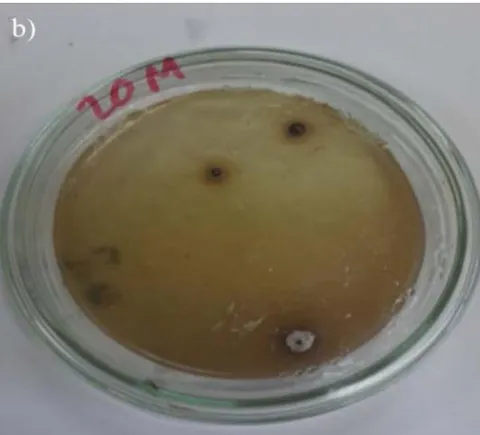
b) Colonies of microorganisms associated with the roots of Mentha viridis developed on agar plates of plant-based culture media prepared from diluted juice (1:20, v/v) of M. viridis.
a) Comparison between the growth of microbial isolates on plant-based culture medium and synthetic media
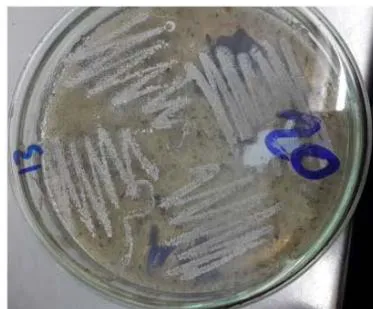
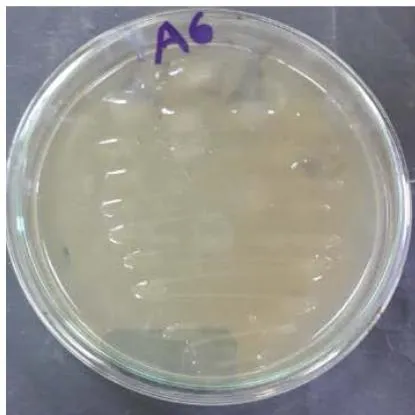
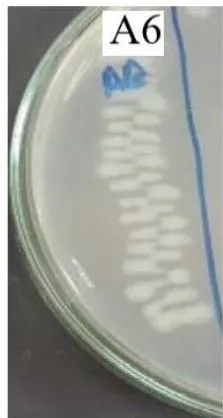
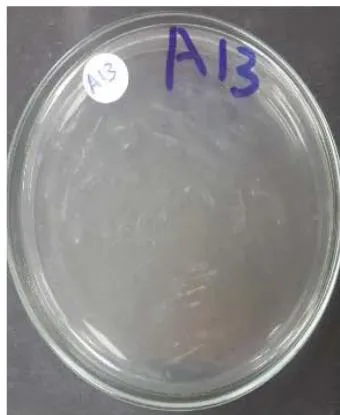
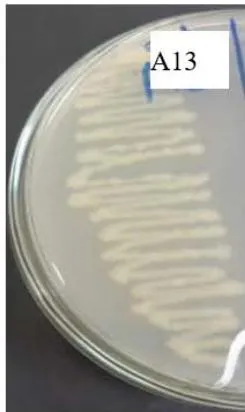
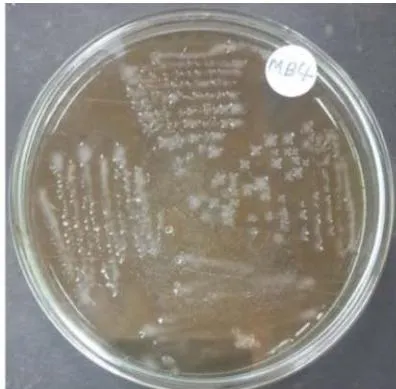
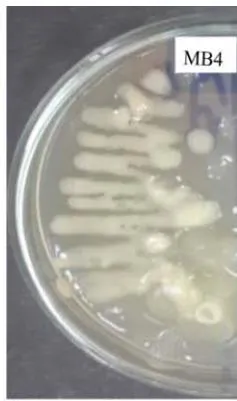
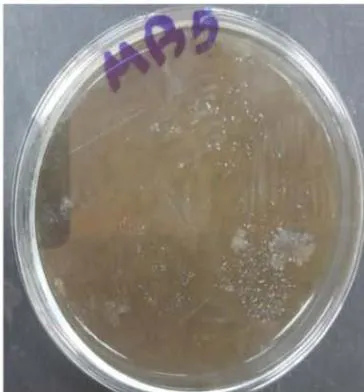
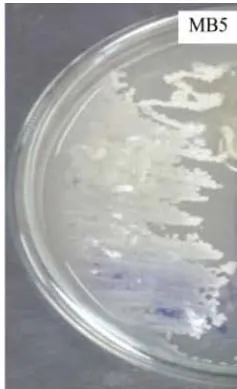
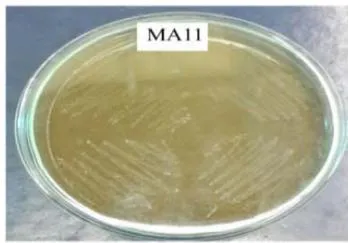
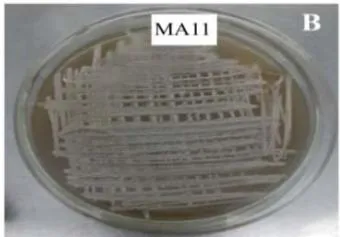
The actinomycetes isolates showed higher rate of growth on Mentha-based agar plates than starch nitrate agar plates (Plate 3). This may be due to Mentha-based medium possesses a considerable amount of nutritional contents like proteins, carbohydrate and fates and also growth factors such as vitamins and amino acids (Table 2) that essential for their growth while synthetic media provides only limited growth factors. In general, the growth of actinomycetes isolates on the plant-based culture media was good enough and very much comparable to the standard culture medium (starch nitrate medium). It is clear from the results that the growth is greatly influenced by the nature and type of the nitrogen source supplied in the culture medium. In comparison with inorganic nitrogen sources, organic nitrogen sources (protein and amino acids) induced relatively higher biomass yield. This is in accordance by the findings of Yu et al. (2008) who found that the Streptomyces spp. records maximum growth rates when peptone use as nitrogen source while ammonium chloride showed moderate growth when it supplied as inorganic nitrogen source in medium. Amendment of amino acids, in combination with carbon source, promoted the growth of actinomycetes, which correlated with Kumar and Kannabiran(2010). Although Mentha contains antibacterial and phenolic compounds, the growth of actinomycetes was not affected by them; this may be because actinomycetes are resistant to these compounds or their concentrations are not enough to inhibit their growth. On the other hand, some bacterial isolates exhibited maximum growth and pigmentation on nutrient agar plates likeA13 (Plate 4) than Mentha and Aloe vera-based culture medium because nutrient agar medium provides balanced salt solution with specific pH and osmotic pressure. While other bacterial isolates showed maximum growth on Aloe vera-based culture medium and high pigmentation on nutrient agar like (A6 isolate) (Plate 4). In addition, MB4 (Plate 5) isolate also yielded significant growth on Mentha-based culture medium but less biomass yield when compared with nutrient agar medium The phenolic compounds in Mentha and Aloe vera juice may limit the growth of bacterial isolates. These results are in line with similar findings of previous reports of (Jadhav et al., 2018).
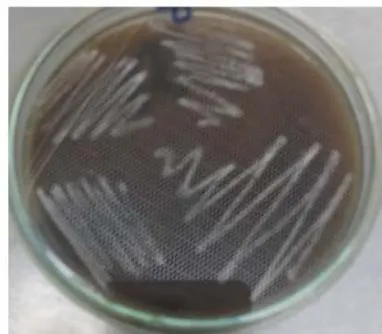

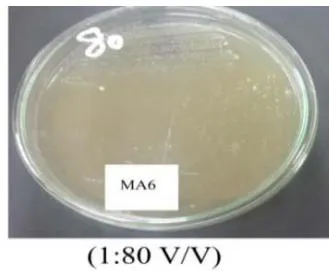
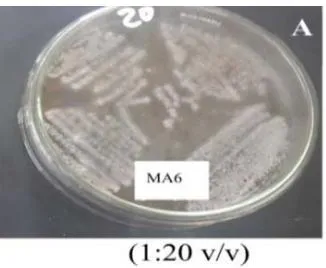
Not only the growth of actinomycetes affected by the type of medium but also by the concentration of the nutritional content. The growth and pigmentation of actinomycetes isolate (MA6) and (MA11) were high at dilution (1:20 v/v) and (1:10 v/v) respectively while both growth and pigmentation of the two isolates were
Auxin is the most investigated hormone among plant growth regulators. The most common, best characterized, and physiologically most active auxin in the plant is indole-3-acetic acid (IAA). IAA is known to stimulate both a rapid response (e.g., increased cell elongation) and a long term response (e.g., cell division and differentiation) in plants. The production of IAA was examined with the use of Salkowski reagent. The development of pink color was first visible within minutes and continued to increase in its intensity for 30 min in the dark, so the optical density was then measured. All bacterial and actinomycetes isolates produce IAA on both plant-based medium and synthetic medium. MB4 and A6 were efficient producers of IAA (36.51 and 16.25 ppm, respectively) on Mentha and Aloe vera-based culture medium respectively Table (3), while the quantity of IAA decreases (10.53 and 8.69 ppm) on nutrient broth medium, this due to the presence of tryptophan, vitamins, salt, carbon source and nitrogen in a plant-based culture medium that were contributing factors in the IAA biosynthesis which correlated with (Apine and Jadhav, 2011) and also the tryptophan supplemented in the medium. It was observed that the ideal concentration of tryptophan needed for maximum IAA production differed between the isolates (Sergeeva et al., 2007). (Narayana et al., 2009; Malhotra and
In-vitro screening of isolates for production of some plant growth-promoting (PGP) activities decreased at dilution (1:80 v/v) (Plate 6). This due to the nutritional content was high at lowest dilutions and low with highest dilutions of plant extract. These results are in agreement with Saleh et al. (2017), who found that the diluted plant juice (1:10, v/v) supported better growth compared to further diluted plant juices.
b) Indole acetic acid (IAA) production by microbial isolates on both plant-based culture and synthetic medium
Srivastava, 2009) mentioned that plant extracts influence bacterial IAA biosynthesis, and organic nitrogen sources observed to promote IAA production better than inorganic nitrogen sources. Furthermore, isolate no. MA13 produce the smallest amount of IAA (2.64ppm) on Mentha-based culture and the highest amount on nutrient broth medium (25.05ppm) Table (3), this due to the high concentration of tryptophan in Menth-based culture (Mentha content Table (2) and 0.5 mg/ml supplemented to medium) reduce the production of IAA, while nutrient broth medium contains the optimum amount of tryptophan. This result is in consistence with (Shokri and Emtiazi, 2010) where they revealed that some strains grown on high concentrations of tryptophan actually reduced IAA production.
| Mentha extract medium | Synthetic medium | Aloe vera extract medium | Synthetic medium | ||||
| No of isolates | IAA (μg/ml) | No of isolates | IAA (μg/ml) | No of isolates | IAA (μg/ml) | No of isolates | IAA (μg/ml) |
| MB1 | 16.77 | MB1 | 12.35 | A1 | 6.02 | A1 | 11.47 |
| MB2 | 6.17 | MB2 | 8.74 | A2 | 4.84 | A2 | 18.32 |
| MB3 | 9.75 | MB3 | 10.64 | A3 | 3.55 | A3 | 8.66 |
| MB4 | 36.51 | MB4 | 10.53 | A4 | 0.79 | A4 | 0.82 |
| MB5 | 8.2 | MB5 | 7.88 | A5 | 14.27 | A5 | 4.19 |
| MA6 | 10.06 | MA6 | 7.47 | A6 | 16.25 | A6 | 8.69 |
| MA7 | 4.35 | MA7 | 2.82 | A7 | 0.69 | A7 | 5.86 |
| MA8 | 10.06 | MA8 | 10.77 | A8 | 0.74 | A8 | 0.9 |
| MA9 | 31.31 | MA9 | 15.26 | A9 | 3.34 | A9 | 8.43 |
| MA10 | 6.48 | MA10 | 9.75 | A10 | 0.27 | A10 | 6.51 |
| MA11 | 3.15 | MA11 | 1.52 | A11 | 1.18 | A11 | 7.68 |
| MA12 | 31.83 | MA12 | 16.32 | A12 | 0.53 | A12 | 0.58 |
| MA13 | 2.64 | MA13 | 25.05 | A13 | 1.08 | A13 | 4.19 |
| MB14 | 15.42 | MB14 | 12.71 | A14 | 0.97 | A14 | 5.39 |
| MB15 | 5.02 | MB15 | 5.13 | A15 | 5.94 | A15 | 4.82 |
| MB16 | 6.92 | MB16 | 14.17 | ||||
| MB17 | 23.52 | MB17 | 7.02 | ||||
| MA18 | 12.56 | MA18 | 10.79 | ||||
c) Quantitative assay of phosphate solubilizing activity
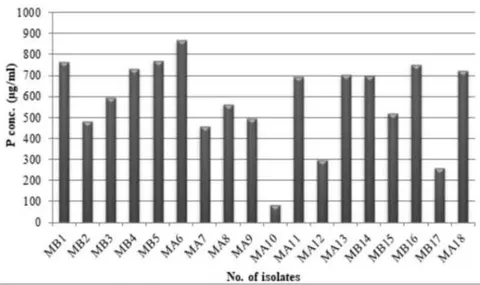
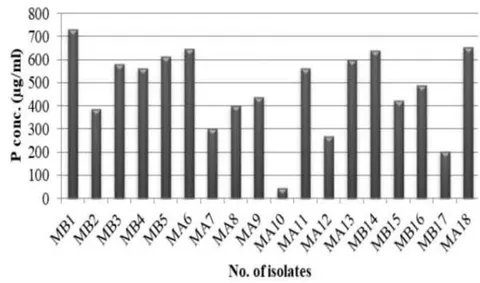
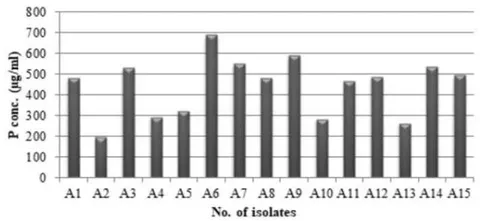
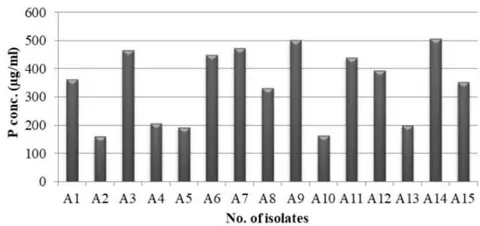
In NBRIP, broth phosphate solubilization activity of microbial isolates was varied from 44.69 to 867.85 g/ml using tricalcium phosphate as a source of insoluble P. Soil microorganisms can solubilize insoluble mineral phosphate by producing various organic acids (Illmer et al., 1995; Jones, 1998). In our study all bacterial and actinomycetes isolates were able to solubilizing phosphorus, which shows an agreement with the estimation of (Kucey, 1983) and (Chabot et al., 1993) and according to them 20 to 40% of the cultivable bacterial population of soil solubilize P. Our results showed that bacterial isolate No A6 was shown maximum phosphorus solubilization on NBRIP broth medium after grown on Aloe vera-based culture as compared to after grown on nutrient broth medium (Figure 1), furthermore actinomycetes No MA6 and bacterial No MB5 isolates were efficient in phosphorus solubilization on NBRIP broth medium after grown on Mentha-based culture 867.85 and 767.2 g/ml respectively than after grown on starch nitrate and nutrient broth medium 648 and 613.46 g/ml respectively (Figure 1). The high phosphorus solubilization on Mentha-based culture and Aloe vera-based due to the lower pH of M. viridis juices was in the range of 5.8-6.5 and A. vera juices 4-6.2 that lowers the pH of the medium and increases phosphorus solubilization by microorganisms that isolated on Mentha and Aloe vera-based media, indicating the organic acid secretion that similar with the estimation of Humaira and Asghari (2011). The inverse relationship between pH and soluble phosphate was reported earlier by (Rashid et al., 2004).
d) Identification of Selected plant growth-promoting rhizobacteria isolates (PGPR) by 16s rRNA Gene Sequencing
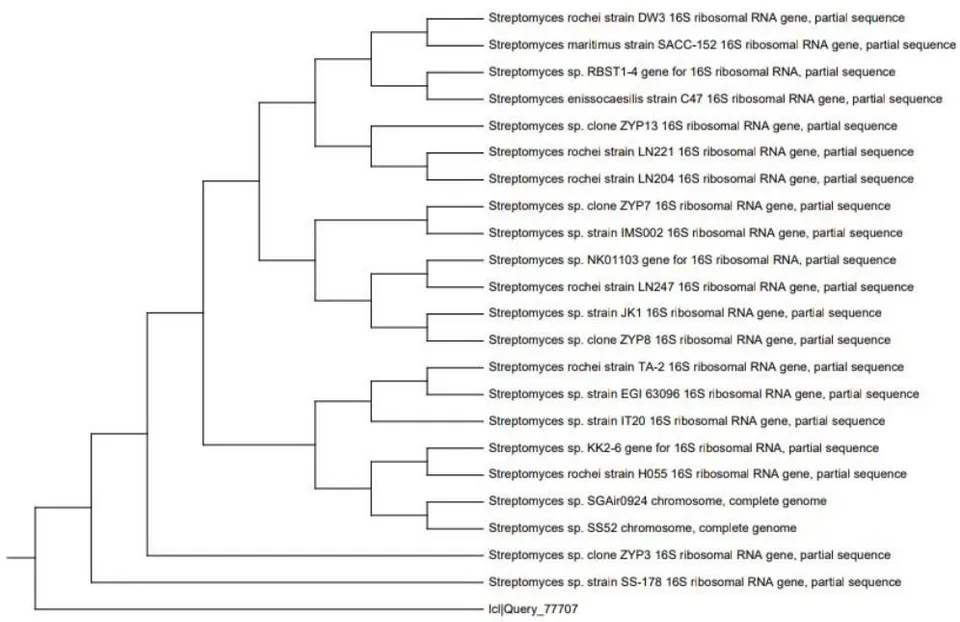
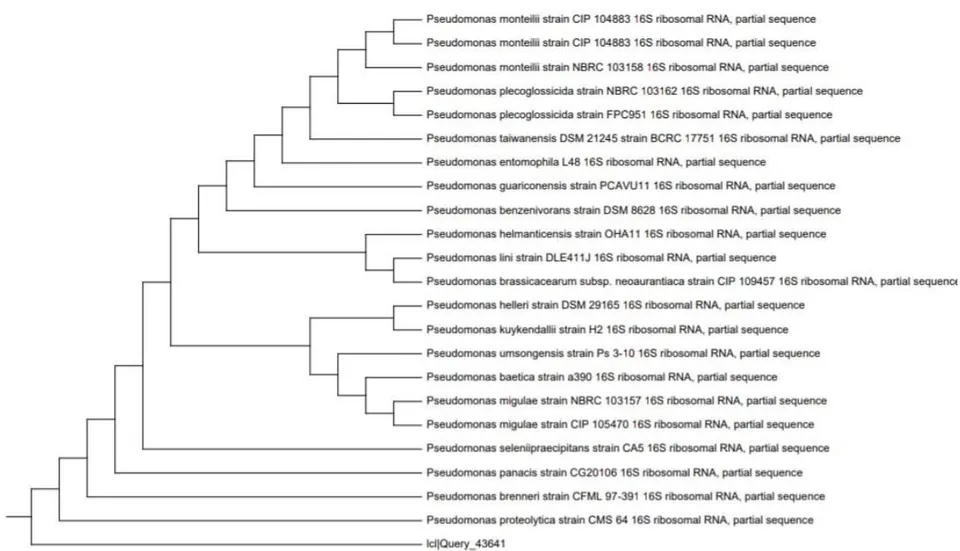
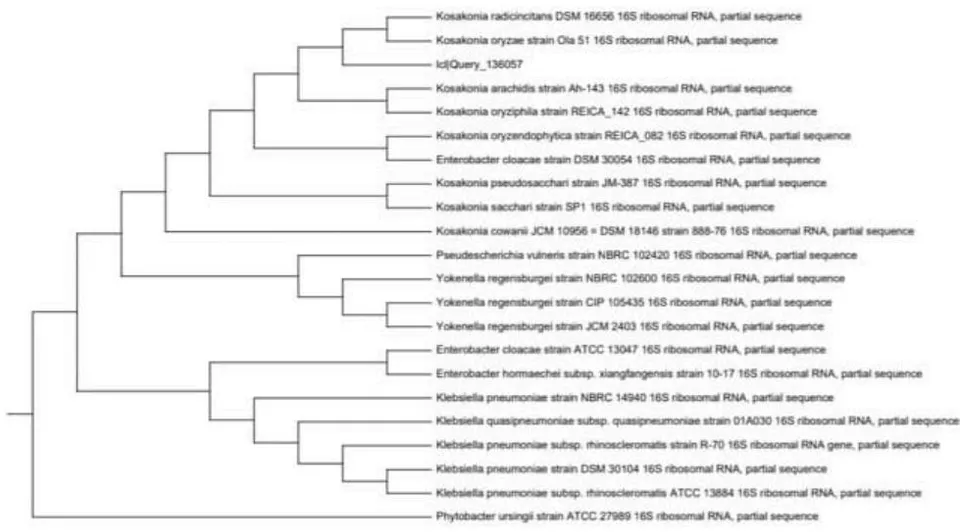
The sequences of 16S rRNA gene of our isolates compared with the sequences in GenBank through BLAST search (http://www.ncbi.nlm.nih.gov/BLAST). The results of the BLAST were, MA6 showed
98.9% similarity with Streptomyces rochei strain DW3 while the MB4 showed 91.4% similarity with Pseudomonas monteilii strain CIP 104883 and A6 showed 99.36% similarity with Kosakonia radicincitans DSM 16656. These quences from strains MA6, MB4, and A6 have been deposited in the Gen Bank and accession numbers were obtained(Table4).
| Isolate code | Source of isolation, Plant | Identified as | Similarity (%) | ACC number |
| MA6 | Rhizophere soil, Mentha viridis | Streptomyces rochei strain DW3 | 98.9 | MN135856.1 |
| MB4 | Rhizophere soil, Mentha viridis | Pseudomonas monteilii strain CIP 104883 | 91.4 | NR114223.1 |
| A6 | Rhizophere soil, Aloe vera | Kosakonia radicincitans DSM 16656 | 99.36 | NR117704.1 |
e) A phylogenetic relationship based on 16S rRNA nuclear gene
The construction of the phylogenetic tree (Figure 2, 3&4) described the phylogenetic relationship of the three species, namely Streptomyces rochei strain DW13, Pseudomonas monteilii strain CIP 104883 and Kosakonia radicincitans DSM 16656.
The above results are agree with those of Meliani et al. (2017) who investigate that the plant growth-promoting traits of a PGPR P. fluorescens and P.
putida like production of IAA, siderophore and phosphate solubilization and found that P. fluorescence and P. putida can produce 3-indole-acetic acid (IAA) in-vitro, at concentrations of and , respectively. The above results were harmony with Jog et al. (2012), who found that Streptomyces rochei, from the wheat rhizosphere, can produce IAA and phosphate solubilization and improve plant growth by increases seed germination, root elongation, and root dry weight and . The results of Zamoum et al. (2017) showed that Streptomyces rochei was positive for IAA (100.3 g ml ). This not harmony with our results. Furthermore, the in-vitro analyses, which demonstrated by Schilling et al. (1998) showed that Kosakonia radicincitans can solubilize rock phosphates. Moreover, this strain produces phytohormones as auxin and cytokine-like compounds Scholz and Ruppel (1992).
When the growth of Pseudomonas monteilii, Kosakonia radicincitans, and Streptomyces rochei on plant extract-based medium was compared with nutrient and starch nitrate respectively, it was found that maximum growth was in plant-based medium and less growth recorded on synthetic medium. It is clear from (Figure 5) that the Pseudomonas monteilii, and Kosakonia radicincitans grow exponentially during two and three days of incubation on both natural and synthetic media. The highest growth was observed on the third day of incubation. After the exponential phase at the fourth and fifth day, then slightly decreases (stationary phase). On the other hand, Streptomyces rochei, and grow exponentially during the first 4 to 7 days of incubation and at the eighth day, the growth slightly decreased.
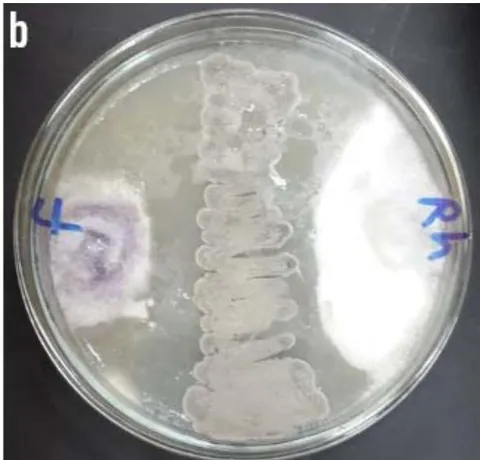
The three efficient isolates tested for their ability to produce inhibitory activity against pathogenic fungi (Fusarium solani, Fusarium oxysporum, and Rhizoctonia solani). Rhizobacteria can produce plant growth-promoting substances that enhance the growth of plants, and also have an antagonistic activity against pathogenic fungi. The results showed that Pseudomonas monteilii and Streptomyces rochei (Plate 7) were more active against Rhizoctonia solani and Fusarium solani respectively, that shown inhibition zone19 and 18mm respectively Table (5), which in line with similar findings of previous reports (Asgharet al.,
2019). Additionally, Kosakonia radicincitans was suppressing the growth of Fusarium solani due to K. radicincitans have genes that responsible for salicylic acid or the jasmonate/ethylene signaling pathways to protect plants against potential pathogen attack Brock et al. (2013).
| Pathogenic fungi Isolates | Diameter of zone of Inhibition (mm) | ||
| Fusarium solani | Fusarium oxysporum | Rhizoctonia solani | |
| Pseudomonas monteilii | 17 | 15 | 19 |
| Kosakonia radicincitans | 11 | 3 | 5 |
| Streptomyces rochei | 18 | 13 | 12 |
Media type Cost in E£/ 100L Synthetic medium Natural medium Solid media 4600 4100 Liquid Media 600 100
IV. CONCLUSIONS
The natural media of Mentha and Aloe vera extracts supported the growth of bacteria and actinomycetes such as Pseudomonas monteilii,
Kosakonia radicincitans, and Streptomyces rochei, respectively. The plant-based culture media could use as inexpensive alternate medium for the routine practical experiments. The plant-based culture increases the cultivability of rhizobacteria than synthetic medium, and was highly cost-effective. Results suggest that PGP isolates developed on plant-based culture medium, which can produce multiple PGP activities like IAA production, solubilize the phosphate, and existed antagonistic activity against pathogenic fungi may improve the growth of plants. Moreover, in the present study, PGPRs were used with a lower dose of fertilizer; thus, it is an environmentally-friendly technology that can minimize soil pollution and maximize crop returns.
ACKNOWLEDGMENTS
This work was sponsored by Al-Azhar University, Faculty of science, Botany and Microbiology Department, Cairo, Egypt.