This paper examines the relationship between the creative economy and the Pantanal territory, aiming to discuss elements that may shed light on the concept of a creative biome-that is, a creative economy inspired by the territory and its specific characteristics. The research is qualitative and adopts an interpretivist approach, with a methodological path that includes a predominantly bibliographic review. The study anticipates that a creative biome-the Southern Pantanal as a creative territory-encompasses practices, symbols, and intangible resources which, due to their uniqueness and rarity, highlight the strategic richness that can emerge from this developing space-concept.
### Autor: Pós-Doutourando na Escola de Administração e Negócios I. INTRODUÇÃO
esde a última metade do século XX a economia mundial tem sofrido profundas transformações, notadamente com a intensificação de crises econômicas, políticas e democráticas, além da ascensão do movimento hegemônico das economias de mercado. Além disso, foi colocado também em perspectiva a fragilidade das instituições no cenário de correlação de forças, motivando intelectuais de diferentes áreas a (re)pensarem propostas alternativas para um desenvolvimento efetivamente sustentável, inclusivo e capaz de assegurar o bem-estar coletivo face aos efeitos deletérios das políticas neoliberais (Santos, 2006; Machado, 2010; Braz, 2017).
Esse processo de mudanças estruturais, particularmente a partir dos anos de 1990, trouxe à baila uma intensa discussão sobre as chamadas economias de transição, à exemplo da economia criativa, solidária, colaborativa, ecológica, circular etc., estabelecendo em seu bojo novos paradigmas relacionados aos sistemas produtivos, além de novos modelos de organização do trabalho no contexto de sociedade em rede (Harvey, 1993, 2005; Furtado 1998; Castells, 2000; Santos, 2000a; Yudice, 2004; Reis, 2008; Miguez, 2009; Oliveira et al., 2013).
Nesse limiar o interesse particular desta pesquisa recaí sobre o advento da economia criativa (EC) como estratégia de desenvolvimento, seus limites, contradições e potencialidades. Indústrias criativas (Caves, 2002; Hartley, 2005; Unctad, 2010; Unesco, 2013; Madeira, 2014; Bendasolli et al., 2016); economia criativa (Brasil, 2011; Howkins, 2013; Leitão, 2015a, 2015b, 2015c, 2016, 2019; Guilherme, 2018); Cidades, Territórios e Clusters criativos (Comunian, 2011; Landry, 2011; Reis, 2011; Ashton et al., 2016; Lima, 2017; Closs & Oliveira, 2017; Leitão & Guilherme, 2019, Pacheco, 2023) são alguns dos termos que circunscrevem este objeto de estudo no arcabouço literário nacional e internacional.
Adicionalmente, em 2004 a UNESCO criou a Rede Mundial de Cidades Criativas. Desde então, cidades e territórios criativos têm recebido significativa atenção no arcabouço teórico nacional e internacional. Contudo, parece haver um hiato estratégico para o estabelecimento de um novo conceito, o de bioma criativo. O argumento central deste artigo advoga a existência de uma economia que está diretamente relacionada à dimensão simbólica, econômica e à biodiversidade que se articulam em um determinado território, neste caso, o Pantanal Sul. Em outros termos: se existem cidades e territórios criativos, certamente


existe uma economia criativa de base territorial, ou melhor, biomas criativos.
À luz do exposto o presente artigo interroga quais características do bioma pantaneiro podem fundamentar o constructo de bioma criativo? Para isso, o trabalho recorre à um vasto levantamento teórico sobre economia criativa e suas principais dimensões com vistas à melhor elucidar o conceito ao leitor. Entretanto, para a efetiva consecução do objetivo do artigo, se recorre também aos clássicos da geografia econômica visando constituir o mote analíticointerpretativo desta pesquisa, particularmente nas contribuições de Haesbaert (1995, 2004a, 2004b, 2008, 2010, 2014, 2015, 2017) e Santos (2000a, 2000b, 2002, 2004, 2005); e ancilarmente, Raffestin (1993), Souza (2011, 2015) e Saquet (2009, 2015, 2017, 2018) dentre outros. Com efeito, o presente artigo tem muito a contribuir no arcabouço teórico interpretativo da economia criativa enquanto estratégia de desenvolvimento local e regional.
## II. Para Uma CompreensÃo da Economia CrIATIVA
O advento do termo "indústrias criativas" em meados de 1990 na Austrália deu início a agenda de políticas públicas para a EC em todo o mundo, mais intensamente durante os anos 2000, tendo como imperativos a originalidade, a criatividade, as rupturas com processos tradicionais de produção e a inovação (Kirschbaum et al., 2009).
De imediato, sabe-se que os "produtos culturais são bens e serviços valorizados por seu significado" e que são "consumidos em um ato de interpretação" ou ainda "simbolicamente", o que difere dos produtos ditos "tradicionais", que são consumidos materialmente, por sua utilidade (Lawrence e Phillips, 2009, p.3-5).
A EC pode ser apreendida dentro da economia dos bens simbólicos. Para Bourdieu (1987) a cultura só existe efetivamente sob a forma de símbolos, de um conjunto de significantes/significados, com função política bem definida. Neste campo, há um "capital simbólico" em disputa. ""Estes [produtos] constituem realidades com dupla face — mercadorias e significações - cujo valor propriamente cultural e cujo valor mercantil subsistem relativamente independentes" (Bourdieu, 1987, p. 102).
Ou seja, o elemento caracterizador desta economia é a sua dimensão simbólica, intangível, que se alimenta do talento criativo (conhecimento, saberes, fazeres etc.) para a produção de bens e serviços, conferindo-lhe valor, em um mercado com dinâmica de funcionamento que desconcentra modelos econômicos tradicionais e assenta-se sobre os princípios da diversidade cultural, inclusão social, sustentabilidade e inovação (Brasil, 2011).
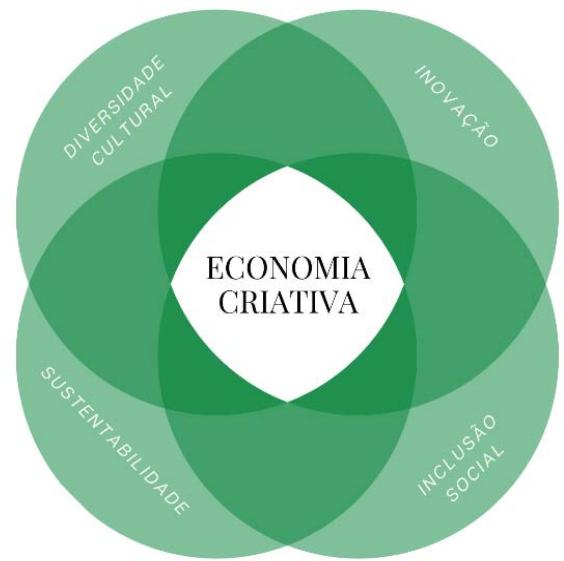 Fonte: adaptado pelo autor com base no Plano da SEC (2024) Figura 2: Princípios da EC segundo o Plano da Secretaria da Economia Criativa (SEC)
Fundamental colocar em perspectiva a dimensão da EC como vetor de desenvolvimento, tão defendido pelo notório economista brasileiro Celso Furtado (Pacheco e Benini, 2018). Ao lançar a coletânea de ensaios "Cultura e desenvolvimento em época de crise" (1984), por exemplo, o autor antecipou propostas em direção a um desenvolvimento endógeno que só viriam à tona no mundo 20 anos depois, qual seja, a descoberta da criatividade ao nível dos fins:
Daí que uma política cultural que se limita a fomentar o consumo de bens culturais tende a ser inibitória de atividades criativas e a impor barreiras à inovação [..], o objetivo central de uma política cultural deveria ser a liberação das forças criativas da sociedade. Não se trata de monitorar a atividade criativa e sim de abrir espaço para que ela floresça (Furtado, 1984, p. 32).
Como bem lembram Pacheco, Benini e Mariani (2018), a economia criativa surge a partir das identidades locais, do povo, introjetada de simbologia, considerando a imensidão da diversidade cultural brasileira. E ainda, a economia criativa, no contexto Brasil, deve ser posta à serviço da lógica dos fins, cooperando para o surgimento de uma agenda de transformação social, que tem em seu constructo multidimensional o seu mote.
De todo modo, parece igualmente apropriado aos objetivos desta pesquisa compreender a EC como um conceito ajustado entre o delicado equilíbrio de imperativos econômicos e o patrimônio cultural de uma nação (Madeira, 2014). A EC tem sido apontada nas últimas décadas como uma das estratégias de desenvolvimento econômico mais significativas, sobretudo, pela capilaridade dos setores que a constituem, percorrendo expressões culturais tradicionais a serviços criativos e novas tecnologias (Caves, 2002; Hartley, 2005; Reis, 2011; Florida, 2012; Howkins, 2013).
Estudos recentes, que focalizam a economia criativa em perspectiva interdisciplinar advogam que a A EC promove a diversificação econômica, de receitas, de comércio e inovação, e pode se relacionar, de forma simbiótica, com as novas tecnologias: notadamente as tecnologias de informação e comunicação. Dessa forma, iniciativas baseadas na abordagem de EC podem promover a revitalização de áreas urbanas degradadas, ou mesmo o desenvolvimento de áreas rurais com herança de patrimônio cultural. (Oliveira et al., 2013).
No contexto da EC apresentada nesta pesquisa à luz de posicionamentos teóricos, os símbolos são compreendidos como incrustados no território e, portanto, no tecido da própria sociedade. Daí que a EC surge a partir das identidades locais, do povo, introjetada de simbologia, considerando a imensidão da diversidade cultural brasileira. Com efeito, tem-se que a economia criativa encontra apoio nas discussões centradas nos territórios, vez que as comunidades que o constituem são reais provedoras de ativos simbólicos, intangíveis e criativos, com forte relação com o setor de serviços, notadamente o turismo local (Pacheco, 2023; Pacheco e Benini, 2018; Londoño-Cardozo e Castrillón, 2022).
Em um breve levantamento' de estudos realizados no campo da economia dos bens simbólicos é possível identificar a seguinte composição:
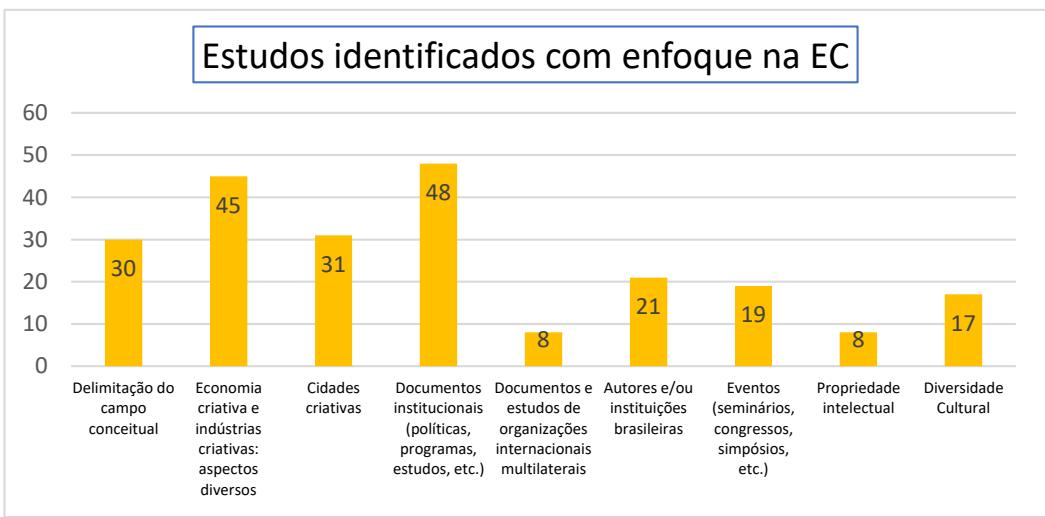 Fonte: elaborado pelo autor partir do repositório e-Criativo (2024)
Gráfico 1: Identificação de Estudos com Enfoque na EC
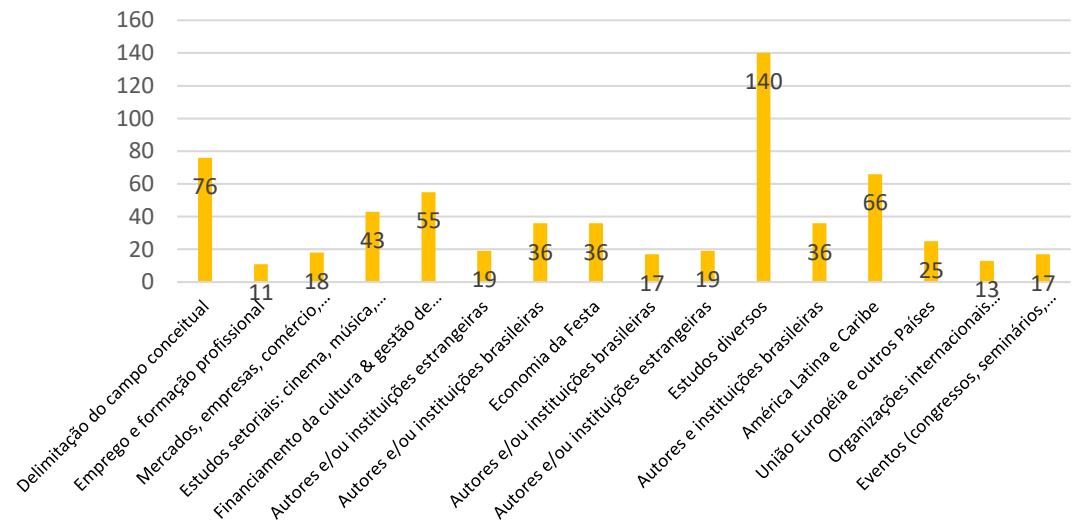 Estudos identificados com enfoque na Economia da Cultura e Escola de Frankfurt Fonte: elaborado pelo autor partir do repositório e-Criativo (2024)
Gráfico 2: Identificação de Estudos com Enfoque na Economia da Cultura
No entanto, a maior parte dos estudos retromencionados são de origem norte-atlântica e eurocêntrica, e que frequentemente ocupam o mainstream da literatura gerencialista sobre EC notadamente pela defesa de expressões como inovação disruptiva, competividade, diferenciação vertical, empreendedorismo, direitos autorais, propriedade intelectual etc., o que reforça a necessidade de adoção de uma perspectiva teórica que seja efetivamente representativa da realidade latino-americana e, particularmente, brasileira (Yudice, 2004; Miguez, 2009, Leitão, 2015a; 2015b; Pacheco, Benini & Mariani, 2018).
Permanece então, com raras exceções, a necessidade de compreensão das abordagens que melhor sirvam a estruturação da EC, sobretudo, diante das crises democráticas que acometeram a América Latina e o Brasil com avanço da agenda neoliberal (Harvey, 2008; Borén & Young, 2013). À guisa de elucidação, apresenta-se os modelos de indústrias criativas da Unctad (2010) e Unesco (2013), os quais pretendem caracterizar/agrupar as atividades que se inscrevem nessas indústrias.
Nesse cenário, as organizações que atuam na EC, nos modelos propostos por Unctad, BiD, Firjan etc, de certo modo obedecem à imperativos de competitividade com outras organizações no campo simbólico, delimitando as fronteiras dessas indústrias e impondo-lhes barreiras, transformando o ato criativo gerador de produtos como que em commodities na medida em que seu potencial de comercialização aumenta (Bourdieu, 1996; Lawrence & Phillips, 2009), ou seja, a dinâmica do capitalismo e as economias de transição estão, frequentemente, interagindo e rivalizando entre si.
De outro norte, sabe-se que as pesquisas de gestão em organizações intensivas em símbolos exigem abordagens - teórica e metodológica - que deem conta de acessar a complexidade de sua configuração e distinção, vez que a produção neste campo está diretamente vinculada à um ato interpretativo dos consumidores: "os produtos de moda [por exemplo] são comprados pelo consumidor, pelo menos em parte, pelo valor ideal ou simbólico que está associado ao bem ou serviço em sua comunidade" (Lawrence & Phillps, 2009, p.16).
A EC pode ser apreendida dentro da economia dos bens simbólicos. Para Bourdieu (1987) a cultura só existe efetivamente sob a forma de símbolos, de um conjunto de significantes/significados, com função política bem definida. Neste campo, há um "capital simbólico" em disputa. "Estes [produtos] constituem realidades com dupla face mercadorias e significações - cujo valor propriamente cultural e cujo valor mercantil subsistem relativamente independentes" (Bourdieu, 1987, p. 102).
É bem verdade que nos setores intensivos em símbolos o processo produtivo (ou criativo) está apenas em parte sob o controle da gestão, embora frequentemente utilize-se nestes processos uma mudança que vai da substância ao estilo do produto. E, para tecer os meandros de todo o levantamento teórico desta tese, insta frisar que "as organizações intensivas em símbolos estão incrustadas em sistemas de textos que fornecem o pano de fundo para sua produção de significado" (Lawrence & Phillips, 2009, p.18, grifo meu).
## III. Qual a Papel do Território na ProduÇÃo da Economia Criativa
O território pode representar muitas coisas: prática e significado, constituindo-se a partir de redes e relacionamentos tecidos por meio de seus atores; como resultante da produção de suas territorialidades num processo histórico moldado nas relações de poder; como representação funcional, simbólica, identitária e múltipla; uma rede social; como espaço de desenvolvimento de sistemas produtivos e inovativos (Cassiolato & Lastres, 2005; Raffestin,1993; Castells, 1999; Santos, 2000; Haesbaert 2017; Ramos, 2023; Zamberlan et al., 2023) dentre inúmeras outras.
O território enquanto lugar reúne em seu interior configurações historicamente pautadas nas relações sociais e nas relações sociedade-natureza. Essas relações compreendem significados plurais que, para além da produção econômica, têm seu mote na identidade e no patrimônio cultural, além das respectivas categorizações territoriais: a territorialização e as territorialidades
O território reúne, no lugar, comunidade, instituições, economia e natureza, num tecido de interações pessoais e sociais, com inteligência e enraizamento [..] corresponde à terra e, sobretudo, à história dos homens que habitam os lugares, à prática social e ao conhecimento acumulado. Cada lugar precisa, assim, ser pensado como específico numa rede de lugares conexos territorialmente (Saquet, 2018, p.488-489).
Isso porque, se o território é fruto de uma complexa relação de atributos histórico-sociais, parece sintomático - minimamente - compreender que este mesmo território pode ser objeto de uma (des)territorialização, ou seja, de uma ruptura que é lógica e dialética que resulta em descontinuidades e apropriações no espaço-tempo, não apenas pelo avanço da globalização e do modo de produção intensivo em capital, mas como resultante do próprio movimento e contramovimento gestado em seu próprio interior à luz de um contexto institucional, ensejando ações à vista de uma (re)territorialização (Mareque et al., 2021).
Haesbaert (2015), classifica o território em algumas vertentes básicas, quais sejam: território natural; território político; território econômico e território cultural ou simbólico-cultural. E ainda, o território pode ser unifuncional, ou seja, enquanto espaço-tempovivido resultante de diversos processos que se constituem nas tramas materiais e imateriais do cotidiano social (Haesbaert, 2017). Por sua vez, a dimensão simbólico-identitária (cultural) a respeito do território parece dialogar com maior fluidez no âmbito da EC, à luz de uma racionalidade substantiva.
Adensando a compreensão, Abramovay (2000) lembra que
[...] um território representa uma trama de relações com raízes históricas, configurações políticas e identidades que desempenham um papel ainda pouco conhecido no próprio desenvolvimento econômico. A economia tem prestado bastante atenção aos aspectos temporais (ciclos econômicos) e setoriais (complexos agroindustriais, por exemplo) do desenvolvimento, mas é recente o interesse por sua dimensão territorial ou espacial (Abramovay, 2000, p. 6, grifo meu).
Daí que os caminhos para se pensar um conceito, ou ainda, as dimensões teórico-conceituais para uma EC de base territorial começam a se clarificar com base na articulação até aqui proposta. Como bem sintetizado por Luciana Guilherme (2018, p.64), o sistema territorial é um complexo de conhecimentos e práticas, pontos e nós, linhas e redes, superfícies e tessituras.
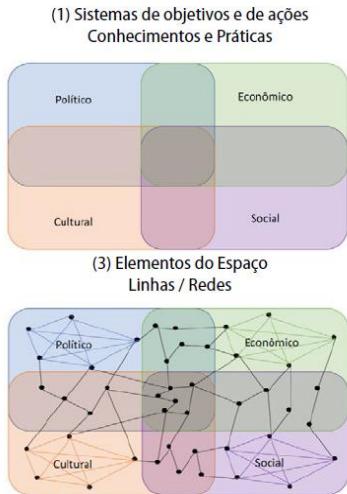
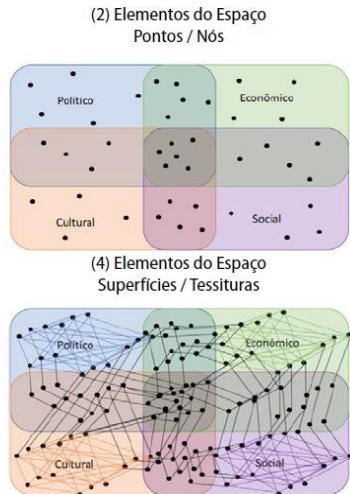 Fonte: Guilherme (2018, p.64) elaborado com base em Raffestin (1993) Figura 2: Sistema Territorial
Ou seja, há que se considerar que os elementos fundantes de uma EC de base territorial passam necessariamente pelo reconhecimento do simbólico, em uma abordagem substantiva da economia, compreendendotradição, memória, significados, histórias e trajetórias, modos de produção e de relações de trabalho, além dos processos criativos e de inovação do lugar.
Nessa esteira, é fundamental considerar que no processo de (des)territorialização, a dinâmica entre a produção material-cultural e sua funcionalidade original pode ser alterada substancialmente, tendo em vista a força modeladora que o processo mercantil-capitalista impõe. Conforme observa Alves (2021):
O contato com os colonizadores brancos representou, para os indígenas, o acosso de uma força descomunal, contra a qual não teriam condições de combater: o capital. Do choque resultou a diluição da cultura indígena no interior da cultura burguesa emergente. Essa diluição implicou uma transformação radical das funções dos objetos e instrumentos produzidos pelos indígenas. A cerâmica, bem como o arco e a flecha, vendidos nas estradas e em lojas especializadas em artesanato indígena, já não servem à preservação de alimentos nem à caça ou à pesca. São, basicamente, mercadorias que permitem ao "artesão" adquirir, no mercado, as demais mercadorias que, sob as novas condições hegemonizadas pelo capital, asseguram a sua subsistência (Alves, 2021, p. 47).
Não obstante a observação acima jogue luz no processo adaptativo que o território e sua base material-cultural sofre ao se relacionar inevitavelmente com a sociedade mercantil-capitalista, a função da produção do simbólico enquanto força agregadora e estratégica para a sustentação econômica não pode ser desprezada; e a economia criativa territorial, enquanto projeto intencional de sociabilidade, apresenta-se como possibilidade de resistência diante da complexa divisão do trabalho que se impõe em qualquer processo de territorialização - produzindo a ciclo vicioso centro-periferia.
Certamente a compreensão de território é demasiada complexa para ser largamente explanada neste artigo, porquanto implique um adequado detalhamento das redes que o constituem (com seus nós, arestas, centralidades etc.). De todo modo, para o argumento de pesquisa delimitado na introdução deste artigo, a exposição aqui realizada parece suprir, sem excessos, as pretensões teórico-metodológicas. Como bem lembra Xavier Greffe (2013)
Hoje a arte e a cultura são, justamente, apresentadas como uma das alavancas mais potentes dessa celebrada transformação dos territórios. Os produtos trazem a marca do território onde foram elaborados, pois incorporam os saberes artísticos e a experiência destes, daí a noção de produtos idiossincráticos (Greffe, 2013, p.312).
Soma-se às interpretações teóricas até aqui trazidas, a inegável contribuição da geografia econômica de Milton Santos (2002). Ao abordar a temática territorial, o autor advoga que território não é apenas
[...] um conjunto de sistemas naturais e de sistemas de coisas sobrepostas, o território pode ser entendido como território usado, não o território em si. O território usado é o chão mais a identidade. A identidade é o sentimento de pertencer aquilo que nos pertence. O território é o fundamento do trabalho; o lugar da residência, das trocas materiais e espirituais e do exercício da vida (Santos, 2002, p.15).
Ou seja, o território é multidimensional, possui múltiplas relações entre natureza, economia, política, cultura etc. Dada essa configuração, o território é determinante do espaço e, portanto, interfere diretamente nas demais estruturas da sociedade. As formações sociais resultantes do território moldam as práticas econômicas.
Em tom contributivo, Santos (2003, p.47) advoga que: "o território é o chão e mais a população, isto é, uma identidade, o fato e o sentimento de pertencer àquilo que nos pertence. O território é a base do trabalho, da residência, das trocas materiais e espirituais e da vida, sobre os quais ele influi". Invariavelmente os constructos debatidos no artigo em curso reconhecem a importância de processos estruturantes de um modelo de desenvolvimento econômico mais orgânicos e socialmente justos a partir de um território autossustentável ou que se insira minimamente neste horizonte.
Para prosseguirmos, faz-se necessário estabelecer algumas breves demarcações conceituais que circunscrevem o processo de desenvolvimento territorial, notadamente a partir do trinômio territorialização-desterritorialização-reterritorialização (TDR):
<table><tr><th></th><th>Territorialização</th><th>Desterritorialização</th><th>Reterritorialização</th><th></th></tr><tr><td rowspan="9">Sujeitos, relações e classes</td><td>- Classes e grupos sociais, objetivos, metas, ritmos e necessidades.</td><td rowspan="2">- Edificações (sobretudo com significado patrimonial), acordos, pactos, coligações, associações políticas, recreativas e culturais.</td><td rowspan="8">- Precisam ser identificadas, debatidas e definidas em cada território ou rede de territórios: econômicas, políticas, culturais e ambientais, de acordo com as especialidades das famílias, dos grupos e das classes, valorizando-se os ritmos lentos e solidários, os saberes populares, as identidades, as proximidades, as redes curtas e as ancoragens.</td><td></td></tr><tr><td>- Comandos locais e regionais, disputas e conflitos.</td><td></td></tr><tr><td>- Relações de confiança e reciprocidade.</td><td>- Cultivos agroquímicos.</td><td></td></tr><tr><td>- Organizações e mobilizações.</td><td>- Inovações tecnológicas utilizadas, financiamentos, subordinações etc.</td><td></td></tr><tr><td>- Iniciativas econômicas.</td><td>- Diferentes inserções no mercado.</td><td></td></tr><tr><td>- Costumes e identidades.</td><td rowspan="4">- Ritmos acelerados de vida e grandes investimentos urbanos e rurais, comerciais, industriais e financeiros.</td><td></td></tr><tr><td>- Saber-fazer e artesanabilidade.</td><td></td></tr><tr><td>- Produtores ecológicos de alimentos.</td><td></td></tr><tr><td>- Outras iniciativas ecológicas como na geração de energia.</td><td></td></tr><tr><td rowspan="9">Mediadores (i) materiais</td><td>- Estado: federal, estadual e municipal.</td><td>- Edificações, projetos em vigor e previstos, níveis de contaminação da água, do solo e do subsolo (quando for o caso), formas de deposição dos desejos líquidos e sólidos.</td><td>- Precisam ser identificadas, debatidas e definidas em cada território ou rede de territórios: econômicas, políticas, culturais e ambientais, valorizando-se a democracia, a participação social, a autonomia decisória, a reciprocidade, a autogestão, e a autoorganização.</td><td></td></tr><tr><td>- Empresas privadas e públicas.</td><td>- Grandes empresas privadas e públicas.</td><td>- O Estado precisa cumprir seus papéis constitucionais e sociais.</td><td></td></tr><tr><td>- Técnicas e tecnologias.</td><td>- Mecanismos de gestão e políticas públicas etc.</td><td></td></tr><tr><td>- Conhecimento, saber popular e ciência.</td><td></td><td></td></tr><tr><td>- Assistência técnica.</td><td></td><td></td></tr><tr><td>- ONGs.</td><td></td><td></td></tr><tr><td>- Sindicatos.</td><td></td><td></td></tr><tr><td>- Força de trabalho.</td><td></td><td></td></tr><tr><td>- Movimentos sociais.</td><td></td><td></td></tr><tr><td rowspan="9">Práticas espaciais e temporais (i) materiais</td><td>- Diferentes apropriações temporárias e mais efetivas.</td><td>- Concentração da terra e demais meios de produção.</td><td>- Precisam ser identificadas, debatidas e definidas em cada território ou rede de territórios: econômicas, políticas, culturais e ambientais, tendo em vista o desenvolvimento desejado, valorizando-se os ritmos lentos e solidários, juntamente com a preservação da natureza (humana e não humana).</td><td></td></tr><tr><td>- Propriedades, domínios, parcelamentos, delimitações, demarcações e especulações imobiliárias.</td><td>- Transformadoras, concentradoras, degradantes e poluidoras.</td><td></td></tr><tr><td>- Diferentes ritmos de vida etc.</td><td>- Expropriação dos trabalhadores e propriedade.</td><td></td></tr><tr><td>- Organizações populares, associativas, cooperativas e resistência ao capital e ao Estado burguês.</td><td>- Ritmos acelerados de produção e vida.</td><td></td></tr><tr><td></td><td>- Especulação imobiliária e financeira.</td><td></td></tr><tr><td></td><td></td><td></td></tr><tr><td></td><td></td><td></td></tr><tr><td></td><td></td><td></td></tr><tr><td></td><td></td><td></td></tr><tr><td></td><td></td><td></td></tr><tr><td></td><td></td><td></td></tr></table>
<table><tr><td>Identidades culturais</td><td>- Frágeis e fortes vínculos com o lugar e com o território: ancoragem. - Pertencimento, afetividade e reconhecimento. - Mobilização, resistência e luta política. - Patrimônio histórico (edificações, saber-fazer, identidades, línguas, ritos, costumes etc.). - Cultura camponesa com incorporação das mudanças: coexistência de cooperação, solidariedade e mercado, </td><td>- Mudanças/rupturas e dissoluções. - Vínculos frágeis com o lugar de produção e vida cotidiana. - Avanços do consumo padronizado. - Avanços já conseguidos politicamente e culturalmente, por exemplo, com produtos típicos, educação ambiental, sustentáveis etc.</td><td>- Resistência e luta. - Fortes vínculos territoriais: ancoragem. - Reprodução da cultura camponesa com incorporação de outros comportamentos e valores: coexistência de cooperação, solidariedade e mercado em redes curtas. - Renovação da identidade vinculada à consciência de classe e de lugar.</td></tr><tr><td>Redes locais, não locais e nós (em distintas escalas)</td><td>- Continuidades espaciais (rurais-rurais; urbano-rurais; urbanas-urbanas). - Redes heterocentradas nacionais e internacionais. - Redes autocentradas tendencialmente locais e/ou regionais. - Comercialização solidária: Mercado local e/ou regional. - Sinergias e reciprocidade: cooperação, solidariedade, associações para produzir, comercializar, festejar, enfim para viver etc.</td><td>- Transposição de limites com descontinuidades/rupturas. - Difusão e fluidez em longas e padronizadas redes de comercialização. - Redes heterocentradas tendencialmente nacionais e internacionais. - Iniciativas locais e/ou regionais na articulação público-privada etc. - Redes mercantis, especulativas: imobiliárias, industriais e financeiras.</td><td>- Novas espaços a partir das diferenças e identidades. - Redes autocentradas tendencialmente locais e/ou regionais. - Sinergias, ancoragem territorial e reciprocidade: cooperação, solidariedade, associações e sindicatos com identidades políticas e/ou econômicas e/ou culturais e/ou ambientais etc.</td></tr></table>
Isso porque, se o território é fruto de uma complexa relação de atributos histórico-sociais, parece sintomático - minimamente - compreender que este mesmo território pode ser objeto de uma (des)territorialização, ou seja, de uma ruptura que é lógica e dialética que resulta em descontinuidades e apropriações no espaço-tempo, não apenas pelo avanço da globalização e do modo de produção intensivo em capital, mas como resultante do próprio movimento e contramovimento gestado em seu próprio interior à luz de um contexto institucional, ensejando ações à vista de uma (re)territorialização (Martins & Junior, 2012).
Embora não seja um fenômeno de interesse particular deste trabalho, tem-se que a (des)territorialização efetiva-se ao largo de um amplo processo de "expropriação de elementos de uma geografia imaginária"constituída historicamente" (Martins & Junior, 2012, p. 147) e que provoca o rompimento de solidariedades horizontais com a destruição de símbolos, marcos históricos, identidades, quanto concreto, material-politico e/ou econômico [....] [há] escala de difusão da desterritorialização, tanto espaciais quanto temporais". E a
desterritorialização é sempre um processo que ocorre em concomitância com a reterritorialização (Haesbaert, 1995, p. 181).
Tem-se, de partida, que a trajetória à vista de uma agenda efetiva de desenvolvimento territorial passa necessariamente pela observação de múltiplas categorias de reflexão e de uma complexa articulação política e institucional com destaque para o papel social, constitucional e redistributivo do Estado, bem como, das diferentes manifestações estruturantes desenvolvidas no seio da sociedade civil organizada, à exemplo das práticas solidárias e agroecológicas.
Entretanto, vários outros autores da área também realizaram suas contribuições acerca dos territórios e territorialidades. Nesse exercício de reflexão, as contribuições de Rogério Haesbaert parecem alinhar-se mais adequadamente ao fio condutor desta tese: "territorializar-se significa também, hoje, construir e/ou controlar fluxos/redes e criar referenciais simbólicos num espaço em movimento, no e pelo movimento" (Haesbaert, 2007, p. 280, grifo meu).
Para esse mesmo autor, o território é "sempre multidimensional e multiescalar, material e imaterial, de dominação e apropriação ao mesmo tempo"
(Haesbaert, 2004, p. 97). Tem-se, portanto uma síntese polissêmica sobre a noção de território, sendo a abordagem socioeconômica de particular interesse, compreendendo o simbólico-cultural - e portanto mais subjetiva - e as relações econômicas que se constituem no "embate entre classes sociais e na relação capital-trabalho, como produto da divisão "territorial do trabalho", por exemplo" (Haesbaert, 2004, p. 40)
## IV. Bioma Pantaneiro e a ProduÇÃo Simbólica: Um Território Criativo De Interesse GLobal
Não se pode olvidar que o território pantaneiro enquanto patrimônio natural e cultural da nação também vem enfrentando os efeitos e investidas deletérias do capitalismo no sentido da sua captura e apropriação em proveito da iniciativa privada e suas infindáveis estratégias de mercantilização. Essas investidas também foram responsáveis pela modificação dos processos de produção no território pantaneiro, alterando e determinando outras geografias, alçando a pecuária e o turismo (de espetacularização) como setores sinérgicos e complementares (Val, 2014).
O Pantanal Sul-Mato-Grossense é um bioma transfronteiriço possuidora de vasta biodiversidade e fornecedora de diferentes serviços ecossistêmicos relevantes para a vida e bem-estar humano e dos demais seres vivos. Graças a essa rica biodiversidade, embebida de aspectos simbólicos, culturais e econômicos, o Pantanal tem suscitado, de forma premente, uma agenda de governança balizada em um robusto arcabouço legislativo de cariz ambiental, com vistas ao desenvolvimento econômico sustentável, e também, considerando a fronteira que estabelece com outros países, notadamente a Bolívia.
Constituindo-se o bioma mais importante do Brasil e um dos mais importantes do mundo, o Pantanal possui uma riqueza sociocultural incomensurável. Do mesmo modo, saberes, vivências e formas de organização encontram-se ricamente presentes no espectro de existência das populações do território pantaneiro.
Não se pode olvidar, entretanto, que o território pantaneiro enquanto patrimônio natural e cultural da humanidade também vem enfrentando os efeitos e investidas deletérias da economia capitalista, no sentido da sua captura e apropriação em proveito da iniciativa privada e suas infindáveis estratégias de espetacularização, acrescido das queimadas, secas e outras crises climáticas. Essas investidas também foram responsáveis pela modificação dos processos de produção no território, alterando e determinando outras configurações geoeconômicas, alcançando a pecuária e o turismo como setores sinérgicos e complementares.
E ainda, comunidades tradicionais do Pantanal estabeleceram-se nos espaços disponíveis e mantiveram estratégias por meio da comunicação oral e dos conhecimentos tradicionais para ocupar e manejar o território. Dessa forma, essas comunidades desenvolveram diferentes alternativas para o manejo e para a sobrevivência no local (Marcovitch & Pinsky, 2020). À guisa de contextualização, o modo de vida das comunidades tradicionais, das gentes pantaneiras, está ligado à dinâmica das águas e que reconhece a importância dos ciclos das águas para a manutenção da vida, propiciando um conhecimento ecológico tradicional e permitindo a preservação dos ecossistemas.
Vê-se, portanto, que a dimensão substantiva do território pantaneiro parece-nos bastante apropriada para clarificar a EC enquanto conceito efetivamente constituído pelo simbólico, pelo intangível, de base territorial. A fauna, flora, recursos naturais, saberes e fazeres locais robustecem os sentidos simbólicos da produção econômica e das relações sociais fundamentadas no território em suas múltiplas dimensões e funções.
Os itens acima mencionados são apenas alguns dos elementos ou representações que fazem parte do "ser" e "existir" das gentes pantaneiras. Muito embora o regional e o local tenham cada qual as suas territorialidades, o conceito de EC aqui estabelecido seguirá aportando esforços de reflexão em direção à conceituação de territórios criativos e também de uma economia criativa de base territorial e, por extensão, de um bioma criativo. Ou seja, considerando que este conceito é, ainda, nebuloso na literatura nacional e internacional, as características que Ihe revestem somente poderão ser efetivamente estabelecidas com base em um somatório de esforços teóricos. Nesse sentido, serão feitos apenas alguns apontamentos de reflexão analítica e que servirão de apoio às categorias de análise utilizadas para se chegar ao argumento central deste artigo.
À luz das principais reflexões teóricas do tema, a economia criativa se propõe à "[..] gerar localmente e distribuir globalmente bens e serviços com valor simbólico e econômico" (Reis, 2008, p. 24, grifo original), sem perder de vista as dimensões da diversidade cultural, a inovação, a inclusão social e a sustentabilidade (Pacheco, 2018).
Para Santos (2005), as questões em torno da dinâmica econômica de uma sociedade somente podem ser compreendidas na relação mútua entre produção, formação social e espaço. Este mesmo espaço deve ser compreendido por meio das múltiplas interações dos elementos, constituindo-se uma realidade relacional.
A realização prática de um dos momentos da produção supõe um local próprio, diferente para cada processo ou fração do processo, o local torna-se assim, a cada momento histórico, dotado de uma significação particular. A localização num dado sítio e num dado momento das frações da totalidade social depende tanto das necessidades concretas de realização da formação social quanto das características próprias do sítio. O uso produtivo de um segmento de espaço num momento é, em grande parte, função das condições existentes no momento inicial. (Santos, 2005, p. 30-31).
Dessa perspectiva que correlaciona espaço, enquanto totalidade e lugar, com a formação social e econômica, Santos (2002) faz a seguinte definição sobre território:
[..] não é apenas um conjunto de sistemas naturais e de sistemas de coisas sobrepostas, o território pode ser entendido como território usado, não o território em si. O território usado é o chão mais a identidade. A identidade é o sentimento de pertencer aquilo que nos pertence. O território é o fundamento do trabalho; o lugar da residência, das trocas materiais e espirituais e do exercício da vida. (SANTOS, 2002, p. 15).
Posteriormente, Santos (2005) irá sofisticar o conceito de territórios abordando-o à vista de suas horizontalidades (lugares vizinhos reunidos por uma proximidade territorial) e verticalidades, entendidas estas como um conjunto de pontos que, embora distantes um do outro, estão ligados por inúmeras formas de processos sociais, constituindo-se um espaço de fluxos e também enquanto transformações econômicas decorrentes do desenvolvimento tecnológico e da internacionalização dos mercados:
[..] o território são formas, mas o território usado são os objetos e as ações, sinônimo de espaço humano, espaço habitado. Mesmo a análise da fluidez posta ao serviço da competitividade, que hoje rege as relações econômicas, passa por aí. De um lado temos a fluidez virtual, oferecida por objetos para facilitar essa fluidez e que são, cada vez mais, objetos técnicos. Mas os objetos não nos dão senão uma fluidez virtual, porque a real vem de ações humanas, que são cada vez mais ações informadas, não normatizadas. (2005, p. 138).
Nessa perspectiva, a economia e os territórios criativos tendem a reverberar constructos globalizantes que pressionam os espaços locais na reprodução de imperativos hegemônicos conflitantes com a diversidade cultural e com a identidade de um povo. Machado (2009, p. 90), lembra que o "[..] processo de globalização coloca na agenda de debates uma série de questões que giram em torno da construção de identidades - nacionais ou culturais e, ainda, individuais que se associa à questão da diversidade cultural".
Inevitável trazer à lume a fala de Milton Santos (2000), que parece alinhar-se adequadamente ao enredo até aqui traçado:
Trata-se, aqui, da produção local de uma integração solidária, obtida mediante solidariedades horizontais internas, cuja natureza é tanto econômica, social e cultural como propriamente geográfica. A sobrevivência do conjunto, não importa que os diversos agentes tenham interesses diferentes, depende desse exercício da solidariedade, indispensável ao trabalho e que gera a visibilidade do interesse comum (Santos, 2000, p. 109-110).
E ainda, para além da função econômica (reconhecida ao longo da história econômica) a terra representa a habitação do homem, a condição de sua habitação, segurança, paisagem etc. Logo, O reconhecimento dessa importante relação, conecta o substantivismo do autor às discussões que envolvem economias alternativas e dos territórios enquanto espaços genuínos de liberdade e desenvolvimento (cultural, social e econômico).
Aliás, como mencionado, todas as dimensões integram-se mutuamente, em particular, pelo caráter político do território "no jogo entre os macropoderes políticos institucionalizados e os micropoderes, muitas vezes mais simbólicos, produzidos e vividos no cotidiano das populações" e também por "seu caráter integrador - o Estado em seu papel gestorredistributivo" (Haesbaert, 2004. p. 76).
No mesmo sentido, como incessantemente advogado pelo notável economista brasileiro, Celso Furtado (1978, 1984, 1998) somente com vontade política será possível liberar as "forças criativas" da nação de sua submissão à lógica dos meios, transladando-a para a lógica dos fins. Nisso consiste o horizonte de desenvolvimento econômico de uma nação.
Ou seja, um bioma criativo corresponde à uma economia introjetada de componentes simbólicoculturais e resulta dos fluxos, redes e interações político-institucionais no contexto de território como espaço híbrido. Trata-se, portanto, de uma economia criativa territorializada, multiescalar, multidimensional, material e imaterial (Pacheco, 2023).
Daí a importância de se apoiar, por meio de políticas públicas de incentivo, negócios sociais e criativos (ou modelos de produção que se pretendam mais inclusivos, sustentáveis e inovadores), capazes de contrapor a crise atual do capitalismo e, ao mesmo tempo, contribuir no processo de geração e redistribuição de riqueza.
## V. CONCLusÕES
O presente artigo objetivou aprofundar discutir a economia criativa e o bioma pantaneiro - como vetor de desenvolvimento socioeconômico tendo o território como dimensão igualmente estratégica no tema. Em que pese o caráter transdisciplinar da economia criativa, este trabalho lançou-se de modo a integrar o espaço teórico-analítico, ainda em debate, que transita entre a adequada formulação e implementação de instrumentos e componentes institucionais capazes de estimulá-la, à exemplo do papel do Estado e das políticas públicas; e, também ao reconhecimento de E ainda, os referenciais da produção criativa são calcados em realidades histórico-regionais, portanto, igualmente territoriais; as articulações de solidariedades e reciprocidades ainda encontram resistências face às interações e dinâmicas sociais do contexto institucional; e o advento de iniciativas inscritas nos setores da EC potencializam formas produtivas alternativas no território.
Forçoso considerar, entretanto, que o avanço do modo de produção capitalista em sua fase financeirizada e neoliberal também colocou em marcha lógicas distintas de apropriação simbólica e a produção do/no território em um mesmo plano. Ao passo que terra, recursos naturais e respectivos mediadores materiais e imateriais são essenciais à vida humana; de outro lado vê-se contingências territoriais distintas e contraditórias que também produziram quebras de solidariedade e reciprocidade entre os próprios indivíduos.
Com efeito, o objetivo de se propor um quadro conceitual para discutir biomas criativos, tem-se que os autores da geografia econômica e da economia desenvolvimentista contribuíram significativamente para as reflexões atuais sobre economia criativa de base territorial, concluindo que a mesma decorre do reflexo das relações estabelecidas no cotidiano, cujo substrato cultural influencia as dinâmicas sociais, que por sua vez se concretizam nas relações de produção no território, atrelando o homem à sua dimensão simbólica e substantiva.
Frise-se, contudo, que a sobredita proposição endereçada à reflexão analítica de um bioma criativo não se pretende generalizante, inobstante as inúmeras possibilidades de articulação e composições no contexto do próprio território, entendido este como espaço complexo por meio do qual todas as relações se desenvolvem. Questões como por exemplo a governança e as relações de poder, requerem aprofundamentos, abstrações e interações empíricas ainda mais particularizadas face às dimensões e conceitos propostos
Como proposição de pesquisas futuras, sugere-se o exame das relações teórico-analíticas sobre o paradigma dos comuns em outros biomas e territórios, bem como, o desenho e a aplicação de regras pactuadas coletivamente sob o olhar da governança de políticas públicas em matéria de desenvolvimento regional e proteção jurídica ambientais.
### AgraDECimeNtos
O presente trabalho foi realizado com apoio da Fundação Universidade Federal de Mato Grosso do Sul - UFMS/MEC Brasil.
[^1]: Elaborado com base em Repertório de fontes sobre Economia Criativa. Disponível em: $ $. Acesso em 29.04.24 e atualizado pelo E-Criativo plataforma de documentação e memória da economia criativa. Disponível em: . Acesso em: 30.04.2024. _(p.3)_
Generating HTML Viewer...
References
41 Cites in Article
Brasil (2011). Plano da Secretaria da Economia Criativa: políticas, diretrizes e ações.
C Leitão (2015). Unknown Title.
R Haesbaert (1995). Desterritorialização: entre as redes e os aglomerados de exclusão.
R Haesbaert (2006). Muros, "campos" e reservas: os processos de reclusão e "exclusão" territorial.
R Haesbaert (2013). O território e a nova desterritorialização do Estado.
Marcos Saquet (2015). Territorialidades, relações campo-cidade e ruralidades em processos de transformação territorial e autonomia.
M Saquet (2017). Consciência de classe e de lugar, práxis e desenvolvimento territorial.
G Alves (2021). Cultura e singularidades culturais.
P Bourdieu (1987). O poder simbólico.
P Bourdieu (1996). As regras da arte.
M Castells (1999). A sociedade em rede: a era da informação: economia, sociedade e cultura.
R Caves (2002). Creative industries: Contracts between art and commerce.
R Florida (2011). A ascensão da classe criativa.
C Furtado (1984). Cultura e desenvolvimento em época de crise.
C Furtado (1998). O capitalismo global.
X Greffe (2013). Arte e mercado.
L Guilherme (2020). Cidades criativas.
Philip Schlesinger (2005). Book Review: Chris Bilton, Management and Creativity: From Creative Industries to Creative Management. Oxford: Blackwell Publishing, 2007.
D Harvey (1993). Condição pós-moderna.
D Harvey (2005). A arte de lucrar: globalização, monopólio e exploração da cultura.
D Harvey (2008). O neoliberalismo: história e implicações.
J Howkins (2001). Economia criativa -como ganhar dinheiro com ideias criativas.
C Kirsbaum,M Pina E Cunha,T Wood (2009). Indústrias criativas e sua relevância para a ciência da administração.
T Lawrence,N Phillips (2009). As indústrias culturais e criativas a nível mundial.
M Madeira (2014). Economia criativa: implicações e desafios para a política externa brasileira.
C Raffestin (1993). Por uma geografia do poder (M. C. França, Trad.).
M Santos (2002). O país distorcido: o Brasil, a globalização e a cidadania.
M Santos (2003). PROJETOS DE DESENVOLVIMENTO E REAÇÃO CAMPONESA NO ESTADO DO RIO DE JANEIRO NOS ENTREMEIOS DOS GOVERNOS PETISTAS NO INÍCIO DO SÉCULO XXI.
M Santos (2005). Sociedade e espaço: a formação social como teoria e método.
G Yúdice (2004). A conveniência da cultura: usos da cultura na era global.
Ricardo Abramovay (2000). O capital social dos territórios: repensando o desenvolvimento rural.
M Ashton (2014). Cidade Criativa do Design da Rede Unesco: evidências e percepções dos turistas em Montreal.
P Bendassolli,J Borges-Andrade,S Gondim (2016). Self-control, selfmanagement and entrepreneurship in Brazilian creative industries.
Thomas Borén,Craig Young (2013). Getting Creative with the ‘Creative City’? Towards New Perspectives on Creativity in Urban Policy.
Marcelo Braz (2017). O golpe nas ilusões democráticas e a ascensão do conservadorismo reacionário.
J Cassiolato,H Lastres (2005). Sistemas de inovação e desenvolvimento: as implicações de política.
Lisiane Closs,Sidinei Oliveira (2017). Economia criativa e territórios usados: um debate baseado nas contribuições de Milton Santos.
R Comunian (2011). Rethinking the creative city: The role of complexity, networks and interactions in the urban creative economy.
Adriano Pacheco,C De (2023). A imaginação move a cidade: o papel da Lei Aldir Blanc nas iniciativas de cultura e economia criativa em Campo Grande, MS.
Érica Ramos,José Vieira Filho (2023). Desenvolvimento regional da agricultura familiar: Cooperativismo e associativismo.
Reginaldo Santos,Fábio Gomes,Thiago Santos,Elizabeth Ribeiro,Luiz Andrade Filho (2016). A crise, o Estado e os equívocos da administração política do capitalismo contemporâneo.
No ethics committee approval was required for this article type.
Data Availability
Not applicable for this article.
How to Cite This Article
Dr. Adriano Pereira De Castro Pacheco. 2026. \u201cPantanal Creative Territory: Contributions to the Creative Economy from the Southern Pantanal Region\u201d. Global Journal of Human-Social Science - E: Economics GJHSS-E Volume 25 (GJHSS Volume 25 Issue E2): .
Explore published articles in an immersive Augmented Reality environment. Our platform converts research papers into interactive 3D books, allowing readers to view and interact with content using AR and VR compatible devices.
Your published article is automatically converted into a realistic 3D book. Flip through pages and read research papers in a more engaging and interactive format.
This paper examines the relationship between the creative economy and the Pantanal territory, aiming to discuss elements that may shed light on the concept of a creative biome-that is, a creative economy inspired by the territory and its specific characteristics. The research is qualitative and adopts an interpretivist approach, with a methodological path that includes a predominantly bibliographic review. The study anticipates that a creative biome-the Southern Pantanal as a creative territory-encompasses practices, symbols, and intangible resources which, due to their uniqueness and rarity, highlight the strategic richness that can emerge from this developing space-concept.
Our website is actively being updated, and changes may occur frequently. Please clear your browser cache if needed. For feedback or error reporting, please email [email protected]
Thank you for connecting with us. We will respond to you shortly.