Introduction
Winemaking is a lengthy, variety-specific, and winery-specific process, typically requiring 18 months for red wine production [1,2]. The first one to two weeks include maceration and fermentation, critical periods for extracting polyphenols and anthocyanins that shape the wine's flavor, aroma, and color profile [3-7]. Optimizing the extraction of these compounds allows winemakers to produce higher-quality, more complex wines with greater flavor and stability [8].
Common methods for enhancing polyphenol extraction include rapid heat treatment through thermovinification, flash expansion, which involves thermovinification followed by vacuum cooling, and the addition of enzymes (i.e., pectinolytic, cellulolytic, and hemicellulolytic enzymes) to accelerate pomace and cell wall degradation [9-11]. While effective, these methods can be costly, energy-intensive, and come with risks of degrading delicate aroma compounds or causing over-extraction of tannins and phenolic compounds that can result in a bitter, astringent, or unbalanced wine. As a non-thermal alternative to accelerate and enhance polyphenol extraction, pulsed electric field (PEF) technology shows great promise to form pores in cell membranes (i.e., electroporation) that facilitate the component extraction from grape must by applying short bursts of high-voltage electricity [12-14,23]. The effective application of PEF to grape must is controlled by two tunable parameters, field strength and specific energy [8]. Field strength is measured in kilovolts per centimeter and equates to the electric force applied to the system. Field strengths from 1 to 10 kV/cm are commonly used in food processing to improve extraction efficiency. Lower settings (0.1 to 1 kV/cm) and higher settings (90 to 150 kV/cm) are used for medical applications and cell inactivation and/or pasteurization, respectively [7-8]. Specific energy settings are measured in kilojoules per kilogram (kJ/kg) and serve as a cumulative measure of the energy delivered by the electric field on the material’s per unit mass. Specific energy is dependent on the conductivity of a solution, and in the case of continuous flow PEF treatment, the volume of material passing through the system per time unit.
In 2021, Elea Technology GmbH introduced the first commercial PEF systems to the U.S. that were capable of continuous flow treatment of solutions and slurries including, fruit and vegetable juices, dairy, wine, and others. PEF technology development in solution applications was inspired by a 2019 study conducted at the University of Zaragoza that demonstrated batch PEF treatment enhanced the color, total polyphenol, and anthocyanin extraction in Grenache, Cabernet Sauvignon, and Tempranillo grapes without affecting pH, °Brix, or total acidity [15-17]. This groundbreaking investigation has led to the manufacture of the PEF Pilot Dual with DN-80 accessory, capable of industrial and pilot-scale oenological trials, with potential to enhance extraction efficiency, reduce maceration time, and improve process sustainability across different wine styles.
The intent of the current investigation is to translate the PEF batch treatment results obtained in the Zaragoza study, into continuous flow PEF integration for the commercial processing of grape must into wine. Our lab obtained access to the first PEF Pilot Dual with DN-80 accessory to enter the U.S. in October 2021, through partnership with Food Physics (Boise, ID). Experimental trials were conducted with grape must at time of fall harvest in 2021 on Chardonnay grapes with Cinder Wines (Garden City, ID), 2022 with Chardonnay grapes at Split Rail Winery (Garden City, ID), Chardonnay and Cabernet Sauvignon grapes at Cinder Wines, Merlot and Mourvèdre grapes with Telaya Wine Co. (Garden City, ID), and lastly, in 2023 a final PEF study was conducted using Sangiovese grapes at Cinder Wines. The intent of these studies was to optimize the PEF treatment parameters and pumped must flow through the PEF system to address the needs of each grape variety.
With regard to Chardonnay grapes, the turbidity of the wine following fermentation often requires bentonite treatment and filtration, both of which are not desired practices. For this purpose, PEF treatment was introduced after fermentation with the goal to eliminate the need for bentonite and filtration, while providing a clear wine product. In contrast, red wines including Cabernet Sauvignon, Merlot, Mourvèdre, and Sangiovese can be particularly challenging to extract color pigment (i.e., anthocyanins), aroma compounds (i.e., esters, alcohols, aldehydes, ketones, etc.), or body compounds (i.e., ethanol, glycerol, tannins, residual sugar, and acids) from the grape must. Thus, PEF treatment of the red varieties of grapes occurs immediately following the crush, to pump the must through the system, prior to fermentation.
The 2021 chardonnay trail was conducted using three sets of treatment conditions (i.e., non-PEF control, low PEF, high PEF) on solution from a post-fermentation blending tank. The sample size was 580 L of solution for each treatment condition that was pumped through a PEF Pilot Dual with DN-80 accessory at a flow rate of around 1,200 L/hr. The two PEF conditions were low treatment (i.e., 10 kJ/kg & 15 kV/cm) and high treatment (i.e., 20 kJ/kg & 15 kV/cm). The intent of this trial was to evaluate whether PEF application would accelerate the lysing of yeast to release mannoproteins responsible for reducing turbidity and preventing tartaric and protein precipitation. The initial results did not indicate a statistical difference between PEF treatment and control.
The 2022 PEF wine trials were performed on one-ton batch sizes that equated to roughly 750 L of material per treatment condition that were pumped at roughly 1,200 L/hr. A Chardonnay trial with Split Rail winery, used crushed grape must at a treatment level of 5 kJ/kg and 3 kV/cm. The Chardonnay trial with Cinder Wines included three treatment levels at 10 kJ/kg & 10 kV/cm, 15 kJ/kg & 10 kV/cm, and 15 kJ/kg & 15 kV/cm using aging Chardonnay on the lees. Evaluation of mannoprotein quantity and quality metrics in either case did not indicate significant improvement. Red wine grape varieties were all PEF treated immediately following maceration in one-ton quantities per treatment condition that consisted of non-PEF control and PEF treated at 5 kJ/kg and 3 kV/cm. The Cabernet Sauvignon PEF trials with Cinder Wines, Merlot and Mourvèdre PEF trial at Telaya Wine Co. all experienced difficulties associated with grape size and skin thickness effecting how the grape must was pumped through the PEF system for consistent and effective treatment. The peristaltic pump was insufficiently consistent, the flow rates variable, and the PEF treatment hindered by the material flow fluctuation. In the case of the Mourvèdre trial, the grapes are small, durable, and resistant to maceration. The unmacerated grapes nullified the influence of PEF treatment to provide notable benefit. Table 1 shows a summary of the experimental conditions that were evaluated prior to the study that serves as the focus of the current article.
Table 1. PEF wine trials that set the stage for the current study. Grape must or Chardonnay on the lees was pumped through a PEF Pilot Dual with DN-80 at 1,200 L/hr.
| Year | Variety/Treatment | Winery | Specific Energy (kJ/kg) | Field Strength (kV/cm) |
|---|---|---|---|---|
| 2021 | Chardonnay/on the lees | Cinder | 10 & 20 | 15 & 15 |
| 2022 | Chardonnay/must | Split Rail | 5 | 3 |
| 2022 | Chardonnay/on the lees | Cinder | 10, 15, & 15 | 10, 10, & 15 |
| 2022 | Cabernet Sauvignon | Cinder | 5 | 3 |
| 2022 | Merlot | Telaya | 5 | 3 |
| 2022 | Mourvèdre | Telaya | 5 | 3 |
It was through this multi-year evaluation of grape varieties, PEF treatment parameters, instrumentation setup (i.e., quality pump, flow meter, macerated must, etc.), and experience with large sample sizes (i.e., 750 L) that we present the details of the 2023 continuous-flow PEF system trail using Sangiovese grape must. The research was conducted in collaboration with Cinder Wines, a family-owned winery in Idaho’s Treasure Valley and the parameters used to test the effectiveness of the treatment were based on winery specifications and included various markers of fermentation as well as polyphenol and anthocyanin content [8]. Among winemakers, Sangiovese grapes have a reputation of being a particularly difficult variety for quality wine production. The grape skin is lightly colored, and phenolic compound content tends to be lower than other red varieties [22, 23]. The high acidity of the grape also contributes to its process challenges, forcing winemakers to extend maceration periods, adjust fermentation protocols, consider oak barrel aging, or blend the juice with other varieties to achieve the desired color, body, and aroma for the finished wine.
Materials and methods
Potassium chloride was purchased from Sigma-Aldrich (St. Louis, MO, USA). Hydrochloric acid, sodium acetate trihydrate, and 0.1 N sodium hydroxide (NaOH) were obtained from Fisher Scientific (Waltham, MA, USA) and Hanna Instruments (Woonsocket, RI, USA), respectively. Folin–Ciocalteu phenol reagent and p-coumaric acid were sourced from MP Biomedicals (Irvine, CA, USA), while saturated sodium carbonate was purchased from Ricca Chemical Company (Arlington, TX, USA). Gallic acid (99.9%) was purchased through Amazon (Seattle, WA, USA). Wine samples were obtained directly from the partnering winery and stored at -18°C until use.
Sangiovese grapes that had been harvested from vineyards in Southeastern Idaho were stemmed and crushed within 24 hours of harvest at Cinder Wines to generate the grape must. The must was then pumped through an Elea PEF Pilot Dual equipped with a DN80 accessory and flow meter that was deployed on site at Cinder Wines for this study (Figure 1). The PEF treatment conditions are referred to as low, medium, and high based on electric field strength, which was selected as the primary classification parameter. Although specific energy is reported for each treatment, it did not increase monotonically with field strength due to system-dependent constraints, including maximum pulse frequency, product conductivity, and achievable flow rate. As a result, specific energy in this study represents a consequential parameter rather than a directly controlled variable. (see Table 2).
Table 2. Field strength and specific energy PEF parameters applied to 2023 Sangiovese grape must at Cinder Wines.
| Field Strength (kV/cm) | Specific Energy (kJ/kg) | |
|---|---|---|
| Control | -- | -- |
| PEF 1 (low) | 0.63 | 11 |
| PEF 2 (med) | 2.5 | 7.5 |
| PEF 3 (high) | 3.0 | 15 |
Following PEF treatment, each of the four conditions followed the standard Cinder Wines protocol for red wine production. Yeast was added to the macerated grape must on the second day post-crush, followed by inoculation on the third day. Samples were taken for the control and PEF-treated grape must during the first 7 days of fermentation after which the must was filtered into separate vessels. Samples were stored at 4°C prior to analysis at which time they were brought to room temperature (21°C), and measured for °Brix, pH, and total acidity (TA) [18]. The samples were then centrifuged for 10 min at 4150 rpm at 10°C. The supernatant was collected, and triplicate samples were analyzed for TPC and TAC using a UV-Vis Bio Tek EPOCH 2 Reader Microplate Spectrometer (Agilent Technologies, Santa Clara, CA, USA).
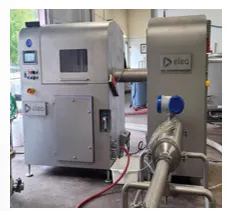
Fig. 1 Elea PEF Pilot Dual (left) with DN-80 accessory (right) and flow meter (front).
°Brix measurements were obtained using a Fisherbrand HDR-P1 Handheld Digital Brix/Refractive Index (RI) Refractometer (Waltham, MA, USA). A small volume of wine must (3–5 drops) was collected prior to centrifugation and directly applied to the prism surface of the refractometer for analysis. For pH and TA measurements, 10.00 mL of grape must was diluted to approximately 100 mL with deionized water and stirred using the built-in stir function of a Hanna Instruments HI932 Automatic Potentiometric Titrator (Woonsocket, RI, USA). The pH was recorded once the value stabilized, and titration was performed automatically using standardized 0.1 N sodium hydroxide (NaOH) to a fixed endpoint of pH 8.2. Total acidity values are reported in grams per liter (g/L) as tartaric acid equivalents [18].
The supernatant was diluted 1:5 (v/v) with 18 MΩ nanopure water prior to analysis. Gallic acid standards ranging from 0 to 500 mg/L were prepared to generate a six-point calibration curve. For each measurement, 1.00 mL of either wine sample or standard was combined with 5.00 mL of 0.2 N Folin–Ciocalteu reagent and allowed to react for 5 min. at room temperature. Then, 4.00 mL of saturated sodium carbonate solution was added, and the mixture was left to develop for 30 min. Absorbance was measured at 740 nm using the UV-Vis microplate reader. All measurements were conducted in triplicate. Total polyphenol content (TPC) of wine samples was calculated using the gallic acid calibration curve and is expressed as milligrams of gallic acid equivalents per liter (mg GAE/L) [19].
A pH 1.0 buffer solution was prepared by dissolving 1.86 g of potassium chloride in approximately 980 mL of 18 MΩ nanopure water, adjusting the pH with hydrochloric acid (HCl), and diluting to a final volume of 1.0 L. A pH 4.5 buffer was prepared by dissolving 54.43 g of sodium acetate, adjusting the pH with HCl, and diluting to 1.0 L. Sample dilutions (1:25) were prepared in 50 mL volumetric flasks using each buffer solution. Absorbance readings were taken at both 520 nm and 700 nm using a Bio Tek EPOCH 2 UV-visible spectrophotometer, carried out in triplicate. Total monomeric anthocyanin content was calculated using the pH differential method according to Equation 1.
Equation 1: TAC (mg/L):
Anthocyanin concentration (mg/L) was calculated using Equation 1, where A = absorbance difference (A520 nm – A700 nm), MW is the molecular weight of malvidin-3-glucoside (493.2 g/mol), DF is the dilution factor, ε is the molar extinction coefficient (28,000 L·mol⁻¹·cm⁻¹), l is the path length in cm, and 10³ is the conversion factor from grams to milligrams [20].
Statistical analysis was performed using GraphPad Prism (version X; GraphPad Software, San Diego, CA). All analyses were conducted in triplicate. Multiple unpaired t-tests were used to evaluate statistical differences between control and PEF-treated samples for each day. For multiple PEF treatments, each was compared independently to the control using the “Multiple t-tests (one per row)” function in Prism. The Holm–Šídák method was applied to correct for multiple comparisons. A significance level of α = 0.05 was used for all tests.
Due to limited replication (n = 3 per treatment) and repeated measurements collected over time from the same fermentation batches, inferential statistical testing was not applied. Data are presented descriptively to illustrate temporal trends and treatment-related patterns. Different statistical comparisons would require greater replication suitable for factorial or mixed-effects analysis.
Results and discussion
Previous trials with different grape varieties indicated the importance of mass consistency for pumping, so the Sangiovese grapes were crushed into a must prior to pumping; however, during preliminary PEF setup, inconsistent flow through the DN80 accessory proved challenging. Rate surges and volume variability with the must running through the system resulted in intermittent shutdowns. To resolve this, the system was adjusted from drawing must from a bin through a low-grade pump, which resulted in pulsation, to using a more powerful Scharfenberger PEV 280 peristaltic gravity fed pump that allowed for consistent flow. Additionally, an Elea flow meter was installed (i.e., the accessory in front of the DN-80 with the circular blue caps, Figure 1), and the specific energy applied to the system was reduced. With the stronger pump and a method of measuring flow, reliable flow rates and consistent must treatment were achieved at the three conditions listed in Table 2.
To evaluate the effectiveness of the PEF treatments at this scale with continuous flow setup, samples were taken each day for the first 7 days of fermentation. Per Cinder Wine’s production protocols, yeast was added on day 2 and inoculation occurred on day 3. The daily samples were analyzed in triplicate for °Brix, pH and TA to assess effect of PEF treatment on this winery’s markers of fermentation.
°Brix is measured by refractive index, where each degree Brix represents one gram of sugar for every 100 grams of solutions. In the context of winemaking, °Brix correlates to the soluble solids in solution, glucose, and fructose, which can be used as a predictor of the alcohol content achievable for a wine. By measuring °Brix in the grape must, winemakers can follow the depletion of sugar during fermentation and accurately assess the point at which sugar levels signal adequate fermentation [18]. At this time, the fermented must is racked and filtered. Although all treatment groups converged to similar °Brix values by day 7, the medium PEF treatment (PEF 2) exhibited a transient lag in sugar depletion during the early stages of fermentation. Several factors could contribute to this observation, including differences in must homogeneity, the distribution of suspended solids within the fermentation vessel, or temporary biological responses of the yeast to PEF-treated must. Because the experiment was conducted using a single commercial-scale fermentation batch for each treatment, it is not possible to determine whether this early divergence reflects a true treatment effect or normal process variability. Nevertheless, the convergence of all treatment groups by day 7 suggests that any influence of PEF on sugar depletion was transient under the conditions evaluated (Figure 2).
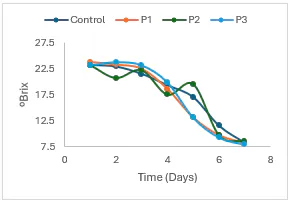
Fig. 2 ºBrix for the first seven days following the crush for Sangiovese must.
Measurements of pH over the first seven days following the crush are shown in Figure 3. The pH trend over the first seven days of fermentation followed an expected rate decline as the activity of yeast produces acids. A pronounced drop in pH for the non-PEF control corresponded with the addition of yeast on day 2 and inoculation on day 3. Interestingly, the PEF treated samples seemed to temper this sharp drop. By day 7, pH values are similar across all treatment groups.
The observed decrease in pH during fermentation cannot be attributed solely to the production of weak organic acids by yeast metabolism. In wine systems, pH evolution reflects the combined influence of several processes, including potassium bitartrate precipitation, changes in buffering capacity, CO₂ dissolution, and shifts in ionic equilibrium. These mechanisms act concurrently throughout fermentation and may outweigh the direct contribution of newly formed organic acids [19].
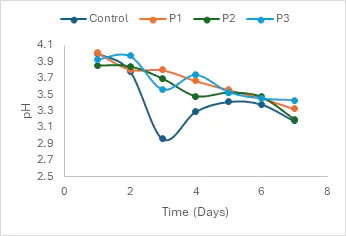
Fig. 3 Daily pH measurements following the crush for Sangiovese must
The total acidity (TA) was measured by titration, and the first seven days of results are shown in Figure 4. The spike in TA for the control sample at day 3 corresponds with the observed drop in pH during the same period (see Figure 3). Overall, the TA trend is consistent with the measured changes in pH and a significant PEF effect is not observed.
No significant differences were observed between treatments in the evolution of °Brix, pH, or total acidity during fermentation. While these parameters are commonly used in winemaking practice to track fermentation progress, they do not constitute a direct assessment of fermentation kinetics. It is therefore possible that any transient effects of PEF treatment occurred early in fermentation and were not captured by the sampling frequency or the standard parameters monitored in this study. Additionally, fermentation metrics such as °Brix, pH, and total acidity, while industrially-relevant, may not be sensitive to subtle changes in membrane integrity or metabolic pathways. Future studies incorporating microbial counts, viability assays, or more detailed kinetic analyses may be necessary to fully elucidate the conditions under which PEF treatment influences fermentation behavior.
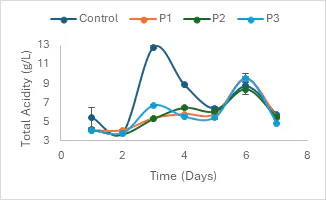
Fig. 4 Total Acidity (TA) across first seven days following the crush for Sangiovese must.
To further investigate the effects of PEF treatment on polyphenolic composition, we analyzed both Total Polyphenol Content (TPC) and Total Anthocyanin Content (TAC). Polyphenols impact the structural, balance, and sensory properties of the finished product whereas anthocyanins are a group of polyphenols that contribute to the color of wine. Understanding how PEF treatment impacts the extraction of these compounds may help winemakers optimize their process to produce wines with desired characterizes.
TPC was determined using the Folin-Ciocalteu method, a widely used colorimetric assay for total phenolics [20]. Values were expressed as Gallic Acid Equivalents (GAE), based on an external calibration curve (R² = 0.99832). This allowed for direct comparison between control and PEF-treated samples to assess how PEF influenced overall polyphenol levels in the 7 days following treatment. Figure 5 shows the difference between the three PEF treatment conditions for TPC.
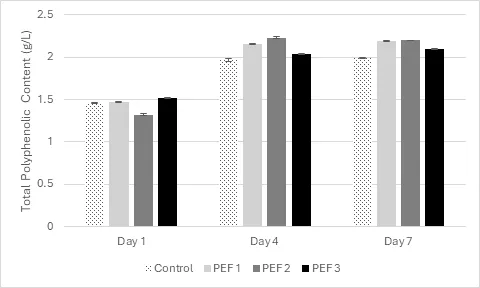
Fig. 5 Total Polyphenolic Content (g/L) across first seven days following PEF treatment for Sangiovese must. Values are reported as mean ± SD of analytical triplicate measurements.
The data show that all three PEF treatment levels increase TPC values in Sangiovese grape must with the greatest variations from control occurring between days 3-6. Figure 5 shows how the level of PEF treatment impacted the peak TPC level and the day on which that peak was reached. PEF-1 reached the highest overall TPC value of 2652.38 mg/L on day 5 whereas PEF 2 and PEF 3 reached peak values of 2376.19 mg/L and 2607.14 mg/L on days 3 and 6, respectively. All three PEF treatments exhibited higher peak TPC values than the control, with maximum increases ranging from approximately 30–33%. Although these differences diminished by day 7, elevated TPC values were still observed for the PEF-treated samples.
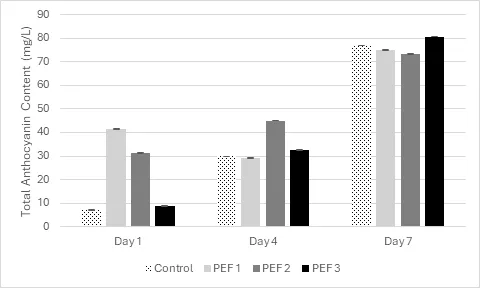
TAC in Sangiovese must was recorded over the first seven days after treatment using the pH differentiation method [14]. This method takes advantage of the structural transformation that anthocyanin pigments undergo at different pH levels. By measuring the absorbance difference at a wavelength of 520 nm, between the two pH conditions, and correcting for background at 700 nm, the concentration of anthocyanins can be calculated using the Beer-Lambert law. This method is reliable, simple, and allows for accurate quantification of total monomeric anthocyanins, typically reported as malvidin-3-glucoside equivalents [21]. Results indicate that PEF treatment enhances anthocyanin extraction compared to the untreated control. Notably, on Day 1, PEF 1 showed a sharp increase to 41.54 mg/L, a 478% increase from the control value of 7.19 mg/L. PEF 2 also showed a marked early increase to 31.41 mg/L, over 336% higher than the control. These early enhancements suggest that PEF may promote rapid pigment release into the must. By day 7, values had stabilized with less than 5% difference among all samples, indicating stabilization across treatments.
While both TPC and TAC values increased over the first seven days following the crush, there was significant fluctuation in the day-to-day measurements. These variations are likely the result of both chemical and procedural factors. With respect to chemical variability, phenolics and anthocyanins can oxidize, bind with tannins and proteins, precipitate, adsorb onto yeast cells, or be enzymatically degraded. These factors are offset by the continual diffusion of phenolics and anthocyanins from the grape solids. The observed day-to-day variability in TPC and TAC measurements likely reflects both the dynamic chemistry of fermentation and the practical challenges associated with sampling heterogeneous grape must at commercial scale. During active fermentation, phenolic compounds and anthocyanins undergo continual extraction, oxidation, adsorption onto yeast cell walls, polymerization, and precipitation, while ongoing diffusion from grape skins and seeds simultaneously alters their concentrations. In addition to these biological and chemical processes, variability may have been introduced by the heterogeneous distribution of grape solids within the fermentation vessel, unavoidable differences in sampling location and depth, and slight variations in sampling time relative to fermentation activity. Because these trials were conducted under commercial winery conditions, complete homogenization of the fermenting must prior to sampling was not always feasible without disrupting normal production practices.
These results indicate that PEF treatment is achievable under continuous flow conditions at scale. While each treatment level does seem to have an effect, based on the parameters measured, the most significant impact seems to occur within the first 4 days of fermentation and normalize by day 7. Further study around grape variety and winery specific parameters are essential to determine the effectiveness of this technology as a method for enhancing polyphenol extraction.
Although the enhanced extraction of polyphenols and anthocyanins observed during the first week of fermentation diminished over time, accelerated release of these compounds may still provide practical advantages during commercial winemaking. Earlier extraction could permit greater flexibility in managing maceration time or pressing schedules by achieving target phenolic concentrations sooner, potentially reducing tank occupancy or improving process efficiency. Whether these early differences translate into improved color stability, phenolic retention, or sensory characteristics of the finished wine remains unknown because the present study concluded with must evaluation. Accordingly, the observations reported here should be viewed as evidence of accelerated extraction rather than confirmation of improved final wine quality.
Conclusions
This study constitutes the first evaluation of continuous flow PEF technology applied to the commercial production of Sangiovese wine in the United States, and, taken together with the four preceding trials at partnering Idaho wineries, represents the most extensive assessment to date of what commercial-scale PEF integration requires in practice. Two findings emerge.
First, reliable continuous-flow PEF treatment of grape must at commercial volumes (~1,200 L/hr) is achievable but requires deliberate attention to pumping infrastructure. Consistent flow through the DN-80 accessory required replacing an underpowered pump with a peristaltic gravity-fed system and adding inline flow measurement. Without these adjustments, must homogeneity and flow variability directly compromised treatment consistency. Commercial winemakers evaluating PEF adoption should treat pumping infrastructure and must consistency as first-order engineering considerations, particularly for skin-contact red varieties like Sangiovese where whole or partially macerated berries complicate flow.
Second, PEF treatment provides an effect on grape must prior to winemaking. Chemical analyses of TPC and TAC show that PEF-treated samples release polyphenolic and anthocyanin compounds earlier and at higher levels than untreated must, with the largest divergence from control occurring within the first four to six days and narrowing by day seven. This effect was not detectable in the winery's standard fermentation markers, as °Brix, pH, and TA showed no meaningful difference between treatment groups by day seven, indicating that PEF's influence, under the conditions tested, is concentrated in early polyphenolic extraction rather than in fermentation kinetics as commonly measured.
Collectively, these findings demonstrate that continuous-flow PEF can be successfully integrated into commercial winery operations while maintaining the enhanced extraction behavior previously observed under smaller-scale conditions. Importantly, the technology achieved this effect without disrupting standard fermentation performance, suggesting compatibility with existing commercial winemaking workflows. Although the enhanced extraction observed during early fermentation was temporary, accelerating phenolic release may provide operational advantages by increasing process flexibility, enabling more precise management of maceration, and potentially reducing extraction times. These characteristics position continuous-flow PEF as a promising process-intensification technology for modern wineries seeking to improve processing efficiency while preserving compatibility with established production practices.
From an industrial perspective, this work reduces several key uncertainties associated with commercial PEF adoption by identifying practical engineering requirements for reliable operation under production-scale conditions. The successful implementation of continuous-flow PEF at commercial throughput demonstrates that the technology is technically scalable and can be incorporated into existing winery infrastructure with appropriate flow-management modifications. As commercial PEF systems become more widely available, these findings provide valuable guidance for equipment manufacturers, winery engineers, and producers considering investment in electrotechnology-based processing.
Nevertheless, commercial adoption will ultimately depend on demonstrating that the accelerated extraction observed during fermentation translates into measurable improvements in finished wine quality or production economics. Because this study evaluated PEF primarily through must-stage chemistry, future research should determine whether earlier polyphenol and anthocyanin release improves color stability, phenolic retention during aging, sensory attributes, production efficiency, or overall economic return. In addition, because field strength and specific energy were not independently varied in the present study, further optimization of treatment parameters is needed to develop variety-specific processing protocols. Validation across additional grape cultivars, vintages, and commercial wineries will further establish the robustness, reproducibility, and economic value of continuous-flow PEF, which demonstrates the technical scalability of continuous-flow PEF under commercial winery conditions.
Future investigations should extend monitoring beyond primary fermentation to determine whether accelerated extraction during the early stages of vinification influences the composition and quality of the finished wine. A broader experimental design would track the same treatment groups through pressing, malolactic fermentation, barrel or tank aging, and bottling while periodically quantifying total phenolics, anthocyanins, color density, tannin composition, and sensory attributes. Combining these measurements with production metrics such as maceration duration, pressing efficiency, and tank residence time would provide a comprehensive assessment of the commercial value of continuous-flow PEF technology.
Acknowledgements:
We would like to acknowledge the support of Food Physics, Boise, ID for access to pulsed electric field equipment, transportation, onsite setup, and logistical support that made this project possible. Cinder Wines deserves recognition for their participation, collaboration, material contribution, and expertise associated with winemaking.
Abbreviations:
The following abbreviations are used in this manuscript:
PEF Pulsed Electric Field
TA Total Acidity
TPC Total Polyphenol Content
TAC Total Anthocyanin Content
L/min Liters per minute
kJ/kg Kilojoules per kilogram
kV/cm Kilovolts per centimeter
MW Molecular weight
GAC Gallic Acid Equivalents