I. INTRODUCTION
Marble is the product of the recrystallization of limestone or dolomite by contact metamorphism or regional metamorphism. The mineral composition is mainly calcite, which foams when it encounters hydrochloric acid Marble is also a large category of natural architectural decorative stones. Generally, marble cutting machines refer to metamorphic or unclassified carbonate rocks with decorative functions, which can be made into architectural stones or crafts.
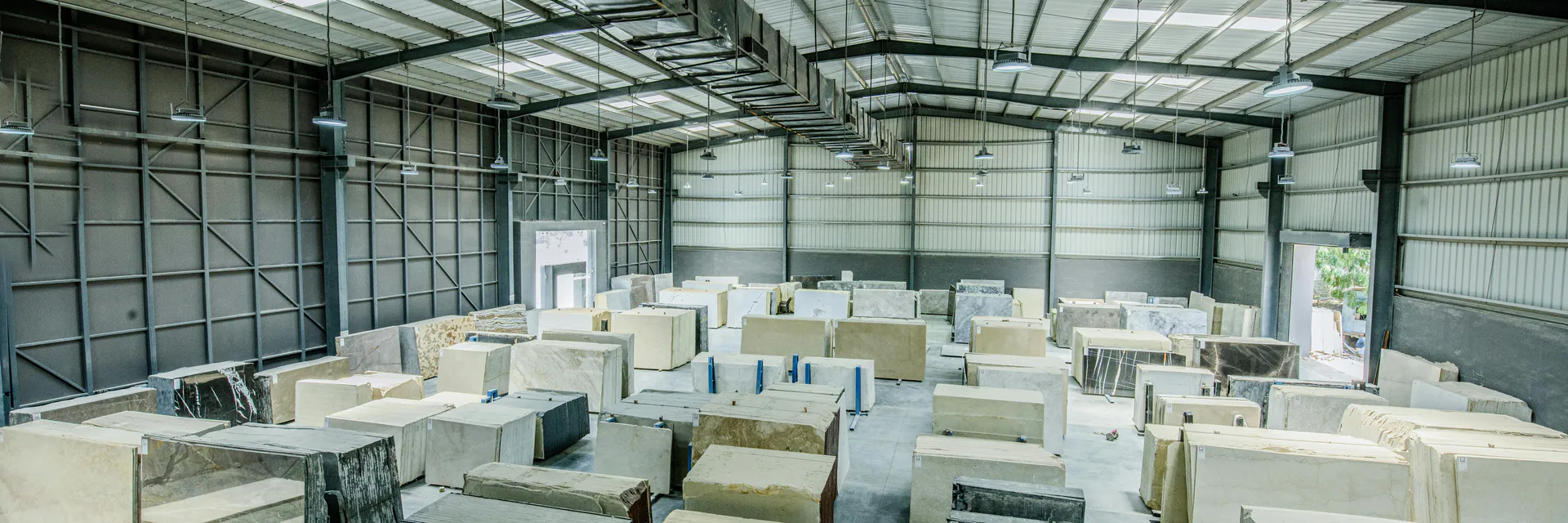
Marble is commonly used as Building Stone, Countertops and sinks, Floor tiles, Terrazzo - marble chips mixed with concrete to form floors, Tomb Stones construction and dimensional stone in Afghanistan especially in eastern part of Afghanistan Nangrhar province such as Khewa Calcite Marble. There are different varieties of marble in different provinces such as Kunarr, Bamyan, Kabul, Balkh, Kandahar, Herat, Paktia, Parwan, Helmand, Nangrhar, Faryab, Wardak, and Samangan. which are extracting and supplying to different countries and are prized for
II. GEOLOGY OF STUDY AREA
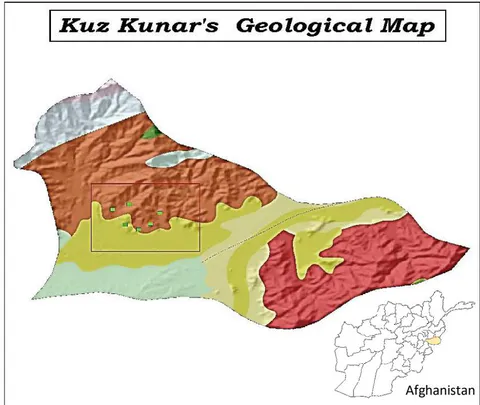
It is necessary to consider the geological structure of this Tectonic Zone. The Tectonic zone of Jalalabad is located in eastern part of Afghanistan and the southeastern part of Nuristan zone. For the first time this was separated by Prof. Slavin and Syed Hasham Mirzad in year (1969) and Kalchanof and Sayed and added this zone in to Tectonic map and relate this zone with Alf Core.
a) Jalalabad Tectonic Zone (Spinghar Block)
The Jalalabad zone is a part of the depth of the past Cambrian which trace minerals lies above the ridges of the past Cambrian that form base of Geosyncline. These ridges appear in the mountain to the surface of the earth. In the eastern part of the Zone and in the southeastern part of Jalalabad city, on the left bank of the Kabul river and on the banks of Kunarr river the upper Paleozoic and lower Mesozoic sediment are visible on the ground and the central part of the Jalalabad zone is covered by Neogene Deposit.
In addition, In Jalalabad zone there are sediments ranging from Archean Proterozoic to Quaternary system. The Archean Proterozoic structure are composed of various Gneisses, Quartzite, Amphibolite and crystalline slabs including the white
Marble layers of Marble. The thickness of the Marble layers inside the Gneisses is from 300 to 600 meters.
Furthermore, The Paleozoic group formation are relatively extensive in the Jalalabad zone including the Ordovician, Silurian, Devonian and Carboniferous formation. These formations are composed of Quartzite. Sediments, Sandstone and Limestone the relationship between which is not clear in some places. The sediments of the Neogene system are present on the top of the sediment discontincordantly which include Conglomerate Sandstone and Clays. The sediment of Quaternary has filled the shore of the river and their thickness is also high.
Relatively in this zone Magmatic rocks are present in large amount that are visible on the ground of the left of Kunarr river and in the Spinghar mountain range which differ from one another in age and in composition and are divided in to two different complex.
- Granite, Gabbro, Amphibolite Complex
- Granite, Granodiorites Complex
And also Albite that are spread in different part of the Zone. And these Magmatic rocks are interesting according to Mines presence.
Tectonically Jalalabad zone is associated with the Cambrian structure with three structural formation layers separated by
O-T, A-R-PR and N-Q
- The Kunarr Tectonic Zone
- The Spinghar Tectonic Zone
- The Jalalabad Basin (Waizy, July 2020)
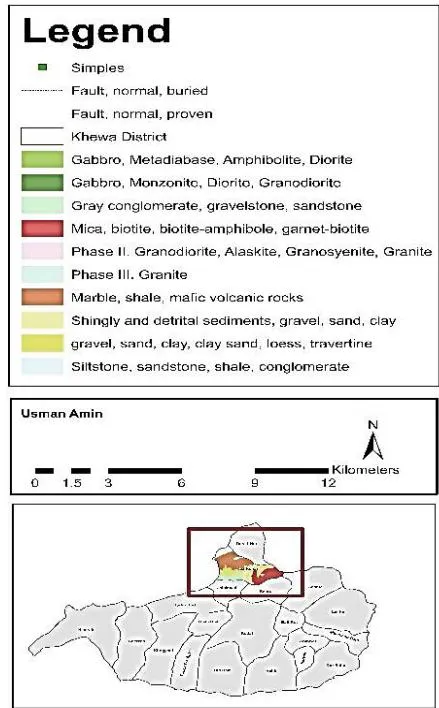
b) Methodologies
To gather the prehistoric studies of the marble for this research, a desk study was undertaken prior to a field trip and laboratory analysis. Books, other articles, and Wikipedia information were all reviewed. For laboratory analyses, samples from the Marble mine were obtained. After that, the area was thoroughly researched by collecting GPS coordinate, readings of the location and taking samples from the precise mine. The conclusions were drawn by interpreting the fieldwork data and analytical data. A sufficient amount of rock sample was crushed and ground up for geochemical tests, and thin slices were made for microscopic examination in the Ministry of Mine and Petroleum. GIS mapping of the mining area makes up the third section of the stud.
i. Petrographic description of the Samples
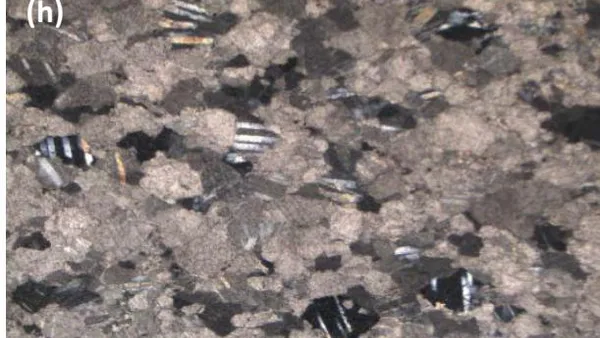
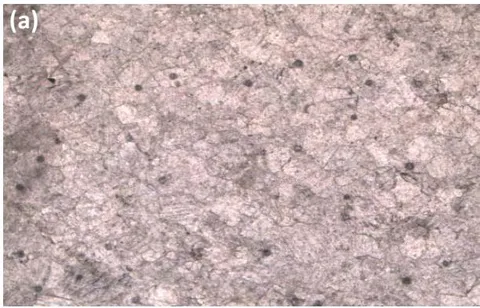
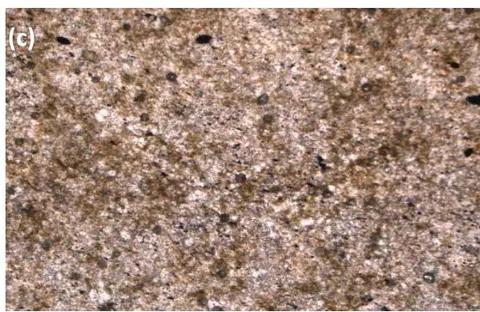
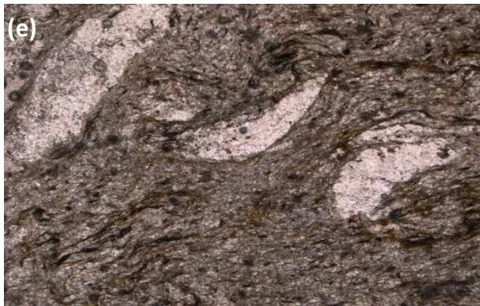
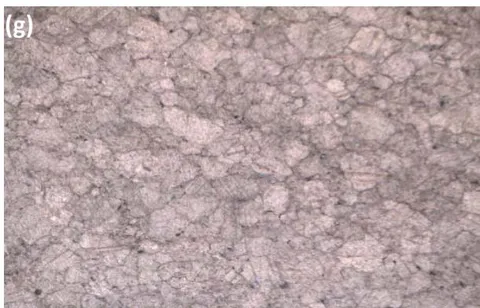
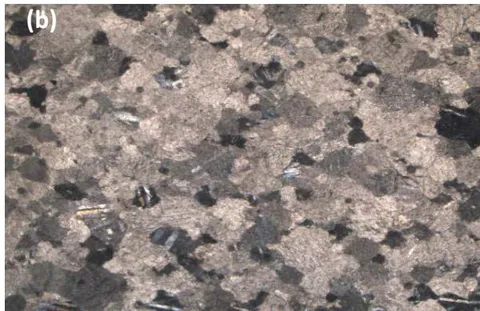
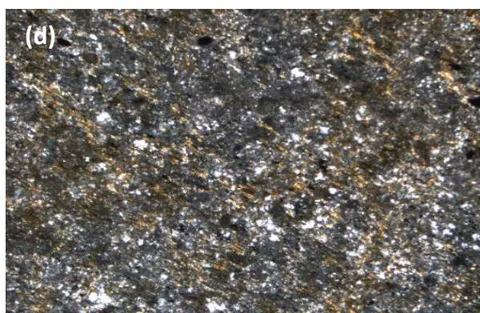
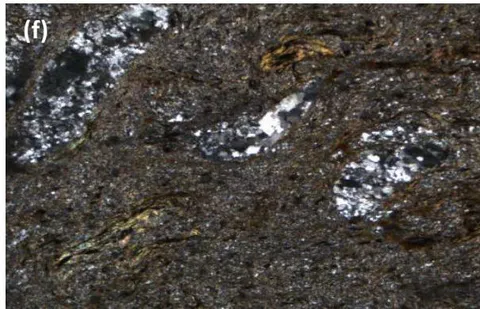
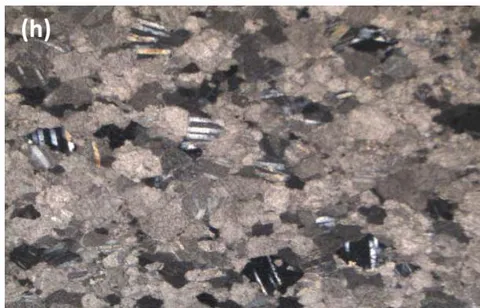
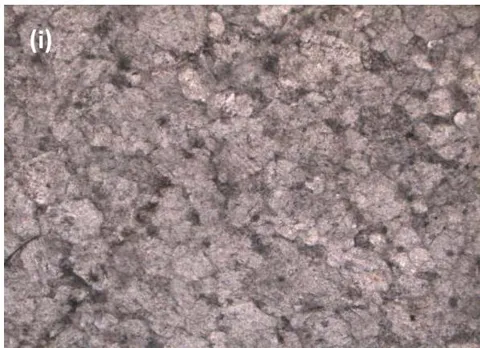
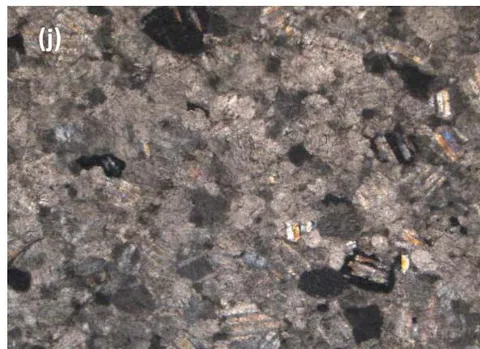
This specimen contains Calcite, Dolomite and Plagioclase with mosaic structure and metamorphic origin. The dye of the specimen is whitish yellow. (figure a,b) a. This specimen contains Muscovite, Biotite Garnet and Quartz with schistose structure and metamorphic origin. the dye of the specimen is yellowish. (Figure c,d) b. This specimen contains Muscovite, Biotite and Quartz and other opaque minerals with schistose structure and metamorphic origin. the dye of the specimen is white. (Figure e,f)
c. This specimen contains Dolomite and Calcite with mosaic structure and metamorphic origin. the dye of the specimen is pale yellow. (Figure g,h) d. This specimen contains Muscovite, Biotite and Quartz with mosaic structure and metamorphic origin. the dye of the specimen is yellowish. (Figure g,h)
ii. Geochemical result
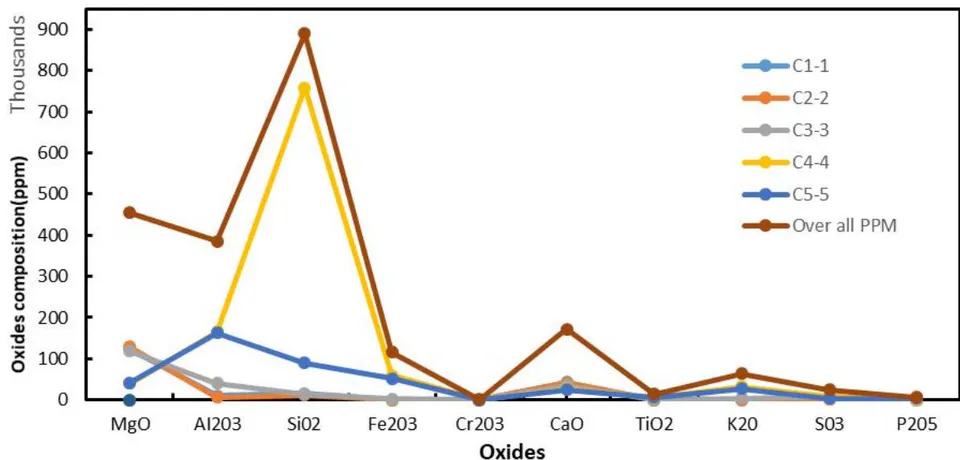
The purpose of geochemical analysis is to identify the constituents of Khewa Calcite Marble's chemical makeup. The XRF analysis results in the determination of 28 elements. The elements with the highest percentages are silicon, calcium, magnesium, aluminum, iron, potassium, and sulfur, as well as heavy metals like Fe, Cr, and Ti.
| Oxides | C1-1 | C2-2 | C3-3 | C4-4 | C5-5 | Over all PPM |
| MgO | 124169.281 | 129315.227 | 118810.945 | 40573.023 | 41836.957 | 454705.433 |
| Al2O3 | 9800.377 | 6439.447 | 40826.293 | 164967.313 | 163134.250 | 385167.680 |
| SiO2 | 15316.664 | 11887.871 | 13935.673 | 758900.938 | 90381.525 | 890422.671 |
| Fe2O3 | 385.620 | 409.443 | 2564.272 | 60375.730 | 52280.992 | 116016.057 |
| Cr2O3 | 101.027 | 45.940 | 166.520 | 254.507 | 172.603 | 740.597 |
| CaO | 43167.294 | 41281.397 | 35411.609 | 27817.947 | 24670.201 | 172348.448 |
| TiO2 | 0.000 | 0.000 | 762.605 | 6597.444 | 6378.446 | 13738.495 |
| K2O | 521.857 | 382.843 | 3485.495 | 32264.771 | 27118.930 | 63773.896 |
| SO3 | 2145.588 | 2357.083 | 7541.333 | 8220.825 | 4054.696 | 24319.525 |
| P2O5 | 0.000 | 0.000 | 0.000 | 2745.132 | 3472.462 | 6217.594 |
Elements C1-1 C2-2 C3-3 C4-4 C5-5 Total PPM Percentage Mg 74,800.77 77,900.74 71,572.86 24,441.58 25,202.99 273,918.94 27.3919 Al 5,185.39 3,407.12 21,601.21 87,284.29 86,314.42 203,792.42 20.3792 Si 7,157.32 5,555.08 65,119.97 354,626.59 422,343.56 854,802.53 85.4803 P 0 0 0 1,198.75 1,516.36 2,715.11 0.2715 S 858.235 942.833 3,016.53 3,288.33 1,621.88 9,727.81 0.9728 Cl 415.01 588.91 1,069.03 672.319 520.006 3,265.27 0.3265 K 431.287 316.399 2,880.57 26,665.10 22,412.34 52,705.70 5.2706 Ca 308,337.81 294,867.13 252,940.08 19,869.96 17,621.57 893,636.55 89.3637 Ti 0 0 456.65 3,950.57 3,819.43 8,226.64 0.8227 V 0 43.459 43.082 174.223 143.756 404.52 0.0405 Cr 69.196 0 114.055 174.32 118.221 475.79 0.0476 Mn 125.522 126.257 116.608 395.57 319.658 1,083.62 0.1084 Fe 269.664 286.324 1,793.20 42,220.79 36,560.14 81,130.12 8.1130 Co 0 22.028 0 118.604 0 140.63 0.0141 Ni 60.83 81.547 71.589 94.3 84.973 393.24 0.0393 Cu 0 0 0 49.76 32.263 82.02 0.0082 Zn 15.56 18.8 28.204 91.311 88.923 242.80 0.0243 As 0 0 0 14.258 0 14.26 0.0014 Rb 0 0 0 55.933 52.166 108.10 0.0108 Sr 68.047 50.702 30.84 88.796 100.362 338.75 0.0339 Zr 0 0 0 201.972 178.984 380.96 0.0381 Nb 0 0 0 11.829 11.198 23.03 0.0023 U 0 7.479 0 0 0 7.48 0.0007 Ba 261.008 285.623 218.639 859.116 707.169 2,331.56 0.2332 Au 0 0 0 0 0 0.00 0.0000 Pb 0 9.021 0 23.296 28.11 60.43 0.0060 Bi 0 0 0 15.338 7.112 22.45 0.0022 Th 0 0 0 17.563 7.482 25.05 0.0025 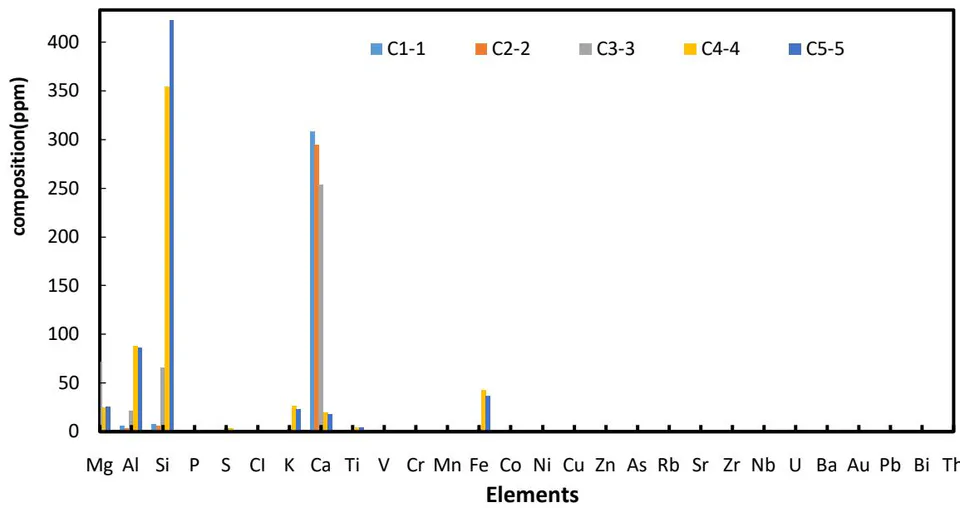
III. MECHANICAL RESULT
The Calcite Marble mechanical studies consist of the following tests which is completely described with their result done in Nangrhar, Alfalah University Engineering Laboratory.
a) Compressive Strength
Uniaxial unconfined compressive strength is the amount of load a stone can tolerate before it breaks in to pieces, such measure of stone's ability to support load bearing structures (Prof., 2022)
The table below shows that the uniaxial compressive strength of Calcite Marble ranges from 53 to 81 Mpa under dry to wet circumstances. Based on strength recognition and description, this rating is assigned in the category of powerful rock break with hammer in hand.
| Crushed Aggregate of Khewa Calcite Marble | Material Source | Khewa Calcite Marble | |||
| Cube NO | Dimension (mm2) | Area (mm2) | Load (KN) | Compressive Strength Kg/Cm2 | |
| Length | Diameter | ||||
| 1 | 71 | 72 | 5112 | 472.5 | 92.4 |
| 2 | 72 | 72 | 5184 | 278.2 | 53.7 |
| 3 | 72.1 | 72.8 | 5248.88 | 522.8 | 99.6 |
| Mpa | Kg/Cm2 | Psi | |||
| 81.9 | 835.1 | 11878.11 | |||
IV. UNIT WEIGHT TEST OF CALCITE MARBLE
The unit weight test is used to measure the quality of aggregate through determining the placed materials volumes the hallows within the distant range. When the scale of the aggregate reaches to 25(5inch) mm so the mold is used to measure unit weigh. (Prof., 2022).
| Unit Weight of course Aggregate | ||||
| Test No | 1 | 2 | 3 | |
| Mass of material + Container | g | 4742 | 4728 | 4740 |
| Mass of Empty Measure | g | 3052 | 3052 | 3052 |
| Mass of Material | g | 1690 | 1676 | 1688 |
| Volume of Measure | Cm2 | 928.9 | 928.9 | 928.9 |
| Bulk Density | g/cm2 | 1.819 | 1.804 | 1.817 |
| Average Unit Weight g/cm2 | 1.814 | |||
V. RESULT AND DISCUSSION
The results of petrographic investigations performed on constructed simples under a microscope showed that the calcite mineral was present in excess in the majority of the sampled simples, with the Khewa marble having a calcite mineral proportion of exactly . The marble is known as "calcite marble" because to its enormous calcite content. Calcite marble's light white tint is caused by the presence of iron and iron oxide. In addition, the proportions of iron and iron oxides are and , respectively. Additionally, the inclusion of silicon, titanium, nickel, aluminum, and nickel oxides added to the calcite marble's incredible hardness. Calcite, Dolomite, Plagioclase, Muscovite, Biotite, and Quartz are only a few of the minerals that make up calcite marble that were discovered in petrographic research. The XRF examination identified the elements and oxides that were present in the calcite marble's composition. Si, Ca, Mg, Al, Fe, K, S, Ti, Cl, Ba, P, Mn, Cr, Ni, Sr, V, Zr, Zn, Co, Rb, Cu, Pb, Th, Nb, Bi, As, U, and Au are the twenty-eight elements determined by the XRF with their precise percentages. The composition of calcite marble contains significant amounts of silicon, calcium, magnesium, and aluminum. Along with the calcite marble, eight oxides are also present in addition to the elements. CaO, SiO2, Al2O3, Fe2O3, SO3, K2O, TiO2, P2O5, and Cr2O3 are the mineral oxides. High percentages of MgO, CaO, SiO2, and Al2O3 are present. The presence of uranium with a concentration in the sample is noteworthy in the XRF examination. Studies in mechanics and physics produced thorough findings. Calcite marble has a compressive strength of 81.9 MPa in dry form and 53.4 MPa in humid form. Physical and mechanical testing showed that Khewa calcite marble is suitable for use in drainage walls and basements but should not be used for interior decorating, kitchen countertops, or other locations where there is a lot of moisture or humidity.
VI. CONCLUSION
- Although there was a small amount of uranium in the calcite marble, the XRF analysis elaborated its
existence. Carbonate rocks are the primary cause of the existence of uranium.
Out of the other twenty-eight elements, silicon, calcium, magnesium, aluminum, and iron were the elements most often detected.
The calcite marble now has four gradations of hardness due to the outstanding interplay of silicon, iron, and aluminum.
Ten oxides have been collected, but among them, magnesium oxide, calcium oxide, silicon oxide, aluminum oxide, and iron oxide have the highest percentages.
Due to the presence of iron and extended physical and chemical weathering, the marble has developed a pale white tint. However, apart from this, the color has also lightened significantly within.
Calcite, dolomite, and plagioclase are the three important minerals, whereas quartz and mica (muscovite and biotite) are the accessory minerals, according to the microscopic study. Additionally, mica schist makes up the adjacent rocks.
Due to its low water absorption, marble may be used in basements, drainage walls, and particularly in damp areas.
According to Los Angeles studies and compressive strength, the marble can withstand a large amount of pressure and weight.
VII. SUGGESTIONS
Extensive research showed that the tested samples all had a trace level of uranium after the XFR assessment. Because it causes cancer and other harmful diseases, the province authorities must inform the permanent people who live close to the calcite marble mountainous area of the Khewa.
Given that we are aware of the superior quality of Khewa marble, we highly advise the present administration to launch a thorough prospecting study to learn more about the locations of calcite marble.
To accurately analyze the calcite marble and their internal fractures. Deep drilling is required to figure out whether or not a prospectsy region may produce blocks of calcite marble that are desirable.
The Khewa district to Kunarr Khaas districts are where calcite marble first began to thrive. We sincerely want the government to produce accurate and comprehensive satellite, regional, topographical, and geological imagery. This will help the government, businesses, and other researchers.
In the field of research, calcite marble from the locations that produce good blocks should be utilized for interior decorating of homes, sculptures, and tabletops, while calcite marble from the locations that produce poor blocks should be used for roads, basements, and other sites.
The marble extraction process started some years ago. Additionally, tons of marble have been rotting as a result of extractors using outdated equipment. The government must maintain a close eye on upgraded machinery and must force extractors to employ these tools for efficient extraction.
To encourage vendors who have been functioning with marble, travertine, and granite to increase their investments in the marble industry, the government should prolong contracts for up to 10 years.
The government need to refrain from extracting the calcite marble from areas where nickel, cobalt, and iron concentrations are high.
In order to come down with the loss of marble, the business owner needs pay professionals to do the extraction.
The government ought to waive or lower the tax in order to encourage marble dealers.
The value of marble domestically in the nation will be impacted by illegal marble exports to foreign nations. The Afghan government must stop illicit exports.
In order to generate high-quality cement, the government should persuade traders to participate in the cement business.
ACKNOWLEDGEMENTS
We'd like to start by thanking Eng. IrfanUllah " Irfan". He assisted and led us in the engineering faculty lab's physical and mechanical testing with the basic things we had gathered along with publishing our essay in a prestigious international publication. Furthermore, we are appreciative to the University of Kabul Polytechnic Geology & Mine Faculty for their cooperation with our microscopic petrological investigations of Slides. Finally, we'd like to thank our study supervisor teaching assistant Khairuddin "Rasikh," for his assistance with technical issues.