Shea butter is a significant source of fat in the diet of many rural dwellers in Nigeria. It is produced from the seeds of Vitellaria paradoxa L tree. Its suitability as dietary fat or use in cosmetic industry is greatly influenced by its physicochemical properties and fatty acid composition. This study aimed at determining the physicochemical properties and fatty acid profile of shea butter found in Nigeria as a possible source of industrial raw material for the production of stearic acid. The physicochemical analyses results showed that the saponification value of the shea butter samples ranged from 174.55 mg/KOH/g -200.97 mg/KOH, while iodine value is from 42.22 g/100g -98.46 g/100g, the unsaponifiable matter ranged from 2.32 -10.55 % and peroxide value ranged from 8.14 meq/kg -19.66 meq/kg.
## I. INTRODUCTION
Plant oil and fats are natural sources of stearic acids. These include cotton seed oil, coconut oil, palm kernel, castor beans oil, rapeseed, soybeans, sunflower and shea butter among others. Plant fats are said to contain low quantity of stearic acid when compared with the animal fats. They are however, increasingly becoming important in nutrition and commerce because they are sources of dietary energy, antioxidants, biofuels and raw material for industrial application (Luis Spitz, 1990 and Okullo et al, 2010).
The shea trees seeds (Vitellaria paradoxa) are source of vegetable oil/fat used in many food products. Both the kernels and butter are used in health products and confectionery industries (Luis Spitz, 1990) Vitellaria paradoxa seed oil has been reported to contain stearic acid with percentage composition ranging between 26 - 48% depending on the growing conditions, climate, as well as the botanical variant. In some parts of Africa, shea butter is more liquid than others due to lower levels of stearic. It is reported that the extent of viscosity and texture of Shea butter depends on the level of stearic acid content. This is because stearic acid is considered essential for the structure of the butter (Realize Ed, 2016).
Nigeria is said to be one of the major producers of Shea in Africa (Collin Nnabuife, 2018). Shea trees are grown in significant quantities in three states of the federation, namely: Niger, Kwara and Kebbi states (Daniel Essiet, 2018). However, this potential has not been fully harnessed (Anonymous). This study therefore seeks to analyze some of the variants of Shea butter in some states in Nigeria with the intent of providing information on the plant's potential as a possible source of raw material for producing plant-based stearic acid for industrial applications.
## II. MATERIAL AND METHODS
### a) Sample Collection and Preparation
Samples of Shea butter were purchased from local markets in four different states (Kwara, Kebbi, Nassarawa, and Niger states) and FCT, Abuja, Nigeria. They were stored in polytene containers for further analyses in the laboratory.
### b) Physicochemical Characterization
Physicochemical analyses such as acid values, saponification values, unsaponifiable matter, peroxide values, iodine values, acidity, moisture content, texture, melting point, and colour was carried out using standard procedures (Akpan et al., 2006).
### c) Determination of Fatty Acid Composition
Fatty acid percentage composition of the samples was determined using a Gas Chromatography-Mass Spectrometer (GC-MS) machine (Shimadzu GC-17A). The samples were esterified using the method described by Abayomi and Co (Abayomi et al., 2012) before GC-MS analysis. Identification of fatty acid composition was carried out by comparing the Mass Spectrometry data of individual analyte with those of standards in machine library.
## III. RESULT AND DISCUSSION
### a) Physicochemical Parameters
The results of the physicochemical analyses of the Shea butter samples are presented in Table 1. The moisture content of the Shea butter samples analyzed in this study fell within the range $0.16 - 11.30\%$. By using the Grading method of West African regional standard using major oil parameters, the Shea butter samples were divided into Grade 1 (Shea butter that can be used by cosmetics and pharmaceutical industries), Grade 2 (Shea butter that are for making confectionaries, Chocolates and margarine) and Grade3 (Shea butter used for production of soap). According to this grading method, the moisture content of Grade 1 range from $0\%$ to $0.05\%$, Grade 2 ranged from $0.05\%$ to $0.2\%$ and Grade 3 ranged from $0.2\%$ to $2\%$ (Munir et al., 2012). Most of the samples fell within Grade 2 and 3 based on their moisture content, except for KE2 (Kebbi sample with grey coloration) with moisture content $11.30\%$ and NA (Nasarawa sample) with moisture content $3.96\%$ (Table 1).
Table 1: Physico-chemical parameters of Shea butter oil from selected state in Nigeria
<table><tr><td>Samples/ Parameters</td><td>AB1</td><td>AB2</td><td>KE1</td><td>KE2</td><td>KW1</td><td>KW2</td><td>NI1</td><td>NI2</td><td>NA</td></tr><tr><td>Acid value mg KOH/g)</td><td>2.24</td><td>23.56</td><td>17.95</td><td>6.73</td><td>28.17</td><td>17.39</td><td>11.97</td><td>1.65</td><td>2.73</td></tr><tr><td>Iodine value (g/100g)</td><td>70.94</td><td>70.94</td><td>92.27</td><td>91.76</td><td>60.09</td><td>98.46</td><td>49.95</td><td>42.22</td><td>56.03</td></tr><tr><td>Peroxide value (meq/Kg)</td><td>18.48</td><td>38.29</td><td>15.05</td><td>19.55</td><td>39.87</td><td>8.14</td><td>15.74</td><td>18.04</td><td>14.53</td></tr><tr><td>SV (mgKOH)</td><td>174.55</td><td>200.92</td><td>179.20</td><td>189.94</td><td>164.29</td><td>189.20</td><td>180.96</td><td>168.30</td><td>200.97</td></tr><tr><td>FFA (%)</td><td>1.12</td><td>1.78</td><td>8.98</td><td>3.37</td><td>14.09</td><td>8.69</td><td>0.98</td><td>0.82</td><td>1.58</td></tr><tr><td>Moisture (%)</td><td>0.97</td><td>2.00</td><td>0.27</td><td>11.30</td><td>0.59</td><td>0.23</td><td>0.42</td><td>0.16</td><td>3.96</td></tr><tr><td>USM (%)</td><td>3.45</td><td>10.50</td><td>3.24</td><td>8.10</td><td>10.55</td><td>3.25</td><td>8.72</td><td>5.01</td><td>2.32</td></tr><tr><td>Color</td><td>Grey</td><td>White</td><td>Grey</td><td>White</td><td>Cream</td><td>Cream</td><td>Cream</td><td>Cream</td><td>Grey</td></tr><tr><td>Texture</td><td>S</td><td>S</td><td>S</td><td>S</td><td>S</td><td>S</td><td>S</td><td>S</td><td>S</td></tr></table>
Table 2: Saturated fatty acid composition of Shea butter from selected states in Nigeria
<table><tr><td>Name</td><td>Myristic acid</td><td>Palmitic acid</td><td>Isopalmitic Acid</td><td>Stearic acid</td><td>Arachidic acid</td><td>Behenic acid</td><td>Lignoceric acid</td></tr><tr><td>IUPA C</td><td>Tetradecanoic acid (%)</td><td>Hexadecanoic acid (%)</td><td>14-methyl Pentadecanoic (%)</td><td>Octadecanoic acid (%)</td><td>Icosanoic acid (%)</td><td>Docosanoic acid (%)</td><td>Tetracosanoic acid (%)</td></tr><tr><td>Ratio</td><td>C14:0</td><td>C16:0</td><td>C16:0</td><td>C18:0</td><td>C20:0</td><td>C22:0</td><td>C24:0</td></tr><tr><td>AB1</td><td>0.71</td><td>24.50</td><td></td><td>19.20</td><td>1.60</td><td>1.19</td><td>-</td></tr><tr><td>AB2</td><td>-</td><td>-</td><td>0.89</td><td>45.01</td><td>0.99</td><td>-</td><td>0.1</td></tr><tr><td>KE1</td><td>0.71</td><td>3.27</td><td></td><td>13.20</td><td>3.89</td><td>4.72</td><td>-</td></tr><tr><td>KE2</td><td>0.15</td><td>3.02</td><td></td><td>0.09</td><td>0.12</td><td>0.23</td><td>-</td></tr><tr><td>KW1</td><td>-</td><td>7.13</td><td>15.76</td><td>11.36</td><td>1.06</td><td>0.32</td><td>0.13</td></tr><tr><td>KW2</td><td>-</td><td>17.13</td><td>15.76</td><td>12.11</td><td>-</td><td>0.32</td><td>-</td></tr><tr><td>NI1</td><td>0.10</td><td>8.72</td><td>7.38</td><td>29.18</td><td>1.78</td><td>0.19</td><td>0.14</td></tr><tr><td>NI2</td><td>0.14</td><td>0.02</td><td>2.10</td><td>11.86</td><td>0.35</td><td>0.07</td><td>0.14</td></tr><tr><td>NA</td><td>0.37</td><td>12.63</td><td>19.14</td><td>13.08</td><td>0.85</td><td>2.84</td><td>0.37</td></tr></table>
Table 3: Unsaturated fatty acid composition of Shea butter from selected states in Nigeria
<table><tr><td>Name</td><td>Oleic acid</td><td>Vaccenic acid</td><td>Linoleic acid</td><td>Gamma-Linolenic acid</td><td>Gondoic acid</td><td>Palmitoleic acid</td></tr><tr><td>IUPAC</td><td>(Z)-octadec-9-enoic acid (%)</td><td>(E)-octadec-11-enoic acid (%)</td><td>(9Z,12Z)-octadeca-9,12-dienoic acid (%)</td><td>(Z,Z,Z)-6,9,12-Octadecatrienoic acid</td><td>11-Eicosenoic acid (%)</td><td>7-Hexadecenoic acid</td></tr><tr><td>Ratio</td><td>C18:9</td><td>C18:11</td><td>C18:2,6</td><td>C18:5,8,11</td><td>C20:11</td><td>C16:7</td></tr><tr><td>AB1</td><td>8.61</td><td>-</td><td>1.48</td><td>1.27</td><td>1.12</td><td>0.06</td></tr><tr><td>AB2</td><td>31.49</td><td>--</td><td>1.18</td><td>-</td><td>0.28</td><td>-</td></tr><tr><td>KE1</td><td>9.95</td><td>-</td><td>-</td><td>4.82</td><td>12.69</td><td>0.45</td></tr><tr><td>KE2</td><td>0.35</td><td>-</td><td>0.10</td><td>0.17</td><td>0.03</td><td>0.05</td></tr><tr><td>KW1</td><td>-</td><td>-</td><td>-</td><td>-</td><td>-</td><td>-</td></tr><tr><td>KW2</td><td>12.34</td><td>19.23</td><td>1.65</td><td>-</td><td>1.06</td><td>-</td></tr><tr><td>NI1</td><td>64.93</td><td></td><td>2.38</td><td>-</td><td>0.08</td><td>-</td></tr><tr><td>NI2</td><td>29.38</td><td>1.39</td><td>8.02</td><td>-</td><td>1.78</td><td>-</td></tr><tr><td>NA</td><td>16.88</td><td>6.02</td><td>0.16</td><td>-</td><td>0.85</td><td>-</td></tr></table>
Generally, high moisture content in oil is known to support the growth of microbes and speed up rate of rancidity (Alirezalu et al., 2011). Enweremdau and Alamu, 2010, reported that Shea butter with $0.036\%$ moisture gave good yield during trans-esterification leading to production of biodiesel. It is observed that for industrial applications, some of the Shea butter sold in Nigerian markets may require further drying.
The acid values of Shea butter analyzed in this study ranged from 2.73 mgKOH to 23.56 mgKOH as presented in Table1. Acid value is a measure of the amount of potassium hydroxide (mgKOH) required to neutralize the free acids in I gram of oil/fat.
Free fatty acids (FFA) values of the samples analyzed in this study ranged from $1.12\%$ to $3.24\%$. These values were within the range for Grade 2 (1.0% to $3\%$ ) and Grade 3 (3.0% to $8.0\%$ ) according to West African regional standard (Munir et al., 2012). FFA are produced by the hydrolysis of oil and fats as a result of time, temperature and moisture content (Mahesar et al., 2014). They are less stable than neutral oil and thus more prone to oxidation and turning rancid. Factors that affect FFA content of an oil are duration of storage, packaging material, processing, moisture content, and general climatic conditions (Mahesar et al., 2014; Okullo et al., 2010).
The peroxide values of the samples are in the range $15.0\mathrm{meq / Kg}$ to $50.0\mathrm{meq / Kg}$ as indicated on Table 1. Literature report that peroxide is the initial product of unsaturated fat oxidation and that fresh oil has peroxide values below $10\mathrm{meq / kg}$ while rancid oil gives peroxide values between 20 and $40\mathrm{meq / kg}$ (Kirk & Sawyer, 1991). According to West African regional classification based on peroxide value (Munir et al., 2012), the samples in the study may be considered to fall within the Grade 3 range with $15.0\mathrm{meq / Kg}$ to $50.0\mathrm{meq / Kg}$.
The saponification values ranged from 164.29 mgKOH/g to 200.97 mgKOH/g, these values fall within the required range of 180 - 360 mgKOH/g reported (Munir et al., 2012). Saponification value has been described as a measure of the alkali-reactive groups in fats and oil (Shahidi & Ambigaipalan, 2005). It is defined as the number of milligrams of potassium hydroxide (mgKOH) required to neutralize the fatty acids in I gram of fat or oil. High saponification value indicates the suitability of the oil for soap production.
The iodine value of studied samples ranged from 42.22 g/100g to 92.27 g/100g. These values are within the acceptable range (58 - 72 g/100g) of iodine value for shea butter at international level (Samuel et al., 2017) except for KE1 (92.27 g/100g), KE1 (91.76 g/100g) and KW2 (98.46 g/100g). Iodine value is a measure of degree of unsaturation in an oil sample. It can be defined as the number of grams of iodine that can be added to 100 g of oil. It is reported that shea nut fat with low iodine value is indicates its richness in saturated fatty acids and this ensures stability against oxidation; thus making it a good source of oil (Samuel et al., 2017). The obtained values are lower than 100 thus, shea butter is a non-drying oil (Warra, 2015). The results from the physicochemical analysis indicate that the samples may be categorized into Grade 2 and 3 oil.
The fatty acid prolife was analyzed by GCMS. Seven saturated fatty acids and six unsaturated fatty acids identified in Shea butter as reported by (Di Vincenzo et al., 2005) were found in considerable quantities in the analyzed samples. Their identity and percentage composition are presented in Table 2 for saturated and Table 3 for the unsaturated fatty acid. The dominant saturated fatty acid includes myristic acid C14, palmitic acid C16, stearic acid C18, Arachidic acid C20, Behenic acid C22 and lignoceric acid C24.
Stearic acid content was found to be higher than other saturated fatty acids in the samples. Its percentage composition ranged from $0.09\%$ (KE2: Kebbi white) to $45.01\%$ (AB2: Abuja white) as presented in Table 2. Figure 1 showed that percentage composition of stearic acid was the highest in AB2 (Abuja white); KE1 (Kebbi grey) and NI1 (Niger grey sample). The value obtained for AB2 is close to the value reported for Shea butter $(49.7\%)$ obtained from
Jalingo, Taraba state, Nigeria (Ugese et al., 2010). Therefore, AB2, KE1, and NI1 samples could be a good source for stearic acid production. Furthermore, all other samples contain a considerable amount of stearic acid, as depicted in figure 1.
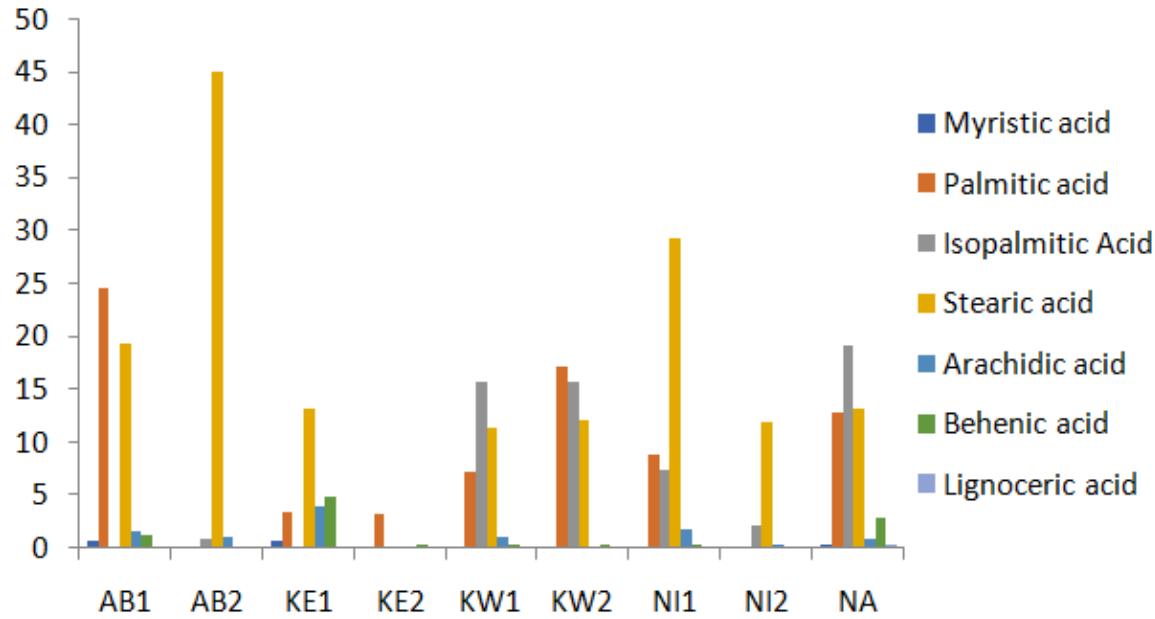 Figure 1: Saturated fatty acid percentage composition of shear butter samples
The predominant unsaturated fatty acids in the samples are the C18 family such as oleic acid C18: 9, vaccenic acid (18:11), linoleic acid C18:2 and six, and the gamma-linolenic acid C18: 5,8,11 as shown in Figure 2. As presented in Table 3, NI1: Niger grey has the highest percentage composition of $64.93\%$, followed by AB2: Abuja white at $31.49\%$. This unsaturated C18 family can be converted to a saturated C18 family and hence they could be a good source for the production of stearic acid. Also found in significant quantities in the analyzed samples is Gondoic acid C20:11 and palmitoleic acid C16:7 (Table 3). The result obtained in this study is consistent with the report that the predominant fatty acid in Shea butter are stearic and oleic acid and it determines the consistency of the butter and their end uses (Maranz et al., 2004).
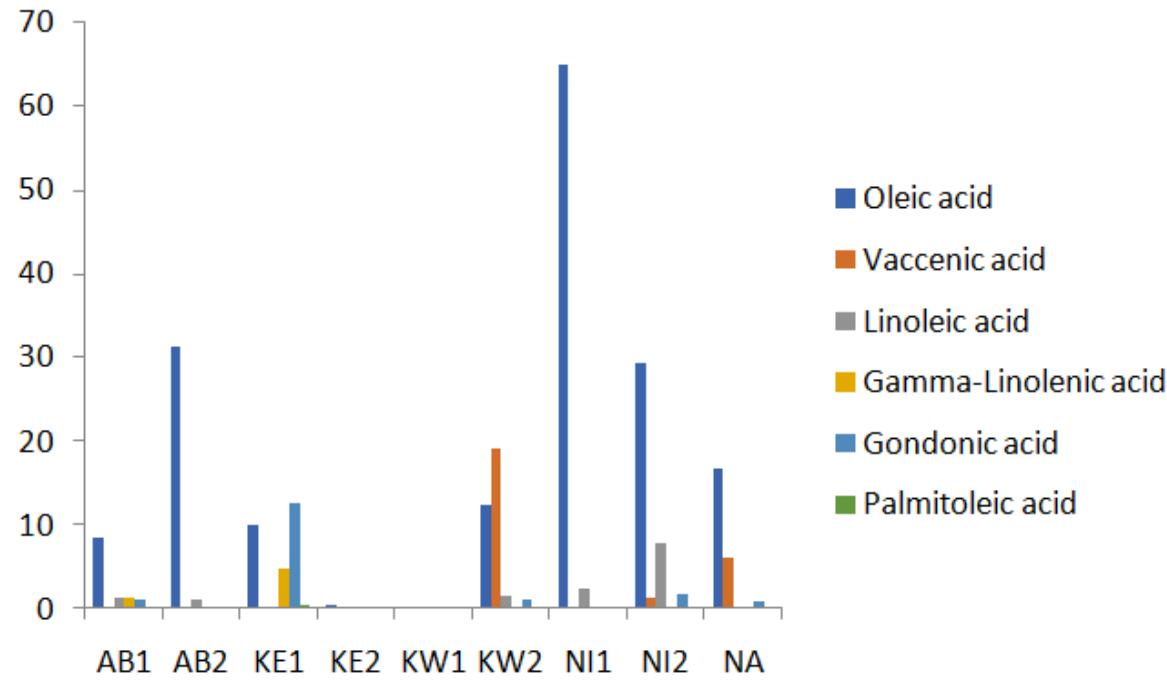 Figure 2: Unsaturated fatty acid percentage composition of shear butter samples
## IV. CONCLUSION
The physicochemical analyses of Shea butter samples indicate that the samples may be graded into the Grade 2 and 3 oils according to West African regional standards and they are rich in unsaturated fatty acids. The fatty acid profile of the samples indicated that sample from Abuja, mainly the Abuja grey sample is very rich in stearic acid composition, and samples from Niger, especially the Niger white sample is rich in oleic acid. The result indicates that the Shea butter samples from the four states, and FCT, Nigeria, could be good sources for producing Stearic acid.
Generating HTML Viewer...
References
19 Cites in Article
T Abayomi,N Nneka,A Akinbo,I Joseph (2012). Chemical composition and antimicrobial activity of the seed oil of Entandrophragma angolense (Welw) C. DC.
U Akpan,A Jimoh,A Mohammed (2006). Extraction, characterization and modification of castor seed oil.
A Alirezalu,N Farhadi,H Shirzad,S Hazarti (2011). The effect of climatic factors on the production and quality of castor oil.
(null). Stearic Acid.
Collin Nnabuife (2018). Upgrading of Indigenous Technology for Processing Shea Butter (Vittelaria paradoxa) In Nigeria..
Daniel Essiet (2018). Empowering shea butter farmers.
Di Vincenzo,D Maranz,S Serraiocco,A Vito,R Wiesman,Z Bianchi,G (2005). Regional variation in shea butter lipid and triterpene composition in four African countries.
C Enweremadu,O Alamu (2010). Physicochemical Properties Of Shea Butter Synthesized Biodiesel.
S Kirk,R Sawyer (1991). Pearson's composition and analysis of foods.
Luis Spitz,G Mazzoni (1990). Advances in saponification, drying and soap‐finishing technology.
S Mahesar,S Sherazi,Abdul Khaskheli,Aftab Kandhro,Siraj Uddin (2014). Analytical approaches for the assessment of free fatty acids in oils and fats.
Steven Maranz,Zeev Wiesman,Johan Bisgaard,Giorgio Bianchi (2004). Germplasm resources of Vitellaria paradoxa based on variations in fat composition across the species distribution range.
S Munir,M Umaru,Z Abdulrahman,I Mohammed,A Aliy,Y Salihu (2012). Extraction and characterization of nigeria shea butter oil.
Jbl Okullo,F Omujal,J Agea,P Vuzi,A Namutebi,Jba Okello,S Nyanzi (2010). Physico-Chemical characteristics of shea butter(<i>Vitellaria paradoxa</i> C.F. Gaertn.) oil from the Shea district of Uganda.
Realizebeauty Ed (2016). The chemistry of shea butter.
C Samuel,K.-K Barine,E.-E Joy (2017). Physicochemical properties and fatty acid profile of shea butter and fluted pumpkin seed oil, a suitable blend in bakery fat production.
F Shahidi,P Ambigaipalan (2005). Quality assurance of fats and oils.
Felix Ugese,Paul Baiyeri,Benjamin Mbah (2010). FATTY ACID PROFILE OF SHEA TREE (<i>VITELLARIA PARADOXA</i>C. F. GAERTN.) SEEDS FROM THE SAVANNA OF NIGERIA.
A Warra (2015). GC-MS Analysis of various extracts of shea nut fat.
No ethics committee approval was required for this article type.
Data Availability
Not applicable for this article.
How to Cite This Article
Stella A. Emmanuel. 2026. \u201cPhysicochemical and Fatty Acid Evalution of Some Shea Butter Samples in Nigeria\u201d. Global Journal of Science Frontier Research - B: Chemistry GJSFR-B Volume 22 (GJSFR Volume 22 Issue B1).
Explore published articles in an immersive Augmented Reality environment. Our platform converts research papers into interactive 3D books, allowing readers to view and interact with content using AR and VR compatible devices.
Your published article is automatically converted into a realistic 3D book. Flip through pages and read research papers in a more engaging and interactive format.
Subject: Global Journal of Science Frontier Research - B: Chemistry
Authors:
Stella A. Emmanuel, Idoko Owoicho, Onyinye Aguzue, Olajide O.Olutayo, Adedirin Oluwaseye, Sallau A.A, Ibrahim I. D, Buga M. L, A. I Okereke, Ozonyia G. N, Alabi F. M (PhD/Dr. count: 0)
Our website is actively being updated, and changes may occur frequently. Please clear your browser cache if needed. For feedback or error reporting, please email [email protected]
Thank you for connecting with us. We will respond to you shortly.