## I. INTRODUCTION
During the Aristotelian era, from ancient Greece's perspective on citizenship, citizens were understood as those individuals that could rule and be ruled (women, people experiencing poverty, enslaved people, and immigrants were omitted). In its essence, the excluded people in the Aristotelian era are those referred to today as disadvantaged or marginalized communities (Elmi, 2016). In modern times, most democratic nations, in the light of their constitutions, all citizens are observed to be equal in all aspects of civil and political rights, irrespective of their ethnicity, race, gender, or social status. Because inclusion of marginalized groups in political participation continues to gather substantial debate, mainly, much attention has been drawn to the culture of most African societies that often hinders participation of the vulnerable and minority groups (Raleigh, 2010). However, minority groups have suffered from marginalization, exclusion from economic, social and political life, cultural acts of violence, and abuse of their right to education and sustainable development. Minority members have also been subjected to hate speech, which has served to perpetuate stereotypes, prejudice, othering, and enemy imaging (Hoehne, 2015). Somalia's minority clans suffered painful exclusions and servitude. The Somali "minority" clans are the Bantu, a large group of southern riverine farmers whose lineage is believed to pre-date that of the majority clans; the Benadiri, a mercantile class of Arabian descent; and a group of several trade-practicing clans known collectively (and pejoratively) as the migdin. (David & Seaboyer, 2011). In the context of this paper, marginalized groups are referred to those whose political rights are deprived of because they are stamped unable to run for political office or prevented from using any of the resources available to reach those positions out. These groups include women, internally displaced persons, people with special needs (disabilities), and members of monitory clans.
From the independence in 1960 to the 1990s, the Republic of Somalia has barely functioned as a single country, even though its first president was democratically elected in 1960 shortly after gaining independence (UNCT, 2007). However, the Supreme Revolutionary Council led by Ziyad Barre tragically shut off Somalia's light and it suspended the 1960 constitution on October 21, 1969, issuing the First Charter of the Revolution, and a year later, the Second Charter, declaring that 'as from October 21, 1970, the Somali Democratic Republic will adopt Scientific Socialism' (Omar, 1992). This ungainly policy caused the Republic of Somalia to enter a period of statelessness after the overthrow of a tyrannical regime in 1991 following eight years of chaos and civil war in the country's south and central regions. Nevertheless, the inhabitants of Somalia's northeastern areas, currently known as Puntland, came to conference that formed a semi-autonomous state in 1998, with a 3-year charter envisioning living in peace and stability, transitioning from the clan-based model to a democratic system, and having the goal of becoming future federal member state of Somalia.
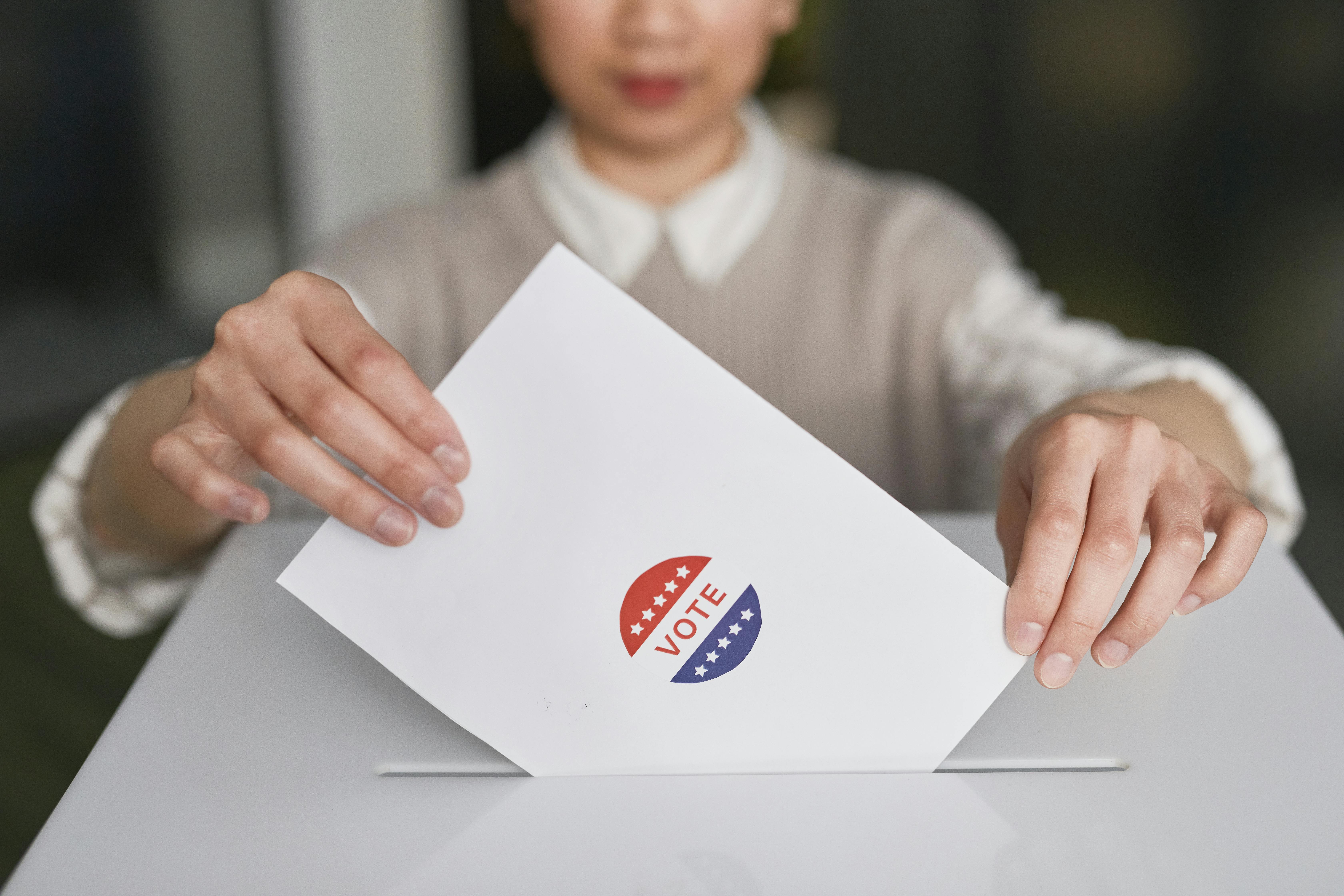
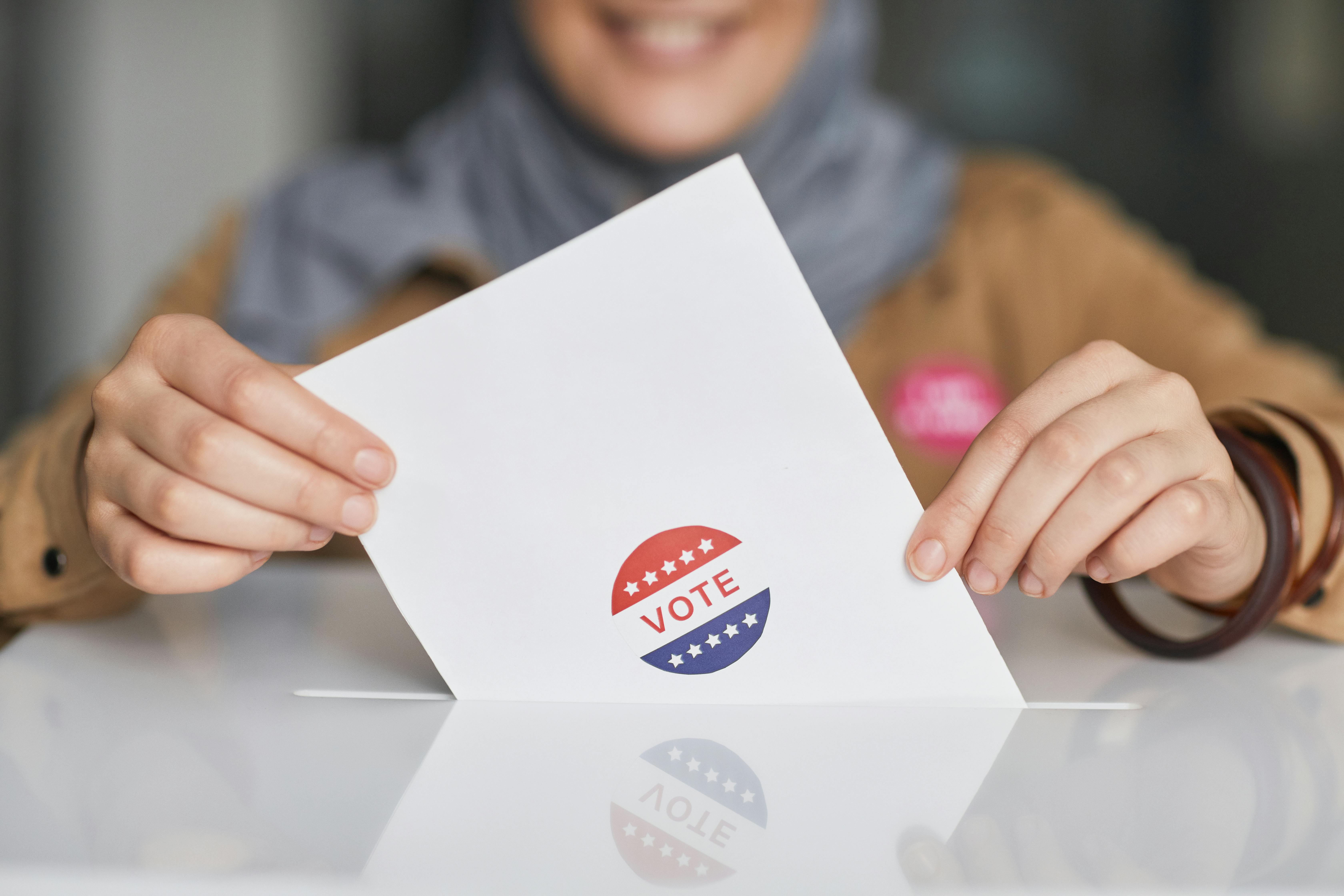
After several years of state-building, Puntland held its first democratic elections for local councilors in 36 districts, marking the first such election since 1969. In general, 215,035 voters participated, electing 780 councillors (Puntland Ministry of Interior, 2023). Throughout this election, it is assumed that the political rights of the minority and marginalized groups are observed in principle. Because democracy in Africa is one of the most unpredictable political phenomena owing to the multiplicity of factors that support or hinder electoral outcomes (Ndirangu, 2022). One of the widely cited causes of undemocratic electoral outcomes in Africa is the low inclusion of marginalized groups, such as people living with disabilities, minority communities/ethnicities/races, age, gender, among others (Nchofoung et al., 2021). The purpose of this paper is to explore how marginalized groups were included in politics during Puntland's first-ever democratic elections. With consideration the degree of the political participation, the obstacles, and the attitudes of the marginalized groups regarding their presence in politics. This study mainly relied on a mixed methods approach, using both quantitative analysis of voter demographics and election data and critical informants interviews with policymakers, elected local councillors, political associations representatives, electoral officials/polling staff officials, civil society organizations, academicians, members of marginalized groups including minorities clans, women and youth groups, and persons with disabilities who involved in electoral processes, using semi-structured questionnaire through multistage random sampling techniques. Besides, the researchers showed observations during political rallies, meetings, and community gatherings of the political associations to further understand the levels of inclusion and participation of marginalized groups since there was a preliminary pilot election at three districts, namely Ufyen, Qardho and Eyl, followed by thirty districts in one time and other three districts, namely Garoowe, Dangoroyo and Godobjiraan in Nugaal region of which postponed due to tensions Garowe, where opposition boycotts and voter disputes led to some delays and challenges. (SIDRA, 2023; Somali Digest, 2024).
## II. THEORETICAL BACKGROUND
### a) Social Inclusion Theory
"Participation" is clearly a term that can encompass a broad range of phenomena: it may be distinguished according to the sphere in which it is expressed (political, social, economic, etc.) or according to the forms it can take (Kalakaan, M., 2023). Those who put their faith in expanded participation assume that the desire to participate is widely distributed; thus, opening government doors will lead to a more representative democracy. (Morris, 2001). Citizenship is defined as equal and full membership of a community (Marshall, 1950). Likewise, in Islamic perspective, the Holy Book attests to the equality of the people as Allah says, "O mankind, verily, we have created you from a single pair of a male and a female and have made you into nations and tribes, that you may know each other. Verily the most honored of you in the sight of Almighty Allah is the most righteous" (Quran, 49:13). Likewise, Hadith from At-Tirmidhi (narrated by Prophet Muhammad, PBUH) said in authentic Hadith, "O mankind, your Lord is One and your father is One. You all descended from Adam, and Adam was created from the earth. He is most honored among you in the sight of God who is most upright. No Arab is superior to a non-Arab, no coloured person to a white person, or a white person to a coloured person except by Taqwa (piety)[^1].
### b) Legal Frameworks in Favour of Gender Equality
Limbani & Darius (2015) noted that Universal Declaration on Human Rights (1948) states "rights and freedoms will not be limited by a person's gender and all human beings are born free and equal in dignity and rights. According to United Nations, (1966), International Convention on the Elimination of all Forms of Racial Discrimination, of article (2.2) underlines that "States parties shall, when the circumstances so warrant, take, in the social, economic, cultural and other fields, special and concrete measures to ensure the adequate development and protection of certain racial groups or individuals belonging to them, for the purpose of guaranteeing them the full and equal enjoyment of human rights and fundamental freedoms. These measures shall in no case entail as a consequence the maintenance of unequal or separate rights for different racial groups after the objectives for which they were taken have been met." International Covenant on Civil and Political Rights (1966), of article (27) also states that "in those States in which ethnic, religious or linguistic minorities exist, persons belonging to such minorities shall not be denied the right, in community with the other members of their group, to enjoy their own culture, to profess and practice their religion, or to use their language". African Charter on Human and Peoples' Rights (1981), of article (8) stipulates that "Freedom of conscience, the profession and free practice of religion shall be guaranteed. No one may, subject to law and order, be submitted to measures re stricting the exercise of these freedoms". Similarly, the Somali Constitution 1960 (as cited by Elmi) states that in terms of rights, at least in theory, Somalia's first constitution enacted in 1960, guaranteed civil, political and social/economic rights to all citizens. In part two of the constitution; citizens have the right to vote, the right to public office, the right to reside and travel freely in any part of the state's territory, and the right to political association. In addition, citizens have the "freedom of religion, thought and to own property" (Kalakaan, M., 2023). Subsequently, the Puntland Constitution (2009), of article 12 stipulates 'the equality of the people', emphasizing that "No person shall be discriminated against based on colour, religion, birth, nationality, property, belief, political affiliation, language, or race and that the constitution shall safeguard the rights of minorities. Likewise, Article 5 of the Puntland Voter Registration Act underlines that any Somali citizen who has lived in Puntland for not less than ten years has the right to vote and be elected.
## III. DISCUSSIONS
### a) Political Participation
The traditional electoral system in Puntland is much like the Federal Republic of Somalia, known as the 4.5 formula (Four main clans and a clan perceived as minority), in which the titled elders could play a pivotal role in the selection of representatives for their respective clans and endorse candidates for political position at local, state and federal levels, with rotation model within the clan and sub-clans balancing the clan powers and dynamics. The elders, in most of time, prefer the male candidates to women. In challenging such social inequality, for the past two decades, the civil society, intellectuals and activists, local and international, have been pushing a political agenda lobbying and advocating for marginalized groups in Somalia—including women, minorities, and internally displaced persons (IDPs)—to create a space for political representation within the framework of country's 4.5 formula. The clan-based electoral model has had a clear impact on inclusivity within Puntland's political landscape. Out of 66 state parliamentary seats in Puntland, only one is held by a woman, and no seats are allocated to internally displaced persons (IDPs) or minority clans except one seat, which is in a rotation with other clans resides the Nugal region who hail from whom considered themselves as majority.
This pattern of exclusion extends to the federal level, where 48 of the two houses: senators and house of people, only 9 are women (6 house of the people and 3 senators), and a low number of seats are held by minorities hailing from the State of Puntland. In good faith, it was expected to expand participation for these groups, especially with the introduction of democratic elections (Raleigh, 2010). Hence, the State of Puntland, which is a part and parcel of the Federal Republic of Somalia in de jure but in fact administers its own internal affairs, initiated a democratization process that successfully held local elections for the first time in over 60 years in 2021. The local elections are seen as a means to promote broader political participation, inclusivity, and moving away from the deeply entrenched clan-based power-sharing model. Democratic election at local governments is seen as the sole mechanism to achieve full-fledged political participation and inclusivity irrespective of political affiliation, clan connections and gender or age distinctions. Participatory democracy is the ultimate panacea to reducing minority inequalities since the opening inclusive spaces integrates every segment of the society (Lupien, 2018). Despite these steps toward inclusion, debates persist regarding the cultural and structural barriers that hinder political participation for marginalized groups, a challenge shared across many African societies (Raleigh, 2010). The social network theory proposes that marginalized groups can be integrated into political participation by unlocking their group-level interactions through education and other essential inputs, such as individual resources and group membership (McClurg, 2003). Accordingly, women's political participation is a central element of democracy, and the nature and degree of women's participation is a vital indicator of the quality of democracy (Massimo, T., 2013). Yet, women in post-conflict societies such as Somalia must be enabled to enter the corridors of power and formal decision-making processes (Shukria, 2013).
Nevertheless, the data found offers snapshot of marginalized groups representation in Puntland's first-ever local council's elected totaling 942, only 162 seats (18%) were occupied by women, while 780 seats (82%) were filled by men, across 36 districts (PEC, 2023). This is an unquestionable proof that there is excellent gender inequality in Puntland's political domain because men still hold the majority of local council seats. On the other hand, gloriously, for the first time, four seats were reserved for the minorities and four other seats for the IDPs. In Puntland, IDPs are referred to as those people hailing from the regions of the south-central of Somalia. In comparison with the Puntland local council's election which was managed by the clan elders, with no representation for IDPs or minorities, Puntland's local election reflects a dramatic shift towards upholding democratic values and principles because the most vulnerable marginalized groups minorities and IDPs were allowed their political rights to exercise. Despite meaningful political participation for the marginalized communities remains limited (UNDP, 2023). Similarly, women, who constitute a half of
Puntland's population—nearly $42.5\%$ of 4 million—are underrepresented because the number of seats in local councilors remains unchanged at $18\%$ (160 seats) across both the traditional elections.
### b) Minority clans in Somalia
The clans like Gaboye, Tumal, and Yibir are ethnically associated with the Samale, which forms a dominant clan in Somalia. However, cultural stigma and traditions have excluded them as outcastes from the Samale clan. They engage in the activities of blacksmithing and shoemaking, as well as being hunters/gatherers. They live mainly in central and northern Somalia (UNCU/UN-OCHA SOMALIA, 2002). ACCORD (as cited in OSAR, 2018) also states that Gabooye of the Tumaal (blacksmiths), Midgan (shoemakers, hunters and gatherers, poison makers, and hairdressers), and the Yibr or Yibro, who are often claimed to be descendants of early Hebrews who settled in the Horn of Africa, live along the coast in Mogadishu and in Bosasso, Borama, and Burco are considered a minority.
Hence, the findings unearthed the absence of role models from marginalized communities. Of $93.1\%$ of respondents (60.5% Agree, 32.6% Strongly Agree) acknowledged that if minority clans were better represented in higher positions within political parties and government institutions, it would likely enhance their chances of securing a fair share of elected local councilor positions. This increased representation at the political leadership level can help ensure that the interests and concerns of minority communities are better addressed, thereby promoting more equitable and inclusive political processes. Research suggests that when marginalized groups hold influential roles, they can advocate for policies that protect their rights and facilitate greater participation in governance (Dufresne, 2017; Young, 2000). Moreover, this may reflect the need for representation and leadership from within marginalized groups in political parties and government institutions, i.e ministries, directors and agencies to inspire greater inclusion and engagement in democratization processes and political podium. Notwithstanding, the legal framework of Puntland includes measures aimed at promoting affirmative action for minority clans, ensuring their representation in private sector through Puntland Labor Law No. 4 of 2011, Article Thirty-One on 'Employment Procedure' that ascertains that every business corporation, agency or industrial establishment to which this code is applicable is required to make sure that at least one of every fifteen employees working for him/it, of whatever level, is a member of the underprivileged groups such as Gabooye or Tumaal in Puntland. Yet, there is no other legal document, even in the 'Law No. 12 of October 1, 2018, regarding the Civil Service Law of Puntland State', in which mentioned a single provision providing the monitoring clans an opportunity to be part of government business. Negating and ostracizing minority groups will delay political and socio-economic development of countries whereas political inclusion promotes state-building, peace, and social cohesion (Ndirangu, 2022).
### c) Accessibility Issues
The study unveiled that financial constrain for campaigns is one of crucial factors that can be attributed to women's underrepresentation in Puntland local elections. $88.4\%$ of the respondents underline that financial constrain is the most significant factor that hinder minority groups and women's efforts to gain political position. Likewise, $95.4\%$ (72.1% Agree, 23.3% Strongly Agree) of the respondents believe that the most notable challenges that could impede the marginalized groups from inclusion include 'limited access to political information'. Because some of the noticeable challenges facing marginalized and indigenous groups in the electoral process include the inability to access electoral centers (Htun & Ossa, 2013).
Various structural and logistical challenges, including insufficient lobbying, a fragmented approach, lack of funding, and limited campaign time, have limited these groups' ability to gain a fair share in the political process (UN Women, 2022).
On the other hand, the researchers found that $86.1\%$ of participants agreed, with $32.6\%$ strongly agreeing, that increasing political participation and access for marginalized groups is crucial for the democratic process. The inclusion of women in political institutions has been facilitated through gender quotas, which fall into three categories: legislative quotas, political party quotas, and reserved seats. However, for these quotas to be effective, they must be embedded in the country's legal framework, including the constitution, the Electoral Law, and the Political Party Law (Affi & Zainab, 2022). The empowerment of marginalized communities to engage politically at local, state, or federal levels must be supported by legal guarantees, such as quotas, which ensure fair representation (UNDP, 2023). Without such guarantees, these communities face various barriers to securing a more equitable political role (Human Rights Watch, 2022). Affirmative action provisions, for instance, aim to ensure that minorities and marginalized groups have representation in governance, while parliament is tasked with enacting legislation to further promote these groups' participation (Affi & Zainab, 2022).
Subsequently, in this study, the findings highlight, in relation to the inclusion of marginalized groups and individuals with limited literacy, that high rates of illiteracy were cited as a disruptive factor, with $79\%$ (48.8% Agree, 30.2% Strongly Agree) of respondents recognizing its role in causing significant challenges. Surprisingly, the study also found that certain candidates and political party leaders have resorted to bribing voters, with the help of poll workers, offering between $5 and$ 15 per vote, particularly targeting unschooled people or marginalized communities in exchange for their support. On the contrary, the findings reveal that the support for writing assistance that was provided to illiterate populations had a positive impact on election success, with $86\%$ (65.1% agree, 20.9% strongly agree) of respondents agreeing to this statement. This suggests that support for illiterate voters may enhance participation and engagement in the electoral process, possibly by reducing barriers to voting and empowering citizens.
### d) Access to Information
Access to political information surfaced as a key barrier during the democratic elections in Puntland, with $95.4\%$ of respondents agreeing that limited information access impedes marginalized groups from participating fully. Security concerns and logistical constraints often limit access to information, particularly in remote areas. Issues such as internet accessibility, conflicts, and opposition boycotts during elections complicate efforts to provide citizens with reliable political information (SIDRA Institute, 2023). Due to limited infrastructure and occasional government restrictions, there are gaps in reaching all citizens, particularly those in rural or underserved areas (Interpeace, 2021). Accordingly, this finding underscores the importance of information dissemination for inclusive political processes, as access to relevant information is essential for informed decision-making and participation as it enables citizens to understand political processes, evaluate candidates, and hold leaders accountable. Civic education campaigns have been essential in educating the public about democratic processes (PDRC, 2024). Political parties in Puntland have taken on the role of disseminating political information to their supporters. However, political bias and varying access to resources among parties can create disparities in how effectively information reaches the populace (WardheerNews, 2024).
### e) Political Parties' Involvement in Elections
After the initial pilot elections in the districts of Eyl, Ufeyn, and Gardho, political parties exerted influence over the electoral commission, urging it to amend the electoral law. They sought to find a legal justification for requiring candidates to fund their own campaigns, mobilize support under their individual legal identities, and modify the election system. TPEC has amended the "Closing List Procedure" to the "Closed List Clarification Procedure." This new procedure addresses concerns about candidates at the bottom of the list who do not campaign or contribute votes to their respective political associations (PDRC, 2023). One fundamental change was to alter the first-past-the-post (FPTP) voting system, allowing candidates who placed lower or in the middle of the rankings to secure a seat still as long as they met the required vote threshold. This change created a loophole that disproportionately benefited candidates from dominant clans, particularly male candidates. As it affects Puntland's current electoral laws, the guideline for women and marginalized community political inclusion of 2021 stipulates that "in each district council election, at least one of the three candidates must be a woman, which is intended to ensure a minimum of $30\%$ representation for women, otherwise, the Electoral Commission has the authority to reject candidate lists that do not comply with or are not in alignment with the 3-1 model. Likewise, the candidate list for each district must include at least one candidate from marginalized groups, so that these groups can fully participate in the electoral process at all levels, provided they reside in that district".
Nonetheless, the arrangement as mentioned earlier for inclusion ended up with empty terms on a paper because neither PEC nor a political party monitored the compliance of those terms. In this aspect, most respondents underlined that Puntland's political parties are controlled by a single individual or a small group when selecting candidates for local council positions. Despite this, the leadership of the political parties fail to reflect a diversity of representation, even within their circle of governing bodies, notably overlooking the significance of socially disadvantaged communities' inclusion to Puntland's democratization process and social cohesion and fraternity. Moreover, the political parties failed to prioritize marginalized people when submitting their candidate lists, and Puntland Electoral Commission, which is the sole authority responsible for ensuring compliance with Puntland's electoral laws, appears indifferent to whether these legal provisions upheld. But it is worth asking, if clan chiefdoms were the sole decision-makers in choosing who shall be a local council, what would distinguish political party leaders?
Besides, as most of the respondents said, some council candidates spent a vast amount of money on their campaigns without external injection. Therefore, they collected voter registration cards from PEC centers. Afterward, the voters were contacted and informed, saying, "We have your voter ID; can you come and pick it up?" with the added request that "vote for me and/or our political party." In some cases, before the voters arrived, they were asked to pledge that they would vote for them. If a voter expressed disinterest, they were then told that that mistakenly called and that there was no ID of theirs with them. In reality, such mischievous behavior goes against the principles of data protection and privacy of citizens, jeopardizing the trustworthiness of the electoral commission in the future.
In a nutshell, the data reveals that persistent gender disparities and minimal inclusion of marginalized people can be attributed to the lack of a cohesive advocacy strategy in place, insufficient funding and inadequate time for campaigning, the undeniable influence of political party leaders over poll workers, a tremendously higher illiteracy rate, and limited law enforcement. Thus, addressing these shortcomings will require structural reforms and a more organized, strategic effort by marginalized communities to break down entrenched social and political barriers (Raleigh, 2010; Human Rights Watch, 2022).
## IV. CONCLUSION
Puntland's democratic elections represent a milestone in the Somalia political landscape, as Puntland successfully held local councilor elections for the first time in 36 districts, after almost 40 years of suspending such elections in Somalia since 1969. Generally, 387,094 voters were registered in biometric, of which 199,416 were female and cast ballots, electing 942 local councillors, of which 163 are women, four are minorities, four represent internally displaced peoples (IDPs) of the south-central of Somalia, and none represent people with special needs. However, the finding highlights that there is still a long, rough road to tackle as the result of the long-awaited democratic election tarnishes 'marginalized groups' efforts in seeking to gain fair political share in local councillors has been affected by a number of factors including inter alia, lack of appropriate advocacy plans and inclusive measures—such as formal legal quotas, insufficient funding, inadequate campaign time and higher illiteracy rate. Above all, the so-called political parties failed to comply with Puntland's election laws while submitting the lists of candidates to the Puntland Electoral Commission, ensuring that marginalized groups were prioritized in a way that gave them access to be in a good passion in the list of nominees.
Addressing these shortcomings, the findings suggest that targeted interventions, such as literacy support, empowering the candidates of marginalized groups, improving access to information, promoting role models and adopting laws that legalize quotas and reserve seats for marginalized groups, particularly the minorities and taking measures for the safety of voters, and strictly observing the poll workers. Such interventions may bring twofold benefits: reduce the rooted social and political barriers to marginalized people and enhance their participation and inclusion in the electoral process.
[^1]: Sunan At-Tirmidhi (Hadith 3270). _(p.2)_
Generating HTML Viewer...
References
38 Cites in Article
L Affi,M Zainab (2022). Gender quotas in political participation: Challenges and opportunities in Puntland.
(1981). Introduction.
Natan Lerner (1965). International Convention on the Elimination of All Forms of Racial Discrimination.
David Last,Anthony Seaboyer (2011). Clan and Islamic Identities in Somali Society.
A Dufresne (2017). The Politics of Representation: Minority Groups in Local Governance.
A Elmi (2016). Developing an Inclusive Citizenship in Somalia: Challenges and Opportunities.
M Hoehne (2015). Continuities and changes regarding minorities in Somalia.
Mala Htun,Juan Ossa (2013). Political inclusion of marginalized groups: indigenous reservations and gender parity in Bolivia.
(1966). The International covenant on civil and political rights and its protocols.
(2021). Somalia: Puntland Elections Suspended.
M Jibrell (2015). The Democratization Project: Opportunities and Challenges.
M Kalakaan (2023). Opportunities and Challenges of Women Participation in Somalia Politics: Case Study of Puntland State.
Limbani Tambwari,Darius Edema (2015). Gender And Politics the Case of South Sudan.
Pascal Lupien (2018). Participatory democracy and ethnic minorities: opening inclusive new spaces or reproducing inequalities?.
T Massimo (2013). Europeanizing Gender Equality.
S Mcclurg (2003). Social networks and political participation: The role of social interaction in explaining political.
C Mershon (2021). Elites, Non-Elites, and Politics.
P Morris,Fiorina (2001). Parties, Participation, and Representation in America: Old Theories Face New Realities.
N Munn (2018). Against the political exclusion of the incapable.
L Ndirangu (2022). Political Participation in Africa: Inclusion of Marginalized Groups as A Panacea to Democratic Elections.
Osar (2018). Somalie: le groupe minoritaire des Gabo oye/Midgan.
M Osman (1992). History of mathematical programming, a collection of personal reminiscences.
Explore published articles in an immersive Augmented Reality environment. Our platform converts research papers into interactive 3D books, allowing readers to view and interact with content using AR and VR compatible devices.
Your published article is automatically converted into a realistic 3D book. Flip through pages and read research papers in a more engaging and interactive format.
Our website is actively being updated, and changes may occur frequently. Please clear your browser cache if needed. For feedback or error reporting, please email [email protected]
Thank you for connecting with us. We will respond to you shortly.