
INTRODUCTION
This contribution forms part of an extensive effort conducted by the academic literature of constitutional law to immediately reflect the extraordinary and unprecedented constitutional challenges entailed by the virus concerns.2 Although the fact, that several contributions have been published during the last months from these issues within a relatively short timeframe, we are still at the initial stage of assessing the constitutional implications in their entirety and complexity.
The pandemic caused the relativization of several constitutional principles and the constitutionally acceptable scope of state intervention during such emergencies, especially during public health concerns are still to be elaborated. The Covid-related measures lead to the severe limitation of fundamental rights, the distortion of the traditional understanding of separation of powers, and the reconsideration of the rule of law in more respects.
The impact of these tendencies concerns all segments of constitutional law. Still, amongst these paramount issues, the conduct of elections constitutes a crucial consideration since it shall secure the democratic legitimacy of legislation and governments even despite the particular restrictions.[5] Several authors have provided a deeper understanding of individual experiences regarding elections during the pandemic; however, a complete and systematic analysis is still ahead. After almost one year has been passed from the beginning of the pandemic, and a significant number of elections took place or expected to occur during this year, this may be the time to turn to this general assessment to draw constructive conclusions for future reference.
Bearing in mind this background, I conceptualize the main models of electoral policies since the beginning of the pandemic and the effect of the extraordinary measures on the fundamental electoral principles. On the ground of this analysis I will outline the main directions of the development, while Some alternatives will be also put forward as regard the perspective of democratic elections during the XXI. century.
I. NEMZETKOZI STANDARDOG A
VÁLASZTÁSOKRA VONATKOZOAN, KÜLÖNös TEKINTETTEL A VILAGJÁRVÁNY KÍHÍVASAIRA
Külön disszertáció témája is lehet a demokratikus választások követelényeit rögzítő nemzetközi jogi dokumentumok számbavétele, illetve az ezek által felállitott mercék pontos tartalmának értelmezese. Ilyen részletességü elemzesre jelen keretek közöttt nem vállalkozhatunk, elenghedetetlen azonban megemlittenkőt olyan nemzetközi egyezményt, amelyek meghatározóak a região választási rendszereis szempontjából: A Polgári-és Politikai Jogok Nemzetközi Egyezségokmánya (a továbbiakban: PPNE),[6] valamint az Emberi Jogok Europai Egyezménye (a továbbiakban: EEJE).[7]
Az említét nemzetközi egyezmények által felállitott, a járványügyi korlátozásokra néźve releváns standardokat három föbb csoportba sorolhatjuk: a választási kampány szempontjából nagy jelentöségú alapvető jogok (gyülekezés, egyesülési jog, valamint a szolás-és sajtószabadság) korlátozása; a meghatározott idöszakkontént történő választások tartásanak követelénye; továbbá a választójog gyakorlasának úabb feltétekhez kõtesével össefüggő.
A PPNE víaszstójogra vonatkozo 25. cikkéból származo követelmenyeket[8] az Egyésült Nemzetek Szervezete Emberi Jogi Bizottsága által elfogadott, az említett cikkhez füzött commentator részletezi.[9] A Commentár 8.[10] és 12.[11] bekezdés is rogzítii a gyülekezs, az egyesülés, a véleménynilvánítas, a sajtó-, valamint a MOZgás szabadságát annak érdekében, hogy a jalötek szabadon terjeszthessék nézeteiket, a víasztlópolgárok pedig korlátoźások nélkül tajékożódhassanak a kandidáló szemelyek és szervezetek programjairól. Az elmüt időszakban szamos olyan járványügyi intezkedés merült fel, amelyek rendkivüli beavatkožást jelentettek ezen jogosultságok gyakorlásaba. A legtöbb országban a szemelyes jelenléten alapuló kampánygyülseket betiltották vagy legfeljebb igen csekélyszámú résztvevövel engedélyeztek;[12] az allampolgárok MOZgásszabadságát jemplö- vagy a véleményilvánítas szabadságának korlátozasa is a járványhelyzetrek tekintettel. Ezen intezkedesek kapcsán az a fó kérdés az Emberi Jogok Európai Bírosága (a továbbiakban: EJEB) által kimunkált teszt értelmében, hogy a víasztrójog korlátozása eseten a korlátozást törveny (jogszabály) irja-e eló; van-e az intezkedésnek egy demokratikus társadalomban legitimacynek tekinthetö celja; illetve a korlátozás mertéke
- Every citizen shall have the right and the opportunity, without any of the distinctions mentioned in article 2 and without unreasonable restrictions:
- (a) To take part in the conduct of public affairs, directly or through freely chosen representatives;
- (b) To vote and to be elected at genuine periodic elections which shall be by universal and equal suffrage and shall be held by secret ballot, guaranteeing the free expression of the will of the electors;
- (c) To have access, on general terms of equality, to public service in his country."
és konkrét MODja megfelel-e a szükségesség és az arányosság kovetelmenyeinek.
A választások rendszeres időközönként való megszervezésének követelényét ugyancsak a Commentár 8. bekezdese rögzíti,13 továbbá az EEJE 1. kiegészítő jegyzőkonyvének 3. cíkke is hangsúlyozza.14 Ez nem feltétlenül jelenti azt, hogy az egyes választások között minded esetben azonos vagy szinte azonos hosszúságú időnek kell eltelnie, jrványhelyzet hiján is szembésültunk elorehozott- vagy éppen elhalasztott választásokkal. Ezek szama azonban megugrott az elmult hónapokban, kulönösen a halasztások gyakorisága szembeszökö. A kerdés ilyenkor az, hogy valóban indokolt-e a jrvány jelenlétère tekintettel megvaltoztatni a választások idöpontját, vagy esetleg egyes politikai erök olyn torekvései allnak a hattérben, hogy ezzel szamukra kedvezöen befolyásolják a választási eredményeket. Természetesen az idöpont megvaltoztatasát szorgalmazók mindig a kógegészszegügyi szükséghelyzettel érvelnek, mig az intezkedés ellenzői hatalomtechnikai megfontolásokat sejtenek a hattérben.15 Régiónkban tobb pédát is lättunk a voksolás datumának mozgatasára, a kontextus tükreben lehet vizsgalni, hogy ez mikor és mennyiben támasztható alá alkotmányjogi érvekkel. További kerdésként merül fel, hogy halasztás eseten az atmeneti idöszakra az adott pillanatban regnaló szerek mandatumhatosszabbitják meg, vagy egy atmeneti szakertői- vagy egységkomány lép-e hivatalba, amelynek feladata kifejezetten a késöbbi választásokig tartó idöszak politikai ertelemben történy áthidalása.
A vásasztojog konkrét gyakorlasát érintó korlatozások rendkivül sukretüek lehetnek a Covid-19 elöidézté különleges jogrendben. Szükséges kétfelé bontanunk az itt felmerülo intezkedeseket aszerint, hogy alkalmazásuk a vásasztojogból történő de facto kizárashoz gezet-e, vagy pedig "csak" voksolást nehezítő elöirast testesít meg a vásasztopolgárok számára. Az elöbbi csoportba jellemzöen kétféle intezkedés kerülhet. Egyrészt bizonyos országokban a Covid-fertőzött személyeket gyakorlatilag megfosztották vásasztojoguktól, mivel megtiltották számukra, hogy belépjenek a szavazóhelységekbe, alternativ szavazásimódot pedig nem dolgoztak ki számukra. Ezen felült tobb országban az utazásí és egyeb szervezési nehézségek miatt nem teremtették meg a külföldön élo vagy tartózkodó állampolgárok számára a szavazás feltételrendszerét, igy az ilyen esetekben ezt a választói csoportot is gyakorlatilag megfosztották választójogától.
A vásasztoiog gyakorlását, tehat a szavazatok leadását övező szabályok számtilan módon igazodtaka a virushelyzethez a különboző országokban: a szavazókorök számának novelése; nyitvatartasi idejük meghosszabbítása; a vásasz tíbs tobb napossa tetele; külön szavazásí idósáv a legveszélyezteteitta bardsadalmi csoportoknak; távolságtartás, maszkviselés, kézfertöhlenités; saját toll használata és rendszeres szellóztétés; a szavazatszámlóbizottsági tagok maximál életkorának meghatározása; alternatively, személyes jelenléthez nem kötott szavazásí modok (postai, elektronikus, urnás) igénybevételének ösztönzése.
A következökben a fentiekhez hasonlo adaptációs lépeseket vizsgáljuk az egyes országokban, majd EZt követően terünk rAz elottunk alló magyarországi valaszásokra.
II. THE COMPETING FUNDAMENTAL RIGHTS AND CONSTITUTIONAL VALUES
The different countries have applied various solutions to adapt their electoral regimes to the unique needs to reduce the disease's transmission. Before considering the concrete scale of these measures, those fundamental rights should be enumerated, which may be concerned by the organization of either legislative or municipal election during public health concerns. In these situations, one may argue that a constitutional democracy should be based on elections periodically and foreseeably to secure the legislative and executive power's moral legitimacy either on the national and municipal levels. According to this line of argumentation, the virus's presence should not mean such a factor, which may justify the postponement of the elections constitutionally. The acting political leaders have been elected for a mandate with exact length. Even though society's restrictions due to the pandemic caused an extraordinary situation, this argument has not sufficient weight to extend the terminating grants. The running seats' prerogation should rely on even more serious considerations, such as when the country is engaged in an armed conflict with external power to protect its sovereignty or territorial integrity. Although the fact, which the significance of constitutional shortcomings caused by the pandemic is beyond doubt, elections should take place as expected. Obviously, all available means should be implemented to minimize the harmful public health consequences.[16] Therefore, the procedural rules should be amended concerning the electoral campaign and the voting itself to comply with the Covid-related additional requirements.
On the contrary, the holding of elections according to the original schedule may violate several fundamental rights, especially to the right to a healthy environment and the highest possible physical and mental health of all persons. Simultaneously the fairness of the elections might also be questionable in the light of the ordered restrictions and the unusual procedural regimes determined for the polls.[17] The main argument from these three is the primary duty to protect human life's,[18] and for this reason, the number of human contacts should be limited with all available tools. Accordingly, the holding of elections during the pandemic is irresponsible and will threaten the life and the well-being of several people, especially the older generations.[19] The continuous feedback from the society to its leaders and the rare chance to give the power into other hands are crucial elements of the democratic framework. However, these undoubtedly critical values should not prevail over the tangible harms being rising from the organization of the elections. It is also noteworthy that modern technological instruments, which may also be utilized in polls, may decrease the number of personal contacts considerably. Nevertheless, the demanding circumstances are indispensable. Without a pressing social need, the state should not require its citizens to endanger their life and physical integrity, and the holding of elections on the due date shall not mean such a pressing social need.
Apart from this, it is also dubious whether this surrounding with huge fear is acceptable to make such an important decision, then vesting the power to confident leaders for some years. Furthermore, the restrictions limited the physical margin of movement of lots of people. Simultaneously, the spread of reliable information is also much more difficult due to the technical difficulties and even to the lack of accessible a vast number of voters, who fall into political apathy. Moreover, the unusual procedural rules may provide additional opportunities for the interested stakeholders to foster fraud and manipulate the elections' outcome with unlawful means, which is also a risk factor.
In the light of the above arguments, should extend the existing mandates, or should establish an interim technocratic government until the end of the virus concerns. The related restrictions and elections should be organized within such circumstances when may express the will of the society democratically.[20]
The introduced models for treating elections sought proper balances between the arguments of these two approaches. In the following subchapters, the distortion of certain electoral principles will be conceptualized, examining the main directions of current endeavors. Finally, we will assess the long-term consequences of the recent crisis from an electoral law perspective.
III. ELECTORAL CAMPAIGN DURING THE PANDEMIC
The exact framework of the right to vote differs remarkably from country to country. However, the objections, which required the adaptation of the procedural background, have been a global issue. Therefore, the reflections on these challenges are also comparable.[21] This is particularly valid in the campaign stage since disseminating political views relied traditionally primarily on rallies based on the participants' physical presence or door-to-door canvassing. Nevertheless, the virus concerns may have forced the legislatures to impose a ban on political demonstrations, even during the direct campaign period, or at least severe limitations have been ordered. For instance, several countries allowed gatherings for campaign purposes; however, the number of participants has been strictly limited.[22] In reality, most of the interested voters could follow these rallies just from elsewhere via electronic means. Still, the impact of these demonstrations may have been more significant in countries less equipped with technical infrastructure than messages conveyed on social media platforms. Meanwhile, the holding of the even restricted live campaign events contributed to the population's comfort sentiments.
Just numerous countries permitted political parties to mobilize their voters via campaign gatherings. Still, another tendency has also been noteworthy to refer the whole campaign process to the virtual sphere.[23] The candidates shared their views via electronic means, via social media platforms, or videos,[24] and the voters also discussed the raised ideas in such forums.[25] Moreover, the electoral offices informed the citizens of the particular rules and restrictions with the help of technological information instruments: via emails, videos, podcasts, or social media posts, like in Australia or Belize. Also habitual celebrations after the publication of the outcome have been cancelled for this occasion,[26] and supporters should have expressed their sentiments just from home, via electronic social networks. Door-to-door canvassing was allowed in several countries, like in Georgia,[27] with evident public health restrictions, such as respect of social distancing. However, it may have imposed a ban on such activities also.
Collecting of electronic supporting signatories for candidatures was also allowed simultaneously or instead of paper-based subscriptions, like in Iceland.[28]
The spread of virtual platforms and their growing significance in public discourse have been a widely discussed tendency during the last years; particular circumstances of recent elections' just strengthened this. However, these arenas for exchanging political views are still not regulated in sufficient detail; several concerns have been raised regarding their operation, the filtering of contents, and the transparency of their functioning. The European Commission is about to draft a directive from these matters. The virtualization of the electoral campaign just underlined the urgency of this demand.[29]
It has also been reported from several countries, for instance, from Croatia.[30] that Due to the unique restrictions, political parties without clear political backgrounds and a well-established circle of supporters had almost no chance to communicate their ideas effectively to the society.[31] This aspect of Covid-related elections has not been analyzed in-depth, but this would also be an essential task to enact procedural rules to balance the inequalities derives from the limited access of voters and ensure equal opportunities for all candidate's and political parties.
A further notice has been the increase of political apathy: those voters, who have shown a willingness to ignore the elections and, more broadly, the participation in public life, decided to refrain from voting due to the quarantine rules and the virus concerns.[32] Although the fact that a clear link between the holding of elections and the spread of the virus has not been proved in any country, the limited public space eliminated most of those voters from the active members of the democratic community. They have had not any clear and strong political engagement.
The significant experience from Covid-19 in this regard was that an electoral campaign mostly without physical presence is at least feasible at the moment; however, the distortive effects are still significant. As supplementary venues of the electoral campaign with rapidly growing importance, the electronic platforms are not sufficiently regulated, while may also undermine the equality of all candidates. Furthermore, the political activity of voters may also be diminished by extraordinary circumstances.
IV. THE FUNDAMENTAL PRINCIPLES OF THE RIGHT TO VOTE DURING THE PUBLIC HEALTH EMERGENCY
I will detail the Covid-related measures during the following subchapter when the three main models' structure will be elaborated. Before this classification, the central electoral principles will be taken into account; some of them are questioned partly or totally by the public health concerns. The universality of the elections and the vote's secrecy has been under pressure, as will be demonstrated accordingly.
a) Universal and equal voting rights
The equality of votes has not been dubious during the pandemic, or at least an issue in this respect has not been attributable to the epidemic. However, as regard universality, more uncertainties have been experienced.[33] The main issue was the treat of Covid-19-positive and quarantined voters, who are undoubtedly entitled to exercise their democratic, participative rights; however, their physical presence will mean an undue risk for the whole electoral staff. One possible direction to solve this issue is the fostering of electronic and postal voting. Still, only a tiny number of the most developed countries have the necessary technical infrastructure and electoral staff to introduce these methods reliably for broader circle of voters.
In certain countries, the Covid-19-positive persons were simply disenfranchised, like in Belize,[34] Chile,[35] or Mali,[36] which may be constitutionally justifiable from a public health perspective, but relativise seriously the fairness and the legitimacy of the whole electoral process.[37] Should we exclude individual citizens from their most important democratic participative rights based on their current state of health?[38] If this is the case, should we extend this treatment to persons with other infecting diseases also?
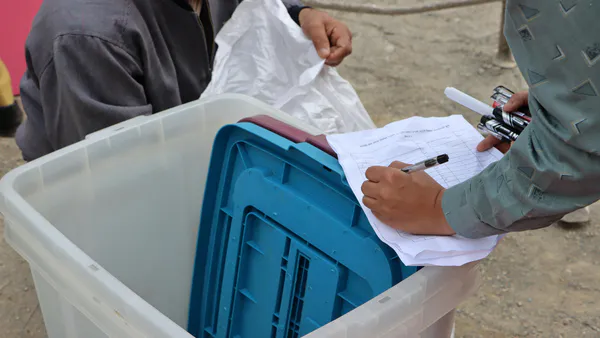
More frequently, legislations targeted to implement particular adaptations of the voting mechanisms with existing solutions and innovations. To set an example, in certain states, mobile urns were used to collect the votes from infected people. However, the counting of these papers also constituted a massive risk for the electoral staff. Therefore, several of them refused to get involved in this task.[39] During the casting of these ballots and counting these votes, special public health measures were applied: mouth and nose masks, gloves, regular fertilizers, and distance keeping for all persons concerned.
Apart from these ideas, some countries provided a unique way for symptom-producing persons to participate in the elections. It was prohibited for Covid-positive or suspected citizens to show up at the polling station; some countries even criminalized such behavior, like Jordan.[40] To secure the transparent and feasible participation of these people, some countries allowed them also to approach the voting venue with a car, where they should have travel alone or a maximum with a driver. The vehicle should have parked close to the voting venue. Some members of the electoral staff provided the electoral sheet to the infected or quarantined citizen, who filled the sheet and showed the ballot to the officers, who verified it. Regarding the universality of the voting, this mechanism may be deemed satisfactory, since all citizens' real participation is ensured. However, there are numerous concerns from the perspective of the voting's secrecy, but this will be assessed in the following subchapter.
In the Czech Republic, the combination of three alternative methods has been recommended for infected or quarantined citizens: mobile voting; voting from a vehicle; or unique polling stations, organized, for instance, in hospitals.[41]
Another challenge from a universality perspective was to provide the possibility of voting for people living abroad. To set examples, Ghana[42] and Guinea[43] simply apparently disenfranchised their citizens living in abroad due to the existing travel restrictions in the countries of their permanent residences.
Suppose universality of the elections is aimed to be maintained. In the case, should elaborate a long-term and safe framework for the voting of those people who have been infected or quarantined at the moment of the elections. The exact details may vary from country to country. However, the personal contact should be excluded or at least minimized between the electoral staff and the Covid-19-infected citizen, while the voting's secrecy should also be protected with proper safeguards, as will be conceptualized in the preceding.
b) Direct and secret ballot
The directness of the voting is also untouched by the pandemic. However, secrecy shall face new challenges due to the unique voting methods and to the complexity of the electoral system in a traditional election, most of the votes are submitted with the same technical facilities, special rules are only applied for a narrower, clearly distinguished group of voters. During the pandemic, even the conventional voting based on physical presence should be renewed in several respects, fewer people will be allocated to each voting venue, and certain people, who are at least suspected of being infected with Covid-19, may vote under extraordinary regimes, which have never experienced before. In light of these circumstances, some people's votes may be revealed for others, especially of those who may be affected by the virus. For the legislation, this constitutes an additional task to prescribe the requirements of secret voting even during public health concerns to avoid personal votes. In the previous subchapter, the voting method from the car has also been rumoured. It may be more worthy of replacing this with electronic voting without any even distant physical contact between the voter and the citizens. However, only some of the most developed countries are ready to receive electronic votes from the citizens. Several issues are still to be mapped out: how should people register for electronic voting, and how could we avoid the verification of the reliability with the maintenance of unanimity for the voter? The conclusion of this chapter, in case of the voting of Covid-19-affected persons, such a regulatory framework should be developed, which will find a proper balance between the public health concerns and the secrecy considerations.[44]
V. VARIOUS METHODS TO ORGANIZE ELECTIONS DURING THE PANDEMIC
The main theoretical challenges have been set, raised by the pandemic to manage democratic elections. Now I turn to the practices applied to bridge this exceptional period by electoral terms. All countries' reflections differ to a particular extent; may classify the vast variety of national models into three main categories. Some states decided to hold the scheduled initially elections to utilize such forms of elections, where personal presence and contact are not required. One possible option in this direction is the development of electronic voting, where people should not meet each other so that public health concerns may be excluded.[45] Postal voting has also been used to minimize human contacts during the electoral process, but the whole election relied only rarely exclusively on these means.
It was more popular to hold the elections with combined solutions: apart from maintaining traditional voting, electronic and postal voting were also included in these systems.[46] In several countries, secret voting remained dominant, however, with lots of adopting measures to meet the unique public health requirements.
Finally, many countries decided to postpone their elections sometimes for a whole year, to avoid the unwanted consequences of the pandemic.[47] In some states, the postponement was shorter and was not sufficient to prevent the impact of the virus concerns, while in other cases, the final schedule of the postponed elections is still pending.
These three main models are known on the ground of those Covid-related solutions, which the countries of the world have introduced. In the next subchapters, I will analyze the details of these approaches more in-depth.
a) Enhanced inclusion of electronic and postal voting
During the last years, the significance of electronic and postal voting has constantly been growing in at least the more developed countries of the world. During the pandemic, this form of electoral participation was rarely able to manage the whole process,[48] just especially in such cases, when the election was not direct (based on electors' participation) or where the postal or electronic voting still had an important role before the outbreak of the corona crisis. For instance, in Ohio, the governor and Congress decided to postpone the elections from March 17 to April 28 2020. and it was determined that the primary mode of voting should be the postal one. Only the disabled persons and the citizens without permanent residence were permitted to vote in person. The number of polling stations has been reduced remarkably compared to the usual number of these places.[49]
Similar solutions were applied in Maryland, wherein one of the congressional constituencies, interim elections took place in April 2020. The methodology was very close to the instruments used in Ohio. Postal voting constituted the primary form of electoral participation, while three constituencies were organized for people with disabilities and persons without a permanent residence.[50] In Bayern, the South-East of Germany, the first round of municipal elections was based on a combined method: personal and postal voting was also possible. However, the second round constituted a fully postal election of mitigating the spread of the virus across the country. This stage of the elections took place on 30-31 March 2021. The necessary documents were supposed to be sent to the citizens until 15th March 2020. If, for someone, these documents have not been provided until this date, he/she shall have registered to the electoral system with his/her identity.[51]
In the Republic of Ireland, the senatorial elections are indirect electors who submit their votes through postal means. Therefore, no adaptation was necessary to hold these elections on their original schedule. The former senators, the members of regional and municipal councils, and the Lower House representatives participated in the polls as they usually do. Nevertheless, an additional restriction was imposed, which was also present in numerous other countries.[52] The representatives of the media and the candidates should not have entered into the venues of vote-counting. Instead of this, as a safeguard, the process was broadcasted and streamed through the different channels of the media. Owing to this regulation, despite the extra-ordinary circumstances, the whole community was able to follow the mechanism and to verify its lawfulness.
Direct presidential elections were planned in Poland on May 10, 2020. Still, the opposition initiated the declaration of a state of emergency, and the postponement of the elections at least until 60 days will pass after the end of the extraordinary period. The government rejected this idea allegedly to avoid the strengthening of the opposition. The Seim, the lower house of the Polish Parliament, passed a bill to extend postal voting and vest the Seim president with the power to postpone the elections just in indispensable cases. Moreover, a particular control body under the minister of justice would have replaced the National Electoral Commission as the main actor responsible for managing the whole process.[53] The Senate, which was dominated by the opposition, used its 30-day term for consideration to set back the government to hold the elections at the beginning of May. When the government realized this intention, the critical preparatory steps were made for organizing the polls without senatorial approval, which entailed lots of criticism even from the civil society. Finally, a compromise has been concluded: the polls were held de facto on 10th May, but in reality, people submitted their votes on 28th June with the combination of traditional and postal voting.[54]
b) Adaptation of the traditional electoral process
The most known sample of the adapted electoral regime is the French municipal elections, where the first stage of the two-round process was held on 15th March 2020. as originally planned. Staging the elections was criticized heavily by several commentators, and individual sources also rumored that the government had severe fears that the postponement will potentially lead to unexpected oppositional successes, which was the main reason why the rescheduling to a later date was rejected. The number of participants in campaign events was limited to thousand people; the electoral staff were obliged to wear mouth and nose masks; the citizens were required to bring their pens; the polling booths should have been fertilized regularly and sanitizer was provided for each participant.[55] These adaptative steps formed part of the special rules enacted for the Covid-related elections in almost all countries concerned.[56] The willingness to participate was remarkably lower than in the previous similar elections. However, as usual, despite of the reporting of some illnesses and deaths during the next days, the overall rate of disease transferring remained almost unchanged. The second round was organized on 28th June, surrounded by less severe restrictions, but with similar adaptive elements to prefer carefulness. Similarly to France, the first round of the parliamentary elections was held in Iran on schedule, while the second round was moved from April to September 2020.[57]
In Wisconsin, the presidential pre-selection of the Democratic Party was supposed to take place on April 7 2020, but the Democratic governor, Tony Evers, decided to postpone the event until June. The Republican Party challenged this decree and the Supreme Court of Wisconsin found the postponement as unconstitutional since – according to the Court – the governor overstepped his constitutional margin of movement. So the pre-selection remained on its original schedule, but the citizens were asked to keep the social distance, to wear masks during the whole process, and to use their pen during submitting their votes. These measures were effective: the elections were reported as wholly safe.
On April 15 2020, South Korea elected parliamentary members with traditional methods, with necessary supplementary elements. Contrary to France, the in-person instruments of campaigns were banned, the dissemination of political views was possible only via electronic means. The duration of the voting was prolonged: more days soot at the citizens' disposal to avoid unnecessary personal meetings in the voting venues. For similar reasons, also increased the number of polling stations, so fewer people should have visited the same location for this purpose. Apart from this, extended the option of postal voting to decrease further in-person contacts. In the polling booths, and during the whole process, provided fertilizers, the wear of masks was mandatory, requested distance keeping, the body temperature was checked. At the same time, the counting of votes was broadcasted and streamed in the media. The elections were successful, and despite those concerns, that increased the indicators of the epidemic remarkably five weeks after the elections. This was not attributable to the voting, and numerous factors may have been responsible for the spread of the virus in South Korea.[58]
One should also enumerate some additional innovative elements of other electoral regimes with less significance. In Austria, the number of those who shall stay at the voting station simultaneously was also limited to further decreasing the number of masses, incredibly close contacts. In Bermuda, early voting was possible for older people and those whose Covid-19 test was positive.[59] In Bolivia, the size of polling stations has been extended,[60] and opened the windows regularly. In addition to this, special training was held for the electoral staff from the virus-related public health requirements. The voters were requested to leave the polling station immediately after submitting their votes. Italy provided two consecutive days for voters to cast their ballot to reduce the number of citizens who simultaneously visited the polling stations.[61] In Brazil, voters were recommended not to bring children or other companions to the polling station to reduce the number of persons present in the building. Those who produced symptoms during the last two weeks before the elections were advised to stay at home, while Covid positive or suspected persons were allowed to refrain from voting despite the fact that participation is deemed to be mandatory for all citizens between ages 18-70 unless a due reason of absence is justified. Training was provided for the electoral officers, and did not select persons over 60 to the electoral staff.[62] In Burkina Faso, no more than 800 voters shall be assigned to each polling station,[63] and in reality, less than 500 people were registered to each venue.[64]
It is also worth-contemplating that it was reported from lots of African countries that the implemented virus-related measures have not been enforced strictly.[65] By contrast, in Belarus, where the official leadership denied the existence of the virus,[66] the president of the National Electoral Office published recommendations for the electoral staff. Early voting was also possible, and also prolonged the opening hours of voting polls to provide broader flexibility for the people. Controversially, the number of observers were limited: three were allowed to enter each polling station due to the problematic epidemiological situation. Similar tendencies were perceptible in Burundi:[67] the leaders of the country called for electoral participation without additional protective measures.[68] In the meanwhile, the electoral office recommended exceptional carefulness for the citizens, and the international observers were expelled from the country on public health grounds.[69]
c) Postponed and ahead of elections
Many legislative and municipal elections have been postponed during the last months due to virus concerns. The reasoning of postponements was various, and the possible motivations also differed remarkably depending on the exact circumstances. Those political forces, who had allegedly enhanced popularity around the initially scheduled date of the elections, always insisted on holding the voting with special safeguards.[70] Those parties, which hoped to access more voters highlighted the seriousness of the public health situation and argued for the elections' postponement.[71]
Elections – What to Watch For? International IDEA, 2020. https://www. idea.int/news-media/news/indonesia%E2%80%99s-big-size-covid-19- elections-%E2%80%93-what-watch
- 65 International IDEA: Taking Stock of Regional Democratic Trends in Africa and the Middle East Before and During the COVID-19 Pandemic. January 2021. https://www.idea.int/news-media/news/taking-stock-regional-democratic-trends-africa-and-middle-east-and-during-covid-19
- https://www.oesterreich.gov.at/themen/leben_in_oesterreich/wahlen/7.html
- 67 Erik Asplund, Olufunto Akinduro: The COVID-19 electoral landscape in Africa. International IDEA, 2020. https://www.idea.int/news-media/news/covid-19-electoral-landscape-africa
- https://www.aljazeera.com/news/2020/05/25/burundi-election-commission-says-ndayishimiye-new-president/
- Laura Thornton: I'm an 'election observer' - but what do we actually do? International IDEA, 2020. https://www.idea.int/news-media/news/im-election-observer-what-do-we-actually-do
- 70 A particular case is notable from the Central African Republic: the Government aimed to postpone the elections to a later date, but the Constitutional Court called for holding the parliamentary elections on the original schedule. https://au.int/sites/default/files/pressreleases/39821-pr-declaration_preliminaire_moeua-_elections. The constitutional review had similar outcomes in some member states of the United States of America, as the already mentioned example of Wisconsin demonstrates this excellently.
- Toby James, Sead Alihodzic: When Is It Democratic to Postpone an Election? Elections During Natural Disasters, COVID-19, and
The exact term of the postponement varies also considerably: in some cases, the forced delay was just some weeks or some months,[72] but this was not always sufficient to avoid the adverse effects of the virus. Some countries decided from a half-year-long[73] and a one-year-long[74] postponement and the final schedule of some voting are still pending,[75] so the disease will influence the electoral tendencies, at least even for years.[76]
It was also frequently contested, how should be the country governed and especially by whom until the staging of the delayed elections.[77] One tangible solution would be to extend the existing mandates. Still, it was a commonly phrased oppositional argument that an interim government should be set up with the cooperation of all political stakeholders to bridge the virus period, and then until the recent elections would be feasibly held.[78] By contrast, the virus concerns lead to several postponed elections and some early ones. In Bermuda, where the next election would have been due in 2022, an early election took place in October 2020, with the justification of achieving more focused governmental efforts to rebuild the local economy.[79] In Croatia, the elections moved forward from the autumn to July 2020;
- 72 Slight postponements just with some weeks, or months (less than half a year): Austria, Bangladesh, Bosnia and Herzegovina, Brazil, Czech Republic, Dominican Republic, France, Guam, India, Indonesia, Jamaica, Kiribati, Latvia, Liberia, Libya, Moldova, Montenegro, New Caledonia, New Zealand, North Macedonia, Papua New Guinea, Poland, Romania, Russia, Serbia, Somalia, Spain, Sweden, Switzerland, Syria, Tunisia, Uganda
- This list and the whole forthcoming classification are based on the database of the International Institute for Democracy and Electoral Assistance (International IDEA). The category is established regardless of the exact type of elections concerned. https://www.idea.int/news-media/multimedia-reports/global-overview-covid-19-impact-elections
- [73] The half year-lengthy postponements: Argentina, Bolivia, Chile, Gambia, Iran, Italy, Kenya, Kosovo, Mexico, Nigeria, Puerto Rico, Slovakia, Solomon Islands, South Africa, Sri Lanka, Uruguay
- [74] One year-long postponements: Armenia, Chad, Colombia, Ethiopia, Gabon, Hong Kong, Kyrgyzstan, Maldives, Paraguay,
- 75 Postponed elections with still pending agenda: Bahamas, Botswana, French Guyana, Gibraltar, Oman, Pakistan, Peru, Zimbabwe
- [76] Some countries applied a combined set of postponements for different types of national and local elections; these are: Australia, Canada, Malaysia, the USA.
- Toby James, Erik Asplund: What happens after elections are postponed? Responses to postponing elections during COVID-19 vary by regime type. International IDEA, 2020. https://www.idea.int/news/media/news/what-happens-after-elections-are-postponed-responses-postponing-elections-during
- 78 Gostin L. O. - Hodge J. G - Wiley L. F. (2020): Presidential Powers and Response to COVID-19. In: JAMA. Vol. 323, No. 16, 1547-1548. https://doi.org/10.1001/jama.2020.4335
- [79] https://www.gov.bm/articles/notice-parliamentary-registrar
this decision was also surrounded by political accusations.[80]
VI. LONG-TERM CONSEQUENCES OF THE COVID-19 PANDEMIC TO DEMOCRATIC ELECTIONS
Numerous solutions have been elaborated globally to comply with special public health requirements during the whole electoral process: some of them have been implemented in most of the relevant countries. At the same time, certain margin of movement always left within the hands of national decision-makers despite the inherently similar challenges. Some of these elements, which are directly linked to the mitigation of the pandemic, will probably disappear when the virus threat is not as intense as it was during the last months. However, some tendencies are deemed to remain in our life even after the pandemic's termination; at least three of these directions should be highlighted.
Firstly, the inclusion of modern technologies in the electoral process will be extended; postal and electronic voting will be integrated more cohesively into the procedural legal framework of elections.[81] Apart from this, the role of electronic platforms will increase further during the collection of signatories, during the campaign period, and after the results' announcement, when politicians and their supporters reflect on the outcome, respectively.[82] Before the pandemic, such elements were mostly supplementary except some countries, but the extraordinary circumstances highlighted their significance and demonstrated the advantages of these methods.
Secondly, Future electoral frameworks will be probably more flexible and diverse than the current ones, which are usually grounded on the dominance of traditional voting based on physical presence.[83] The crisis showed the importance of alternative paths and the necessity to adapt the procedural rules to the electoral demands more efficiently and to the unexpected external challenges. The future elections are supposed to be more expensive,[84] For instance, financial issues have already been raised during the crisis in Bosnia and Herzegovina.[85]
Thirdly, electoral systems' response capacity to emergencies should be regulated with more carefulness either at the constitutional and legislative level.[86] It was uncertain whether elections should be held during emergencies. It was also dubious how should the period should be bridged between the original schedules of elections and the date of the postponed ones. Even if several constitutions explicitly stipulate the way of delaying elections, the due reasons of such a step, and the bridging of the interim period, it quickly turned out that several of these provisions lack a sufficient level of precision.
VII. CONCLUSIONS
When approximately one year has been passed from the outbreak of the Covid-19 pandemic, and the epidemic is still on-going, I attempted to provide a cursory glance at the central development observable in the field of electoral law consequences of the virus concerns. The scale of implemented novelties has probably not been finalized, but some crucial directions are still identifiable for future references.
The known public health requirements imposed additional responsibility on all stakeholders from legislations to each citizen to decide whether elections should be held on schedule or should be postponed; and on keeping the whole electoral process within the bounds of safety and reliability.[87] Due to urgent reflections, the decisions were based on practical considerations, or actual or alleged political aspirations. However, the dogmatic aspects of the new challenges of the electoral system have inevitably not been analyzed in depth. After one year of experience, several practical examples have been seen, and in the light of these points of reference, in my sense, the science of constitutional law has two main tasks in this field. On the one hand, the Covid-related elections should be monitored closely. Those conclusions should be drawn, which might orient legislations and electoral bodies during the preparation of such events amongst public health requirements. It is still an imaginable perspective that virus concerns will not disappear wholly in the future. Further epidemics might also appear, so some aspects of these protocols might remain in electoral regimes. On the other hand, the latest development entailed the broad applications of such solutions, mostly neglected, or at least significant fears have been expressed concerning their deeper integration into the electoral process. The forcing circumstances of the public health emergency convincingly justified that these instruments are feasible. In light of these changing attitudes and the well-established technological and social tendencies, their role will increase further during the following years. Constitutional scholars should identify the pandemic's long-term consequences from an electoral law perspective and should elaborate proposals to the exact framework of post-Covid elections. This contribution aimed to be a modest contribution to the fulfillment of these two main tasks.