The recent epidemiological events and the associated need for scientific knowledge have increased the number of investigations on the impact of diseases in different areas, but at the level of built scenarios, the problems caused by inadequate infrastructure and urban characteristics in coping with health crises are widespread. Given these issues, the general objective of this research is to assess the application of solutions in the field of humanized management of (post-) pandemic urban landscapes, especially in an international context. A scientometric analysis and a systematic review of secondary sources was conducted in the Lens, Scopus, and Web of Science (WoS) databases, quantifying the results and classifying their characteristics to d elineate the main academic discussions. The literature search yielded a total of 200,032 texts, of which 194 were selected for preliminary analysis after applying filters. This showed that publications on WoS (51.35%) and those with empirical approaches (70.62%) predominate, with Europe (33.51%) being more represented, although the United States (12.89%) published a greater number of articles.
## I. INTRODUCTION
This study focuses on the evaluation of alternatives for the humanized future of the contemporary city, considering the period concurrent with and following the 2019 coronavirus disease (Covid-19) pandemic. An increasing number of investigations are being published on the impact of the sanitary crisis on the mental health and well-being of people worldwide. Similarly, the studies highlight how changes in subjects' relational environments, social isolation, and fear of infection, among other reasons, can alter behaviour, including in public spaces (Amério et al., 2020; Ammar et al., 2020; Miller & Smith, 2021; Wang et al., 2025).
At each moment of the pandemic, more problems in urban landscapes were being revealed because of the inadequate infrastructure and functionality of cities to cope with health crises. Thus, failures have been identified in several countries, such as the intensification of the viral spread through residential places, poor management of resources, and the needs of the population in terms of urban planning, as well as other issues raised by the pandemic, including the experience of citizens across generations without the effective development of solutions (Chauvin, 2024; Ditrans et al., 2023; Patel, 2020; Zgorska, Kamrowska-Zaluska & Lorens, 2021).
In this context, this research aims to provide an exploratory knowledge base about the humanized landscape and to systematically analyze scientific data shedding light on the possibilities that apply to post-pandemic scenarios. Thus, a conceptual understanding of the issues discussed is essential, especially regarding future perspectives for cities and their management.
Therefore, the general objective of this study is to assess the application of solutions in the field of humanized management of (post-)pandemic urban landscapes, especially in an international context. In summary, the activities related to achieving these aims should respond to the following research question: within a transnational framework, what are the most important principles for the human-focused future of the contemporary city? To achieve the objective and formulate the answers to the query, information from secondary sources was studied, especially studies addressing the topic's scientific and academic state of the art, which ensured the conduct of the study according to the postulates of the theories and concepts discussed below.
## II. THEORETICAL POSTULATES
The concept of landscape is first addressed, which is determined by the relationships between natural and anthropic elements in a spatial, temporal, and social context (Sander et al., 2025). The studies on the theme were gradually expanded and gained a scientific body, being and are used today in an integrated perspective between systems of nature and humankind, in an inter-relational way, considering systemic components to produce a new conceptual approach (Min, 2025; Switalski et al., 2025). It is thus seen as an integrated interpretive and sensory link between natural and human factors.
The topic is also interpreted geographically: it is a form of spatial planning that has multiple aspects, as individuals are considered capable of changing the landscape, and it has emotional effects on people. It is generally associated with what can be observed but is not limited to this condition, referring to immaterial phenomena and processes that are relevant to the interpretation of what is visualized.
However, it also focuses on the expression of characteristics such as space, region, territory, and place and the changes that these environments undergo over time with or without human influence. It is therefore a collective heritage created by the subjectivity of local people and by nature (Min, 2025).
Thus, the term can be used for a variety of situations because the ability to describe a landscape is not a simple act. Its appreciation can be laden with feelings and emotions toward place, but it can also be expressed in a rational and systemic way, evaluating and categorizing natural and human-made features. As a concept, however, it has individual and collective values that make it a subjective influence that is more important than any material value.
On the other hand, its valorization helps improve the quality of life and strengthens people's social and cultural identity (Hersperger et al., 2020). Therefore, not only the landscape but also the urban scenarios and the dynamics of the city, in particular, are permeated by the same relationships, analyses, and territorial views of the individual and society.
The domination of territories historically fostered in humans the ability to shape and change nature, creating a ritual of space (Herrmann-Pillath, 2024). This gave rise to the processes of demographic understanding, population quantification, and urban planning, in which cities were geographically delineated, distinguishing urban from rural perimeters, and using these elementary distinctions to measure their qualitative attributes, thus giving rise to the second relevant concept for the present study: the city.
Considering the urbanized areas as transformative agents for global sustainability, Bai (2025) notes that they are places where people live and work, but beyond that they are centers of attraction for society. This 'magnet' effect enables interaction between residents and provides alliances and organizational functions for the group's proper social and cultural development. The concept of demarcated territory highlights the existence of different social actors in cultural construction and appropriation.
The urbanized space can be understood as purely geometric without being so. It relates to architectural elements, economic centers, and social environments, with norms and rules that regulate human activity (Foster et al., 2025). Thus, the concept of habitat has been updated, indicating the creation of a goal of mastering nature. Moreover, urban life is permeated with the collective as the city is full of accumulations and flows of individuals, which is why it becomes necessary to create projects for laws that regulate the rights and duties of citizens and promote politics (Foster et al., 2025).
In this perspective, the city is an agglomeration in a limited area that hosts a sizeable population, where commercial, service, and industrial activities predominate, generating systems of capitalization, and whose community can produce cultural resources for identification (Karam et al., 2025). This definition changes over time, but some elements are evident in the topic's formation and construction.
Currently, the capacity of urban environments to provide technologies to solve social problems has been proven, especially during the recent pandemics. To this end, tools to optimize resources and precision in the provision of public services and the adaptability of government, among others, are being evaluated (Moghayedi, 2025).
Cities need innovations and technologies because they are constantly evolving. However, these are difficult constructs to conceptualize as the applications of words have a variety of meanings and can also be interpreted in different ways.
In general, they are associated with knowledge generation. According to Mairesse et al. (2025), innovation can be interpreted as the creation of new realities as it is a process in which something is created that did not exist before and which also gives an unusual function and utility to existing elements. The author emphasizes that this process consists of operations and actions aimed at results; thus, it must be stimulated and developed in a planned direction.
Innovation occurs in a multidisciplinary way; therefore, different innovative practices can be linked to knowledge from different fields (Mairesse et al., 2025). It is a fundamental component for solving social, economic, political, cultural, and other issues in the face of major daily problems. It is thus possible to understand that the innovative process of searching for answers and creating forms of relationships stimulates more effective and efficient changes in society and governance.
Technology, in turn, is based on human action, which is socially conditioned and aims to structure a set of alternatives to achieve defined goals, usually characterized by procedures and tools (Ottone & Grifoni, 2017). It is possible to demonstrate the importance of developing instruments to promote innovation in the search for new outcomes, a particular aspect of technological concepts that provide resources to promote material or intellectual discoveries.
The term 'innovation' is therefore associated with anything that humans invent to make their daily life easier and more enjoyable, considering their subjectivity. This includes artifacts, procedures, or means that help individuals stay alive and feel good, the latter being increasingly valued in today's world (Mairesse et al., 2025).
The progress and innovation in the urban-social and scientific-technical fields in the 1950s changed the everyday life of ordinary people, with more investigations into occupational activities that were defined as being characterized by dehumanizing factors in terms of interaction with community members, especially in the health sector. In the 1970s, debates on humanization intensified, focusing on concerns about individual wellbeing. In addition, contrary practices were associated with hierarchical power relations in the exercise of care and decision-making, as well as with psychological and subjective factors involving acts of depersonalization of the ordinary individual (Girard, 2021).
However, it is not only the health sector that has faced difficulties in dealing with subjectivity and the issue of humanization, as this problem has emerged in various fields (Girard, 2021). For example, in the domain of technology, during the recent pandemic, the monitoring of isolated persons was automated, which reduced the interaction between patients and health professionals to a minimum, leading to a decrease in the interpersonal contact necessary to promote the mental and relational health of isolated persons.
The promotion of computerization and innovation in the surveillance of pandemic infections has brought both advantages and disadvantages, as the excess of technological resources in the provision of care has also led to difficulties in reaching remote regions and in monitoring families in vulnerable situations and without Internet access. These conditions are associated, for example, with the spread of misinformation and communication delays among healthcare staff (Aihara et al., 2025).
In terms of spaces and relationships, humanization is understood as the prioritization of the quality of attention and care for people, their satisfaction, and the relevance of their subjectivity. Girardi (2021) emphasizes that humanitarian action influences the individual's sense of being and the subjective dimension of their performance. These practices are often considered relational technologies linked to the holism of care, as well as the transformation of practices and the quality of support.
In general, this type of policy related to occupations promotes the use of techniques, equipment, and procedures. In conjunction with the use of technological knowledge, they are expressed in dialogues, listening, empowerment, and the management of affection, always committed to people's happiness (Shehayeb, 2023).
Therefore, humanization policies aim to reorganize work processes in healthcare and propose changes in daily service delivery as well as changes in society's performance. The physical and relational environments can exhibit dehumanization, such as in situations where people are housed in static and sterile places that offer little potential for stimuli that promote well-being (Shehayeb, 2023).
These considerations lead to a concern for the influence of the environment on the subjectivity of individuals, requiring the need for a balance between the functional needs of society and the care provided by socialization spaces. Tang (2023) adds that form and design are also humanizing factors in landscapes.
The possibility of humanizing the public space is achievable through an urban process capable of valuing the human scale and allowing citizens to assume a leading role in the design of places of communal use. The authors state that it is crucial for places to meet the desires of their users, and suggests that policies must be geared towards humanizing cities and ensuring citizens' well-being (Rossi & Nardis, 2025).
This position strengthens the social and democratic function of the urbanized space and that the best alternative for municipal development is the one that can improve the quality of life and adequately meet people's basic needs. Thus, the insight that the environment influences people's behavior and vice versa guides the framework of research methods.
## III. METHODOLOGICAL PROCEDURES
Exploratory, descriptive, and synthetic-analytical techniques were applied to define the main scientific-academic debates on humanized landscapes in an international context, particularly considering the recent pandemic period. The methods used were divided into four main phases:
a) Theoretical Foundation: Based on exploratory and descriptive techniques for examining secondary sources – literature and documents – with the aim of identifying fundamental theories and concepts for the study.
b) Methodological Structuring: Grounded in the same techniques and previous sources, with the aim of identifying methods for conducting the research, especially through the collection of information on academic-scientific articles relevant to the addressed topics.
c) Classificatory Contextualization: Framework analysis of innovative and technological solutions to systematize them in an international context.
d) Discussion of the Results: Supported by descriptive and analytical techniques for the identification of innovations and technological strategies to substantiate city design, planning, and management processes.
Taking into account the period between 2020, marking the formal onset of the recent pandemic, and 2022, when its effects began to subside, the following international databases were consulted to achieve the previously defined objective: Lens (2020-2022), Scopus (2020-2022), and Web of Science (WoS, 2020-2022). According to Kumar (2025), bibliometrics is a quantitative and statistical methodology that aims to measure scientific publication indexes and the dissemination of knowledge.
This author describes bibliometrics as a method for measuring patterns of written communication as well as for identifying the most active and prolific authors in research on a given topic. In the present study, the systematic review was used to enable the organization of journal contents for the identification of possible innovations and new technologies for the humanization of urban landscapes in the (post-)pandemic period. Therefore, a single string consisting of two parts connected by the Boolean operator AND was used, as shown in Table 1.
Table 1: String used in Journal Databases
<table><tr><td>("Urban*" OR "Urban Management" OR "Landscape*" OR "Cit*" OR "Humaniz*" OR "Innovation" OR "Technolog*" AND ("Pandemic" OR "Lockdown" OR "Social Distanc*"</td></tr></table>
Source: Prepared through the selection of keywords.
After the initial string search, filters were used for each journal database to identify similar options among the searches so that the results remained consistent. In this phase, pre-tests were conducted within the portals (Table 2) to identify the set of results obtained and refine the filters until usable and high-quality results were found for the present research.
Pre-Test 1: Initial search: n= 107,296 Application of the filters: Date (2020, 2021, and 2022): n= 88.982 Type of document (Journal Article): n= 63,704 Subject Matter/Field of Study (Psychology; Political Science; Public Health; Sociology; Social Distance; Mental Health; Environmental Health; Psychological Intervention; Environmental Science; Perception; Politics): n= 21,345 Subject Matter/Subject (Health Policy; Psychiatry and Mental Health; Sociology and Political Science; Health (social science); Urban Studies; Social Psychology; Social Sciences (miscellaneous); Public Administration; Environmental Science (miscellaneous); Experimental and Cognitive Psychology): n= 2,493 Language (English, Spanish and Portuguese): No option. Final application: Initial search: n= 110,985 Application of the filters: Type of document (articles): n= 81,200 Date (2020, 2021 and 2022): n= 65,837 Subject Matter/Field of Study (Psychology; Political Science; Public Health; Sociology; Social Distance; Environmental Health; Psychological Intervention; Perception; Politics): n= 20,675 Subject Matter/Subject (Social Psychology; Sociology and Political Science; Public Health, Environmental and Occupational Health; Sociology; Health Policy; Urban Studies; Public Administration): n= 2,789 Keyword Refine (Public Health; Mental Health; Health Policy; Urban Studies; Public Administration; Environmental Science (miscellaneous); Experimental and Cognitive Psychology): n= 2,493
<table><tr><td>LENS</td></tr><tr><td>Pre-Test 1:
Initial search: n= 107,296
Application of the filters:
Date (2020, 2021, and 2022): n= 88.982
Type of document(Journal Article): n= 63,704
Subject Matter/Field of Study (Psychology; Political Science; Public Health; Sociology; Social Distance; Mental Health; Environmental Health; Psychological Intervention; Environmental Science; Perception; Politics): n= 21,345
Subject Matter/Subject (Health Policy; Psychiatry and Mental Health; Sociology and Political Science; Health (social science); Urban Studies; Social Psychology; Social Sciences (miscellaneous); Public Administration; Environmental Science (miscellaneous); Experimental and Cognitive Psychology): n= 2,493
Language (English, Spanish and Portuguese): No option.
Final application:
Initial search: n= 110,985
Application of the filters:
Type of document (articles): n= 81,200
Date (2020, 2021 and 2022): n= 65,837
Subject Matter/Field of Study (Psychology; Political Science; Public Health; Sociology; Social Distance; Environmental Health; Psychological Intervention; Perception; Politics): n= 20,675</td></tr><tr><td>Subject Matter/Subject (Social Psychology; Sociology and Political Science; Public Health, Environmental and Occupational Health; Sociology; Health Policy; Urban Studies; Public Administration): n= 2,789
Keyword Refine (Public Health; Mental Health; Health Policy; Urban Health): n= 265
Language (English, Spanish and Portuguese): No option.</td></tr><tr><td>SCOPUS</td></tr><tr><td>Pre-Test 1:</td></tr><tr><td>Initial search: n= 288,123</td></tr><tr><td>Application of the filters:</td></tr><tr><td>Date (2020, 2021, and 2022): n= 205,092</td></tr><tr><td>Type of document(Article and Review): n= 169,971</td></tr><tr><td>Subject area (Social Sciences; Environmental Sciences; Psychology; Multidisciplinary): n= 56,894</td></tr><tr><td>Language (English, Spanish and Portuguese): n= 55,695</td></tr><tr><td>Pre-Test 2:</td></tr><tr><td>Initial search: n= 42,986</td></tr><tr><td>Application of the filters:</td></tr><tr><td>Date (2020, 2021, and 2022): n= 38,369</td></tr><tr><td>Type of document(Article and Review): n= 29,953</td></tr><tr><td>Subject area (Social Sciences; Environmental Sciences; Psychology): n= 11,162</td></tr><tr><td>Language (English, Spanish and Portuguese): n= 10,771</td></tr><tr><td>Pre-Test 3:</td></tr><tr><td>Initial search: n= 42,986</td></tr><tr><td>Application of the filters:</td></tr><tr><td>Date (2020, 2021, and 2022): n= 38,369</td></tr><tr><td>Type of document(Article): n= 25,727</td></tr><tr><td>Subject area (Social Sciences; Environmental Sciences): n= 9,525</td></tr><tr><td>Language (English, Spanish and Portuguese): n= 9,196</td></tr><tr><td>Pre-Test 4:</td></tr><tr><td>Initial search: n= 42,986</td></tr><tr><td>Application of the filters:</td></tr><tr><td>Date (2020, 2021, and 2022): n= 38,369</td></tr><tr><td>Type of document(Article): n= 25,727</td></tr><tr><td>Subject area (Social Sciences; Psychology): n= 8,295</td></tr><tr><td>Language (English, Spanish and Portuguese): n= 7,995</td></tr><tr><td>Pre-Test 5:</td></tr><tr><td>Initial survey: n= 44,109</td></tr><tr><td>Application of the filters:</td></tr><tr><td>Date (2020, 2021, and 2022): n= 29,520</td></tr><tr><td>Type of document(Article): n= 26,473</td></tr><tr><td>Language (English, Spanish and Portuguese): n= 25,396</td></tr><tr><td>Subject area (Social Sciences; Environmental Sciences; Psychology; Multidisciplinary): n= 11,173</td></tr><tr><td>Limit To (Psychology; Cities; Technology; Innovation; Urban Population; Urban Planning): n= 1,655</td></tr><tr><td>Exclude (Air Pollution; Air Pollutant; Atmospheric Pollution; Nitrogen Dioxide; Ozone; Nitrogen Oxides; Carbon Monoxide): n= 1,472</td></tr><tr><td>Final application:</td></tr><tr><td>Initial search: n= 61,603</td></tr><tr><td>Application of the filters:</td></tr><tr><td>Type of document(Article): n= 40,973</td></tr><tr><td>Date (2020, 2021, and 2022): n= 37,920</td></tr><tr><td>Language (English, Spanish and Portuguese): n= 36,352</td></tr><tr><td>Subject area (Social Sciences; Psychology; Multidisciplinary): n= 13,432</td></tr><tr><td>Limit To (Psychology; Technology; Innovation; City; Urban Planning): n= 1,479</td></tr><tr><td>Exclude (Pneumonia Virus, Viral Pneumonia; Telemedicine; Government; Teaching; Economics; Distance Education; Medical Education; Severe Acute Respiratory; Coronavirus Syndrome 2; E-learning; Telehealth; Online Learning; Medical Student; Medical Students): n= 1,158</td></tr><tr><td>WEB OF SCIENCE</td></tr><tr><td>Pre-Test 1:</td></tr><tr><td>Initial search: n= 55,968</td></tr><tr><td>Application of the filters:</td></tr><tr><td>Date (2020, 2021, and 2022): n= 47,751</td></tr><tr><td>Type of document (articles and review articles): n= 40,779</td></tr><tr><td>Categories (Environmental Studies; Psychology Multidisciplinary; Social Sciences Interdisciplinary; Urban Studies; Political Science; Sociology; Regional Urban Planning; Public Administration; Social Issues; Social Psychology; Humanities Multidisciplinary; Behavioural Sciences): n= 3,433</td></tr><tr><td>Language (English, Spanish and Portuguese): n= 3,365</td></tr><tr><td>Pre-Test 2:</td></tr><tr><td>Initial search: 57,830</td></tr><tr><td>Application of the filters:</td></tr></table>
$$
Date (2020, 2021, and 2022): n = 49,612
$$
Type of document (articles and review articles): $n = 42,286$
Categories (Environmental Studies; Social Sciences Interdisciplinary; Urban Studies; Political Science; Sociology; Regional Urban Planning;
Public Administration; Social Issues; Social Psychology; Behavioural Sciences): n = 2,885
Language (English, Spanish and Portuguese): $n = 2,842$
Pre-Test 3:
Initial search: 57,830
Application of the filters:
$$
Date (2020, 2021, and 2022): n= 49,612
$$
Type of document (articles): $n = 37,337$
Categories (Environmental Studies; Urban Studies; Political Science; Sociology; Regional Urban Planning; Social Issues; Social Psychology; Behavioural Sciences): n= 2,188
Language (English, Spanish and Portuguese): $n = 2,159$
Final application:
Initial search: $n = 27,444$
$$
Type of document (articles): n= 22,014
$$
Date (2020, 2021, and 2022): $n = {19},{936}$
Language (English, Spanish and Portuguese): $n = 19,512$
Categories Refine (Social Sciences Interdisciplinary; Urban Studies; Political Science; Sociology; Regional Urban Planning; Public
Administration; Social Issues; Social Psychology; Humanities Multidisciplinary; Behavioural Sciences): n= 1,503
Source: Prepared through the application of the search procedures
Subsequently, raw data was extracted from the academic texts and articles that better matched the research topic, according to inclusion, exclusion, and thematic criteria could be selected. The following options were considered in all databases:
a) Type of Archive: Articles only, to retain the already published and official content, including peer reviewed materials.
b) Schedule (2020-2022): Due to the active recent pandemic period.
c) Languages: Portuguese, to cover the original language of the present study; Spanish, to address Latin American countries; and English, to highlight the international nature of the study.
The filters were then applied to specific categories provided by each database (Table 3). These procedures were supported by the research protocol (Table 4).
Table 3: Filters Applied to Journal Databases
<table><tr><td>"Subject area" (Terms: Social Sciences; Psychology; Multidisciplinary), Keyword "Limit To" (Terms: Psychology; Technology; Innovation; City; Urban Planning) and Keyword "Exclude" (Terms: Virus Pneumonia, Pneumonia Viral; Telemedicine; Government; Teaching; Economics; Distance Education; Medical Education; Severe Acute Respiratory; Coronavirus Syndrome 2; E-learning; Telehealth; Online Learning; Medical Student; Medical Students). The filter "Categories" was chosen from WoS (Terms: Social Sciences Interdisciplinary; Urban Studies; Political Science; Sociology; Regional Urban Planning; Public Administration; Social Issues; Social Psychology; Humanities; Multidisciplinary; Behavioural Sciences). The filters "Subject Matter" / "Field of Study" were applied to Lens (Terms: Psychology; Political Science; Public Health; Sociology; Social Distance; Environmental Health; Psychological Intervention; Perception; Politics), "Subject Matter" / "Subject" (Terms: Social Psychology; Sociology and Political Science; Public Health, Environmental and Occupational Health; Sociology; Health Policy; Urban Studies; Public Administration) and Keyword "Refine" (Terms: Public Health; Mental Health; Health Policy; Urban Health).</td></tr></table>
Table 4: Search Protocols Applied to Selected Journal Portals
<table><tr><td colspan="2">Lens</td><td colspan="2">Scopus</td><td>Web of Science</td></tr><tr><td colspan="2">Initial String
Total results:
n = 110,985</td><td colspan="2">Initial String
Total results:
n = 61,603</td><td>Initial String
Total results:
n = 27,444</td></tr><tr><td colspan="2">Filter: Type of document
Article
n = 81,200 | 29,785 excluded</td><td colspan="2">Filter: Type of document
Article
n = 40,973 | 20,630 excluded</td><td>Filter: Type of document
Article
n = 22,014 | 5,430 excluded</td></tr><tr><td colspan="2">Filter: Publication date
2020, 2021, and 2022
n = 65,837 | 15,363 excluded</td><td colspan="2">Filter: Publication date
2020, 2021, and 2022
n = 37,920 | 3,053 excluded</td><td>Filter: Publication date
2020, 2021, and 2022
n = 19,936 | 2,078 excluded</td></tr><tr><td colspan="2">Filter: Categories
Subject Matter/Field of Study
n = 20,675 | 45,162 excluded</td><td colspan="2">Filter: Language
Portuguese, English and Spanish
n = 36,352 | 1,568 excluded</td><td>Filter: Language
Portuguese, English and Spanish
n = 19,512 | 424 excluded</td></tr><tr><td colspan="2">Lens</td><td colspan="2">Scopus</td><td>Web of Science</td></tr><tr><td colspan="2">Filter: CategoriesSubject Matter Subjectn = 2,789 | 17,886 excluded</td><td colspan="2">Filter: CategoriesSubject area n = 13,432 | 22,920 excluded</td><td>Filter: Categoriesn = 1,503 | 18,009 excluded</td></tr><tr><td colspan="2">Filter: Keywordn = 265 | 2,524 excluded</td><td colspan="2">Filter: KeywordLimit To n = 1,479 | 11,953 excluded</td><td>Partial result:1,503 articles</td></tr><tr><td colspan="2">Partial result:265 articles</td><td colspan="2">Filter: KeywordExclude n = 1,158 | 321 excluded</td><td></td></tr><tr><td colspan="2"></td><td colspan="2">Partial result:1,158 articles</td><td></td></tr></table>
After extracting information from the retrieved articles, exclusion criteria for duplicate studies and epidemiological contexts other than the recent pandemics were established because of the possibility of finding documents that addressed events prior to it. Other articles dealing with the disease were accepted for the reasons already explained.
Subsequently, because of several articles that emerged from the application of the string, the collected data were classified to allow an analysis of the main topics found and how they related to the purpose of bibliometrics. After reading the titles and keywords, the main characteristics of the texts were identified and classified into relevant topics for this study, culminating in the categories described in Tables 5 and 6.
Table 5: Description of Thematic Categories not Relevant to the Study
<table><tr><td>Information and Media</td><td>Addresses the dissemination of information, credibility, manipulation, fake news, and the sharing of data during the pandemic, with articles addressing publications and communications in newspapers, radio, and social media, among other media, with topics not directly related to aspects of cities.</td></tr><tr><td>Education</td><td>Highlights the influence of the pandemic on education in general, considering both the need to adapt to online courses and the infrastructure of educational institutions, as well as the impact on professionals and students.</td></tr><tr><td>Ecology</td><td>Presents relevant points for areas of environmental sustainability, such as pollution, and conservation of natural resources such as climate, fauna, and flora, among others, not related to cities and humanization.</td></tr><tr><td>Specific Location (Internal or Individual)</td><td>Shows the conditions of closed environments with little relation to the community, such as tenements, domestic spaces, kitchens, gardens, asylums, prisons, hotels, and libraries, as well as topics about the individuality of family nuclei, gender issues, and domestic and child conflicts, without addressing the interactions of these subjects or places with the city.</td></tr><tr><td>Scientific Methodology</td><td>Assesses various forms of scientific production, methods, practices, disclosures, resources, adaptations to the pandemic period, and fraud, among other topics, without direct reference to the keywords of this study.</td></tr><tr><td>Mobility and Accessibility</td><td>Gathers information on pandemic disruptions in people's interaction with urban mobility. Although this is an interesting topic for the humanized landscape, it offers a very specific perspective that can possibly be used for other opportunities.</td></tr><tr><td>Digital World</td><td>Lists various ways of using digital tools after social isolation imposed by pandemics, mentioning social media, video calls, electronic materials, artificial intelligence, cyber security, robotics, virtual reality, and the like.</td></tr><tr><td>Policy and Management</td><td>Discusses party politics and government and civic issues, discussing forms of government, Brexit, and citizen participation in government projects; theories on public administration during the pandemic are also wide-ranging and may contribute to future studies of the humanized landscape.</td></tr><tr><td>Professions and Organizations</td><td>Examines the impact of social isolation and measures to mitigate the disease effects in the workplace, focusing on specific occupations and adaptations to online services, as well as the impact on facility rental, informal and domestic workers, and coworking and organizations, and the development of digital entrepreneurship.</td></tr><tr><td>Economy</td><td>Explores the economic impact of the pandemic and links health and economic issues, including increased market values, financial rankings, free market, neoliberalism, financial solidarity, basic income, taxes, and wages.</td></tr><tr><td>Security</td><td>Investigates issues of workplace safety, child abuse, neglect and maltreatment, domestic violence, dangers of nuclear materials, street crime, organized crime, and overcrowding during the pandemic, which can be addressed in future research.</td></tr><tr><td>Medicine and Health</td><td>Develops content on strategies for the care of patients with various clinical conditions associated with the disease and the management of physicians and other healthcare workers, such as psychologists, biomedical and nursing staff, in clinics and hospitals, in the context of the pandemic.</td></tr><tr><td>Tourism</td><td>Considers issues of access to tourist environments and new places and ways of visiting, including discourses on sustainability, the tourism industry, sporting events, accommodation, historic centers, markets, economics, inclusion, travel, recreation, and other related content, with no focus on the city, although this is a topic for further research on the humanized landscape.</td></tr></table>
Table 6: Description of the Thematic Categories Relevant to the Study
<table><tr><td>Isolation and Social Distancing</td><td>Deals with social behavior during the pandemic and pays special attention to people's responsibility to integrate into cities in the face of health directives, mentioning interaction at a distance, neighborhood relations, loneliness, and related issues.</td></tr><tr><td>Pandemic Impacts on Cities</td><td>Reports on the experience of municipalities and public policy, particularly in relation to housing and public administration in the context of the pandemic, focusing on the impact on urban settlements, agglomerations, and slums and on post-pandemic planning, considering effective solutions at this time, with emphasis on the elements of the city and its landscape.</td></tr><tr><td>Open Spaces and Green Areas</td><td>Provides data to identify open spaces with potential for community interaction during the pandemic crisis and highlights opportunities for the use of natural landscapes and green spaces in the urban environment.</td></tr><tr><td>Community Experiences</td><td>Discusses community experiences during the pandemic, highlighting the differences between urban structures, government decisions, social interaction in specific places, constraints, well-being, and decision-making in the context of the disease taking into account the perceptions of social groups and their relationships with urbanized spaces.</td></tr><tr><td>Smart Cities</td><td>Develops concepts for aligning technological, social, economic, and environmental interests to meet the needs arising from the considerations of pandemics, with an important link to technology and innovation, which are fundamental to this study.</td></tr><tr><td>Technology and Innovation</td><td>Identifies tools and materials used in the context of the recent pandemic as a key criterion for research development to meet community needs and humanize the cityscape.</td></tr><tr><td>Human Rights and Public Policies</td><td>Targets vulnerable groups such as immigrants, women, and the elderly, among others, in terms of public policies for access to citizenship in their respective places of residence, with content focused on the analysis of inequalities, awareness, vulnerabilities, people on the street, social policies applied to the morphology of cities and related issues, with a strong link to the landscape and its humanization processes.</td></tr><tr><td>Humanization</td><td>Discusses the subjective aspects of people interacting with the landscape, with information on the psychosocial impact of the pandemic, systemic thinking about the crisis, care planning, psychological suffering of residents in specific locations, crisis management, human behavior, and other content of fundamental interest to this research.</td></tr><tr><td>Urban Design and Planning</td><td>Identifies ways in which urban areas can survive the impact of the disease; investigates resilient cities, spatial planning and management, use of public spaces, healthcare options, environmental improvements and flexibility; proposes experimental solutions to the health crisis, and eventual technologies and innovations in the urban environment.</td></tr></table>
Text analysis was then performed to assess the main theoretical and practical debates on the topic. As some studies could not be accessed, the bibliometric screening was completed by selecting 149 articles.
After applying all the criteria described, a table was created to systematize the data collected; this also included the study typology, divided into theoretical and empirical studies, and the research countries, which were used to classify the continents to which the publications referred. These results are explained in more detail below.
## IV. BIBLIOMETRIC RESULTS
As mentioned earlier, the bibliometric search without filters returned a total of 200,032 results, of which only $1.46\%$ (2,925) were useful for the topic studied. Most of these articles were eligible for a full reading based on the possibility of using their content came from the Scopus (1,158 [39.59%]) and WoS (1,502 [51.35%]) databases, which returned several studies compared to Lens (265 [9.06%]) (Figure 1).
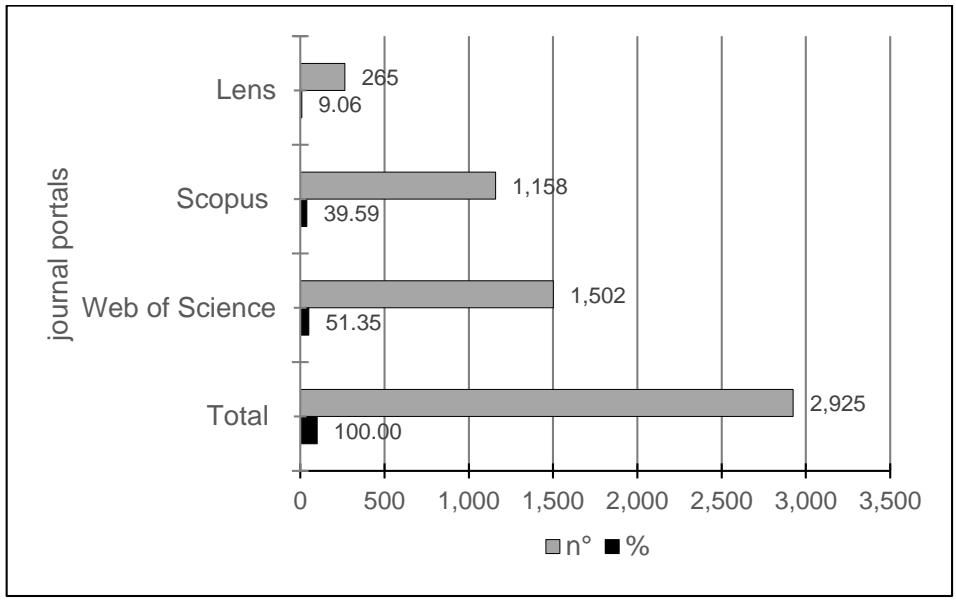 Figure 1: Chart of Quantities and Proportions of Scientific Articles Found by Journal Portals
Source: Prepared from data extracted from Lens (2020-2022), Scopus (2020-2022), and WoS (2020-2022).
The results from both databases of higher proportionality of the bibliometric search represent the most meaningful content in the international literature addressing issues related to the humanized landscape as understood in this study. It is worth noting that the string applied aimed to understand theories, methods, technologies, and innovations related to the thematic. Therefore, it was selected without a population sample or limiting the search to a specific environment, such as central, commercial, or domestic regions in cities, as these were all viable analytical options. Thus, general information was sought to delineate the new approach, which had not been easily found in the literature until then.
The topics addressed by articles not relevant to the study are shown in Figure 2 and correspond to 2,421 articles (82.8% of the total). As expected, medicine and health account for the largest proportion of articles, with 21.02% (509).
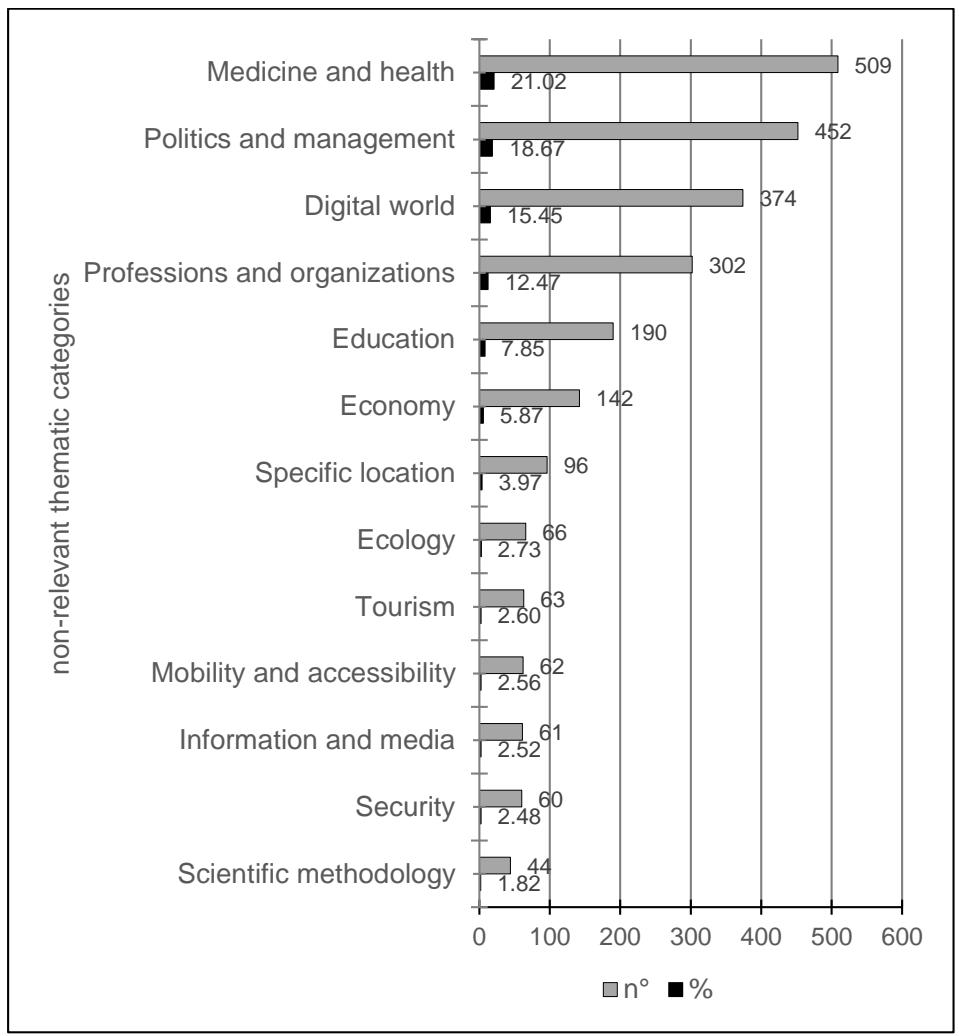 Figure 2: Chart of Quantities and Proportions of Articles by Thematic Categories not Relevant to the Study
Source: Elaborated from data taken from Lens (2020-2022), Scopus (2020-2022), and WoS (2020-2022).
Figure 3 shows the results for the thematic categories relevant to the research, accounting for 239 articles (8.17% of the total). In this context, it is worth highlighting the articles addressing community experiences (44 articles [18.41%]).
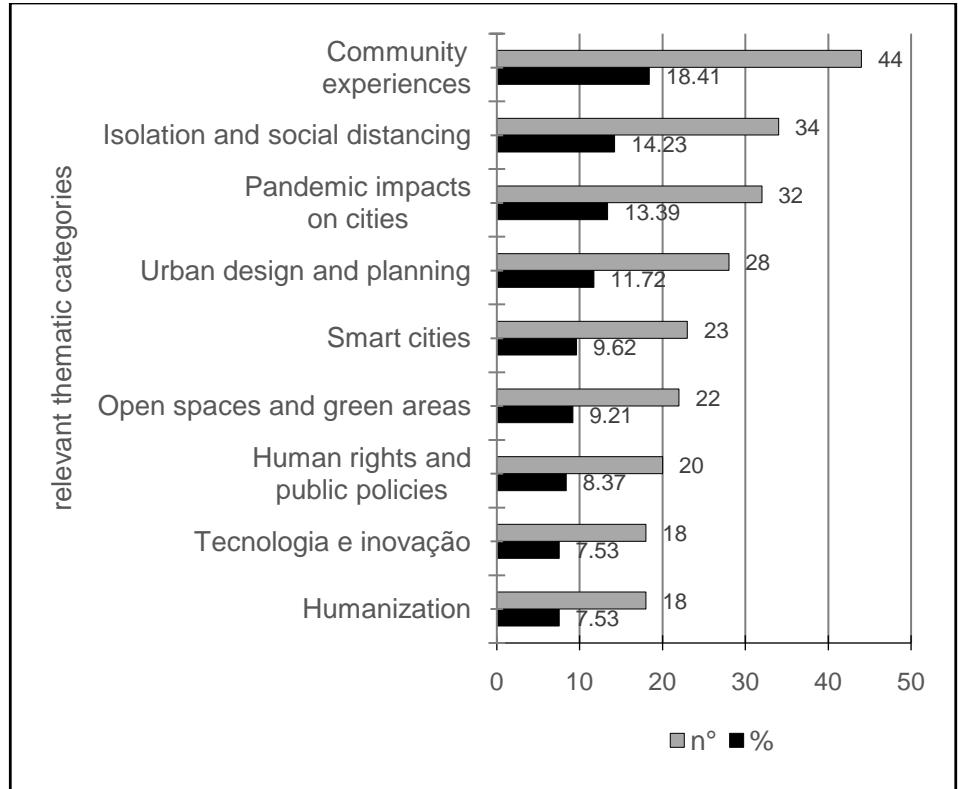 Figure 3: Chart of Quantities and Proportions of Articles Per Relevant Thematic Categories
Source: Prepared from data extracted from Lens (2020-2022), Scopus (2020-2022), and WoS (2020-2022).
The procedures used in the following phases were combined to select and classify articles relevant to the central topics of the investigation. The exclusion criteria resulted in the removal of 265 (9.06%) publications extracted from the databases – 69 because they were duplicates and 196 because they were not suited to the specific context of the health crisis.
Most of the data met the inclusion criteria, and $90.94\%$ (2,660) of the documents were selected in this phase (Figure 4). The 239 texts in the relevant thematic categories were read to assess their suitability for the study, resulting in 194 articles ( $81.17\%$ of the previous result).
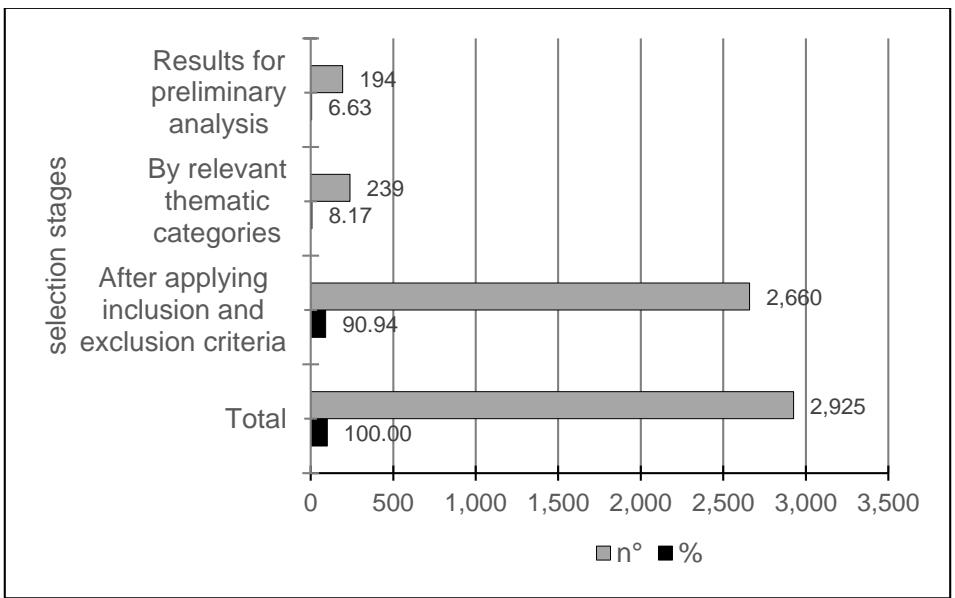 Figure 4: Chart of Quantities and Proportions of Selected Articles per Bibliometric Phases
Source: Prepared from data extracted from Lens (2020-2022), Scopus (2020-2022), and WoS (2020-2022). Note: Sum of percentages not equivalent to 100.00% Of the 194 articles, 137 were empirical studies (70.62%) (Figure 5), which addressed both cities and communities during the pandemic period in different global contexts. On the other hand, only 57 theoretical
texts (29.38%) were found, most of which focused on works published during the health crisis and reports of actions taken by the city government.
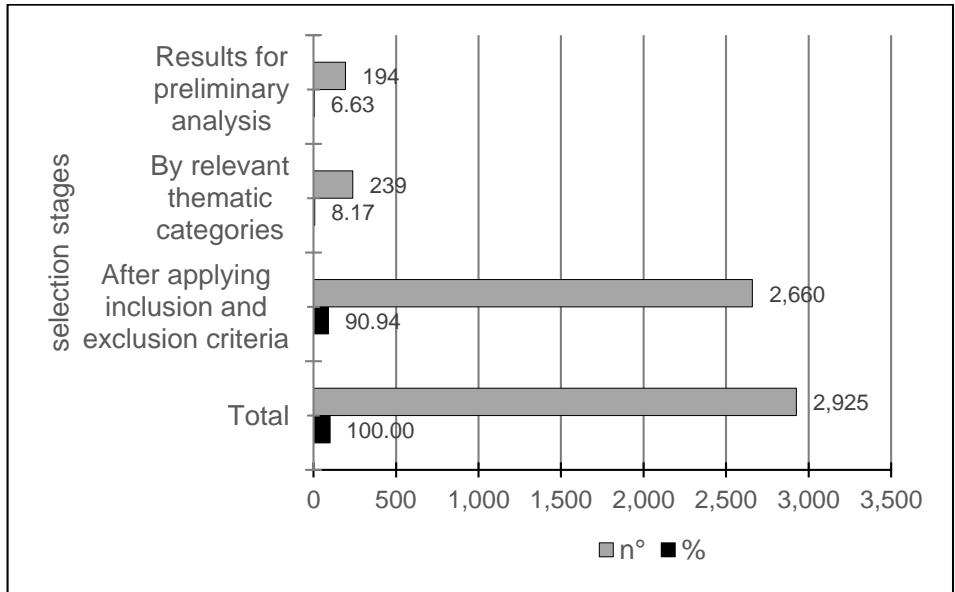 Source: Elaborated from data taken from Lens (2020-2022), Scopus (2020-2022), and WoS (2020-2022).
Figure 5: Chart of Quantities and Proportions of Articles after Preliminary Analysis by Approach Typology Of the six continents, only Antarctica was not found in the 194 selected articles. Because of the large territorial extent and the significant cultural differences among the regions, America was divided into two subcontinents - South and North - as no article from Central America was found.
Providing information relevant to the analysis of the international context, the journal databases included articles with proportionally different publication locations (Lens: 7 countries, 4 continents, and 2 subcontinents; Scopus: 31 countries, 3 continents, and 2 subcontinents; WoS: 35 countries, 4 continents, and 2 subcontinents).
Overall, Europe is the most represented, with 65 texts (33.51%), followed by Asia with 40 (20.62%). The continents with the lowest rates are Africa with 11 (5.67%) and Oceania with 4 (2.06%) (Figure 6).
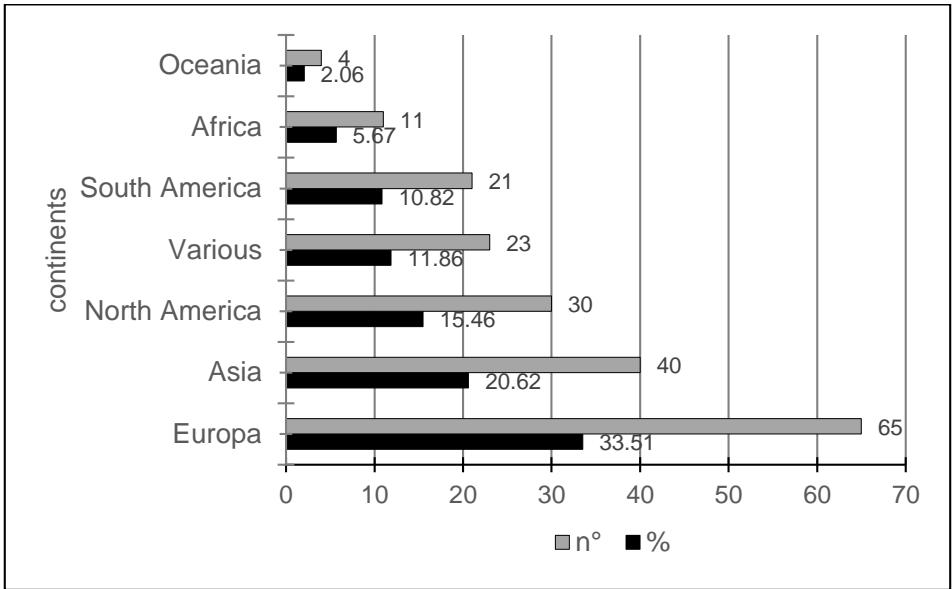 Figure 6: Chart of Quantities and Proportions of the Continents Addressed in the Selected Articles
Source: Prepared from data extracted from Lens (2020-2022), Scopus (2020-2022), and WoS (2020-2022).
Fifty countries and several cities were analysed in the 196 articles selected. Brazil was in fifth place with 13 studies $(6.70\%)$ (Figure 7). However, most of the publications came from the United States, with 25
(12.89%), followed by the 23 articles classified as 'other' (11.86%), which refer to works conducted in more than one country and mostly consist of comparisons between regions on different continents.
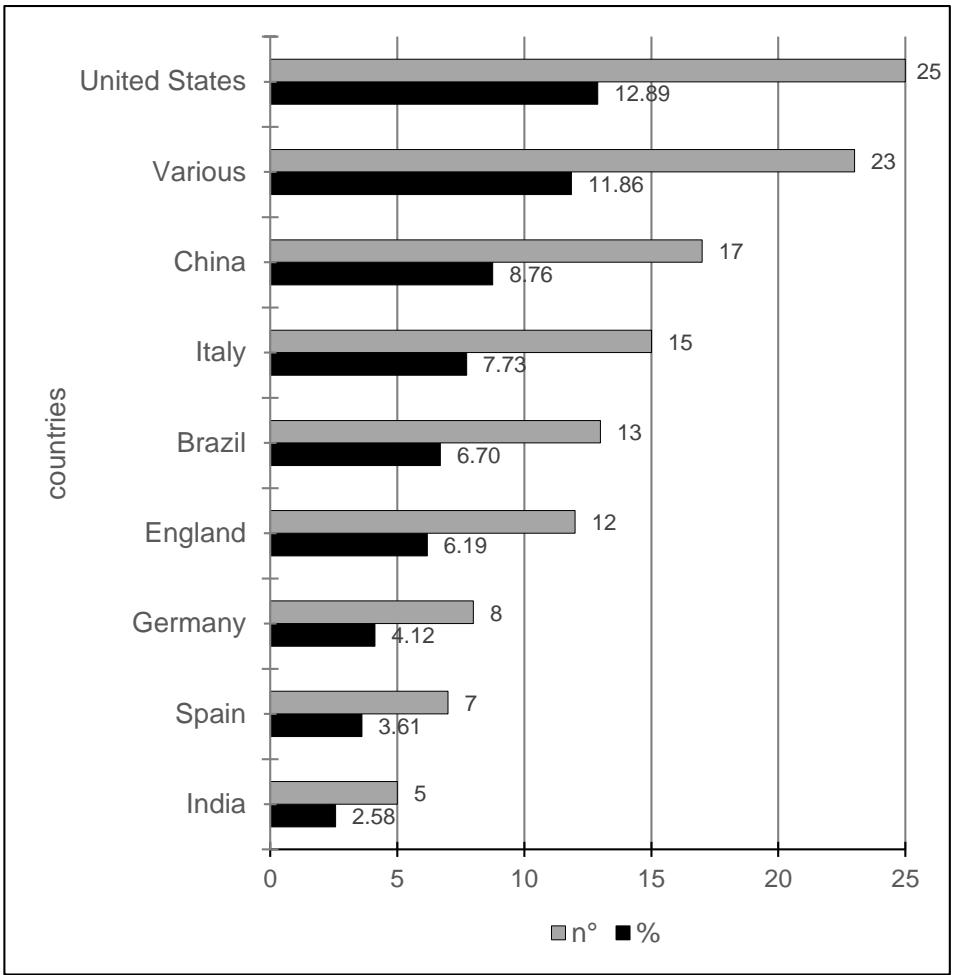 Figure 7: Chart of Quantities and Proportions of the Nine\* Countries Most Addressed in the Selected Articles
Source: Elaborated from data taken from Lens (2020-2022), Scopus (2020-2022), and WoS (2020-2022). Note: $\star =$ proportion exceeding $2.50\%$ of the total Of the 194 articles included in categories relevant to the topic, 45 (18.83%) were excluded because they were not freely accessible, resulting in 149 (76.80% of the texts selected for preliminary analysis). This reclassified the initial views on isolation and social distancing (28 [18.79% of the available articles]) and on the impact of the pandemic (26 [17.45%]) (Figure 8).
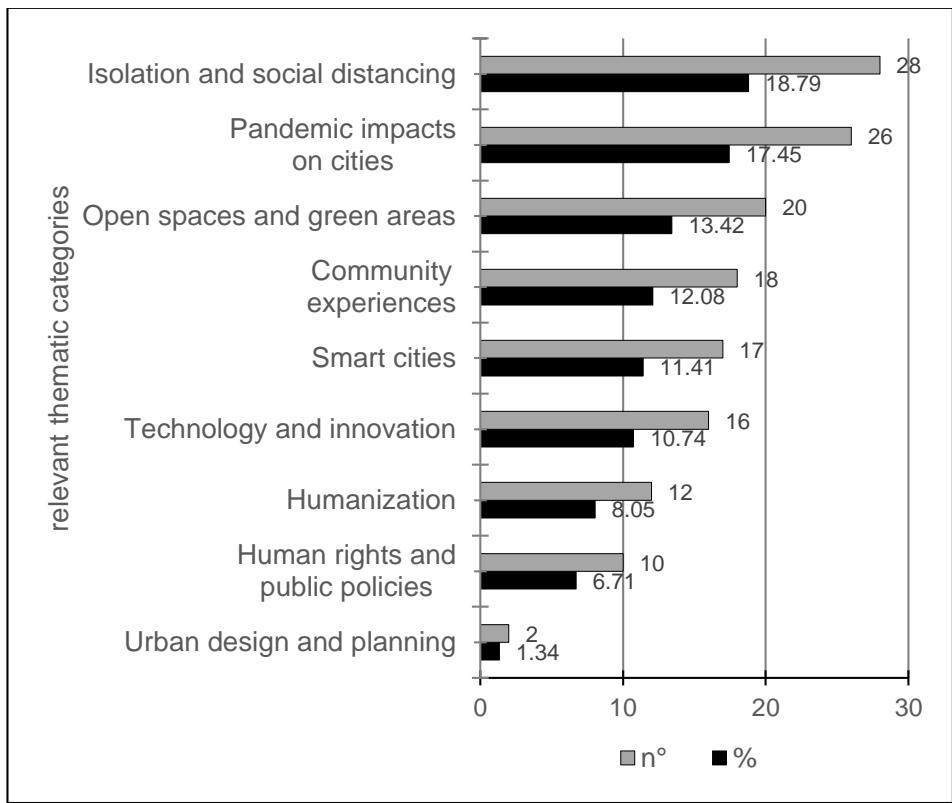 Figure 8: Chart of Quantities and Proportions of Open Access Articles by Relevant Thematic Category
Source: Prepared from data extracted from Lens (2020-2022), Scopus (2020-2022), and WoS (2020-2022).
Reading the articles in their entirety offers several perspectives. However, since it is impossible to individually analyze the contents because they refer to various countries from different contexts, the next section summarises the general results regardless, highlighting the most relevant texts for the frequently addressed thematic categories.
## V. ANALYTICAL DISCUSSIONS
Isolation and social distancing were a sudden and radical step in the everyday life of individuals and for society, as well as for trade, transport, education, and professional practice. Américio et al. (2020), Ammar et al. (2020), and Mouratidis (2021) state that the quality of life was changed by the restrictions on movement in the cities during lockdown.
Residents' well-being was also affected by alterations in relationships between them and their neighbors (Marlow et al., 2021), not only due to imposed isolation but also due to the fear of contracting the pathogenic agent, which resulted in high mortality rates from mid-2020 to early 2022 (WHO, 2025). These factors increased people's sense of fear and unease in dealing with the city, increasing the impact of the pandemic in cities (Mouratidis, 2021).
Rosa and Mannarini (2021) found that the recent pandemic had a direct impact on the use of open spaces and green areas as well as on private places and socio-psychological aspects. The authors confirm that group interaction, communication processes, individual sense-making, and social behavior were changed by that health crisis.
The changes, however, affected not only the individual but also the common sphere. Natural and built spaces were affected by the changes in cities and neighborhoods, as social gatherings almost died out. In general, such environments are affectively remembered by citizens as places for personal and communal reflections, daily activities, and interaction with other groups, creating bonds of belonging (Pipitone & Jović, 2021; Rosa & Mannarini, 2021).
During the recent pandemic, densely wooded areas were widely used, both in economically favoured locations and in informal settlements. In general, residents of residential areas adhered to the recommendations of social distancing, reduced the frequency of central and tumultuous places, and used open spaces that were close to their homes (Zgórska, 2020).
Places with natural landscapes, such as forests, seas, and mountains, reached people's subjective look and proved to be socially safe because of the lower risk of infection. From this point of view, outdoor environments allowed the continuity of physical activities and social interaction from a distance (Mouratidis, 2021; Zgórska, 2020).
This knowledge guides the reasoning that the spatial structure of communities has potential and awakens the interest of urban planners regarding the search for opportunities to expand functional open spaces for recreational purposes. Together, they make the reuse of degraded land for recreational purposes effective (Zgórska, 2020).
According to Mouratidis (2021), the presence and proximity of places used for recreation are important for maintaining or increasing the quality of life. Because of the risk of infection when traveling—especially on public transport – and mobility restrictions in cities, natural landscapes and green spaces in the neighborhood are seen as being increasingly relevant in the 'pandemic era' (Wolfe, 2011).
As a subjective element, well-being requires components such as life fulfillment, emotional satisfaction, and self-actualization. For example, Mir (2020) points out that the measures required to contain the pathogen disrupted several activities that promoted these conditions, such as recreational activities and social interaction. Community experiences with various civic initiatives associated with flexible adaptation to radically new situations have developed the concept of social innovation and increased knowledge in the field of urban resilience (Szemző et al., 2022).
Considering the international literature, the concept of smart cities was among the topics of greatest interest for this research, with innovations related to the care of individuals, regardless of the country studied, and proposals for a more inclusive and sustainable urban development process based on technological resources (De Las Heras et al., 2020; Graziano, 2021; Kang et al., 2020).
Technology and innovation adaptations had to be rapid and long-term as the pandemic became a global innovation phenomenon within a few months (Dahlke et al., 2021; Rosa & Mannarini, 2021). The use of information and communication technologies (ICTs) played an important role in people's quality of life as they relied on digital tools to communicate socially, request help, or receive virtual care (Cobelli et al., 2021; Mouratidis, 2021). It is worth mentioning, however, the warning from Miller & Smith (2021) regarding ethics in technological use.
Technological resources also play an important role in preventing new pandemics. When used in urban planning, they suggest that the future lies in the concept of smart cities – in other words, those that use technology to promote quality of life and quickly solve problems in the daily lives of their inhabitants (Yang & Chong, 2021).
Yang and Chong (2021) clarify that smart cities must integrate data and information systems from multiple sources to improve their ability to meet the aspirations of the population. In a pandemic, control and prevention of the spread of the virus or similar contagion agents could be achieved using assistive technologies in the urban structure. To this end, the authors highlight the need for governance initiatives that shape the different modalities of infrastructure in a specialized way and with citizens contributing to and understanding innovation as the demand comes from society itself.
Almost all the statements above, as well as others in the analyzed articles, address humanization in (post-)pandemic cities. However, the concept of 'care planning' proposed by Jon (2020) recognizes not only the interdependence of people but also the constant dialectical relationships between built and natural environments, In terms of human rights and public policy, the decisions made in the management of cities during the pandemic period, as well as information about the mental health and well-being of individuals, are of great importance, in addition to alerts about citizens' rights (Gready, 2020; Torres Obregon, 2021). In this framework, aspects of societal vulnerability were reinforced by the disease outbreak, deepening pre-existing socio-economic inequalities (Wu et al., 2021).
Despite limited access to studies on urban design and planning, this study contributes to the debate on the basic principles and social aspects related to the design of architectural and urban spaces that can withstand the impacts of a health crisis era (Girardi, 2021; Melone & Borgo, 2020; Mir, 2020). Postpandemic priorities are also postulated to structure cities so that they can develop and maintain their functionality with as few infections as possible during other severe diseases after Covid-19 (Aboukorin et al., 2021). This debate leads to the final reflections of this article.
## VI. CONCLUSIONS
The general objective of this study, that is to assess the application of solutions in the field of humanized management of (post-)pandemic urban landscapes, especially in an international context, was achieved. At the same time, the answers to the research question reveal significant trends within a transnational framework, clarifying some of the most important principles for a human-centred future of the contemporary city.
The theoretical approaches to the interaction between landscape and humanization in the urban context served initially as a basis for the bibliometric search, which was also supported by the methodological procedures for texts classification, the results obtained, and the respective analytical discussion. The analysis of the selected articles and the increase in publications on content related to the recent pandemic with different information reveal that the impact of the health crisis has been studied in different areas and on a large scale from 2020 to 2022. It can therefore be assumed that investigations across most scientific fields examined the new topic in a global scale, enabling the emergence of diverse keywords and multiple thematic categories within the research framework.
The increasing number of studies on the adaptations required for the pandemic indicates that the search for alternatives for the 'humanization' of cities is still at a preliminary stage. In general, the challenge remains to further identify the relationships between human-centred principles and new applied solutions – in other words, to create innovative connections for the area. This is partly because the topic is unprecedented and has been little discussed in the literature.
The present study serves as a basis for overcoming this paradigm. The development of descriptive research on the conceptual definition of the 'humanized landscape' can contribute to future research as it is a topic that has expressive potential for different areas of urban research, despite the still insufficient framework of references focused on this kind of interpretation.
On the other hand, the diversity of the content found gives rise to several possibilities for establishing principles for urban planning. At least in part, it provides important solutions for the humanized future of today's cities.
The need to establish relationships between state administration and specific public measures as a part of the humanization of urban landscapes is also worth mentioning. Greater care for citizens in terms of health and safety in the post-pandemic period is also needed.
### ACKNOWLEDGMENTS
To the Conselho Nacional de Desenvolvimento Científico e Tecnológico (CNPq) e à Fundação Araucária (FA) de Apoio ao Desenvolvimento Científico e Tecnológico do Estado do Paraná for their financial support of the research, and to the former institution also for granting scholarships to the first and second authors, respectively. To the Pontificia Universidade Católica do Paraná for the assistance to the study.
Generating HTML Viewer...
References
47 Cites in Article
Salma Aboukorin,Haoying Han,Mahran Mahran (2021). Role of urban planning characteristics in forming pandemic resilient cities – Case study of Covid-19 impacts on European cities within England, Germany and Italy.
Hikaru Aihara,Ichiro Kawachi,Benjamin Sommers (2025). Impact of Telemedicine on Health Expenditures During the COVID-19 Pandemic in Japan: Quasi-Experimental Study.
Andrea Amerio,Andrea Brambilla,Alessandro Morganti,Andrea Aguglia,Davide Bianchi,Francesca Santi,Luigi Costantini,Anna Odone,Alessandra Costanza,Carlo Signorelli,Gianluca Serafini,Mario Amore,Stefano Capolongo (2020). COVID-19 Lockdown: Housing Built Environment’s Effects on Mental Health.
Xuemei Bai (2025). Cities as transformative agents for global sustainability.
J Chauvin (2024). Why did Covid-19 affect some cities more than others? Insights from Brazil before vaccination.
N Cobelli,F Cassia,R Burro (2021). Factors affecting the choices of adoption/non-adoption of future technologies during coronavirus pandemic.
Ana De Las Heras,Amalia Luque-Sendra,Francisco Zamora-Polo (2020). Machine Learning Technologies for Sustainability in Smart Cities in the Post-COVID Era.
Johannes Dahlke,Kristina Bogner,Maike Becker,Michael Schlaile,Andreas Pyka,Bernd Ebersberger (2021). Crisis-driven innovation and fundamental human needs: A typological framework of rapid-response COVID-19 innovations.
Pablo Dintrans,Paula Valenzuela,Claudio Castillo,Yamileth Granizo,Matilde Maddaleno (2023). Bottom-up innovative responses to COVID-19 in Latin America and the Caribbean: addressing deprioritized populations.
Julia Forster,Stefan Bindreiter,Birthe Uhlhorn,Verena Radinger-Peer,Alexandra Jiricka-Pürrer (2025). A Machine Learning Approach to Adapt Local Land Use Planning to Climate Change.
Luigi Girard (2021). The evolutionary circular and human centered city: Towards an ecological and humanistic “re-generation” of the current city governance.
Teresa Graziano (2021). Smart Technologies, Back-to-the-Village Rhetoric, and Tactical Urbanism.
Paul Gready (2020). The Implications of and Responses to COVID-19: Localizing Human Rights in the City of York (UK).
C Herrmann-Pillath (2024). Rituals as Nature-Based Governance of reciprocity between people and nature.
Anna Hersperger,Matthias Bürgi,Wolfgang Wende,Simona Bacău,Simona Grădinaru (2020). Does landscape play a role in strategic spatial planning of European urban regions?.
Ihnji Jon (2020). A manifesto for planning after the coronavirus: Towards planning of care.
Myounggu Kang,Yeol Choi,Jeongseob Kim,Kwan Lee,Sugie Lee,In Park,Jiyoung Park,Ilwon Seo (2020). COVID-19 impact on city and region: what’s next after lockdown?.
Hiba Karam,Lalita Phatthanachaisuksiri,Vijay Palliyil,Meng Cai,Niklas Suhre,Eva Kassens-Noor (2025). Identifying “cities” of the world: a methodological approach, lexicon, and database for human settlements.
Rahul Kumar (2025). Bibliometric Analysis: Comprehensive Insights into Tools, Techniques, Applications, and Solutions for Research Excellence.
Lens (2020). Seeing economic collapse and recovery through the lens of complexity economics.
Jacques Mairesse,Pierre Mohnen,Ad Notten (2025). Innovation and productivity: the recent empirical literature and the state of the art.
Thomas Marlow,Kinga Makovi,Bruno Abrahao (2021). Neighborhood Isolation during the COVID-19 Pandemic.
M Melone,S Borgo (2020). Rethinking rules and social practices. The design of urban spaces in the post-Covid-19 lockdown.
Seumas Miller,Marcus Smith (2021). Ethics, public health and technology responses to COVID‐19.
Wenqi Min (2025). A scientometric review of cultural heritage management and sustainable development through evolutionary perspectives.
Veaceslav Mir (2020). Post-Pandemic City: Historical Context for New Urban Design.
A Moghayedi (2025). Inclusive digitalized urban public facilities for sustainable cities: A comparative user-centered evaluation of benefits and challenge.
Kostas Mouratidis (2021). How COVID-19 reshaped quality of life in cities: A synthesis and implications for urban planning.
F Ottone,R Grifoni (2017). The Reality of the Unbuilt.
A Patel (2020). Preventing Covid-19 amid public health and urban planning failures in slums of Indian cities.
J Pipitone,S Jović (2021). Urban green equity and Covid-19: Effects on park use and sense of belonging in New York City.
Maddalena Rossi,Chiara Nardis (2025). A Participatory Design. The Near Future of Quality Public Space Planning.
A Rosa,T Mannarini (2021). Covid-19 as an "invisible other" and socio-spatial distancing within a one-metre individual bubble.
Cicik Suciati,Sigit Hermawan (2020). Research Trends in Intellectual Capital and University Performance: A Bibliometric Analysis Using Scopus Database.
M Sander,A Klimesch,L Samaan,S Kühn,J Augustin,L Ascone (2025). Natural vs. built visual urban landscape elements around the home and their associations with mental and brain health of residents: A narrative review.
Dina Shehayeb,Mennatallah Tawfik,Mirame Elsayed,Shaimaa Emad,Esraa Halawa (2023). Humanizing Smart Cities: A Preconception to a Better Life for All.
Hanna Szemző,Jorge Mosquera,Levente Polyák,Lukács Hayes (2022). Flexibility and Adaptation: Creating a Strategy for Resilience.
M Switalski,M Van Strien,A Grêt-Regamey (2025). Measuring place rather than space: Integrating landscape qualities for the urban-rural gradient using people's perceptions and machine learning.
X Tang (2023). Research on intelligent landscape design based on distributed integrated model.
D Torres Obregon (2021). Entre el desarrollo desigual y el derecho a la ciudad. Reflexiones sobre Lima Metropolitana en el siglo XXI.
Weiyu Wang,Xiqing Wang,You Yu (2025). COVID-19-Related Stress Events and College Student Mental Health During Home Quarantine: The Mediating Role of Negative Cognitive Emotion Regulation and the Moderating Role of Meaning in Life.
(2025). WHO Covid-19 Dashboard.
N Wolfe (2011). The viral storm: The dawn of a new pandemic age.
X Wu,X Li,Y Lu,M Hout (2021). Two tales of one city: Unequal vulnerability and resilience to Covid-19 by socioeconomic status in Wuhan, China.
S Yang,Z Chong (2021). Smart city projects against Covid-19: Quantitative evidence from China.
Barbara Zgórska,Dorota Kamrowska-Załuska,Piotr Lorens (2021). Can the Pandemic Be a Catalyst of Spatial Changes Leading Towards the Smart City?.
Explore published articles in an immersive Augmented Reality environment. Our platform converts research papers into interactive 3D books, allowing readers to view and interact with content using AR and VR compatible devices.
Your published article is automatically converted into a realistic 3D book. Flip through pages and read research papers in a more engaging and interactive format.
The recent epidemiological events and the associated need for scientific knowledge have increased the number of investigations on the impact of diseases in different areas, but at the level of built scenarios, the problems caused by inadequate infrastructure and urban characteristics in coping with health crises are widespread. Given these issues, the general objective of this research is to assess the application of solutions in the field of humanized management of (post-) pandemic urban landscapes, especially in an international context. A scientometric analysis and a systematic review of secondary sources was conducted in the Lens, Scopus, and Web of Science (WoS) databases, quantifying the results and classifying their characteristics to d elineate the main academic discussions. The literature search yielded a total of 200,032 texts, of which 194 were selected for preliminary analysis after applying filters. This showed that publications on WoS (51.35%) and those with empirical approaches (70.62%) predominate, with Europe (33.51%) being more represented, although the United States (12.89%) published a greater number of articles.
Our website is actively being updated, and changes may occur frequently. Please clear your browser cache if needed. For feedback or error reporting, please email [email protected]
Thank you for connecting with us. We will respond to you shortly.