The purpose of this study was to test the effectiveness of growing vegetables under diaper waste moisture conservation technology and to incentivise diaper waste management in a way which reduces its ecological footprint through water and plant nutrients harvesting and conservation in agriculture. Due to poor refuse collection in Chitungwiza which has encouraged improper disposal of diaper waste, people resorted to the dumping of used disposable diapers at various dumping sites that have sprouted in most residential areas in the urban areas of Zimbabwe. Diaper wastes currently not properly managed in a manner which adds value to the food chain while they contain significant amounts of nutrients coupled with their water holding capacity which is not being utilised to address challenges induced by climate change in the agricultural sector pertaining food security and climate resilience in urban agriculture hence the need to undertake this study. An experiment to compare growth of vegetables under diaper waste treatment and a control without diapers was conducted. Vegetable growth rate and soil moisture loss were monitored over 10 weeks.
## I. INTRODUCTION
It is therefore apparent that Disposable baby diapers have almost become indispensable in the list of baby care products as their use has been increasing steadily over the years [12]. Although disposable baby diapers were used traditionally for their convenience especially when travelling, nowadays they are generally used in many parts of the developed and developing world as a replacement for cloth diapers. In the developed world approximately between $90\%$ and $95\%$ of diapers used are disposable [23]. In a study done in Ottawa, Canada, disposable diapers were used by $82.3\%$ parents and only $2\%$ used cloth diapers. The developing world is adopting the use of disposal diapers because of their perceived advantages over the cloth diapers. It is therefore apparent that, the advent of disposable diapers has somehow resulted in the death of the napkin culture. [20] Claims that disposable diapers have become highly commoditized as they are regarded as an epitome of modernization. They have in actual fact become a necessity rather than a luxury in fast paced lives.
The increased use of disposable diapers is associated with a number of environmental health challenges. The soiled diapers litter public spaces where they are an aesthetic nuisance [2]; [18]. Unlike in the developed countries where the disposal of waste is more developed, with separation at the source, developing countries such as Zimbabwe still use traditional methods of mixing waste and sometimes the diapers are dumped at illegals dumpsites [11]. Attributes this to inefficiencies by local authorities to manage solid waste. The refuse collection and disposal systems are inadequate and it is common to find refuse containing human waste such as disposable diapers mixed with other domestic waste. This negligent disposal of soiled disposable diapers therefore increases the chances of environmental pollution by waste which will otherwise be used in an ecological sustainable manner. It also exposes people who deal with solid waste such as municipal employees and waste scavengers to contaminants which could cause serious illnesses as they may handle raw faecal matter in the process of handling of soiled disposable diapers. The challenge of improper diaper disposal is affecting many towns and cities in the world and Chitungwiza town is not an exception.
However, diaper waste can be recycled into scientifically proven use which can contribute significantly in waste management, nutrient recycling and moisture conservation for agricultural use. A model around these elements can be developed to in order to proffer solutions around use of diapers in a more sustainable manner and addressing climate change and irrigation water scarcity problems. Originally, diapers relied on the absorbency of cotton, paper and sponges to hold the liquid in place. Unfortunately, those materials could only hold about 20 times their weight in water. However, today there is a much better situation. The use of super absorbent polymer materials such as sodium polyacrylate has dramatically increased the liquid holding capacity of diapers. Sodium polyacrylate was originally developed as an agricultural product which could be spread over crop fields to absorb moisture when it's plenty and release it when needed. It is a super-absorbing polymer that can hold up to 800 times its weight in water. When water is added to the soil, the polymer will absorb and hold some water. As the soil dries, the polymer releases its water keeping the soil moist. These properties can be harnessed in a bid to conserve water for irrigation whilst addressing the challenge diaper waste management.
### a) Problem Statement
The non-collection of refuse in Chitungwiza has encouraged improper disposal of diaper waste. Generally, people resort to the dumping of used disposable diapers at various dumping sites that have sprouted in most residential areas in the urban areas of Zimbabwe. This is because, responsible authorities fail to collect refuse on a regular basis. Walking through Chitungwiza one can observe soiled diapers that are disposed near residences and along the roads. Diapers that are recklessly dumped at illegal dump sites are usually ravished by stray dogs thereby exposing faecal matter which attracts the huge green flies. It takes 500 years for disposable diapers to decompose [15]. There is acute water scarcity late alone water for irrigation. This study seeks to find out if hydrogels contained in diapers would make a significant difference in conserving water and retaining the moisture as well as supplying nutrients in the soil in a vegetable garden.
### b) Justification
This study explores the subject of diapers, which are an iconic environmental problem associated with child rearing. It is generally regarded that waste management is the sole duty and responsibility of local authorities, and that the public is not expected to contribute. Contrary to this statement however, there is need for community involvement and participation in decisions regarding proper disposal of waste material to maintain a health and safe environment. In Zimbabwe, as in many developing countries, it appears that little information is available regarding handling and the proper disposal of disposable diapers despite a significant rise in usage of such during the last decade by women of child bearing age. Proper disposal of diapers reduces incidences of contamination of drainage water, which can subsequently lead to diarrheal diseases. There are a lot of diapers which are a nuisance and threat to environmental health around urban areas. Diaper wastes currently not properly managed in a manner which adds value to the food chain while they contain significant amounts of nutrients coupled with their water holding capacity which is not being utilised to address challenges induced by climate change in the agricultural sector pertaining food security and climate resilience in urban agriculture hence the need to undertake this study.
### c) Objectives
## i. General Objective
To incentivise diaper waste management in a way which reduces its ecological footprint through water and plant nutrients harvesting and conservation in agriculture.
## ii. Specific Objectives
1. To establish diaper waste handling practices in Chitungwiza.
2. To compare growth rates of Brassica Napus L under diaper waste moisture conservation technology and the conventional farming method.
3. To determine the effectiveness of diaper waste-moisture conservation technology in moisture conservation.
### d) Research Questions
1. What are the waste handling practices in Chitungwiza residential area?
2. What is the plant growth rate of Brassica Nupus L under the conservation conditions?
3. How effective is diaper waste-moisture conservation technology in moisture conservation?
### e) Definition of Terms
Diaper Waste Moisture Conservation Technology - a technique used to conserve moisture and harvest nutrients from soiled diapers for small scale agricultural purposes.
## II. MATERIALS AND METHODS
### a) Study Site Description
Chitungwiza City is located about 20km South East of Harare Main Post Office, covering $49\mathrm{km}^2$. It shares boundaries with Harare City and Mashonaland East Province. Chitungwiza town has an estimated population of about 354,472 according to the 2012 census. It is popularly known for a hospital named Chitungwiza Central Hospital, Aquatic complex, Town Centre complex and its Delta Chibuku super plant, Chitungwiza came into existence in the late1970s.
The town has four administrative districts, namely Seke North, Seke South, Zengeza and St Mary's as shown in the map below. The oldest of the suburbs is St Mary's which is divided into two sections, Manyame Park (New St Mary's) and Old St Mary's. St Mary's is popularly known for being the oldest suburb in Chitungwiza town. Zengeza is divided into 5 sections i.e. Zengeza 1, 2, 3, 4 and 5. Zengeza 4 being relatively the largest section. Seke is another suburb and it is divided into many sections i.e. Unit A up to Unit P.
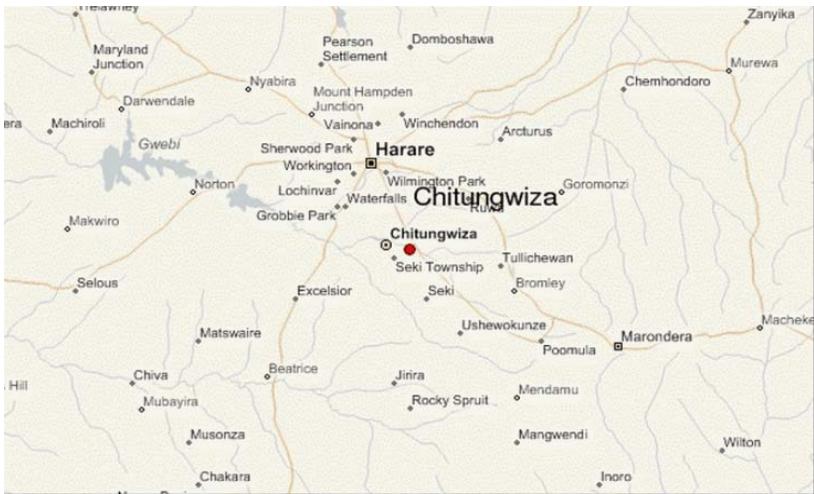
Figure 2.1: Showing Location of Chitungwiza
Some of the popular shopping centers in Chitungwiza include Chikwanha, PaGomba, Pazvido, PaJambanja, Chigovanyika, PaDaddy, unit j shopping Centre, Zengeza 2 shopping Centre.
### b) Study Area
The study was conducted in Old St Mary's Chitungwiza, ward 5 lying on coordinates $17^{\circ}59'51''$ S $31^{\circ}2'35''$ E. It is bounded by other wards in Chitungwiza, namely in the North by Manyame park, on the North
West by Zengeza 2 and on the South Zengeza 5. It is characterised by a continental temperate climate and it has a rocky geology which is characterised by big granite rocks.
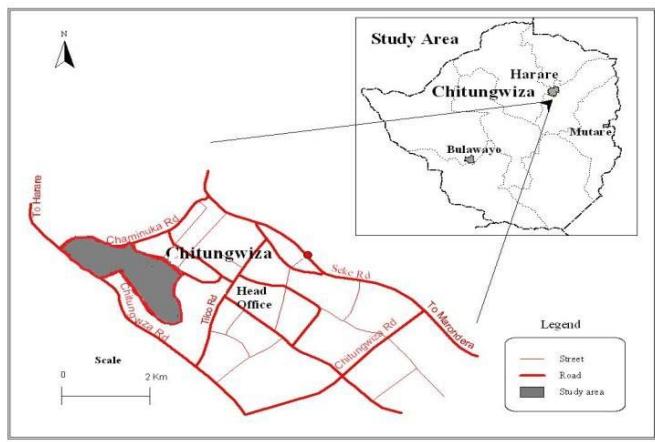
Figure 2.2: Study Area Map
### c) Research Design
A cross sectional case study on the assessment of improper solid waste collection, handling and disposal practices among residents of Old St Mary's, Chitungwiza. The case study was appropriate for the researcher because it allowed an in depth study of aspects of the problem within a limited time scale. Hand administered questionnaires, interviews and observations were used for the study. [7] Defines research design as a deliberately planned arrangement of conditions for analysis and collection of data in a manner that aims to combine relevance to research purpose with the environmental procedure. The two common types of research design are the case study and the descriptive research and in this particular study the Case study method will be used. A descriptive case study research design was used in order to achieve the research objectives. A descriptive case study research design helps in gaining adequate insight and an in-depth analysis of occupational noise at the organization. Due to the case study approach that was used the research was confined to the mentioned area of study.
This is a cross sectional research that will use both mixed research method methodology involving the use of both quantitative and qualitative research methods. Observational check list and structured interviews with the selected respondents will be employed. Experiments to assess the feasibility of utilizing soiled diapers in vegetable beds will also be conducted.
### d) Sampling Frame/Population
The target population of the study are caregivers of infants and toddlers who are still using diapers and environmental health promoters. The study will be conducted in two residential areas of Chitungwiza town namely St Marys and Manyame Low Density. Twenty mothers with children below the age of two years will be interviewed from each of the above mentioned suburbs and they will be randomly selected.
### e) Method of Data Collection
The study will also look at the municipal solid waste disposal site as it is s the destination of disposal sites that were collected in the town. This study will triangulate a number of qualitative techniques in gathering data including interview guide and observation guide. The use of qualitative methods enable the study to have access to the perspectives of the people in sampled areas on their views and handling practices of disposable diapers. The use of qualitative techniques will enable the research observe the social life of women using diapers and where the diapers are being utilised. This will provide the study with a deeper appreciation of what is going on with regards the use of diapers.
## i. Questionnaires Surveys
40 questionnaires were self-administered systematically selected households (target population) to collect adequate information to determine household that use disposable diapers and the method of disposal, to establish the amount of disposable diaper as a proportion of the total waste, assess the effectiveness of current strategies used in managing the disposal of diapers and assesses the environmental impacts of improper disposal of diapers. The questionnaires keep away from interviewer bias, guiding the areas that can impact the legitimacy and reliability of data collection. They comprised of closed type questions whereby answers to the questions were availed and open ended type questions which gave room for respondents to explain and describe their feelings about the issues requiring clarification. Open ended questions allowed the respondents to formulate their own answers. Closed ended questions entailed the respondents to choose answers from given options. The questionnaires are of critical importance in research since the research study can be swiftly done and data analysis can begin right away and they are a less costly way of reaching people. Questionnaires allowed responses to be gathered in a standardized way and in this case the questionnaires will be more objective.
This research adopted a mixed-method approach, and hence the nature of data collected and analysed was both qualitative and quantitative. A questionnaire with semi-structured questions was used in the study because questionnaires allow the recording of both qualitative and quantitative data.
important for this study because it adopted a mixed method [5]. A questionnaire also promotes high validity and reliability than other instruments. The data collected through questionnaires is easily quantifiable especially through the use of software packages such as SPSS and Excel which were also utilised in this study. This instrument was used because it is flexible and allows in-depth understanding of issues under study and a greater exploration of the issues [5]. Furthermore questionnaires can be analysed more scientifically and objectively than other instruments. A questionnaire has its own shortfalls that include its inability to allow interaction or discussions during data collection [10].
## ii. Field Observations/ Reconnaissance
This is non-verbal way of collecting data was used by the researcher. It emphasizes on discovering the meanings of the reactions exhibited by people towards actions of other people or change of situations. It allows the researcher to look at people's actions and situations' noting what is going on without asking questions. In the case of the research under study, observations assisted the researcher to view day to day disposable baby diaper waste management activities that are being undertaken by residents in Chitungwiza. The observations are aimed at allowing the study to obtain firsthand information through purposeful, systematic and selective way of watching the state of diaper handling and disposal at the illegal dump sites. The researcher will also participate in the municipal assessment of solid waste generation rates and waste characteristics, specifically focusing on data on soiled disposable diapers.
## iii. Experimental Method
A piece of land to which measures approximately $1.5\mathrm{m}^2$ was used to run the experimental gardening under the soil moisture conservation technique. Soil was excavated from an area which measures $1.5\mathrm{m}\times 1\mathrm{m}$ up to a depth of $0.5\mathrm{m}$. The hydrated super absorbent polymer will come from used biodegradable diapers which are usually socked in urine rich nitrates which are required for optimum plant growth. These were in the ratio of 1:1 by weight. Overland flow filled in the depression during rainy season such that water was harvested and stored for future use. Short maturity variety will be growth and growth performance measured. Soil moisture was determined weakly during the short maturity plant growing season using a soil tensiometer. A tensiometer measures soil water suction (negative pressure), which is usually expressed as tension. This suction is equivalent to the force or energy that a plant must exert to extract water from the soil. The instrument must be installed properly so that the porous tip is in good contact with the soil, ensuring that the soil-water suction is in equilibrium with the water suction in the tip. The suction force in the porous tip is transmitted through the water column inside the tube and displayed as a tension reading on the vacuum gauge.
The researcher used two vegetable beds. The control and variable was set up as follows:
Control A: Include diapers and watered after every seven days. Moisture was measured on a daily basis. Plant growth was measured on a weekly basis.
Control B: No diapers included in the vegetable bed and watered after every seven days. Moisture was measured on a daily basis. Plant growth was measured on a weekly basis.
## iv. Materials
- Watering cans
- Tape measure
- Used diapers
- Recording chart
- Rape seeds (Brassica napus L)
- Tensiometer
### f) Data Presentation and Analysis
The collected data has been presented in different forms through the use of tables, graphs and figures. The data was then critically analysed through assessing trends, increases, decreases and consistencies. The data was also analysed using statistical tools such as SPSS Kersim 20 and Microsoft Excel.
## III. RESULTS AND DISCUSSIONS
This section presents the findings of the study. Results shown in this chapter show the diaper waste handling practices in Chitungwiza, growth rate of Brassica Napis. $L$ and the effectiveness of the moisture conservation technology. The results are presented in various forms such as tables, bar graphs and pie charts which can be easily interpreted and understood. The data was then critically analysed and interpreted.
# a) The Number of Diapers
The responses to this question are shown in table 3.1. The responses to this question were gathered from all those who still have babies that are still using diapers within the targeted population of Chitungwiza.
Table 3.1: Daily Diaper Usage
<table><tr><td colspan="2"></td><td>Frequency</td><td>Percent</td><td>Valid Percent</td><td>Cumulative Percent</td></tr><tr><td rowspan="4">Valid</td><td>>2</td><td>5</td><td>12.5</td><td>12.5</td><td>12.5</td></tr><tr><td>2-5</td><td>33</td><td>82.5</td><td>82.5</td><td>95.0</td></tr><tr><td>6-8</td><td>2</td><td>5.0</td><td>5.0</td><td>100.0</td></tr><tr><td>Total</td><td>40</td><td>100.0</td><td>100.0</td><td></td></tr></table>
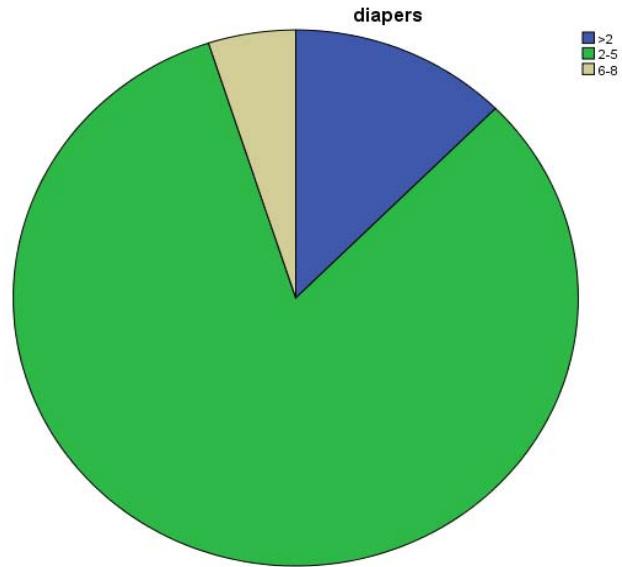
Figure 3.1: Showing the Number of Diapers used by Mothers Per Day
Table 3.1 and Fig 3.1 above show the total percentages of diapers used per day. Out of the total population surveyed, $12.5\%$ of the sample uses less than 2 diapers per day. $82.5\%$ uses 2-5 diapers per day and only $5\%$ uses a minimum of 6- 8 diapers per day. The results show that the average usage of diapers per day is 2- 5 diapers.
### b) Age up to Which Diapers are Used
Table 3.2: Age
<table><tr><td colspan="2"></td><td>Frequency</td><td>Percent</td><td>Valid Percent</td><td>Cumulative Percent</td></tr><tr><td rowspan="4">Valid</td><td>2</td><td>27</td><td>67.5</td><td>67.5</td><td>67.5</td></tr><tr><td>3</td><td>11</td><td>27.5</td><td>27.5</td><td>95.0</td></tr><tr><td>4</td><td>2</td><td>5.0</td><td>5.0</td><td>100.0</td></tr><tr><td>Total</td><td>40</td><td>100.0</td><td>100.0</td><td></td></tr></table>
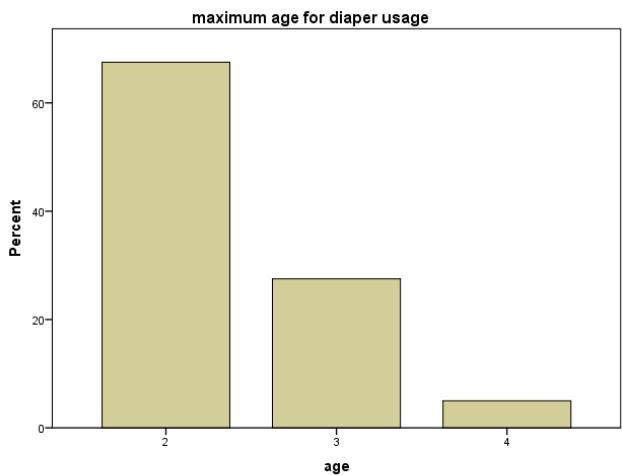
Fig 3.2: Variation of Diaper usage with Age Groups
Table 3.2 and Fig 3.2 shows the age group of children which uses diapers the most. The bar graph shows that $67.5\%$ of the children that uses diapers the most are 2 years old followed by $27.5\%$ which are 3 year old babies and the least being the 4 year old children with $5\%$.
Used Diapers Handling Practices
Table 3.3: Used Diapers
<table><tr><td colspan="2"></td><td>Frequency</td><td>Percent</td><td>Valid Percent</td><td>Cumulative Percent</td></tr><tr><td rowspan="5">Valid</td><td>Burn</td><td>9</td><td>22.5</td><td>22.5</td><td>22.5</td></tr><tr><td>Dumpsite</td><td>10</td><td>25.0</td><td>25.0</td><td>47.5</td></tr><tr><td>Bin</td><td>8</td><td>20.0</td><td>20.0</td><td>67.5</td></tr><tr><td>Burry</td><td>13</td><td>32.5</td><td>32.5</td><td>100.0</td></tr><tr><td>Total</td><td>40</td><td>100.0</td><td>100.0</td><td></td></tr></table>
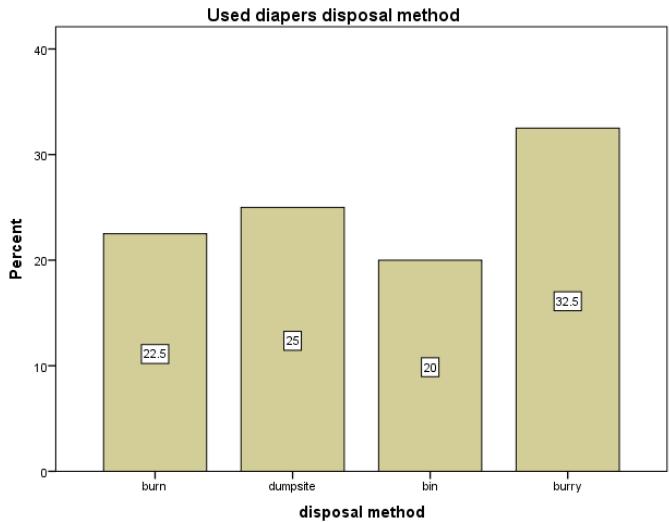
Fig 3.3: How Mothers Manage their used Diapers in Chitungwiza
Table 3.3 and Fig 3.3 show results on how mothers manage used diapers in Chitungwiza. The various methods used for disposal include Burning, Throwing diapers at illegal dumpsites, Waste bins and Burying them. The bar graph shows that $32.5\%$ of the targeted population bury their soiled diapers. $25\%$ of the population dispose of their diapers at illegal dumpsites. This was mainly attributed by poor municipality services which have led to open dumping. Out of the 40 respondents $22.5\%$ burn the diapers, however, burning of diaper waste by residence is mainly attributed to ignorance and also irregular waste collection by the municipality. The open burning practices reduce the volumes of diaper waste but it also actually promotes health hazards to the public through inhalation of smoke and odour. Hazardous toxins like furan and dioxin are
### c) Why do you Prefer Diapers to Nappies
also produced when there is incomplete combustion on diaper waste. Residents tend to use paraffin, methylated spirit and diesel as catalyst to burn diapers because it is difficult to burn in their wet condition with faeces. Therefore, burning of paraffin and other fuel increase the number of greenhouse gases in the atmosphere leading to global warming. Moreover, dioxin and furan are the deadliest toxins that can be produced when there is incomplete combustion. [4] Also commented that carbon monoxide and chlorine are the greenhouse gasses generated when disposable diapers are incinerated and open burning of refuse pose health risk of inhalation of smoke and odour. Ashes may be leached to the ground or dispersed by wind which results in respiratory problems and water contamination by toxics. Lastly $20\%$ dispose the diapers in waste bins.
Table 3.4: Diapers vs Cloth Nappies
<table><tr><td colspan="2"></td><td>Frequency</td><td>Percent</td><td>Valid Percent</td><td>Cumulative Percent</td></tr><tr><td rowspan="4">Valid</td><td>Easy</td><td>22</td><td>55.0</td><td>55.0</td><td>55.0</td></tr><tr><td>Affordable</td><td>7</td><td>17.5</td><td>17.5</td><td>72.5</td></tr><tr><td>Saves water</td><td>11</td><td>27.5</td><td>27.5</td><td>100.0</td></tr><tr><td>Total</td><td>40</td><td>100.0</td><td>100.0</td><td></td></tr></table>
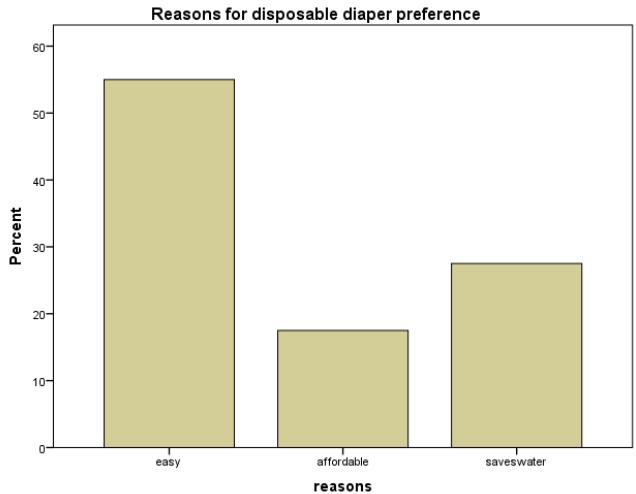
Fig 3.4: Showing Why Mothers Prefer using Disposable Diapers to Cloth Nappies
Table 3.4 and Fig 3.4 show results on why mothers prefer using diapers to nappies. $55\%$ of the targeted population uses disposable diapers because they are easy to use. $27.5\%$ suggest that they save water whilst $17.5\%$ pointed out that disposable diapers are affordable. These results show that disposable diaper use is dominant in Chitungwiza as most women revealed that diapers are convenient in saving time than traditional reusable nappies which are difficult to handle
d) What Can Be Done to Improve Diaper Waste Management?
and require a lot of laundry. In actual fact cloth diapers are difficult to deal with as they require a lot of water and unavailability of water up to four days worsens the situation, power shortage also initiates women to use disposable diapers since cloth diaper require ironing before use. The research conducted by Mutowo (2015) established that $78\%$ women are in use of disposable diapers and the reasons cited were convenience $70\%$ and cost $30\%$.
Table 3.5: Waste Management
<table><tr><td colspan="2"></td><td>Frequency</td><td>Percent</td><td>Valid Percent</td><td>Cumulative Percent</td></tr><tr><td rowspan="6">Valid</td><td>Burn</td><td>14</td><td>35.0</td><td>35.0</td><td>35.0</td></tr><tr><td>Burry</td><td>5</td><td>12.5</td><td>12.5</td><td>47.5</td></tr><tr><td>Gardening</td><td>7</td><td>17.5</td><td>17.5</td><td>65.0</td></tr><tr><td>Education/awareness</td><td>12</td><td>30.0</td><td>30.0</td><td>95.0</td></tr><tr><td>Recycling</td><td>2</td><td>5.0</td><td>5.0</td><td>100.0</td></tr><tr><td>Total</td><td>40</td><td>100.0</td><td>100.0</td><td></td></tr></table>
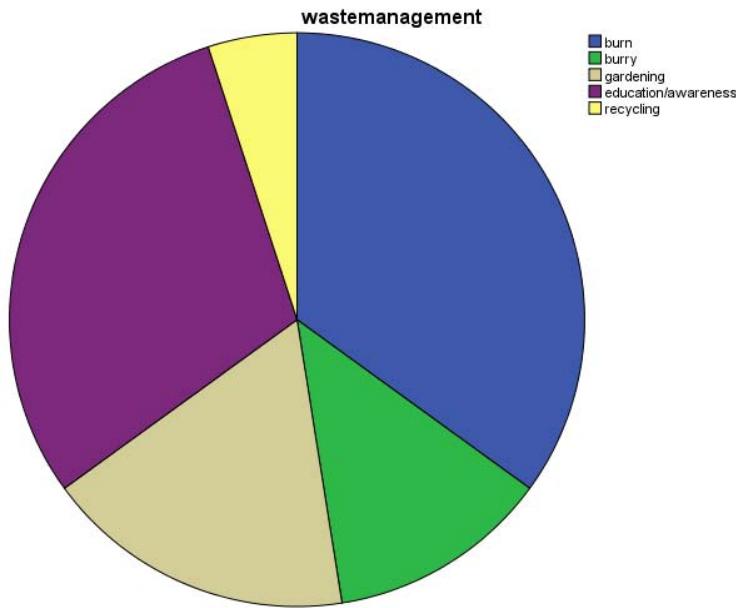
Fig 3.5: Showing How Waste Management Can be Improved
Table 3.5 and Fig 3.5 show the responses on how waste management can be improved in Chitungwiza. $35\%$ suggests that diapers should be burned, $30\%$ suggests that there should be education and awareness on how to properly dispose these diapers. This is supported by he only sure method to get people to change their habits is through education and creating awareness. $17.5\%$ of the targeted population suggests that soiled diapers should be used for small scale gardening. Out of the 40 respondents $12.5\%$ suggests that soiled diapers should be buried whilst $5\%$ suggests that they should be recycled in order to improve waste management practices in Chitungwiza.
e) The Growth Rates of Brassica Napis L under Diaper Waste Moisture Conservation Technology and the Conventional Farming Methods
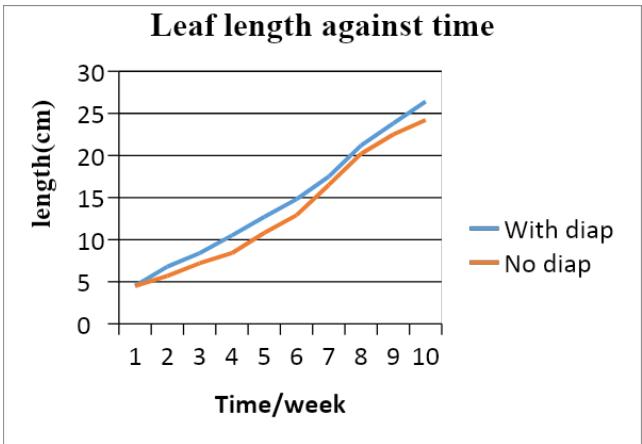
Fig 3.6: Showing the Growth of Leaf Length Against Time
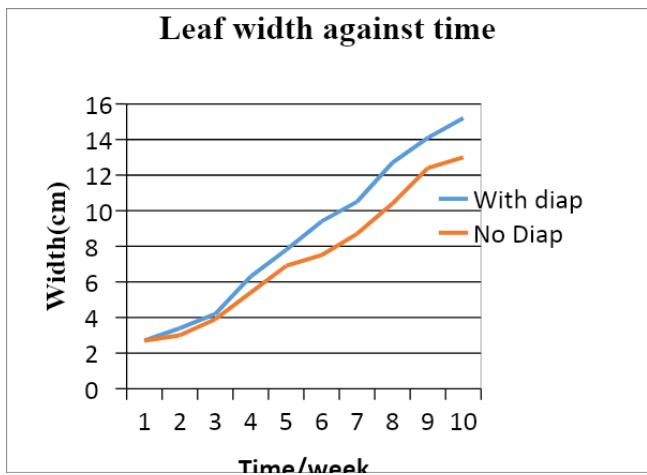
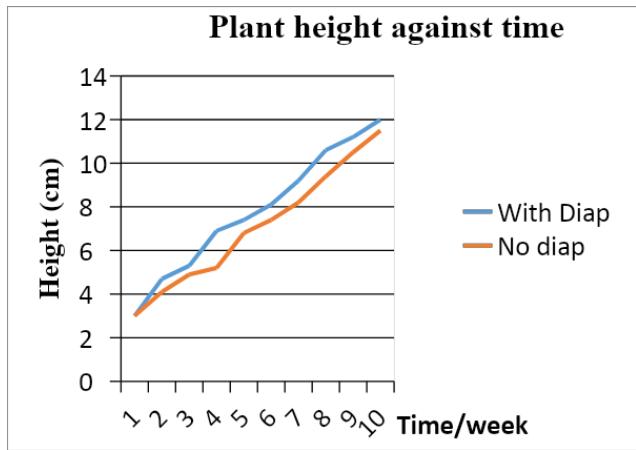
Fig 3.7: Showing the Growth of Leaf Width Against Time
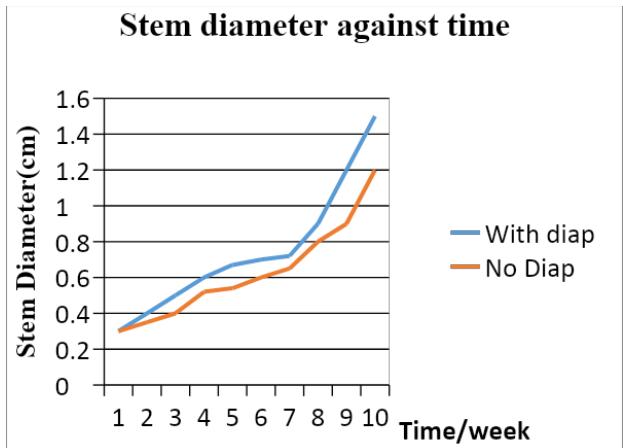
Fig 3.8: Showing the Growth of Plant Height Against Time Fig 3.9: Showing the Growth of the Stem Diameter Against Time
The above diagrams show the growth rate of Brassica Napis $L$. The results were extracted from two different vegetable beds thus one with diapers and the other one without diapers. The growth measurements were taken from the growth of the stem diameter, leaf length, leaf width and plant height. The above results therefore show that the vegetables grow on a faster rate under the diaper waste moisture conservation technology.
f) The Effectiveness of Diaper Waste-Moisture Conservation Technology In Moisture Conservation
The results shown in Fig 3.10 show the measurements of moisture taken from Control A and Control B.
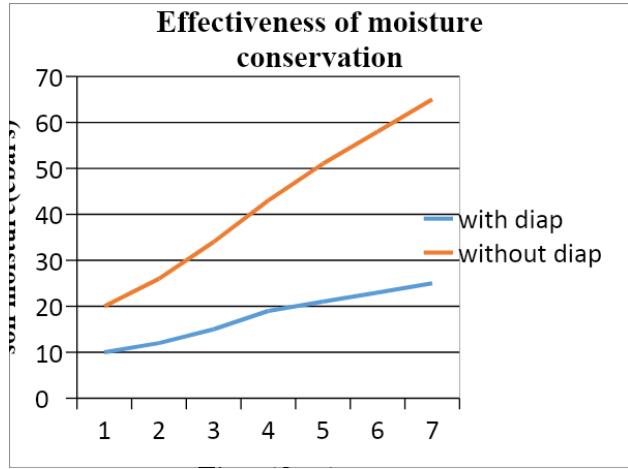
Fig 3.10: Showing Moisture Conservation
The measurements were taken from a depth of $10\mathrm{cm} - 15\mathrm{cm}$. According to the graph in Fig 3.10, 10cb (centibars) corresponds to the saturation for loam soils which were used in this study. As a rule of thumb the tensiometer is installed in the plant row, where roots are concentrated, and taking up the most water. The operation of the tensiometer represents suction force needed to draw water from the soil is such that the higher the measurement the less the moisture. The tensiometer used measures from 0-85 cb with 0 indicating saturation point and 85 showing dry soil conditions. Around 60cb the crops begin to wilt. The moisture content is inversely proportional to the tensiometer centibars reading. The trend on the graph therefore shows that under diaper treated soils moisture decreased by a factor of 15 cb whilst under the control it decreased by a factor of 45 cb. This result shows less moisture loss rate under the treatment than the control. This demonstrates capacity of diaper hydrogels to conserve water. The results clearly show that diapers are highly effective in conserving moisture when compared to the control of the experiment.
## IV. CONCLUSION AND RECOMMENDATIONS
### a) Conclusion
From the findings of the study it can be concluded that there is improper diaper waste handling in the study area. The most common diaper waste disposal methods used are illegal dumping, burying and dumping. This cause for concern and an environmental health risk is looming. Majority of babies consume between 2-5 diapers per day. It was also established that diaper waste generation is most to babies 2 years and below and the conclusion is that as child grow diaper consumption decreases. The major reason why disposable diapers are preferred to cloth diapers is that disposable diapers are easy to use. It can also be concluded that there is environmental illiteracy calling for the need for environmental awareness and educational programs as indicted by the public misconception that burning of diaper waste could improve waste management yet this causes air pollution. The comparison between the growth of Brassica Napis $L$ under the moisture conservation technology and the control showed that the technology is effective in improving plant growth. It can also be concluded that the technology is an effective moisture conservation technique as evidenced by the less moisture loss rate under the treatment than the control after irrigation. This shows that irrigation scheduling or irrigation frequency can be reduced when the moisture conservation technology is applied due to the water holding capacity of diapers.
### b) Recommendations
- To use the diaper waste moisture conservation technology in small scale farming
- Marketers to insert disposable plastic papers inside the diapers,
- Regular refuse collection,
- Health promotion awareness on proper disposal of diapers
- Manufacturers to include information leaflets in diapers packs on proper disposal of disposal diapers
- To keep abreast with current trends in waste management, the local authorities should invest in resources to promote proper disposal of refuse.
- Diaper waste disposal awareness campaigns should be carried out in tandem with Family Health Care Services at Clinics and social gathering so that maximum numbers of mothers are reached.
- Communities to be empowered through Community Based Organization to manage their own refuse instead of relying on the local authorities, who are facing financial constraints.
- Solid waste management authorities should invest more effort in upgrading waste collection capacity and improve disposal mechanism which in turn shall help to reduce the environmental burden and to treat hazardous wastes like soiled diapers
Generating HTML Viewer...
References
28 Cites in Article
A Allred (2010). Solutions to a Stinky Problem.
O Ayalon,T Goldrath,G Rosenthal,M Grossman (2009). Reduction of plastic carrier bag use: An analysis of alternatives in Israel.
C Bless,C Higson-Smith (2000). Fundamentals of Social Research Methods.
P Chipunza (2012). Mirrlees, Robin Ian Evelyn Stuart de la Lanne-, (13 Jan. 1925–23 June 2012), Richmond Herald of Arms, 1962–67.
R Colin (2011). Real World Research.
J Colon,Ruggieri,L Sanchez,A Gonzalez,A,Puig (2012). Possibilities of composting disposable diapers with municipal solid wastes.
Hugh Coolican (1990). Research methods and statistics in psychology.
C Delport (2005). Quantitative Data-Collection Methods.
A Fink (2006). Organizational Surveys: An Overview.
B Gomez,J Jones (2010). Research Methods in Geography.
Maithili Kamat,Ram Malkani (2003). Disposable diapers : A hygienic alternative.
H Laberee (2013). solid waste management principles in developing countries.
R Mangizvo (2009). The Problem of Burst Sewage Pipes and Sewerage Outflows in East View Suburb in Kadoma City, Zimbabwe.
R Mangizvo,W Mupindu (2014). Impacts of Heavy Metals in Soil Profile of Surrounding Municipal Solid Waste Dump Site.
C Mason (1991). Biology of Freshwater Pollution.
Mansoor,D Saywell (1995). Community Initiatives in Solid Waste, Kampala.
Ilana Meallem,Yaakov Garb,Julie Cwikel (2010). Environmental Hazards of Waste Disposal Patterns—A Multimethod Study in an Unrecognized Bedouin Village in the Negev Area of Israel.
M Odio,S Friedlander (2000). Diaper dermatitis and advances in diaper technology.
L Pendry,A Mewse,C Burgoyne (2012). Environmentally friendly parenting: are cloth nappies a step too far? Young Consumers: Insight and Ideas for Responsible Marketers.
M Peterson (1974). Soiled disposable diapers: a potential source of viruses..
S Pynthamil,J Amarnath (2011). Study on the composition of municipal solid waste in Kanchipuram Municipality.
P Rai,B Lee,T Liu,Q Yuhui,E Krause,D Marsman,S &felter (2009). Safety Evaluation of Disposable Baby Diapers Using Principles of Quantitative Risk Assessment.
V Ramaswamy,H Sharma (2011). Plastic bags -threat to environment and cattle health: a retrospective study from Gondar City of Ethiopia.
Shanon (1990). Diapers: What do parents choose and why?.
(1990). EPA Superfund Sites, Arizona, 1997.
D Washington Unknown Title.
A Weisbrod,G Van Hoof (2011). LCAmeasured environmental improvements in Pampers diapers.
No ethics committee approval was required for this article type.
Data Availability
Not applicable for this article.
How to Cite This Article
Chikwanha S. M.. 2026. \u201cProduction of Rape (Brassica Napus L) Under Diaper Waste-Moisture Conservation Field Technology\u201d. Global Journal of Science Frontier Research - D: Agriculture & Veterinary GJSFR-D Volume 23 (GJSFR Volume 23 Issue D4): .
Explore published articles in an immersive Augmented Reality environment. Our platform converts research papers into interactive 3D books, allowing readers to view and interact with content using AR and VR compatible devices.
Your published article is automatically converted into a realistic 3D book. Flip through pages and read research papers in a more engaging and interactive format.
The purpose of this study was to test the effectiveness of growing vegetables under diaper waste moisture conservation technology and to incentivise diaper waste management in a way which reduces its ecological footprint through water and plant nutrients harvesting and conservation in agriculture. Due to poor refuse collection in Chitungwiza which has encouraged improper disposal of diaper waste, people resorted to the dumping of used disposable diapers at various dumping sites that have sprouted in most residential areas in the urban areas of Zimbabwe. Diaper wastes currently not properly managed in a manner which adds value to the food chain while they contain significant amounts of nutrients coupled with their water holding capacity which is not being utilised to address challenges induced by climate change in the agricultural sector pertaining food security and climate resilience in urban agriculture hence the need to undertake this study. An experiment to compare growth of vegetables under diaper waste treatment and a control without diapers was conducted. Vegetable growth rate and soil moisture loss were monitored over 10 weeks.
Our website is actively being updated, and changes may occur frequently. Please clear your browser cache if needed. For feedback or error reporting, please email [email protected]
Thank you for connecting with us. We will respond to you shortly.