The article deals with experiments performed at the National Laboratory named after. Jefferson, associated with elastic and inelastic collisions of the proton nucleus by an electron beam with an energy of 4.56 GeV. It has been experimentally proved that the local maximum found near 33 GeV during the polarization of protons by an electron flow is associated with the electric polarizability αᴇ and the local maximum found at the Large Hadron Collider, but already at an energy of 28 GeV, during p-p collisions, is associated with the polarization of quark-gluon plasma. Thus, the electric polarizability αᴇ, which is a fundamental property of the proton structure, like size or charge, does not consider the influence of the nuclear polarization of the quark-gluon plasma. This introduces its adjustments to the definition of the polarization radius.
## I. INTRODUCTION
Today on the pages of scientific journals began to appear messages related to the polarization of the physical vacuum and such composite systems as protons in the Large Hadron Collider [1]. Proton polarizabilities are fundamental structural constants. The CMS collaboration in the experiment at the Large Hadron Collider in 2019 demonstrated a decrease in the t-quark mass with increasing energy for the first time [2]. They studied the distribution of reaction products in pp collisions with energy from 1 [TeV] to 13 [TeV]. The decrease in the mass of elementary particles up to an energy of 13 [TeV], as well decrease in the magnitude of the interaction constants at a confidence level of $95\%$, depending on the energy at which measurements are made. This effect, explained by vacuum polarization, was indeed observed in experiments in particular, the decline in the mass of b- and c- quarks was measured, as well as the decrease in the strong interaction constant [2]. The latest experimental data obtained in Jefferson's laboratory say that one of the mysteries in physics is the polarizability of protons $\alpha_{E}$ [3]. According to calculations, $\alpha_{E}$ should decrease monotonically with increasing squared momentum transfer, but a local max was found near $33~\mathrm{GeV}$, which the authors of the communication associated with the polarization of the proton nucleus. In this case, the characteristic polarizability radius of the proton re significantly exceeded the charge radius. The problem became even more acute (up to $7\sigma$ ) if all the data obtained on the scattering of electrons by protons were considered. We are talking not only about elastically reflected protons, but also about inelastic collisions of electrons with a hydrogen nucleus. Modern quantum theory predicts a monotonic decrease in the polarizability of a proton with an increase in the square of the momentum. The University of Maryland theoretical physicist Xiangdong Ji describes the polarization process as follows: "Each model predicts a monotonic decrease. Monotonic decay is a general feature of the theory, which must be true." [4]. But the deceptive logic of modern theory contradicts the experimental data. In my article, I offer an answer to this and other questions related to the polarizability of the proton.
## II. POLARIZATION OF PHYSICAL VACUUM AND QUARK-GLUON PLASMA
In quantum electrodynamics (QED), the instability of the physical vacuum under the action of high-energy cosmic radiation photons, relativistic protons, peak electric and magnetic fields, or high-intensity laser radiation is accompanied by vacuum polarization and is characterized by the formation of electron-positron pairs, which makes the vacuum unstable [5]. It has been experimentally established that in the presence of a magnetic field $\mathrm{H} \approx 10^{-6}$ T or a peak of the electric field strength $\mathrm{E} \approx 10^{-6}$ V·cm $^{-1}$ in the quantum vacuum, relatively stable particles are formed from virtual particles (lifetime $16 \times 10^{-\mathrm{ff}}$ s.) [5]. During the polarization of the quantum vacuum and its transformation into the matter, the change in the vacuum energy w can be represented as a sum:
$$
w = w ^ {p} + w ^ {e} \tag {1}
$$
where $\mathbf{w}^{\mathrm{p}}$ is the vacuum polarization, $\mathbf{w}^{\mathrm{p}}$ Effl/8π;
$w^{\mathrm{e}}$ is the change in the energy of the substance at the production of particles
$$
w^{e}=\mathrm{e}ET\varkappa,\quad\varkappa=\frac{\mathrm{e}^{2}\mathrm{E}^{2}\mathrm{T}}{4\pi^{3}}\exp\left(-\pi\frac{\mathrm{m}^{2}}{\mathrm{h}\mathrm{E}}\right)\tag{2}
$$
The creation of particles is the main reason for the change in the energy of the vacuum. For an electromagnetic field, the polarization energy density of a physical vacuum can also be represented as the sum of two terms (1). Where is the first term $w^p(w_0)$ quadratic in the electric and magnetic fields \[6\]:
$$
w _ {0} = \frac {\left(\mathbf {E} ^ {2} + \mathbf {H} ^ {2}\right)}{8 \pi} \tag {3}
$$
determines the energy of a non-interacting electromagnetic field before critical values of electric strengths Schwinger's field $\mathbf{E}\mathbf{s} = 1.32\times 10^{-6}[\mathrm{V}\times \mathrm{cm}^{-1}]$ and magnetic field strength $\mathbf{H} = 10^{-6}$ [Gs]. The second term, $w^{e}(w_{I})$ describes the interaction of photons due to the production of electron-positron pairs \[6\]:
$$
w_{I} = 2 D \left[ 3 \mathbf{E}^{2} \mathbf{E}^{2} - \mathbf{H}^{2} \mathbf{H}^{2} - \left(\mathbf{E}^{2} \mathbf{H}^{2} + \mathbf{H}^{2} \mathbf{E}^{2}\right) \right] + 7 D \left[ \left(\mathbf{E H}\right)^{2} + \left(\mathbf{H E}\right)^{2} \right]
$$
The constant D can be calculated by the methods of quantum electrodynamics and in Gaussian units
$$
D \equiv \eta \frac{\mathrm{h} _ {1}}{\mathrm{m} ^ {4} \mathrm{c} ^ {5}}
$$
Where $\eta$ is the dimensionless coefficient $\eta \equiv \frac{\alpha\mathrm{f}\mathrm{l}}{45\times(4\pi)\mathrm{f}\mathrm{l}}\approx 7.5\times 10^{-9}$ (6)
$\alpha$ is the fine structure constant, m is the mass of the electron,
c is speed of light.
It is convenient D to write the coefficient through the Compton wavelength of the electron $\lambda = \hbar /mc$ in the form \[6\]:
$$
D = \eta \frac {\lambda^ {3}}{m c ^ {2}} \tag {7}
$$
In quantum chromodynamics (QCD), the polarization of a quark-gluon plasma that fills the nucleus of a proton proceeds similarly to the polarization of the physical vacuum. Instead of the formation of electron-positron pairs with the participation of virtual exchange photons, in a quark-gluon plasma with a strong nuclear interaction, polarization is accompanied by the construction of three unstable $\pi^{-}$ mesons ( $\pi^0$, $\pi^+$, $\pi^-$ ) with the participation of virtual exchange pions, which eventually decay into leptons [1]. At the same time, the energy spectrum of the birth of new particles and antiparticles difference, which indicates a change in the structure of the physical vacuum when it is included in the nuclei of atoms. Inside the proton nucleus, the quantum vacuum turns into a quark-gluon plasma, similar to the matter inside the most massive stable neutron stars. In 2018 Prof. Volker Burkert conducted a series of experiments at the CEBAF accelerator. After the collision of fast electrons with a mass of liquid hydrogen (the source of protons), the researchers registered the particles resulting from their interaction - an electron, a proton, and two photons. This made it possible for the first time to measure the pressure at the center of the proton by bombarding the proton with electrons whose energy reached $100\mathrm{MeV}$ or more, which allowed the electron to penetrate into the structure of the proton (Figure 1) [7].
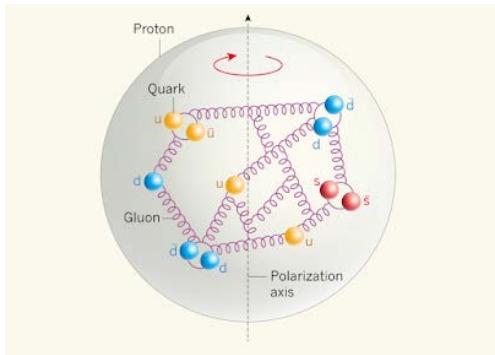 Figure 1: The structure of the proton, quarks and gluons
Volker Burkert and his colleagues at Jefferson's laboratory found that the pressure in a proton can exceed $10\mathrm{J}^5$ Pascal [7]. Particle physics studies at the VEP-1 collider at the Novosibirsk Budker Institute of Nuclear Physics, Siberian Branch of the Russian Academy of Sciences has confirmed the validity of quantum electrodynamics up to an energy of $2 \times 160~\mathrm{MeV}$. That is, it was confirmed that the electron is a point formation on scales up to $4\times 10^{-14}$ cm and, unlike the proton, has no internal structure [8]. This is at least 100.000 times less than the radius of a hydrogen atom one femtometer. At such a small value, electrons penetrate into the proton. The researchers then observed the scattering of the resulting photons, comparing their characteristics with information about the proton and the accelerated electron. This scattering gave scientists an energy and momentum diagram that allowed them to describe the extreme pressure at the center of a proton, which prevents the proton from collapsing by holding the quarks together. According to modern ideas, a proton consists of three quarks - two u-quarks (up quarks from the word up) and one d-quark (down quark from the word down). Gluons bind uud quarks into a single particle. The maximum repulsion between quarks is observed at a distance of $6 \times 10^{-\mathrm{m}}$, while the pressure reaches $10 \mathrm{~J}^{5}$ Pascals. This indicator is considered one of the critical characteristics of the proton: a colossal force is directed from the center outward, counteracting the force of the outer regions of the particle produced to the center [7].
Since the middle of the last century, the study of the interaction of high-energy particles has made it possible to detect resonances that manifest themselves in the form of peaks on the general monotonic behavior of the cross-sections of their interactions. Resonances were interpreted as a consequence of the presence of quantum levels in the systems themselves and identified in the SM as newly born unstable particles. Today, all resonances are classified and described within the framework of the Standard Model up to the Higgs boson. However, the production of unstable particles in the LHC at a proton energy of about 10-30 GeV is indeed observed and this effect can be explained by the polarization of atomic nuclei, accompanied by the formation of three unstable $\pi$ -mesons ( $\pi^0$, $\pi^+$, $\pi^-$ ) with the participation of virtual exchange pions. [8]. Nuclear physicists led by Professor Mohammed Abdallah (American University, Cairo) has found a new way to use the Relativistic Heavy Ion Collider (RHIC) to see the shape and detail inside atomic nuclei [9]. This time, the instrument of physicists was but the Relativistic Heavy Ion Collider (RHIC), which is based on the principle of quantum entanglement. Recall that quantum entanglement is a bond between two (or more) particles whose properties remain the same no matter how far these particles are from each other. RHIC (The Relativistic Heavy Ion Collider) is a relativistic heavy ion collider located at the Brookhaven National Laboratory in the United States. Thanks to the new method, physicists have been able to gain insight into the internal structure of atoms, as well as witness a new type of quantum entanglement. Studying of this effect is considered one of the most promising in modern physics. Due to a series of quantum fluctuations during the polarization of the quark gluon plasma inside the nucleus, photons moving at a superrelativistic speed, interacted with gluons, forming an intermediate particle $\pi^0$, the rapid decay of which began two "pions" - $\pi^+$ and $\pi^-$. The information obtained allows displaying the location of gluons in the core of an atom with detailed accuracy (Figure 2)
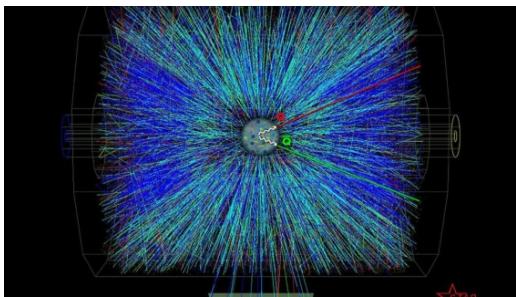 Figure 2: Image of the structure of the atomic nucleus and quantum entanglement
A linearly polarized photon can be quantized from the Lorentz-enhanced electromagnetic field of a core moving at super relativistic speed. When two relativistic heavy core pass each other at a distance of several nuclear radii, a photon from one nucleus can interact through a virtual quark-antiquark pair with gluons from the other nucleus, forming a short-lived vector meson (for example, $\pi^0$ ). In the experiment, polarization was used in diffraction photo production to observe a unique pattern of spin interference, with the angular distribution of the decay of $\pi^0$ into two "pions" - $\pi^{+}$ и $\pi^{-}$. The nuclear radii of the strong interaction were extracted from these diffraction interactions and found to be 6.53 ffi 0.06 fm (197Au) and 7.29 ffi 0.08 fm (238U), larger than the radii of nuclear charges.
## III. PROTON POLARIZABILITY
In the Jefferson Lab in 2022, a large group of physicists from Armenia, India, Canada and the States led by Nikolaos Sparveris from Temple University [3]. They measured the virtual Compton scattering cross section by bombarding protons with electrons during their elastic collision. At the same time, in the same Jefferson laboratory in 2018, Volker Burkert conducted experiments by bombarding protons with electrons during their inelastic collision, which the authors forgot about and, as a result, in the kinematic scattering model they created, the contribution of inelastic collisions of electrons with the nucleus was not fully taken into account hydrogen. The researchers measured the virtual Compton scattering cross section by bombarding protons with electrons during their elastic collision. As a result, the team confirmed the existence of the anomaly. The polarizability of atoms and molecules can be measured relatively easily by physicists. The same parameter for protons is much more difficult to measure due to different physical scales. Some conclusions about the electrical $\alpha \mathrm{E}$ and magnetic $\beta \mathrm{M}$ polarizability can be drawn by irradiating protons with electromagnetic radiation. One can offer a simplistic description of the polarizabilities through the resulting effect of an electromagnetic perturbation applied to the nucleon constituents. An electric field moves positive and negative charges inside the proton in opposite directions. The induced electric dipole moment is proportional to the electric field, and the proportionality coefficient is the electric polarizability which quantifies the stiffness of the proton. On the other hand, a magnetic field has a different effect on the quarks and on the pion cloud within the nucleon, giving rise to two different contributions in the magnetic polarizability, a paramagnetic and a diamagnetic contribution, respectively [3]. According to Ruonan Li, a graduate student at Temple University, measurements of the proton electric polarizability reveal how susceptible the proton is to deformation or stretching in an electric field. Like size or charge, the electric polarizability $\alpha \mathrm{E}$ is a fundamental property of proton structure. One can offer a simplistic description of the polarizabilities through the effect of an electromagnetic perturbation applied to the nucleon constituents. An electric field moves positive and negative charges inside the proton in opposite directions. The induced electric dipole moment is proportional to the electric field, and the proportionality coefficient is the electric polarizability which quantifies the stiffness of the proton. Therefore, polarizabilities fully manifest themselves when measuring virtual Compton scattering, in which an incident photon is produced in the act of interaction of an electron with a proton as a carrier particle (Figure 3). To study such scattering, physicists directed a beam of electrons with an energy of 4.56 gigaelectronvolts at a target of liquid hydrogen 10 centimeters thick. Spectrometers in the experimental chamber recorded the energies and momenta of the scattered electrons and recoil protons. Coincidences from them could reconstruct the entire scattering kinematics.
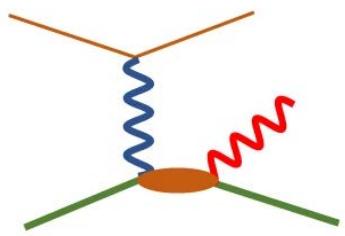 Figure 3: One of the Feynman diagrams includes virtual Compton scattering. The orange line is an electron, the green one is a proton, the blue one is a virtual photon. The red one is a real one. R. Li et al. / Nature, 2022
A feature of the experiment was that its authors carried out measurements near the nucleon resonance, where polarizabilities are more pronounced. In addition, physicists concentrated on azimuthally symmetric photon scattering, comparisons of which made it possible to some systematic factors. Plotting the dependence of the polarizabilities on the transmitted 4-pulses, the authors confirmed that for its electrical part there is a peak at 0.33 square giga electron volts, which, however, is approximately two times smaller than that observed earlier.
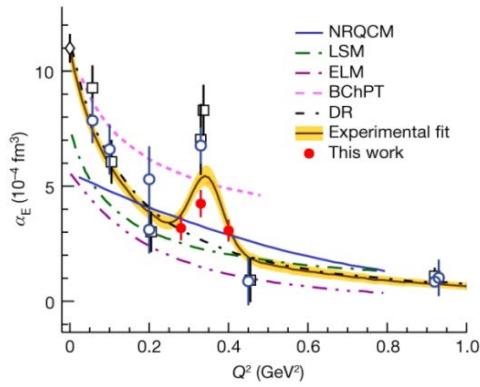 Figure 4: Dependence of the electric polarizability on the square of the transmitted 4-momentum. The red dots indicate the experimental results obtained by fitting the model (black line with a yellow stripe). Circles and squares indicate the results of previous experiments. R. Li et al. // Nature, 2022
Based on the model, the authors estimated the mean square radius of an electrically polarized proton, which turned out to be 1.36 ffi 0.29 square femtometers. This is almost twice as large as the average squared radius of an unpolarized proton, which is about 0.7 square femtometers. The found position of the local maximum $\alpha \mathrm{E}$ coincides with the previously discovered one. The experiment was carried out on high resolution spectrometers (Mainz Microtron MAMI). In experiments on the scattering of electrons by protons, the polarizability makes a different contribution to its outcome, depending on the square of the 4-momentum transferred from the particle to the system. By measuring this dependence, Roche and colleagues found an anomalous peak at 0.33 square gigaelectronvolts back in 2000, which contradicts theoretical considerations predicting a monotonic decay to this region [10]. When this peak was recorded in previous measurements in 2000, many considered it to be an accident, but a new, more accurate measurement confirmed the presence of an anomaly. The experimentalists intend to perform more measurements to confirm that the peak does indeed exist and map out its shape. "Further into the future, one would ideally like to measure this through an independent reaction channel, which could potentially become available at Jefferson Lab if a positron beam were to become available" [3]. Nuclear physicist, Ronald Gilman of Rutgers University in New Jersey says: "I'd love to see another new result of the same quality before I'm completely convinced." However, there is no unity in the ranks of scientists on this issue. The theoretical physicist at the University of Maryland, Xiangdong Ji is more skeptical and believes that monotonic decay is a general feature of the theory [4]. But the deceptive logic of modern theory contradicts the experimental data. So back in 2018, during pp-collisions at the Large Hadron Collider, Roger Barlow discovered the formation of muon pairs in a narrow energy peak of colliding protons, strictly defined at the level of 28 GeV [11]. In light of a new approach to the polarization of the proton nucleus in p-p collisions, which have a larger square of momentum transfer than electrons in the experiments of Nikolaos Sparveris in the Jefferson Lab in 2022, it can be expected that Barlow discovered a local maximum at which in a quark-gluon plasma at In the strong nuclear interaction, polarization is accompanied by the formation of three unstable $\pi$ -mesons ( $\pi^0$, $\pi^+$, $\pi^-$ ) with the participation of virtual exchange pions and the subsequent production of short-lived protons and antiprotons [1]. In most cases, pairs of muons come from other sources associated with different events, and not from the decay of a single particle. If you try to calculate the original mass in such cases, it will spread over a wide range of powers rather than creating a narrow peak. In a new experiment, the CMS detector detected a large number of muon pairs and, by analyzing their energies and directions, found that these pairs were produced by the polarization of a single parent proton. You can look at Figure 5 and judge for yourself.
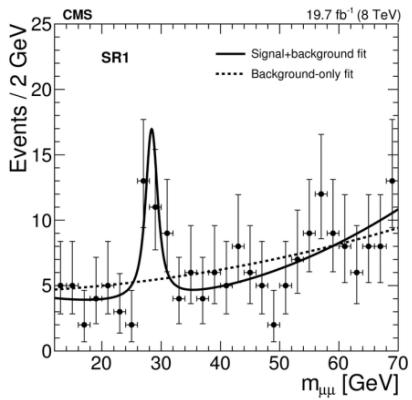 Figure 5: Energy peak of 28 GeV during proton polarization during p-p collisions
This is a real peak, not just a statistical fluctuation due to a random spread of background points (dashed curve in Figure 5) [11]. The CMS collaborations have rigorous internal validation procedures and you can be sure that the authors calculated the amounts correctly when they report a standard deviation value of 4.2. This means that there is only a $0.0013\%$ chance of getting this prominent randomly generated noise peak in the data and not the real particle. It must be something so strange that no one has ever proposed it. Fortunately, another large LHC experiment, ATLAS, has similar data from its experiments, which the team is still analyzing and reported in due time. Let us consider why the average square of the radius of a polarized proton in p-p collisions, commensurate with the proton radius [11], may differ from its value obtained with electric polarizability (1.36 ffi 0.29 square femtometers). To answer this question, let us recall the significant difference in the values of the root-mean-square proton charge radius, which were measured in ordinary (0.8 fm) hydrogen by the method of high-energy electron scattering on protons and muonic hydrogen (0.833 fm) [12]. A new method for determining the charge radius of a proton includes an experiment on the spectroscopy of muonic hydrogen, which is a bound system of a proton and a negatively charged muon. Like the electron, the muon is a lepton, which makes it possible to use the canonical methods of quantum electrodynamics (QED) of coupled systems. However, the muon is 207 times heavier than the electron; hence the Bohr radius of the muon turns out to be equal to $\alpha_0 / 207$, where the $\alpha_0$ -Bohr radius of the electron. Accordingly, the contribution of the corrections associated with overlapping of the wave function with the nucleus increases by many orders of magnitude. This made it possible to measure the Lembol shift at a wavelength of 6 $\mathrm{~m}$ and to refine the proton charge radius by an order of magnitude [12]. Similarly, the average square of the radius of a polarized proton in p-p collisions differ significantly from its value obtained for the electric polarizability of the proton by relativistic electrons.
## IV. CONCLUSION
The article experimentally proves that the local maximum found near 33 GeV during the polarization of protons by an electron beam also exists in the Large Hadron Collider, but already at an energy of 28 GeV during p-p collisions. Thus, the conclusion of the authors of the article [3] that with an increase in the square of the momentum transfer, there is a local maximum near 33 GeV, associated with the electric polarizability $\alpha \mathrm{E}$ of the proton, was confirmed with the formation of muon pairs in a narrow energy peak of colliding protons, strictly defined at the level of 28 GeV at nuclear polarization of protons in the LHC [12]. Thus, the logic of modern quantum theory about the monotonic decrease in the dependence on the electric polarizability of protons with the increasing square of the transferred 4-momentum turned out to be erroneous. In the theoretical model Sylvester Kornowski's "Origin of the measured proton-electromagnetic structural anomaly" Poznań University (UAM) Poland, the academic results are in entire agreement with the experimental data of the Jefferson laboratory presented by R. Li, et al. (2022) [13]. In near-Earth outer space, the mechanism of formation of secondary electron-positron pairs is the collision of relativistic protons and cosmic radiation with protons and nuclei of the interstellar medium. In these collisions, as a result of the polarization of protons, produce pions and kaons, which eventually decay into leptons. Using AMS-02, the spectra of secondary electrons and positrons were measured in the energy range 0.5-700 GeV for electrons and 0.5-500 GeV for positrons and it was possible to fix the presence of a peak in the total spectrum of electrons and positrons at the energy of external relativistic protons $\mathrm{Wp} \approx 20 - 30\mathrm{GeV}$ [14]. During the experiments Professor of the Massachusetts Institute of Technology Yuri Galaktionov notes that neither the electron nor the positron spectra can be described by a power law with a single exponent in the entire studied energy range [14]. This discovery confirms the erroneousness of the power dependence of the proton polarization on the energy of external particles. New experimental data obtained both in the Large Hadron Collider and in near-Earth space with the help of Alphamagnetic spectrometer AMS-02 suggest the presence of a novel, not yet understood dynamical mechanism in the proton and present significant challenges to the nuclear theory.
Generating HTML Viewer...
References
14 Cites in Article
S Konstantinov (2020). The Role of Vacuum Polarization in the Large Hadron Collider.
Xiangdong Ji (2014). Parton physics from large-momentum effective field theory.
T Adorno,S Gavrilov,D Gitman,R Ferreira (2017). Peculiarities of Pair Creation by a Peak Electric Field.
Y Poluektov (2021). The dependence of the propagation speed of the equilibrium radiation on temperature.
V Burkert,L Elouadrhiri,F Girod (2018). The pressure distribution inside the proton.
E Levichev,A Skrinsky,G Tumaikin,Yu Shatunov (2018). Electron–positron beam collision studies at the Budker Institute of Nuclear Physics.
M Abdallah (2023). Tomography of ultra-relativistic nuclei with polarized photon-gluon collisions // Science Advances.
J Roche (2000). First Determination of Generalized Polarizabilities of the Proton by a Virtual Compton Scattering Experiment.
Roger Barlow (2018). Tenured Radicals: How Politics Has Corrupted Our Higher Education, Roger Kimball. 1990. Harper and Row, New York, NY. 204 pages. ISBN: $18.95.
K Khabarova,N Kolachevsky (2021). Proton charge radius.
Maciej Kokociński,Katarzyna Waszyńska,Iwona Chmura-Rutkowska,Anna Kokocińska (2022). Sytuacje o charakterze molestowania seksualnego w społeczności UAM. Raporty z badań.
Yu Galaktionov (2017). Search for antimatter and dark matter, precision studies of the cosmic rays fluxes on the international space station. AMS experiment. Results of four year exposure.
No ethics committee approval was required for this article type.
Data Availability
Not applicable for this article.
How to Cite This Article
Stanislav Konstantinov. 2026. \u201cProton Polarization, Quark-Gluon Plasma and an Atom Model\u201d. Global Journal of Science Frontier Research - F: Mathematics & Decision GJSFR-F Volume 23 (GJSFR Volume 23 Issue F4): .
Explore published articles in an immersive Augmented Reality environment. Our platform converts research papers into interactive 3D books, allowing readers to view and interact with content using AR and VR compatible devices.
Your published article is automatically converted into a realistic 3D book. Flip through pages and read research papers in a more engaging and interactive format.
The article deals with experiments performed at the National Laboratory named after. Jefferson, associated with elastic and inelastic collisions of the proton nucleus by an electron beam with an energy of 4.56 GeV. It has been experimentally proved that the local maximum found near 33 GeV during the polarization of protons by an electron flow is associated with the electric polarizability αᴇ and the local maximum found at the Large Hadron Collider, but already at an energy of 28 GeV, during p-p collisions, is associated with the polarization of quark-gluon plasma. Thus, the electric polarizability αᴇ, which is a fundamental property of the proton structure, like size or charge, does not consider the influence of the nuclear polarization of the quark-gluon plasma. This introduces its adjustments to the definition of the polarization radius.
Our website is actively being updated, and changes may occur frequently. Please clear your browser cache if needed. For feedback or error reporting, please email [email protected]
Thank you for connecting with us. We will respond to you shortly.