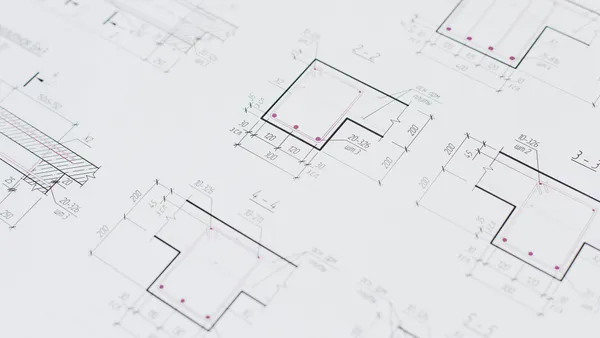
This study presents a comparative analysis of isolated RCC footing design using four major international design codes—IS 456, Eurocode 2, ACI 318, and SANS 10160/10100—under identical loading conditions and varying soil bearing capacities. Although engineers typically follow their respective national codes, these standards differ significantly in safety formats, shear and punching models, and reinforcement rules, resulting in notable variations in footing dimensions and material use. With increasing emphasis on cost optimisation and reduction of embodied carbon, understanding such cross-code differences has become essential for multinational engineering practice, sustainability benchmarking, and evidence-based improvements to national codes.
A harmonised comparison framework respecting to individual code philosophies is applied to evaluate footing size, concrete volume, reinforcement demand, and governing limit states for each code. The study further quantifies material-intensity metrics, cost intensity, and carbon emissions arising from concrete and reinforcement steel. Results show substantial variation—up to $40{-}60%$ in concrete consumption—caused primarily by differences in one-way shear and punching shear provisions. IS 456 consistently produces the thickest and most conservative footings, while ACI 318 yields the leanest and most material-efficient designs, with EC2 and SANS provisions forming an intermediate balance.
Overall, the study highlights how design-code selection influences structural efficiency, economic performance, and sustainability, offering valuable insights for engineers, code-review committees, and stakeholders pursuing optimized and low-carbon foundation design.