
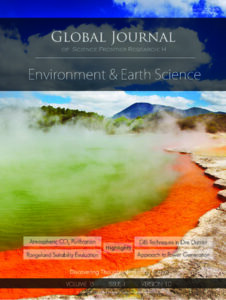
Rangeland Suitability Evaluation for Livestock Production using Remote Sensing and GIS Techniques in Dire District, Southern Ethiopia

1
Berhanu Keno Terfa
Berhanu Keno Terfa
2
K.V. Suryabhagavan
K.V. Suryabhagavan
1 Addis Ababa University

Send Message

To: Author

GJSFR Volume 15 Issue H1

Article Fingerprint

ReserarchID

G4V6T

Rangeland Suitability Evaluation for Livestock Production using Remote Sensing and GIS Techniques in Dire District, Southern Ethiopia Banner
  • English
  • Afrikaans
  • Albanian
  • Amharic
  • Arabic
  • Armenian
  • Azerbaijani
  • Basque
  • Belarusian
  • Bengali
  • Bosnian
  • Bulgarian
  • Catalan
  • Cebuano
  • Chichewa
  • Chinese (Simplified)
  • Chinese (Traditional)
  • Corsican
  • Croatian
  • Czech
  • Danish
  • Dutch
  • Esperanto
  • Estonian
  • Filipino
  • Finnish
  • French
  • Frisian
  • Galician
  • Georgian
  • German
  • Greek
  • Gujarati
  • Haitian Creole
  • Hausa
  • Hawaiian
  • Hebrew
  • Hindi
  • Hmong
  • Hungarian
  • Icelandic
  • Igbo
  • Indonesian
  • Irish
  • Italian
  • Japanese
  • Javanese
  • Kannada
  • Kazakh
  • Khmer
  • Korean
  • Kurdish (Kurmanji)
  • Kyrgyz
  • Lao
  • Latin
  • Latvian
  • Lithuanian
  • Luxembourgish
  • Macedonian
  • Malagasy
  • Malay
  • Malayalam
  • Maltese
  • Maori
  • Marathi
  • Mongolian
  • Myanmar (Burmese)
  • Nepali
  • Norwegian
  • Pashto
  • Persian
  • Polish
  • Portuguese
  • Punjabi
  • Romanian
  • Russian
  • Samoan
  • Scots Gaelic
  • Serbian
  • Sesotho
  • Shona
  • Sindhi
  • Sinhala
  • Slovak
  • Slovenian
  • Somali
  • Spanish
  • Sundanese
  • Swahili
  • Swedish
  • Tajik
  • Tamil
  • Telugu
  • Thai
  • Turkish
  • Ukrainian
  • Urdu
  • Uzbek
  • Vietnamese
  • Welsh
  • Xhosa
  • Yiddish
  • Yoruba
  • Zulu

Management of complex ecosystems such as rangelands needs adequate knowledge to consider its capability for sustainable utilization. Land suitability analysis is needed to make proper land-use planning. GIS and Remote Sensing techniques offer a convenient and powerful platform to integrate spatially complex and different land attributes for performing land suitability analysis. The present study was intended to analyze and map suitable areas for livestock production in Dire district using remote sensing and GIS techniques. The study made use of Landsat TM 2011 remote sensing satellite image for land-use/land-cover analysis, and Multi Criteria Evaluation in a GIS environment to come up with the final suitability map.

Funding

No external funding was declared for this work.

Conflict of Interest

The authors declare no conflict of interest.

Ethical Approval

No ethics committee approval was required for this article type.

Data Availability

Not applicable for this article.

Berhanu Keno Terfa. 2015. \u201cRangeland Suitability Evaluation for Livestock Production using Remote Sensing and GIS Techniques in Dire District, Southern Ethiopia\u201d. Global Journal of Science Frontier Research - H: Environment & Environmental geology GJSFR-H Volume 15 (GJSFR Volume 15 Issue H1): .

Download Citation

Issue Cover
GJSFR Volume 15 Issue H1
Pg. 11- 25
Journal Specifications

Crossref Journal DOI 10.17406/GJSFR

Print ISSN 0975-5896

e-ISSN 2249-4626

Keywords
Classification
GJSFR-H Classification: FOR Code: 090905
Version of record

v1.2

Issue date

March 24, 2015

Language

English

Experiance in AR

The methods for personal identification and authentication are no exception.

Read in 3D

The methods for personal identification and authentication are no exception.

Article Matrices
Total Views: 4345
Total Downloads: 2156
2026 Trends
Research Identity (RIN)
Related Research

Published Article

Management of complex ecosystems such as rangelands needs adequate knowledge to consider its capability for sustainable utilization. Land suitability analysis is needed to make proper land-use planning. GIS and Remote Sensing techniques offer a convenient and powerful platform to integrate spatially complex and different land attributes for performing land suitability analysis. The present study was intended to analyze and map suitable areas for livestock production in Dire district using remote sensing and GIS techniques. The study made use of Landsat TM 2011 remote sensing satellite image for land-use/land-cover analysis, and Multi Criteria Evaluation in a GIS environment to come up with the final suitability map.

Our website is actively being updated, and changes may occur frequently. Please clear your browser cache if needed. For feedback or error reporting, please email [email protected]
×

This Page is Under Development

We are currently updating this article page for a better experience.

Request Access

Please fill out the form below to request access to this research paper. Your request will be reviewed by the editorial or author team.
X

Quote and Order Details

Contact Person

Invoice Address

Notes or Comments

This is the heading

Lorem ipsum dolor sit amet, consectetur adipiscing elit. Ut elit tellus, luctus nec ullamcorper mattis, pulvinar dapibus leo.


High-quality academic research articles on global topics and journals.

Rangeland Suitability Evaluation for Livestock Production using Remote Sensing and GIS Techniques in Dire District, Southern Ethiopia

Berhanu Keno Terfa
Berhanu Keno Terfa Addis Ababa University
K.V. Suryabhagavan
K.V. Suryabhagavan

Research Journals





























































