
I. INTRODUCTION
Strategic behaviors are complex phenomena. In the multilateral framework, strategic intentions can be hidden deep in the neomercantilist market incrementalism [1]. Even though strategic intentions can reveal with key strategic actions, its implications can often be neglected due to reactive preparedness and sunken costs.
Global structural readjustment further complicates strategic behaviors with mass psychology and decision mechanisms. The short-term structural change was signified by the 2018 Sino-America Trade War, and Brexit two years prior further signified the depth of the global multi-player strategic readjustments. Moreover,
SARS-CoV-2 broke the global pace by the economic constraints with the humanitarian disasters from the bottom up.
Hindsight analysis on the strategic point can be the most complicated process and least easy to achieve due to strategic defense [2]. With a paradigm-shift from the author's human rights and humanitarian researches, relative advantage contributed by field research experience and intercultural comprehensions informed the research design. The research seeks to answer the question on the global structural change's nature being on geopolitics only, or constitute a new Space Race.
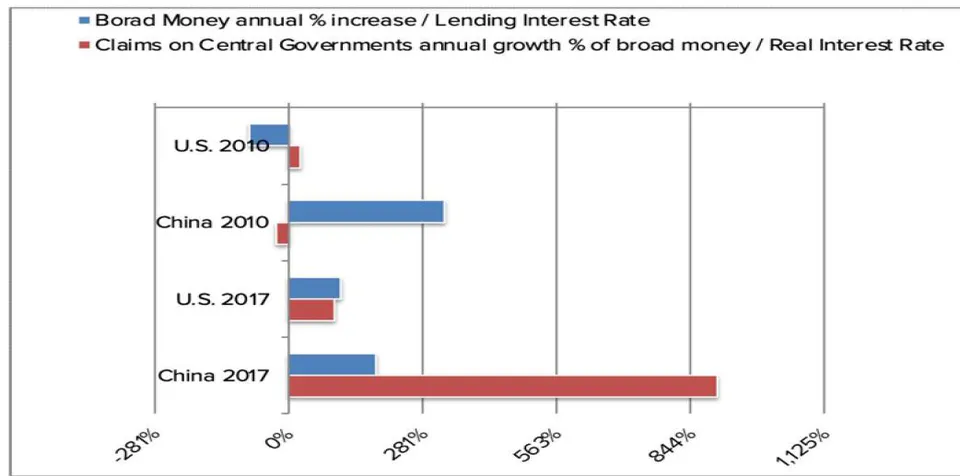
The research is purported to obtain some strategic clarity in U.S.-China relationship with the energy sector's supply chain interlinkage in military and civil economy. The pilot research obtained from the World Bank data in 2018 on the macro money indicators for U.S.-China comparative studies. Fig. 1 presents the preliminary results that informed the objective of the research.
A mixed method of quantitative economics and qualitative strategic analysis have been adopted. With the differences in decision mechanisms between the U.S. and PRC, human rights and humanitarian perspectives have been strictly adhered to during the Trade War, with the researcher's diagnostic involvement in the cyber warfare [3, 4].
After the field researches in the U.S., the methodology shifted from anthropological and sociological disciplines to intentional analysis from structural behaviors. The methodology adopted is a counter-measurement on the torture environment with threats structurally conducted from the top down [5-7]. Information gathering has been used to collect empirical evidence. In another sense, the information and cyber sphere have been used as a field research method to supplement the traditional sociological and anthropological methods.
The research focuses on the structural consequences from the militarization of the South China Sea [8]. The geopolitical coverage of the South China Sea intersects with the third island chain, linking the western Pacific, Into-Pacific, and the South Pacific, apart from PRC's "reunification" discourse on Taiwan and coercions on Hong Kong and Macau (SAR) [9]. The scope of the research focuses on the political economic consequences from PRC's strategic behaviors, and hypothesizes that PRC's strategic ambitions are on outer space from the globalized economic and supply chains.
Due to the covert strategy effects and globalized economy, military and intelligence operations are intertwined with economic activities [10]. The differentiations of time between military & intelligence actions and economic & financial behaviors have been the limitation of the research design. Furthermore, quantitative data in strategic reserve and distribution are lacking in the research for more precise analysis and evaluation of the strategic situations and severity.
Clarifying the strategic intentions in the responsive phase of strategic transitions and global readjustments from the hindsight perspective better informs strategic [dis] engagement and long-term preparedness. The research not only takes the strategic judgments into consideration, but also the global sustainable development goals so that humanitarian perspectives can be accounted for in the strategic counter-actions. The significance and novelty of the work lie with the industrial structures and industry-academics relationships that need to be [re] adjusted in the power political global structures.
The methods will first take an overview of the post-pandemic global economy with samples from the United Nations permanent five member countries and World Bank data [11]. Afterwards, analyses on the industry and scientific community are provided in proving that the geopolitical behaviors are not realpolitik in nature, but signify a new Space Race. The results suggest PRC's strategic behaviors not only harm the Chinese population & natural environment, but are also unscientific in its paradigms of outer space development. Russia's suspension of the New START treaty signifies Russia's potential support in PRC's regional dominance from the "Belt Road" [12]. The industrial analysis with technical details have evidenced that Russia's role in the South China Sea has been associated with outer space [13].
II. MATERIALS AND METHODS
The economic analysis data have been obtained from the World Bank's World Development Indicators [11]. The data have been updated to 2021, and some data have been discontinued since around 2017. For clarity of the analysis with major statistical gaps and upheavals since 2018, standard deviation has been plotted with between 2010 and 2017, and between 2018 and 2021. Confidence intervals (CI) take in the two phase spans, and are integrated into the CI ( ) of the two spans. Military correlates of spending are separated from the civil economy by the formula:
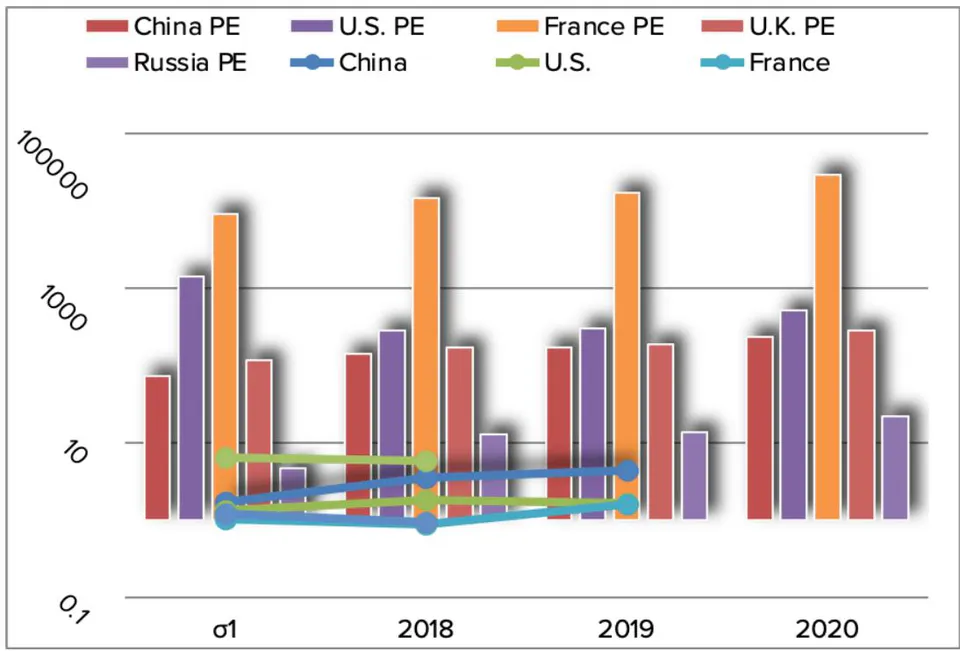
Fig. 2 gives an overview of the global economic stability and upheavals between 2018 and 2020 with plotted against adjusted net national income per capita (annual% growth) (data in 2021 incomplete for all the countries). It is seen that even though France has been the most energy efficient in economic growth, there is an inverse trend of energy efficiency in economic growth to adjusted net national income per capita, especially after the pandemic. The trend is inverted between China and Russia, indicating to the bilateral source of sustainable development disruptions in economic equality. The relative stability of China against Russia in the negative growth trend further suggests the disruptive source originates from China. Possible bias exists with the contribution of effects from broad money seen in Fig. 1, but does not affect the negative factor between energy efficiency and adjusted net national income per capita. From an industrial perspective, the energy sector is seen as being in a steady state despite of the contribution of geopolitical conflicts, and the possibilities that the above phenomenon is contributed by maintenance costs in the energy sector are low.
With the heat island effects, pollutants primarily impact on agriculture and food production, and lead to complex impacts on human security and determinants of health. To obtain the actual human living conditions, human security is factorized with energy and technology accessibility for cooking, agriculture, and emissions. For the human security factor, minimum value of access to clean fuels and technologies for cooking and access to electricity has been used for population coefficient (value taken as their reciprocal). The value of "agricultural raw materials exports - imports" is used for the economic and industrial coefficient, and "agricurl emissions " is used as the sustainable agriculture coefficient. The products of the coefficients are used as the human security factor and plotted in Fig. 3. There is a direct correlation between fertilizer consumption and emissions.
For the research question, qualitative analysis focused on industrial supplies of PRC's Natural Gas Hydrate (NGH) productions. The research did not limit the scope of source information, and Google was used for associated terms in information scouting. Due to the current location of the researcher in mainland China, Virtual Private Network is used to access Google and other websites. The search terms used are "Methane Hydrate yearly production China", "China Methane Hydrate export", and "natural gas hydrite liquid propulsion". First three pages of information were reviewed and analyzed, with a total round 90 pieces. No substantial quantitative evidence were obtained, but positive results already appeared with the limited information under the analytic framework. The saturation may be contributed by the author's overestimation on PRC's technological reserves and its strategic planning's reliance on the global economy performance. With the news sources, citations are mainly attributed to the main source from the news industry's circulation.
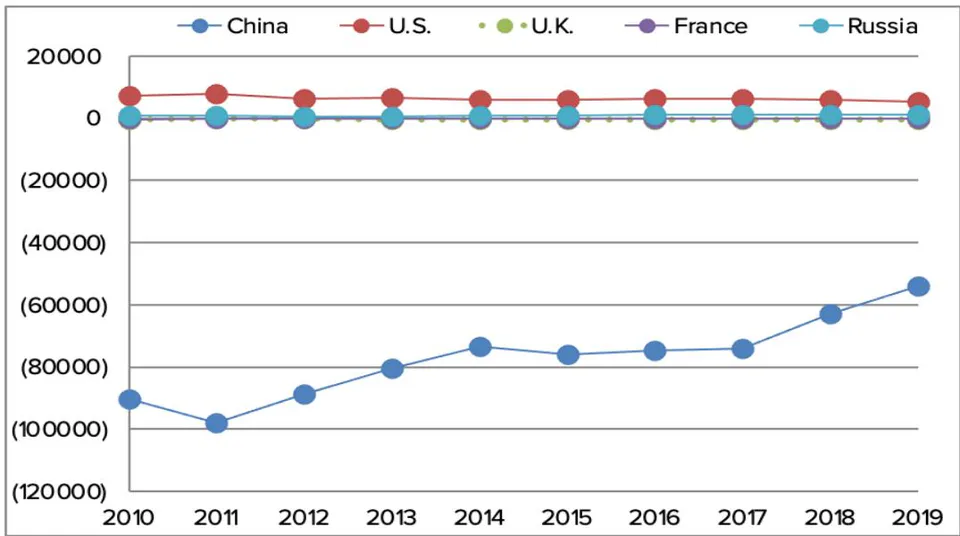
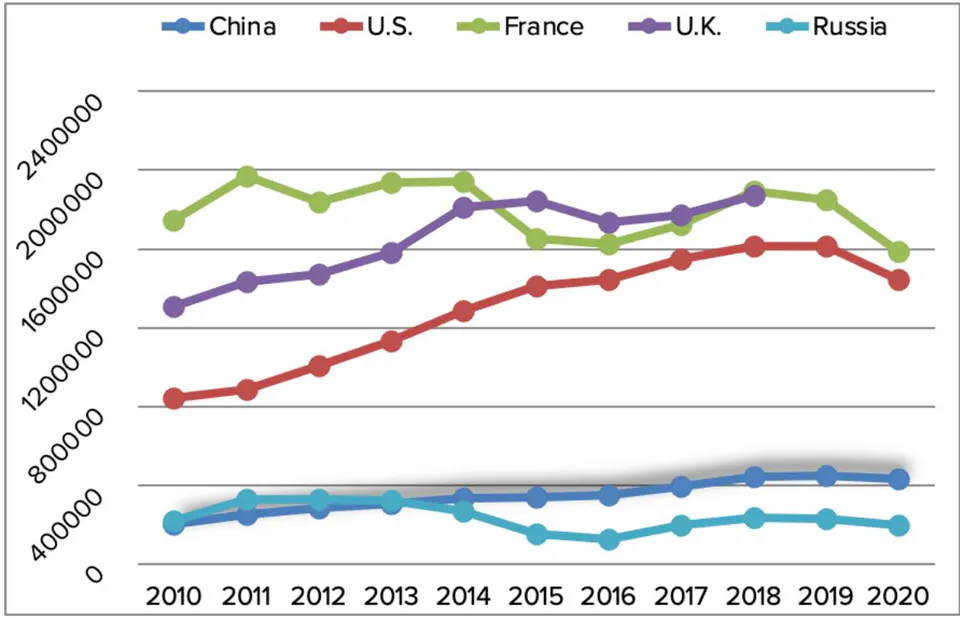
To demonstrate the top-down nature of the Chinese militarism development with the economic sectors, the introduced M factor is plotted in the P5 comparisons in Fig. 4. It is seen that the inverse trend in clean energy returns is slightly correlated with the M factor for the U.S. and France. U.K.'s militant development is hedged against China and Russia's militant developments, indicating to the maritime geopolitical factors in macroeconomy.
The ratios of sovereignty debts' contribution to civil economy is briefly plotted with the equation seen in Fig. 5. Due to the lack of data in the U.S., U.K., and France's use of IMF credit, only China and Russia have been compared with the militarism development trends. The trend suggests China and Russia's decreased reliance on the IMF credits for economic development has contributed to militarist developments since 2016 seen in Fig.
- And the timeline is in proximity with the South China Sea NGH productions.
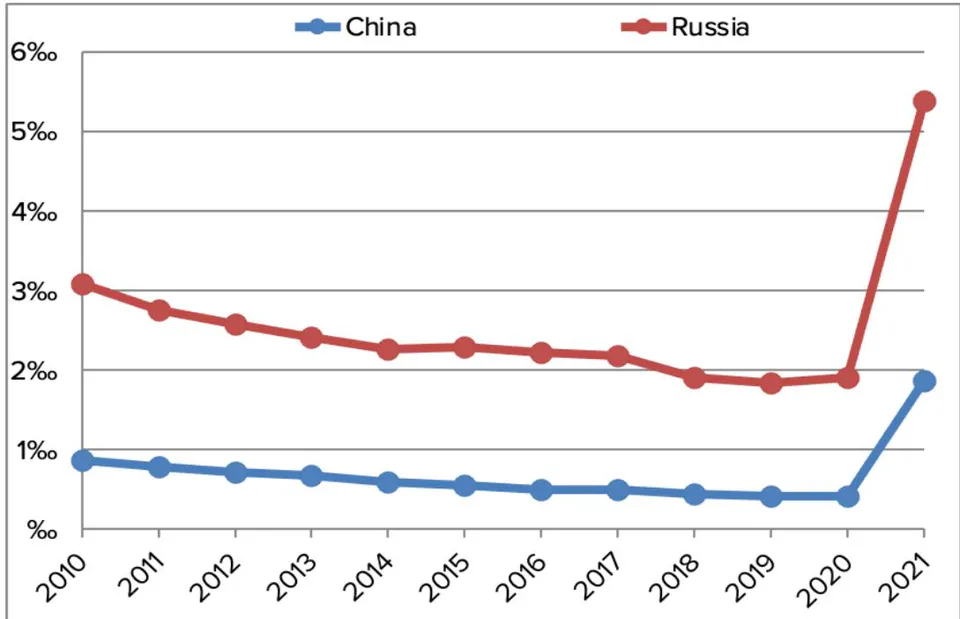
Fig. 4 and Fig. 5 corroborate that top-down designs for NGH exploitation is present, and the South China Sea contains of reservoir within PRC's reach, amounting to 64.96 trillion cubic meters [14]. Similar to the building of the Three Gorges Dam for nuclear production, academic literature unified the proclaimed purpose to be on clean energy and calls for multilateral mercantilism cooperations [14-16]. Even though propositions were made on the excuses of carbon emission, the propulsion ambitions in the space race are revealed in the solid fluidization exploitation of marine NGH [15].
NGH in the industrial chain can be processed for liquid propulsion systems, either by chemical extraction for fusion method or solid fuel crystalline composition for fission method [17-19]. Both Chinese and Russian scientists have been focusing on the technologies in the fusion method, possibly for its relatively low technological requirements and flexibilities in returnable space missions [20, 21]. PRC's gas hydrate expedition originated from 2007, and started production in the South China Sea in 2017, with a 309,000 cubic meters productivity in a 60-day period [14, 22]. Its monthly output increased to 861,400 cubic meters in 2020 [23].
Per the emissions (kg per PPP $ of GDP) and methane emissions in energy sector (thousand metric tons of CO2 equivalent) indicators compared to nitrous oxide emissions in energy sector, China and Russia should have cared more for the energy sector's impact on sustainable development than the other P5
members. The inverse bottom-up incentive in microeconomic perspective with the macroeconomic performance data in Fig. 2 further evidences the energy sector's industrial chains have been compromised from real economy. Carbon dioxide damage from the militarist developments has not properly reflected in the macroeconomic data [11].
Two possible explanations exist: 1) discrepancies in the price market in the global economy influenced the international settlements in the data structures; and 2) underground economy and black markets, such as the semi-black-market offshore realm [24], have been contributing to the data structures' integrity. For example, the Communist Party of China (CPC) used its military to plant opium poppy before occupying Beijing for financial advantage against the Kuomintang (KMT) [25]. With the research design, evidence have mainly been collected for the first explanation.
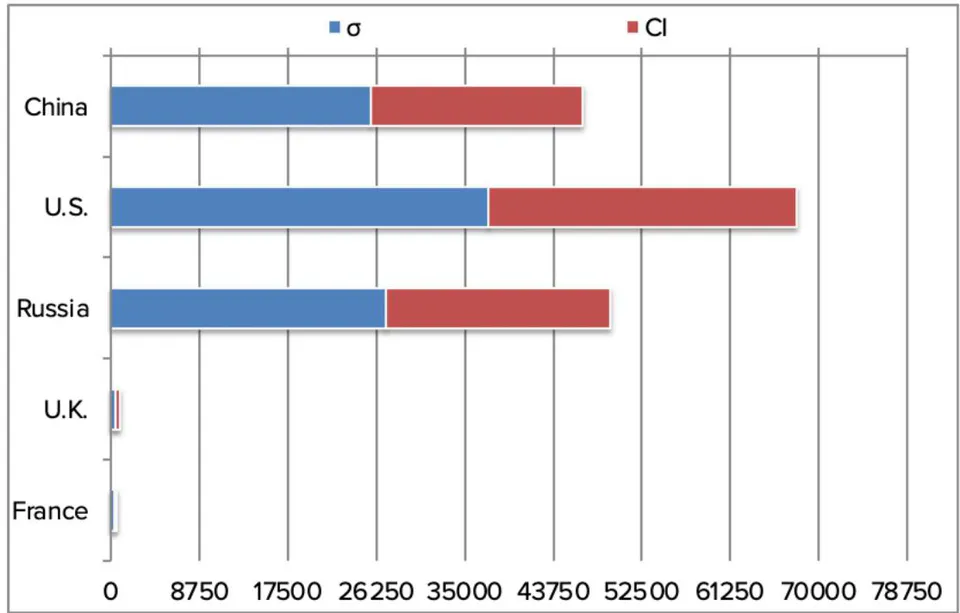
From an economic and industrial perspective, liquid NGH's potentials for rocket propulsion cannot be fully realized without extracting methane from the crystalized condensates, apart from methane emissions during exploitation by depressurizing the seabeds [17, 26]. Fig. 6 shows the standard deviation and CI of the P5's methane emissions in energy sector. The correlations quantitatively suggest a trilateral relationship among the U.S., Russia, and China in the energy-related methane emissions, regardless of the scales of territories.
Albeit the space industry is a strategic niche market, its total market values in monetary terms have been substantially low [27]. With a cross-sector comparison in the U.S. national healthcare expenditure and the sustainable food security indicators in Fig. 3, the U. S. does not have a space fever in the free market economy [28]. The U. S. Congress and Commerce in space industry have inherited the Cold War policies, making the trilateral correlations less likely originating from strategic behaviors [29, 30].
Further possibilities have been located with the price market. Supply advantage is present in the NGH market mainly in the form of liquified natural gas (LNG) price. With projected global demand of 4.9 trillion cubic meters by 2040, PRC's strategic output margins with LNG reserve refills in price peaks in the mass market [31]. This further indicates to China's covert strategic operations in the energy price market.
The fusion method for manned and returnable space flight has been cognized to be the strategic purpose of China's behavior with the NGH [18, 21]. Strategic planning flexibility room is present with the mass market for niche market development, depending on: 1) income cash reserves in marginal interests in the mass market, and 2) technology access for exploitation optimization in energy returns and for niche products in optimization of storage and refinement [32, 33]. The top-down industry-specific strategy with command economy price bargaining is prone to the limitations of the vertical NGH distributions below the seafloor [31, 34].
III. RESULTS
The research has evidenced that China's strategic behaviors in the South China Sea are not only a geopolitical design, but are purported for a new Space Race. The fission method that the U.S. has pertained to in outer space development is consistent with the scientific exploration paradigm, in contrast to the USSR in the Cold War, and China in the new Space Race [35].
The proclaims of clean energy and emission reduction on NGH exploitation by PRC's command economy are falsified. The misleading proclaims are not only political, but also impact on the novelty, credentials, and integrities of science and academic freedom, increasing subjective biases in science communication. The root problem can be simplified as the national political economy's impact on the liberal international multilateral globalization and global political economy.
The allied economic defenses in the geopolitical conflicts have further marginalized the civil economy under dictatorial structure. Not dissimilar to the USSR in the Cold War, the nature of PRC's ambitions are geopolitical, but only projected to the celestial sphere. Its macroeconomic behaviors with strategic mandates have been the source of low market values of the space industry through the energy sector, and impact on the market development of commercial space. Due to the lack of data on energy import and export, only partial inference was made with the energy import data between 2010 and 2015; the U.S.'s acceptance on
China's covert strategic offense behaviors has been present in the energy sector [11, 36].
Real economic setbacks and disruptions on sustainable development from macroeconomy make China's strategic behaviors a global negative sum game. Not only the top-down design's strategic rooms are frail to uncertainties in global economy, humanitarian disasters from the geopolitical and economic conflicts further made the negative sum game a certain result. The strategic response of supply chain decoupling will further complicate macroeconomy, and influence the industrial sectors.
Apart from the earth's internal heat budget associated with the drills, exchange for recovering methane from gas hydrates does not support the proposition of NGH's potentials as alternative energy in solving climate change [21]. In the upper industrial chains, technical propositions on solid fluidization and formation fluid extraction correspond with the strategic intention analysis for propulsion technologies with China's NGH exploitation [21, 37].
IV. DISCUSSION
Democratization has always been the simplest solution to the complex problems behind the research, while the solution has failed time and time again in history with the Chinese [9]. With the strategic cooperation possibilities ruled out on the South China Sea, the U.S.'s mutual participation with the Chinese expedition in NGH can be out of benign engagement and market necessities, if not profit-seeking from the private sector and misinformation in the scientific community. The complexities in human rights and humanitarian values in dealing with strategic threats are present in the circumstances between conflicts and peaceful transition.
Increased costs in cyber security to preserve democratic decision mechanism from autocratic influences have been an economic consequence from the strategic stand-off. Due to the nature of geopolitical ambitions behind the new Space Race, with Russia's refusal in renewing the NEW START treaty in the Communist block, efforts in scientific outreach can see no substantial results without ensuring academic freedom in the suppressed regions. Therefore, sustaining the scientific values rigorously in the industrial sectors is necessary in preventing the economic and financial incentives being maliciously utilized to illicit strategic ends.
Pricing up the space sector's economic entry thresholds may be a solution to preserve the free market economy. Military deterrence in geopolitical conflicts is not the optimal solution to uphold the values in sustainable development. New civil energy innovations are still needed even when the military sector can be most intensive in environmental pollution. The deterrence through economic and financial means is not unprecedented, but the PRC's militarization of civil economy such as with the communication and internet sector makes the choice a type II error with the proven hypothesis.
There is a possibility for type I error in the research that PRC's strategic behaviors are only out of economic and financial purposes, and geopolitics is only a phenomenon of the ends. If the type I error is true, the structural power of the PRC is then falsified in the global realm. This falsification is not unsupported by the facts of legitimacy issues of the CPC reign. As the abuse of power is consistent with the lack of legitimacy, the deviation between facts and truth lingers in the realm of power politics.
The existence of type I error in the research derived from the technical definition of realpolitik. As Space Race is evidenced in the purposes behind the geopolitical strategies, realpolitik is only means to the end hypothesized. This implies that room for negotiation is present in conflict resolution, with the costs of value depreciation in technological advantages. However, this still does not guarantee the peaceful development of outer space due to the decision mechanisms and incentive inertia in the Chinese crave for space. The strategic denials of the PRC system are seen for the personal developmental psychology's projection contributed by the strictly top-down decision mechanisms. Therefore, the type I error is unavoidable but its analysis not irrelevant to the research problem.
The only solution left for the structural problems is not in the structural framework. The global pressures and mandates in human rights have de facto influenced the PRC to a constitutional monarchy. Instead of a royal family, it is a single party. The development in modern China was signified by the Separation of Party and Government, and its fiasco failure contemporary [38]. If global diplomatic persuasions do not work, the structural premises return to the same last resort with Putin and his transgressions against Ukraine [39, 40].
V. CONCLUSIONS
PRC's current strategies in the NGH are not in the interests of sustainable development. Even though literature in the scientific publishing industry proclaim it as a goal, its functions only serve for political misinformation with the propaganda agendas in the scientific community. Its strategic proliferation is only recently being noticed by the U.S. and acted upon with the Trade War.
Power political issues in the Asian sphere are revealed in the energy sector. PRC's militant geopolitical ambitions in the energy sector are consistent and are aiming for outer space. Albeit the U.S.'s Cold War policies are still in action, deceitful strategies in the scientific community can trespass the technological barriers.
Bottom-up democratic decision formation is intricately vulnerable to the economic, political, and misinformation factors. The negative sum game is being leveraged from the top down, and the responsive factors leveraged from the bottom up. A choice between structural anarchy and anarchy in a de jure sense is presented in the situation and circumstance.