This study aims to develop a participatory development strategy based on IESQ Power in Konawe Selatan District Government of Indonesia. Therefore, the research process uses a participatory paradigm in the form of shallow and deep participation and creative participation to improve the welfare of rural communities.The result of research showed that the strategic formulation of participatory development based on IESQ Power is a synthetic process between the participatory development cycle with the six Pillars of Faith and five Pillars of Islam. Meanwhile, the construction of integrated rural development reflects the synergistic process between the participatory development paradigm and religious values, which are cored in IESQ Power and Revelation System. Thus, the use of the participatory development paradigm is not only integrated and interdependent between structural, cultural and spiritual approaches, however, the process of implementing participatory development in rural communities can also take place comprehensively and strategically and be carried out with a full sense of responsibility. In turn, however, it can also be a driving force for social worship that can increase internal motivation for actors in empowerment and other development programs.
## I. INTRODUCTION
Therefore, one of Well-being is always coveted by every individual, family and society as a whole, where the intended well-being is a psychological mental health condition accompanied by the ability to meet all primary and secondary needs. Therefore, one of the most important efforts to do psychological education for each family effectively to manage problems caused by mental health problems through participatory treatment models (Zoladl et al., 2020). Similarly, well-being during this life can last for various types of family relationships, marital bonds, intergenerational, and siblings, it turns out to be very important for well-being (Thomas et al., 2017). Efforts to achieve the well-being of children and poor families at risk during COVID-19 are based on syst emic models of human development and family function by making child adjustments through cascading processes involving caregiver welfare and family processes (Prime et al., 2020). Including the important of equitable public health services that can have an effect on social integration (Jing et al., 2019). The ideal of every nation state in building is the welfare of its entire population without exception. Efforts to meet the needs of a more sustainable population are through welfare approaches to well-being, through ecological maintenance and welfare integrated in every planning (Khan et al., 2020). All development capabilities and strategies and development models are directed to achieve the development goal of community welfare. In relation to this, it is necessary for every institution including Islamic educational institutions to direct its development strategy by strengthening integration, universality and democracy (Ainissyifa, 2019). Keep in mind that urban and rural development strategies are influenced by governance accompanied by contemporary nature conservation policies and practices, so the important thing that needs to be done is the neo-endogenous approach strategy as a stated-driven nature conservation initiative in terms of local resistance and unbalanced power relations (Hidle, 2019). Community welfare means the ability of the community to meet its basic and secondary needs independently. Social services including health services are the social and life conditions of an independent society, and implement innovative solutions when formal services are inadequate to relieve pain, fatigue after loss of mobility (Grimmer et al., 2004). Similarly, in terms of community financial services for the sake of achieving prosperity, where they develop microfinance in rural areas taking into account local wisdom in saving and investing by villagers to overcome limited access to formal financial services, as well as in reducing poverty where village development uses a bottom-up approach taking into account local wisdom through microfinance development (Soegiono et al., 2019). It turns out that the existence of a facility and infrastructure such as a port has determined for the economic development of the region and the country, so as to be able to prosper and improve the quality of life, along with the existence of circular city model (CCM) operating and preserving marine and marine resources in a sustainable manner (Cerreta et al., 2020). The fulfillment of these needs is easily obtained and available at any time and can be felt by all citizens of the community, where the availability of primary and secondary needs is easily obtained through the market. Therefore, to meet the needs ofICT
application as a vehicle to establish e-marketing because it can create jobs, the population is a small holder, and the e-marketing model must be proposed adopted and operationalized (Alavion & Taghdisi, 2021).
But reality shows that well-being has not been felt by all individuals and societies. Social welfare issues are strongly related to ecological sustainability, meaning that it requires handling of ecological challenges that have a negative impact on equality and social welfare, which is why policies are needed by integrating ecological sustainability with social welfare planning (Khan et al., 2020). The lack of perceived well-being by individuals, families and communities is due to the uneven development of character education in the perspective of Islamic education, as superior character in terms of intellectual, emotional, and spiritual intelligence (Rohana, 2019). The inability of the State/government and society to prosper individuals and communities is seen from the increasing number of poor people both in urban areas and in rural areas. Efforts to build with external cultural strategies integrated with local culture in communicating their values and identities in the context of potential cultural and ideological differences (Simic, 2020). In addition, there has been no announced strategy of developing Islamic educational institutions in order to strengthen the concept of integration, universality, and democratic paradigm (Ainissyifa, 2019). Development strategies and models have not been able to prosper the community. The social gap between rich and poor is widening. The key development strategies and models are dissemination through social networks and from a transmedia storytelling perspective integrated into territorial marketing strategies as resources that reinforce the achievement of development goals (Campillo-Alhama & Martínez-Sala, 2019). Development management is only beneficial if contemporary nature conservation policies and practices are based representing new structures that can influence development strategies in communities, where local capacity building is adapted to complex planning theories (Hidle, 2019). Poverty or inability to meet primary needs can be done through social enterprise work integration (WISE) accompanied by encouragement of social values, even the social impact is oriented to forms of social sustainability (Rey-Martí et al., 2021). Difficulty meeting basic and secondary needs due to declining purchasing power of the community. The increasing and expensive energy needs, energy and economic performance need to be applied to agricultural and zootechnical communities, even contributing to the international goals of sustainable development (Maturó et al., 2021). Economic development aims to increase income and purchasing power, the effort that needs to be done is to explore the capacity of the local economy (Pavel et al., 2020). Maintaining purchasing power through efforts to strengthen the economic resilience of rural areas in the form of social capital and agricultural dependence can provide benefits, but on the other hand some things that hamper economic resilience, namely crime rates and political participation (Hennebry, 2020).
Therefore, participatory development strategies are needed as a way to achieve the welfare of the community through the involvement of poor people in the development process. Building a participation model means building consensus to organize and communicate reciprocal relationships between biological, psychological, social, cultural, and environmental factors (Thompson et al., 2020). Development requires a systematic participatory model that utilizes information technology in collecting data for organizational/group decision-making (Eleftheriadis et al., 2018). And social well-being is integrated with ecological sustainability, so that between social welfare and ecology is handled simultaneously and integrated in drafting policies (Khan et al., 2020). Basic needs and secondary needs development model according to community culture. One of the fundamental needs of society is economic fulfillment through job creation with the skills to make craft objects accompanied by a process of communication of the importance of harmonious living, and avoiding things that can cause social, cultural, ecological or political resistance (Pérez, 2021). The application of ESQ power for all elements of society as a tool to maintain and improve the welfare of the community. The application of intellectual, emotional and spiritual intelligence, it turns out, can increase the productivity of society (Priyono et al., 2018). Da turns out that welfare as a value that is upheld because it can be an index of social progress (Voukelatou et al., 2021).
## II. RESEARCH METHOD
The participatory research process takes place in the form of shallow participation and deep participation. Constructivism is to find the meaning of an event or activity through various methods such as participatory observation and observation, free and in-depth interviews, case studies and Focus Group Discussion (FGD). This provides an opportunity to formulate a participatory development model, because in practice constructivism uses a variety of approaches to acquire knowledge and understanding of a theoretical perspective including: interpretivism, phenomenology, symbolic interaction and critical theory. This study uses the typology of cross sectional studies as a case study that seeks to shorten the observation time by observing at certain stages or levels of development, this research process uses descriptive type case studies that take place.
## III. RESULTS AND DISCUSSIONS
Participatory development strategy as one of the rural community development policies, has been implemented in South Konawe district of Indonesia's Southeast Sulawesi province. Development participation means involving all elements of society in the development process starting from the stage of planning, implementation, supervision and utilization of development results. The basic needs-oriented development model is a model of community development adapted to the needs and culture of the community itself, in addition to that also applied secondary needs oriented development model as a complement to the fulfillment of needs in accordance with community culture. Participatory development is certainly determined by the developmental actors, and one of the abilities that needs to be possessed as an actor is emotional and spiritual intelligence. That is why, it is important for them to be given education and training in Emotional and Spiritual Quotient (ESQ), which is carried out gradually and thoroughly for all of societal elements. The existence of various policies from both the central and regional governments is used as a guide in generating community participation in the development process. Involvement of all elements of society in every stage of development. Basic needs and secondary needs development models that are adapted
to culture are alternatives needed by the community. The application of ESQ power as one of the methods in motivating, so that all community leaders have the ability to improve and maintain their well-being.
### 1. ESQ Power-Based Participatory Development Strategy
The results showed that intellectual intelligence accompanied by emotional and spiritual intelligence of development actors and actresses in various fields can undoubtedly cause a development and empowerment program to succeed and succeed in achieving the development goals themselves, that esq power-based participatory development strategies have been successful in developing rural development programs. Participatory development based on ESQ Power as "software interconnection relations is needed especially in building rural areas that are still natural and rural communities that are still thick cultural values. That the cultural approach is a safe and indispensable approach in performing services to rural communities (Schill & Caxaj, 2019). Similarly, managing a problem in a society that will intervene requires a participatory model of care (Zoladl et al., 2020).
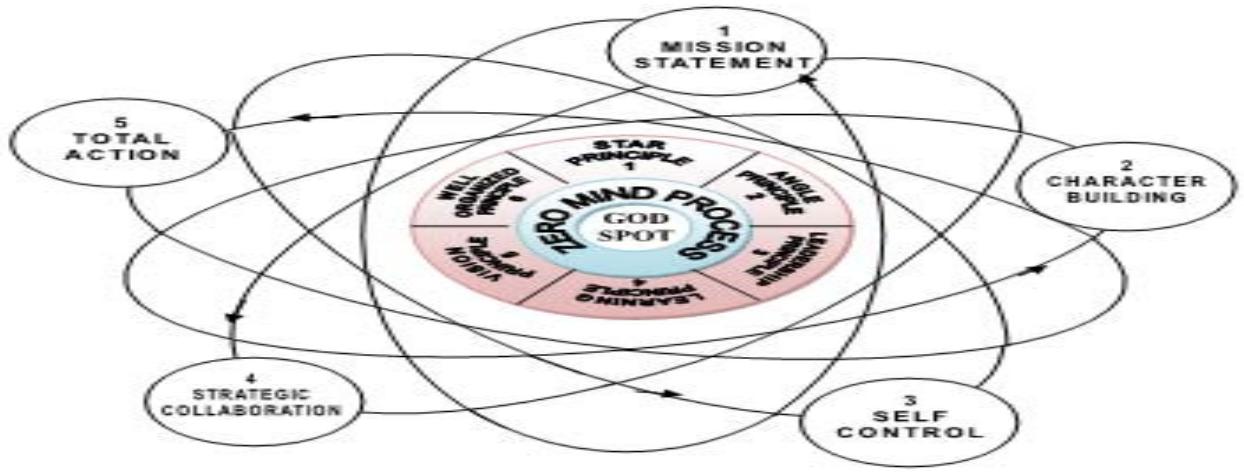 Chart 1: Implementation of Life in perspective of The Pillars of Faith and Pillars of Islam as characters in development actors.
Indeed, the injection of the values of the Rukun Iman and Rukun Islam cycles as seen in chart 1 can be a powerful energy that will have tremendous power to propel man to walk on the orbital line that has been outlined towards the peak of devotion. For development actors and a network of actors who are able to emit spirituality values can run development and empowerment programs in accordance with the guidance of the paradigm that has been outlined. In formulating institutional development strategies requires the paradigm of Islamic education development through strengthening integration, universality and democracy and supported by the formulation of educational principles, formulation of vision and mission that jells and measurable and strong governance (Ainissyifa, 2019).
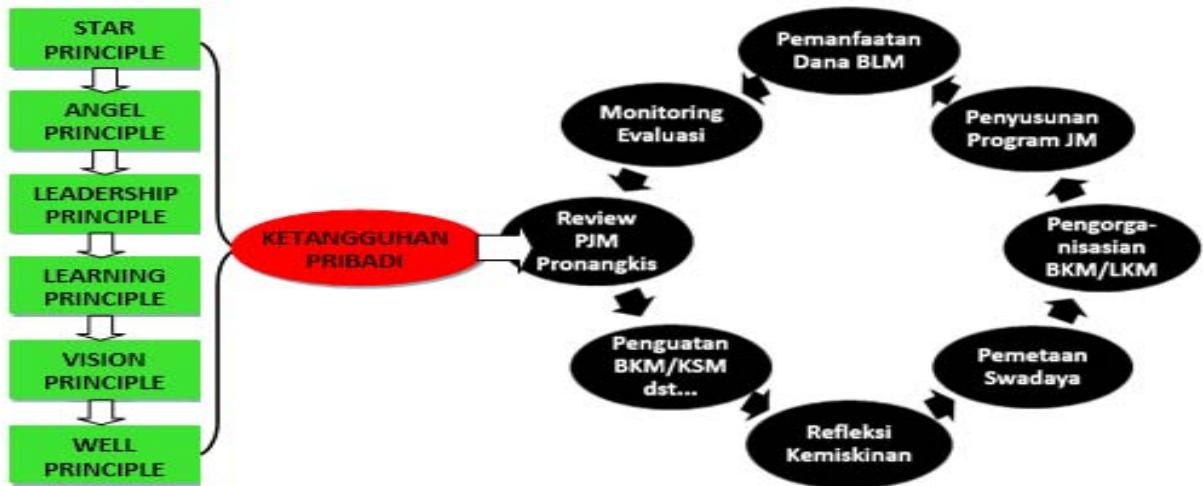 Chart 2: Prophetic Construction and Its Effect on Personal Toughness and Participatory Cycles.
Efforts to place the Star Principle of Faith as an indicator of social faith that has been internalized in the mind and conscience of a person or group of people. Then it can be ascertained that it will follow the honesty of angels (Angel Principles), follow fully the pattern of Prophetic leadership (Leadership Principle), learn throughout his life (Learning Principle) commonly called long life education, long-term thinking (Vision Principle) and not pragmatic, and obey the laws and rules of the game that have been agreed (Well Organized Principle). Not the other way around, so massively commits violations of the law in various deviant behaviors, and even tends to appear kebablasan. Of course, it also needs energy and economic performance support that can be applied by agricultural communities oriented towards sustainable development, through innovative technologies that utilize rural energy resources (Maturó et al., 2021). While it is recognized that vulnerability to change can lead to increased understanding of risk and increased adaptive capacity, where extreme weather events, or weather-related events and crises can challenge people's resilience, it can also increase opportunities for learning and innovation, expanding the repertoire of adaptive responses (Endfield, 2012). Support unity and unity by training citizens to be open, compromised and adaptive societies (Awang et al., 2019). Economic resilience policies are also indispensable when society has opened itself up to the outside world that will be vulnerable to compensation on foreign investment (Pretorius et al., 2021). So that development strategies using participatory models need to be supported by emotional and spiritual intelligence of all elements of society as development actors. Emotional and spiritual intelligence will give birth to development actors who have individual and social toughness. Efforts to establish personal toughness through this pre-professional educational construction, every actor requires a deep concentration to live and practice a ritual worship is not only in the framework of efforts to establish personal toughness and social toughness, so as to apply the cycle of participatory development to the maximum. This is the right step in avoiding the helplessness, uncertainty, confusion, suffering, and ethical and social tensions that can lead to the birth of a brutal society.
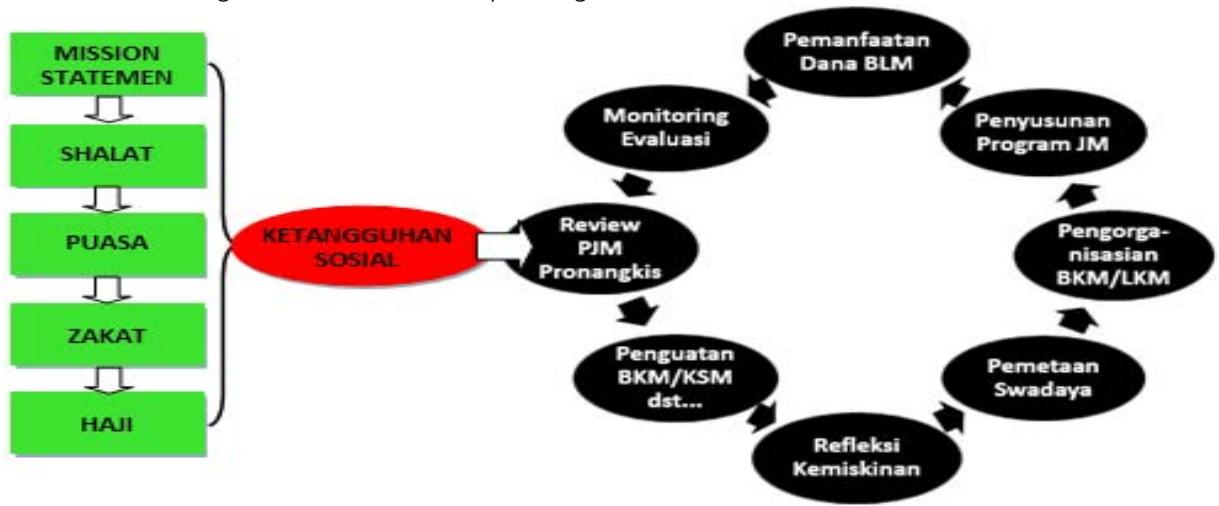 Chart 3: Prophetic Construction and Its Effect on Social Resilience and Participatory Cycles.
Along with that, if praying and fasting are guaranteed to lead to personal toughness. While Zakat and Hajji is a synergistic collaboration strategy and will certainly produce social resilience. All of this can be imagined, how will the result when the actor of the poverty reduction network successfully treads the cycle of The Pillars of Faith and The Pillars of Islam in depth? Of course, it will not only have a high level of awareness. However, it will also have the intellectual intelligence to maintain the trust and trust of the people visually. Individual and social resilience for development actors can anticipate any external economic shocks, which will affect regional economic growth in developing regions through the impact of export demand and capital inflows (Zerrer & Sept, 2020). Of course, it is also supported by a strategy to understand each other's differences in culture, power and status that must be communicated so that it becomes a potential driver of the process of progress (Simc, 2020). Stakeholders in this case the government and public institutions and local communities need to carry out strategies for the preservation and polarization of cultural assets, because it can be economically profitable and key in making investment decisions (Bottero et al., 2020)
How not, the political shahwat use of public money in the form of increasing spending appetite as an effort to fulfill the accessories of contemporary life. Inevitably, the squandering of political costs that may be jarring in various regional and national political arenas, both before taking the hot seat and or afterwards as a form of security fund intended for successful teams in order to maintain the status quo for those in power. Inevitably, when it comes to locking the buzzert actors with innumerable social and economic costs.
#### 2. Refunctionalization of Coordination Team of Regional Overcoming (CTRO)
The maximization of function and role of CTRO is the first and main strategy to develop the building at the regional level primarily building rural area. With the existence of CTRO, it is the exact time to show political will for developing coordination and evaluation of program in a sector cross way. It means that the member of CTRO from the SKPD lineages should begin to show the spirit and performance according to their main task and function as structural institution that carries out the responsibility as the Coordinator of Poverty Overcoming Program (POP). It is certainly surprising that when a structural institution that resides in governmental area frequently gives the reason that they do not have any fund in actuating their task in CTRO. In this context, (Sahar and Salomo, 2018) finds three challenges and obstacles that cause the slowness of poverty overcoming in Pinrang Regency. Firstly, the performance of CTRO that is formed in 2010 to propel the process of planning and funding in order to be capable of resulting in the formulation of effective budget and of doing coordination and monitoring of annual poverty overcoming program in an area that is not maximized. The indication is that there is still the tendency of sector ego either in planning or in implementation of regional poverty overcoming program. Besides, the contextualization of program and indicator of benefit recipients are arranged based on the perception and indicator of each Regional Apparatus Work Unit (RAWU).
Secondly, poverty overcoming program is not integrated. As a result, so far benefit recipients have been faced to the access of a long poverty overcoming program and certainly require a lot of transportation expense. The last challenge and obstacle is that there is an obstacle at the level of benefit recipients of program namely data difference and lowness of data-basis validity extent related to the number of poor citizens and poor household that in turn become the number reference of regional poverty rate. Therefore, it is recommended that in this context, a discourse and offer related to the implementation of collaborative and academic and practice governance strive to strengthen the autonomy and legitimation to collaborative leader that is carried out by Poverty Overcoming Field of District Secretariat both by rank and by law that are defined in regional regulation that is able to regulate all stakeholders. Likewise, there must be a comprehensive guide to the stakeholders related to ideal model and knowledge of collaborative governance especially in poverty reduction by making use of and by utilizing professional staff and experts in order to be able to be directed inclusively.
In line with the thought, according to Peribadi et. al., (2021) that dysfunctionalization of CTRO as structural institution is probably caused by the existence of CTRO use participatory development paradigm in holding out poverty overcoming program is suspected to have not been familiar to use participatory development paradigm in holding out poverty overcoming program. In addition to have not understood participatory development paradigm based on community and other cultural bases, it is possibly due to difficulty of leaving conventional paradigm that has been made not to function during New Order period. Based on that, the urgency of participatory development strategy in the frame of Cultural Weberian and Spiritual Khaldunian can be used to build rural area and community. For that reason, the writer designed a formulation as the effort of refunctionalization of CTRO as seen on Chart 4. It is a proposition of design for institutional structure of CTRO that can be considered by Board of Regional Planning Development on each area of Regency/City in preparing or activating if CTRO is regarded to have been formed so far. In this context, besides being supported by the chief, technical instance, director, and secretary, CTRO Institution must be supported by four operational Institutions in the forum and in the field that every time they are ready to execute all programs of rural area development and poverty overcoming program that will be given in the middle of community.
Firstly, working-group of policy and planning that is in charge of giving the support of policy planning and poverty overcoming program. The tasks of this working-group are: (1) coordinating and facilitating the formulation of strategy and poverty overcoming policy and facilitating the process of synchronization with the Planning of Middle-Term Development Planning; (2) Coordinating the policy and priority program of poverty overcoming in Working-Plan of Regional Government (WPRG); (3) Doing synchronization of poverty overcoming programs of intersector and intercenter and interregion; (4) Facilitating the developing of regional poverty overcoming program in keeping with the characteristics and regional potency; and (5) Monitoring and evaluating the implementation of poverty overcoming policy.
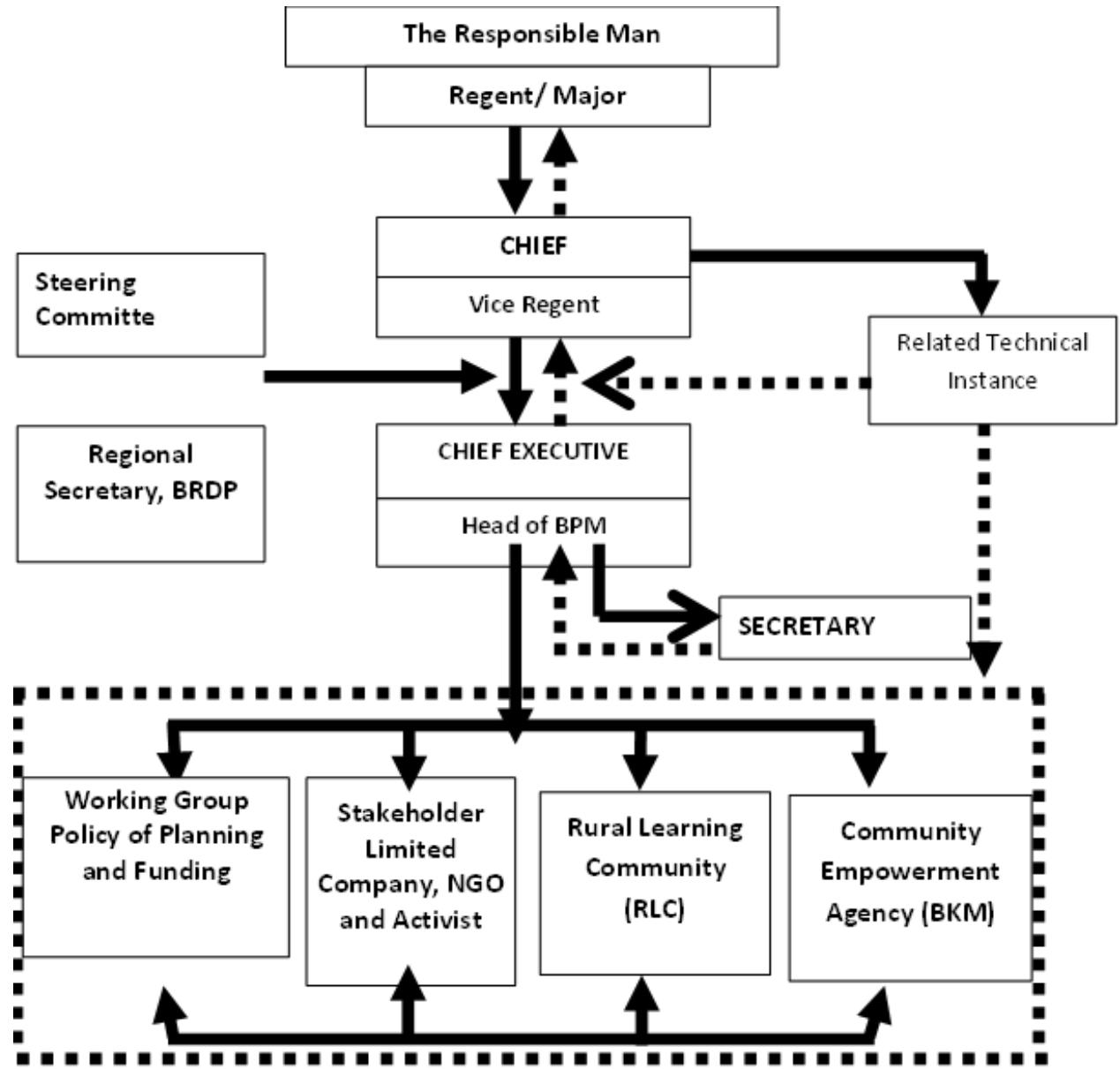 Chart 4: Proposition Design of CTRO Organization Chart of Regency/City
Secondly, institutional Working Group that is in charge of giving the support of facility in carrying out poverty overcoming program. The tasks of working group are: (1) consulting in the compiling of Regional Poverty Overcoming Strategy (RPOS); (2) Facilitating consistency of regional policy in poverty overcoming; (3) Facilitating the development of participatory capacity; (4) Coordinating the development of common project pilot; and (5) Arranging synchronization of inter institution.
Thirdly, working Group of Budgeting that is in charge of giving the support of budgeting towards poverty overcoming program. The tasks of this working group are: (1) Directing allocation and funding sources according to the programs that have been palnned; (2) Budgeting sources both from domestica and from abroad (either coming from the government, company or society) for poverty overcoming programs; (3) Monitoring and evaluating the using of fund for poverty overcoming program both in regional and in central areas; dan (4) Fighting pro poor budgeting in legislative institution.
Fourthly, the stakeholders from various professional lineages both from Universities and Non Government Organization, and activists and from public figures primarily from the poor public figures themselves not only discuss deeply for a variety of strategies of developmental program implementation, but also are sometimes involved in monitoring and evaluating a variety of programs.
Fifthly, Rural Learning Community is Partnership organization that is in charge of formulating strategic steps that specifically study the paradigm, implement them and form society self-subsistence institution.
Sixthly, Board of Society Self-Subsistence (BSSS) as the collection of the chosen persons in a rural area to sharpen a program that is really required by societal citizen. For that reason, the member of BSSS as the collection of persons who have the spirit of volunteerism is in charge of identifying various programs of aspirational, professional and proportional development. In the context of government, BSSS is associated as the Aspirations Board that reflects as Legislative institution.
Urgency of position of CTRO in the effort of institutional reconstruction and social institutions capacity reinforcement as the working-partnership of government in carrying out humanitarian duty in the society is greatly required. Therefore, it is highly expected in order that the persons who participate in this design are the ones who do have competence, commitment, and care towards the efforts of finishing the problems of development and empowerment in the region. Thus, the process of membership recruitment must be actuated openly to choose the interested persons (not the ones who are called and especially forced) and have competence and commitment of humanitarian values. But, when analyzed from the indicator of intelligence quality developed by (Hawari, (2009), dysfunctionalization of CTRO, inactiveness of Urban Learning Communities (ULC), degradation of BSSS, and farming community institutions and data collection controversy mean to have not shown yet the capability of finishing the problems in the field (Intelligent Quotient), not yet transparent, accommodating, and consistent (Emotional Quotient), have not been able to turn threat into challenge until turn into opportunity and have not yet generate spirit and selfconfidence (Creativity Quotient). Eventually, it has not kept the trust yet based on worship (Spiritual Quotient).
The result of research of (Fadillah, (2018) that is contained in his article "Policy Analysis and Poverty Alleviation Strategy in Tangerang City, Banten Province" found that the implementation of poverty reduction policy through Team of Poverty Overcoming Coordination (TPOC) is doing poverty overcoming coordination as one to control the implementation of policy and poverty overcoming program (POP) comprehensively. The Poverty Overcoming Coordination covers: synchronization, harmonization, integration of inter SKPD, vertical and horizontal institution, and the interlaced synergy between government policy with proposition of community from the bottom. Generally, this research found that policy and strategy of poverty overcoming in Tangerang City can be said to give the positive result with the indicator of the declining of poor society number, an increasing of Human Development Index and significant for the last three years from 2012 to 2014.
Meanwhile, according to Annida, (2020) in her article that entitles "Health Financing Policy towards the Poor in Achieving Universal Health Coverage in Banjar Regency" that forum of CTRO involves Corporate and Social Responsibility (CSR) to assist the financing of health towards poor society. Another effort in order that only the society who are really poor and needy who enter in the list of social assistance regency, regional government through Vice Regent of Banjar in the forum of CTRO has also asked the Head of District to appeal the society to be motivated to enter health insurance independently. It is crystalized through circular letter arranged by Health Office of Regency and is signed by the Regent to be conveyed to the area of district as the information that since 2020 there has been no more program of regional health guarantee, and the society is appealed to enter health insurance independently.
#### 3. Integral Strategy of Rural Area Development
Maximization of understanding and perception and application of ESQ Power-based paradigm as an integralistic paradigm will be able to produce internal motivated and sense of responsibility as a reflection of the intentions of social worship. The potential of ESQ Power is based on 6 rukun lman cycles, 5 Islamic Rukum cycles and 7 empowerment cycles in an integrated village development strategy. Optimization of zero mind process that must be done by rural development actors before carrying out their duties is a mission statement, so that all elements of implementing development programs, ranging from facilitators and up to stakeholders must routinely discipline themselves through prayer, always hone their sensitivity and concern through fasting, strive to show their participation through zakat, infaq and sedeqah, and must be smart to build collaboration with various parties to develop their work programs. The main resource development for society is knowledge of sustainable economies supported by the interaction between economic and social integration and creating a more open environment (Li, 2020). But don't forget the participatory evaluation of each useful and more accurate activity program (Kleinhans, 2019). One of the activities program is to develop the livestock sector through crossbreeding which is able to increase production and is considered as a solution in improving the performance of breeders from local communities (Leroy et al., 2020).
Success in developing a zero mind process, means having the ability to reflect on thought, having personal toughness means having self-help mapping skills, having social toughness means always thinking to develop institutional strengthening programs, having the ability to total action means having the ability to build collaboration strategies in order to compile various programs. In the end, the development actor who already has all kinds of abilities in the context of intellect, emotional and spiritual and other creativity intelligence, must be able to go further to develop a synergistic collaboration strategy to the stage of establishing synergistic relationships, implementation efforts and monitoring and review programs. So as to be able to carry out sustainable development with efficient technological innovation and enable energy and economic performance as a collective action (Maturó et al., 2021). Effective collaboration from a wide range of stakeholders and support from technical and nontechnical expertise, can result in informed decisions (Elefteriadis et al., 2018).
Finally, what may not be important is that we must strive to develop an integrated rural development formulation by integrating the participatory development paradigm with the potential of ESQ Power. Thus, the use of the participatory development paradigm becomes comprehensive, since it looks not only based on local cultural values. However, it is also in a participatory development formulation based on the potential value of ESQ Power, so that structural, cultural and spiritual approaches seem to be integrally intertwined and interdependent.
It seems that the peak of optimization of zero mind process that must be done by the developmental actors of rural areas before carrying out their task is mission statement, so that all of the implementing-element of developmental program, beginning from the facilitators to the stakeholders must be routine to make themselves discipline. This is done by praying, keeping increasing the sensitivity and care through fasting, striving to show their participation through zakat, infaq, and sedeqah (paying or giving some of our wealth to the needy or the poor, or the orphans) and being intelligent to build the collaboration with various parties to develop their working-program.
The success of developing the zero mind process means to have had the ability of reflection of thinking, having personal strength means to have had the ability of swadaya mapping, having social strength means to keep thinking to develop the program of institutional reinforcement, having the ability in total action means to have had the ability of building the strategy of collaboration in the case of arranging a variety of programs. At last, the actor of development who has had all kinds of capabilities in intellectual, emotional, and spiritual and contexts and other creativity intelligences must be capable of going furthermore to compile strategy of synergic collaboration (Hajji) towards the phase of interlacing synergic relationship, the effort of implementing and supervising and reviewing programs.
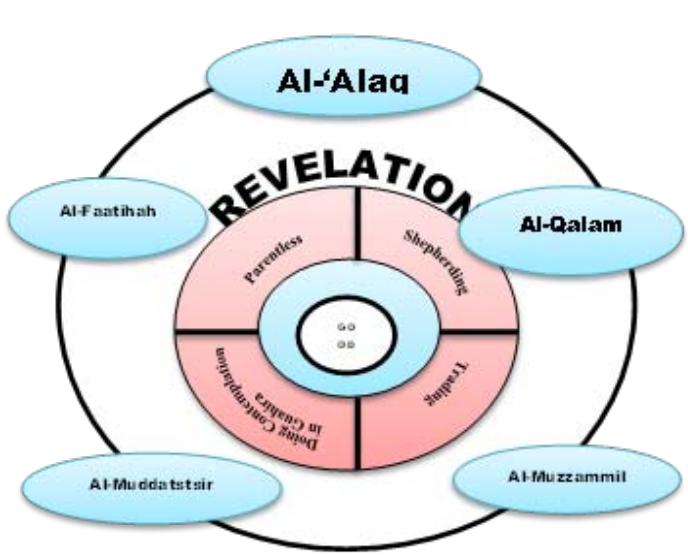
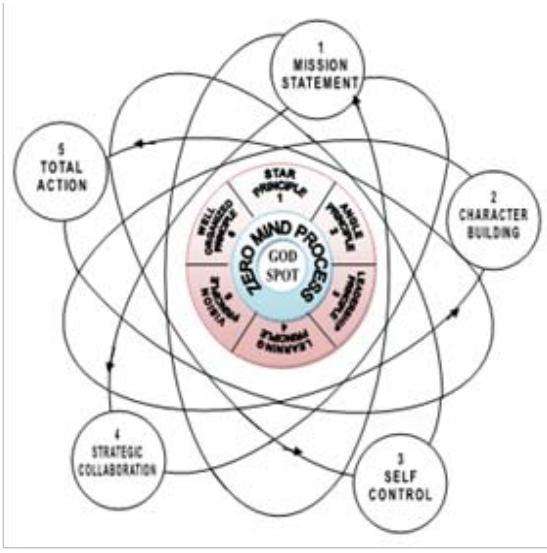
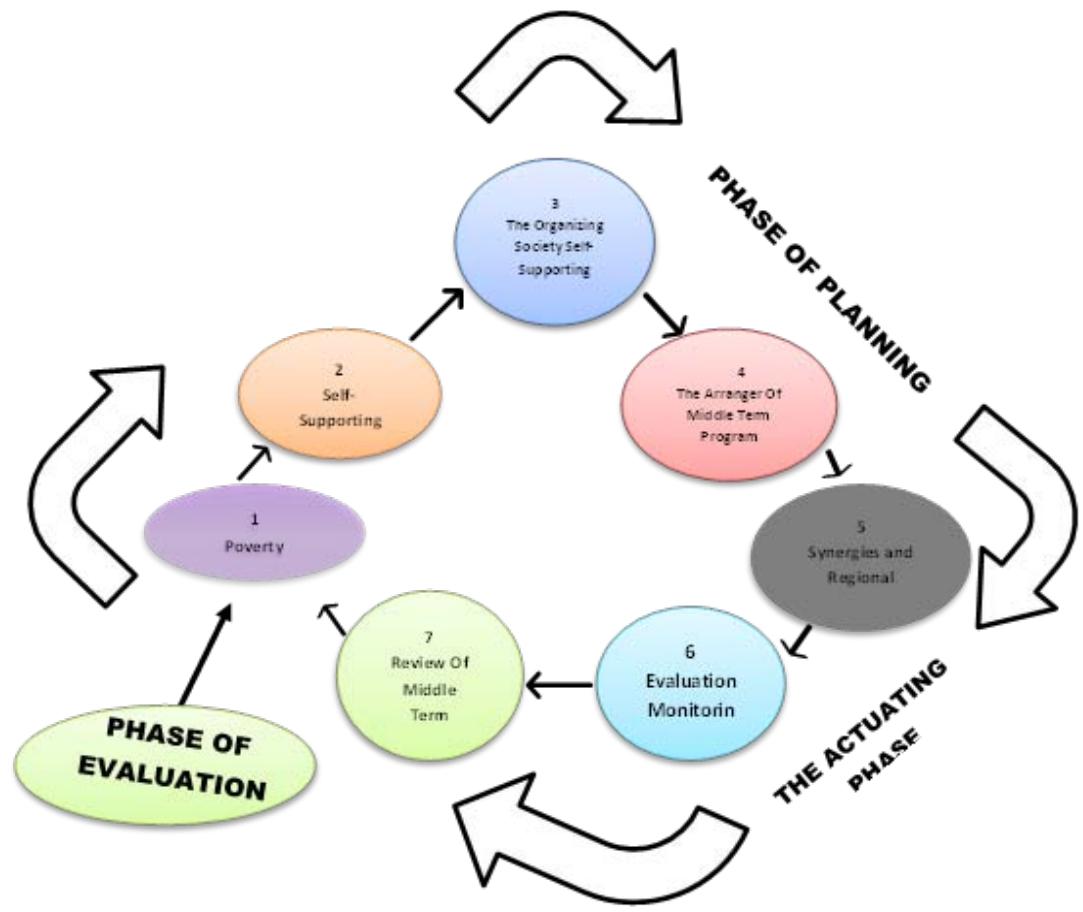 Chart 5: Integralistic Paradigm of Future Village Development
Due to the limitedness of Nature Resource and global competition that is more and more spectacular, it is very much needed innovation from the actor and actress of development that not only have intelligence and skill use participatory development paradigm and/or other alternative paradigms that are regarded to be super strategic. However, even more urgent is that an intelligence of creativity underlain by emotional and spiritual intelligences that can propel someone to actuate their task responsibly.
In actuality, only the intelligent and responsible persons who will be able to carry out their task and will be able to result in a settlement area, make the inhabitants prosperous, and only them who have the value of ESQ Power who will not destroy rural social system and do not spread the virus of deforestation, deculturalization, de-spiritualization, dehumanization, demoralization, and a variety of other social degradation forms. Likewise, only the persons who have integrity who can create a settlement area "Gemah Ripah Loh
Jinawi and Tata Tentrem Kerta Raharjo" as the pattern and structure of development that bring prosperity and peace.
For that reason, social condition of inhabitant in various aspects becomes main indicator for the progress and backwardness of a society, region, nation, and country. The inhabitants as Human's Resources seem to be more determining in comparison with Natural Resource. However, the both are potencies which must be mutual supporting. But, it is unavoidable that there is a nation and country that progresses very fast become industrial countries like Japan. Likewise, in accordance with Tominaga (in Ritzer, 2013) that Japan is supported by the factor of Quality Human's Resource as the result of modification process that keeps developing its hyperrationality. Meanwhile, our nation and country tends to imitate everything that comes from the Western world.
We must begin to realize a very important thing until then we give the priority the process of a very logic evaluation sincerely The reason is that several countries like Indonesian country which is greatly rich with Natural Resources, but all of a sudden goes into underdevelopment country, and even currently begins to be the kind of another under development country. Thus, working-ethics of our elitists who are given the responsibility to control the government and administer the potential of Natural Resources have not had intellectual and spiritual quotient and prime and maximal creativity quotient. More than that, as though our social elitist not only lost sense of humanity and sense of responsibility. However, it also lost sense of nationalism because there are a lot of Foreign Labors.
Eventually, it is unavoidable that our beloved nation and country highly misses the presence of our public figure that not only can be exemplified, but also can deliver to the field of social welfare that can make prosperous. It is not bureaucratic and political elites that has the wealth that results in socio-economic gap with the people. It is no longer avoidable that the actors and actresses of development in various fields are reluctant to be responsible in carrying out the task. According to Mulait (2018) in his article that entitles "Mengimani Yesus Kristus Sang Pembebas: Suatu Upaya Berkristologi Dalam Konteks Pemiskinan Gereja Indonesia" that poverty in the Third World (Indonesia) is not a coincidence or just happens, but is a symptom of injustice that arouses the suffering for a lot of people that actually are found in human's capability and responsibility. In this context, the effort of internalizing the spirit of Jesus as the Releaser is a proposition of christology in religion plurality and minority on one hand with the effort of being involved in poverty problems on the other hand, so that it is brave to be involved in sociopolitical world to state the right thing and save according to the message of the Bible. It means that Opposing the greed and injustice that makes Indonesian society undergo the life against with the dignity as the noble God's creature is a down-to-earth reflection in sociopolitical and socio-economic problems that become the life determinant of many persons in Indonesia.
In line with that, in accordance with Alyanto (2021) in his article that entitles "Theism, Messiahism and Axiology: The Accommodation of Christian Scriptures Against the Problems of Poverty and Impoverishment" that as a matter of fact, having faith is a fact without gap between sky and earth, but having faith becomes meaningful when coming into contact with real world." For that reason, in the poverty and pauperization of Theresa (in Aliyanto, 2021) affirmed that we need a concerted effort in bringing together theological meanings with praxis in the context of the problems of poverty and impoverishment of society. The persons who live in poverty are frequently avoided by a majority of persons because they are regarded as the dirty and sickly people. As a result, it is not surprising that the poverty becomes the source of criminal due to economic problems. Likewise, in accordance with Stott (in Aliyanto, 2021) that one of the approaches of Christian people towards poverty problem is stimulating both our mind and emotion simultaneously to look for the bases of poverty overcoming by making Theism, Mesianism, and axiologism to be present that becomes the task of every human being that has obtained the bestow of forgiveness from the God.
When the fund of Zakat, Infaq and sedeqah is handled in participatory manner, the philanthropy of Islam can become solution for the society on poverty problems that happened. The effort of poverty reduction that can be done is by handling the fund that has been got from philanthropy of Islam well and productively. Nevertheless, there must be some fund given to the consumptive society. When the fund of philanthropy of Islam is handled well and productively, the fund will not be finished up until anytime and can even develop so that its utilization will be increasingly bigger and larger, whereas the fund of philanthropy of Islam that is consumptive can also increase the demand and society's buying-capability, so that the society is increasingly prosperous. Meanwhile, the fund that is productive can increase the activity of investment and productivity of company (activity of business) so that it can also elevate the using of man power (reducing unemployment) and finally can enhance the prosperity and reduce poverty (Rizal and Mukoramah, 2021).
## IV. CONCLUSION
We should start working to develop an integrated rural development formulation by integrating the participative development paradigm with the potential cultural values of Kalosara and ESQ Power. Thus, the use of participatory development paradigms becomes comprehensive, because it looks not only based on local cultural values. However, also in a participatory development formulation based on the potential value of ESQ Power, so that structural, cultural and spiritual approaches seem to be integrally and interdependently intertwined. Maximization of understanding and perception and application of ESQ Power-based paradigm as an integralistic paradigm is not only able to get rid of pseudo awareness and false consciousness (false consciousness) in the mind and conscience of the empowerment actor. However, it will also be able to produce internal motivated and sense of responsibility as a reflection of the intentions of social worship. Inevitably, the potential of ESQ Power based on 6 cycles of Rukun Iman, 5 cycles of Islamic Rukum and 7 cycles of empowerment is synchronized as the main key in an integrated village development strategy. Only intelligent people carrying out trust and responsible intelligence will be able to give birth to a rural area and be able to prosper its inhabitants. And only those who have ESQ Power values have individual and social toughness, so they will not decodify rural social systems and do not spread deforestation viruses, deculturation, desprituization, dehumanization, demoralization and various other forms of social degradation. Finally, all components of the sons and daughters of this beloved nation and country must immediately realize that efforts to improve the quality of human resources in the future, should begin with a very fundamental principle that the basis of human intelligence is in the space of spiritual awareness. Rural areas now get the opportunity to grow and develop quickly towards Maju Village and Mandiri Village during the Disbursement of Village Fund Budget. But to realize the efficient and effective use of Village Funds, the Research Team recommends to start organizing a Kalosara Culture-based Musrenbang and utilizing the paradigm of participatory development based on ESQ Power.
Generating HTML Viewer...
References
43 Cites in Article
H Ainissyifa (2019). Development strategy of islamic education institution.
Seyed Alavion,Ahmad Taghdisi (2021). Rural E-marketing in Iran; Modeling villagers' intention and clustering rural regions.
Nofa Alyanto,Deky (2021). Teisme, Mesianisme Dan Aksiologisme: Akomodasi Kitab Suci Kristen Terhadap Problema Kemiskinan Dan Pemiskinan.
Annida (2020). Kebijakan Pembiayaan Kesehatan terhadap Masyarakat Miskin dalam Pencapaian Universal Health Coverage di Kabupaten Banjar.
Mohd Awang,Abdul Ahmad,Mumpuniarti,Abdul Abdul Rahman (2019). Social integration practices among multi-ethnic youths.
M Bottero,C D'alpaos,A Marello (2020). An application of the a'WOT analysis for the management of cultural heritage assets: The case of the historical farmhouses in the aglie castle (Turin).
Concepción Campillo-Alhama,Alba-María Martínez-Sala (2019). Events 2.0 in the transmedia branding strategy of World Cultural Heritage Sites.
Maria Cerreta,Eleonora Giovene Di Girasole,Giuliano Poli,Stefania Regalbuto (2020). Operationalizing the Circular City Model for Naples’ City-Port: A Hybrid Development Strategy.
S Eleftheriadis,P Duffour,D Mumovic (2018). Participatory decision-support model in the context of building structural design embedding BIM with QFD.
G Endfield (2012). The resilience and adaptive capacity of social-environmental systems in colonial Mexico.
Arif Fadilla (2018). ANALISIS KEBIJAKAN DAN STRATEGI PENGENTASAN KEMISKINAN DI KOTA TANGERANG PROVINSI BANTEN.
K Grimmer,J Moss,J Falco (2004). Experiences of elderly patients regarding independent community living after discharge from hospital: a longitudinal study.
Barraí Hennebry (2020). The determinants of economic resilience in rural regions. An examination of the Portuguese case.
Knut Hidle (2019). How national parks change a rural municipality's development strategies – The Skjåk case, Norway.
Zhengyue Jing,Yi Wang,Lulu Ding,Xue Tang,Yuejing Feng,Chengchao Zhou (2019). Effect of social integration on the establishment of health records among elderly migrants in China: a nationwide cross-sectional study.
J Khan,R Hildingsson,L Garting (2020). Sustainable welfare in Swedish cities: Challenges of eco-social integration in urban sustainability governance.
Kimberly Kleinhans (2019). The Logic Model, Participatory Evaluation and Out Of School Art Programs.
Carlota Las Hayas,Irantzu Izco-Basurko,Ane Fullaondo,Silvia Gabrielli,Antoni Zwiefka,Odin Hjemdal,Dora Gudmundsdottir,Hans Knoop,Anna Olafsdottir,Valeria Donisi,Sara Carbone,Silvia Rizzi,Iwona Mazur,Anna Krolicka-Deregowska,Roxanna Morote,Frederick Anyan,Mette Ledertoug,Nina Tange,Ingibjorg Kaldalons,Bryndis Jonsdottir,Ana González-Pinto,Itziar Vergara,Nerea González,Javier Mar Medina,Esteban De Manuel Keenoy (2019). UPRIGHT, a resilience-based intervention to promote mental well-being in schools: study rationale and methodology for a European randomized controlled trial.
Gregoire Leroy,Paul Boettcher,Badi Besbes,Carlos Peña,Florence Jaffrezic,Roswitha Baumung (2020). Food securers or invasive aliens? Trends and consequences of non-native livestock introgression in developing countries.
Hanwei Li (2020). How to Retain Global Talent? Economic and Social Integration of Chinese Students in Finland.
Anthony Maturo,Andrea Petrucci,Cesare Forzano,Giovanni Giuzio,Annamaria Buonomano,Andreas Athienitis (2021). Design and environmental sustainability assessment of energy-independent communities: The case study of a livestock farm in the North of Italy.
Sol Mora (2018). Resistencias sociales a la cooperación de China en infraestructura: las represas Kirchner-Cepernic en Argentina.
Meki Mulait (2018). MENGIMANI YESUS KRISTUS SANG PEMBEBAS: SUATU UPAYA BERKRISTOLOGI DALAM KONTEKS PEMISKINAN GEREJA INDONESIA.
Alexandru Pavel,Bogdan Moldovan,Karima Kourtit,Peter Nijkamp (2020). Urban or Rural: Does It Make A Difference for Economic Resilience? A Modelling Study on Economic and Cultural Geography in Romania.
S Pérez (2021). Manifestations of social resistance in craft processes iku, nasa and sami indigenous craft.
Peribadi (2021). Strategi Pembangunan Partisipatif Menuju Desa Masa Depan.
O Pretorius,E Drewes,M Aswegen,Van,G Malan (2021). A policy approach towards achieving regional economic resilience in developing countries: Evidence from the sadc.
H Prime,M Wade,D Browne (2020). Risk and resilience in family well-being during the COVID-19 pandemic.
Ariana Priyono,S Chandra,T Putra,L (2018). Effect of intellectual, emotional and spiritual intelligence toward productivity of employee.
Andrea Rey-Martí,Millán Díaz-Foncea,Pilar Alguacil-Marí (2021). The determinants of social sustainability in work integration social enterprises: the effect of entrepreneurship.
Ritzer,George (2013). Eksplorasi Dalam Teori Sosial: Dari Metateori sampai Rasionalisasi, diterjemahkan oleh Astry Fajria dari buku Explorations in Social Theory, From Metatheorizing to Rationalization.
Fitra Rizal,Haniatul Mukaromah (2020). Filantropi Islam Solusi Atas Masalah Kemiskinan Akibat Pandemi Covid-19.
E Rohana (2019). Character Education Relation with Spiritual Intelligence in Islamic Education Perspective.
Abdul Sahar,Roy Salomo (2018). TATA KELOLA KOLABORATIF DALAM PENANGGULANGAN KEMISKINAN DI KABUPATEN PINRANG.
Kaela Schill,Susana Caxaj (2019). Cultural safety strategies for rural Indigenous palliative care: a scoping review.
Ljiljana Simić (2020). The relevance of EU external cultural synergies.
L Soegiono,A Atahau,Harijono,A Huruta (2019). Local wisdom in rural microfinance: A descriptive study on villagers of east sumba.
Patricia Thomas,Hui Liu,Debra Umberson (2017). Family Relationships and Well-Being.
Laura Thompson,Justin Lang,Brieanne Olibris,Amélie Gauthier-Beaupré,Heather Cook,Dakota Gillies,Heather Orpana (2020). Participatory model building for suicide prevention in Canada.
Vasiliki Voukelatou,Lorenzo Gabrielli,Ioanna Miliou,Stefano Cresci,Rajesh Sharma,Maurizio Tesconi,Luca Pappalardo (2021). Measuring objective and subjective well-being: dimensions and data sources.
Nicole Zerrer,Ariane Sept (2020). Smart Villagers as Actors of Digital Social Innovation in Rural Areas.
Mohammad Zoladl,Solaiman Afroughi,Khairollah Nooryan,Shirali Kharamin,Amin Haghgoo,Yaghoub Parandvar (2020). Applying Collaborative Care Model on Intensive Caregiver Burden and Resilient Family Caregivers of Patients with Mental Disorders: A Randomized Controlled Trial.
No ethics committee approval was required for this article type.
Data Availability
Not applicable for this article.
How to Cite This Article
Peribadi. 2026. \u201cReconstruction of Participatory Development Paradigm Based on Spiritual Principles for Improving the Social Welfare of Rural Communities\u201d. Unknown Journal GJHSS-C Volume 24 (GJHSS Volume 24 Issue C2): .
Explore published articles in an immersive Augmented Reality environment. Our platform converts research papers into interactive 3D books, allowing readers to view and interact with content using AR and VR compatible devices.
Your published article is automatically converted into a realistic 3D book. Flip through pages and read research papers in a more engaging and interactive format.
This study aims to develop a participatory development strategy based on IESQ Power in Konawe Selatan District Government of Indonesia. Therefore, the research process uses a participatory paradigm in the form of shallow and deep participation and creative participation to improve the welfare of rural communities.The result of research showed that the strategic formulation of participatory development based on IESQ Power is a synthetic process between the participatory development cycle with the six Pillars of Faith and five Pillars of Islam. Meanwhile, the construction of integrated rural development reflects the synergistic process between the participatory development paradigm and religious values, which are cored in IESQ Power and Revelation System. Thus, the use of the participatory development paradigm is not only integrated and interdependent between structural, cultural and spiritual approaches, however, the process of implementing participatory development in rural communities can also take place comprehensively and strategically and be carried out with a full sense of responsibility. In turn, however, it can also be a driving force for social worship that can increase internal motivation for actors in empowerment and other development programs.
Our website is actively being updated, and changes may occur frequently. Please clear your browser cache if needed. For feedback or error reporting, please email [email protected]
Thank you for connecting with us. We will respond to you shortly.