The Beginnings-Among the oldest known public pharmacies in Transylvania, established by city magistrates and operated by tenant pharmacists, are those in the most important and wealthiest towns of the Transylvanian Saxons: Sibiu [German: Hermannstadt, Hungarian: Nagyszeben] (1494), Brașov [German: Kronstadt, Hungarian: Brassó] (1512), and Bistrița [German: Bistritz, Hungarian: Beszterce] (1516). Those pharmacy foundations are based on models from the German-speaking area. The same applies to the third largest city in Transylvania, although the establishment of the first municipal pharmacy in Cluj [German: Klausenburg, Hungarian: Kolozsvár] is not documented, but the existence of this is suggested by the fact that Wolfgang Theke, a pharmacist from Buda (today: Budapest), moved first to Brașov, then to Sibiu, and later to Cluj in 1543.
## I. THE BEGINNINGS
Among the oldest known public pharmacies in Transylvania, established by city magistrates and operated by tenant pharmacists, are those in the most important and wealthiest towns of the Transylvaniaan Saxons: Sibiu [German: Hermannstadt, Hungarian: Nagyszeben](1494), Braşov [German: Kronstadt, Hungarian: Brassó](1512), and Bistriţa [German: Bistritz, Hungarian: Beszterce](1516). Those pharmacy foundations are based on models from the German-speaking area. The same applies to the third largest city in Transylvania, although the establishment of the first municipal pharmacy in Cluj [German: Klausenburg, Hungarian: Kolozsvár] is not documented, but the existence of this is suggested by the fact that Wolfgang Theke, a pharmacist from Buda (today: Budapest), moved first to Braşov, then to Sibiu, and later to Cluj in 1543. In 1567, the city council of Bistriţa requested that Cluj should send a pharmacist, indirectly indicating the presence of at least one pharmacist there. The first mention of a pharmacy is from a council record dated April 8, 1591, which states that the pharmacy should not remain without a tenant, and therefore should be leased, along with all its equipment, to Adam Schaecht, probably from Leipzig. Around 1600, the city magistrate appears to have hired a new pharmacist, possibly Johannes Balck from Duisburg, whose name appears in the city's citizenship registry in 1599. No further data from the 16th century are recorded.
The pharmacy located on the main market square, near St. Michael's Church, was described in a 1655 letter by Dr. Balthasar Honettel from Zwickau as being far from modest, indicating the prosperity of its tenant due to its excellent equipment. From the 17th century, only sparse data is available, recording only individual names of pharmacists such as Timotheus, Mihály Szócs, János Patekarius, Ede (Edward) Stano, an exile from Poland who arrived around 1645, and György Sopronyi starting around 1664.
## II. THE PRIVATE SAINT GEORGE PHARMACY
In the early 1700s, following the practice in other cities, the city magistrate privatized the pharmacy. The first private owner is said to have been Jakob Fojt (also known as Foit or Foith), whose important life dates are inscribed on his tombstone at the city cemetery "Házsongárd" (Cimitirul Central). He was born in 1679 in Upper Hungary's Presov (Slovak: Presov, Hungarian: Eperjes) and died in 1723 at the age of 44, after twelve years of marriage to Sara (born Hooz), the widow of the Evangelical Lutheran pastor Johann Phleps. None of his descendants were interested in continuing the pharmacy. After him, it seems to have been difficult to find a new tenant for the pharmacy. It was not until six years later that Samuel Schwartz (also known as Schvartz), a Zipser Saxon from Kežmarok (Slovak: Kežmarok, Hungarian: Késmárk,) came to Cluj. His biography is known from his printed Latin obituary. After attending the Reformed College in Sárospatak, Hungary, and the Evangelical College in Bratislava (German: Pressburg, Hungarian: Pozsony), Samuel Schwartz (1701-1749) began his pharmaceutical training in Sopron (German: Ödenburg), Hungary, at the "Zum schwarzen Elefanten" pharmacy owned by Kornel Gänsel Jr., and continued his training in Regensburg at the "Zum Engel" pharmacy under Georg Sigmund Stoll. After passing his examination before the Collegium medicum Augustanum in Augsburg, he also traveled in Germany and the Netherlands, studying at the University of Leiden. In 1729, he accepted repeated invitations from the gubernatorial physician of Transylvania, Samuel Köleséri and took over the Cluj pharmacy. Schwartz married the widow of his predecessor Fojt and soon enjoyed he high esteem in the city. Having died in 1749 without offspring, his widow, following the terms of his will, (testament) arranged for the return of his apprentice, Tobias Mauksch, who was then completing his journeyman years abroad in Stuttgart, Ludwigsburg, and Nuremberg.
## III. THE MAUKSCH FAMILY OF PHARMACISTS
Tobias Mauksch (Maugsch), a son of a furrier, was baptized on August 8, 1727, in the Evangelical Lutheran parish of Kežmarok. Orphaned early, his mother sent him in 1740 to her cousin, Samuel
Schwartz, a native pharmacist of Kežmarok residing in the royal free city of Cluj, Transylvania, to apprentice. Following the widow Schwartz's wishes, Mauksch took over the pharmacy as a lessee in 1750. Two years later, on December 20, 1752, the young apothecary acquired citizenship of the city and soon purchased the pharmacy from Schwartz's widow. He compiled his "Taxa Pharmaceutica," a 45-page price list in German and Latin, listing over 2000 medications. "In 1760, upon the recommendation of the Cluj city magistrates and the illustrious Transylvanian government, Empress Queen Maria Theresa granted him an exclusive privilege, securing him against any competition." [Melzer, 264]
Economically and socially, Tobias Mauksch quickly ascended to become a wealthy and highly respected citizen. In the early 1760s, Mauksch bought a corner house on the northeast corner of the main market square to accommodate his flourishing business and growing family. He had it remodeled and renovated, adorning the walls with baroque-style frescoes and inscriptions that are preserved to this day. From his marriage in 1756 to Susanna Sartorius (ca. 1736-1773) from Košice (German: Kaschau, Hungarian: Kassa), nine children were born. His second wife was Susanna Habermeyer (1733-1782) from Győr (German: Raab), who also bore him nine children. Due to high child mortality, only one son and two daughters from the first marriage and one son and six daughters from the second reached adulthood. His children married within the circle of patrician families: doctors, pharmacists, teachers, officials, and officers.
Since 1732, there was a second pharmacy in Cluj, owned by the Jesuit order. Following the dissolution of the order in 1773, the pharmacy was closed. Two years later, Tobias Mauksch acquired the equipment at a public auction and relocated the pharmacy near St. Michael's Church on the market square, likely to its old site, and in 1775 he handed over the "Unicornis" (Egyszarvú) pharmacy to his trained pharmacist and son-in-law, Michael Streicher (1749-1822).
In 1790, Tobias Mauksch also acquired the "Golden Deer" (Arany szarvas) pharmacy in Târgu Mures (German: Neumarkt am Mieresch, Hungarian: Marosvásárhely) for his son Johann Martin. To his then minor son, he dedicated his manuscript "Instructio" (1793-1801), which detailed everything necessary for successfully running the pharmacy in Târgu Mures, still considered a pharmacological historical rarity today. The manuscript offers deep insights into the management of pharmacies at the time and the lives of pharmacists in Transylvania. As an excellent professional, Tobias Mauksch not only enjoyed the trust of his customers, patients, and fellow citizens but especially the recognition and high regard of the city magistrates and many high state officials. At the recommendation of Count Ádám Teleki, he was entrusted with the dignified position of "Police Director and City Captain." Mauksch also held other public offices, including that of royal commissioner, senator (1788), and even as a member of the Diet of Cluj (1790-1794), the capital of the Habsburg Grand Principality of Transylvania. He was not only revered as a pharmacist and senator but also as a devout family man and zealous church curator of the Evangelical Lutheran Church. He passed away on January 5, 1802. His neoclassical tombstone is located in the central cemetery of Cluj "Házsongárd" (Cimitirul Central).
His legacy continued through his elder son, Tobias Samuel Mauksch (1769-1805), who passed his pharmacy examination in 1789 in Pest and studied medicine for several semesters in Göttingen. From 1793, he operated in Târgu Mures at the "Golden Deer" pharmacy, and later in Cluj, where he took over the leadership after his father's death in 1802. Like his father, he was elected as a hundred-man and church curator, but he died in 1805. His half-brother Johann Martin Mauksch (1783-1817) passed his pharmacist examination in 1804 in Pest and returned to Cluj. After the early death of Tobias Samuel, he took over not the Târgu Mures pharmacy as predetermined by their father, but the paternal pharmacy in Cluj, which he managed until his own early death in 1817. With Johann Martin, the Mauksch line in Cluj died out, as no sons resulted from his marriage with Eleonore, born Laszgallner. The pharmacy continued under Daniel Slaby (1783-1835), a native of Bratislava and former classmate and friend of Johann Martin. In 1822, the esteemed pharmacist Daniel Slaby married the widow, Eleonore Mauksch. After Slaby's early death in 1835, as no heirs resulted from this marriage either, the ownership of the pharmacy passed to Johann Martin Mauksch's daughter, Augusta Mathilde (1815-1850).
## IV. THE HINTZ PHARMACY DYNASTY
In 1835, Augusta Mathilde Mauksch married Georg Gottlieb Hintz (1808-1863), a Transylvaniaan Saxon and Evangelical Lutheran city pastor from Sighisoara (German: Schäßburg, Hungarian: Segesvár). Their son, Georg Joseph Hintz (1840-1890), laid the foundation for the Hintz pharmacy dynasty. The family pharmacy was managed by various tenants, such as Martin Noppendruck, until 1863 when the young heir took over its management. After attending the Unitarian College, he received his training locally as an apprentice and journeyman, then at the "Zum Schwarzen Adler" pharmacy in Sibiu, managed by Karl Müller senior, and in Miskolc, Hungary.
In 1860, he began his pharmacy studies in Vienna, where he earned his doctorate in Chemistry three years later. From then on, the pharmacy bore his surname and served as a teaching facility for pharmacy students at the University of Cluj, where Dr. György
József Hintz, as he later called himself in the Hungarian version of his name, also taught as a lecturer in pharmaceutical technology at the Medical Faculty of the University of Cluj (founded 1872) and conducted examinations in his field. Dr. Hintz authored numerous publications in professional journals and was a board member of several professional associations both domestically and abroad, supporting the Pharmacy Students' Aid Association and the Music Conservatory, which he chaired. Dr. Hintz held several municipal honorary positions, including city council member and health committee member. He also served as a curator of the Evangelical Church, following in his Mauksch ancestors' footsteps, and as treasurer of various associations and banks, making his family among the city's elite.
In 1866, he married Emma Groisz (1846-1929), and together they established the Hintz pharmacy dynasty in his hometown. His eldest son, Dr. György Károly Hintz (1874-1956), his grandsons György Hintz (1912-1992) and Gábor Hintz (1918-1989), and the latter's son, György József Hintz (1939-1992), all successfully pursued careers in pharmacy, maintaining the flourishing "Dr. Hintz Pharmacy" and renovating it several times over the decades. In 1920, the union of Transylvania with Romania occurred. After World War II, in 1949, the Hintz family lost their home and pharmacy overnight due to expropriation by the communist regime. The Hintz family was then forced to rent their former property. The premises of the closed, venerable pharmacy were temporarily misused for other purposes (as a bread shop) until 1954, when a Pharmacological Historical Collection of the Transylvanian History Museum (Colecţia de Istoria Farmaciei Cluj al Muzeului National de Istorie a Transilvaniei) was established there.
## V. PREHISTORY OF THE MUSEUM
Professor Dr. György József Hintz is said to have begun collecting old pharmacy vessels, mortars, books, manuscripts, and prescriptions in the last quarter of the 19th century, especially since the idea of establishing a pharmacy museum had arisen in the 1880s. His son donated this collection to the Institute for the History of Medicine in 1934. The core of today's collection of pharmacy equipment originates from the private collection of over 1000 items belonging to the renowned Cluj physician, pharmacist, and historian, Professor Dr. Gyula Orient (1869-1940). He initiated the first exhibition of the Hungarian Pharmacy Museum in Cluj, which took place in 1917 in the villa of Count Imre Mikó, then the seat of the Transylvaniaan Museum Society (Erdélyi Múzeum-Egyesület).
In 1920, Transylvania became part of Romania. A year later, the pharmacy history collection was assigned to the "Institute for the History of Medicine, Pharmacy, and Medical Folklore" of the Medical Faculty in Cluj and was transferred shortly thereafter. Professors Gyula Orient, Jules Guiart (1870-1965), and Valeriu Lucian Bologna (1892-1971) made lasting contributions to the development of this collection, which was eventually housed and displayed in the nationalized Dr. Hintz Pharmacy under the name "Pharmacy History Collection" on January 20, 1954. This project was entrusted to the medical historian Professor Bologna and his assistant, Dr. Samuel Izsák (1915-2007), the future chairholder for the History of Medicine and Pharmacy. Dr. Izsák, along with the Sibiu art historian and museologist Dr. Julius Bielz (1884-1958), collected old and valuable historical artifacts, pharmacy equipment, tools, vessels, stamps, books, writings, medical instruments, and much more from nationalized pharmacies across the country. Dr. Izsák established two such collections, in 1952 in Sibiu at the Small Ring in the former "Zum Schwarzen Bären" pharmacy of Guido Fabritius, and in 1954 in Cluj.
Due to construction measures, the operation was paused from 1959 to 1964, the new pharmacy was halved due to the construction of a pedestrian passage, and the setup was redesigned. In 1963, the administration of the collection was transferred from the Medical Faculty to the National Museum of Transylvaniaan History (Muzeul National de Istorie a Transilvaniei, MNIT), and Dr. Eva Crisan, a former doctoral student of Professor Bologna and both a museologist and physician, was put in charge, a role she fulfilled for over four decades. It is a fact, however, that the "Pharmacy History Collection" (1954-2018) scarcely possessed any exhibits from the former Mauksch-Hintz Pharmacy.
It was therefore all the more pleasing that during the recent renovation of the property in 2020, old pharmacy accessories, consisting mainly of glass containers and vessels, were discovered in the former ice vault in the courtyard of the "Mauksch-Hintz House". These were incorporated into the current exhibition inventory. During archaeological excavations, other artifacts also came to light, such as wall remnants in the cellar from Roman times (Napoca) and the "coin treasure" in two Bohemian medicinal water bottles made of stoneware from the 19th century. The 972 silver and gold coins appear to have been a private "money reserve" around the time of the cholera epidemic in 1873, which had then been forgotten. On the attic of the house, documents, manuscripts, photographs, and many other artifacts were found, which entered the museum's possession.
## VI. THE NEW MUSEUM
In the fall of 2018, the "Pharmacy History Collection" (Colecchia de Istorie a Farmacie) in the heritage-listed Mauksch-Hintz House on the northeast corner of the main market square (Piaţa Unirii) had to close its doors. The closure was due to extensive renovation measures planned by the property owner, Dr. med. Georg Hintz (Frankfurt am Main), on the building, which dates to the 16th century and had been restituted by the Romanian state. His private initiative not only represented a multi-million investment but also required an energy and time-intensive project management (2018-2024), expertly supervised and persistently implemented. For Dr. Georg Hintz, as an investor, it proved fortunate to have entrusted the project to the competent German-Romanian cooperation office "Planwerk", led by Benjamin Kohls and active in urban planning and architecture projects throughout Romania. The exemplary results of the renovation have left all involved highly satisfied, and the project rightly earned a state award.
Upon entering the new pharmacy museum, visitors first come to the anteroom with a cellar entrance (part of the former new pharmacy), where the sales area of the Hintz Pharmacy was located at the end of the 19th century and in the first half of the 20th century. There used to be chairs next to the counter where customers could comfortably wait and chat while the medicine prescribed by the doctor was being prepared. A few steps lead to the former material storage room (Camera materialis), which today displays painted storage cabinets as well as statues, busts, and shelves with pharmacy vessels. Centrally placed on the counter is a type of scent box (Aromatarium) with several compartments containing various fragrant medicinal plants and raw materials, awaiting the encounter with curious visitors' noses.
In the "old office," where medicines were sold in the 18th century, the room is richly decorated with symbolic paintings and inscriptions and was later used as the office of the pharmacy manager. The Baroque decoration of the wall paintings from 1766 features pharmacy symbols such as the staff of Asclepius with two snakes, the tree of life, and a crane with a stone in its claws—a symbol of vigilance—as well as cornucopias, symbols of prosperity. The counter in the center of the room displays typical raw materials for medicines of plant, mineral, and even animal (powder of deer antler, castoreum, crab eyes, apothecary skink, Spanish fly, etc.) and human origin (mummy powder, fat). The furniture and various medicine containers made of wood, glass, ceramic, faience, porcelain, or metal, whether transparent, lacquered, or colorfully painted, originate from old pharmacies across the country.
In the fourth room, the former laboratory, pharmacy seals, tools, mortars, scales, vessels, laboratory instruments, and medications or raw and starting materials for making medicines are displayed. A pharmacy library with old prescription and specialty books is housed in a cabinet. In the showcase are scales and weights, glasses, microscopes, a homeopathy set, pharmacist certificates and diplomas, medicine boxes, photos, etc., displayed alongside a bronze bust of Prof. Dr. Valeriu L. Bologna. Large informational panels on two walls draw visitors' attention, inviting them to learn more about the life and work of the pharmacy's most famous owners—Tobias Mauksch, Johann Martin Mauksch, and Prof. Dr. György József Hintz.
The basement area consists of seven rooms and is also completely renovated. The first basement room used to store light- and temperature-sensitive substances such as oils, fats, mineral waters, wine, vinegar, and alcohol. The corresponding containers are visible in the showcases, although most lack individual labels. The symbolic laboratory room, displaying numerous tools and devices for making medicines, is grouped according to functional criteria, including for crushing or mortaring, grinding, sieving, distilling, cooking, decanting, and for "hot preparation" of medicines, as well as cold preparation (via percolator) tools. An interactive side room (Sala multimedială) features, among other things, the 19th-century coin treasure, over 100-year-old photos of the Hintz family taken by Gabriella Hintz (born Boros), wife of pharmacist Dr. György Károly Hintz, and short films about the history of the house and its renovation on a flat-screen. A significant part of the cellar exhibition is the collection of medical instruments, containing exhibits used in hospitals and clinics in Cluj from the late 19th century to the 1980s. The objects are grouped by medical specialties: dentistry, ophthalmology, radiodiagnosis, surgery, etc. An examination table and a dental treatment chair are also part of the exhibits. The last exhibition room is dedicated to surgery (Amfiteatrul anatomic) with an old operating table, extensive surgical instruments, several anatomical teaching boards, and medical-technical items and devices, mostly from the extensive private collection of Cluj physician Prof. Dr. Pompiliu Manea.
Curator Dr. phil. Ana-Maria Gruia, the dedicated historian and museologist, launched the government-funded research project "Pharmatrans" (https://pharma-trans.mnit.ro/en/home/) a few years ago and, with her team, cataloged the current inventory of more than 7,000 objects in the pharmacy museum. The contributions of the introductory volume also deal with the history of pharmacy in Cluj. The seven-volume (3200 pages) catalog is an exemplary, richly illustrated work in English, also accessible online (https://pharmatrans.mnit.ro/en/catalogue/).
## VII. OUTLOOK
On January 15, 2024, at 1:00 PM, the spacious and modernly designed attic of the Hintz House hosted the official and ceremonial opening of the "Pharmacy Museum" (Muzeul Farmaciej), attended by numerous public figures including Dr. Felix Marcu, Director of the
Transylvanian National History Museum (Muzeul National de Istorie a Transilvaniei, MNIT), Dr. Georg Hintz as the property owner, and Dr. Ana-Maria Gruia, curator of the Pharmacy Museum. She announced that the Pharmacy Museum has become this year a member of the association Aromas Itinerarium Salutis (AIS), marking its entry as the first Romanian member in this organization and thus joining the "European Route of Historical Pharmacies and Healing Gardens." Museum pedagogy will play there a significant role, as the newly opened museum aims not only to provide a retrospective on the history of medicine but also to serve as a meeting place. Schoolchildren will be involved in guided activities designed to spark their imagination, curiosity, and experimental spirit, with activities such as making soaps, candles, candies, and even perfumes.
Further plans include more generously labeling the exhibits, as currently, they are not labeled adequately. The labels are also planned to be multilingual (currently only available in Romanian and English), which will cater to the expectations of Hungarian and German visitors from both domestic and international backgrounds. This effort extends to the audio guide explanations and brochures (flyers) as well, meeting the modern spirit of multilingualism and high quality of offerings. This positioning will enable the newly reopened Cluj Pharmacy Museum (https://muzeulfarmaciei.mnit.ro/) to stand out among similar institutions in Transylvania, such as those in Sibiu, Brasov, Oradea, and Sighisoara, and to become one of the most attractive sights in Cluj.
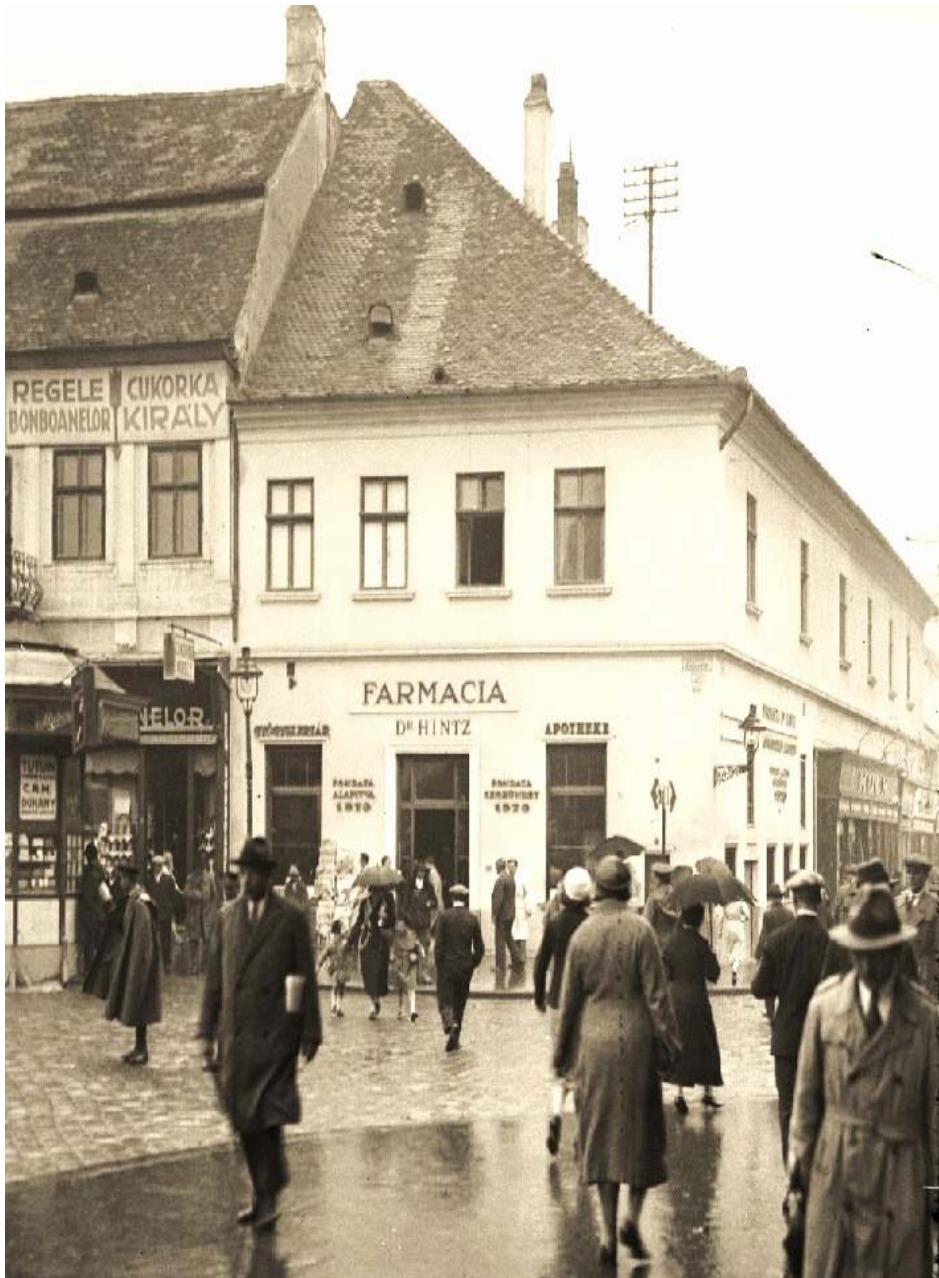 Fig. 1: Mauksch-Hintz house with Pharmacy (1930, MNIT)
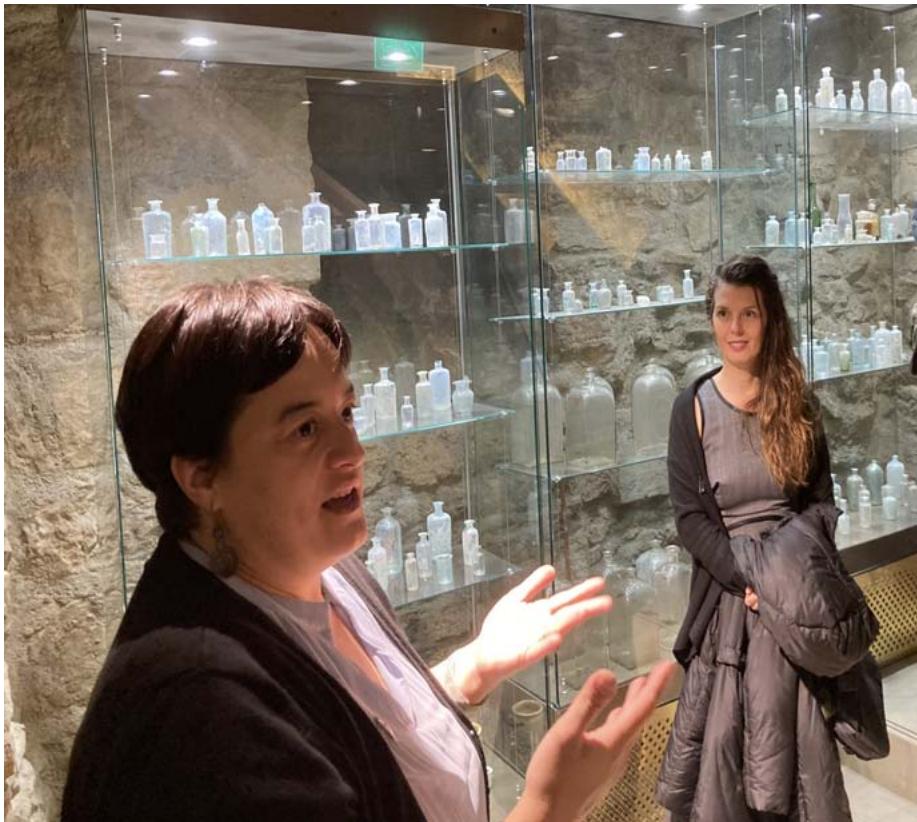 Fig. 2: Dr. Ana-Maria Gruia during the guided tour (R.Offner)
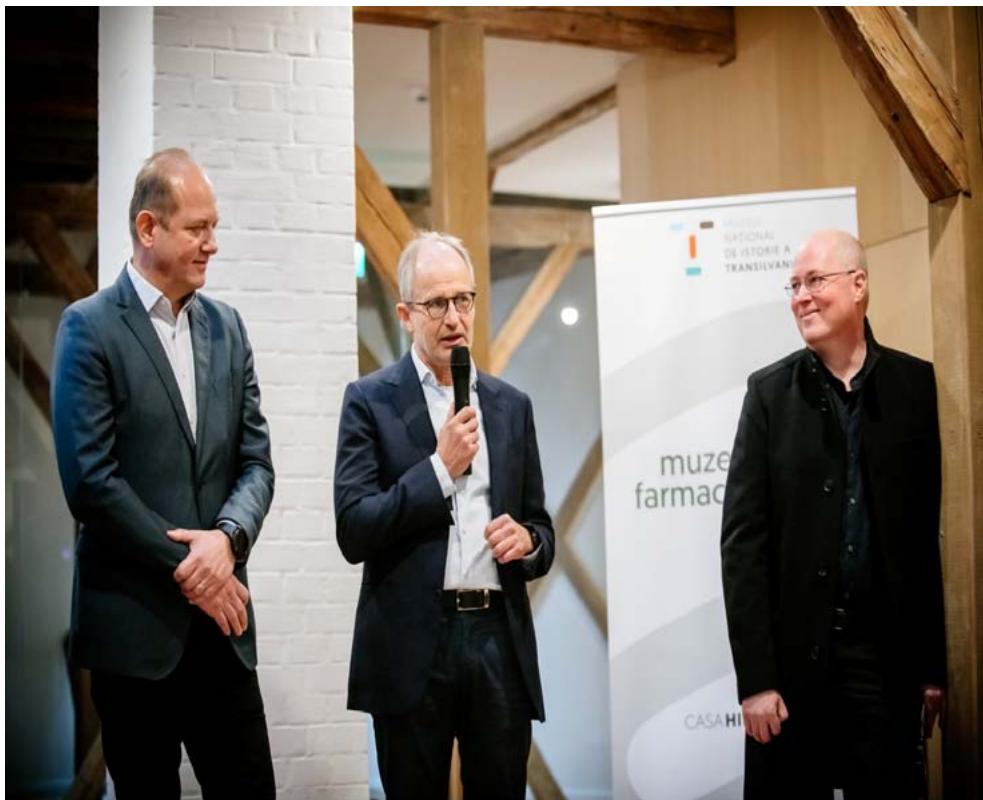 Fig. 3: Dr. Felix Marcu, Direktor of MNIT, Dr. Georg Hintz (speaker) and Benjamin Kohl (R. Offner)
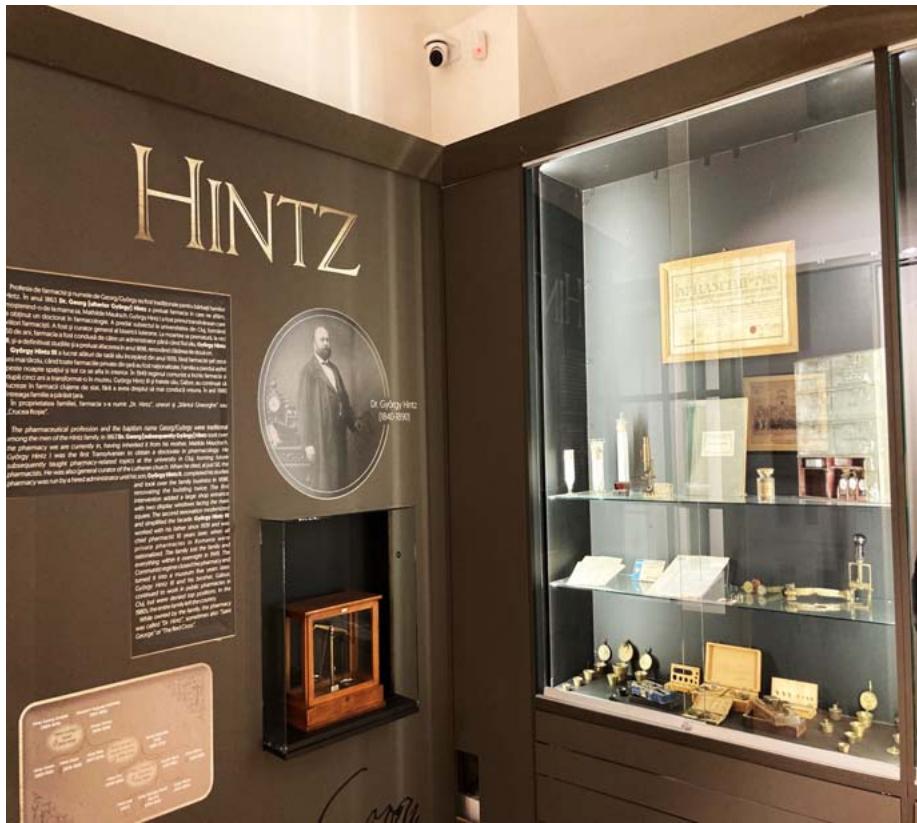 Fig. 4: Showcase with pharmacy utensils and biographical data from Dr. György József Hintz (R. Offner)
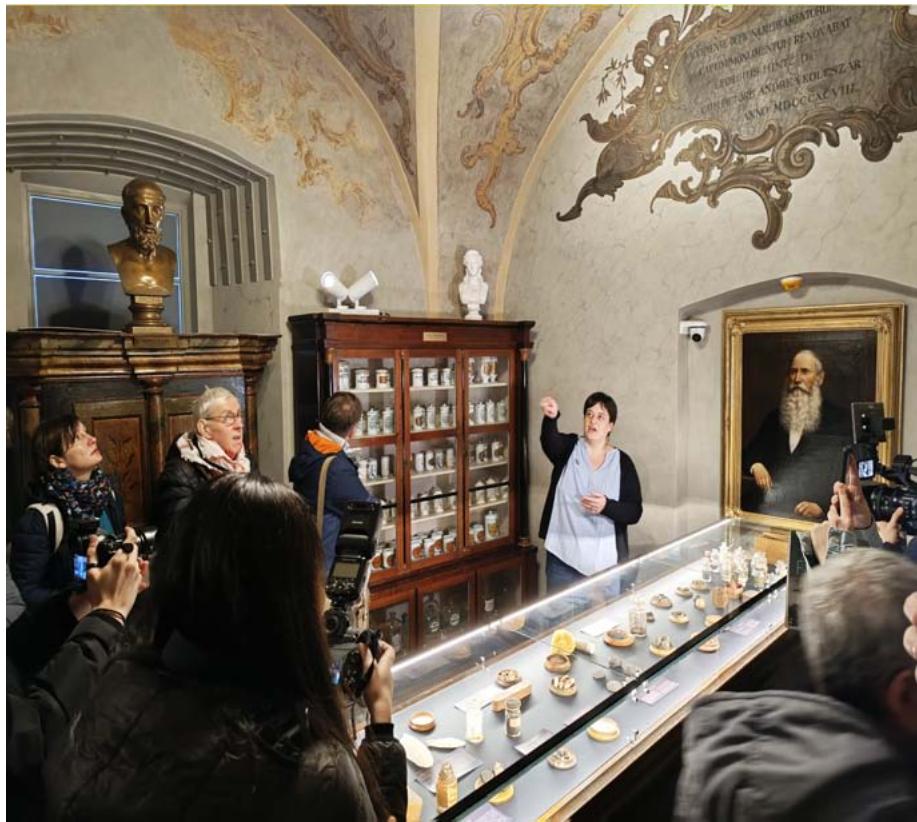 Fig. 5: Dr. Ana-Maria Gruia explains the exhibited objects (I. Gödri Tóth)
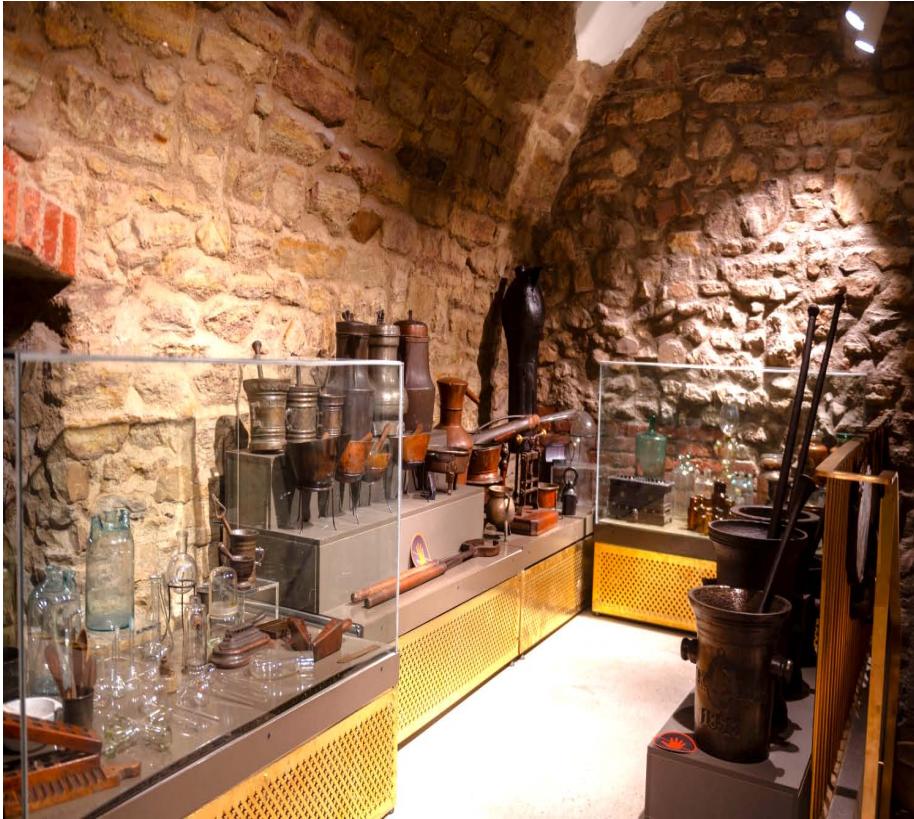
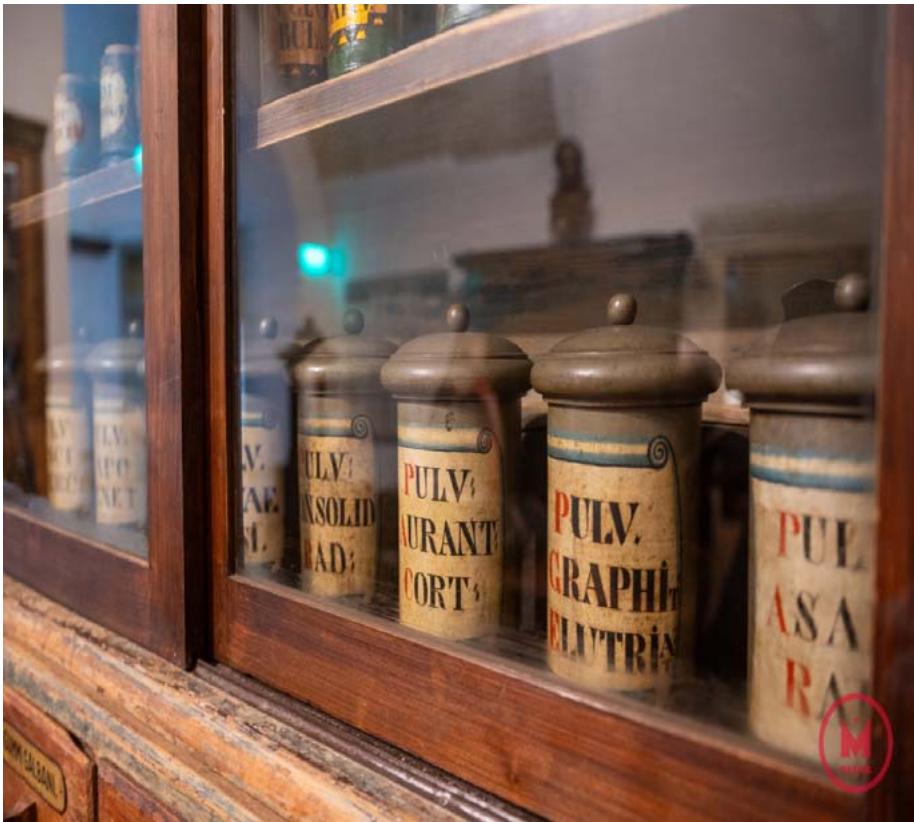 Fig. 6: Pharmacy instruments and equipment (R. Offner)
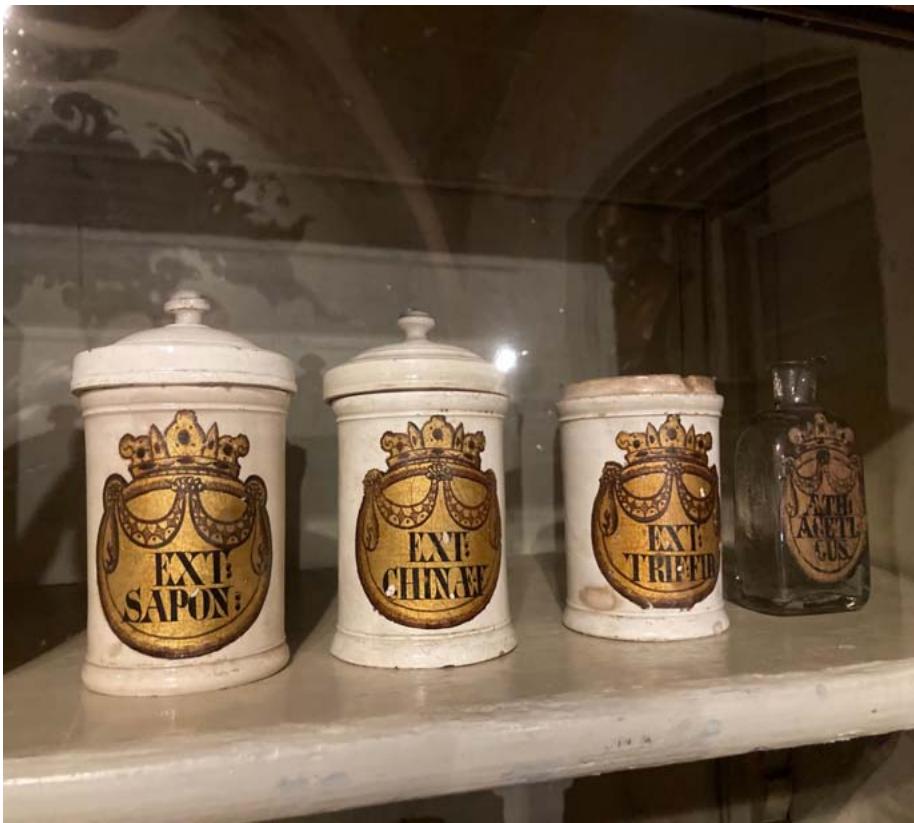 Fig. 7: Wooden medicine jars (19th century) (R. Offner)
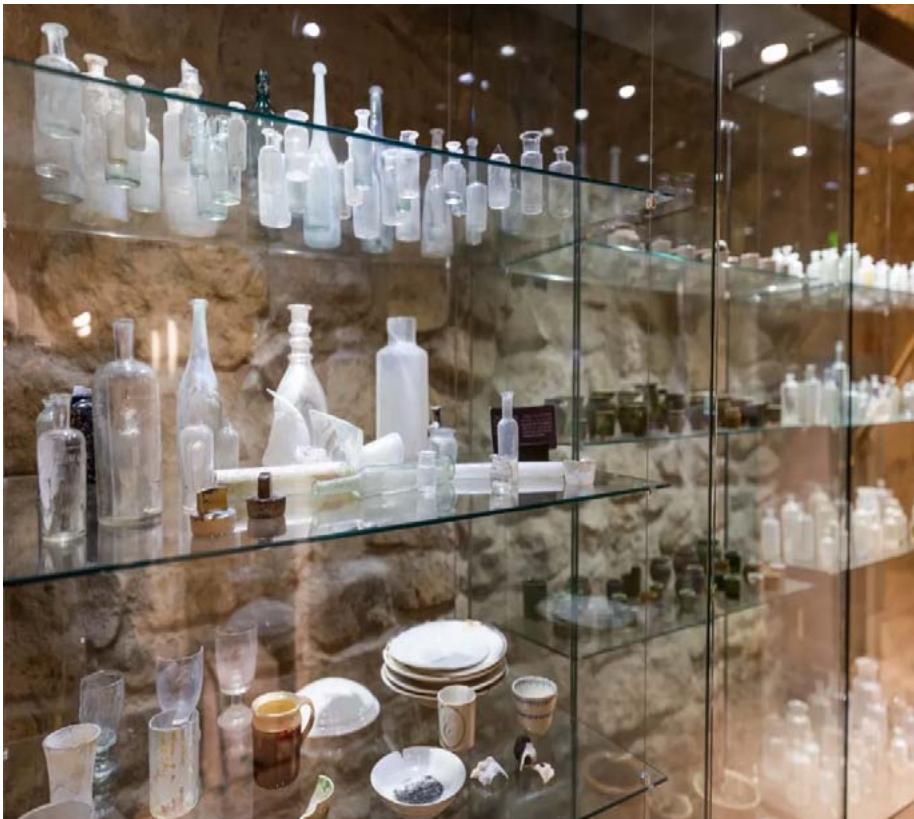 Fig. 8: Pharmacy jars made of faience (19th century) (R. Offner) Fig. 9: Pharmacy glassware (19th century) (R. Offner)
Generating HTML Viewer...
References
42 Cites in Article
Arhivele Naţionale,României Unknown Title.
Pál Binder (1984). A Mauksch család erdélyi gyógyszerész tagjai [Apotheker der siebenbürgischen Familie Mauksch.
Valeriu Bologa,E Elekes (1960). Încercare de revizuire și precizare a datelor întemeierii primelor farmacii din Ardeal (sec. XV-XVI-lea).
Eva Crişan (1996). Materia Medica de Transylvanie. I. Contributions a l'histoire de la therapie en Roumanie; II.
Eva Crişan (1973). Prima ‚Taxa farmaceutica' (listă de preţuri farmaceutice) din Transilvania. In: I. part.
Guido Fabritius (1989). Verdienstvolle deutsche Apotheker aus Siebenbürgen.
György Gaal Két kolozsvári polgárcsalád találkozása.
Ana-Maria Gruia (1885). Melinda BLOS‑JÁNI (coord.), Imagini interioare. Colecția fotografică a doamnei Ella Hintz (n. Boros, 1885–1975) [Interior Images. The Photography Collection of Madam Ella Hintz (b. Boros, 1885–1975)], Exit Publishing, Cluj‑Napoca, 2022, pp. 224.
György Gaal (2009). Orvosok és gyógyszerészek sírjai a Házsongárd temetőben a 19. század közepéig.
Găzdac-Alföldy,/ Ágnes,Zsolt Csók (2023). Ana-Maria Gruia: Pharmatranp All Things Apothecary in 16th-20th-century Transylvania.
Genersich Christian: Merkwürdigkeiten der königlichen Freystadt Kesmark in Oberungarn, am Fuße der Carpathen.
Ana-Maria Gruia (2018). Farmaciile din Clujul Epocii Premoderne.
Ana-Maria Gruia (2023). Ana-Maria Gruia: Pharmatranp All Things Apothecary in 16th-20th-century Transylvania.
Ana-Maria Gruia (2023). PHARMATRANS. All Things Apothecary in Sixteenth–Twentieth-Century Transylvania. The History of Pharmacy Collection in Cluj‑Napoca (prezentare proiect).
János Herepei (1988). A gyalui iskola régi mesterei.
Éva Hintz,Károly Zalai (2002). Az erdélyi Hintz gyógyszerész család történetéből.
Arnold Huttmann (2000). Arnold Huttmann: Medizin im alten Siebenbürgen. Beiträge zur Geschichte der Medizin in Siebenbürgen.
Elek Jakab (1540). Karten.
Eugenia Beu-Dachin,George Cupcea,Sorin Cociș (2014). A dedication to Terra Mater at Napoca.
Ana-Maria Gruia (1840). PHARMATRANS. All Things Apothecary in Sixteenth–twentieth-century Transylvania. The History of Pharmacy Collection in Cluj-Napoca/ 2023.
Wolfgang Melzer,Werner Fölling (1989). Gelebte Jugendträume: Die Biographien der befragten Cheruth—Mitglieder.
Robert Offner,András Magyar (2014). Obituary of Samuel Schvartz (1701-1749), “illustrious man” and former pharmacist of Kolozsvár.
Robert Offner,László Tuka (1793). A gyógyszertári minőségbiztosítás korai erdélyi példája: Tobias Mauksch kolozsvári patikus Instrukciója.
Robert Offner,László Tuka (2014). Tobias Mauksch kolozsvári patikus gyógyszerészi Instructio-ja (1793).
Ana-Maria Gruia (2023). PHARMATRANS. All Things Apothecary in Sixteenth–twentieth-century Transylvania. The History of Pharmacy Collection in Cluj-Napoca/ 2023.
Robert Offner (1991). R - Salarist.
Robert Offner (2017). Brief des Klausenburger Apothekers Tobias Mauksch aus 1750 an den Nürnberger Stadtarzt und Gelehrten Christoph Jacob Trew.
Gyula Orient (1926). Az erdélyi és bánáti gyógyszerészet története.
Julius Orient (1928). Aus pharmazeutischer Vergangenheit Siebenbürgens und des Banats. Von Dr. Julius Orient. Ins Deutsche übersetzt von Mr. pharm. Edgar Müller Herausgegeben von der Gesellschaft für Geschichte der Pharmazie. Kommissionsverlag Arthur Nemayer, Mittenwald (Obb.). 58 Seiten auf Glanzpapier. Mit zahlreichen Abbildungen.
Julius Orient (1931). Carl Wilhelm Scheele. Sein Leben und seine Werke. Von Dr. Otto Zekert, Wien. Zwei Teile. Herausgegeben von der Gesellschaft für Geschichte der Pharmazie. Mittenwald 1931 bis 1932. Buchdruckerei Arthur Nemayer.
Julius Orient (1928). Einfluß des Deutschen Geistes auf die Entstehung und Entwicklung der Pharmazie in Siebenbürgen.
Jenő Pataki (2004). Az erdélyi orvoslás kultúrtörténetéből.
Aliz Lázár Lakatos (2013). Slang Usage of the Hunagarian Youth in Transylvania.
Tobias Schmidt (1950). 3. BESCHREIBUNG DER BLATTRESTE.
Anemari Negru (2023). MEMORIILE UNOR EROI OLTENI DIN PRIMUL RĂZBOI MONDIAL.
Miklós Szabó,László Szögi Erdélyi peregrinusok: Erdélyi diákok európai egyetemeken.
Siebenbürgische Peregriner (1998). Inhalt.
Miklós Szabó (2005). Erdélyiek magyarországi egyetemeken 1848 előtt.
Ev Taufmatrikel Der Kirchengemeinde Hermannstadt: 1741-1768, 4. Bd., P 135. Siehe Ev.
Joseph Trausch (1983). Schriftsteller-Lexikon der Siebenbürger Deutschen.
Joseph Trausch (1983). Schriftsteller-Lexikon der Siebenbürger Deutschen.
Károly Zalai (1977). Hintz György gyógyszerészeti műtani egyetemi előadásainak oktatás-és tudománytörténeti jelentősége.
No ethics committee approval was required for this article type.
Data Availability
Not applicable for this article.
How to Cite This Article
Prof. Dr. Med. Robert Offner. 2026. \u201cRediscovering History: The Revival of the Cluj Pharmacy Museum\u201d. Global Journal of Medical Research - B: Pharma, Drug Discovery, Toxicology & Medicine GJMR-B Volume 24 (GJMR Volume 24 Issue B2): .
Explore published articles in an immersive Augmented Reality environment. Our platform converts research papers into interactive 3D books, allowing readers to view and interact with content using AR and VR compatible devices.
Your published article is automatically converted into a realistic 3D book. Flip through pages and read research papers in a more engaging and interactive format.
The Beginnings-Among the oldest known public pharmacies in Transylvania, established by city magistrates and operated by tenant pharmacists, are those in the most important and wealthiest towns of the Transylvanian Saxons: Sibiu [German: Hermannstadt, Hungarian: Nagyszeben] (1494), Brașov [German: Kronstadt, Hungarian: Brassó] (1512), and Bistrița [German: Bistritz, Hungarian: Beszterce] (1516). Those pharmacy foundations are based on models from the German-speaking area. The same applies to the third largest city in Transylvania, although the establishment of the first municipal pharmacy in Cluj [German: Klausenburg, Hungarian: Kolozsvár] is not documented, but the existence of this is suggested by the fact that Wolfgang Theke, a pharmacist from Buda (today: Budapest), moved first to Brașov, then to Sibiu, and later to Cluj in 1543.
Our website is actively being updated, and changes may occur frequently. Please clear your browser cache if needed. For feedback or error reporting, please email [email protected]
Thank you for connecting with us. We will respond to you shortly.