- Whitehair, K. J., C. Shanklin W., and L. Brannon A. (2013)
5. Kallbekken, S., & Saelen, H. (2013)
Title: An environmental win-win by "nudging" hotel guests to reduce food waste Despite the fact that it was carried out in a hotel buffet setting, the results are highly applicable to college cafeterias.
This research demonstrated that placing signs encouraging guests to reduce waste and take smaller portions led to significant decreases in food waste. Although the buffet-style setting is not unique to universities, it makes the findings applicable to college dining halls and makes them applicable.
Authors: Sunita Agarwal, Kamlesh Haritwal, Jyoti Meena
- Submitted to the Asian Journal of Food Research and Nutrition in the year 2023
- In summary, the 70-day audit of two girls' hostels revealed significant daily food waste at breakfast, lunch, and dinner in this study. The study emphasizes the significance of raising staff and student awareness of the need to reduce food waste.
- Food waste reduction at Chitkara University in Punjab
- The organization is Chitkara University.
- In conclusion, Chitkara University was able to reduce food waste by by implementing strategies like color-coded bins for tracking waste, adjusting food preparation based on student attendance, offering smaller portion sizes, implementing educational programs, and training staff members who serve food.
- Management of food waste at Lovely Professional University (LPU) in Punjab
- Institution: Lovely Professional University
- Summary: LPU has implemented a structured system for tracking and managing food waste, including encouraging students to pre-subscribe to meal services, using 200-liter bins for collecting leftovers, and daily tracking of food waste. In the 2022-23 academic year, LPU recorded food wastage of less than 1 metric ton, showcasing its commitment to sustainable practices.
- Addressing Malnutrition and Reducing Campus Food Waste at Centurion University, Odisha
- Centurion University is the organization.
- Summary: With a campus population of approximately 12,000, Centurion University
produced around 751 kg of food waste per day in 2023. The university implemented awareness campaigns, efficient menu planning based on ICMR guidelines, composting through bio-digesters, and regular monitoring to reduce per capita food waste from 0.21 kg in 2020 to 0.13 kg in 2023.
10. Study on Food Wastage in BIT-Patna College Campus Hostel Mess
CHAPTER 3- RESEARCH DESIGN
Research Methodology and Data Collection:
This study followed a Design Thinking approach, a user-centered problem-solving framework that emphasizes empathy, ideation, prototyping, and testing. This objective is to reduce food waste in college cafeterias.
Stage 1: Empathy:
To understand the food waste in college cafeterias, a structured Google Forms questionnaire was distributed among students. The survey included both open-ended and multiple-choice questions covering:
- Explore behaviours like skipping meals, disposing of leftovers, over-ordering.
- Include quotes or anecdotes that reflect common attitudes (e.g., "I take more food just in case, but I can't finish it").
- Investigate pain points such as rigid portion sizes, unappealing menu options, or lack of time.
How often do you eat in the college cafeteria?
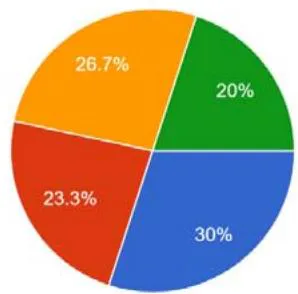
Daily 3-5 times a week 1-2 times a week Rarely From this pie chart illustrates how often students eat in the college cafeteria, based on 90 responses. According to the data, of students eat in the cafeteria on a daily basis, and 23.3 percent go there 3-5 times per week. This suggests that the cafeteria is frequented by more than half of respondents . However, only of students eat there more than once per week, and of students rarely make use of the cafeteria's services. Based on this distribution, it would appear that the students the cafeteria serves are a mix of regular and occasional diners. Meal planning and demand forecasting become more difficult as a result of this variation in usage, which can lead to food overproduction and waste if not carefully managed.
Stage 2: Define:
The college cafeteria faces high food waste due to inflexible portion sizes, rushed meal selection, and inconsistent food quality. Students often discard food because of taste issues, large servings, and time constraints. How might we improve meal selection, portion customization, and food quality to minimize waste and enhance student satisfaction?
Stage 3: Idea Pitching:
The team conducted brainstorming sessions to generate possible solutions. The most promising ideas were grouped into four categories:
- Discounts for Smaller Portions
- Food Donation Program
- Customizable portion sizes
- Food Waste Awareness Campaign
Final Recommendation idea: Customizable portion sizes
Pros:
- Reduces over-serving.
- Meets individual preferences and increases student satisfaction.
- Reduces post-meal waste.
Cons:
- May slow down service lines.
- Requires operational changes.
- Potential inventory management challenges.
Stage 4: Prototype
A low fidelity prototype of the chosen idea was developed using a visual website.
This website helps the students to customize their food portions and combos.
Students can pre order their meals where can reduce the time in cafeterias.
3. Helps kitchen plan and reduce overproduction.
Sample website Screen shots:
Below are sample UI screenshots of the food ordering website prototype:
Foodi.
Home
Menu
Mobile-app
Contact-Us







Items Title Price Salad $56 Sandwich $66 Quantity Total Remove 1 556 x 1 566 x Subtotal $122 Delivery Fee $2 Total $124 If you have a promo code,Enter it here. Promo code Submit
Foodi.

Menu
Mobile-ug
Contact-Us
Delivery Information
| First Name | Last Name |
| Email address | |
| Street | |
| City | State |
| Zip code | Country |
| Phone | |
Cart Total
| Subtotal | $122 |
| Delivery Fee | 52 |
| Total | $124 |
Stage 5: Testing
Conducted usability testing with 20 users over 1 week. Feedback gathered on:
- Ease of use
- Ease to access
- We can pre-order
In the Test phase, users interacted with the prototype of the food ordering website designed to reduce the food waste. Feedback was collected through surveys.
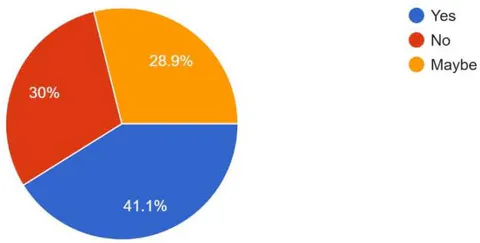
Do you feel rushed to choose your meal, leading to bad choices?
90 responses
Interpretation:
The second pie chart addresses whether students feel rushed when selecting their meals, potentially leading to poor choices. Out of 90 respondents, reported feeling rushed, said they did not, and were unsure. This means that nearly of students experience at least some level of uncertainty or pressure when deciding what to eat. This behavior can result in students selecting meals they may not truly want or enjoy, which increases the likelihood of uneaten food being discarded. Such a pattern highlights a critical issue: the lack of time or clarity during meal selection contributes directly to food waste, emphasizing the need for improved systems that support more thoughtful and informed meal choices.
CHAPTER 4- SUMMARY OF FINDINGS,
SUGGESTIONS AND CONCLUSION
Findings:
1.
- A significant portion of students (53.3%) eat in the cafeteria frequently (daily or 3–5 times a week).
- Nearly of respondents use the cafeteria only occasionally or infrequently.
- The cafeteria must accommodate both frequent and occasional visitors because of this variation in usage, making demand forecasting and portion planning more difficult.
2.
A combined (Yes + Maybe) of students feel some level of pressure or indecision while selecting meals.
Impatient decisions may result in:
Unwanted food selections
More food goes to waste (if students throw away food they didn't really want) o A lower level of contentment with cafeteria meals
Suggestions:
1. Introduce Digital Pre-ordering:
- Make it possible for students to choose their meals in advance through an app or website.
- This can reduce last-minute decisions and help the kitchen prepare accurate quantities.
2. Implement Customizable Portion Sizes:
- Enable students to choose smaller, medium, or large portions based on hunger levels.
- This can directly reduce uneaten food waste.
- Display Menus with Nutritional Info & Photos:
- Waste and poor meal choices can be reduced by making informed decisions easier.
- Train Staff on Predictive Serving:
- To avoid over-preparation, adjust cooking quantities based on meal timing and popularity trends.
- System for Student Feedback:
- To learn about shifting preferences and levels of satisfaction, conduct feedback kiosks or surveys on a regular basis.
CONCLUSION
The analysis reveals that while over half the student body regularly uses the college cafeteria, a large portion also experiences rushed meal decisions. This frequently leads to poor food choices, which may increase food waste. Implementing digital pre-selection tools, portion customization, and better meal presentation strategies can significantly enhance meal satisfaction and reduce food wastage. Addressing these concerns not only improves operational efficiency but also supports a sustainable campus dining environment.