This study investigates the rhetorical strategies employed in public CEO apologies issued in response to major corporate crises between 2010 and 2024. Drawing from a corpus of ten high-profile apology statements-including video transcripts, written releases, and interview excerpts-this paper applies a combined framework of Appraisal Theory and Image Repair Theory to analyze how top executives linguistically construct responsibility, express regret, and attempt to repair stakeholder trust. The findings reveal consistent patterns in evaluative language use, responsibility-taking, emotional appeals, and institutional ethos. Variations in tone, modality, and audience engagement across industries are also examined. By situating these discursive features within the broader context of crisis management and leadership communication, this study offers interdisciplinary insights into how language functions as a managerial tool for damage control and reputational rehabilitation.
## I. INTRODUCTION
In the era of instantaneous digital visibility and heightened consumer awareness, corporate crises are no longer confined to boardrooms or buried in back-page press releases. Today, they unfold under relentless public scrutiny- on social media platforms, in newsfeeds, and across global stakeholder networks. A defining ritual in the management of such crises is the public apology delivered by the organization's highest-ranking official: the Chief Executive Officer (CEO). These apologies do more than express remorse; they serve as strategic discourse acts, meticulously crafted to contain reputational fallout, affirm corporate values, and rebuild fractured trust (Coombs, 2007; Benoit, 1995). At the intersection of ethical leadership, stakeholder management, and media accountability, the CEO apology has become a powerful tool for institutional self-representation. As Fombrun (1996) suggests, organizational reputation is a strategic asset, particularly vulnerable during public crises.
However, the communicative efficacy of these apologies remains a subject of debate. Some are praised for their transparency and moral courage- such as Satya Nadella's handling of diversity concerns at Microsoft- while others, like United Airlines' early response to the Flight 3411 incident, are criticized for being tone-deaf or evasive. Despite their growing prevalence in corporate life, CEO apologies remain under examined as linguistic and rhetorical artifacts. This aligns with the call for more discursive approaches to leadership communication (Frandsen & Johansen, 2017). Most existing analyses focus on their legal or managerial implications, often neglecting the rich textual and interpersonal features that shape how these messages are received and interpreted by audiences (Hearit, 2006; Ulmer, Sellnow, & Seeger, 2014).
This study seeks to fill that gap by conducting a detailed discourse analysis of ten public CEO apologies issued between 2010 and 2024, each responding to high-profile crises ranging from racial profiling and sexual harassment to environmental disasters and product safety failures. These cases represent acute reputational threats that demanded rapid, rhetorically credible responses from senior leadership. By applying an interdisciplinary framework that combines Appraisal Theory (Martin & White, 2005) with Image Repair Theory (Benoit, 1995), this research examines how language is used to signal accountability, express emotional alignment, and navigate the fine line between justification and contrition.
The analysis pays particular attention to key linguistic features such as evaluative adjectives, stancetaking devices, and modal verbs that CEOs deploy to shape audience perceptions. Special emphasis is placed on how tone, emotional resonance, and strategic ambiguity function in the process of institutional self-defense. The study also considers broader social and pedagogical implications, demonstrating how such discourse can serve as instructional material in both Business English and management communication curricula. As recent scholarship suggests, analyzing corporate apologies offers valuable insights into stakeholder engagement, ethical positioning, and leadership performance under pressure (Wang, Ngai, & Singh, 2021; Liu & Li, 2021).
Ultimately, this article argues that CEO apologies are not merely reactive performances. Rather, they constitute complex communicative acts that blend rhetorical strategy, affective alignment, and managerial foresight. Understanding the linguistic architecture of these statements sheds light on how corporate leaders attempt to restore legitimacy, reassert control, and redefine organizational identity in the aftermath of reputational harm.
## II. THEORETICAL FRAMEWORK
The apology has long functioned as a cornerstone of image restoration in both interpersonal and institutional settings. In the context of corporate communication, the CEO apology occupies a particularly charged rhetorical space. It is simultaneously a speech act, a performance of moral leadership, and a discursive attempt to contain reputational fallout in high-stakes situations. The increasing visibility of corporate failures- often amplified through digital media ecosystems- has led to a parallel rise in public apologies from executives attempting to reassert institutional control. These communicative events offer a rich field for academic analysis, situated at the intersection of management studies, media discourse, and applied linguistics.
While early studies of corporate apologies tended to focus on their legal or managerial dimensions, more recent scholarship emphasizes their rhetorical and linguistic construction. Central to this shift is Image Repair Theory, developed by William Benoit (1995), which offers a robust framework for categorizing and interpreting the communicative strategies employed by speakers to repair damaged public images. Grounded in classical rhetoric and public relations theory, the model identifies five principal strategies: denial, evasion of responsibility, reduction of offensiveness, corrective action, and mortification. These are not merely abstract categories- they serve as heuristics for tracing how speakers construct narratives of accountability or deflection. For instance, CEOs often employ mortification ("We are deeply sorry") in tandem with corrective action ("We are taking steps to ensure this never happens again") to signal both contrition and institutional competence. Other tactics, such as bolstering or minimizing, may be used to mitigate blame by emphasizing past achievements or framing the crisis as isolated and uncharacteristic.
Scholars such as Hearit (2006), Coombs (2007), and Brinson and Benoit (1996) have demonstrated how Image Repair Theory applies across a wide range of corporate crises, from environmental disasters to product recalls. Particularly in CEO discourse, where the individual's ethos is perceived to embody the institution, these strategies take on heightened importance. The use of active versus passive constructions, the presence or absence of first-person pronouns, and the rhetorical sequencing of explanation and apology all contribute to how responsibility is framed. Recent findings by Tyler and Cameron (2020) show that leadership apologies emphasizing first-person accountability and agentive verbs tend to yield higher public approval, especially when combined with an acknowledgment of audience emotions.
While the theory has been critiqued for privileging speaker intention over audience interpretation, its utility as a taxonomic tool for mapping discourse strategies remains widely accepted in both communication and business ethics research.
Yet, understanding what CEOs say in response to crisis is only half the task. Equally important is how they say it- how their language conveys emotional resonance, ethical stance, and institutional alignment. To address this dimension, the present study incorporates Appraisal Theory, a linguistic framework developed by Martin and White (2005) within the broader tradition of Systemic Functional Linguistics. Appraisal Theory offers a detailed model of how language performs evaluative functions in discourse. It is particularly useful for analyzing expressions of emotion (affect), moral judgment, and value-based appreciation, as well as for tracking how speakers engage with alternative viewpoints or intensify/de-intensify claims.
Appraisal Theory distinguishes between three interrelated domains: attitude, engagement, and graduation. In the context of CEO apologies, attitude captures the ways in which executives express grief, concern, regret, or outrage- whether through affective language ("we are devastated"), judgment ("this was a failure of leadership"), or appreciation ("our employees deserve better"). Engagement concerns the positioning of the speaker relative to other voices or perspectives: for example, whether the CEO invokes expert opinion, acknowledges public outrage, or asserts institutional authority. Graduation refers to the modulation of intensity, which affects how strongly a claim is made or how deeply an emotion is felt. The choice between "regret" and "deep regret," or "we made an error" versus "we failed catastrophically," carries significant implications for how the apology is interpreted.
The strength of Appraisal Theory lies in its ability to uncover the interpersonal dynamics embedded in seemingly neutral or formulaic statements. As Wang, Ngai, and Singh (2021) argue, the evaluative texture of CEO apologies can reveal implicit hierarchies of concern- whether the emphasis is placed on victims, shareholders, the company's reputation, or legal liability. Moreover, by attending to the fine-grained structure of evaluative meaning, researchers can explore how linguistic choices align with or diverge from broader social expectations of sincerity, humility, and responsibility.
The integration of Image Repair Theory and Appraisal Theory in the present study allows for a multi- scalar analysis of CEO apologies, combining macro-level patterns of rhetorical strategy with micro-level features of linguistic choice. This dual approach responds to recent calls for more linguistically-informed models of crisis communication that can account for both what is said and how it is said (Liu & Li, 2021; Bednarek, 2006). It also offers significant pedagogical value. Further support for the dual-theory model comes from Johansson and Elsbach (2022), who advocate for combining evaluative linguistics with corporate image theory to better decode the ethical impact of CEO rhetoric during reputational crises. In the context of Business English and management education, the ability to decode and produce ethically persuasive language is increasingly viewed as a core leadership competency. As Hutchinson and Waters (1987) and later Tardy (2020) emphasize, effective communication in professional contexts is not simply about clarity or correctness but about navigating complex rhetorical demands in culturally and ethically sensitive ways.
Ultimately, CEO apologies are more than reactive tools for crisis containment. They are discursive enactments of institutional identity and ethical positioning. By analyzing their linguistic structure through the combined lenses of Appraisal Theory and Image Repair Theory, this study contributes to a deeper understanding of how corporate leaders use language to negotiate reputational stakes, reaffirm values, and re-establish trust in moments of vulnerability.
## III. METHODOLOGY
This study adopts a qualitative, corpus-based discourse analysis approach to examine the rhetorical and linguistic strategies employed in CEO apologies following corporate crises. Guided by the dual frameworks of Image Repair Theory (IRT) and Appraisal Theory, the research aims to uncover how institutional leaders navigate moments of reputational vulnerability through language. This integrative approach enables both macro-level classification of apology strategies and micro-level examination of evaluative linguistic features. By doing so, the study reveals how corporate ethos, emotional alignment, and moral positioning are discursively constructed in the aftermath of public failure. Corpus-based qualitative methods have become central to the analysis of strategic discourse in crisis events, offering nuanced insights into genre-specific patterns.(Baker, P., & McEnery, T. 2015). This approach aligns with recommendations by Flowerdew and Richardson (2018), who emphasize the importance of discourse-informed frameworks in analyzing ideologically charged corporate narratives.
The corpus comprises ten CEO apologies issued between 2010 and 2024, each of which addresses a high-profile incident of reputational damage. These apologies were selected according to the following criteria:
- Public Visibility: Each apology received widespread media coverage and was disseminated through official channels such as press releases, public statements, and televised interviews.
- Direct Authorship: Each apology was delivered or authored by the Chief Executive Officer, not a public relations department or legal representative.
- Crisis Relevance: Each apology responded to a crisis involving ethical transgression, consumer harm, or organizational misconduct.
The Selected Cases Span Multiple Industries: Aviation, finance, technology, and entertainment, which reflect a range of communicative contexts and stakeholder audiences. As recommended by Wodak (2019), sampling across diverse industries strengthens the representativeness of crisis discourse studies, especially when institutional contexts shape communicative constraints. For spoken apologies delivered in video format, full verbatim transcripts were produced. All texts were anonymized during the coding process to reduce bias and ensure consistency. While nonverbal elements such as tone, posture, and facial expression were noted for context, the analysis focused exclusively on verbal data to maintain methodological consistency across both written and oral formats.
Data analysis proceeded through iterative, interpretive coding using NVivo software, with each apology segmented into rhetorical units and tagged according to the theoretical frameworks employed. At the macro level, Image Repair Theory was applied to identify the presence of the following discursive strategies:
- Denial (e.g., "We did not do what was alleged")
- Evasion of responsibility (e.g., "This was an isolated mistake")
- Reduction of offensiveness (e.g., "We have a long-standing commitment to...")
- Corrective action (e.g., "We are implementing new protocols")
- Mortification (e.g., "I am deeply sorry")
These strategies were not treated as mutually exclusive; rather, their co-occurrence and sequencing were analyzed to understand how CEOs layered rhetorical moves in response to complex reputational threats.
At the micro level, Appraisal Theory was used to investigate the evaluative texture of each apology. Specific attention was given to the following categories:
Attitude, encompassing affect (e.g., "We are devastated"), judgment (e.g., "This was unacceptable"), and appreciation (e.g., "Our employees deserve better")
- Engagement, including voice and stance (e.g., inclusive pronouns, hedging, acknowledgment of external perspectives)
- Graduation, reflecting the degree of intensity or modulation (e.g., "regret" vs. "profound regret," "we may have failed" vs. "we failed catastrophically")
This layered analytical approach allowed for the exploration of how CEOs expressed emotional resonance, allocated blame, demonstrated institutional accountability, and negotiated the expectations of multiple audiences. Inclusive language, modal verbs, and syntactic structures were examined as indicators of rhetorical stance and strategic positioning.
The choice of a qualitative discourse analysis is justified by the inherently complex and situated nature of CEO apologies. As these are often highly curated, multimodal, and high-stakes communications, they demand a methodology capable of interpreting both explicit rhetorical moves and implicit interpersonal meanings. Unlike quantitative content analysis, which may identify frequencies but not function, the current approach attends to how linguistic choices serve persuasive, ethical, and strategic aims within a specific communicative event.
Ultimately, the methodology combines rhetorical analysis and functional linguistics to offer a holistic understanding of CEO apologies as artifacts of institutional discourse. It supports both theoretical advancement and pedagogical applicability in fields such as Business English, management training, and corporate ethics education.
## IV. ANALYSIS & RESULTS
This section presents a two-tiered analysis of the apology corpus, integrating macro-level rhetorical strategies from Image Repair Theory (IRT) with micro-level linguistic evaluation via Appraisal Theory. Together, these perspectives illuminate not only what CEOs said in response to reputational crises, but how they shaped emotional, ethical, and institutional meaning through language.
Analysis of the ten CEO apologies reveals a strong preference for three core strategies: mortification, corrective action, and reduction of offensiveness. Each apology contained at least one instance of mortification, with CEOs expressing direct remorse for the event and accepting personal or organizational accountability. Corrective action was also universal, as leaders attempted to assure stakeholders that concrete measures would prevent future recurrence. Reduction of offensiveness typically involving appeals to company values, legacy, or mitigating circumstances- was present in every case.
Notably, denial was absent from all statements, signaling an awareness that overt deflection of blame is increasingly viewed as insincere or irresponsible in the public eye. Only one apology (Volkswagen) included subtle forms of evasion of responsibility, primarily by attributing the scandal to systemic or departmental shortcomings rather than individual decisions.
Table 1: CEO Apology Corpus Analysis
<table><tr><td>CEO</td><td>Company</td><td>Crisis Type</td><td>Mortification</td><td>Corrective Action</td><td>Denial</td><td>Reduce Offense</td><td>Evasion</td></tr><tr><td>Oscar Munoz</td><td>United Airlines</td><td>Passenger mistreatment</td><td>1</td><td>1</td><td>0</td><td>1</td><td>0</td></tr><tr><td>Mark Zuckerberg</td><td>Facebook</td><td>Data privacy</td><td>1</td><td>1</td><td>0</td><td>1</td><td>0</td></tr><tr><td>Dennis Muilenburg</td><td>Boeing</td><td>Aircraft safety</td><td>1</td><td>1</td><td>0</td><td>1</td><td>0</td></tr><tr><td>Martin Winterkorn</td><td>Volkswagen</td><td>Emissions scandal</td><td>1</td><td>1</td><td>0</td><td>1</td><td>1</td></tr><tr><td>Tony Hayward</td><td>BP</td><td>Environmental disaster</td><td>1</td><td>1</td><td>0</td><td>1</td><td>1</td></tr><tr><td>Kevin Johnson</td><td>Starbucks</td><td>Racial profiling</td><td>1</td><td>1</td><td>0</td><td>1</td><td>1</td></tr><tr><td>Richard Smith</td><td>Equifax</td><td>Data breach</td><td>1</td><td>1</td><td>0</td><td>1</td><td>1</td></tr><tr><td>Tony Fernandes</td><td>Air Asia</td><td>Plane crash</td><td>1</td><td>1</td><td>0</td><td>1</td><td>1</td></tr><tr><td>John Stumpf</td><td>Wells Fargo</td><td>Fraudulent accounts</td><td>1</td><td>1</td><td>0</td><td>1</td><td>1</td></tr><tr><td>Nikesh Arora</td><td>Palo Alto Networks</td><td>Sexist imagery</td><td>1</td><td>1</td><td>0</td><td>1</td><td>1</td></tr></table>
This table documents the presence or absence of each rhetorical strategy across the corpus. The pattern suggests a strong convergence toward a rhetoric of accountability, in which CEOs aim to perform

contrition while restoring confidence through promises of reform.
Beyond rhetorical categories, the apologies demonstrate clear and repeated use of evaluative language aligned with the dimensions of Appraisal Theory: affect, judgment, appreciation, engagement, and graduation.
### 1. Affect
Expressions of negative affect- such as sorrow, regret, or devastation- appeared in nearly every apology. These emotional terms served to signal empathy and humanize the speaker. Positive affect, while less common, was occasionally invoked to reaffirm the company's vision or future direction (e.g., "we are committed to rebuilding trust").
#### 2. Judgment
Both positive and negative judgments played a key role in framing the ethical stakes of each crisis. CEOs frequently condemned the events or actions under scrutiny ("this was unacceptable," "we failed to live up to our standards"), while simultaneously offering affirmations of corporate values or moral commitments ("we are a company that takes responsibility," "this is not who we are").
#### 3. Appreciation
The language of appreciation was used to reinforce stakeholder value and institutional legacy. CEOs often praised the dedication of employees, the loyalty of customers, or the company's historical contributions. These appraisals worked to balance the emotional tone of the apology with forward-looking reassurance.
#### 4. Engagement
The use of inclusive pronouns (e.g., "we," "our team") and references to stakeholders created a sense of engagement, fostering shared responsibility and community. However, in some cases, contractive engagement (e.g., avoiding alternative viewpoints, downplaying ambiguity) appeared to protect corporate positioning.
#### 5. Graduation
Most apologies employed high degrees of graduation to amplify the severity of the situation ("deeply sorry," "unacceptable failure," "profound regret"). This linguistic intensification functioned to underscore sincerity and emotional alignment with aggrieved stakeholders.
Table 2: Appraisal Theory Analysis of CEO Apologies
<table><tr><td>CEO</td><td>Positive Affect</td><td>Negative Affect</td><td>Positive Judgement</td><td>Negative Judgement</td><td>Positive Appreciation</td><td>Expand Engagement</td><td>Contract Engagement</td><td>High Graduation</td><td>Low Graduation</td></tr><tr><td>Oscar Munoz</td><td>2</td><td>2</td><td>3</td><td>1</td><td>2</td><td>2</td><td>1</td><td>3</td><td>1</td></tr><tr><td>Mark Zuckerberg</td><td>1</td><td>3</td><td>2</td><td>2</td><td>2</td><td>1</td><td>2</td><td>2</td><td>2</td></tr><tr><td>Dennis Muilenburg</td><td>1</td><td>3</td><td>2</td><td>2</td><td>2</td><td>2</td><td>2</td><td>2</td><td>2</td></tr><tr><td>Martin Winterkorn</td><td>0</td><td>3</td><td>1</td><td>3</td><td>1</td><td>1</td><td>2</td><td>1</td><td>2</td></tr><tr><td>Tony Hayward</td><td>1</td><td>4</td><td>1</td><td>3</td><td>1</td><td>1</td><td>2</td><td>3</td><td>1</td></tr><tr><td>Kevin Johnson</td><td>2</td><td>2</td><td>3</td><td>1</td><td>2</td><td>2</td><td>1</td><td>3</td><td>1</td></tr><tr><td>Richard Smith</td><td>1</td><td>3</td><td>2</td><td>2</td><td>2</td><td>1</td><td>2</td><td>2</td><td>2</td></tr><tr><td>Tony Fernandes</td><td>2</td><td>2</td><td>3</td><td>1</td><td>2</td><td>2</td><td>1</td><td>3</td><td>1</td></tr><tr><td>John Stumpf</td><td>1</td><td>2</td><td>2</td><td>2</td><td>2</td><td>1</td><td>2</td><td>2</td><td>2</td></tr><tr><td>Nikesh Arora</td><td>1</td><td>3</td><td>2</td><td>2</td><td>2</td><td>2</td><td>1</td><td>2</td><td>2</td></tr></table>
Source: author's interpretation
This table quantifies the use of appraisal resources across all ten apologies, demonstrating the widespread reliance on emotional, ethical, and reputational framing devices.
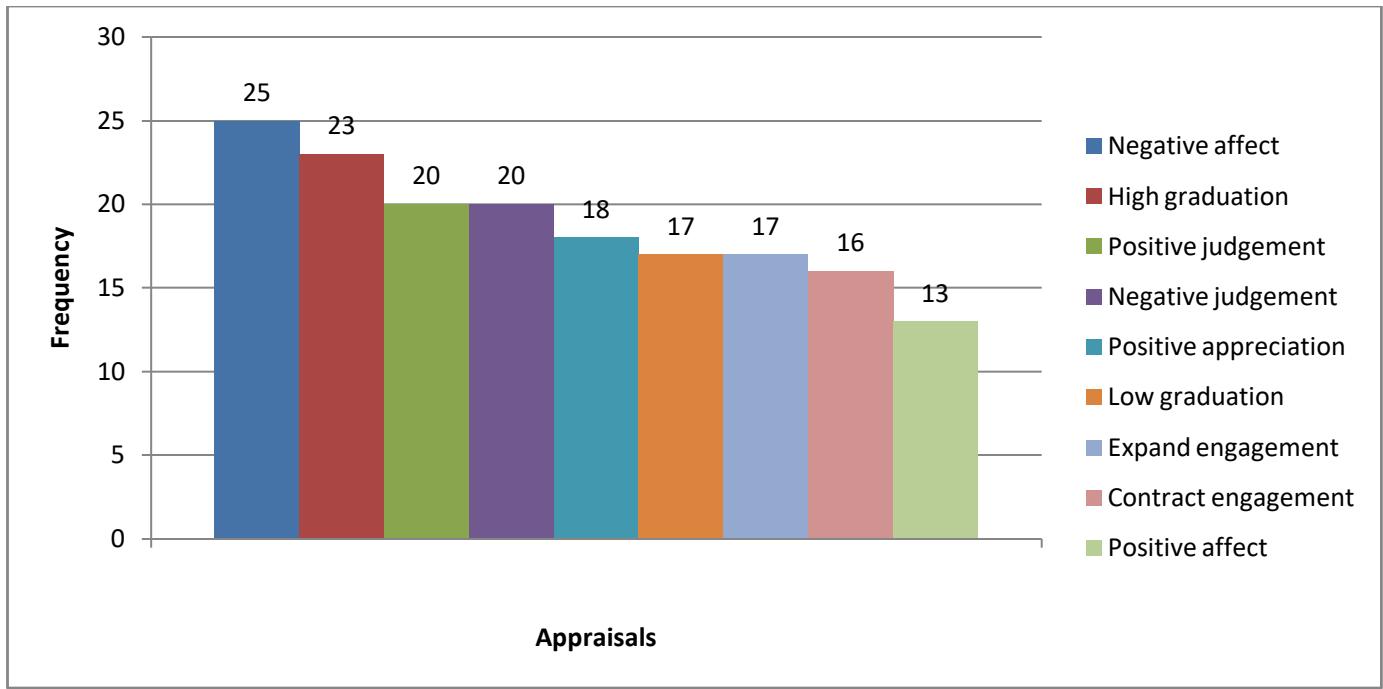 Figure 1: Distribution of Appraisal Theory Features in CEO Apologies
Source: author's interpretation
Figure 1 presents a detailed visual analysis of the distribution of Appraisal Theory features across the CEO apology corpus. The data show a pronounced reliance on negative affect, confirming that emotional resonance is the central pillar of modern corporate apologies. CEOs overwhelmingly employ language that conveys regret, sorrow, and distress. For this reason, terms like "devastated," "ashamed," and "deeply sorry" dominate the discourse. These expressions function as interpersonal signals of vulnerability and remorse, allowing the speaker to humanize their role while acknowledging public discontent. The prominence of negative affect suggests that emotional alignment is no longer optional but essential in the performance of institutional accountability. This pattern echoes findings by Thompson and Alba-Juez (2014), who argue that negative affect and intensification are key discursive tools in restoring perceived sincerity during reputational crises.
Closely following is high graduation, which amplifies meaning and emotion through intensifying modifiers and emphatic constructions. CEOs use phrases like "complete failure," "utterly unacceptable," and "deep remorse" to heighten the perceived seriousness of the event and their own sincerity. The high frequency of intensification underscores its strategic value as a credibility-enhancing device, helping to foreground the gravity of the situation and validate stakeholder outrage.
Judgment, both positive and negative, ranks next in frequency. As Hartelius (2020) points out, moral evaluation enables speakers to navigate public blame and reclaim ethical positioning, particularly when facing institutional fallout. CEOs engage in moral evaluation not only by condemning the actions that led to the crisis ("we fell short," "this was wrong"), but also by reasserting ethical standards and leadership values ("we are committed," "this is not who we are"). The dual presence of both types of judgment affirms that CEO apologies are morally performative. These leaders must demonstrate both contrition and moral resolve, restoring institutional ethos by clearly articulating right and wrong.
Appreciation features moderately in the data and serves a rhetorical function of rebuilding relational capital. CEOs often praise their employees, customers, or company legacy ("we value your support," "our proud tradition") as a way to anchor the apology in a broader narrative of stability and resilience. These appreciative gestures soften the tone of the apology and position the crisis as a deviation rather than a defining characteristic of the organization.
The use of engagement resources, particularly expand engagement, appears next in the frequency hierarchy. This includes inclusive language ("we," "our customers," "all of us") that fosters a sense of collective responsibility or shared experience. Such language helps CEOs cultivate solidarity and alignment with stakeholders. However, constructive engagement, which limits or preempts alternate interpretations ("this does not reflect our values," "let me be clear"), is used more sparingly. This suggests that while CEOs aim to control the narrative, they avoid appearing overly defensive or autocratic, especially in highly scrutinized public settings.
Graduation (low) appears with similar frequency to engagement markers. Here, linguistic downtoning (with phrases like "some missteps," "challenging moment," or "partial breakdown") is used in conjunction with more forceful elements to moderate tone, avoid panic, or position the crisis as manageable. Its modest use reflects a delicate balancing act between dramatization and reassurance.
Finally, positive affect is the least employed resource in the corpus. CEOs rarely express emotions such as pride, hope, or optimism within the apology itself, likely due to the genre constraints of crisis discourse. In moments of reputational threat, it seems that excessive positivity may appear insincere or out of touch. Instead, CEOs strategically reserve positive affect for post-apology messaging, once the emotional damage has been addressed.
In summary, Figure 1 reveals that CEO apologies are constructed through a layered blend of emotional gravity, ethical positioning, and strategic tone management. Negative affect and high graduation dominate, establishing the apology's emotional and rhetorical seriousness. This is followed by judgment and appreciation, which build ethical credibility and relational repair. Engagement and graduation (low) moderate these dynamics, while positive affect is minimized, reinforcing the communicative imperative of humility, intensity, and remorse in the face of institutional failure.
Several cross-cutting themes emerge from the combined analysis:
- Humanization of Leadership: CEOs often portrayed themselves as emotionally affected individuals, not distant executives, in an effort to build trust and relatability.
- Institutional Distancing: While individuals accepted responsibility, companies were sometimes linguistically distanced from the wrongdoing (e.g., use of passive voice: "mistakes were made").
- Chronotopic Alignment: Apologies often positioned the crisis as a deviation from past achievements and a pivot toward future reform, aligning past-present-future in a narrative of recovery.
- Moral Positioning: The repetition of ethical terms and moral judgment (e.g., "responsibility," "integrity," "failure") reinforces the crisis as a moral, not merely procedural, event.
These patterns indicate that CEO apologies are not mere acts of damage control; they are highly strategic discursive performances shaped by social expectations, brand identity, and the genre conventions of crisis communication.
## V. CONCLUSION AND MANAGERIAL IMPLICATIONS
The results of this study offer critical insights into how corporate leaders navigate reputational crises through language. The CEO apology is a carefully crafted communicative act that negotiates a delicate balance between emotion, ethics and institutional authority. This observation aligns with research by Coombs (2014), who emphasizes that emotional resonance and ethical framing enhance the perceived legitimacy of corporate responses during crises. By analyzing a corpus of high-profile CEO apologies through the frameworks of Image Repair Theory and Appraisal Theory, this article demonstrates how leaders deploy specific rhetorical strategies to shape public perception, re-establish trust, and protect long-term organizational legitimacy.
The dominance of negative affect and high graduation in the apology texts reflects a key managerial insight: successful apologies must acknowledge wrongdoing while also coming across as authentic. Emotional resonance has become a managerial imperative, particularly in an era of hyper-scrutiny, where corporate responses quickly become viral and are dissected not only by affected stakeholders but by a broader public on social media, news outlets, and investor platforms. By projecting strong negative emotions and intensifying them sentiments through amplifying language, CEOs seek to align themselves with public sentiment and present a leadership persona that is emotionally attuned and morally responsive.
This emotional framing is complemented by the extensive use of judgment resources, which allow CEOs to publicly evaluate behavior in moral terms. These evaluations perform a dual function: on one hand, they acknowledge ethical failure. On the other hand, they also reassert the company's normative values. The strategic use of positive judgment (such as reaffirming commitments to safety, integrity, or customer care) helps to reposition the company's ethos as one that, although momentarily compromised, remains fundamentally sound. In this way, apologies serve not only as reactive measures but as opportunity spaces for ethical recalibration.
The study also underscores the calculated use of engagement resources, particularly those that build solidarity through inclusive pronouns ("we," "our," "together"). These serve to draw audiences into a shared framework of resolution and renewal. At the same time, limited use of contractive engagement indicates a preference for controlled openness, where CEOs seek to manage public interpretation without appearing authoritarian. This balance is delicate: an apology that asserts too much control risks coming off as defensive, while one that is too open may invite further scrutiny or legal liability. Skilled communicators navigate this space by crafting messages that appear personal and humble yet remain institutionally safe.
From a strategic communication standpoint, this research affirms that CEO apologies are high-stakes rhetorical performances that require precision, emotional intelligence, and ethical clarity. In moments of crisis, the
CEO becomes the voice of the corporation. Apologies that fail to strike the right tone or omit key evaluative moves may exacerbate the reputational damage they seek to contain. As such, corporate communication teams and crisis managers must be equipped not only with legal and public relations frameworks but also with a deep understanding of evaluative language dynamics and public affect.
Moreover, the findings suggest a growing public expectation for moral leadership. The frequent use of judgment and affect reveals that audiences are no longer satisfied with procedural explanations or technical fixes: they demand emotional engagement and ethical transformation. Similarly, Claeys and Cauberghe (2015) highlight that stakeholders tend to respond more favorably to crisis messages that explicitly integrate emotional language and ethical accountability. A successful apology today must signal not only that a problem occurred but that the company has learned, evolved, and recommitted to its foundational values. In this context, language becomes a form of reputational currency. It should be capable of restoring trust and realigning stakeholder relationships.
In conclusion, this study illustrates how the intersection of linguistic analysis and crisis management reveals the inner architecture of effective corporate apologies. The application of Appraisal Theory and Image Repair Theory to real-world CEO statements offers a replicable model for assessing the discursive strategies that underlie successful image restoration. As organizations face increasing reputational risks in volatile global markets, the ability to craft sincere, ethically grounded, and strategically sound apologies becomes a core element of executive leadership skills. Future research may expand this approach across cultural contexts, industries, and digital platforms, but the central insight remains: in the aftermath of corporate failure, proper use of language has become synonymous with proper leadership.
Generating HTML Viewer...
References
21 Cites in Article
P Baker,T Mcenery (2015). Corpora and discourse studies: Integrating discourse and corpora.
M Bednarek (2006). Evaluation in media discourse: Analysis of a newspaper corpus.
W Benoit (1995). Accounts, excuses, and apologies: A theory of image restoration strategies.
S Brinson,W Benoit (1996). Dow Corning's image repair strategies in the breast implant crisis.
An-Sofie Claeys,Verolien Cauberghe (2015). What makes crisis response strategies work? The impact of crisis involvement and message framing.
W Coombs (2007). Protecting organization reputations during a crisis: The development and application of situational crisis communication theory.
W Coombs (2014). Ongoing crisis communication: Planning, managing, and responding.
C Fombrun (1996). Reputation: Realizing value from the corporate image.
J Flowerdew,J Richardson (2018). The Routledge Handbook of Critical Discourse Studies.
F Frandsen,W Johansen (2017). Organizational crisis communication: A multivocal approach.
E Hartelius (2020). Rhetoric and/of the Common(s).
Keith Hearit (2006). Crisis Management By Apology.
T Hutchinson,A Waters (1987). English for specific purposes: A learning-centred approach.
S Johansson,K Elsbach (2022). Navigating blame and trust: A linguistic and reputational analysis of CEO crisis communication.
S Liu,X Li (2021). A multimodal critical discourse analysis of corporate apologies by Starbucks CEO from the perspective of crisis management.
J Martin,P White (2005). The language of evaluation: Appraisal in English.
C Tardy (2020). Genre-based writing instruction: Moving beyond the five-paragraph essay.
G Thompson,L Alba-Juez (2014). Evaluation in context.
T Tyler,J Cameron (2020). Accountability in corporate apologies: A linguistic analysis of CEO statements.
R Ulmer,T Sellnow,M Seeger (2014). Effective crisis communication: Moving from crisis to opportunity.
Q Wang,C Ngai,-B Singh,R (2021). A discursive analysis of crisis response strategies in.
No ethics committee approval was required for this article type.
Data Availability
Not applicable for this article.
How to Cite This Article
Dr. Constantin Ilas. 2026. \u201cRegret and Responsibility: A Discourse Analysis of CEO Apologies in Corporate Crisis Management\u201d. Global Journal of Computer Science and Technology - G: Interdisciplinary GJMBR-G Volume 25 (GJMBR Volume 25 Issue G1): .
Explore published articles in an immersive Augmented Reality environment. Our platform converts research papers into interactive 3D books, allowing readers to view and interact with content using AR and VR compatible devices.
Your published article is automatically converted into a realistic 3D book. Flip through pages and read research papers in a more engaging and interactive format.
This study investigates the rhetorical strategies employed in public CEO apologies issued in response to major corporate crises between 2010 and 2024. Drawing from a corpus of ten high-profile apology statements-including video transcripts, written releases, and interview excerpts-this paper applies a combined framework of Appraisal Theory and Image Repair Theory to analyze how top executives linguistically construct responsibility, express regret, and attempt to repair stakeholder trust. The findings reveal consistent patterns in evaluative language use, responsibility-taking, emotional appeals, and institutional ethos. Variations in tone, modality, and audience engagement across industries are also examined. By situating these discursive features within the broader context of crisis management and leadership communication, this study offers interdisciplinary insights into how language functions as a managerial tool for damage control and reputational rehabilitation.
Our website is actively being updated, and changes may occur frequently. Please clear your browser cache if needed. For feedback or error reporting, please email [email protected]
Thank you for connecting with us. We will respond to you shortly.