Food retailing in the 1950s was defined by strong social ties between shopkeepers and customers, grounded in geographical proximity and mutual trust. These relationships went beyond mere economic transactions, fostering spaces of human interaction where consumer loyalty was built on reciprocity and respect. Small shops, located at the heart of their communities, anticipated customers’ needs and cultivated secure, familiar environments that reinforced social cohesion. While consumer experience remains a priority today, new dynamicsespecially the integration of AI and growing partnerships with local producers-are reshaping the retail landscape. Despite these transformations, the core value of human connection remains central to food retailing. This position paper highlights the continuity between past practices and present trends, emphasizing how values such as proximity and interpersonal relationships, though redefined, continue to be essential to the consumer experience. By doing so, it offers a critical analysis of how traditional retail models can be reimagined to address contemporary challenges while preserving their social foundations.
## I. INTRODUCTION
Academic insight often arises in unexpected moments: a reflective conversation over coffee, the vivid recollections of a nonagenarian describing home-delivered milk, or the memory of a neighborhood butcher who extended credit to loyal customers. These practices, once widespread in 1950s Europe, are now often romanticized as emblems of a simpler, more human-centered era. However, a closer examination reveals structural shortcomings in these retail arrangements, including exclusionary gender roles, restricted access for lower-income populations, and the perpetuation of local economic disparities. In today's context- where sustainability, localism, and consumer ethics shape public discourse- such historical models offer more than sentimental appeal. They represent business practices grounded in trust, community, and enduring social ties, qualities that remain highly relevant in rethinking contemporary retail strategies. This prompts a critical question: Could these seemingly outdated frameworks serve as a foundation for reconciling economic efficiency with environmental and social accountability in modern commerce? Viewed through this lens, the past is not merely a source of nostalgia but a repository of relational principles that can inform and enrich retail models in a rapidly evolving landscape.
The relational approach to food retailing is rooted in a robust theoretical tradition that views exchange as a socially embedded process, grounded in trust, reciprocity, and local connections. Macneil (1980) was one of the pioneers in emphasizing the importance of long-term relationships in economic transactions, challenging the purely transactional view of trade. This concept was further developed by Granovetter (1985), whose work on social embeddedness underscores the pivotal role of interpersonal ties in shaping economic behavior. In the field of marketing, several scholars have demonstrated that the emotional dimensions of consumption serve as strategic levers, particularly in the context of convenience retailing (Arnould & Thompson, 2005; Gopaldas, 2015). More recent studies suggest that, even within an increasingly digitalized retail landscape, consumers continue to value human interaction, perceiving it as more authentic, empathetic, and ethically grounded (Rosenbaum et al., 2017; Pol et al., 2020; Rasmusen et al., 2022). Thus, the relational approach should not be viewed as an outdated concept, but rather as a contemporary strategic asset capable of reconciling economic performance with social responsibility. Against this backdrop, revisiting historical forms of convenience retailing offers valuable insights into how relational dynamics were embedded in past practices and allows us to assess their relevance for the strategies currently adopted by large food retailers.
Building on this theoretical foundation, the position paper examines three interconnected themes: local embeddedness, restrained consumption, and the role of social ties- which continue to influence modern retail strategies. These themes are explored within the context of evolving consumption patterns, shaped by technological advancements and changing societal expectations. However, it is crucial to critically assess the limitations of the 1950s retail model, which often excluded certain social groups and reinforced existing inequalities. By referencing historical examples, the position paper links past practices with the resurgence of relational retail models, highlighting the ongoing importance of interpersonal connections despite the dominance of digital and algorithmic consumer behaviors. A key methodological tool in this analysis is historical photography, which functions as both a visual representation and a cultural artifact. Photography provides valuable insights into the lived experiences of individuals, documenting the social dynamics that influenced their commercial interactions. Several scholars have demonstrated that images, as visual documents, capture moments of organizational life in their natural context, often revealing subtle, informal aspects of human interactions (Strati, 1989; Kunter & Bell, 2006; Ray & Smith, 2012; Shortt & Warren, 2019). This methodology deepens the theoretical analysis by grounding abstract concepts in tangible visual evidence.
While interest in localism, sustainability, and human connection is gaining traction in contemporary retail discourse, much of the existing marketing scholarship continues to prioritize technological innovation or narrowly defined economic metrics. This position paper addresses a critical gap by linking historical retail practices to current debates in marketing theory, consumer culture, and business history. Revisiting the relational retail model of the 1950s, it sheds light on the strategic importance of social bonds in cultivating long-term consumer loyalty. More specifically, it explores how values such as proximity, authenticity, and mutual trust can be effectively integrated with digital technologies to create a customer experience that is not only efficient but also meaningful and ethically responsive. In doing so, the position paper reconceptualizes the role of interpersonal relationships in the modern marketplace, offering a conceptual foundation for future inquiries into the convergence of tradition and innovation. Ultimately, it argues that critically reassessing past retail models can inspire forward-looking strategies aligned with the ethical and environmental expectations of today's consumers.
## II. LOCAL ROOTS AS A LEVER FOR RESILIENCE
At a time when the mobility of goods seems (deceptively) unlimited and global supply chains dominate the economic landscape- yet have been increasingly questioned since the Covid-19 pandemic and successive geopolitical crises- the strategic importance of geographical proximity might seem outdated. On the contrary, a growing number of economic and management scholars are emphasizing its central role in the resilience and sustainability of commerce. Localized exchange systems offer valuable lessons on how to design short supply chains capable of adapting to uncertainty, market fragmentation, and ecological pressures. By reducing intermediaries, enhancing flexibility, and fostering relationships based on trust, proximity creates an environment conducive to logistical agility, resilience, and territorial solidarity (León-Bravo et al., 2025). The rising interest in short food circuits, the circular economy, and urban-rural connections thus reflects a strategic refocusing on controllable, responsive exchange mechanisms (Vergragt et al., 2016). Far from being a spatial constraint, proximity is proving to be a vital resource for managing volatility, particularly in critical sectors such as food trade. It provides a sober, resilient model that offers a credible alternative to globalization that has flourished under neoliberal policies.
### a) How Local Proximity Enhances Supply Chain Flexibility
Geographical proximity has long been considered a critical factor in successful commerce, as it directly influences the ability of businesses to build trust and respond quickly to consumer needs. As Cliquet (2022) emphasizes, local embeddedness is the foundation of resilient business models, creating closer, more responsive relationships between producers and consumers. This concept is vividly demonstrated by initiatives like the Association pour le Maintien d'une Agriculture Paysanne (AMAP) in France, and Community Supported Agriculture (CSA) in Anglo-Saxon countries (Sulistyowati et al., 2023). These models prioritize reducing intermediaries, shortening supply chains, and enabling producers to have direct access to local consumer bases. This proximity facilitates the alignment of supply with local demand, helping to ensure supply security during times of crisis. The localized nature of these systems also makes them less vulnerable to disruptions within global value chains, such as geopolitical crises, climate-related shocks, or economic recessions. Importantly, these models challenge the dominance of mass globalization by offering a more sustainable and efficient alternative. By promoting decentralized networks that focus on local connections, this model demonstrates the enduring relevance of local trade as an asset, even in the face of growing global interdependencies.
Theoretical contributions from Camagni (1991), Krugman (1991), and Storper (1997) further reinforce the strategic importance of localized trade in fostering resilient and adaptive supply chains. Their foundational work in spatial economics emphasizes that geographically proximate networks are better equipped to absorb and respond to disruptions, particularly in sectors such as food, where the perishability of goods heightens vulnerability. Proximity between producers and consumers enables a more agile and responsive system, capable of adjusting swiftly to fluctuations in both demand and supply, thereby maintaining the continuity of goods movement during crises. For instance, localized supply chains diminish dependence on remote suppliers and reduce the logistical complexities associated with long-distance transport. This not only lowers overall transport costs but also significantly reduces the environmental footprint tied to global trade systems. Moreover, locally anchored systems inherently cultivate stronger communication, mutual trust, and cooperation between stakeholders, resulting in more cohesive and efficient distribution processes (Gajdic et al., 2023). In this context, the resurgence of local trade should not be seen as a nostalgic return to the past, but rather as a forward-looking strategic alternative to the unchecked massification of global supply chains- offering a more resilient, sustainable, and context-sensitive model for navigating an increasingly volatile world.
### b) How Historical Models Inform Modern Local Strategies
The concept of the short supply chain, which is gaining traction today, can be traced back to the post-WW II era, when local trade was the norm. In the 1950s, many grocery stores, butcher shops, and bakeries sourced their products from nearby farmers, fostering direct relationships with local producers. This system relied on the simplicity of weekly markets, often held in market halls or town squares, where goods reflected the seasonality of the local terroir. At the time, the supply chain was characterized by minimal stock, short-distance transport, and close coordination between local producers and consumers (Lyon et al., 2004). This direct exchange was made possible by an intimate understanding of local conditions, such as the climate and seasonal variations in agricultural production. While this model was certainly rudimentary and, as Ramsingh (2014) points out, lacked proper sanitation standards, it was incredibly resilient. The short supply chain thrived without the need for advanced infrastructure or costly logistics networks, instead relying on the adaptability of both producers and consumers. This simplicity and efficiency, driven by proximity and mutual understanding, allowed the system to remain robust even in the face of challenges. Today, these characteristics are often described as "agile management," a practice that is gaining increasing relevance in contemporary supply chain strategies (for a literature review, see Raji et al. [2021]).
To further underscore the resilience of local trade practices, Picture 1 offers a compelling visual representation of the era's everyday logistics. The image depicts a milkman delivering fresh milk to small neighborhood shops by horse-drawn cart- an iconic and evocative scene that captures the simplicity, regularity, and operational efficiency of short supply chains. Though modest in appearance, this method of delivery played a pivotal role in maintaining consistent procurement, illustrating how localized networks effectively met consumer needs without relying on complex infrastructures or capital-intensive transport systems. The straightforward and human-scaled nature of this process, as illustrated in Picture 1, highlights the practical strength of "proximity logistics" in addressing the very challenges that often plague large-scale supply chains. Viewed in conjunction with the theoretical and historical frameworks discussed earlier, the image reinforces the enduring relevance and adaptive potential of small shops. It demonstrates how these seemingly simple systems, despite operational limitations, laid the groundwork for resilient supply chains and continue to offer valuable strategic insights for contemporary practice. Even in their rudimentary forms, such locally anchored models provide important lessons for modern supply chain management- particularly when navigating the vulnerabilities, complexities, and sustainability issues associated with today's increasingly globalized and fragile trade environments.
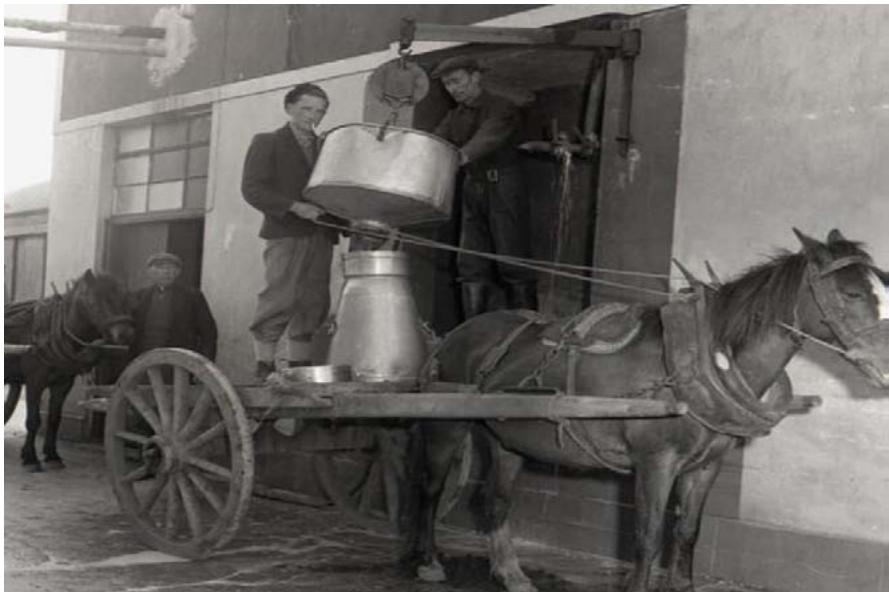 Source: By courtesy of Allan Cash PictureLibrary. Picture 1: Milk delivery to small food shops (Ireland, 1950)
The vulnerabilities exposed by recent global disruptions- such as geopolitical tensions, climate change, and the COVID-19 pandemic- have prompted a renewed interest in localized trade systems. AMAPs, pick-your-own farms, and local product vending machines are examples of initiatives that seek to adapt the localism of the past to the realities of modern trade (Rouquet & Paché, 2017; Hanan et al., 2024). Large retailers have also embraced hybrid models that integrate micro-locations into urban environments to enhance the responsiveness of their logistical facilities. These practices, while utilizing advanced technologies like real-time traceability and predictive analytics, retain the core principles of the 1950s supply chain model. The goal remains the same: to create short, agile, and resilient supply chains that can adapt to disruptions, minimizing the impact of crises, and ensuring the continuity of supply. Unlike earlier attempts at localism, today's models incorporate cutting-edge technology to enhance efficiency, sustainability, and scalability. This combination of tradition and innovation demonstrates how local trade systems, when adapted to contemporary needs, can offer a strategic response to the challenges posed by an increasingly unpredictable global landscape. Far from simply harking back to the past, these modern initiatives offer an updated blueprint for the future of supply chain management.
## III. SOBRIETY AND FRUGALITY: REDISCOVERING LOGISTICS
Sustainable logistics has garnered increasing attention in both academic and practical circles over the past two decades, reflecting the urgent need for more resource-efficient and environmentally conscious supply chains (Morana, 2013; Ren et al., 2020). Central to this movement is the notion of frugality, which emphasizes the optimization of material usage while minimizing environmental degradation and long-term ecological risks. Theoretical models of frugality challenge the patterns of overconsumption and overproduction that have long characterized industrial practices, arguing that such models are fundamentally unsustainable (Fulconis et al., 2019). Instead, the focus shifts toward resource efficiency, advocating material reuse, waste minimization, and more responsible management of procurement flows- including informal, community-based practices that are often overlooked (Lee Park et al., 2022). This framework promotes the idea that companies must not only reduce operational costs but also assume greater social and environmental responsibilities across their value chains. As part of a broader societal transition, businesses are increasingly implementing strategies to lower their carbon footprints, enhance energy efficiency, and integrate circular economy principles into logistics operations. However, frugality extends well beyond cost-cutting measures; it requires a fundamental rethinking of supply chain design to embed sustainability as a guiding principle, thereby enabling firms to remain resilient, innovative, and adaptive in an increasingly volatile, uncertain, and resource-constrained global environment.
### a) How Frugality Redefined Logistics
One of the key theoretical contributions of frugality in logistics is its distinction from dominant models like lean, agile, or just-in-time (JIT) logistics. While these systems focus on efficiency, minimizing waste, and enhancing flexibility, frugality introduces an ethical dimension, emphasizing the long-term environmental and societal consequences of supply chain decisions. Unlike JIT, which prioritizes minimizing inventory to reduce costs, frugal logistics promotes small-scale, locally anchored supply networks that reduce delivery distances, limit energy use, and foster community resilience. This conceptual shift challenges the conventional emphasis on rapid production and consumption cycles, instead advocating a more intentional, resource-conscious approach that prioritizes sustainability over short-term profitability. By drawing on traditional logistical wisdom and integrating modern digital tools, frugal logistics presents a model that is not only efficient but also socially and environmentally responsible. The integration of frugality into supply chain practices offers a compelling alternative to dominant paradigms, showing how sustainability and competitive advantage can coexist in today's increasingly constrained world. This reframing is echoed in recent scholarship that highlights the importance of systemic transformation in logistics for achieving environmental goals (Grant et al., 2022).
In the 1950s, long before the term "frugality" was commonly used in modern business discourse, the economic constraints of the time shaped everyday logistics practices. Small shops and markets, operating in environments with limited resources, practiced a form of frugality that was essential to their survival. These businesses relied on local and seasonal products, purchasing small quantities to meet the immediate needs of consumers. As depicted in Picture 2, the physical spaces of these shops were strongly compact in Europe, which prevented overstocking and promoted efficient inventory management. Milk and oil were sold from pumps, and fresh produce was kept in baskets or wooden crates, with no plastic packaging in sight (Raheem, 2013). Such practices were born out of necessity, with a sharp focus on limiting waste, particularly given that refrigeration was not common. The frugal approach, driven by scarcity rather than sustainability concerns, nonetheless demonstrated remarkable logistical efficiency. For historians, this period is seen as a time when supply chains were inherently aligned with consumer demand, exemplifying a key principle of supply chain performance- reducing waste while meeting immediate needs (De Castro Melo & Chicarelli Alcantara, 2014). The historical model of frugal management offers valuable lessons for
today's efforts to design more sustainable logistics systems.
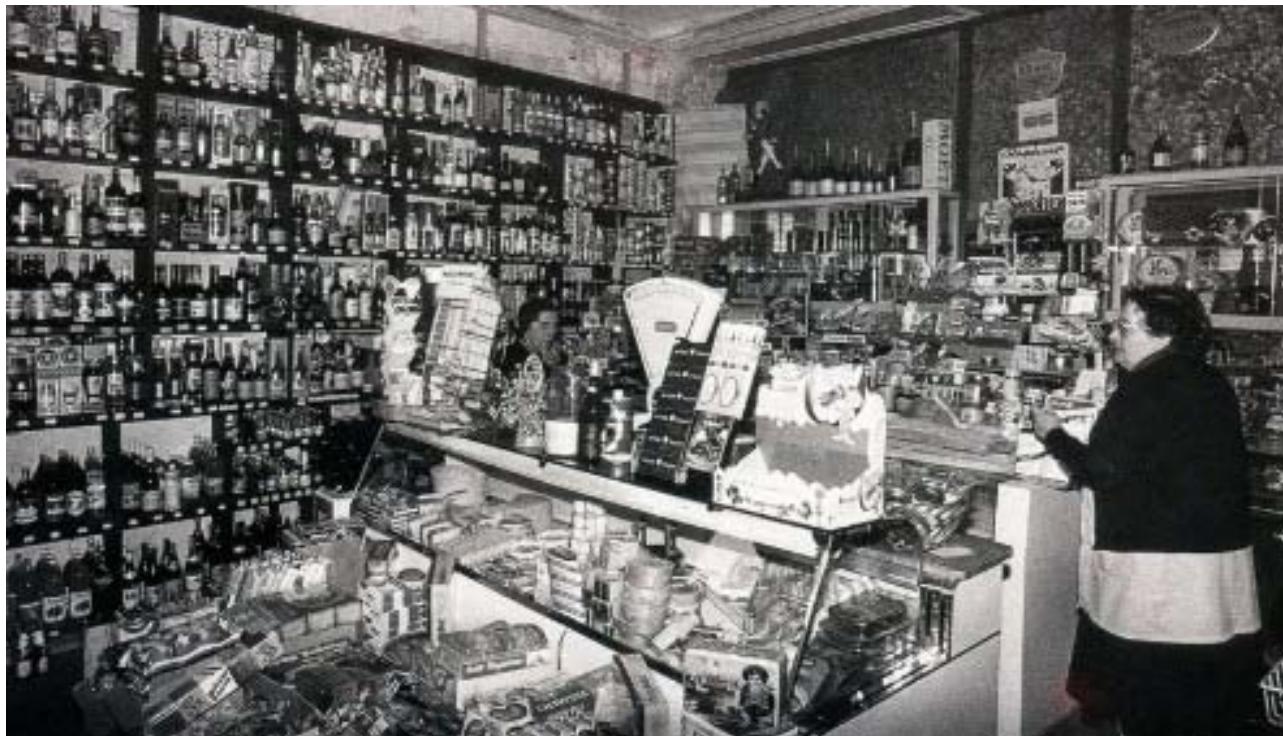 Source: By courtesy of La Dépêche, March 15, 2020. Picture 2: Grocery shop in a village (France, 1950s)
### b) How Past Practices Shape Future Logistics
As businesses and societies confront the urgent need to reduce their environmental footprints, the frugality of the 1950s extends beyond a mere historical analogy. While many modern logistics systems are driven by sophisticated technologies, the core principles of frugality- resourcefulness, waste minimization, and reliance on local resources- remain profoundly relevant today. The contemporary rise of zero-waste shops, deposit systems for reusable bottles, and bulk-buying sections in supermarkets exemplifies a resurgence of frugal practices in today's context (Beitzen-Heineke et al., 2017; Picuno et al., 2025). These initiatives, when combined with digital tools enabling real-time inventory tracking and predictive analytics, mirror the small-scale, local practices of the 1950s that minimized waste and maximized resource efficiency. By modernizing these concepts through technology, businesses can adapt the frugal logistics model to the complexities of global supply chains, providing consumers and organizations alike with a sustainable alternative to traditional models of consumption. This revival suggests that frugality, far from being a relic of the past, is a viable solution for the future of logistics, particularly as concerns about sustainability and climate change continue to intensify.
Additionally, concepts from degrowth economics and sufficiency-based approaches provide a complementary critique of overproduction and consumption, aligning with the principles of frugal logistics. These frameworks argue for scaling back production to what is necessary, thereby reducing the ecological footprint and promoting more sustainable lifestyles (D'Alisa et al., 2014; Hickel, 2019). By integrating these ideas into logistics models, companies can move beyond the traditional growth paradigm, embracing sufficiency as a guiding principle. Moreover, consumer education and behavioral change strategies such as nudges encouraging lower-impact purchasing or promoting unpackaged goods- reinforce the cultural and social dimensions of frugal logistics. In this way, logistics systems are not only about optimizing supply chains but also about shaping societal behaviors toward more sustainable practices (Syed et al., 2024). This cultural shift, when coupled with the efficiency gains from digital tools, creates a holistic approach to logistics that fosters sustainability at every level of the value chain. By incorporating these broader ideas, frugal logistics evolves into a strategic model that balances efficiency, sustainability, and social responsibility, ensuring long-term viability for both businesses and the environment.
## IV. TRUST, FAMILIARITY AND SOCIAL TIES
As McNeil (1980) and Granovetter (1985) have shown, economic exchanges are embedded in social structures, shaped by interpersonal ties, cultural norms, and historical contexts. This embeddedness was particularly visible in the food trade of the 1950s, which was not merely an economic transaction but a deeply social practice, where trust, familiarity, and reciprocity played vital roles. Bourdieu's (1986) notion of social capital- networks of relationships and the recognition they generate- offers a useful lens to understand these dynamics. His broader typology of capital, encompassing economic, cultural, and social forms, frames the role of local shopkeepers as mediators of embedded exchange. Positioned at the heart of neighborhood life, these shopkeepers were attuned to local rhythms, able to anticipate needs, nurture relationships, and often extend informal credit. Such practices fostered bonds grounded in mutual respect, recognition, and community obligation (Chabault, 2024). The local shop was not only a commercial space but a "social hub" where symbolic capital was accumulated and circulated. Trust emerged not only through repeated transactions but through the shopkeeper's active role in sustaining community cohesion. In this sense, commerce reinforced social solidarity, producing a resilient form of local exchange. Far from being peripheral, these ties were central to the functioning of everyday economic life.
A key representation of this dynamic can be seen in Figure 3, which shows a child purchasing goods from a small shop in the Netherlands in 1953. This image is more than just a historical moment; it symbolizes the trust inherent in local commerce at the time. The safety with which children were allowed to make purchases alone illustrates the level of community trust built through consistent and daily interactions. In this environment, the shopkeeper was not just a vendor; they were an integral part of the community, someone whose presence was trusted by all members of the community, including the younger generation. Picture 3 highlights a deeper societal function of local stores, where the security of the environment transcended the immediate transaction and reflected the personal relationships built over time. It is a visual testament to how trust, rooted in the familiarity and recognition between customers and shopkeepers, was integral to the commercial ecosystem of the era. Beyond the physical act of purchasing, these stores were spaces of social interaction, reinforcing communal bonds and creating a sense of belonging, central to the "production of the neighborhood."
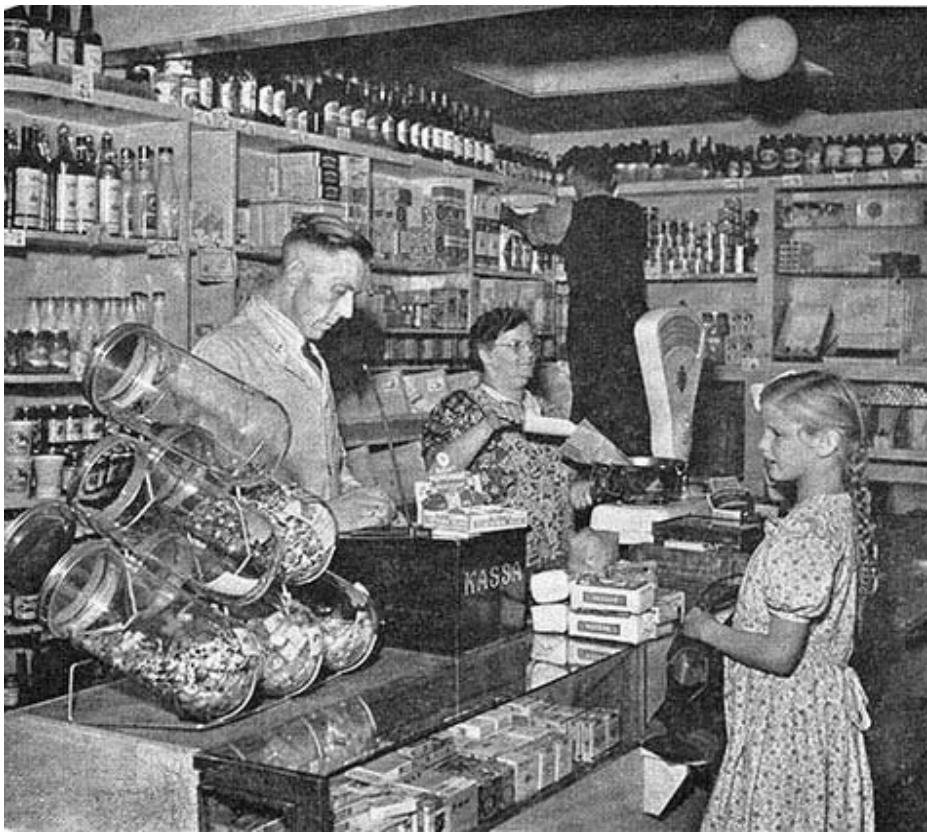 Source: By courtesy of Pinterest. Picture 3: Fully secure children's area (The Netherlands, 1953)
### a) How Local Retail Restores Trust
In contrast, today's digital retail environment has introduced new forms of trust mechanisms that, while innovative, often fail to replicate the depth of personal connection characteristic of face-to-face interactions. Online platforms depend on user ratings,
reputation systems, and customer reviews to establish trust and mitigate misinformation and deception (Beck et al., 2024). Although these mechanisms provide valuable feedback and influence consumer decision-making, they fall short of fostering the deeper, more personal relationships once common in traditional retail settings. Digital trust is inherently more transactional-anchored in algorithms and depersonalized evaluations—whereas trust in local retail environments developed organically over time through direct and repeated human interactions. As consultants such as LaGore et al. (2023) observe, platform-based systems, though effective in guiding customer choices, lack the social intimacy afforded by physical proximity and personal recognition. In the digital age, customer loyalty is increasingly shaped by impersonal metrics, in contrast to the 1950s retail model, which relied heavily on the human touch. The absence of personalized service and community-based engagement on digital platforms underscores their limitations, reaffirming that human relationships remain central to cultivating and sustaining trust- even in an increasingly digitized marketplace.
Modern businesses, however, are increasingly integrating both traditional relational approaches and innovative digital solutions. Hybrid retail models, such as community-owned grocery stores, co-ops, and "social supermarkets," are reinterpreting the relational logic that flourished in the 1950s. These businesses combine the strengths of both worlds: they preserve close-knit community relationships while leveraging modern technology to enhance efficiency and personalize customer experiences. For instance, these models often involve customers in business decisions, such as voting on product selections or participating in store operations. This participatory approach fosters a stronger sense of ownership and trust, positioning social capital at the core of the business model. Community-owned grocery stores, co-ops, and social supermarkets underscore the continued relevance of social ties in contemporary commerce, offering a compelling alternative to purely transactional or digital models (Cambra González, 2025). They serve as modern-day equivalents of the neighborhood shops of the past, fulfilling similar roles by cultivating a sense of belonging and ownership. These businesses are becoming social hubs in a way reminiscent of the 1950s, demonstrating how a blend of community engagement and digital tools can create sustainable, relational retail environments that meet modern demands while preserving the social capital central to earlier models.
### b) How Hybrid Models Reinvent Community
The relevance of relational spaces can also be understood through the lens of urban sociology, particularly Oldenburg's (2023 [1989]) concept of "third places." These informal public spaces, located outside the realms of home and workplace, serve as vital hubs where individuals gather, socialize, and build meaningful connections. Community-oriented shops- such as independent grocers, cooperative markets, and local cafés- can be viewed as contemporary manifestations of third places, where people not only make purchases but also engage in face-to-face interactions with others in their community. From this perspective, such retail environments offer more than commodities; they function as venues for social engagement, civic participation, and emotional support, fostering a strong sense of place and belonging. Just as third places have long been integral to creating vibrant, cohesive neighborhoods, modern hybrid retail models are reclaiming this social role. By blending traditional retail elements with modern conveniences- such as digital ordering and flexible service options- these models promote interaction, support local economies, and reinforce the social fabric. In doing so, they highlight the enduring significance of relational ties in the retail sector, demonstrating how businesses can thrive by aligning with the evolving social and emotional needs of their customers, even within an increasingly digitized commercial landscape (Zukin et al., 2015).
In short, trust, familiarity, and social ties are crucial components in the contemporary retail sector, particularly for food-focused businesses (Badot & Filser, 2007). In the past, the focus was predominantly on product acquisition; today, consumer expectations extend beyond the transaction to a broader experience. For small food shops to thrive, they must create an environment where customers feel valued and understood. This shift in focus is supported by techniques like customer relationship management (CRM), which help businesses gain deeper insights into customer preferences, allowing for tailored offerings and enhanced service quality. As Solomon & Russell (2024) argue, despite the growing role of technology in retail, true consumer loyalty is anchored in authentic human interactions. The importance of personalized service, attentive listening to individual needs, and a focus on exceptional customer care cannot be fully replicated by algorithms or automated systems. These elements remain at the heart of fostering lasting connections, ensuring that even as businesses embrace digital advancements, the relational foundations of customer loyalty continue to play a pivotal role in long-term growth and success.
In an ever-evolving competitive environment, the quality of human contact alone is no longer sufficient to ensure strong sales performance. Today's multiple retailers like Marcel & Fils in France must be strategically agile, incorporating innovations that transform proximity into a key driver of sustainable differentiation. For instance, some chains are exploring the potential of AI to adjust their assortments in real-time based on local shopping habits, optimizing their offerings to reflect micro-spatial preferences. Large retailers like Lidl and
Leclerc are strengthening partnerships with regional producers to promote short supply chains, enhance transparency, and deepen their connections with local communities. Simultaneously, some large retailers are reimagining the concept of service by creating hybrid spaces that blend retail and community areas, where workshops, tastings, cultural activities, and festive events enrich the consumer experience (Antéblian et al., 2013; Hagtvedt & Chandukala, 2023). These developments signal the emergence of a new commercial framework where social ties are not eliminated, but rather redefined at the intersection of digital, local, and experiential. Far from pitting tradition against modernity, the most innovative players blend the two to forge new forms of loyalty grounded in "augmented proximity."
## V. CONCLUSION
This position paper explored the strategic value of social connections in the food retail sector, drawing from the relational practices of 1950s small shops to understand how these might inspire new consumer experiences in a radically different context. The central question examined how the relational practices of small shops, founded on proximity, authenticity, and loyalty, could be adapted to the modern era to meet evolving consumer expectations. While historical models emphasized direct, human interactions within localized spaces, their revival today is not about replicating past models but about integrating contemporary technologies that complement and enhance these relational practices. The challenge lies in blending digital innovation with the human elements of connection, thus fostering consumer experience that is both personalized and sustainable. This hybrid approach is essential in a time when consumers are more conscientious about societal and environmental issues. By adopting this model, large food retailers can offer a unique value proposition that resonates with modern ethical concerns, such as sustainability, local sourcing, and transparency. Ultimately, the future of food retail lies in creating meaningful, socially responsible connections, combining tradition with innovation to meet the expectations of a more conscious and demanding market.
Adapting relational practices from the 1950s is not simply a matter of nostalgia. While societal shifts such as globalization, digitalization, and environmental crises have transformed consumer behavior, the underlying values of trust, proximity, and personal relationships remain vital in today's retail landscape. Giuseppe Tomasi di Lampedusa's famous line, "Everything must change for everything to remain the same," captures the paradox of continuity and change. For modern large retailers, this means understanding that while the past provides important lessons, these must be reframed in the context of current technological and societal realities. The rise of e-commerce, for instance, has radically altered how consumers interact with businesses, while also heightening demands for digital transparency and efficiency. Thus, it is not about returning to a bygone era but creating hybrid models that incorporate both relational heritage and digital solutions. Large retailers must find innovative ways to build trust and engagement, particularly with younger, more tech-savvy consumers who expect seamless integration between physical and digital experiences. Striking this balance will be critical in ensuring that modern food retail businesses remain competitive and relevant in a rapidly changing market.
Looking ahead, research must explore how digital platforms can cultivate authentic consumer relationships. Emerging technologies like AI, blockchain, and data analytics offer new ways to enhance personalization and trust, creating more meaningful connections between large retailers and customers. For instance, AI can help companies better understand consumer behavior and preferences, while blockchain can ensure product traceability and transparency. However, these technologies must be used in a way that complements, rather than replaces, human interactions. Future research should investigate how these tools can be integrated into a hybrid retail model that combines relational heritage with modern technological solutions. Additionally, measuring relational value will be essential for assessing the effectiveness of these models. Metrics such as customer retention, community engagement, and social impact will help determine how successfully businesses are fostering long-term loyalty and connection. Research should also consider how consumers' perceptions of proximity and community are changing in the digital age, as virtual spaces continue to play an increasingly significant role in shaping social bonds. Understanding how technology can enhance, rather than disrupt, these relationships will be crucial in ensuring that food retail businesses meet the evolving expectations of their customers.
In conclusion, the future of food retailing depends on successfully combining relational heritage with modern technological tools. By blending tradition with innovation, retailers can offer consumers a personalized, authentic experience that also meets the growing demand for sustainability and ethical business practices. This hybrid approach allows businesses to leverage digital tools to improve efficiency and scalability while maintaining the core values of human connection and community. For businesses, this means creating a retail environment where consumers feel valued, and engaged, not just as buyers, but as active participants in a larger social framework. Moving forward, the challenge will be to find ways to integrate these relational values with the rapidly advancing digital landscape. Retailers must also consider how to measure the success of their relational approaches, ensuring that these models not only create value for customers but also foster long-term loyalty and engagement. With a continued focus on both the human and technological aspects of the retail experience, food retailers can navigate the complex demands of today's market while building meaningful, enduring connections with their customers.
### ACKNOWLEDGMENTS
The author wishes to express sincere and profound gratitude to the two anonymous reviewers of the Global Journal of Management & Business Research for their outstanding and exceptionally thoughtful feedback. Their meticulous reading and constructive suggestions were instrumental in significantly enhancing both the clarity and scholarly rigor of the first draft of this position paper. The depth of their engagement and the precision of their insights reflect the highest standards of academic review.
Generating HTML Viewer...
References
50 Cites in Article
Blandine Antéblian,Marc Filser,Claire Roederer (2013). Consumption experience in retail environments: A literature review.
E Arnould,C Thompson (2005). Consumer culture theory (CCT): Twenty years of research.
O Badot,M Filser (2007). Re-enchantment of retailing: toward utopian islands.
B Beck,S Wuyts,S Jap (2024). Guardians of trust: How review platforms can fight fakery and build consumer trust.
Elisa Beitzen-Heineke,Nazmiye Balta-Ozkan,Hendrik Reefke (2017). The prospects of zero-packaging grocery stores to improve the social and environmental impacts of the food supply chain.
P Bourdieu (1986). The forms of capital.
R Camagni (1991). Innovation networks: Spatial perspectives.
Antonio Cambra González (2025). Can co-op supermarkets lead the way to sustainability? Potentials and challenges in the shift from food difference to food democracy in Spain.
V Chabault (2024). Sociologie du commerce.
G Cliquet (2022). Distance, commerce et confiance.
Dor Gilboa (2014). Review of: Giacomo D'Alisa, Federico Demaria and Giorgos Kallis (eds.) (2015) Degrowth: A Vocabulary for a New Era.
De Castro Melo,D Chicarelli Alcantara,R.-L (2014). Defining demand management.
F Fulconis,G Paché,E Reynaud (2019). Frugal supply chains: A managerial and societal perspective.
Dušanka Gajdić,Herbert Kotzab,Kristina Petljak (2023). Collaboration, trust and performance in agri-food supply chains: a bibliometric analysis.
Ahir Gopaldas (2015). Creating firm, customer, and societal value: Toward a theory of positive marketing.
Mark Granovetter (1985). Economic Action and Social Structure: The Problem of Embeddedness.
D Grant,A Trautims,C.-Y Wong (2022). Sustainable logistics and supply chain management: Principles and practices for sustainable operations and management.
H Hagtvedt,S Chandukala (2023). Immersive retailing: The in-store experience.
A Hanan,J.-L Moulins,G Paché (2024). How to reconcile buying local products through vending machines? The clash of cultures.
J Hickel (2019). Degrowth: A theory of radical abundance.
T Jacques (2017). L'Etat, le petit commerce et la grande distribution, 1945-1996: Une histoire politique et économique du remembrement References Références Referencias.
D Jhamb,R Kiran (2012). Emerging retail formats and its attributes: An insight to convenient shopping.
Paul Krugman (1991). Increasing Returns and Economic Geography.
Aylin Kunter,Emma Bell (2006). The Promise and Potential of Visual Organizational Research.
D Lagore,M Kramer,D Rodrigo (2023). Enhancing digital trust in the consumer and retail sector.
Verónica León‐bravo,Belinda Borrello,Federica Ciccullo,Federico Caniato (2025). Unpacking Proximity for Sustainability in Short Food Supply Chains.
Phil Lyon,Anne Colquhoun,Dave Kinney (2004). UK food shopping in the 1950s: the social context of customer loyalty.
I Mcneil (1980). The new social contract: An inquiry into modern contractual relations.
Wanda Orlikowski (1992). The Duality of Technology: Rethinking the Concept of Technology in Organizations.
Lee Park,C Fracarolli Nunes,M Machuca,J (2022). Social sustainability in supply chains: The role of local practices and informal networks.
C Picuno,S Gerassimidou,W You,O Martin,E Iacovidou (2025). The potential of Deposit Refund Systems in closing the plastic beverage bottle loop: A review.
H Pol,M Galetzka,A Pruyn (2020). The personal touch in customer contact: The influence of a personal approach on customer relationships.
D Raheem (2013). Application of plastics and paper as food packaging materials-An overview.
Ibrahim Raji,Tommaso Rossi,Fernanda Strozzi (2021). A dynamic literature review on 'lean and agile' supply chain integration using bibliometric tools.
Brigit Ramsingh (2014). The emergence of international food safety standards and guidelines: understanding the current landscape through a historical approach.
Gitte Rasmussen,Theo Van Leeuwen (2022). Special issue: The human touch – Analyzing online and offline shopping.
Joshua Ray,Anne Smith (2012). Using Photographs to Research Organizations: Evidence, Considerations, and Application in a Field Study.
Rui Ren,Wanjie Hu,Jianjun Dong,Bo Sun,Yicun Chen,Zhilong Chen (2020). A Systematic Literature Review of Green and Sustainable Logistics: Bibliometric Analysis, Research Trend and Knowledge Taxonomy.
M Rosenbaum,M Losada Otalora,G Contreras Ramírez (2017). How to create a realistic customer journey map.
Aurélien Rouquet,Gilles Paché (2017). Re-enchanting logistics: the cases of pick-your-own farm and large retail stores.
Harriet Shortt,Samantha Warren (2019). Grounded Visual Pattern Analysis: Photographs in Organizational Field Studies.
M Solomon,C.-A Russell (2024). Consumer Behavior: Buying, Having, and Being (8th ed.).
M Storper (1997). The regional world: Territorial development in a global economy. New York: Guilford Press. and customer experience.
Antonio Strati (1999). Putting People in the Picture: Art and Aesthetics in Photography and in Understanding Organizational Life.
Catharina Sulistyowati,Suraya Afiff,Muhammad Baiquni,Mia Siscawati (2023). Challenges and potential solutions in developing community supported agriculture: a literature review.
Shayaan Syed,Adolf Acquaye,Malik Khalfan,Theresa Obuobisa-Darko,Fred Yamoah (2024). Decoding sustainable consumption behavior: A systematic review of theories and models and provision of a guidance framework.
Sharon Zukin,Philip Kasinitz,Xiangming Chen (2015). Global Cities, Local Streets.
P Vergragt,L Dendler,M De Jong,K Matus (2016). Transitions to sustainable consumption and production in cities.
No ethics committee approval was required for this article type.
Data Availability
Not applicable for this article.
How to Cite This Article
Professor Gilles Pache. 2026. \u201cRelational Heritage in Retail—Reimagining 1950s Practices for the Future of Consumer Experience\u201d. Global Journal of Management and Business Research - A: Administration & Management GJMBR A Volume 25 (GJMBR Volume 25 Issue A2): .
Explore published articles in an immersive Augmented Reality environment. Our platform converts research papers into interactive 3D books, allowing readers to view and interact with content using AR and VR compatible devices.
Your published article is automatically converted into a realistic 3D book. Flip through pages and read research papers in a more engaging and interactive format.
Food retailing in the 1950s was defined by strong social ties between shopkeepers and customers, grounded in geographical proximity and mutual trust. These relationships went beyond mere economic transactions, fostering spaces of human interaction where consumer loyalty was built on reciprocity and respect. Small shops, located at the heart of their communities, anticipated customers’ needs and cultivated secure, familiar environments that reinforced social cohesion. While consumer experience remains a priority today, new dynamicsespecially the integration of AI and growing partnerships with local producers-are reshaping the retail landscape. Despite these transformations, the core value of human connection remains central to food retailing. This position paper highlights the continuity between past practices and present trends, emphasizing how values such as proximity and interpersonal relationships, though redefined, continue to be essential to the consumer experience. By doing so, it offers a critical analysis of how traditional retail models can be reimagined to address contemporary challenges while preserving their social foundations.
Our website is actively being updated, and changes may occur frequently. Please clear your browser cache if needed. For feedback or error reporting, please email [email protected]
Thank you for connecting with us. We will respond to you shortly.