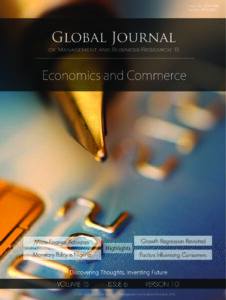
Remittances, Exchange Rate, and Monetary Policy in Nigeria

Augustine C. Osigwe
Augustine C. Osigwe
Chekwube V. Madichie

Send Message

To: Author

Remittances, Exchange Rate, and Monetary Policy in Nigeria

Article Fingerprint

ReserarchID

EJRV6

Remittances, Exchange Rate, and Monetary Policy in Nigeria Banner

AI TAKEAWAY

Connecting with the Eternal Ground
  • English
  • Afrikaans
  • Albanian
  • Amharic
  • Arabic
  • Armenian
  • Azerbaijani
  • Basque
  • Belarusian
  • Bengali
  • Bosnian
  • Bulgarian
  • Catalan
  • Cebuano
  • Chichewa
  • Chinese (Simplified)
  • Chinese (Traditional)
  • Corsican
  • Croatian
  • Czech
  • Danish
  • Dutch
  • Esperanto
  • Estonian
  • Filipino
  • Finnish
  • French
  • Frisian
  • Galician
  • Georgian
  • German
  • Greek
  • Gujarati
  • Haitian Creole
  • Hausa
  • Hawaiian
  • Hebrew
  • Hindi
  • Hmong
  • Hungarian
  • Icelandic
  • Igbo
  • Indonesian
  • Irish
  • Italian
  • Japanese
  • Javanese
  • Kannada
  • Kazakh
  • Khmer
  • Korean
  • Kurdish (Kurmanji)
  • Kyrgyz
  • Lao
  • Latin
  • Latvian
  • Lithuanian
  • Luxembourgish
  • Macedonian
  • Malagasy
  • Malay
  • Malayalam
  • Maltese
  • Maori
  • Marathi
  • Mongolian
  • Myanmar (Burmese)
  • Nepali
  • Norwegian
  • Pashto
  • Persian
  • Polish
  • Portuguese
  • Punjabi
  • Romanian
  • Russian
  • Samoan
  • Scots Gaelic
  • Serbian
  • Sesotho
  • Shona
  • Sindhi
  • Sinhala
  • Slovak
  • Slovenian
  • Somali
  • Spanish
  • Sundanese
  • Swahili
  • Swedish
  • Tajik
  • Tamil
  • Telugu
  • Thai
  • Turkish
  • Ukrainian
  • Urdu
  • Uzbek
  • Vietnamese
  • Welsh
  • Xhosa
  • Yiddish
  • Yoruba
  • Zulu
Font Type
Font Size
Font Size
Bedground

Abstract

This study examined the relationship and causality that exist between remittance inflows and monetary aggregates, interest rate, exchange rate, and the domestic price level in Nigeria. The Johansen co-integration and the Granger causality techniques were employed. The Johansen co-integration test indicated that long run relationship among the variables. The Granger causality test results revealeda unidirectional causality running from money supply (LM2) to remittances (LREM) only at lag one and not in the reverse. In other lags, there was no evidence of causality between the duos. The results also showed that, consistently from lag one to lag five, causality run from exchange rate (LEXR) to LREM and not in reverse direction. Unidirectional causality run from interest rate (INT) to LREM, occurring from lag one to lag four. There was no evidence of causality in any direction between inflation rate (INF) and LREM within these lags. We also found that causality run from exchange rate (LEXR) to money supply (LM2) only at lags one and four and not in the reverse order.

References

11 Cites in Article
  1. De Adenutsi,R Ahortor (2008). Remittances, Exchange Rate, and Monetary Policy in Ghana.
  2. Christopher Ball,Martha Cruz-Zuniga,Claude Lopez,Javier Reyes (2012). Remittances, Inflation and Exchange Rate Regimes in Small Open Economies.
  3. K Barrett (2014). The effect of remittances on the real exchange rate: The case of Jamaica.
  4. A Brook (2003). Recent and prospective trends in real long-term interest rates: Fiscal policy and other drivers.
  5. M Fleming (1962). Domestic Financial Policies under Fixed and under Floating Exchange Rates.
  6. D Gujarati,D Porter (2009). Damodar GUJARATI. Basic Econometrics. McGraw-Hill, 1978..
  7. F Mandelman (2011). Monetary and Exchange Rate Policy under Remittance Fluctuations, Federal Reserve Bank of Atlanta.
  8. O Mbutor (2010). Can monetary policy enhance remittances for economic growth in Africa? The case of Nigeria.
  9. R Mundell (1963). Capital Mobility and Stabilization Policy Under Fixed and Flexible Exchange Rates.
  10. M Sultonov (2011). Impact of remittances on the real effective exchange rate of Tajikistan's national currency.
  11. Vincent Arel-Bundock (2013). WDI: World Development Indicators and Other World Bank Data.

Funding

No external funding was declared for this work.

Conflict of Interest

The authors declare no conflict of interest.

Ethical Approval

No ethics committee approval was required for this article type.

Data Availability

Not applicable for this article.

How to Cite This Article

Augustine C. Osigwe. 2015. \u201cRemittances, Exchange Rate, and Monetary Policy in Nigeria\u201d. Global Journal of Management and Business Research - B: Economic & Commerce GJMBR-B Volume 15 (GJMBR Volume 15 Issue B6).

Download Citation

Journal Specifications

Crossref Journal DOI 10.17406/GJMBR

Print ISSN 0975-5853

e-ISSN 2249-4588

Keywords
Classification
GJMBR-B Classification JEL Code: B22
C22
E4.
Version of record

v1.2

Issue date
September 4, 2015

Language
en
Experiance in AR

Explore published articles in an immersive Augmented Reality environment. Our platform converts research papers into interactive 3D books, allowing readers to view and interact with content using AR and VR compatible devices.

Read in 3D

Your published article is automatically converted into a realistic 3D book. Flip through pages and read research papers in a more engaging and interactive format.

Article Matrices
Total Views: 4268
Total Downloads: 2062
2026 Trends
Related Research
Our website is actively being updated, and changes may occur frequently. Please clear your browser cache if needed. For feedback or error reporting, please email [email protected]

Request Access

Please fill out the form below to request access to this research paper. Your request will be reviewed by the editorial or author team.
X

Quote and Order Details

Contact Person

Invoice Address

Notes or Comments

This is the heading

Lorem ipsum dolor sit amet, consectetur adipiscing elit. Ut elit tellus, luctus nec ullamcorper mattis, pulvinar dapibus leo.


High-quality academic research articles on global topics and journals.

Remittances, Exchange Rate, and Monetary Policy in Nigeria

Augustine C. Osigwe
Augustine C. Osigwe
Chekwube V. Madichie

Research Journals