This literature review focuses on the analysis of renal denervation therapy as a potential treatment for difficult-to-control hypertension. Systemic arterial hypertension (SAH) is a prevalent condition with various approaches to achieving control, including lifestyle modifications, pharmacological interventions, and surgical treatments. The fluctuations in blood pressure within the kidneys occur due to the stimulation or inhibition of sensory and motor pathways in the renal nerves. Each of these modifications is linked to the underlying condition in the progression of hypertension. The employed methodology involves the ablation of renal afferent and efferent nerves using a catheter through percutaneous intervention facilitated by ultrasound.
## I. INTRODUCTION
Systemic arterial hypertension (SAH) is a prevalent medical condition. Despite extensive research and the availability of effective and safe pharmacological treatments, a significant number of patients face challenges in achieving optimal control of their blood pressure levels, leading to a classification of treatment resistance. The regulation of blood pressure is primarily governed by the sympathetic nerves, which maintain a constant level of activity and establish the sympathetic tone in the heart, blood vessels, and kidneys [1, 2].
Renal denervation therapy has been shown to effectively lower blood pressure in patients with resistant hypertension. This therapy works by deactivating specific regions between the central nervous system and the kidneys, resulting in an immediate decrease in renal sympathetic nerve activity and a subsequent reduction in blood pressure levels. This modality is considered invasive and has demonstrated a high level of safety, low complexity, and a favorable prognosis rate. As a result, it can help reduce the need for excessive medication dosages [1, 6].
## II. METHODOLOGY
This is a literature review whose sources were taken from the SciELO and PubMed data platforms. The search period was July 2023, meeting the inclusion criteria of articles from 2000 to 2023, in Portuguese and English, online, and in full text. The following health descriptors (DeCS) were used as strategies to better evaluate the texts: "Denervation", "Systemic Arterial Hypertension" and "Treatment".
## III. DISCUSSION
Systemic arterial hypertension (SAH), which currently affects 1.2 billion people globally, results in medical expenses, cardiovascular disease mortality, and crippling patient consequences. The sympathetic nerves, which are active in vascular tone and work on the heart, arteries, and kidneys, physiologically regulate blood pressure. The sympathetic and parasympathetic nervous systems supply the kidney with blood flow. Although sympathetic innervation is connected to renal physiology, excessive activity can cause hypertension [1, 4].
Numerous studies have been successful in illuminating hypertension, and effective treatment options for SAH have been discovered. The main antihypertensive medications are diuretics, angiotensin-converting enzyme inhibitors, angiotensin receptor blockers, antiadrenergic medications, calcium channel blockers, and renin inhibitors, and they are all effective. These medications can be used on their own or in combination with three other medications, although some patients still experience unsatisfactory BP levels despite the combinations, necessitating the adoption of other therapeutic approaches like renaldenervation. [2]
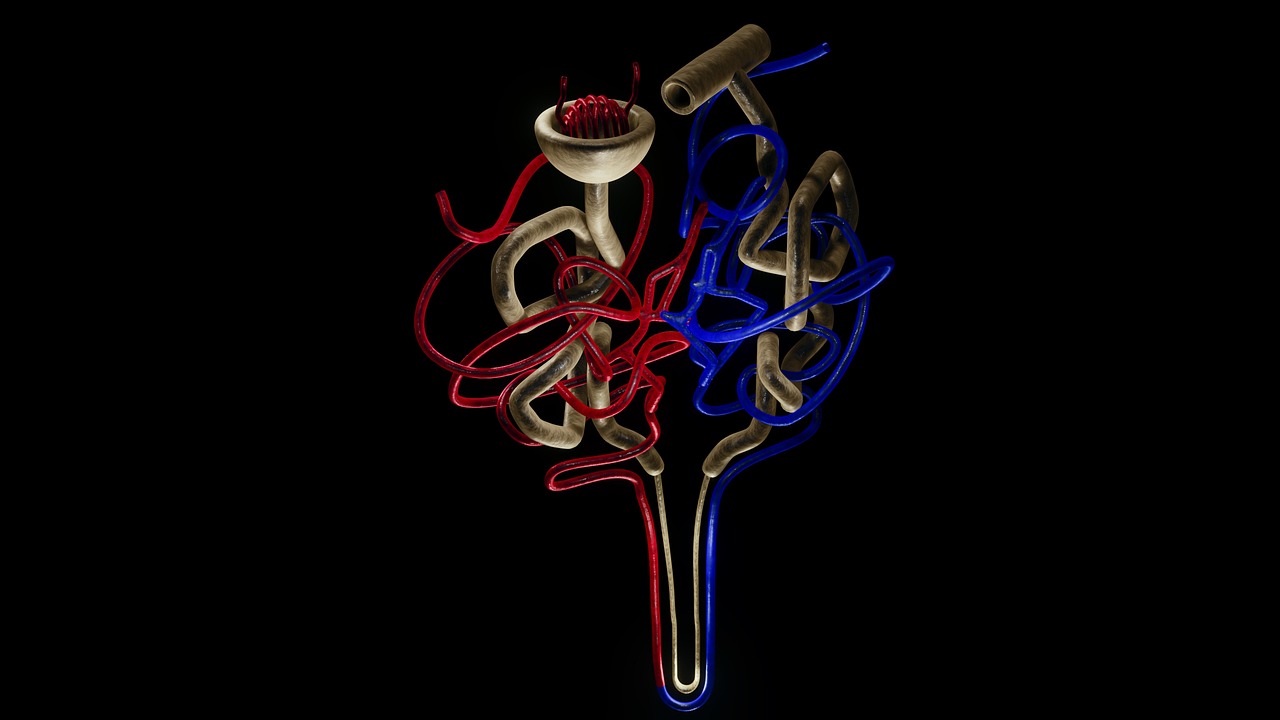
The peripheral sympathetic neural system is defined by regions, meaning that altering sympathetic activity can produce different effects in certain regions. The renal neural pathways contain efferent and afferent nerve fibers. These nerves are arranged alongside the wall of the renal arteries, but not symmetrically. A recent study in humans showed that 1) the right renal artery is significantly more innervated than the left; 2) the anterior and superior quadrants are more innervated than the posterior and inferior quadrants; and 3) the distal thirdof the renal arteries is more innervated than its proximal segments. The efferent fibers function through nerve impulses from the central nervous system towards the kidneys, influencing renal function; the main neurotransmitter is noradrenaline, while the afferent fibers carry information from the kidneys to the CNS. These fibers respond to chemical, mechanical, nociceptive, and chemical stimuli [3, 4].
The fluctuation of blood pressure in the kidney is associated with the activation and inhibition of the afferent and efferent pathways of the renal nerves. Each of these changes is linked to the underlying pathology that leads to the development of hypertension.
Hypertension is associated with increased sympathetic activity resulting from afferent signals originating from the kidneys. This leads to the redefinition of sympathetic tone through adenosine triphosphate (ATP) receptors, which can cause vessel hypertrophy in response to angiotensin II. Research conducted on animals has demonstrated that an overactive sympathetic system plays a crucial role in the development of hypertension. As a result, denervation has emerged as a potential alternative treatment for hypertension [2].
Sympathetic denervation of the kidneys is characterized by the ablation of renal afferent and efferent nerves. This procedure can be done through a catheter with a percutaneous intervention using ultrasound that comes from a piezoelectric crystal at the end of the catheter and is focused on the renal artery by inflating a water-cooled balloon or even radiofrequency, which suspends the nerve fibers in the adventitia of the renal artery. [3,5]
A randomized study comparing the two denervation methods (RADIOSOUND-HTN) concluded that ultrasound ablation can create deeper lesions in the main renal arteries. Other risks of the procedure as a whole include hemorrhage, arterial stenosis, and aneurysm, as well as side-effects of the procedure due to the sympathetic nerve acting on other functions; however, the recording of these events was not significant enough to compromise the safety and benefits of the procedure. [2,4,5]
Even though the results of animal studies were encouraging, many patients continue to take antihypertensive medications to manage their blood pressure even after denervation. Some clinical trials were still ambiguous, while others revealed a beneficial outcome in BP measurement following the treatment in the office. The current research aims to examine the efficacy of non-pharmacological interventions in managing hypertension, with the objective of determining if these interventions yield satisfactory outcomes [6].
## IV. CONCLUSION
Considering the significant prevalence of systemic arterial hypertension within the population, it is of paramount significance to develop innovative or alternative pharmacological strategies for effectively managing blood pressure. Renal denervation has demonstrated efficacy as a viable alternative procedure for patients with resistant hypertension, as evidenced by the immediate improvement in blood pressure observed in patients undergoing this intervention. Therefore, it is crucial to prioritize the promotion of new research and studies on the subject to strengthen this therapeutic measure and evaluate its application in clinical practice [2, 6].
Generating HTML Viewer...
References
6 Cites in Article
Kazuomi Kario (2022). Catheter-based ultrasound renal denervation in patients with resistant hypertension: the randomized, controlled REQUIRE trial.
Marco Fontes,Peliky (2020). Renal sympathetic denervation for resistant hypertension: where do we stand after more than a decade.
Marshall Heradien,Pieter Van Der Bijl,Paul Brink (2019). Renal denervation: mechanisms and clinical aspects.
Michel Azizi (2022). Effects of Renal Denervation vs Sham in Resistant Hypertension after Medication Escalation: Prespecified Analysis at 6 Months of the RADIANCE-HTN TRIO Randomized Clinical Trial.
No ethics committee approval was required for this article type.
Data Availability
Not applicable for this article.
How to Cite This Article
Matheus Amorim Grigorio. 2026. \u201cRenal Denervation for the Treatment of Hypertension\u201d. Global Journal of Medical Research - F: Diseases GJMR-F Volume 23 (GJMR Volume 23 Issue F7): .
Explore published articles in an immersive Augmented Reality environment. Our platform converts research papers into interactive 3D books, allowing readers to view and interact with content using AR and VR compatible devices.
Your published article is automatically converted into a realistic 3D book. Flip through pages and read research papers in a more engaging and interactive format.
Subject: Global Journal of Medical Research - F: Diseases
Authors:
Renata Melo de Carvalhoo Lima, Luciane Alves de Oliveira, Marilia Albuquerque Barreto,, Matheus Henrick Pereira de Almeida, Maria Jullia Alvares de Melom, Bruno Renan de Carvalho Lopes (PhD/Dr. count: 0)
This literature review focuses on the analysis of renal denervation therapy as a potential treatment for difficult-to-control hypertension. Systemic arterial hypertension (SAH) is a prevalent condition with various approaches to achieving control, including lifestyle modifications, pharmacological interventions, and surgical treatments. The fluctuations in blood pressure within the kidneys occur due to the stimulation or inhibition of sensory and motor pathways in the renal nerves. Each of these modifications is linked to the underlying condition in the progression of hypertension. The employed methodology involves the ablation of renal afferent and efferent nerves using a catheter through percutaneous intervention facilitated by ultrasound.
Our website is actively being updated, and changes may occur frequently. Please clear your browser cache if needed. For feedback or error reporting, please email [email protected]
Thank you for connecting with us. We will respond to you shortly.