I. INTRODUCTION
Unlike ants, termites do not move around on the open ground. Most of the species either tunnel through the soil or move inside 'mud tube' that they build from soil, sand, slits and rocks and wood particles or whatever the termites feed on. Mud tubes are usually found on foundation wall or from cracks between boards and walls. Old 'mud tubes' are dry and crumble easily and that may be visible for years. Sometimes they abandoned the apex of the 'mud tube' if disturbed. The average circumference of a mudtube is relatively thin over the concrete wall, although they can be larger in soil surface. On an average 2 to 3 termites could easily move side by side inside a mud tube. Besides maintaining a microclimate the mud tube protects the termites from the attack of ants and other predators. Two common types of mudtubes are built by the termite of which first one is 'working tube' that run from the nest to the identical food sources. The other type is an 'exploratory tube' which is used for searching food sources. Several studies that examined the response of termites to a disturbance like knocking were conducted on arenas containing food and termite foragers (Hu, Apple and Traniello, 2003,
Schwinghamer and Houseman, 2006, Gautam and Henderson 2012). The studies showed that termites immediately escaped from the source of disturbance to other container (without food) through connecting tubes, but they returned after short period (within several seconds or minutes). Based on these observation researchers concluded that termite would not abandon food sources 'for extensive period of time as a result of mechanical disturbances (Gautom and Henderson 2012). Using a special experimental setting, Wang et al. 2016 had first reported study that some termite species escaped along the wall of Petridis after a disturbance was created by knocking, and unidirectional escaping flow (either clockwise or anticlockwise) lasted for long periods. During, the escaping process little congestion was observed, probably because most worker termite follow each other, whereas only a few workers reversed or moved backwards against escaping flow. The nests of subterranean termites in urban areas may be found in the soil under buildings. Robinson (1996) reported that swarming is generally synchronized over wide areas, but it also depends on environmental conditions or seasonal phenomenon such as wind, rain and soil moisture. It was proven that moisture content does not affect termites tunneling activity when they first emerged, but when termites move further from their nesting site, they have a tendency to look for areas with higher moisture content (Su and Puche 2003) Different termite species showed different tunneling geometry (Campora and Grace 2001). They will minimize their total tunnel length to one location in a search area. Once they find a suitable food source, they will follow the direct foraging route to reduce the amount of energy used (Hedlund and Henderson 1999, Campora and Grace 2001, Puche and Su 2001, Arab and Costa-Leonardo 2005).
The incidence of termite is very common in most of the houses during May to July which makes an alarming situation among the dwellers of Eastern India. The 'mudtube' formation is an indication of a termite infestation. It is a common practice of a household to determine the presence of termite by breaking open the mud tubes. Termites often rebuild the broken part which is another indication of current activity. The present study deal with the seasonal effect on repairing the damaged mud tube along with the behavioral changes of Odontotermes obesus (Rambur) when an indoor mudtube was consequently damaged at certain interval after repairing in a termite prone area of Kolkata, West Bengal, India for 2 consecutive seasons during 2020 and 2021 respectively.
II. MATERIALS AND METHODS
a) Study Site
The study was conducted from April to June of 2019, 2020 and 2021 on a termite prone areas of Kolkata, West Bengal located at North latitude and 86.00 to 89.00 East longitude with mean sea level 9.75 meter. The season is broadly classified dry and warm (March to May), wet and warm (June to October), dry and cool (November to February). The mean maximum temperature is usually high in April and low in early part of the January. Normal rainfall varies from 1271 to . The termite species was previously identified by Zoological Survey of India, Kolkata. Altogether 5 mud tubes were selected at above the ground on a concrete wall at Ballygunge, Kolkata, West Bengal, India.
Tests were conducted between 6.00 AM to 12.00 AM. A scale was fitted along the length of each tube for measuring a area breached during study period. The response of termites were recorded by camera at certain intervals until the mud tube was repaired and closed.
b) Mudtube Repairing
Video recording was taken to measure the area of the mud tube that was repaired from the top to bottom or bottom to top and along the side of breached part until the whole damaged part was covered. The pooled data for 2019, 2020 and 2021 are incorporated for calculation of time per unit area.
III. RESULTS
a) Seasonal Effect on Repairing Damaged Mud Tube
The termite nests are usually built in a particular area and mud tubes are formed year after year from the same location. The termites were observed to be active in summer and some workers were found to prepare mud tube over the old concrete wall using sand and saliva. The indoor mud tube formation was more frequent during April to July in Kolkata, West Bengal, India. A simple study was made to find out the time required for repairing length x5mm breadth x2mm height of a breached tube over a concrete wall during summer and rainy season and the results are given in Fig. 1 & 2.
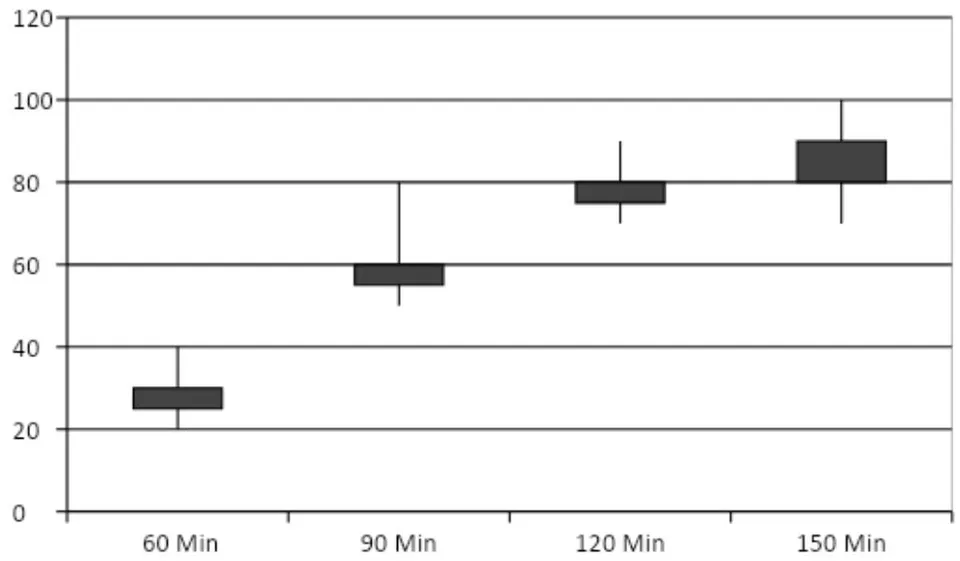
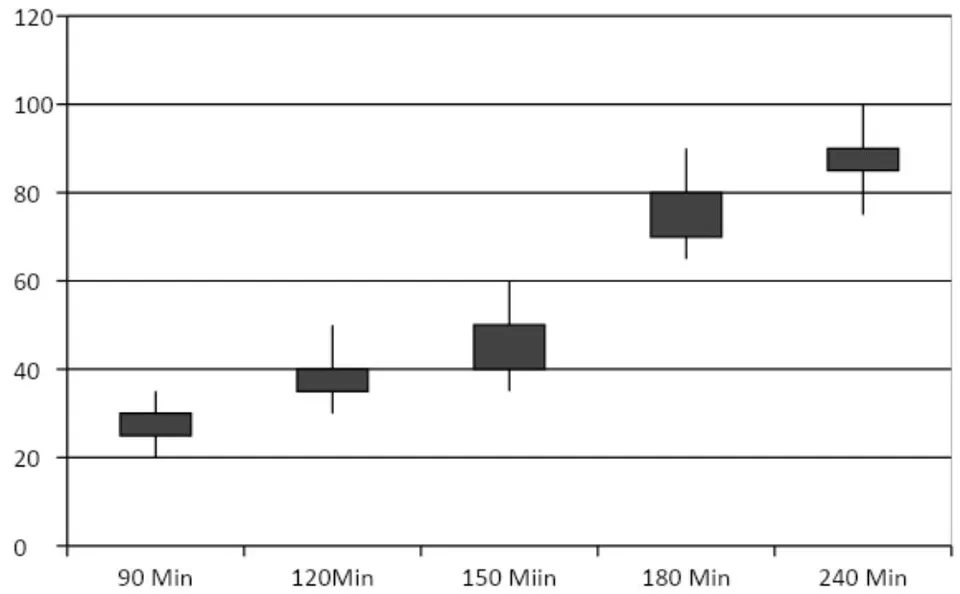
It could be observed that during rainy season the time required for repairing an unit area of indoor mud tube was about half of the summer season. During both the seasons the termite initiated works at least one hour after breaking the tube but in summer season the time duration was extended up to 240 minutes. The total 100 cubic millimeter spaces were covered during 150 and 240 minutes in rainy and summer seasons respectively.
b) Categorories of Termite Responses after Breaking the Mudtube
Based on changes of behavioral pattern in response to the damage of a 100mm length x5mm breadth 2mm height mud tube, the termite responses were divided into 6 exclusive categories. (1) type-1: mud tubes were closed within 2 hours. (2) type-2: mud tubes were closed within 4 hours (3) type-3: both the end of the breached area of the tube were closed together (4) type-4: one or more numbers moved from base to apex (5) type 5: one or more numbers move from apex to base. (6) type-6: some members came outside the surrounding of breached area.
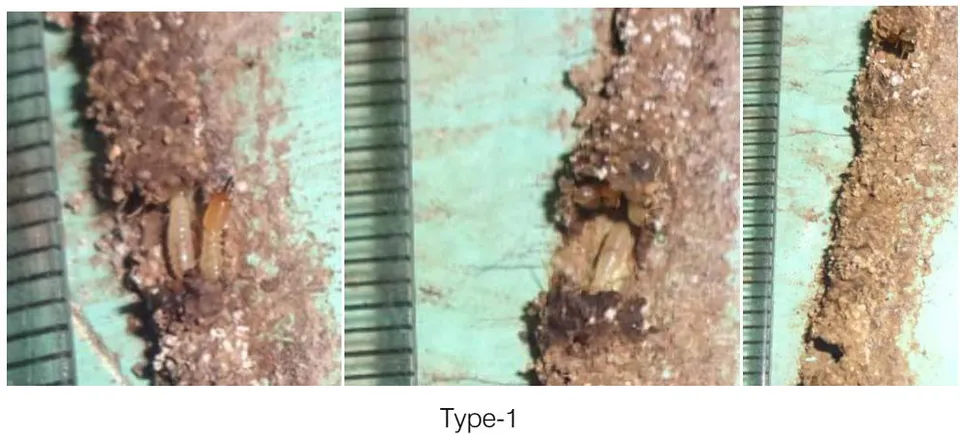
Type 1: The mud tube was closed within 2 hours when the damage was very small about (10mm length x 5mm beadth x 2mm height) of the total area. Here the workers immediately started to cover the area from both the end of breached area. When multiple damages ranging up to 8 in numbers of same size were broken over this tube more numbers of workers were engaged to cover the breached area. On an average they attempted 5 to 6 times per day or 60 to 70 times per week to repair their working tube if it was artificially damaged (<10%) by needle during the month of June (Fig 3).
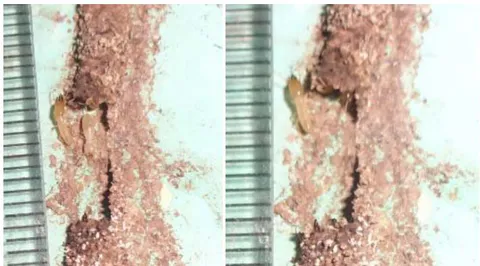
Type 2: The repairing period was extended with the increase of surface of breached area of mud tube. Here the time required to cover the broken part was 4 hours when the breached area was increased to (20mm length x5mm breadth x 2mm height) of the total area. If two breached areas of same size were located in single mud tube the termites initially completed one followed by a 30 to 40 minutes rest before initiation of second one (Fig-4).
Type 3: When the breached part of mud tube was about 20 to of the total area then they initiated to repair from both the ends of the broken parts together.
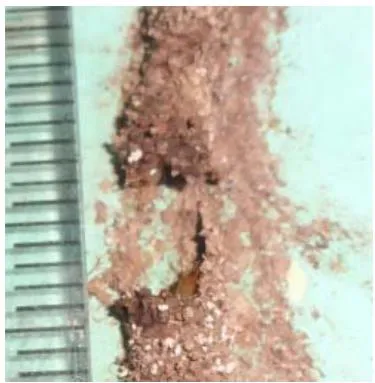
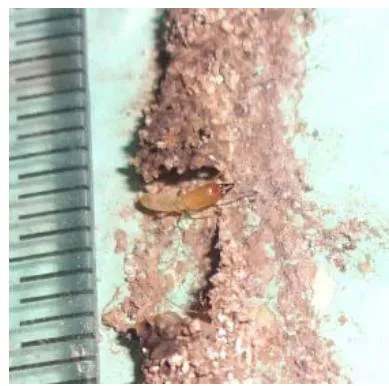
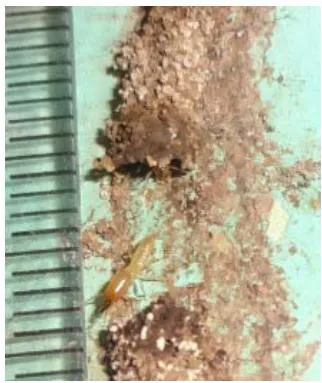
Meanwhile 2 special workers were engaged to construct the side wall. The entire work was completed within 4 to 5 hours period of ceaseless work (Fig 5).
Type 4: In general, the termites advanced from base to apex and vice versa in search of food. Entire program altered with the breaking of mud tube. From the average of 5 video recording it was found that if the broken part was nearer to base about two third of total population immediately rushed to the apex through this breached area and one third of the population turned back to the base from apex (Fig 6).
Type 5: If the broken part was nearer to apex very few population were found to cross over the breached area as monitored through 5 video clippings. Here about population came from base who participated in repairing the broken area (Fig 6).
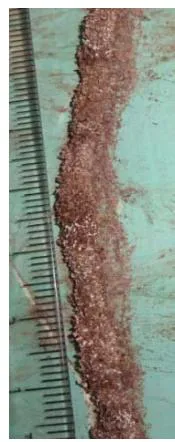
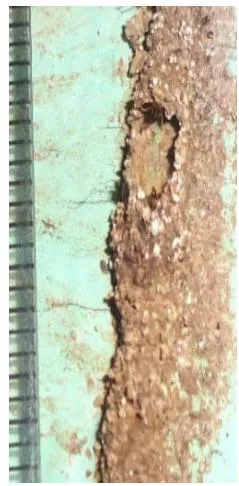
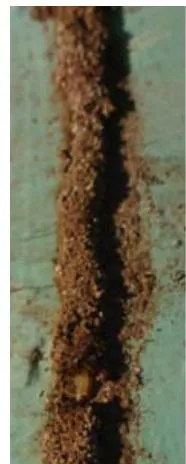
Type 6: A special group of termites which were aggressive and immediately came outside looking for the presence of natural enemies but after 3to 4 minutes they returned back to base through the opening end of breached area (Fig 7).
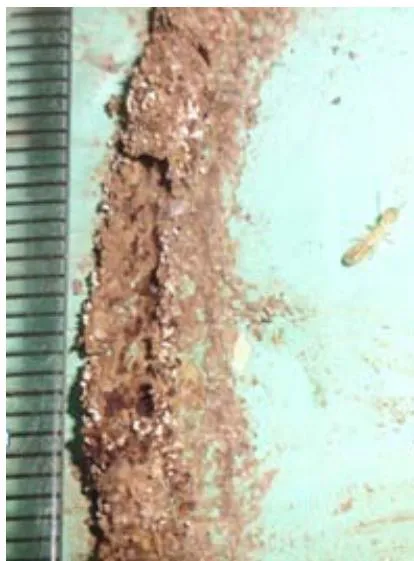
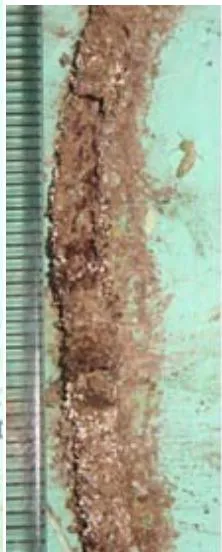
c) Measurement of the Repairing Activity of Termite
The actual area of mud tube was repaired by termites at every 15 minutes interval following removal of area from area of mud tube. Here the entire area of breached tube was repaired within 2 hours of initiation of work. Each segment of broken tube was separated in 3 parts of which basal part nearer to nest was denoted by 'B', side wall was denoted by 'S' and rear end was denoted by 'A' as given in Fig 8.
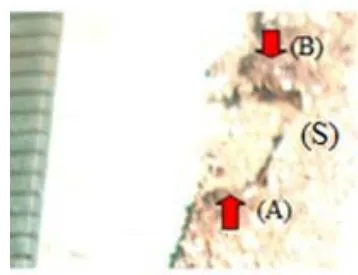
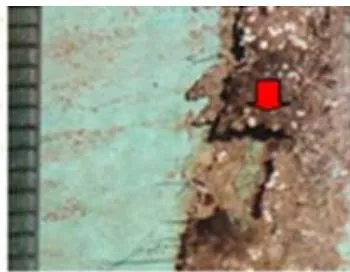
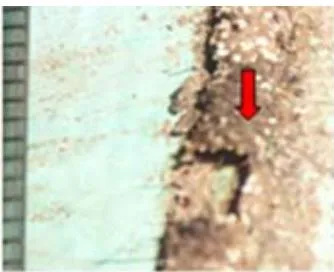
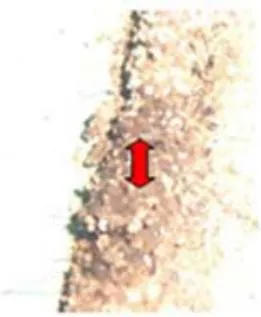
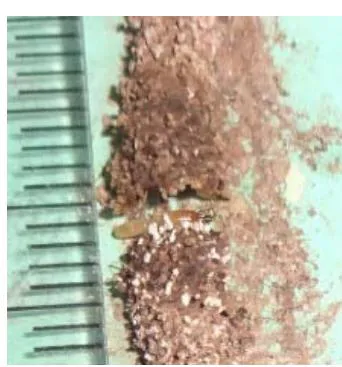
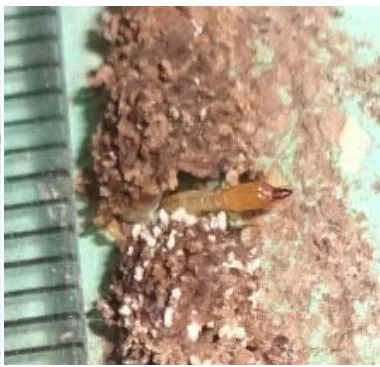
The Figure 8 showed that initially the termites started to repair from base (B) and completed of the total area within first 30 minutes followed by from both base and apex in 45 minutes. Meanwhile two special workers were found to repair both side wall of breached area (S) for 10 to 15 minutes each. Although the work done was performed from both the ends simultaneously for 90 minutes, the area in rear end (A) was one third of the base (B). The remaining part of work was completed after 30 minutes, a special worker was engaged to prepare last part keeping the body horizontally to the ground before closing the tube (Fig 9).
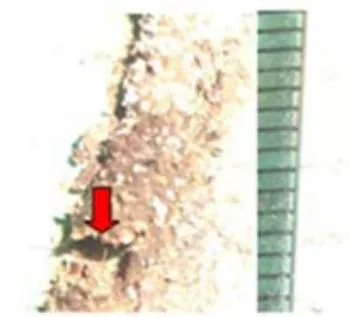
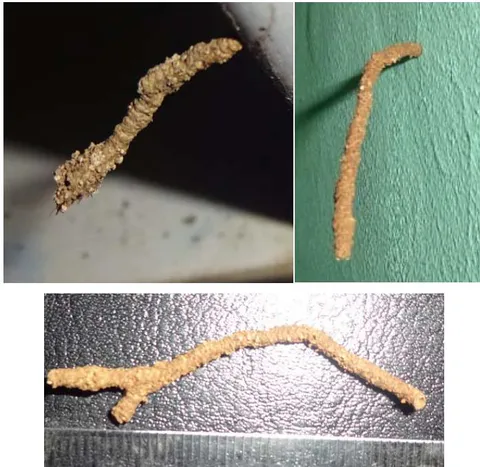
Sometimes during constructing the mudtube, fraction remains suspended above while a portion remains concealed beneath the tile or cracks of the wall, this part is left unrepaired if its surface was artificially damaged by external forces (Fig 10). This type of structure formations were up to in length and 1 to in width hollow so that one or two termites could easily move from their base to apex. The apex of this suspended structure may be club shaped or bifurcated and the opening was not clearly visible from outside.
IV. DISCUSSIONS
Termite Odontotermes obesus (Rambur) is a common pest of both agriculture and house hold. Termite swarm could easily be seen everywhere as large numbers of adults are attracted to light. If anyone does not see the swarm, the mud tube formation is a subtle sign of termite infestation. A mud tube infestation can only be deemed active if after its mutilation, subsequent worker and soldier termites emerge in floods for its rebuild in rapid succession. Otherwise an abandoned mudtube remains isolated independent of its breakage and thus assumed to be old and inactive. The repairing behavior is also determined by several factors which are discussed in length herewith. The time required to repair the damaged tube was less in rainy season than summer as the termites require moisture to construct tunnels out of the mud to connect their nest in the ground with their food sources. Cowie et al. (1989) reported that termites move up or down in the soil to meet changing moisture and humidity conditions. Based on changes of behavioral pattern in respect to damage of mud tube, the termites are divided into 6 exclusive categories which can give an idea about the division of work immediately after breaking of mud tube. Using the experimental settings Xiong et al. (2018) also divided termite into 4 exclusive categories on the basis of behavioral patterns of repairing, escaping and presence of predators. From the measuring of repairing activity we can estimate the working efficiency of termite per unit time in response to the damage of mud tube. Here the initial working efficiency was lower but the maximum outputs were obtained just 30 minutes before covering the damaged mudtube. Xiong et al. (2018) also reported that up to 15 minutes after breaking the number of downwards moving termite was significantly higher than the number of termites performing all other behavior except repairing. The termites build these suspended mud tube or "hanging" shelter tubes down toward the ground so they have better access along the length of the food sources".
From the result it is to be concluded that the studies on repairing activity in response to the damage of mud tube in two different seasons indicated that termite require higher humidity for quick formation of mud tube. The behavioral study after breaking the mudtubes also indicated that no single termite would be in charge of repairing the damage. The procedure of repair begins with construction of three fourth base succeeded by one fourth of the apex. However much preference is given in the architecture of side walls even more so than ends. The suspended mud tube or hanging shelter tube is rarely constructed by termite as an extra temporary sanctuary. Further evidence resides in the fact that these are seldom repaired and are only utilized as an easy access for food sources.
ACKNOWLEDGEMENT
Author would like to thank to our Director of Research, Bidhan Chandra Krishi Viswavidyalaya, West Bengal, India for providing necessary facilities to carry out the experiment.
Conflict of Interest
The authors declare that he has no conflict of interest.