Over the past two decades, China’s MPA education has undergone a transformation from highspeed development to high-quality development. However, there are still problems and challenges in the current development of MPA education in China. In the new era, MPA education should take the opportunity of comprehensive improvement and innovation of education to reform its teaching and innovate its training methods. Change the traditional “external transmission” teaching perspective and build an “internal structure” teaching perspective with a dynamic knowledge perspective, a proactive student perspective, and an active learning perspective as the core. Give full play to the joint efforts of schools, government, and society, and form a “double-loop” talent training model that integrates theoretical knowledge and management practice. Promote MPA students to achieve research-based learning, cooperative learning, social learning, and innovative learning, enhance the quality of talent cultivation, and help to achieve a new realm of “Chinese governance.
## I. INTRODUCTION
The Master of Public Administration (MPA) is a graduate-level education program based on the discipline of public administration and other related fields. It is an essential pillar of higher professional graduate education in the humanities and social sciences, along with the Master of Laws (JM) and Master of Business Administration (MBA) (Chen Zhenming, 1999). The goal of MPA education in China is to cultivate talents who are both competent and virtuous, who meet the needs of socialist modernization construction, who have a mastery of advanced methods and techniques in public administration analysis, and who are high-level, applied, and composite leaders, managers, and other public service personnel who are familiar with public administration or public policy practices. The 5th Plenary Session of the 19th CPC Central Committee proposed "Building a High-Quality Education System" during the 14th Five-Year Plan period and the goal of building a solid country by 2035, marking a new era of "Comprehensive Quality Improvement and Innovation" in Chinese education. Since the official launch of MPA professional degree education in China in 1999, after more than 20 years of development, MPA education has shifted from high- speed growth to high-quality product. In the new era, MPA professional degree education should also be comprehensively improved and innovated, deepen educational reform, build an MPA professional degree education training model with "internal construction" teaching philosophy as the core and "double loop" as the main body, and promote the sustainable development of Master of Public Administration professional degree education.
## II. THE NECCESSITY OF REFORM IN THE MPA PROFESSIONAL DEGREE EDUCATION TRAINING MODEL
The government and public organizations have a significant responsibility in managing public affairs, solving general problems, and realizing public interests. Public administrators are entrusted by the state and the people to represent the government and public organizations in exercising public power and engaging in daily public administration activities. The effectiveness of public administration activities is closely related to the realization of shared interests, the long-term stability and peace of society, and the prosperity or decline of the country. In June 2018, General Secretary Xi Jinping emphasized at the Central Foreign Affairs Work Conference that "currently, our country is in the best period of development since modern times, and the world is in the greatest changes in a hundred years, both of which are interwoven and stimulate each other." The global epidemic of the novel coronavirus pneumonia also highlights the lack of a global governance framework. In the context of coexisting opportunities and challenges, public administrators need to have systematic thinking skills, a broad knowledge of international perspectives, professional public administration literacy, and the ability to learn actively.
Conducting MPA education can effectively compensate for the shortcomings in the knowledge level and structure of domestic public administration personnel(Xue Lan,1999). Since the launch of the master's degree education in public administration in 1999, it has experienced a historic leap from nothing to something (Han Xi Xiang, 2020), from small to large, and from weak to vigorous. It has achieved a transformation from high-speed development to high- quality development, forming a Chinese characteristic MPA education mode. However, over 20 years of education practice have gradually revealed some problems that are commonly present in MPA education. There is a particular gap between the current training methods of MPA education in China and actual needs. The "import-style" teaching view has been the main focus in teaching, and the teaching methods have remained centered on classroom lectures. Teachers focus too much on memorizing knowledge, and simplify teaching goals to mastering the textbook content. Localized cases and interactive teaching content are insufficient. Students lack an active learning attitude, passively accept theoretical knowledge, lack awareness of cooperation and communication, and not only do not master theoretical knowledge, but cannot apply professional theoretical knowledge to analyze and solve practical management problems. In addition, MPA education in different schools varies in terms of course
setting, faculty allocation, and teaching content, leading to a lack of consistency in the quality of MPA education.
In short, despite more than 20 years of development, China's MPA education has made leapfrog, comprehensive, and three-dimensional progress, achieving remarkable results and training many professional public administration personnel for the country. However, with the rapid development of the economy and society, the scope and difficulty of public social affairs management have increased, which poses higher requirements and expectations for China's general administration discipline and MPA education. In the context of the era of comprehensive quality improvement and innovation in education, it is necessary to carry out teaching reform of MPA education, innovate training methods, and promote the high-quality development of graduate education in public administration.
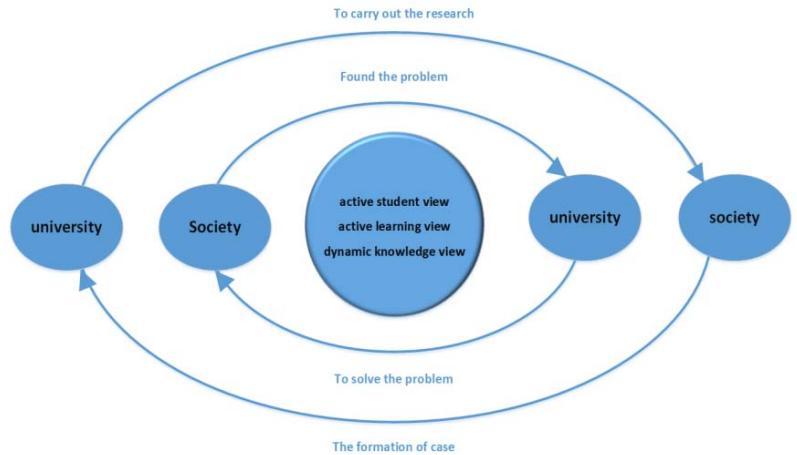 Figure 1: MPA Education and Training Model with "Inner Constructivism" Teaching Concept as the Core and "Double-Cycle" as the Main Body
## III. BUILDING AN "INTERNAL STRUCTURE" TEACHING PHILOSOPHY
The education model of China's MPA has always been based on the "import-style" teaching concept, mainly reflected in the following aspects. Firstly, it is a static view of knowledge, which believes that the knowledge of public administration is objectively existent and can be increased through external migration and superposition. The main task of the teacher is to transmit knowledge to the students' minds through classroom teaching. Secondly, it is a mechanical student view, which believes students are blank papers and can only mechanically grasp knowledge. The process of education by the teacher is to use the knowledge prepared in advance to draw on the blank paper. Finally, it is a passive view of learning, in which the learning process is the transfer of knowledge from outside the student to the student's brain through the teacher's lecture. It is believed that learning is a process of inputting knowledge from outside to inside, in which the teacher is the leader, responsible for maintaining order, transmitting information, and the student must fully accept the rules set by the teacher. MPA education is committed to cultivating high-level applied and composite talents. Still, under the influence of the "import-style" teaching concept, it only emphasizes that students need to "learn to achieve" and ignores "learn to apply," and has caused a series of adverse effects, such as the student's alienation from the main body of teaching activities, the simplification of knowledge structure, and the weakening of practical ability. Therefore, MPA education should change the traditional teaching and build a "self-construction-style" teaching concept. The "self-construction-style" teaching concept refers to the teaching concept in which the learner realizes the self-construction of new knowledge through cooperative learning and communication, the guidance of the teacher, and the transformation and reorganization of
existing knowledge and experience (Zhou Yicheng, 2016). This teaching concept has completely different views of knowledge, students, and learning compared to the "import-style" teaching concept.
### a) Dynamic knowledge perspective
The dynamic knowledge view followed by the constructivist teaching approach in public administration professional degree education is as follows: Public administration professional knowledge is constructed through the interaction between the subject and object, and its meaning is presented through both the text and the learner's mind. The truth should be approached through the verification of experience (Zhou Yicheng, 2016).
In terms of knowledge acquisition, public administration professional knowledge is synthesized and complexly grown within the brain. The addition of knowledge by students is not solely dependent on the teacher's classroom lecture, but also includes the accumulation of their own experiences, cooperation, and communication between students, and inspiration from public administration cases, etc. The teacher's main task is not to give mechanical classroom lectures, but to guide students through diverse teaching methods such as situational teaching and case, allowing students to combine textbook theory with work experience and transform it into new knowledge points.
From the perspective of knowledge carriers, lesson plans, and textbooks do not have absolute truth. Knowledge evolves with time, and lesson plans and textbooks have a certain lag in some aspects, requiring teachers to change their inherent thinking of relying solely on textbooks and keep up with new trends and knowledge points. In addition, public administration knowledge is only an incomplete induction of public administration practice; teachers should not rigidly transmit public administration knowledge to students as an utterly correct thing, but instead, encourage students' critical thinking and allow them to express different opinions and perspectives.
### b) Active student perspective
The internal structure of teaching in the Master of Public Administration (MPA) professional degree education follows an active student perspective: students are not passive objects mechanically receiving knowledge, but rather active individuals with actual public administration experience and expertise, who can use their subjective initiative to construct knowledge dynamically.
To apply for MPA, a candidate must have a college degree or above and three years or more of work experience. This indicates that MPA graduate students are learners with special public administration experience and knowledge, not blank sheets of paper. Therefore, teachers should respect and understand this knowledge and experience, pay attention to students' emotions and values, and strive to grow together in the teaching process, rather than being an authoritative figures during the teaching process.
MPA graduate students have personal initiative, not mechanically accepting the teacher's knowledge infusion. They can combine textbook theory with practical experience, using approach to solve management problems in real life, thereby deepening their understanding of public administration knowledge. On the other hand, they can use theoretical knowledge to research actual management issues and form localized cases with the help of various forces, such as the government and the school, developing localized points with local characteristics.
### c) Proactive learning perspective
The pedagogical philosophy followed in the structured teaching of the Master's degree education in Public Administration is based on the principle of active learning: learning is a process of knowledge construction that takes place through the student's active exploration, close collaboration, and the teacher's proactive guidance and flexible assistance.
Learning is a process in which graduate students in Public Administration actively construct knowledge, rather than relying the passive transmission of knowledge from teachers. In this process, students must change their passive thinking and dare to discover problems, ask questions, and communicate and cooperate with their classmates. Graduate students in Public Administration share, debate, and inspire each other through cooperative learning, establish a learning community, and lay a solid team foundation for constructing new knowledge. In addition, teachers need to clarify their practical orientation and are not the dominant or authoritative figures, but are the students' collaborative partners, listeners, and guides. Teachers should establish an excellent equal, and cooperative relationship with students, listen to their ideas, and encourage the development of critical and innovative thinking. In terms of time allocation, students should be given sufficient time to express and exchange their views and plans. In terms of space allocation, it is necessary to ensure the smooth progress of cooperative learning, and forms such as roundtable meetings can be adopted to achieve the presentation and debate of multiple perspectives and ultimately promote the formation of new knowledge.
## IV. BUILD A "DOUBLE LOOP" TALENT CULTIVATION MODEL
The cultivation of a Master of Public Administration degree mainly includes two types of graduate students: bachelor's degree graduates and professional degree graduates. Compared to bachelor's degree graduates, professional degree graduates in public administration not only have specific research abilities, but also have more vital practical abilities, and can closely integrate theory and practice. The cultivation method of professional degree graduates in public administration should meet two primary conditions. First, it should meet the needs of students' development. That is, students should have professional public administration literacy and relevant knowledge and skills. Second, it should meet the needs of social growth and career development, and provide society with high-quality applied management personnel. The "double-loop" talent cultivation mode is a cultivation mode that can meet these two essential conditions. The "double-loop" talent cultivation mode of professional Master of Public Administration is an applied and composite talent cultivation mode that aims to fully tap the joint efforts of schools, governments, and society, achieve a close integration of theoretical knowledge and management practice, double-loop, and promote the coordinated development of individual learning and organizational learning. This mode can fully mobilize various forces, such as government, schools, society, etc., to work together to cultivate professional talents, and achieve full integration of theoretical knowledge and practical work (Li Fei, 2018).
### a) Inner-loop training path from society to school
The inner loop of the "double loop" talent cultivation path refers to students returning from society to school for learning. Graduate students in public administration have at least three years of work experience and can bring the problems discovered in work back to the classroom. Through teachers' knowledge lectures and interactive communication among students, they can think about the issues, boldly propose hypotheses, carefully consider and reason to validate, and use what they have learned to provide solutions to the issues, thus guiding practical work. The professional experience of MPA graduate students gives them rich practical experience, which is what the school lacks. With the support of theoretical knowledge, MPA graduate students can better integrate practice and theory.
The internal loop process emphasizes practical experience. Taking real-life public administration problems as opportunities, stimulates students' interest in learning theoretical knowledge and learning by doing, using theoretical knowledge to solve real problems, thus also giving students a deeper understanding of theoretical knowledge. Compared to simply being taught by the teacher, learning knowledge with questions not only enhances students' learning interest but also helps students have a deeper understanding of theoretical knowledge. At the same time, it also helps teachers gain new insights into theoretical knowledge, thus achieving mutual growth in teaching.
Building an internal loop cultivation path from society to school requires continuously improving the applicability of MPA education. In course design, courses with high relevance to MPA graduate work should be appropriately increased, thus stimulating students' interest in active learning. In teaching content, besides reflecting the characteristics of theory, knowledge, and system, as a professional education, educational content must also be closely combined with social reality. In teaching methods, not only traditional classroom teaching methods are needed, but also methods with strong applicability, such as case teaching and scenario simulation.
### b) Outer-loop training path from school to society
The outer loop of the "double loop" talent training path refers to students learning from society after they leave school (Ma Baobin, 2011). This path is the focus of a new talent training model. In the learning process at school, students compare the theories they have learned with their real-life experiences, and thus they have the desire to use ideas to solve real-life issues or to verify what they have learned. Students refine and summarize the theories and real-life problems they have learned, and thus they initially form research topics. When students return to practical work in society, they conduct research on these topics, which combines their theoretical learning with practical experience, thereby improving both their theoretical knowledge and useful ability.
During the research process, students are required to have the ability to plan and solve complex problems, which enhances their team cooperation and communication skills. In addition, the research process promotes close collaboration between the school and government departments, helping to solve the problems that the government departments urgently need to address. After the research is completed, the results can be processed and organized into localized public cases, which can eventually be fed back into teaching activities.
The two loops in the talent training model for a Master of Public Administration degree are interdependent and must not be lacking. They develop together in a continuous loop, achieving a close combination of theory and practice. The "double loop" talent training model views the learning process as a phased and hierarchical learning process. This process values the learner's previous work experience, requires students to find problems in their actual work and solve them using the knowledge they need, and also requires students to return theoretical questions generated through reflection to the practical work in society, collecting materials through field research, forming cases, and testing, developing, and innovating theoretical knowledge.
## V. ANALYSIS OF ADVANTAGES OF THE CULTIVATION MODEL WITH "INNER CONSTRUCTIVISM" TEACHING PHILOSOPHY AS THE CORE AND "DOUBLE LOOP" AS THE MAIN BODY
The MPA education and training model with "internal constructivism" teaching philosophy at its core and "double loop" as its main body is a new type of educational model and also a suitable educational model for training public administration master's degree students in the context of comprehensive quality improvement and innovation in education. The creation of this model is mainly reflected in the following four aspects:
### a) Research-oriented learning
Compared with academic research graduate students, public administration professional degree graduate students, although they emphasize practicality more, have the commonality of research. This requires that in MPA education, problem-oriented approaches should be taken, students should be driven to learn by doing through specific problems or localized cases. Their research ability should be improved through research projects.
Under the new training model, there is an emphasis on a dynamic view of knowledge, an active student view, and an active learning view. Teachers are no longer mechanically outputting knowledge, but rather, they cleverly use problems to stimulate students' learning interests. Students solve problems and validate theories by combining the difficulties they encounter with theoretical knowledge through active learning, which ultimately enhances their professional literacy and accumulates their knowledge and skills. Research-based education requires changing the traditional teacher-student relationship. The relationship between teacher and student is no longer simply a relationship between the guide and the guided, but a friendly and cooperative partnership. In research projects, teacher-student interaction and communication will be promoted. Students will draw more professional management knowledge from their contact with teachers, while teachers will also gain more practical management experience from their interaction with students, realizing the expected growth of teachers and students.
### b) Collaborative learning
The MPA education and training model with an "Internal Structure" teaching perspective as its core and a "Double Loop" as its main body emphasizes the importance of learning teams. The learning process is a multi-directional communication rather than a self-closed isolated island, requiring cooperative learning with classmates. The "Double Loop" training model divides students into different learning groups based on the content of the topic or project and personal interests and hobbies, allowing students to engage in full communication in the learning group, constantly recognizing themselves, recognizing others, establishing a sense of cooperation and group awareness.
Every member of the public administration professional degree graduate program must fully participate in the divided collective learning, using collaborative wisdom to solve practical problems and increase theoretical knowledge. In this process, teachers need to play a good role as a guide, assisting students in mastering theoretical knowledge and clarifying their strengths and weaknesses. The practice has shown that cooperative learning is more efficient than individual learning, and can also ignite different thinking sparks. The exchange of other ideas can make each learner gain more other ideas. In addition, this kind of cooperative learning is beneficial for students to better integrate into the collective life of actual work, abandon self-centered thinking and ideas, value mutual communication and communication among the joint, and thus more favorable for solving practical problems and spreading theoretical knowledge.
### c) Social learning
The training goal of public administration professional degree education in our country is to cultivate high-level, applied, and compound talents familiar with public administration or public policy practices. The way to achieve this goal is to connect theory with practice. The new training model emphasizes the "inherent" teaching concept and the "double-loop" talent training model, expanding talent training to society. This model makes the connection between schools, government, and society more closely. The problems and research projects in the "double-loop" talent training model are mainly from the difficulties encountered by students in their work or issues that urgently need to be solved by government departments. By analyzing and summarizing these problems and conducting on-site surveys, not only the solutions to the issues are put forward, but also the ability of students to discover, analyze, and solve problems is improved. In addition, for students, the fundamental theories in textbooks and the basic knowledge taught by teachers are indirect experiences, and they should be allowed to have critical thinking to analyze and think. In real-world social practices, students form their knowledge system through communication and interaction with the outside world, connecting previous experiences and contemporary society, thus getting closer to the essence of the theory.
### d) Innovative learning
In traditional "outward-oriented" teaching views, learning is understood as a passive input of knowledge from outside to inside. However, a new type of learning has been proposed with a "construction-oriented" teaching view as the core and a "double-loop" as the main body, which helps students to learn and learn how to learn actively. This new training model advocates innovative learning and enables students to have a broad knowledge, vision, and creative thinking in their work and learning. Public administration professional degree education improves students' knowledge and skills through this new training model, fostering their sense of public spirit, awareness of the rule of law, global vision, and political identity during students' active learning. Students bring these concepts and skills back to their work, using professional public administration knowledge to solve practical problems, and through continuous practical exploration, not only enhance their work ability, but also meet the needs of professional development. This enables them to solve public social problems from a more experienced perspective, realize public interest, and achieve public benefit.
## VI. CONCLUDING REMARKS
Xia Shuzhang, the father of MPA education in China, emphasized that MPA education in China must be closely aligned with the primary national conditions of our country (Xia Shuzhang). The thought of socialism with Chinese characteristics in the new era, led by President Xi Jinping, has dramatically influenced the development of China's administrative management system and provides a strong foundation for the development of MPA education. It is crucial to cultivate public administration professionals who have a deep understanding of China's governance and possess strong management skills and practical abilities.
MPA education, as a professional master's program designed to train managers in public institutions and government, is a relatively young discipline within the field of general management and a crucial component of postgraduate education. Over the past two decades, MPA education in China has made significant progress, producing some talented public management professionals. However, the development of MPA education in China must continue to evolve, adapting to the changing social and educational environment and focusing on the "nonstructural" teaching concept and "dual cycle" training model to achieve sustainable and connotation-based professional degree education. The ultimate goal is to provide high-quality, application-oriented talents who can contribute to the progress of China.
Generating HTML Viewer...
References
22 Cites in Article
Dong Zhang Runjun,Rui (2016). Analysis of Public Administration Master's Education Oriented to Problem.
Qiu Zhou Yicheng,Dongliang (2016). From Exportation Teaching to Construction Teaching: Reflection and Reconstruction of MPA Professional Degree Graduate Teaching in China.
Xie Jing,Peng Zongchao (2016). Exploration of Tsinghua MPA Education Model Based on Thematic Research and Practical Innovation.
Xie Jiahong,Zhu Jun,Shen Wenqin (2021). Has the Ability of Professional Degree Graduate Improved? -Analysis of Public Administration Master's Ability Enhancement and Its Influential Factors.
Xue Lan,Zhao Chunjun,Zhao Jinsong (1999). Developing Public Administration Master's Education to Meet the Needs of Reform and Opening-Up.
Xia Shuzhang (2018). China's MPA Education Cannot Depart from the Basic National Conditions of China -Interview with Xia Shuzhang.
Tang Delong,He Xin (2021). A Good MPA Thesis: Who Writes and How to Write? -Content Analysis of 104 National Public Administration Master.
Ma Baobin,Ma Xiaojie (2011). Study on "Double Cycle" Cultivation Mode of Public Administration Master's Graduates.
Li Fei,Li Cong (2018). Study on the Education Quality Evaluation System of Public Administration Professional Degree Graduate "Double Cycle" Cultivation Mode.
Liu Yu,Huang Junying,Zhang Chaohui (2017). Empirical Study on MPA Professional Degree Graduate Education Satisfaction -Based on the Survey of Five Universities in Sichuan.
Huang Jianwei,Liu Wenke,Xiong Peixuan Review and Prospect of China's MPA Education Research in the Past 20 Years -Based on Keyword Analysis of Literature.
Han Xixiang,Shi Danxi The achievements and prospects of MPA education in China in 20 years.
J (2020). Unknown Title.
Chen Zhenming (1999). Looking at China's MPA education and its course setting from the experience of foreign countries.
Jacobus Wessels (2019). Challenges to inform the curricula of Master of Public Administration programmes.
Capobianco Stephen,See (2018). Enhancing global and intercultural competencies in Master of Public Administration classes: Assessing alternative approaches to incorporating cultures and languages.
Alina Shevchenko (2016). The Essence and Structure of Masters’ of Public Administration Core Competencies in the USA.
K Nollenberger (2017). On-Campus versus Hybrid Courses in a Master of Public Administration Program.
Ani Matei,Lucica Matei (2012). Internationalization of Master Programmes in Public Administration. An EU-US Comparative Study.
Göktuğ Morçöl,Michele Tantardini,Adam Williams,Derek Slagle (2020). Master of Public Administration and Master of Public Policy degrees: Differences and similarities in the curricula and course contents.
Peter Carroll,Whatever,To (2010). WHATEVER HAPPENED TO THE MASTER OF PUBLIC ADMINSTRATION (MPA)?.
Jennifer Bremer,Laila Baradei (2008). Developing Public Administration and Public Policy Master’s Programs in Egypt.
No ethics committee approval was required for this article type.
Data Availability
Not applicable for this article.
How to Cite This Article
Zhang Bin. 2026. \u201cResearch on the MPA Education and Training Model with Internal Structure; Teaching Perspective as the Core and Double Loop; as the Main Body\u201d. Global Journal of Human-Social Science - G: Linguistics & Education GJHSS-G Volume 23 (GJHSS Volume 23 Issue G2): .
Explore published articles in an immersive Augmented Reality environment. Our platform converts research papers into interactive 3D books, allowing readers to view and interact with content using AR and VR compatible devices.
Your published article is automatically converted into a realistic 3D book. Flip through pages and read research papers in a more engaging and interactive format.
Over the past two decades, China’s MPA education has undergone a transformation from highspeed development to high-quality development. However, there are still problems and challenges in the current development of MPA education in China. In the new era, MPA education should take the opportunity of comprehensive improvement and innovation of education to reform its teaching and innovate its training methods. Change the traditional “external transmission” teaching perspective and build an “internal structure” teaching perspective with a dynamic knowledge perspective, a proactive student perspective, and an active learning perspective as the core. Give full play to the joint efforts of schools, government, and society, and form a “double-loop” talent training model that integrates theoretical knowledge and management practice. Promote MPA students to achieve research-based learning, cooperative learning, social learning, and innovative learning, enhance the quality of talent cultivation, and help to achieve a new realm of “Chinese governance.
Our website is actively being updated, and changes may occur frequently. Please clear your browser cache if needed. For feedback or error reporting, please email [email protected]
Thank you for connecting with us. We will respond to you shortly.