
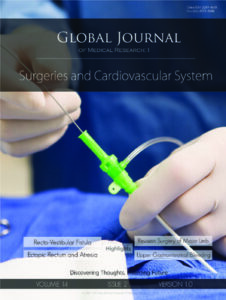
Revision Surgery of Major Limb Amputations, Indications, Surgical Management and Outcome

Article ID

92WCA

Revision Surgery of Major Limb Amputations, Indications, Surgical Management and Outcome

Zidane Basheer Zidane
Mohammed Elamin Salim
Seif EIdin Ibrahim Mahadi
DOI

Abstract

Background: The rate of revision following major limp amputations remains high despite the availability of a variety of methods to select amputation level. The purpose of this study was to outline the common indications, surgical management and outcome of revision surgery of major limb amputations in Khartoum teaching hospital, and to compare our experience with that of other published data. Methods: This is a prospective cross sectional hospital based study conducted in Khartoum teaching hospital (KTH) during the period November 2012 to January 2014. Results: A total of 62 patients required revision surgery for their major limb amputation were entered into the study. Their ageranged between 3-90 years with mean age of 47.35 years and standard deviation of 19.06 years. Males outnumbered females by a ratio of 2.8:1. Diabetes found in 34 patients (54.8%), hypertension in 22 (35.5%), and 8 patients (12.9%) had other comorbid diseases including cardiovascular disease and renal impairment. The most common cause of initial amputation was diabetes related sepsis (46.8%), followed by trauma (32.3%) and peripheral vascular disease (17.7%). Lower limbs were involved in 75.8% of cases and upper limbs in 24.2% of cases giving a lower limb to upper limb ratio of 3.12:1. Below knee amputation was the most common level performed (54.8%). There was one bilateral lower limb amputation. Most of the revision surgeries performed in the first six weeks after the amputation (87.7%). The most common indication for revision surgery was wound infection (53.2%). Other more frequent indications include prominent bone (19.4%), stump necrosis (11.3%), and fissuring & ulceration (9.7%). Less frequent indications include painful neuroma (3.2%) and prosthesis unfitting (3.2%). The most common revision procedures performed was wound debridement & secondary suture (25.8%), followed by skin grafting (22.6%), wedge resection (16.1%), muscle flap (9.7%), and excision of neuroma (3.2%). Reamputation was

Revision Surgery of Major Limb Amputations, Indications, Surgical Management and Outcome

Background: The rate of revision following major limp amputations remains high despite the availability of a variety of methods to select amputation level. The purpose of this study was to outline the common indications, surgical management and outcome of revision surgery of major limb amputations in Khartoum teaching hospital, and to compare our experience with that of other published data. Methods: This is a prospective cross sectional hospital based study conducted in Khartoum teaching hospital (KTH) during the period November 2012 to January 2014. Results: A total of 62 patients required revision surgery for their major limb amputation were entered into the study. Their ageranged between 3-90 years with mean age of 47.35 years and standard deviation of 19.06 years. Males outnumbered females by a ratio of 2.8:1. Diabetes found in 34 patients (54.8%), hypertension in 22 (35.5%), and 8 patients (12.9%) had other comorbid diseases including cardiovascular disease and renal impairment. The most common cause of initial amputation was diabetes related sepsis (46.8%), followed by trauma (32.3%) and peripheral vascular disease (17.7%). Lower limbs were involved in 75.8% of cases and upper limbs in 24.2% of cases giving a lower limb to upper limb ratio of 3.12:1. Below knee amputation was the most common level performed (54.8%). There was one bilateral lower limb amputation. Most of the revision surgeries performed in the first six weeks after the amputation (87.7%). The most common indication for revision surgery was wound infection (53.2%). Other more frequent indications include prominent bone (19.4%), stump necrosis (11.3%), and fissuring & ulceration (9.7%). Less frequent indications include painful neuroma (3.2%) and prosthesis unfitting (3.2%). The most common revision procedures performed was wound debridement & secondary suture (25.8%), followed by skin grafting (22.6%), wedge resection (16.1%), muscle flap (9.7%), and excision of neuroma (3.2%). Reamputation was

Zidane Basheer Zidane
Mohammed Elamin Salim
Seif EIdin Ibrahim Mahadi

No Figures found in article.

ZIDANE BASHEER ZIDANE MOHAMED. 2014. “. Unknown Journal GJMR-I Volume 14 (GJMR Volume 14 Issue I2): .

Download Citation

Journal Specifications
Classification
Not Found
Keywords
Article Matrices
Total Views: 4393
Total Downloads: 2315
2026 Trends
Research Identity (RIN)
Related Research
Our website is actively being updated, and changes may occur frequently. Please clear your browser cache if needed. For feedback or error reporting, please email [email protected]

Request Access

Please fill out the form below to request access to this research paper. Your request will be reviewed by the editorial or author team.
X

Quote and Order Details

Contact Person

Invoice Address

Notes or Comments

This is the heading

Lorem ipsum dolor sit amet, consectetur adipiscing elit. Ut elit tellus, luctus nec ullamcorper mattis, pulvinar dapibus leo.


High-quality academic research articles on global topics and journals.

Revision Surgery of Major Limb Amputations, Indications, Surgical Management and Outcome

Zidane Basheer Zidane
Mohammed Elamin Salim
Seif EIdin Ibrahim Mahadi

Research Journals






























































