
I. INTRODUCTION
Bioinformatics is a science. It is used to analyze and interpret the biological data with interdisciplinary inputs. It is performed in a computer, i.e. in a dry lab to analyze biological queries that are answered in a progression mode that may go on indefinitely till homeostasis is reached.
Genesis of this report is due to several requests, initially generated by publication in a regional news magazine, Gujarat Medical Journal. We noted, as an accidental finding in our ongoing research on neurodegenerative diseases treated with Bone Marrow derived Mesenchymal Stem Cells (BM-MSCs) or with Adipose Derived Mesenchymal Stem Cells (ADMSCs). We decided to academically progress the research by publishing it in a journal devoted to stem cell research . This publication in turn has generated global interest and we are receiving reprint requests and the protocols. Meanwhile we have successfully translated ADMSCs to all three germinal layers . Potential is thus expanded to a new drug discovery OA paper Diabetes paper.
Advances in bioinformatics have so progressed that using computers as a dry lab, enormous data can be accessed. We therefore report on the progression of our research on MSCs as well as results obtainable with bioinformatics on several cytokines that may have impinged our research.
II. MATERIALS AND METHODS
BM-MSCs are reported to have 120 cytokines and chemokines.[5] To publish the data on all 120 molecules that are being secreted from BM-MSCs would be far too voluminous. So, we summarize only with a largely secreted molecule, IL-6. IL-6 has a property to impact the functions of the cells of various tissue types. IL-6 search yields two different leads.
1-Molecular Function, that generates the following further leads, such as
cytokine activity
growth factor activity
interleukin-6 receptor binding
2- Biological process search will yield the processes where IL-6 mediates are enumerated as follows:
acute-phase response
cellular protein metabolic process
cellular response to hydrogen peroxide
cellular response to lipopolysaccharide
cytokine-mediated signalling pathway
endocrine pancreas development
glucagon secretion
hepatic immune response
humoral immune response
inflammatory response
interleukin-6-mediated signalling pathway
maintenance of permeability of blood-brain barrier
monocyte chemotaxis
negative regulation of apoptotic process
negative regulation of bone resorption
negative regulation of cell population proliferation
negative regulation of chemokine biosynthetic process
negative regulation of collagen biosynthetic process
negative regulation of fat cell differentiation
negative regulation of interleukin-1-mediated signalling pathway
negative regulation of lipid storage
neuron cellular homeostasis
neuron projection development
neutrophil apoptotic process
neutrophil mediated immunity
platelet activation
positive regulation of acute inflammatory response
positive regulation of apoptotic DNA fragmentation
positive regulation of apoptotic process
positive regulation of B cell activation
positive regulation of cell population proliferation
positive regulation of chemokine production
positive regulation of DNA-binding transcription factor activity
positive regulation of epithelial to mesenchymal transition
positive regulation of extracellular matrix disassembly
positive regulation of gene expression
positive regulation of glial cell proliferation
positive regulation of immunoglobulin secretion
positive regulation of interleukin-17 biosynthetic process
positive regulation of interleukin-6 production
positive regulation of leukocyte chemotaxis
positive regulation of MAPK cascade
positive regulation of neuroinflammatory response
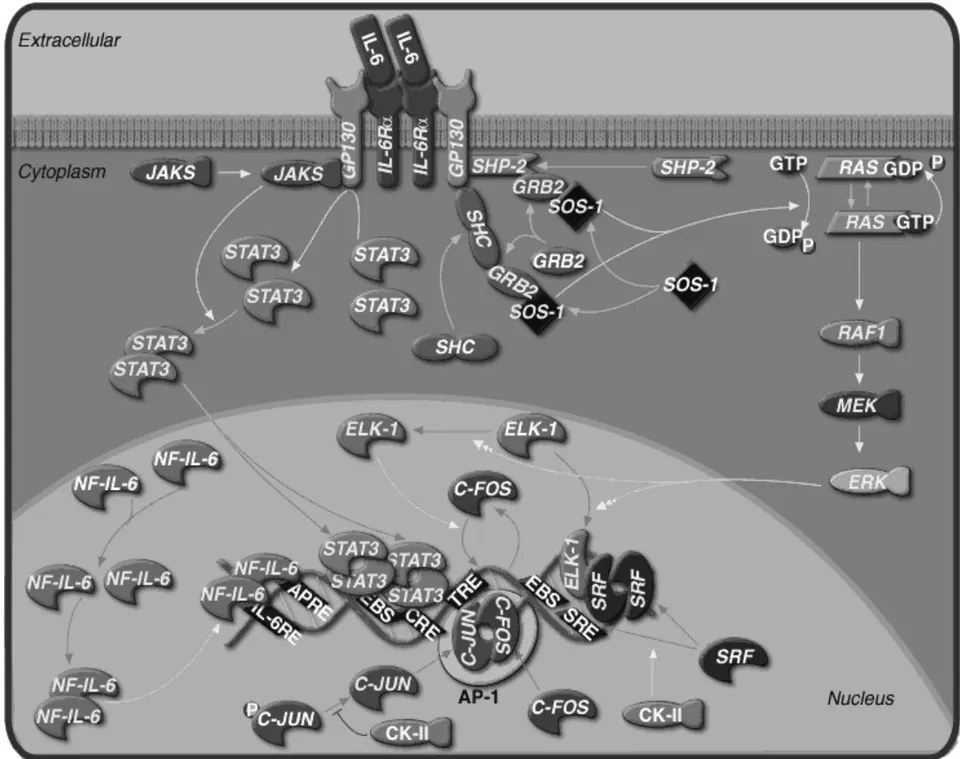
EBS. Thus bioinformatics generates composite information concerning this scientific knowledge based on technology of gene expression of DNA, proteomics [7].
positive regulation of osteoblast differentiation
positive regulation of peptidyl-serine phosphorylation
positive regulation of smooth muscle cell proliferation
positive regulation of T cell proliferation
positive regulation of T-helper 2 cell cytokine production
positive regulation of transcription, DNA-templated
positive regulation of transcription by RNA polymerase II
positive regulation of translation
positive regulation of type B pancreatic cell apoptotic process
positive regulation of vascular endothelial growth factor production
post-translational protein modification
regulation of angiogenesis
regulation of astrocyte activation
regulation of microglial cell activation
regulation of neuroinflammatory response
regulation of vascular endothelial growth factor production
response to glucocorticoid
T-helper 17 cell lineage commitment
A linear computer search yields random non-serialized progression of data as listed above. Each of the above will generate one or more leads that get integrated into numerous metabolic processes. The process is tedious, time consuming and will need integration with in-depth understanding of the process.
In contrast, bioinformatics with its unique, refined software tools will process all of the above to give a result in the form of processes in progress chart. This chart will indicate the genes responsible for protein production such as STAT3 and will also include the proteins that constitute a receptor binding site such as
Melanin synthesis involves approx. 1500 proteins. Melanogenesis, in turn is influenced by several intrinsic factors such as molecules secreted by surrounding keratinocytes, fibroblasts, neural or endocrine cells. [8]
Focalization was arrived by consideration of the following factors:
1. Hair is ectodermal tissue.
Melanin is secreted by melanocytes that are regulated by melanocyte-stimulating hormones secreted by the skin, pituitary gland and hypothalamus. Endogenous secretions originate from endodermal tissue.
Mesenchymal Stem Cells are derived from the mesenchymal tissue.
We further focalize on IL-6 as one of the prime cytokines secreted by MSCs. It was selected for following reasons:
1. Endocrine pancreas development
2. Glucagon secretion
3. Interleukin-6-mediated signalling pathway
4. Negative regulation of bone resorption
5. Neuron cellular homeostasis
6. Positive regulation of epithelial to mesenchymal transition
7. Positive regulation of osteoblast differentiation
8. High expression of CD44 marker[9]
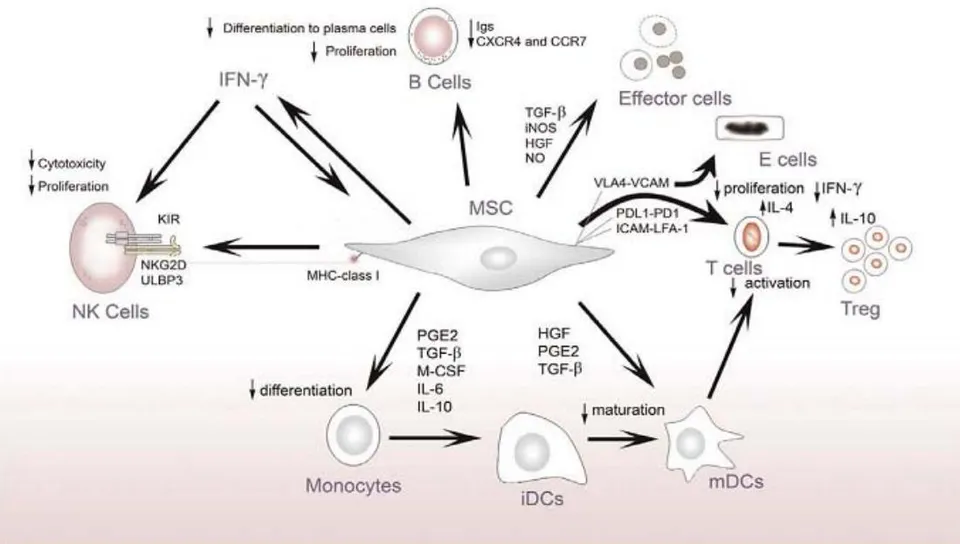
Legend:
NK Cells – Natural Killer Cells
KIR - Killer cell immunoglobulin-like receptors
ULBP3 - UL16-binding protein 3
IFNγ - Interferon gamma
MHC - major histocompatibility complex
PGE2 - Prostaglandin E2
TGF- - Transforming growth factor beta
M-CSF – Macrophage Colony stimulating factor
IL – Interleukin
Igs – immunoglobulin
CXCR-4 - C-X-C chemokine receptor type 4
CCR-7 - C-C chemokine receptor type 7 iNOS – Nitric Oxide Synthase
HGF – Hepatocyte Growth Factor
PDL 1 - Programmed death-ligand 1
PD1 - Programmed cell death protein 1
ICAM - Intercellular Adhesion Molecule
Simplified bioinformatics chart (Fig. 2) arrived at the following properties as derived from various molecules as expressed by MSCs:
1) Multilineage translation
2) Facility to migrate to affected tissue and transform into it
3) Anti inflammatory property by virtue of paracrine secretions
4) Regenerative capability
- They are HLA-DR negative, which makes them immunonaive.
Indian Council of Medical Research and Drug Controller General of India informed.
III. RESULTS
Spindle shaped cells with a large molecule suggested a phenotype of BM-MSCs. This was verified with positive CD44 marker at National Centre for Cell Biology, Pune.
ADMSCs were verified with 4 positive markers, CD 44, CD 105, CD29 and CD 90 [Fig.3]
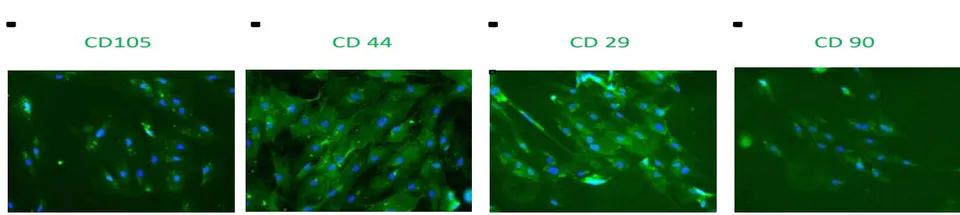
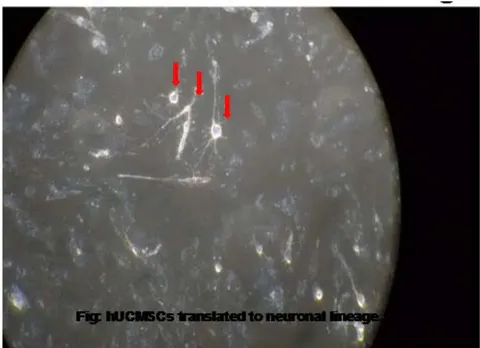
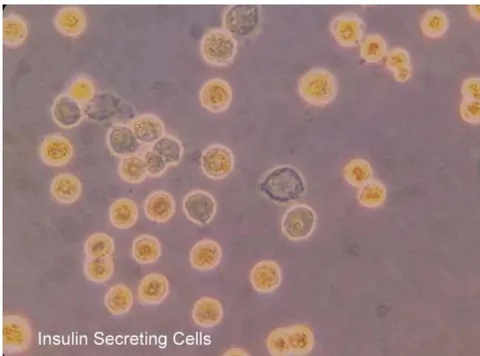
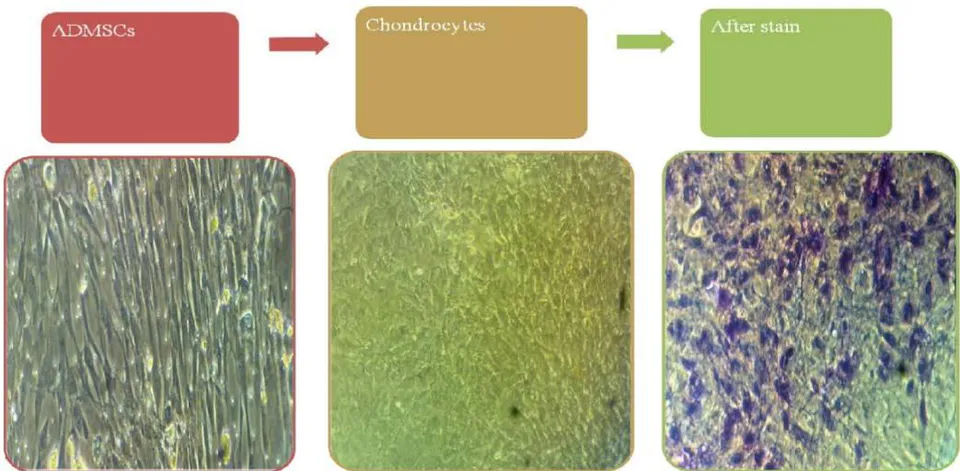
This yielded a proof of concept for preliminary clinical trial for application to degenerative neuronal conditions, diabetes mellitus: Type 1, Type 2, Maturity Onset Diabetes of Young Adults [4] and Osteoarthritis [3].
ICMR and DCGI notify that Stromal Vascular Fraction and MSCs are drugs that need to be investigated further.
IV. Discussion
While researching in a preliminary clinical mode, application of MSCs to diverse degenerative neurological conditions, an accidental finding of grey hair turning to black was observed. This paper highlights that howsoever ambiguous a finding in research, it should not be given a pass. Nature may appear to be playing dice but it does not.
Had Alexander Fleming given a pass to a chance non-occurrence of microbial growth in a particular Petri dish, penicillin may not have been discovered. Therefore, every occurrence, howsoever trivial, must be explained. Researchers usually publish positive results. We should derive inference as to how 10 of the 14 patients did not show the positive signs.
This accidental finding has charted a pathway to possible new drug discoveries. The process will take long to go through various stages of clinical trials. Yet, it is established, with additional evidence as presented in this research that it is plausible that ADMSCs may be a futuristic drug.
The paper also highlights how bioinformatics shortens the processes that would have taken a long time to establish in a wet lab.
V. CONCLUSION
The paper highlights that accidental findings do have a process that would have generated the occurrence. The process in melanogenesis involves all 3 germinal layers. That paved the way to a plausible clinical application of ADMSCs to apparently diverse appearing clinical conditions.