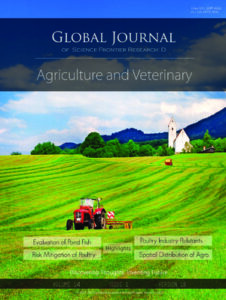
Risk Mitigation of Poultry Industry Pollutants and Waste for Environmental Safety

§ Tamil Nadu Veterinary and Animal Sciences University

Send Message

To: Author

Risk Mitigation of Poultry Industry Pollutants and Waste for Environmental Safety

Article Fingerprint

ReserarchID

CR1RT

Risk Mitigation of Poultry Industry Pollutants and Waste for Environmental Safety Banner

Key Research Insights

Synthesized scholarly intelligence & interactive research assistant
  • English
  • Afrikaans
  • Albanian
  • Amharic
  • Arabic
  • Armenian
  • Azerbaijani
  • Basque
  • Belarusian
  • Bengali
  • Bosnian
  • Bulgarian
  • Catalan
  • Cebuano
  • Chichewa
  • Chinese (Simplified)
  • Chinese (Traditional)
  • Corsican
  • Croatian
  • Czech
  • Danish
  • Dutch
  • Esperanto
  • Estonian
  • Filipino
  • Finnish
  • French
  • Frisian
  • Galician
  • Georgian
  • German
  • Greek
  • Gujarati
  • Haitian Creole
  • Hausa
  • Hawaiian
  • Hebrew
  • Hindi
  • Hmong
  • Hungarian
  • Icelandic
  • Igbo
  • Indonesian
  • Irish
  • Italian
  • Japanese
  • Javanese
  • Kannada
  • Kazakh
  • Khmer
  • Korean
  • Kurdish (Kurmanji)
  • Kyrgyz
  • Lao
  • Latin
  • Latvian
  • Lithuanian
  • Luxembourgish
  • Macedonian
  • Malagasy
  • Malay
  • Malayalam
  • Maltese
  • Maori
  • Marathi
  • Mongolian
  • Myanmar (Burmese)
  • Nepali
  • Norwegian
  • Pashto
  • Persian
  • Polish
  • Portuguese
  • Punjabi
  • Romanian
  • Russian
  • Samoan
  • Scots Gaelic
  • Serbian
  • Sesotho
  • Shona
  • Sindhi
  • Sinhala
  • Slovak
  • Slovenian
  • Somali
  • Spanish
  • Sundanese
  • Swahili
  • Swedish
  • Tajik
  • Tamil
  • Telugu
  • Thai
  • Turkish
  • Ukrainian
  • Urdu
  • Uzbek
  • Vietnamese
  • Welsh
  • Xhosa
  • Yiddish
  • Yoruba
  • Zulu
Reading Preferences
Font Size
Line Spacing
Background
This converted HTML version may contain rendering inconsistencies. Please refer to the PDF for the authoritative version, or click here to provide feedback.

Abstract

Poultry waste such as litter, offal, feather and major micro environmental pollutants like carbon, nitrogen and phosphorous cause major threats to the micro environment, if not mitigated properly. Over the past few decades, adoption of intensive rearing of birds has increased the load of micro environmental pollutants. These could disturb the ecological balance by polluting ground water, air and soil. In poultry, excess amounts of ammonia leads to reduction in growth rate, decrease in egg production, lower air quality and damages in upper respiratory tract. It induces infectious diseases like Newcastle disease, air sacculitis and keratoconjunctivitis. Potential strategies are now available to reduce these pollutants load by physical, chemical and biological approaches. Nitrogen pollution can be managed by dietary manipulation and chemical neutralization. Methane produced by anaerobic fermentation of poultry waste can be used profitably as biogas. Phosphorous runoff in agricultural fields can be prevented mainly by using phytase enzyme, salt precipitation, and also by vegetative filter strips. Increasing emission of harmful pollutants like ammonia, phenol, toluene, methanol, etc., in the atmosphere results in obnoxious odour decreasing bird’s productivity. It can be reduced by various odour reduction methods like providing proper ventilation, shed temperature, wind break walls etc. Poultry waste can also be used positively as feather meal, biodiesel, electricity generator, biodegradable plastic, vermicompost etc.

References

24 Cites in Article
  1. 1. R Blair,J Jacob,S Ibrahim,P Wang (1999). A Quantitative Assessment of Reduced Protein Diets and Supplements to Improve Nitrogen Utilization. Journal of Applied Poultry Research, 8(1), 25-47.
  2. 2. I Chaubey,D Edwards,T Daniel,D Nichols (1993). Effectiveness of vegetative filter strips in controlling losses of surface-applied poultry litter constituents. ASAE, 38(6), 1687-1692.
  3. 3. (1999). Commission of the European Communities. Official Journal, 182, 1-9.
  4. 4. Ekta Tiwary,Rani Gupta (2012). Rapid conversion of chicken feather to feather meal using dimeric keratinase from Bacillus licheniformis ER-15. J Bioprocess Biotechniq, 2(4)
  5. 5. N Ferguson,R Gates,J Taraba,A Cantor,A Pescatore,M Straw,M Ford,D Burnham (1998). The effect of dietary protein and phosphorus on ammonia concentration and litter composition in broilers. Poultry Science, 77(8), 1085-1093.
  6. 6. N Ferguson,R Gates,J Taraba,A Cantor,A Pescatore,M Ford,D Burnham (1998). The effect of dietary crude protein on growth, ammonia concentration, and litter composition in broilers. Poultry Science, 77(10), 1481-1487.
  7. 7. Glenda Briggs (2004). Odour management options for meat chicken farms. Agnote DAI
  8. 8. M Jayakumar,T Sivakami,D Ambika,N Karmegam (2011). Effect of turkey litter (Meleagris gallopavo L.) vermicompost on growth and yield characteristics of paddy, Oryza sativa (ADT-37). AFRICAN JOURNAL OF BIOTECHNOLOGY, 10(68), 15295-15304.
  9. 9. J Jiang,J Sands (2000). Rural Australia OnLine, Roger Buckeridge, Canberra, Rural Industries Research and Development Corporation, 1996, vi + 58 pp., AU$20.00, ISBN 0 6422 0519 0. Prometheus, 15(3)
  10. 10. J Juanpere,A Pérez-Vendrell,J Brufau (2004). Effect of microbial phytase on broilers fed barley-based diets in the presence or not of endogenous phytase. Animal Feed Science and Technology, 115(3-4), 265-279.
  11. 11. J Kim,W Lim,H Suh (2001). Featherdegrading Bacillus species from poultry waste. Process Biochemistry, 37, 287-291.
  12. 12. D Mccrory,P Hobbs (2001). Additives to Reduce Ammonia and Odor Emissions from Livestock Wastes: A Review. Journal of Environmental Quality, 30(2), 345-355.
  13. 13. E Mcgahan,C Kolominskas,K Bawden,R Ormerod (2002). Strategies to reduce odour emissions from meat chicken farms. Proceedings of 2002 Poultry Information Exchange, 27-39.
  14. 14. L Mitran,J Harter-Dennis,J Meisinger (2008). Determining the Nitrogen Budget and Total Ammoniacal Nitrogen Emissions from Commercial Broilers Grown in Environmental Chambers. Journal of Applied Poultry Research, 17(1), 34-46.
  15. 15. P Moore,T Daniel,D Edwards (2000). Reducing Phosphorous runoff and Inhibiting Ammonia Loss from Poultry manure with Aluminium sulfate. J. Environ. Qual, 29, 37-49.
  16. 16. M Oliveira,R Somariva,O Junior,J Neto,A Bretas,O Perrone,J Reversat (2012). Biomass Electricity Generation Using Industry Poultry Waste. International Conference on Renewable Energies and Power Quality (ICREPQ'12)
  17. 17. P Plumstead,H Romero-Sanchez,R Maguire,A Gernat,J Brake (2007). Effects of Phosphorus Level and Phytase in Broiler Breeder Rearing and Laying Diets on Live Performance and Phosphorus Excretion. Poultry Science, 86, 225-231.
  18. 18. C Ritz,B Fairchild,M Lacy (2004). Implications of Ammonia Production and Emissions from Commercial Poultry Facilities: A Review. Journal of Applied Poultry Research, 13(4), 684-692.
  19. 19. Scott Carter,Haejin Kim (2013). Technologies to reduce environmental impact of animal wastes associated with feeding for maximum productivity. Animal Frontiers, 3(3), 42-47.
  20. 20. J Swan (1992). Animal by-product processing.
  21. 21. D Thyagarajan (2013). Biotechnological applications to mitigate environmental pollutants in poultry industry. Poultry production Biotechnology, 26, 223-236.
  22. 22. Tugba Bingol,N,M Karsli,D Bolat,I Akca,T Levendoglu (2009). Effects of Microbial Phytase on Animal Performance, Amount of Phosphorus Excreted and Blood Parameters in Broiler Fed Low Non-Phytate Phosphorus Diets. Asian Journal of Animal and Veterinary Advances, 4, 160-166.
  23. 23. P Williams (1999). Waste Treatment and Disposal. Waste Treatment and Disposal
  24. 24. H Xin,R Gates,A Green,F Mitloehner,P Moore,C Wathes (2011). Environmental impacts and sustainability of egg production systems. Poultry Science, 90(1), 263-277.

Funding

No external funding was declared for this work.

Conflict of Interest

The authors declare no conflict of interest.

Ethical Approval

No ethics committee approval was required for this article type.

Data Availability

Not applicable for this article.

How to Cite This Article

Dr.D. Thyagarajan, M. Barathi, R. Sakthivadivu. 2014. "Risk Mitigation of Poultry Industry Pollutants and Waste for Environmental Safety". Global Journal of Science Frontier Research - D: Agriculture & Veterinary GJSFR-D Volume 14 (GJSFR Volume 14 Issue D1).

More Citation Formats

Download Citation

Journal Specifications

Crossref Journal DOI 10.17406/GJSFR

Print ISSN 0975-5896

e-ISSN 2249-4626

Keywords
Classification
GJSFR-D Classification FOR Code: 630106
859899p
Version of record

v1.2

Issue date
March 26, 2014

Language
English
Order Article Reprint
Experience in AR

Explore published articles in an immersive Augmented Reality environment. Our platform converts research papers into interactive 3D books, allowing readers to view and interact with content using AR and VR compatible devices.

Read in 3D

Your published article is automatically converted into a realistic 3D book. Flip through pages and read research papers in a more engaging and interactive format.

Article Matrices
Total Views: 1.1K
Total Downloads: 45
All Trends

Request Access

Please fill out the form below to request access to this research paper. Your request will be reviewed by the editorial or author team.
X

This is the heading

Lorem ipsum dolor sit amet, consectetur adipiscing elit. Ut elit tellus, luctus nec ullamcorper mattis, pulvinar dapibus leo.

High-quality academic research articles on global topics and journals.

Risk Mitigation of Poultry Industry Pollutants and Waste for Environmental Safety

Dr.D. Thyagarajan
Dr.D. Thyagarajan Tamil Nadu Veterinary and Animal Sciences University
M. Barathi
M. Barathi <p>Tamil Nadu Veterinary and Animal Sciences University</p>
R. Sakthivadivu
R. Sakthivadivu <p>Tamil Nadu Veterinary and Animal Sciences University</p>