River tourism is quite different from the conventional tourism concept which is based on rivers. Bangladesh has great potential to flourish in this sector. Bangladesh is already famed as a riverine country. A good number of tourists are interested in river tourism in Bangladesh. Though there is huge potential for Bangladesh to become a prominent destination for river tourism but still it is untapped due to various challenges. This study analyzed the existing river tourism sector of Bangladesh to explore the potentialities and challenges of this sector. The study revealed that there are some challenges to gaining success in the development of river tourism. Lack of skilled manpower, safety and security issues, lack of tourism infrastructure, and inadequate funding are some remarkable challenges. Based on the findings, the paper suggested several recommendations for the development of river tourism in Bangladesh.
## I. INTRODUCTION
Rivers are major spatial elements in the landscape of Bangladesh. Historically Bangladesh is known as the "Land of Rivers". The rivers of Bangladesh are one of the greatest forms of self-identification for the country and the most important geographical feature of Bangladesh. The rivers of Bangladesh also played an important role in the history, growth, and development of the country. The livelihood of countless rural Bangladeshis depends on the rivers. The country has 700 rivers including tributaries and a total length of almost $24,140~\mathrm{km}$. They consist of rivers, hilly streams, winding seasonal creeks, and canals together constituting about $7\%$ of the country's total surface areas and they link most parts of the country by anintricate network of waterways (Banglapedia).
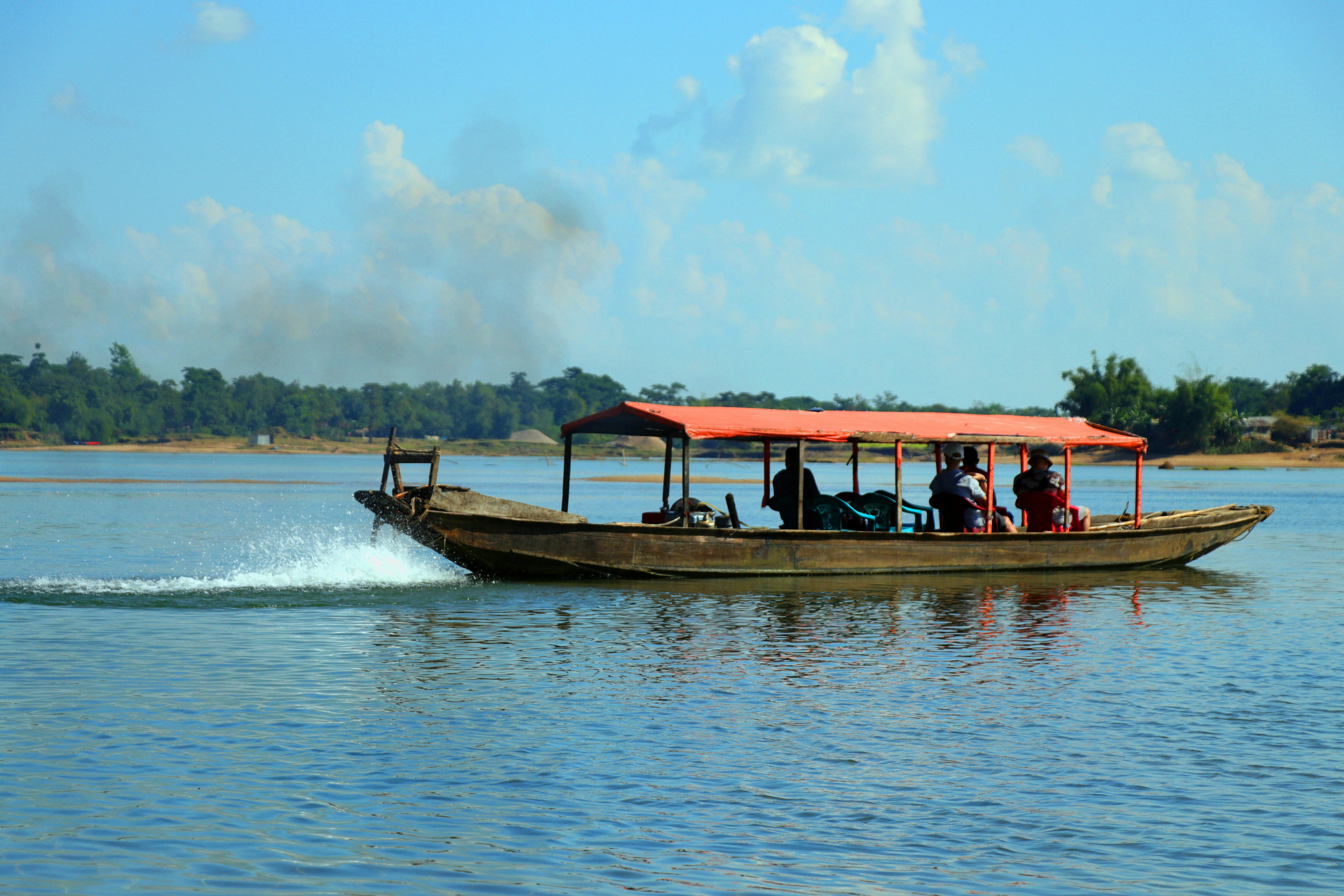
River tourism is one of the most popular forms of tourism worldwide. It offers an opportunity to travel inland waterways and rivers. It provides a unique experience to explore a country differently. River tourism is very flexible, comfortable, and pleasant to travelers and serves the tourism purpose mostly in an enjoyable way. Foreign tourists are interested in exploring the local people's livelihood, their unique culture and traditional way of life, nature, picturesque pristine countryside, and the serene beauty of the rivers, hilly rivers, and wetlands like haor (wetland ecosystem). The serenity and touch of a river may vary for tourists. Some found it in a dramatic and romantic way, permeating a sense of pleasantness to the beholders. Tourists are also interested in exploring the people's life of Char (River Bar). Their struggling and survival ways are really different from others. Foreign tourists also love to visit inland and coastal islands like Hatia, Bhola, Swandeep, and so on. Tourists are also interested to travel in paddle steamers because of its antique appeal, heritage, and convenience.
Each river in the country is full of opportunities for the tourism sector and waiting to be utilized. River tourism also can work as the savior from demise of rivers. River tourism is the best way to see the real beauty of Bangladesh. Unfortunately, Bangladesh is still far behind from developing river tourism for improper tourism infrastructure.
## II. LITERATURER REVIEW
The tourism sector is playing an important role in the economic development of developing countries. In Bangladesh tourism is one of the most profitable sectors (Elena et al., 2012). River tourism is a unique sub-sector of the tourism industry in Bangladesh. River tourism is closely related to the natural environment and living being on the bank of river livelihoods which are deeply rooted in rivers and water. The history of river tourism started with Herodotus. In ancient times he described his journey to Egypt in 450 BC when the Nile overflows on Egypt. People used boats to move and sail right by the pyramids for going Naucratis to Memphis (Carson, 1994, p. 22).
In primeval times people in this South Asia region only use waterways because the river was the main route then. Moving one place to another for personal reasons and carrying goods for business purposes people were using rivers as only of way movement. At present, still, the people of Bangladesh are giving importance to our river ways for both passenger and commodities transportation. River tourism has become popular and taken a particular place besides ocean and overland traveling. Hulme and Youngs (2002) stated that writing and traveling have been intimately connected. Writers open an imagination field for us and give us the enjoyment of traveling through their writing. Such peaceful traveling like River tourism gives this kind of scope to armchair travelers.
The great river Amazon was first traveled by European travelers. They followed Amazon from the Andes between 1541 and 1542 and showed interest in other travel and discovers more from Amazon. River tourism is also highlighted in the writing of Travel Guide of the River from Chongqing to Wuhan by Shaw (2007). In 2000 a study of tourism was done in the Yunnan Great Rivers, National Park in China. The Salween, Mekong, and Yangtze Rivers have a variety of tourism activities like logging, fish hunting, water-based agriculture, etc. that attract tourists from all over the world, as observed by Cater (2000)
A river constitutes a major tourism resource, providing spectacular settings, recreation facilities, means of transport, a sense of heritage and adventure, and links with the environment and the natural world. Tourists, researchers, and investors are mostly interested in ocean cruising (Dowling, 2006) although some scholars are shown interest in the study of river tourism, and have demonstrated that river tourism can be a good source of outdoor recreation as well as it will attract eco-tourists (McKean et al., 2005)
People are very much fond of river cruising for enjoying colorful natural beauties and different ways of living on the bank of the river. Moreover, it offers a more relaxing and slower travel experience than other forms of tourism. River tourism allows travelers for creating a personal adventure. River tourism has become a major tourist attraction, giving a boost to the tourism industry. River ship provides a traveler with an intimate atmosphere with close interaction with our culture as the river was the sole means of transport in the past.
## III. METHODOLOGY OF THE STUDY
This research is carried out by using the qualitative research approach. Qualitative methods have become increasingly appropriate to researchers of tourism as they being to explore personal feelings, perceptions, and attitudes, particularly of host communities, and the impact of tourism on them (Walle, 1997:534).
This study was based on the synthesis of primary data and secondary data. Primary data had been collected from the interviews of different stakeholders, field observation, and questionnaire analysis. Secondary data had been collected from published research articles, journal articles, conference papers, seminar proceedings, dissertations, books, reports, newspaper, articles, magazines, brochures, government websites, and open-access materials. As the data on river tourism is inadequate, so to collect more data an intensive literature review related to river tourism and resources, their management issues, and constraints in the Bangladesh context was conducted through an online search.
## IV. OBJECTIVE OF THE STUDY
### a) Primary objectives
The primary objective of this study is to identify the potentiality of river tourism in Bangladesh.
### b) Secondary objectives
- To identify the scope of river tourism in Bangladesh.
- To identify the benefits and economic contribution of river tourism in Bangladesh.
- To identify the barrier and challenges in the development of river tourism in Bangladesh.
- To find out some recommendations that will help the growth of river tourism in Bangladesh.
## V. PROSPECTS OF RIVER TOURISM IN BANGLADESH
Generally, the use of the river for travel and recreational activities is known as river tourism. River tourism is an alternative type of tourism that includes trips to natural areas and walks on the bank of the river and muddy roads, swimming, and sports activities, for example, fishing, rafting, canoeing, river kayaking, etc. Rivers are very important for the economy of Bangladesh historically. Once upon a time, people depend on the river for their livelihood. People are used to fishing, boating, and many more as a means of income source. Our agricultural sector depends on the mercy of river water for irrigation.
The Water Development Board, Bangladesh (WDB, 2019) has published documents with the names of 406 rivers. This number varies from source to source as some rivers have already vanished with time and some have taken different names at different places. There are 57 international rivers in Bangladesh of which 53 flow from India and 3 from Myanmar. Bangladesh has predominantly four major river systems (1) the Brahmaputra- Jamuna, (2) the Ganges-Padma, (3) the Surma-Meghna, and (4) the Chittagong Region river system. However, the Brahmaputra is the 22nd longest $(2,850\mathrm{km})$ and the Ganges is the 30th longest (2,510 km) river in the world (Bangladeshia 2004).
River tourism may become one of the main unique selling points in the tourism industry of Bangladesh. The volume of river tourism in Bangladesh is at its initial state compared with the vastness of the river networks. Nowadays, many private companies are mainly engaged in river tourism which facilitates organized various river cruising packages. Though Bangladesh has numerous rivers but all the rivers are not suitable for river tourism because of not having a proper depth from the surface, heavy river wave, muddy canals, improper infrastructure, and so on. Bangladesh has a huge tourist market segment for river tourism. Shown below-
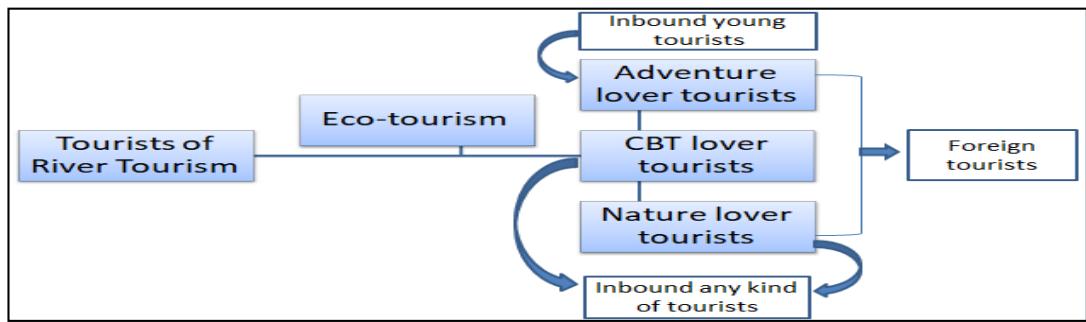 Figure: Targeted Tourists Segment for River Tourism
Source Deloped by Author, 2022
This segmentation is done through a distinct field survey. Around 50 people of different ages were taking part in this survey. It is notified that adventure lover tourists, Community-based tourism lover tourists, and nature lover tourists are interested in river tourism. Adventure lover tourists are mostly coming from young age people. Moreover, tourists from different countries are also interested to take part in river tourism in Bangladesh. They want to explore the scenic natural beauty of Bangladesh through river tourism. Overall river tourism can support eco-tourism that is environment friendly.
### a) Unique Characteristics of River Tourism in Bangladesh
Historically, people in Bangladesh traveled by boat because the river was the main route for both passenger transportation and carrying goods. Rivers are also major spatial elements of the landscape and constitute a significant tourism resource. River tourism in Bangladesh contains some unique characteristics.
a. River tourism is nature-based tourism.
b. Attract visitors through the serenity and adventure of mighty rivers.
c. River tourism can offer both relaxing and leisure-based tourism activities as well as adventure-based tourism activities.
d. Rivers in the countryside are most appealing as they retain much of their natural beauty.
e. River tourism can offer various water-based activities, such as fishing, boating, swimming, and so on.
Source:Developed by Author,2022
### b) Scopes of River Tourism in Bangladesh
The rivers of Bangladesh have several scopes that lead to sustainable river tourism. A good number of direct and indirect facilities are provided by the rivers of Bangladesh that create scopes for river tourism. Direct facilities include:
- Riverside areas which are full of natural attraction.
- Transport including different types of river vehicles, especially for river cruising.
- Providing recreational activities (water sports, swimming, fishing, boat race, and so on).
- Direct food supply (fish, drinking water, water-based agriculture for other food sources).
The rapid growth of the population in Bangladesh increases the use of river water for human and industrial purposes. Rivers provide some indirect facilities including jetty of water transport, Disposal of human waste, Support industrial activities and waste disposal, Source of hydroelectricity, and so on.
### c) Major River Tourism activities in Bangladesh
River offers an extensive variety of opportunities for recreational and tourist activities. River tourism offers great water adventures experience as well as it provides the most scenic views, diverse wildlife, and flora along the route. River tourism is combined with exciting water-based activities. Major river tourism activities are water rafting, river cruise, fishing, river exploration, boating, kayaking, and leisure activities.
Though Bangladesh is the biggest river delta in the world but lacks the necessary river cruising product, river tourism in Bangladesh is still underdeveloped. There are very few river cruising products are available now. River cruises on the Sundarban for a 3 to 4 days night stay is very popular among tourists.
<table><tr><td>Name of Cruise Transport</td><td>Capacity</td><td>River Circuits</td><td>No. of Units</td></tr><tr><td>Day Cruising Ship</td><td>100-500 seating</td><td>Cox's Bazar, Dhaka</td><td>13</td></tr><tr><td>Day Cruising Vessel</td><td>40-100 seating</td><td>Dhaka</td><td>10</td></tr><tr><td>Overnight Cruising Vessel</td><td>20-70 sleeping</td><td>Sundarbans, Dhaka</td><td>50</td></tr><tr><td>Engine Boat for short destination cruise</td><td>10-30 seating</td><td>Mongla, Rangamati, Bandarban, Cox's Bazar, Kuakata, Sylhet, Jhalokathi</td><td>1200</td></tr><tr><td>Speed Boat for destination transfer</td><td>6-10 seating</td><td>Cox's Bazar, Rangamati, Mongla, Dhaka</td><td>300</td></tr></table>
Figure: Different Trips in River Ways
There are also some other river cruising products available. These are the 'Dhaka Dinner Cruise' offering on the river Shitalakhawa, Padma River Cruise, Jamuna River Cruise, Chittagong Boat Cruise offerings on the river Kornofuli, etc.
## VI. BENEFITS OF RIVER TOURISM DEVELOPMENT IN BANGLADESH
The tourism industry offers many jobs for unemployed people. President and CEO of WTTC stated that "Travel & Tourism, which already supports one in every 10 jobs on the planet, is a dynamic engine of employment opportunity" (2018). The development of River tourism also can create extensive employment opportunities for local people. River cruise ships, restaurants, retailers, travel agents, leisure industries, airlines, and other transportation services can create a huge number of new job opportunities. It also helps to alleviate poverty.
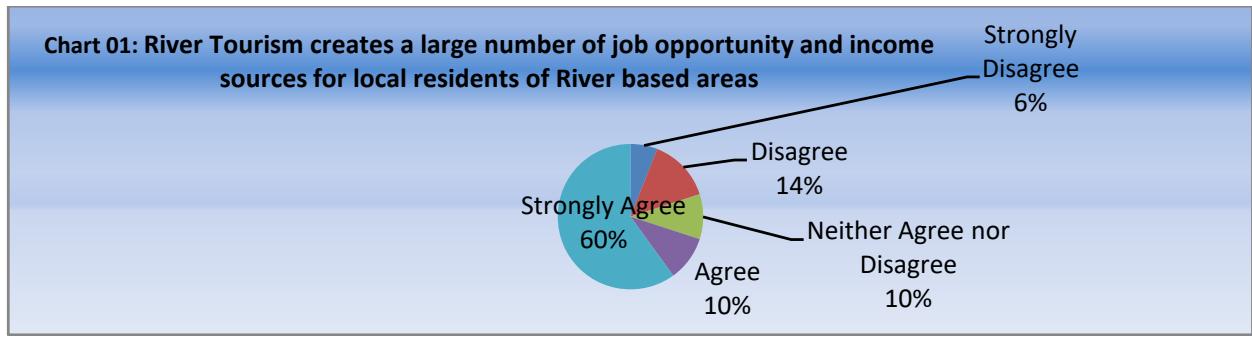
The data of Chart 01 shows that $6\%$ of tourists strongly disagree that River Tourism creates a large number of job opportunities and income sources for local residents of River based areas. $14\%$ of tourists disagree with this statement. $10\%$ of tourists neither agree nor disagree. $10\%$ of tourists believe that rivers can create jobs for unemployed people. $60\%$ of tourists strongly agree with this statement. So we can see most of the participants agree with this statement.
The development of river tourism can ensure the contribution to the GDP of Bangladesh. River tourism activities are connected with different products and services (e.g. foods, entertainment equipment, recreational equipment, accommodation, transport, etc) which can directly contribute to GDP. Private investment and government funding in this sector can contribute indirectly to GDP.
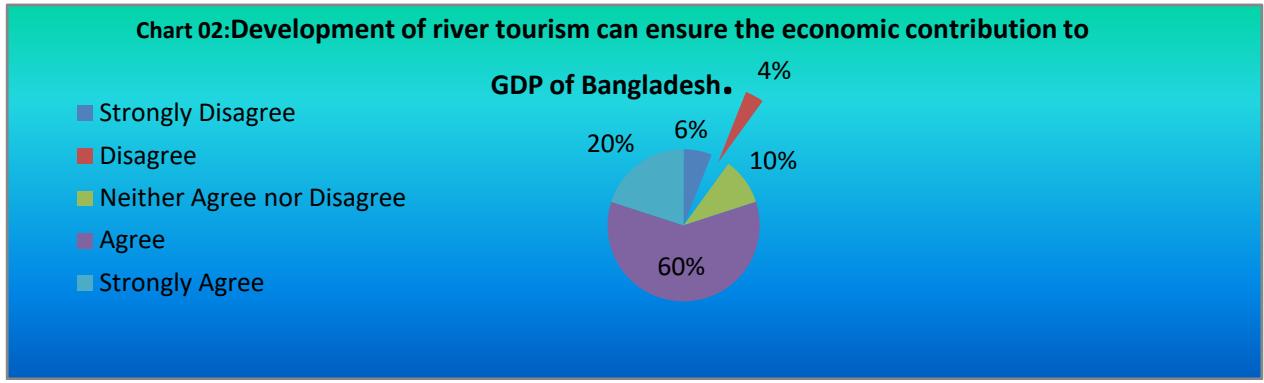
The data of Chart 02 shows that $6\%$ of tourists strongly disagree that river tourism can ensure the economic contribution to the GDP of Bangladesh. $4\%$ of tourists disagree with this statement. $10\%$ of tourists neither agree nor disagree. $60\%$ of tourists believe that river tourism can ensure the economic contribution to the GDP of Bangladesh. $20\%$ of tourists strongly agree with this statement. So we can see most of the participants agree with this statement.
Sustainable river tourism can ensure and promote peace by fostering understanding between local people and tourists. It also promotes and preserves the local cultural and historical traditions.
Chart 03: River tourism development can create collaboration between local communities and tourist from different areas that makes socio-economic development

Chart 04: River tourism development can ensure infrastructural development of river side areas that can reduce the negative impact of natural disaster
The data of Chart 03 shows that $4\%$ of tourists strongly disagree, that River tourism development can create collaboration between local communities and tourists from different areas that makes socio-economic development. $16\%$ of tourists disagree with this statement. $32\%$ of tourists neither agree nor disagree. $30\%$ of tourists agree and $18\%$ of tourists strongly agree with this statement. So we can see almost $50\%$ of the participants agree with this statement.
River tourism development can ensure infrastructural development of riverside areas that can reduce the negative impact of natural disasters. Natural disasters can cause land erosion of riverside areas. People lost their homes and being shelter less. It also slows down the pace of economic growth.
- Strongly Disagree
- Disagree
- Neither Agree nor Disagree
- Agree
- Strongly Agree
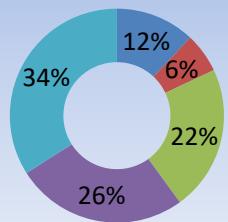
The data of Chart 04 shows that $12\%$ of tourists strongly disagree, that River tourism development can ensure infrastructural development of riverside areas that can reduce the negative impact of natural disaster. $5\%$ of tourists disagree with this statement. $22\%$ of tourists neither agree nor disagree. $26\%$ of tourists agree and $34\%$ of tourists strongly agree with this statement. So we can see most of the participants agree with this statement.
River tourism development can raise awareness among local residents about the importance of river and river-side tourism spots. Overall all these things can work as a contributor to protecting the environment, river preservation, and diminution of river pollution.
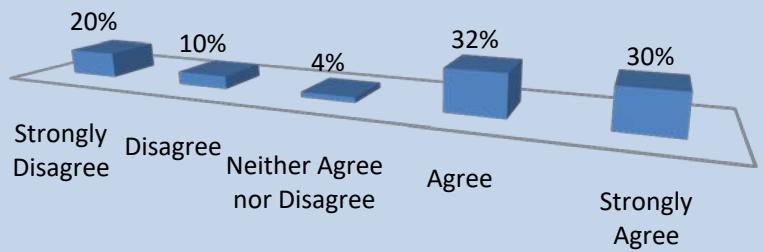
Chart 05: River tourism development can promote the importance of river preservation and diminution of river pollution
The data of Chart 05 shows that $20\%$ of tourists strongly disagree, that River tourism development can promote the importance of river preservation and diminution of river pollution. $10\%$ of tourists disagree with this statement. $4\%$ of tourists neither agree nor disagree. $32\%$ of tourists agree and $30\%$ of tourists strongly agree with this statement. So we can see almost $62\%$ of the participants agree with this statement.
## VII. MAJOR BARRIERS IN DEVELOPING RIVER TOURISM IN BANGLADESH
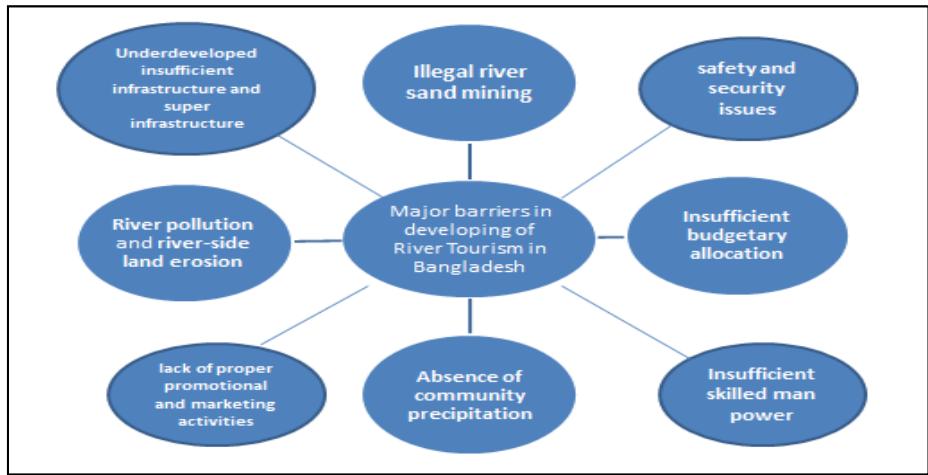
River tourism activities are addressing the opportunities of tourism which can directly contribute to our GDP. There are some challenges that hinder to activate the river tourism in Bangladesh that's given below:
Illegal river sand mining is very common in our country. For unplanned sand mining in river destroys both side of river area. It also negatively impacted on agricultural land besides the river. Every year people are losing land to river erosion caused by illegal dredging.
Insufficient budgetary allocation slows down the development of river tourism development. So sufficient budgetary allocation needs for proper river tourism infrastructure development, marketing and promotional activities, training for operating river tourism activities tools, and so on.
Source:Developed by Author,2022
The absence of community precipitation (people who live beside the riverine areas) in river tourism decelerates the development of river tourism as they are not aware of it. There is a huge opportunity to make the community involved and develop river tourism as well as develop the entire community of riverside.
River pollution is posed a serious challenge to river-based tourism in Bangladesh. The main reason behind river pollution is the unawareness of river health and sustainability of the river ecosystem, throwing dirty garbage in the river while traveling, oil spills from tourist's vessels, leak of chemicals from industrial containers, etc.
Underdeveloped insufficient infrastructure and super infrastructure (jetties, vessels, well-designed and equipped ships) for river tourism make it difficult to flourish this tourism sector.
In river tourism, tourists have to stay in boats or ships. It creates some safety and security issues like natural disasters, robbery, tidal surges, thieves, pickpockets, and mobile networks not found in the middle of the river, etc.
Many tourist spots across the country are yet to gain popularity among tourists both from home and abroad due to a lack of proper promotional and marketing activities. To attract tourists from home and abroad, we need to give importance to promotional activities.
In every year thousands of hectares of river-side land erosion happened in rainy season. This is one of the biggest challenges to grow this specific tourism subsector.
Sufficient skilled man power needed for developing and operating river tourism. Otherwise insufficient skilled man power may cause this sector collapsed before booming.
## VIII. RECOMMENDATIONS FOR SUSTAINABLE DEVELOPMENT OF RIVER TOURISM
1. Ensuring local community involvement in the process of river tourism development makes tourism sustainable and everlasting.
2. Need to promote local heritage, festivals, and culture of river areas for attracting local and foreign tourists.
3. Public awareness should be increased among both local people and tourists to control environmental pollution.
4. Infrastructural and super- infrastructural development needs to be carried out to the river tourism spots.
5. Foreign tour operators can be used as another way to promote river tourism in Bangladesh across the world. It will help to reach more foreign tourists. Moreover, this can boost our tourism sector rapidly.
6. The development of sustainable river tourism is a long-term phenomenon. Development planning for the short-term will help to gain long-term achievement.
7. Many countries are promoting tourism through on-arrival visas. So Bangladesh could implement on arrival visa service for foreign tourists to promote river tourism.
8. Safety and security arrangement is inadequate in river area for tourism. Proper security needs to be ensured and a one-stop information system can be introduced for tourist's safety.
9. Proper marketing approaches should be taken to reach the maximum number of tourists for river tourism.
10. Specialized academic and training centers are needed to create skilled manpower for the river tourism sector. Special rescue teams and lifeguards should be prepared to avoid any kind of accidents.
11. Laws should be imposed to rescue river areas which are abused. Special campaigning, seminar, and conference can be arranged for raising awareness to protect rivers and riverside areas.
## IX. CONCLUSION
As a riverine country, river tourism has tremendous potential in Bangladesh. River tourism in Bangladesh is expanding gradually. Local and foreign tourists are very much interested to take part in river tourism. By improving the existing river tourism spots and activities, also developing new ones, the country can attract a significant number of local and international tourists. Also, this sector has great potential to reduce the unemployment rate by generating new job opportunities. Though there are lots of challenges in developing river tourism which includes fewer river tourism scopes and activities, safety issues, lack of infrastructure, lack of efficient human resources, lack of environmental awareness, insufficient promotional work, etc. The development of the river tourism sector depends on how efficiently and effectively these challenges can be overcome. Several strategies are discussed to mitigate these challenges in this report. Proper planning and implementation should be ensured for the development of river tourism. In this way, this particular tourism sector may bring economic prosperity to the national economy.
Generating HTML Viewer...
References
22 Cites in Article
Ersiswarmansyah Abbas (2021). Portrait of Tourism Based on River Tourism in Banjarmasin.
Anim Ajake,Titus Amalu (2012). The relevance of tourism on the economic development of Cross River state, Nigeria.
Njoku Raymond Amanze,Atu Emmanuel Etta,Gabriel Onah Ojugbo,Onah Ojugbo (2012). Development Challenges and Tourism in the 21st Century in Cross River State, Nigeria.
Sompong Amnuay-Ngerntra,S Sompong,Hideki (2013). Community Development through Public Art Event in Ratchaburi, Thailand.
L Carson (1994). Structure and Properties of a Wilderness Travel Simulator. V. Kerry Smith and John V. Krutilla. The Johns Hopkins University Press, Baltimore, Maryland 21218. 1976. 173p.
Erlet Cater (2000). Tourism in the Yunnan Great Rivers National Parks System Project: Prospects for sustainability.
Akram Deiminiat,Hassan Shojaeesiuki,Saeid Eslamian (2014). Low-Flow Hydrology ................................................................................................... Mehdi Vafakhah, Saeid Eslamian, and Saeid Khosrobeigi Bozchaloei.
(2006). Cruise ship tourism.
Maria Elena,Muhamad Lee,Suhartono H.,Hossein I.,Nur Abd Rahman,Nur Bazilah (2012). FUZZY TIME SERIES AND SARIMA MODEL FOR FORECASTING TOURIST ARRIVALS TO BALI.
Hilma Fachrudin,Mohammad Lubis (2016). Planning for Riverside Area as Water Tourism Destination to Improve Quality of Life Local Residents, Case Study: Batuan – Sikambing River, Medan, Indonesia.
Mohiuddin Helal (2020). Covid-19: Economic Impact of Riverin Tourism in Bangladesh study for finding TOTAL LOSS of Tourist Vessel Operators in Bangladesh Content.
P Hulme,T Youngs (2002). The Cambridge Companion to Travel Writing.
Ravi Sharma (2019). Impacts of Anthropogenic and Tourism Activities on River Water Quality.
John Mckean,Donn Johnson,R Taylor,Richard Johnson (2005). Willingness to Pay for Non Angler Recreation at the Lower Snake River Reservoirs.
N H A Rahman,S Abas,S Omar,M I Jamaludin (2020). Exploring the river-based tourism product for Muar River: A tourism opportunity spectrum (TOS) approach.
Bruce Prideaux,D Timothy,Malcolm Cooper (2009). Introducing river tourism: physical, ecological and human aspects..
R Shaw (2007). Three Gorges of Yangtze River National Geopark (Hubei, Chongqing).
Zhangyu Shi,Qian Cheng,Dong Xu (2021). Spatial econometric analysis of cultural tourism development quality in the Yangtze River Delta.
Bruno Sousa,Laurentina Vareiro,Ana Marques,Vasco Santos,Marco Valeri (2022). The Impact of River Tourism on the Development of the Demarcated Regions in Specific (Post-pandemic Crisis) Contexts: The Case of Cruise Ships.
Josef Steinbach (1995). River related tourism in Europe ? an overview.
Tawfique Ali (2013). Do not wait for disaster: Op-ed article in The Daily Star.
Van Balen,Michael Mitchell,Elvira Dooms,Haezendonck (2014). River tourism development: The case of the port of Brussels.
No ethics committee approval was required for this article type.
Data Availability
Not applicable for this article.
How to Cite This Article
Nora Islam. 2026. \u201cRiver Tourism in Bangladesh: Present Status and Future Prospects\u201d. Global Journal of Management and Business Research - F: Real estate, Event, Tourism Management & Transporting GJMBR-F Volume 22 (GJMBR Volume 22 Issue F3): .
Explore published articles in an immersive Augmented Reality environment. Our platform converts research papers into interactive 3D books, allowing readers to view and interact with content using AR and VR compatible devices.
Your published article is automatically converted into a realistic 3D book. Flip through pages and read research papers in a more engaging and interactive format.
River tourism is quite different from the conventional tourism concept which is based on rivers. Bangladesh has great potential to flourish in this sector. Bangladesh is already famed as a riverine country. A good number of tourists are interested in river tourism in Bangladesh. Though there is huge potential for Bangladesh to become a prominent destination for river tourism but still it is untapped due to various challenges. This study analyzed the existing river tourism sector of Bangladesh to explore the potentialities and challenges of this sector. The study revealed that there are some challenges to gaining success in the development of river tourism. Lack of skilled manpower, safety and security issues, lack of tourism infrastructure, and inadequate funding are some remarkable challenges. Based on the findings, the paper suggested several recommendations for the development of river tourism in Bangladesh.
Our website is actively being updated, and changes may occur frequently. Please clear your browser cache if needed. For feedback or error reporting, please email [email protected]
Thank you for connecting with us. We will respond to you shortly.