1. Introduction
The Rohingya are an ethnic group, the majority of whom are Muslim, who have lived for decades in Buddhist-majority Myanmar. They speak Ruaingga, a distinct language that sets them apart from other ethnic groups in Myanmar. Despite their long history in the country, the Rohingya were officially excluded from Myanmar’s list of recognized ethnic minorities following the enactment of the 1982 Citizenship Law, effectively rendering them stateless and depriving them of basic rights, including citizenship, freedom of movement, and access to public services.
Myanmar, located near the Bay of Bengal, historically included Arakan (now Rakhine State) as a major center of trade and cultural exchange. Arakan served as a commercial hub that facilitated interactions between Myanmar and the broader world, attracting merchants and traders from diverse backgrounds. Over centuries, Mughal, Pathan, Moor Muslim, and Arab traders arrived in the region for trade and many eventually settled there. Arab traders played a significant role in spreading Islam, leading to the gradual conversion of segments of the local population. As a result, the region became a significant cultural and religious center for the Muslim community, contributing to its unique historical and demographic composition.
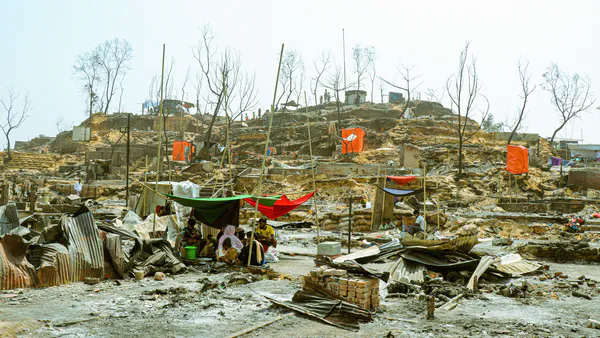
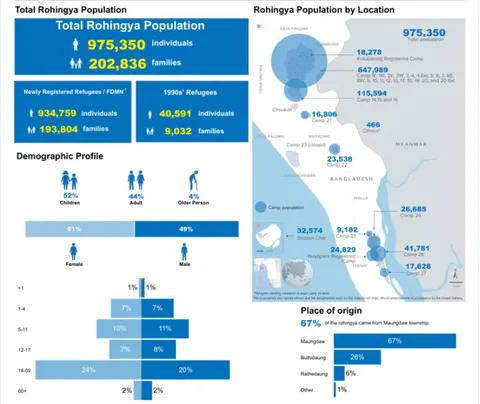
The Rohingya crisis continues one of the most pressing humanitarian challenges of the 21st century. The forced displacement of nearly one million Rohingya refugees from Myanmar to Bangladesh following the military crackdown in 2017 has placed an overwhelming burden on host communities, particularly in the Cox’s Bazar region.1 While the crisis has gathered significant international attention due to its humanitarian dimensions, the socioeconomic and environmental consequences for host communities in Bangladesh remain a critical yet underexplored area of discourse.2
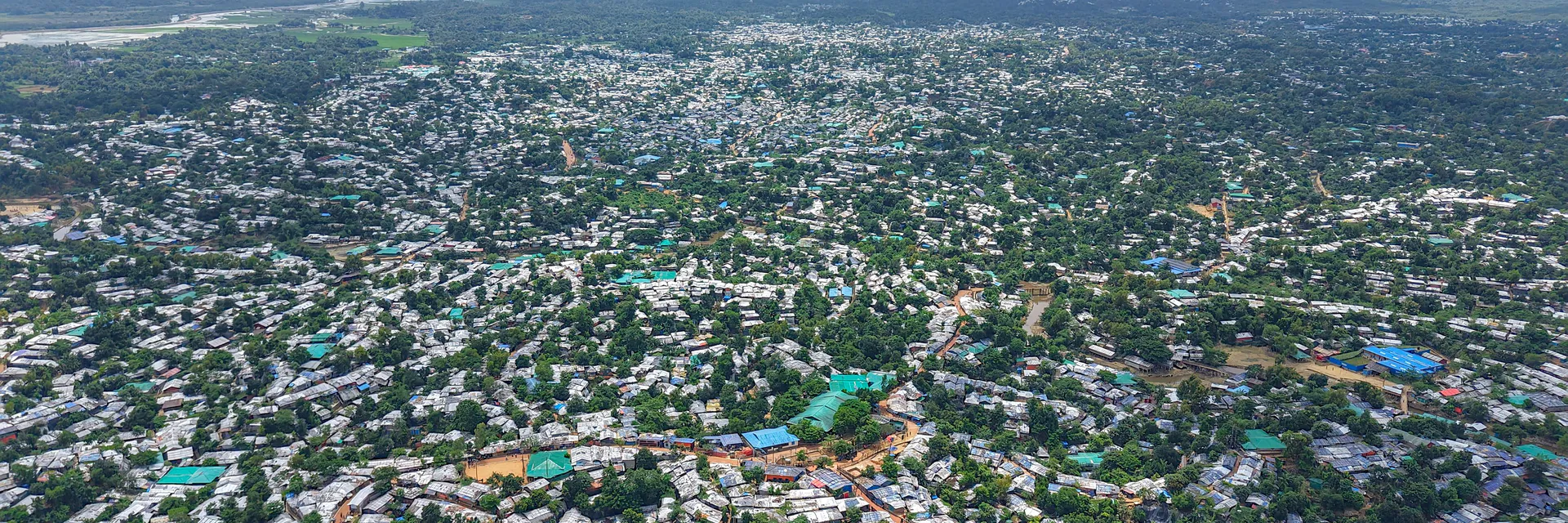
As a developing nation with limited resources, Bangladesh has struggled to balance its humanitarian responsibilities with the socioeconomic well-being of its citizens. The uncertain and large-scale influx of Rohingya refugees has damaged public services, interrupted local labor markets, and intensified competition for already scarce resources in an economically vulnerable region.3 Besides, the rapid expansion of refugee camps has led to serious environmental degradation, including deforestation, biodiversity loss, and the depletion of natural resources. These challenges highlight the urgent need for a comprehensive analysis of the crisis’s impact on host communities, emphasizing both its immediate repercussions and long-term implications.
2. Problem Statement
The Rohingya crisis has presented significant challenges for Bangladeshi host communities, international aid efforts, and humanitarian organizations, all of whom have been at the forefront of managing the massive influx of refugees. The unprecedented arrival of nearly one million Rohingya refugees has led to widespread economic disruptions, exacerbating social tensions and placing immense pressure on public infrastructure and essential services.4 The increased demand for housing, healthcare, education, and employment opportunities has strained local economies, often leading to heightened competition between host communities and refugees for limited resources.
Beyond the socioeconomic strain, the large-scale settlement of Rohingya refugees in Cox’s Bazar and its surrounding forested areas has accelerated environmental degradation, threatened ecological sustainability, and disrupted the delicate environmental balance of the region.5 Deforestation, soil erosion, and water contamination have emerged as critical environmental concerns, further complicating the humanitarian response and development strategies in the region.
While previous research has examined various aspects of the Rohingya crisis, much of the existing literature focuses primarily on the humanitarian needs of refugees, with limited attention given to the long-term socioeconomic and environmental consequences for host communities. There remains a significant research gap in understanding how the prolonged presence of refugees affects local economies, social cohesion, and environmental sustainability in Bangladesh. Addressing this gap is crucial for developing holistic policy responses that not only support displaced populations but also ensure the resilience and well-being of host communities. This study aims to bridge this gap by providing a comprehensive analysis of the socioeconomic and environmental challenges faced by host communities, contributing to evidence-based policymaking and sustainable development planning.
3. Research Objectives
To analyze the socioeconomic outcomes impact of the Rohingya refugee crisis on host communities in Bangladesh.
To assess the environmental consequences for Rohingya refugees regarding pollution, resource depletion, and deforestation for placement of refugees.
4. Research Questions
The research study will follow the question to find recommendations.
What are the socioeconomic challenges faced by the host communities due to the Rohingya crisis?
How has the Rohingya refugee influx affected environmental sustainability in the host region of Bangladesh?
5. Significance of the Study
The Rohingya crisis has created far-reaching both for placing populations and host communities in Bangladesh. Most of the existing research focused only on the humanitarian perspectives of Rohingya refugees and there also remain the gaps of research to understand socioeconomic and environmental through host communities. The study investigates bridging that gap by providing an analysis of how large-scale Rohingya refugees can influence the local communities, social stability, and environmental sustainability in Bangladesh.
From the socioeconomic perspective, the research highlights the labor markets, public infrastructures, and the resources that enhance the challenges for host communities and refugees in Bangladesh. Through estimating the challenges, the research will contribute to the policy for developing economic stability in the labor market, and social integration to distribute the resources that affect the region of Bangladesh.
From the environmental perspective, the study explores the results of biodiversity, deforestation, and resource reduction due to Rohingya refugee settlements. Ecological sustainability and development are significant for the rural and social development of the host communities to maintain ecological balances. Moreover, the research study represents the relevant policy and evidence-based insights to the government policymakers and agencies, and international organizations to control the mismanagement of the crisis. Through the adoption of a holistic approach, the study discusses the refugee host dynamics and long-term sustainable development of the settlement of refugees in Bangladeshi local communities especially Cox’s Bazar region. By adopting a holistic approach, the research contributes to global discussions on refugee-host dynamics, sustainable crisis management, and long-term development planning in displacement-affected regions. The findings of the research will advance the forced migration discourse and local communities’ resilience to foster the sustainable economic and environmental development of Bangladesh.
6. Literature Reviews
The unpredictable influx of refugees has disrupted the environmental equilibrium and posed significant challenges to the economic and social stability of host communities. Numerous studies have explored the impact of the Rohingya refugee crisis on host populations in Bangladesh (Lee, 2005). While some research has focused solely on the economic implications, assessing both the positive and negative effects of refugee presence, a comprehensive understanding of the broader socioeconomic and environmental consequences remains essential.
Foreign aid agencies have played a role in job creation within host communities by funding the establishment of schools, healthcare clinics, and housing projects. However, Kobia and Cranfield (2009) found that refugees contribute to economic distress by increasing unemployment and intensifying job competition, leading to anxiety among local workers.6 Moreover, many refugees sell their aid supplies at lower prices in local markets, undercutting local retailers who face higher tax burdens.
The Rohingya refugee crisis has also impacted Bangladesh’s tourism sector, particularly in Cox’s Bazar, a region that has historically been a major tourist destination (Lewis, 2019). The influx of a large refugee population has altered the economic landscape, increasing competition for necessities such as food and water. Alix-Garcia (2009) highlighted that while international aid efforts have lowered commodity prices, the heightened demand has led to market distortions, sometimes resulting in price surges that disproportionately affect host communities.7
Beyond economic pressures, the increase in illegal activities associated with some refugee groups has raised serious security concerns for host communities. Mogire (2016) noted that conflicts have arisen between Rohingya refugees and residents, often due to violations of local laws and regulations.8 Some refugees have also been involved in fraudulent activities, engaging with criminal networks that exploit their vulnerable status (Islam, 2022). These factors have contributed to rising security challenges, complicating efforts by local authorities to maintain stability.9
Religious and ethnic tensions have also emerged because of the crisis. Wolf (2014) found that the Rohingya refugee influx has contributed to religious conflicts, further straining relations between host communities and displaced populations.
The environmental consequences of the refugee crisis have been particularly severe. Martin (2005) documented how rapid population growth within refugee settlements has led to deforestation, as large numbers of trees are cut down to provide housing materials, cooking fuel, and infrastructure development.10 This unsustainable resource depletion has contributed to environmental degradation, threatening the ecological balance of the region. Adhikary (2018) researched environmental issues and deterioration of forestland, disruption of land flows, and water supply for Rohingya refugees and found that the use of natural forestland increased the social clash between host communities and Rohingya refugees.11 It is difficult to accommodate refugees due to the existing Rohingya influx. Environmental issues such as water contamination, and overuse of ecological assets affect the host communities and native people of Bangladesh (Datta, 2015). Through these overcrowded camps for Rohingya refugees, diseases like diarrhea, and cholera can be spread with other diseases which can affect the residents and refugees also (Alam, 2019). 12
7. Research Methodology
The research study applies the qualitative research design and implements the secondary data analysis to understand the socioeconomic and environmental effects on host communities due to Rohingya refugees. The Rohingya refugee crisis and its multidimensional complexity, the qualitative research approach allows us to explore the in-depth analysis of previous research reports, and empirical studies on socioeconomic and environmental impact. The qualitative research approach is effective for a comprehensive analysis of the crisis of Rohingya refugees. The study used secondary data sources and scholarly institutional material to analyze the crisis. The data were collected from books, academic literature, and peer-review journal articles on the refugee crisis, and the socio-environmental impact on host communities in Bangladesh. The government and NGO’s report are used to conduct the study. The national and international organizations include the United Nations High Commissioner for Refugees (UNHCR), the World Bank (WB), Human Rights Watch (HRW), and the International Organization for Migration (IOM). This report provides significant insights into challenges for host communities due to the Rohingya refugee influx. The national and international newspapers like Guardian, The New York Times, Al Jazeera, BBC News Dhaka Tribune, and The Daily Star were used to develop the policy and real scenario of Rohingya refugees and host communities. Incorporating diverse sources of data to ensure the comprehensive and multidimensional research perspective of crisis impact analysis. The thematic analysis approach was used for the investigation and interpretation of the collected data for the research. The data were categorized and reviewed for the Rohingya refugee crisis to understand the socio-economic and environmental impact. A comparative analysis was used to identify the gaps in previous research studies and patterns of the crisis for host communities. The findings of the research were created to understand the holistic concept of crisis.
8. Impact of Rohingya Refugees on the Socioeconomic of the Host Communities
The Rohingya refugee influx in Bangladesh has profoundly impacted the socio-economic implications for host communities, especially Cox’s Bazar region. Although international humanitarian assistance relies upon refugees, refugee influx raises local economic barriers, labor market competition, and pressure on public services (World Bank, 2021). This section of the research investigates the socio-economic challenges faced by the local host communities in Bangladesh due to the Rohingya Refugee influx.13
8.1. Labor Market Disruption and Employment Competitions
The massive refugee influx affects the labor market dynamics in Cox’s Bazar and other regions in the Chittagong Division. Due to the restriction of labor legal laws, they entered the local or informal market and accepted the local workers which discouraged the host communities’ labor market.
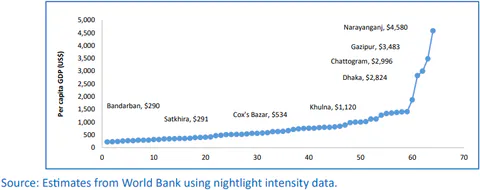
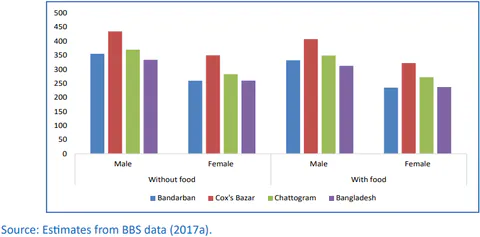
Wage suppression, particularly in low-skilled labor sectors such as agriculture, construction, and fishing (Khatun, 2018). Job displacement, as local laborers face increased competition and reduced bargaining power. Tensions between host communities and refugees, as locals perceive the refugee population as a threat to their economic stability.14 Research by Rahman (2019) indicates that laborers in Cox’s Bazar have experienced income reductions of up to 30% due to wage competition from refugees. This has contributed to economic insecurity among host communities, particularly among daily wage earners.
8.2. Inflation and Market Distortions
The demand for basic commodities such as food, water, housing, and fuel has surged due to the rapid population increase, leading to: Price inflation, particularly for essential goods like rice, vegetables, and fish (Alix-Garcia, 2009). Housing shortages and rent increases, make it difficult for local families to afford housing (Lewis, 2019). Distorted local markets, as refugees often receive international aid in the form of subsidized food and supplies, which they sometimes resell at lower prices, undercutting local businesses (Kobia & Cranfield, 2009). While international aid has helped stabilize food availability, local retailers have suffered losses due to informal refugee trade networks that disrupt traditional supply chains.
The sudden population increase has placed immense strain on public infrastructure and essential services, including Healthcare facilities, which are overburdened due to increased demand for medical care, vaccinations, and maternal health services (UNHCR, 2020).15 Educational institutions, as refugee children seek access to local schools, stretching limited resources and causing overcrowding (World Bank, 2021). Water and sanitation systems, have been overwhelmed by the increased demand, leading to water shortages and sanitation crises in certain areas (Hasan, 2014).16 The government of Bangladesh and humanitarian organizations have provided temporary relief through emergency medical services and water supply projects, but long-term infrastructure planning remains a challenge.
9. Social Impacts
9.1. Rising Social Tensions and Community Conflicts
The prolonged refugee presence has contributed to socio-cultural tensions between Rohingya refugees and host communities. Major factors include Resource competition, as both refugees and locals struggle for employment, land, and services. Perceived economic disadvantages, where host communities feel neglected in favor of international aid directed primarily toward refugees. Cultural and religious differences have occasionally led to clashes and resentment among local populations (Wolf, 2014). Several studies suggest that dissatisfaction among host communities has grown over time, as initial humanitarian sympathy has given way to economic and social frustrations (Rahman, 2014).17
9.2. Security and Crime-Related Issues
The rise in illegal activities, including human trafficking, drug smuggling, and petty crimes, has been linked to the refugee crisis (Mogire, 2019). Key concerns include: The expansion of illicit trade, particularly narcotics smuggling across the Myanmar-Bangladesh border. Increased crime rates, including theft, fraud, and black-market activities, contribute to insecurity in host communities (Islam, 2017). Law enforcement challenges, as local authorities struggle to manage conflicts between refugees and host populations. Although not all Rohingya refugees are involved in criminal activities, their vulnerable socio-economic position has made some susceptible to exploitation by criminal networks.
9.3. Decline in Tourism and Economic Opportunities
Cox’s Bazar, once a major tourist destination, has suffered economic losses due to the crisis. Factors contributing to the decline include Security concerns, discouraging both domestic and international tourists. Environmental degradation, making natural attractions less appealing. A shift in the local economy, as many businesses now rely on humanitarian aid rather than tourism revenue (Lewis, 2019). The reduced tourism revenue has further weakened the economic resilience of host communities, particularly those dependent on the hospitality and service sectors.
10. Conclusion
The Rohingya refugee crisis has impacted not only the Rohingya population but also the host communities, specifically Cox’s Bazar. The findings of the research highlight that the International Humanitarian provided immediate relief, and socioeconomic support which remain challenges for urgent demand policy. From the socioeconomic perspective, the influx of Rohingya refugees has severely interrupted the labor markets, local wages, and job competition pressure on local communities and public services, for instance, healthcare, housing, and education. The presence of Rohingya refugees also creates an impact on inflation, market misrepresentation, and increasing social crimes in the host communities and refugee populations. Moreover, social security illegal activities and unauthorized labor networking have complicated governance and law enforcement. From the environmental perspective, the Rohingya refugee crisis contributed to deforestation, disruption of biodiversity, and water pollution due to forest land having been cleared for settlement of refugees. Due to the unsustainable use of natural resources, waste, and pollution are aggravated vulnerabilities in Cox’s Bazar region. The research study underscores the integration of environmental strategies to prevent ecological imbalance. Although there are significant challenges, the research study recognizes the chance of policy interventions to solidify economic resilience and sustainable development. The government, NGOs, and international agencies can work collaboratively to mitigate the long-term sustainable solution of the Rohingya crisis. To foster the sustainable development of both humanitarian and host communities, balanced strategies need to be prioritized. In conclusion, the Rohingya refugee crisis was the main focus of the research, and the findings highlighted the sustainable and comprehensive strategies to consider socioeconomic, and environmental sustainability. Future research should be on longitudinal studies to assess refugee-host interactions. The Rohingya crisis needs global support and commitment to sustainable development.
Footnotes
UNHCR. (2024, August 22). Rohingya Refugee Crisis Explained. Www.unrefugees.org. https://www.unrefugees.org/news/rohingya-refugee-crisis-explained/ ↩
Chowdhury, M., Williams, N. L., Thompson, K., & Ferdous, G. (2022). The Rohingya Refugee Crisis in Bangladesh: an Analysis of the Involvement of Local Humanitarian Actors. Third World Quarterly, 43(9), 1–21. https://doi.org/10.1080/01436597.2022.2085087 ↩
Lee, M. J. (2021). Media influence on humanitarian interventions: analysis of the Rohingya refugee crisis and international media coverage. Journal of International Humanitarian Action, 6(1). https://doi.org/10.1186/s41018-021-00108-5 ↩
Uddin, M. R., & Fazilatun Nesa. (2021). The Rohingya Refugee Crisis: Socio-Economic, and Environmental Impacts on Local Community in Bangladesh. Journal of Asia-Pacific Studies, 6(2), 275–288. https://www.researchgate.net/publication/354203132_The_Rohingya_Refugee_Crisis_Socio-Economic_and_Environmental_Impacts_on_Local_Community_in_Bangladesh ↩
Halim, Md. A., Rinta, S. M., Amin, Md. A., Khatun, A., & Robin, A. H. (2021). The Environmental Implications of the Rohingya Refugee Crisis in Bangladesh. Asian Journal of Environment & Ecology, 189–203. https://doi.org/10.9734/ajee/2021/v16i430269 ↩
Kobia, K., & Cranfield, L. (2009). Literature review: Urban refugees. Retrieved from http://www.unhcr.org/4b0a528c9.pdf ↩
Alix-Garcia, J., & Saah, D. (2009). The Effect of Refugee Inflows on Host Communities: Evidence from Tanzania. The World Bank Economic Review, 24(1), 148–170. https://doi.org/10.1093/wber/lhp014 ↩
Mogire, E. (2016). Victims as Security Threats. Routledge. https://doi.org/10.4324/9781315548319 ↩
Islam, M. R., & Wara, U. (2022). Conflict Potential of the Rohingya People in Bangladesh and Beyond. JAS (Journal of ASEAN Studies), 10(1). https://doi.org/10.21512/jas.v10i1.8215 ↩
Martin, A. (2005). Environmental Conflict Between Refugee and Host Communities. Journal of Peace Research, 42(3), 329–346. https://doi.org/10.1177/0022343305052015 ↩
Adhikari, P. (2012). Conflict-induced displacement, understanding the causes of flight. American Journal of Political Science, 57(1), 82–89. https://doi.org/10.1111/j.1540-5907.2012.00598.x ↩
Alam, J. (2019). The current Rohingya crisis in Myanmar in historical perspective. Journal of Muslim Minority Affairs, 39(1), 1-25. https://doi.org/10.1080/13602004.2019.1575560 ↩
World Bank. (2024). Refugees in Bangladesh| JDC. Jointdatacenter.org. https://www.jointdatacenter.org/activites/socioeconomic-analysis-of-refugees-in-bangladesh/ ↩
KHATUN, Dr. Fahmida, “Implications of the Rohingya Crisis for Bangladesh”, Organisational Presentation presented at the A dialogue on «Addressing Rohingya Crisis: Options for Bangladesh» at CPD, Centre for Policy Dialogue (CPD), November 11, 2017 ↩
UNHCR Staff, “100 Days of Horror and Hope: A Timeline of the Rohingya Crisis”, UNHCR The UN Refugee Agency, December 1, 2017. https://www.unhcr.org/news/stories/2017/12/5a1c313a4/100-days-horror-hope-timeline-rohingya-crisis.html. ↩
HASAN, Kamrul, “ ‘Locals Unhappy about Losing Labour Market to Rohingyas’ ”, Dhaka Tribune, December 11, 2017. https://www.dhakatribune.com/bangladesh/nation/2017/12/11/locals-labour-market-rohingyas/. ↩
Rahman, U. (2010). The Rohingya refugee: A security dilemma for Bangladesh. Journal of Immigrant & Refugee Studies, 8(2), 233-239. https://doi.org/10.1080/15562941003792135 ↩