Bangladesh has been facing a new crisis to provide shelter to the Rohingyas who were forcibly repatriated from Myanmar. Though Rohingyas taking shelter in Bangladesh started in 1978, the last massive influx of the Rohingyas occurred on 25 August 2017, when more than 7,00,000 Rohingya refugees fled to Bangladesh due to massive crime against humanity in Myanmar. More than a million Rohingya refugees live in Rohingya camps in Cox’s Bazar, wherein, in most cases, the Rohingyas are exploited in many ways for many reasons, and the personal security of the Rohingya in the camps are under threat in many ways. Therefore, this paper explores two issues. First, the paper argues that the overall fundamental human rights of the Rohingya in the camps are undermined; and second, in other ways, Rohingya also creates challenges for Bangladesh as the host country.
## I. INTRODUCTION
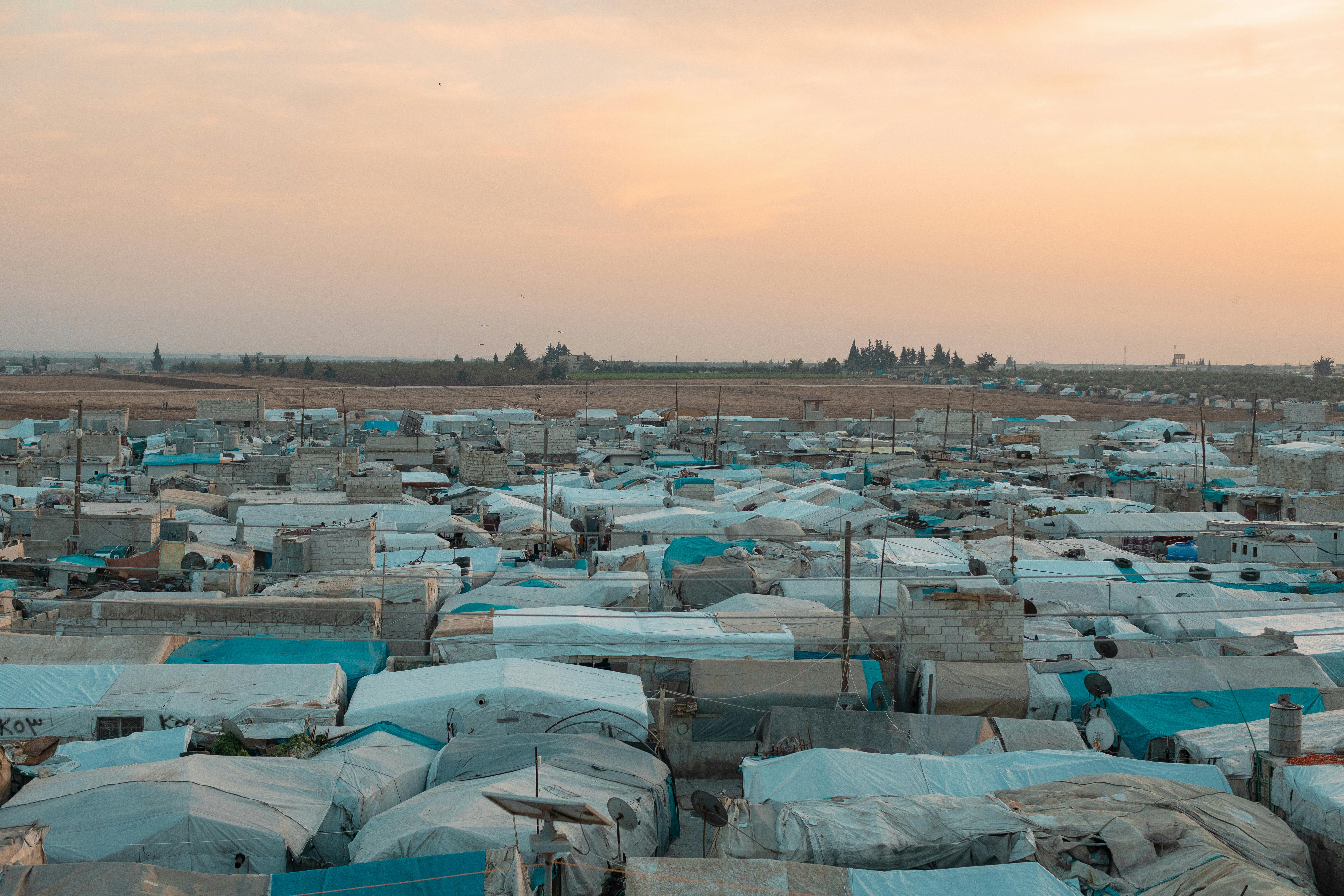
The Rohingya group in Myanmar's Rakhine State has a long history of social and economic isolation that ended in horrendous violence, culminating in a significant movement of up to 900,000 refugees to date (WHO, 2019). Villages were burnt down, individuals were detained, tortured, sexually assaulted, and their families and livelihoods were destroyed in Rakhine State (Riley et al., 2017). Bangladesh is now hosting 11 Lakh Rohingya refugees whom the Myanmar government forcefully displaced through massive genocidal attacks. Bangladesh is also experiencing different noncustomary security concerns like environmental change, energy emergency, food and security issues, and water shortage due to hosting these Rohingya refugees. The human security and human rights of Rohingya refugees in Bangladesh are also significant concerns (Uddin, 2021). Mental health, poor sanitation, a rise in sexually transmitted illnesses, hunger, reproductive health, and a lack of educational opportunities are all significant concerns. The Rohingya are in danger because of poor living conditions in refugee camps. In Bangladesh's Rohingya refugee camps, 37 people share one toilet (Mahmood et al., 2017). For the Rohingya refugees, clean water is also in short supply. However, many individuals drink from adjacent waterways, which are also used for bathing and open defecation, particularly in illegal Rohingya settlements (Chan et al., 2018). Poor sanitation and hygiene conditions in Rohingya refugee camps have increased the risk of diarrheal disease transmission among the population. In addition to inadequate sanitation, low water quality, limited living quarters, and high levels of drug trafficking and sexual exploitation, infectious disease outbreaks in Rohingya refugee camps are a big concern (Hossain et al., 2018). Food security is also a significant worry since just six of the refugees' food consumption ratings meet the minimum requirements (UNICEF, 2019). Sexual abuse and exploitation are rampant in Rohingya camps right now. Approximately 67 of the refugees had been sexually abused or exploited (Hutchinson, 2018). Thus, the Rohingya people have become a victim again in the camps in Bangladesh. On the other hand, the present Rohingya refugee crisis adds more challenges for Bangladesh and creates new security threats and challenges for the country. It includes human or nontraditional security, transnational security, internal security, militancy and terrorism, border security, political oppression, human rights violations, and economic and social injustice. Therefore, it is necessary to address it in research to explore the phenomena further.
## II. ROHINGYA REFUGEE TAKE SHELTER IN BANGLADESH: A LEGAL FRAMEWORK
Human migration may be defined in two ways. The term dislocates migrants refers to people who have made a permanent or semi-permanent shift of domicile. The second meaning of the word migration is simply a movement of people across space. In contrast to the previous definition, it is acknowledged that the new dwelling resulting from the relocation is typically very transient and that the movement itself is an inherent part of the group's lifestyle. In the broadest sense, a marginal or inferior group might be described in terms of race or ethnicity or by some other trait. In this respect, minorities are not always numerical migrants. Because the minor criteria are established by marginal or subordinate states rather than numbers. According to the United Nations Convention on the Status of Refugees, anyone who is outside his or her country of nationality because of a well-founded fear of persecution on the grounds of race, religion or nationality or membership in a particular social group or political opinion, and who is unable or unwilling to seek refuge in the country of his or her former habitual residence as a result of such events, is referred to as a refugee under international law. The
1951 Convention on the Status of Refugees (The 1951 Refugee Convention). According to the 1951 Refugee Convention, a refugee is defined as a person who has a well-founded fear of persecution due to one or more of the following five factors: race, religion, nationality, social group membership, political opinion, or political affiliation. A refugee must satisfy four essential requirements (The 1951 Refugee Convention). First, they must be outside their country of origin or birth nationality. Second, the person is unable or unwilling to take advantage of that country's protection or return to that country. Third, the inability or unwillingness is due to a well-founded fear of persecution. Fourth, fear is justified based on the person's race, religion, nationality, or membership in a particular social or political group. (The 1951 Refugee Convention). As a result of the Cartagena Declaration, adopted in 1984 by Central American nations, a refugee is defined broadly to encompass individuals who escape their country because of widespread violence or international wars.
Refugee law is founded on international human rights law. Every individual has a right to seek and receive protection from persecution in other countries, according to Article 14 of the Universal Declaration of Human Rights, which was adopted on December 10, 1948. (Universal Declaration of Human Rights of December 10, 1948). The Universal Document of Human Rights is a non-binding declaration that does not apply to any specific country (Constantin, 2018). However, certain of its principles have become customary international law binding on all governments over time. Many elements have been enshrined in international and regional human rights treaties and national laws and constitutions. All people, including those who are uprooted in their own country and those who are uprooted in another country, are entitled to international human rights (Abdelaaty, 2021). They have the right to be treated under international human rights standards to guarantee that they are protected from physical harm and have access to medical care and education while displaced (Wali et. al., 2018). The four Geneva Conventions of August 12, 1949, and the two Additional Protocols of June 8, 1977, are the most fundamental sources of modern International Humanitarian Law (IHL). IHL strives to protect all civilians caught up in armed conflict, including refugees and internally displaced people (Storey, 2012). It assures, among other things, that refugees are neither discriminated against nor forced to return to their home countries against their choice (Quinn, 2014). It also makes it illegal for warring sides to evict people forcefully. Customary international law serves as the main underpinning for this sub-branch of international refugee law. Non-refoulement, on the one hand, safeguards refugees from being deported. However, international agreements like the 1951 Convention are solely enforceable on the signatory governments. Even if a state is not a signatory to a convention, it must adhere to some universally acknowledged and recognized norm, referred to as customary international law. Similarly, while not being a party to the 1951 Convention, Bangladesh has housed the Rohingya Community in their country on the principle of nonrefoulement and wishes to repatriate them freely under Customary International Law.
## III. EXPLOITATION AND INSECURITY ISSUES OF ROHINGYA IN THE CAMPS IN BANGLADESH
The Rohingya hosting is not new for Bangladesh. However, the Rohingya rehabilitation in Cox's Bazar District due to more than 900000 Rohingya fleeing from Myanmar in 2017 for genocidal killing of Rohingya by Myanmar authority has become a challenge for the Bangladeshi government (Hossain et al., 2020). The registrar Rohingya are sheltered in 34 refugee camps in Cox's Bazar District in Bangladesh. Though the shelter has ensured the security of vulnerable Rohingya in the refugee camps in Bangladesh, the different kinds of insecurity and exploitations of Rohingya have been noticed in the Rohingya camps. This section discusses how Rohingya are exploited and how their security is under threat in the refugee camps.
Sexual harassment and gender-based violence are common in the Rohingya camps. Many Rohingya girls and women are forcefully involved in prostitution (Center, 2018). The Rohingya women and girls are very vulnerable in the camps. They live in extreme poverty. Many women have been compelled to prostitution to save their families from hunger. The vulnerable Rohingya girls are forcefully involved in prostitution by the local middleman. The local middleman benefits by selling the Rohingya girls, and the Rohingya girls and women are abused by the syndicate of local and Rohingya leaders. This syndicate earns substantial financial benefits by exploiting Rohingya women and girls.
Local syndicate of drugs business also involves vulnerable Rohingya in Yaba business. Vulnerable Rohingya people are easy carriers of Yaba fills. Yaba business is witnessed and heard to go back to Myanmar. Even professional yaba business people cannot bring yaba directly now into Bangladesh. According to Hossain et al. (2020, pp. 28-29), "a large number of Rohingya are trafficking Yaba (an illegal narcotic) pill to gain money by selling it [26]." The Yaba underground market is thriving in South Asian nations, and Bangladesh is no exception. Carrying more than a hundred tablets in a single cigarette package is incredibly tiny and handy. The Rohingya carry about 92 percent of Yaba tablets, and more than 96 percent of Yaba pills enter Bangladesh through the Taknaf route. At the Kutupalong and Balukhali Rohingya camps in Cox's Bazar, over 200 Yaba hats (small shops) are open." In the Yaba industry, drug dealers employ vulnerable Rohingya individuals, and the bulk of Yaba smugglers are now female Rohingya. Many news outlets have previously reported on the Rohingya's participation in the illicit yaba trade (Minar, 2021). Minar (2021, p. 11) also claimed that "Rohingya yaba carrier Motaleb Mia (pseudonym) said he knows 20-22 Rohingya who are involved in yaba smuggling and explained that "the smugglers hand ya ba pills to the mules in the deeper parts of the camps, who carry them to Cox's Bazar". According to an article published in October 2017, "law enforcement have confiscated yaba pills worth over Tk13 crore in the two Upazillas, and have detained numerous Rohingya for alleged smuggling" (See also, Mahmud 2017a). Also, the vulnerable Rohingya have been used by several terrorist groups, and the vulnerable Rohingya have become a target of militant groups (Minar, 2021; Mahmud 2017b). Minar, 2021 (p. 11) mentioned that another news reveals that a top Counter-Terrorism and Transnational Crime (CTTC) official said the JMB (a terrorist organization in Bangladesh) men been working in the Rohingya refugee camps since 2016 and were recruiting members behind the relief and funding aid to the Rohingya camp. They recruited at least 40 militant members (See also, Rabbi 2018).
Besides drug trafficking, arms dealers use and involve vulnerable Rohingya in arms dealing and smuggling. Unemployment and poor wages are significant problems that make Rohingya people idle and vulnerable. Vulnerabilities and idleness make them involved in many criminal activities. It has also been argued that "the unemployed and idle Rohingya are being drawn into criminal activities for money though they do not have to think about their food and accommodation as the aid agencies provide them with everything they need. So, a big portion of Rohingya youths remain idle and become engaged in domestic violence, internal feuds, and gender-based violence" (Minar, 2021, p. 11; Mahmud 2018b). Also, if the venerable Rohingya wanted to work for lower wages, it created tensions of local labor. Rohingya refugees have many challenges inside the refugee camps as well.
## IV. HOST COMMUNITY CHALLENGES
The experience of dealing with the refugee crisis is not pleasant for any community, particularly when it becomes the source of further deterioration in the socioeconomic conditions of the host country. In this aspect, the Rohingya refugee crisis is unusual. The location in Bangladesh where they are taking refuge following their arrival is one of the most impoverished in the country. Because of the steep terrain and scarcity of cultivable land, most of the population relies on day labor to
We are aware that Rohingya refugees are engaged in terrorism, extremism, smuggling, trafficking, and insurgency, amongst other activities. These are the most severe dangers to national security, whereas law and order, protection measures, counter-terrorism mechanisms, and other measures address local and state concerns. A tragic situation exists for Rohingya who are stateless. Insurgency is becoming a more serious security threat, including Rohingya refugees, Bangladesh, and Myanmar, and is growing more widespread. Historically, two main actions by the Myanmar military government have led to the departure of Rohingya and the ensuing challenges of insurgency and terrorism. The social security issue is one of the most concerning issues in Bangladesh. They engaged in drugs, drug trafficking, violence against women and children, riots, decaying social values, and gender discrimination. The trade of drugs is another security threat for Bangladesh. It should be noted that China, India, and Bangladesh are the countries with the greatest rates of drug addiction in their bordering regions with Myanmar. As a result, Bangladesh has seen an upsurge in drug shipments arriving by land and water. According to the findings of the study, a large number of Rohingya girls and women are participating in prostitution. It represents a significant challenge for the local community.
Women and children are disproportionately affected by the consequences of environmental degradation, particularly those associated with fuelwood harvesting and burning. Foraging and transporting wood requires women to work long hours, putting them at a greater danger of weariness and vulnerability to attack than males. Time spent on such activities detracts from childcare, family, and social duties, and children who participate in incomparable activities may have less time available for schooling due to their participation. Environmental difficulties related to refugees are often the result of large populations of people congregating in a small area within a short period, as is frequently the case. The Rohingya refugees, both legal and undocumented, are often held responsible for the worsening environmental conditions in the area. Deforestation, notably by tree cutting, water pollution, and other environmental challenges, are among the most pressing concerns regarding the environmental component of security. For example, it has become obvious that refugee-related environmental effects may have substantial negative consequences for the health and wellbeing of the local population and the health and wellbeing of the refugee community, as has been shown in many studies.
Two developments have occurred: first, host countries have become more sensitive to the potential economic loss that they may suffer as a result of environmental damage caused by large concentrations of refugees, and second, the absence of a consistent policy for the rehabilitation of damaged areas after refugees have been repatriated. The destruction of renewable natural resources, such as forests, soils, and water supplies, is the most significant source of environmental concerns among the refugee population, according to the United Nations High Commissioner for Refugees. Particularly severe consequences for regions of high environmental importance may be connected to the area's biological richness, its role as a sanctuary for endangered species, or the ecosystem services these areas provide. It is widely believed that the Rohingya are destroying the woods, cutting the hills for their refuge, and settling in various locations around Myanmar, causing enormous harm to the natural ecosystem. They take down trees on purpose in order to support their families. There are numerous types of environmental contamination in the locations where Rohingya refugees, both documented and undocumented, reside. A significant source of worry is water contamination, which is caused by a lack of access to sanitation and safe drinking water. The sewerage management in the camps is a major concern. Particularly, the location of the Tal camp is a great concern. All the sewage flows into the Naf River, spoiling the purity of the river water. Moreover, waterborne diseases are more likely to spread due to such flow. Deforestation is becoming another major environmental disaster in this area.
## V. CONCLUSION
The Rohingya situation in Bangladesh has become a very complex issue. It has become a burden for Bangladesh as a host country in many ways. Bangladesh is in the dilemma of two folds. One is considering Rohingya as human rights ground, and another is security and other challenges for Bangladesh created by sheltering these Rohingya people from human rights perspectives. As a result, Bangladesh must find a comprehensive solution to the refugee issue and develop a unified security policy to cope with all of the possible dangers it faces. If this does not change, Bangladesh's condition will deteriorate shortly. This paper will specifically attempt to discuss the conditions or factors necessary for sustainable solutions and how the implementation of Rakhines post-conflict socio-legal framework, which ensures national security, positively or negatively impacts Rohingya refugees' humanitarian status. It will use the case of Rohingya in Bangladesh as an example. Thus, this research explores many unknown facts to understand the problem and find sustainable policy solutions for Bangladesh and the Rohingya community. Some critical issues about the refugee study can be raised, such as religious and racial persecution, involuntary migration, coping with new atmospheres, response to repatriation and resettlement process by refugees, and perception of refugees' experience. However, the study reflects such vital issues through the life history of Rohingya refugee people.
Dealing with refugee people from the nation-state point of view might not be adequate for understanding their life; moreover, in a general sense, people are supposed to stay within the border of their country and go back home But apart from such notion, International relations study needs deep study perception to understand underlying phenomena of refugee life and that study might contribute to making proper policy concerning refugee welfare program to present in a nutshell, this study divide Rohingya experience in two way, as minor ethnic group to their home and as a refugee in exile, especially in Bangladesh. As the author visited the refugee camp, the author knows that all of them Rohingya refugees are unwilling to go back to their own country as they do not have to be worried about their livelihood problem, which made the Myanmar regime a bit relaxed as ethnically Bangladesh cannot force them to go back. Finally, the research finds that Rohingya are exploited for many reasons, and the personal security of the Rohingya in the camps is under threat in many ways. Thus, the paper argues that the overall fundamental human rights of the Rohingya in the camps are undermined. In other ways, Rohingya also creates challenges for the host country Bangladesh.
Generating HTML Viewer...
References
34 Cites in Article
L Abdelaaty (2021). The relationship between human rights and refugee protection: an empirical analysis.
B Ahmed,M Orcutt,P Sammonds,R Burns,R Issa,I Abubakar,D Devakumar (2018). Humanitarian disaster for Rohingya refugees: impending natural hazards and worsening public health crises.
F Arafat,H Khanam (2019). The Gradual Ramp up of Rohingya Crisis and Bangladesh's Challenges: An Overview from Bangladesh Perspective.
M Center (2018). Socio-Political impacts of Rohingya refugees on Bangladesh.
Emily Chan,Cheuk Chiu,Gloria Chan (2018). Medical and health risks associated with communicable diseases of Rohingya refugees in Bangladesh 2017.
S Cheung (2012). 'Migration Control and the Solutions Impasse in South and Southeast Asia: Implications from the Rohingya Experience'.
S Cheung (2012). 'Migration Control and the Solutions Impasse in South and Southeast Asia: Implications from the Rohingya Experience'.
A Constantin (2018). Human subject research: international and regional human rights standards.
S Fukuda-Parr (2004). Gender, globalization and new threats to human security.
Leonard Hammer,Saleh Ahmed (2020). Environmental responsibility and Rohingya refugees: potential grounds for justice.
M Hossain,A Sultana,H Mazumder (2018). Sexually transmitted infections among Rohingya refugees in Bangladesh.
S Hossain,H Zhang,S Hosain,L Yun (2020). Rohingya Refugee Crisis: Security Concerns for Bangladesh.
Susan Hutchinson (2018). Gendered insecurity in the Rohingya crisis.
Sakib Imtiaz (2018). Ecological impact of Rohingya refugees on forest resources: remote sensing analysis of vegetation cover change in Teknaf Peninsula in Bangladesh.
S Kneebone (2016). Comparative regional protection frameworks for refugees: norms and norm entrepreneurs.
Kudrat-E-Khuda ( Babu (2020). The impacts and challenges to host country Bangladesh due to sheltering the Rohingya refugees.
Syed Mahmood,Emily Wroe,Arlan Fuller,Jennifer Leaning (2017). The Rohingya people of Myanmar: health, human rights, and identity.
Tarek Mahmud (2017). Law and Order Situation Dips in Ukhiya, Teknaf.
Tarek Mahmud (2017). Social Media Role in Relieving the Rohingya Humanitarian Crisis.
Sarwar Minar (2021). Refugees and Host State Security: An Empirical Investigation of Rohingya Refuge in Bangladesh.
T Miriam (2006). Where ethics and politics meet: The violence of humanitarianism in France.
Syeda Parnini,Mohammad Othman,Amer Ghazali (2013). The Rohingya Refugee Crisis and Bangladesh-Myanmar Relations.
Mohammad Quader,Hemal Dey,Md. Malak,Abdul Sajib (2021). Rohingya refugee flooding and changes of the physical and social landscape in Ukhiya, Bangladesh.
Neil Quinn (2014). Participatory action research with asylum seekers and refugees experiencing stigma and discrimination: the experience from Scotland.
Arifur Rabbi,Rahman (2018). At Least 40 Rohingyas Recruited by JMB.
Andrew Riley,Andrea Varner,Peter Ventevogel,M Taimur Hasan,Courtney Welton-Mitchell (2017). Daily stressors, trauma exposure, and mental health among stateless Rohingya refugees in Bangladesh.
H Storey (2012). Armed Conflict in Asylum Law: The "War-Flaw.
A Tay,A Riley,R Islam,C Welton-Mitchell,B Duchesne,V Waters,A Varner,B Moussa,A Mahmudul Alam,M Elshazly,D Silove,P Ventevogel (2018). The culture, mental health and psychosocial wellbeing of Rohingya refugees: a systematic review.
Nando Sigona (2017). If the EU wants to be the bastion of liberal democracy, it too must stop demonising refugees and migrants.
S Ullah,K Asahiro,M Moriyama,M Tani (2021). Socioeconomic status changes of the host communities after the Rohingya refugee influx in the Southern coastal area of Bangladesh.
(2011). 4 UNHCR and Urban Refugees.
Abdullah Khan,Shimul Roy,Tamanna Tasmiah (2019). Factors Associated with Malnutrition Among Under-Five Rohingya Refugee Children in Cox’s Bazar, Bangladesh: A Cross-Sectional Study.
N Wali,W Chen,L Rawal,A Amanullah,A Renzaho (2018). Integrating human rights approaches into public health practices and policies to address health needs amongst Rohingya refugees in Bangladesh: a systematic review and meta-ethnographic analysis.
Sayem Chowdhury,Md. Islam,Md. Haque,Nikkon Das,Sajjad Hossain,Marufa Heya,Md. Rahman (2019). Exploring the Health Care Seeking Behavior of Rohingya Community during COVID-19 Pandemic.
No ethics committee approval was required for this article type.
Data Availability
Not applicable for this article.
How to Cite This Article
Md Shah Alam. 2026. \u201cRohingya Refugees in Bangladesh: Exploitations and Challenges for Host Community\u201d. Global Journal of Human-Social Science - H: Interdisciplinary GJHSS-H Volume 22 (GJHSS Volume 22 Issue H2).
Explore published articles in an immersive Augmented Reality environment. Our platform converts research papers into interactive 3D books, allowing readers to view and interact with content using AR and VR compatible devices.
Your published article is automatically converted into a realistic 3D book. Flip through pages and read research papers in a more engaging and interactive format.
Our website is actively being updated, and changes may occur frequently. Please clear your browser cache if needed. For feedback or error reporting, please email [email protected]
Thank you for connecting with us. We will respond to you shortly.