Personal identity has rec ently appeared in the agenda of social sciences and humanities in a variety of ways. There is a huge and expanding body of literature on identity, and “identity studies” has gained significant importance in the social sciences and humanities across the globe. This article aims to trace back the history of theories on Western personal identity from an interdisciplinary angle. Defining identity raises many questions and invites different disciplines ranging from hermeneutics, philosophy, sociology, psychology, psychoanalysis, linguistics, anthropology, and many more. Answering questions about the nature of the self and the relationship between a person and her body led this article to trace back two lines of thought: a dualist view that sees identity in terms of soul and body dichotomy, and a monist view that focuses on the body as a defining element of identity. The enormous philosophical interest in the idea of personal identity is due to concerns with the nature of personal identity throughout time and the relationship, if any, between personal identity and bodily identity.
## I. INTRODUCTION
The concept of identity is strangely perplexing and puzzling; What am I? What kind of object/subject am I? Or to overgeneralize: what kind of thing is a person? What are we made of? Is it possible to determine someone's identity with certainty? What constitutes the core components of the self? Is it plausible to get clear on what is the identity of a person? What are the fundamental building blocks of the self? Emmanuel Kant sums up the question in The Critique of Pure Reason: "What is the human being?" Alluding that when defining human nature, we can easily at least know ourselves. The same approach was conducted by David Hume in his Treatise on Human Nature, defining the human being so that we can grasp the human identity.[^15] Is it that constant persistent unit, that stable flow of "stream of consciousness" -to use William James' terms in his seminal book Principles of Psychology- or that inconsistent oscillating hybrid and fragmented construction? Identity as a concept is oddly perplexing, if not puzzling and so complex. More to the point, identity, or the self as a lived experience is uncannily paradoxical. The post-modern state in which we live offers us a scene distorted by fragmentation, "mimicry" like the apostate of Ralph Sing in The Mimic Men by V.S Naipaul[^1], "hybridity"[^2], "liquidization"[^3], "corrosion of character"[^4], deeply suffering in what Charles Taylor qualifies as in his book a Secular Age[^9]: "Malaise of modern identity"[^8], or what Julia Kristeva describes in Black Sun: Depression and Melancholia as "maladies of the soul". What is it for something that exists in the past, present, or future to be me? What's the nature of the persistence of identity over time? What is the vital key, the nature, or the basis of personal identity? Or to put it in other words: What is it for somebody like me who is here today, and maybe next year, to be the same person as me? What is the nature of personal identity?
At first glance one might think that we can get clear on the answer: we need to know what am I? What is a person? What is the metaphysical composition of people on the one hand? On the other, we need to get clear on the nature of identity or persistence, or more specifically personal identity. For to persist as recognizable individuals in the present implies to survive, in the sense that concerns us in this article. Once more, many of our core feelings and attitudes are primarily focused on our own pasts and futures, which is closely related to how we view our responsibility for past actions, and how we practice giving and receiving praise. It is difficult to conceive the profound effects, this would have on our perception of the world and our emotional and moral reactions to it if we were to abandon the idea of a person as a unified ongoing entity. Yet, questions like what am I? What kind of an entity am I? What am I made of? May seem in philosophical jargon, metaphysical. So, we're enquiring about the same metaphysical questions in a kind of survey already asked earlier by many thinkers: What is the common human ground upon which we can define identity? Is it the soul (Plato's Republic, St. Augustine's confessions)? Is it the "cogito ergo sum" (Descartes,[^10] "Meditations on First Philosophy.")? Is it pure reason (Kant's Critique of Pure Reason), or spirit (Hegel's Phenomenology of the Spirit, Berkley's Treatise Concerning the Principles of Human Knowledge), or being as a unit/one (Spinoza's Ethics), or monad (Leibnitz's Monadology)? Or impressions, vivid forceful creeds, habits, and emotions that we acquire by our bodily sense through experience (Locke's Essay Concerning Human Understanding, Hume's Treatise of Human Nature)? Or, the dualist dichotomy soul-body in metaphysical continental philosophy? Is it the body as suggested in various hypothetical empirical, materialist, and mechanical philosophies? Is identity synonymous with becoming (Kierkegaard's The Sickness Unto Death), or being (Heidegger's Being and Time)? Or a reflection of a dialogue, or a dialectical synthesis with the other whether it is God (Kierkegaard's Concept of Anxiety), or nature (Spinoza's Ethics), or human (Bubber's I and Thou, Sartre's Being and Nothingness)? Can't the identity be linked to society because "the human being is social by nature" as Ibn Khaldun emphasizes in his Muqaddimah[^5] for humans are inherently social creatures and society is the natural environment for human identity development. Isn't the self a productive and consumer entity belonging to a social class (Marx and Engels's German Ideology), or an ideological discursive reproductive subject (Althusser's Ideology and Ideological State Apparatuses, Foucault's Discipline and Punish, though Foucault does not treat ideology explicitly but his exploration of ideology is intertwined with his broader examination of power, knowledge, and the ways in which they shape society)? Isn't the debate about sex and sexed, or gender ignoring feminist identity relevant to the topic? Isn't it racial,
ethnic, and religious...Or the unconscious, the sexual drive, the death drive (Freud's Beyond Pleasure Principle)? Or the cycle of desires (Lacan's Ecrits)? Is it the linguistic (Aristotle's on Interpretation, St. Augustine's Confessions, Richard Rorty's famous quote: "The world does not speak for us; we speak for the world" in Philosophy and the Mirror of Nature), or the social, or the political, or the cultural animal (Giorgio Agamben's Homo Sacer, Umberto Eco's The Search for the Perfect Language)? What kind of a subject/object is a person? It seems plausible to think that understanding identity should depend on how it is built, and what is it made of? what are its components?
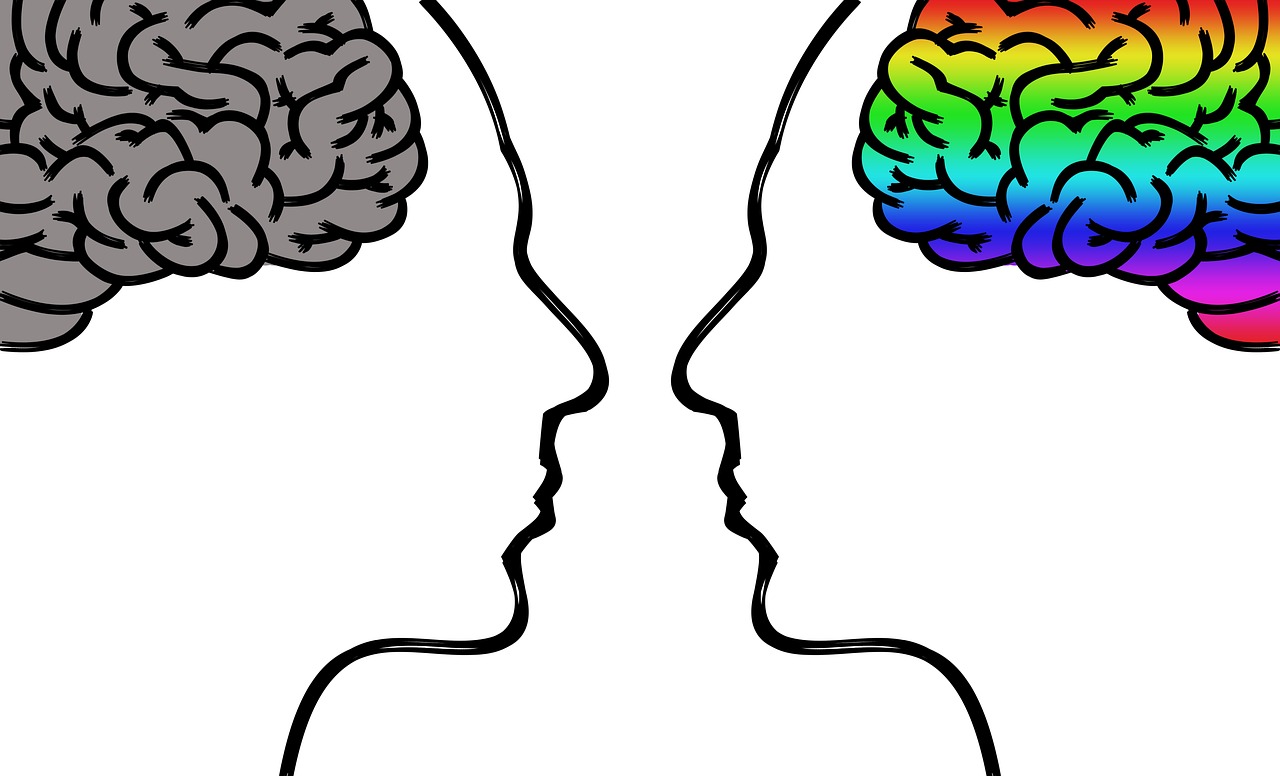
We can sum up the whole matter of identity into two basic positions, or two hermeneutically and historically deep theoretical trends though they are not the only possible positions on the question of the metaphysics of identity. Yet, we think that the two most prominent positions, and definitely the ones most worth taking seriously for our purposes, are as follows: First, Identity is a combination of a body and something else, say a soul, a spirit, a mind, a reason and the like. The crucial thing about this continental first view is that the soul, spirit, or mind are thought of as something prior, independent, separate from, and distinct from the body and controlling it. To use a commonly known enough word, this entity is the soul. So, human beings are, or have, or consist of bodies and souls with the soul as something distinct with priority over the body. We can call this position the "dualist view" or what Richard Swinburn (1984) calls "the dualist theory", or the soul-body dichotomy, or mind/body "binary opposition".
The second position, also called by Sidney Shoemaker (1984) "the materialistic account", is that which considers the body, that lump of organs, flesh, bones, and muscles that is always there in front of you when you see it reflected in the mirror, or in the gaze of others, and that entity in each one of us which drags around with us. It's the sort of object/subject that we can put on a scale, that is physical, and the biologists can study, and doctors can heal or treat, and undoubtedly made up of matter of various kinds of cells, molecules, atoms, and so forth. In contrast to the first view that considers that identity is constructed by an immaterial thing, or something that's not the body, or something that's not a material object, something metaphysical not composed of cells, molecules, and atoms: the soul as the house of life and being, or the basis of consciousness, thinking, and therefore it is perhaps the personality. What is crucial in this point of view is that the proper theoretical metaphysical understanding of the soul/spirit/mind is to think of it in nonphysical, antirealistic, ideal, and nonmaterial terms.
We can qualify "the dualist view" dualist obviously because there are two basic components: the soul and the body. The soul is something infinite, immaterial, and nonphysical, and the body is a palpable, material, and tangible substance. The other alternative view is not dualist but monist: it says that there's only one basic substance that determines the self, and only one basic kind of thing that is crucial in defining identity, i.e., the body. Accordingly, identity is just a certain kind of material subject/object, it is just a body that can do activities that most other material objects can't do. The monist view can be called hypothetical empirical "physicalism" because it says that what human beings just are made of, are these physical bodily objects: the self is just a body that can do various activities as an extension to it like thinking, speaking, writing poetry, falling in love... On the other hand, the dualist view suggests that people are bodies and souls. These are the two basic interpretations, with others that can be found in other disciplines.
From a logical point of view, and with the advent of progress in Identity studies more possible views have emerged. If the monist is right and there are bodies but no souls, then suppose someone who is also right and advocates that there are souls but no bodies, and someone else who might oscillate between both. This closely corresponds to a viewpoint that says there are thoughts but not genuinely physical things, or supposes that there are no stable notions and that identity is a dynamic process of becoming (like Kierkegaard for instance). Perhaps we fall into a kind of illusion when we look at physical stuff. Or one can be seriously misled or confused if they are thought of in just materialistic terms. The belief that only minds and their ideas exist is referred to as idealism. The use of physical items is merely an analogy for mental concepts or something similar. In both literature and philosophy, idealism has a very long history. In a nutshell, there are viewpoints in which the body and the mind are merely two perspectives on the same fundamental reality, which is neither physical nor psychological. The dualist position, which holds that humans have both bodies and souls and the physicalist view, which holds that our bodies are all we have and all we are, are the two viewpoints we will concentrate on.
To elaborate further on the dualist viewpoint; the crucial determinant is the soul, spirit, or mind as an immaterial substance at times transcendental (Plato, Kant), at others immanent (Aristotle), or both (St. Augustine), and we could call it by different names. The soul/spirit/ mind is based in or just is something nonphysical something nonmaterial. On the one hand, the soul can guide, control, and command the body. On the other hand, the body produces input that the soul eventually senses or feels. As is always the case in philosophy and other disciplines, there are more complex varieties of dualism in which the interaction may not be two-way, but for the purposes of this article, we will stick with the standard two-way interactionist dualism. My body is therefore under the power of my thoughts. There are many ways that my body might impact my thinking. Nevertheless, both of the entities are separate things.
However, there is still a strong relationship between such two poles. Even if talking about physical locations may be somewhat figuratively intended, we sometimes say that the soul is in the body. It's not like we believe that if you start opening up the body, you'll eventually find the specific location of the soul and say the location of the soul is just here. With the dualists, we tend to believe that the soul has a very intimate connection with the body, but identity is not the soul and the body, it is just the soul. So even if that intimate connection gets destroyed the soul could continue to exist. The second thing to make clear is that we could be interested in three separate concerns: Are bodies and souls really two separate things? Is the soul, an immaterial object, to be used to explain the mind? If the physicalist is correct, then we are bodies with the capacity for thought, planning, bodily feelings, and emotion as well as dreams and goals. We are physical beings with the ability to communicate. We are embodied persons or we are persons in bodies. These are the kinds of queries and problems this article addresses. You will gain a better understanding of yourself and the kinds of issues you deal with daily by using this as an introduction to the subject of social and personal identity.
## II. LITERATURE REVIEW
The philosophical account of the issue of identity is so complex. Charles Taylor sees in his seminal book *Sources of the Self: The Making of the Modern Identity* that the modern identity or the Western Self to be scientifically more precise is basically moral with 'self-mastery' of reason and dates back to antiquity with Greek philosophy and Plato's *Republic* in particular: "Plato's moral doctrine, as he sets it out in the *Republic*, for instance, seems quite familiar to us. We are good when reason rules, and bad when we are dominated by our desires." (Taylor, 115) Eventually what Taylor is doing is tracing the historical evolution the modern self has undergone. Taylor's methodology of making recourse to the history of philosophy starting with Plato, moving to St. Augustine, and arriving at Descartes and other enlightened philosophers is not strange for he underwent a similar strategy in another interesting work, *Politics of Recognition*.
Another way is to discuss this perplexing topic from a Kantian approach, in his Critique of Pure Reason, in the sense that when we reach a clear definition of "what is man?" consequently we will define what human identity is. This approach will lead us to a kind of transcendental metaphysical idealism that requires hermeneutics in an attempt to decipher intricate philosophical views on human nature. We will propose in this respect two major trends of thought which propose two versions of identity; a dualist view, and a monist view.
One last approach is to follow what John Locke explained concerning the issue. Locke, being the first to write overtly about such a concept in Book II, Chapter XXVII entitled 'Of Identity and Diversity' in his seminal book An Essay Concerning Human Understanding, saw that talking about identity needs not only a historical timeline but also a place reference, in other words, a spatiotemporal reference. Giving an account of the logically necessary and sufficient conditions for a person recognized at one moment to be the same person as a person identified at another is the problem of personal identification over time. In other words, it is the challenge of explaining what personal identity through time always entails, or as many philosophers put it, the challenge of defining the standard of personal identity over time (diachronic personality). In a different sense of the traits, or properties defining a criterion of personal identification across time would mean stating what constitutes acceptable personal identity proof.
## III. IDENTITY AS A WHOLE UNIT
In both philosophical versions of the identity, whether it is a dichotomy of soul and body with mastery of soul in the Platonic-Cartesian tradition of qualifying the soul as a notion of an immaterial, incorporeal, unextended soul that could be interpreted as unproblematically ensuring a personal identity separately and independent of physical changes over time, or the opposite, the dominance of the body in what Harold W. Noonan calls in his book Personal Identity 'the Bodily Criterion', we are still talking about one whole totality that can be described as self, or personal identity. The dualist philosophers were heavily preoccupied with unreal transcendental issues such as the nature of the soul (immanent or transcendental), the nature of the relationship between the soul and body (separate or connected), and the supremacy of the soul or mind. However, the main purpose was to define the human being, a common connection point between this movement and the physicalist approach. The latter, which associated the body with material ideas like time, space, mobility, performativity, memory, and causation, appeared to be gaining appeal. The prevalence of the aforementioned philosophical currents also indicates that a stable definition of one's own identity was sought after as a common goal.
### a) The dualist view
This view can be considered as the most historically dominant dating back to the times of ancient Greek philosophy up to now. Charles Taylor in Sources of The Self refers back to Plato as the first to highlight the self-mastery of the soul over the body. Yet, Plato was not alone in this respect, a whole list of philosophers followed this custom. Talyor mentions St. Augustine and Descartes as leading figures that deepened this tradition.
## i. The transcendental soul
Idealism started with Plato mainly with his utopian Republic. Plato proposes the soul, or the psyche, as a separate entity self-controlling the body. Every human being has a unique soul with three parts: first, the head's logos controls the other components and is connected to reason. Second, the thymos is connected to spirit and is situated close to the chest area. Desires are connected to the eros which is found in the stomach. Dialogues on the soul in the Republic demonstrate that Plato's views on ethics and metaphysics are consistent with the idea of a tripartite soul. A close relationship with the body is necessary for the soul, which is expressly described as being tripartite. The treatment of the soul is also holistic; the focus is on the whole soul rather than on its individual components, i.e., the health of the soul does not depend on the health of each component acting independently. Plato in this sense says in The Republic, Book 1, 353d. (Translation found in Campbell 2021: 523.): "Is there any function of the soul that you could not accomplish with anything else, such as taking care of something (epimeleisthai), ruling, and deliberating, and other such things? Could we correctly assign these things to anything besides the soul, and say that they are characteristic (idia) of it?
No, to nothing else.
What about living?
Will we deny that this is a function of the soul?
That absolutely is."
In modern philosophy, Kant and following him Fichte introduced a new perception of identity in their theories of knowledge. According to Kant in his Critique of Pure Reason, our cognitive abilities rather than reality itself are responsible for our experience's formal structure, which includes its unity and law-governed regularity. Because our mind generates experience in a way that is law-governed, it has a consistent form, it sees concepts rather than palpable objects. Therefore, for Kant, self-consciousness is the awareness of the mind's law-governed process of merging or synthesizing sensible elements to create a single experience. According to him: "this unity of consciousness would be impossible if in the cognition of the manifold the mind could not become conscious of the identity of the function by means of which this manifold is synthetically combined into one cognition". This premise is reflected in what we might call Kant's principle of apperception, which states that "The I think must be able to accompany all my representations; for otherwise something would be represented in me that could not be thought at all, which is as much as to say that the representation would either be impossible or else at least would be nothing for me"
Although Fichte argues in his Foundations of Natural Right (1797), that self-consciousness is a social phenomenon that necessitates communication between the "I" and society, he develops in his Foundations of the Science of Knowledge (Wissenschaftslehre) a system where identity or "absolute I" is a synthesis of an active "I" and a passive "I". The first statement of the Jena Wissenschaftslehre's first principles begins with the phrase "the I posits itself as an I." The first principle states that "the I posits itself as self-positing," since this activity of "self-positing" is considered to be the fundamental characteristic of I-hood in general. The verb "To posit" (setzen) here means simply "to be aware/ conscious of," so to even exist, the I must posit itself; but, the I can only posit itself to the extent that it divides against itself by positing itself as imperfect and limited (and thus as unlimited or "absolute" in the same way). Additionally, it is incapable of constructing or creating its own restrictions, which is to say, it cannot even hypothesize these limitations for itself. The intellect—as a finite entity—can't serve as the source of its own passivity.
## ii. The immanent soul
Aristotle's theory of the soul as presented primarily in his book De Anima (or On The Soul) contrasts with Plato's dualistic theory of the soul as presented earlier in this article. To answer the question "What is soul?" at the beginning of De Anima II.1 Aristotle made a distinction between matter (potentiality), form (actuality), and the compound of matter and form as inseparable. Second, according to Aristotle, all temporary existence follows the law of causality, changing from potential to actual. For instance, a seed develops into a tree. The tree's shape and material are not lacking in the seed, but they are not appealing to it. But why do we not state that it is identical to the tree if it has the same form and substance? The seeds in the tree are similar to each other in a certain sense. They aren't exact duplicates, though. They stand out for whatever reason, and Aristotle wants to discuss that distinction. A different manifestation of the seed's form, the tree, is created as it grows. This shape, which is the inner "telos" or "entelechy" of the living thing's seed, has always existed in potential form but became actualized through growth. As this process of growth develops over time, it represents the progression from potentiality to actuality.
According to Aristotle, the union of a person's body and soul constitutes the substantial existence of that person: "The soul neither exists without a body nor is a body of some sort. For it is not a body, but it belongs to a body, and for this reason is present in a body, and in a body of such-and-such a sort" (414a20ff). The soul is necessary for the existence of the body as a whole, and the body cannot exist without the soul. Plato's multifaceted soul is rejected by Aristotle, the soul cannot be separated from the body even though it is not a corporeal object. He claims that I don't experience desire in one area of my spirit and wrath or shame in another area at the same time. I have a single soul with several different abilities. Now, according to Aristotle, the soul is not a substance in the truest meaning of the word, but rather a composite that the soul creates by actualizing matter into a body that has been endowed with soul. As a result, Aristotle does not find the topic of the unity of the body and soul to be particularly intriguing, what is puzzling is: How does the soul bring the body into being? What do these different actualizations entail? According to Aristotle, the soul is indivisible from the body since it is the original actuality of it. The soul is the initial actuality of the body, according to Aristotle. The soul acting is the second reality of the body. Being alive is being constantly focused on, involved in, and oriented toward that form in its appropriate substance. Therefore, having a life is the first reality, followed by having a good life. According to Aristotle, the soul is not a particular action but rather the capacity or ability to engage in a variety of acts, particularly those involving cognition, feeling, and sustenance. Additionally, it is the actualized potential to engage in specific activities rather than an underdeveloped potential. Therefore, the fundamental abilities of the soul are those of development and nutrition, which are characteristics of plants. These are the abilities that animals possess when sensation, movement, and the ability to experience pleasure and suffering are included. The final powers of the soul are those of mind and intellect, which are only possessed by humans.
## iii. St. Augustine and the Illuminated Self
The modern reader will face some paradoxical impressions about Augustine's writings. The quantity of Augustine's writings much outweighs that of nearly all other ancient authors whose works have survived "In the Retractiones ("Revisions", a critical survey of his writings in chronological order down to 428 CE) he suggests a threefold division of his work into books, letters and sermons (Retractiones 1, prologue 1); about 100 books, 300 letters, and 500 sermons have survived.[^7]" Philosophical dialogues and discussions marked the beginning of Augustine's literary career after his conversion to Catholicism. These dialogues include well-known subjects including skepticism (Contra Academicos), happiness (De beata vita), evil (De ordine), and the soul's immortality (Soliloquia, De immortalitate animae). The immateriality of the soul (De quantitate animae), language and learning (De magistro), freedom of choice and human responsibility (De libero arbitrio), and the numerical structure of reality (De musica) were all topics that Augustine continued to explore. Augustine's early Christian philosophy is kind of summarized in the essay De vera religione.
St. Augustine, like the majority of ancient thinkers, held the view that the human being is a composite of body and soul and that the soul, which was viewed as the origin of life and the focal point of consciousness, perception, and thought, is, or should be, the controlling portion within this composite. St. Augustine was also the first to invent the notion of cogito: "Augustine was the inventor of the argument we know as the 'cogito' because Augustine was the first to make the first-person standpoint fundamental to our search for the truth." The human being is in a triadic dialectical relation between his soul and God on the one hand, his soul and his body on the other, and his soul and the external forms. The agency of the soul as a free will makes us accountable for our actions: "The world as I know it is there for me, is experienced by me, or thought about by me, or has meaning for me. Knowledge, awareness is always that of an agent." The rational mind should control its sensual tendencies and appetites so that it can grow wise and intelligent by turning to God, who is simultaneously the Supreme Being and the Supreme Good. The so-called concept of illumination, which is Augustine's theory of knowledge, is a clearly non-empiricist epistemology based on a likely Neoplatonic interpretation of Plato's notion of recall.
According to Augustine, illumination and an interior teacher are necessary for authentic knowledge. Such first-hand acquaintance is attainable through sense perception in the case of perceptible objects, which, strictly speaking, do not admit knowledge at all but only of opinion. The ability to understand intelligible objects, however, cannot be acquired empirically through the use of abstraction or communicated to us linguistically by a human teacher; rather, it requires personal intellectual activity that yields an intellectual insight, which we judge by a standard we can only find within ourselves. Mathematical, logical, and fundamental moral facts serve as the model for this type of cognition since we grasp them for ourselves rather than by accepting them from a teacher or a book (De magistro 40; see also De libre arbitrio 2.34). God—a view explicitly attributed to the Platonists in De civitate dei 8.7—who, in the manner of a Neoplatonic immaterial principle, is both immanent and transcendent in a dialectical relation to our soul—is the condition of possibility and the criterion of truth of this intellectual insight.
From sensory perception to theoretical reason or contemplation, Augustine finds three elements in all of our cognitive acts. They are as follows: [^1] an object that is either external to the mind (such as sense perception) or internal to it, in which case it is an image or a concept stored in our memory; [^2] a cognitive faculty that must be activated or "formed" by the object for cognition to occur; and [^3] a voluntary/intentional element that causes the cognitive faculty to be "formed" by the object. The third element ensures the active character of perception and intellection and also supports the idea that we cannot comprehend something until we deliberately direct our attention to it.
## iv. Cogito, all-inclusive reason, and infinite spirit
In a very remarkable manner, René Descartes was the first philosopher to announce the centrality of the "I". The reflective "I" first appeared in French as "Je pense, donc je suis" in his Discourse on the Method, then Descartes referred to it in Latin as "Cogito ergo sum" in Meditations on First Philosophy and eventually reappeared again in Latin in his later Principles of Philosophy. Descartes popularly saw that the existence of my "I" seems beyond any serious question. To question anything even my own existence by myself has to exist first. I am myself the only solid and dependable certainty. The existence of anything beyond me, however, is not so quickly and obviously recognized. "It began with the Prometheus defiance of René Descartes, who decided to go it alone, to step outside the custom and prejudice of his own age and culture, and to seek truth on his own. He thought it would be possible to judge the culture in which he had been reared from the vantage point of a solitary individual purified by doubt, who accepts nothing other than that which his own reason compels him to accept. Cosmic exile, as Quine aptly named it, was, above all, cultural exile. It expresses extreme distrust of culture, one's own, and all others. Moreover, Descartes felt an acute contempt for culture, which he called 'custom and example' and considered to be the source of all error. The human mind was so made as to ensure that, on its own, it would find the truth: this was Descartes' solution to the problem of evil, for it enabled him to exonerate God from the charge of leading us into error. It was not man as made by God who erred, but man as perverted by culture."
René Descartes asserts that: "While we thus reject all of which we can entertain the smallest doubt, and even imagine that it is false, we easily indeed suppose that there is neither God, nor sky, nor bodies, and that we ourselves even have neither hands nor feet, nor, finally, a body; but we cannot in the same way suppose that we are not while we doubt of the truth of these things; for there is a repugnance in conceiving that what thinks does not exist at the very time when it thinks. Accordingly, the knowledge, _I_ THINK, THEREFORE _I_ AM, is the first and most certain that occurs to one who philosophizes orderly."10
Provided that I am still trying to determine the world's existence on the foundation of my own being, I make myself the center of the globe and the referee of the world. My mindset is that if there is to be anything at all, it will have to be on my own conditions and laws, satisfying and meeting my individual requirements of proof standards that are set down by my confidence that I myself exist. All my knowledge depends on my personal comprehension of my existence: the only way for me to know anything else is for me depends on tracing it back to my personal knowledge of myself.
The point that "I think, I am, I exist" is Descartes' response. I can question and doubt the existence of any exterior object outside my own mind, and I can question the existence of what seems to be my whole body. But when I try to also question the existence of my inner self, I discover that I am still there alone as a questioning thinker. Besides, if I try to question the being of this questioning, then I still discover the action of my questioning. Also, no issue how difficult I try to question this questioning; I cannot help but discover the operation of questioning. My questioning is what in the end I cannot question. Doubting is thinking, and the existence of thinking indicates the being alone of a thinker. Hence, Descartes' popular conclusion: "I think, therefore I am". A castle and a barrier are built between the "I" and the world: the jail of my doubt, the process of thinking itself about any existence at all of anything beyond my mind. The 'Self' becomes unavoidable because my Self becomes the only factor I can know for sure. I end up with the issue of the unavoidable solitary self, a kind of estrangement that happens between myself and the world.
## IV. THE PHYSICALIST VIEW
The most common idea of personal identity is that it is made up of bodily identity, which is practically everyone's first assumption. The self as we understand it in daily life is actually established by physiological identity or as Harlod Noonan puts it: "P2 at time t2 is the same person as P1 at time t1 if and only if P2 has the same body as P1 had." Our bodies—that mass of organs, skin, bones, and muscles that always looms large in front of us when we look in the mirror or into the eyes of others—are the things that each of us carries around with us. It is the kind of physical item or subject that can be measured, that biologists can study, that medical professionals can heal or treat and that unquestionably consists of matter made up of different types of cells, molecules, atoms, and so forth.
### a) Monism
Perhaps Aristotle was the first to talk about the inseparability between body and soul but his theory insisted on the existence of dualism. Descartes followed the same tradition but believed that the soul/mind was separate from the body and could exist outside of it. Descartes asserts that the self is an immaterial substance that is separate from its body. This immaterial self has a body, and it is attached to that body so closely that they become one. Descartes maintains that the relationship between one's ego and one's body is fundamentally different from that of a pilot and his craft. Spinoza was the first to refute Descartes's theory and propose that being is one stable totality. Adopting a geometric methodology with precise definitions, axioms, demonstrations, and clear conclusions he asserts that there is a unity between God and Nature in a pantheist manner.
In his most important work, Ethics Demonstrated in a Geometrical Manner, Spinoza draws a fundamentally different conception of the universe. The book is divided into five sections: Of God, of the Nature and Origin of the Mind, the Origin and Nature of the Affects, Of Human Bondage, or the Power of the Affects, and Of the Power of the Intellect, or of Human Freedom. Aspects of general metaphysics (such as the presence of God, free will, the nature of bodies and minds, etc.) are covered in Part I. Part II addresses two mental topics: (i) a general theory of knowledge and (ii) what the mind is and how it interacts with the body. Spinoza outlines his theory of emotions (which he refers to as "affects") and a wholly deterministic view of human psychology in Part III. Spinoza offers his ethical philosophy in Parts IV and V.
Spinoza starts part one of his Ethics by definitions. He says the following:
II. "That thing is called finite in its own kind (in suo generne) which can be limited by another thing of the same nature. For example, a body is called finite, because we always conceive another which is greater. So a thought is limited by another thought; but a body is not limited by a thought, nor a thought by a body.
III. By substance, I understand that which is in itself and is conceived through itself; in other words, that, the conception of which does not need the conception of another thing from which it must be formed.
IV. By attribute, I understand that which the intellect perceives of substance, as if constituting its essence.
V. By mode, I understand the affections of substance, or that which is in another thing through which also it is conceived.
VI. By God, I understand Being absolutely infinite, that is to say, substance consisting of infinite attributes, each one of which expresses eternal and infinite essence.[^11]
He defines 'substance' as something that is not dependent on other things, which is where he begins his argument. Everything that exists, in Spinoza's view, is either a substance or a mode. A substance is something that cannot exist or be created without the presence of other things. Both conceptually and ontologically, substances are distinct entities. The only substance after this is God/nature. A mode or property is something that depends on and cannot exist in the absence of a material. Humans are limited beings with interdependent traits. He claims that there is no transcendent and personal God, no eternal soul, no free will and that there is no ultimate reason or objective for the cosmos to exist using a geometrical approach. Instead, Spinoza contends that all of nature, including humans, is governed by a single set of laws, negating the notion that humans are special. He also contends that nothing that occurs could have happened any other way, that the universe is one inherently active totality (which can be thought of as either "God" or "Nature"), and that the mind and body are one and the same thing conceived in different ways.
### b) John Locke's notion of person and memory
In the well-known chapter "Of Identity and Diversity" of his seminal book Essay Concerning Human Understanding (Book II, Ch. 27), John Locke was the first to formulate the identity question in a way that could be easily recognized. Yet, before dealing with Locke's theory on personal identity we need to bear in mind that the Lokean approach is highly hypothetical and empirical. In other terms, he is among the founders of the Anglo-Saxon empirical school in opposition to the transcendental continental school of thought. Empiricism relies on bodily senses, physical experiences, and palpable universal mechanical laws. So, the Lockean project has the purpose of defining the human being by defining it according to the faculty of understanding or consciousness. Yet, John Locke's approach to identity was misunderstood and at times misread by other scholars. More to the point it even received many objections. Galen Strawson in his book entitled Locke on Personal Identity: Consciousness and Concernment asks: "Why has he been so misunderstood? I blame certain influential commentators; in whose vanguard one finds one of the worst readers of other philosophers in the history of philosophy: the good Bishop Berkeley. Thomas Reid is also to blame, for although he is a great (and often funny) philosopher, and sometimes accurate enough in his renderings of the views of his predecessors, he enjoys mockery too much to be reliable, he's too free with the word "absurd," and his misreading of Locke's views on personal identity, which follows Berkeley's, is spectacular."
By identity and diversity, Locke means "the very being of things, when, considering anything as existing at any determined time and place, we compare it with itself existing at another time, and thereon form the ideas of identity and diversity." Individuation, time, and space are central key concepts in this theory, in other words, we are talking about a diachronic identity.
Locke was essentially starting from scratch when he developed his idea, thus despite the very simple language he uses, it is a somewhat complex and intricate theory. He held the quite rational position that the right identity criterion is what makes for consistency through time. Anything's identity seems to be a rather simple matter as long as it exists and remains self-identical. If A and B were identical particles of matter with a continuous history connecting them at various points in time, they would only be identical particles if a continuous pathway led from one to the other. What makes up a human body's identity, and how does that identity differ from other bodies? The answer is simple: a continuous history of such ordered life forms a living organism's identity over time. The fact that you are systematically changing through time is actually a key component of what it means to be a living entity. The best way to sum up what Locke has to say about personal identification is to say that a person is a thinking, intelligent being with reason and reflection who may conceive of themselves as the same thinking thing at different times. This is only possible because of consciousness, which is inseparable from thinking and crucial to it: "Self is that conscious thinking thing...which...is concerned for itself as far as that consciousness extends" (Essay II, xxvii. 17)
Locke is making a crucial distinction between a human being and any other living organism whether vegetal or animal. In contrast to other living things, humans are thinking, intelligent beings, and Locke claims that consciousness, which is inextricably linked to thought, is the key to the development of a person's identity over time. This continuity of consciousness will unquestionably be based on memory. It will be some type of consciousness of continuity of consciousness, mediated by memory, that makes me the same person as myself from years ago. Harold Noonan highlights that "The heart of Locke's account of personal identity is the claim that identity of substance is irrelevant. What matters for personal identity is sameness of consciousness and this may relate states of different substances and may fail to relate states of the same substance." $^{12}$ Locke indicates that any individual only looks back on those mental occurrences or deeds that they believe to be their own when he argues that "sameness of person consists in sameness of consciousness." In other words, the "subjective constitution of the self" $^{13}$ is the ideal lens through which to view the permanence of any person or self.
### c) David Hume's identity illusion
Half a century after John Locke's Essay Concerning Human Understanding David Hume wrote a book with almost the same title *Enquiry Concerning Human Understanding* but with the same purpose solidifying an already empirical school of thought that already started from the days of Francis Bacon. Eventually, this book didn't include any chapter on identity. Hume wrote about this topic in his earlier book *Treatise of Human Nature*: "Hume discusses personal identity in two places: in the main body of the Treatise of Human Nature (1978), in Section VI of Part IV of Book I, entitled 'Of personal identity', and in an Appendix published a year later with Book III, in which he declares himself wholly dissatisfied with his treatment of the topic in that section, but confesses that he now finds the whole matter a 'labyrinth' and that he knows neither how to correct his former opinions nor how to render them consistent: there is no discussion of the topic in the *Enquiry Concerning Human Understanding.*[^14]
There is no such thing as a personal identity, and there is no actual concept we can refer to as personal identity, so why do people believe so strongly that personal identity is something that is taken for granted and exists in reality? Where does the idea of identity come from? This is how David Humes, who is known for his skepticism, begins his essay. Hume asserts, in contrast with Locke's theory, that we do not have an idea of ourselves that is founded on such a single, unchanging impression. When common people speak of personal identity, they feel that they possess some sort of unchanging core over time. Hume is searching for a single constant and invariable impression because it is what is widely thought to make up the impression of self. When we reflect and observe, all we see are perceptions that are grouped together in bundles. We cannot discover a straightforward concept of who we are or a constant perception of who we are in these collections of perceptions. Hume is a proponent of the bundle theory of personal identity, which he invented. This view contends that "the mind itself, far from being an independent power, is merely 'a bundle of perceptions' without unity or cohesive quality."15 The self is nothing more than a collection of experiences connected by relations of cause and similarity, or, more precisely, the idea of such a collection is what constitutes the empirically supported notion of the self. Hume, therefore, believes that a person is similar to a series of mental occurrences that are connected to one another as cause and effect: "We may observe, that the true idea of the human mind, is to consider it as a system of different perceptions or different existences, which are link'd together by the relation of cause and effect, and mutually produce, destroy, influence, and modify each other. Our impressions give rise to their correspondent ideas; and these ideas in their turn produce other impressions....as the same individual republic may not only change its members, but also its laws and constitutions; in like manner the same person may vary his character and disposition, as well as his impressions and ideas, without losing his identity. Whatever changes he endures, his several parts are still connected by the relation of causation."16
## V. CONCLUSION
Although there are other alternative viewpoints on the issue of the metaphysics of personal identity, we may distill the entire issue into two fundamental positions, or two hermeneutically and historically significant theoretical movements: the dualist continental trend of thought, and the physicalist monist approach. According to the first view, identity is a fusion of a body and another element, such as a soul, a spirit, a mind, a reason, or anything like. The most important aspect of this continental first view is the idea that the soul, spirit, or mind is something that comes before, is independent of, is distinct from, and controls the body. The other alternative viewpoint, which is monist rather than dualist, maintains that there is only one basic object—the body—that defines identity and that there is only one basic kind of thing that decides the self. Personal identity, then, is merely a particular class of material subject or object; it is merely a body with abilities that most other kinds of material objects lack. The dualist philosophers were highly concerned with unreal transcendental issues like the nature of the soul (immanent or transcendental), the nature of the relation soul and body (separate or connected) with the supremacy of the soul or mind, but more to the point the purpose was to define the human being a common ground that relates this trend with the physicalist approach. The latter proved to be gaining popularity linking the body with material concepts like time, space, mobility, performativity, memory and causality. The uprising of the monist physicalist theories has led to a reverse trend: the importance of the practical mind over the critical, hypothetical "pure reason". Such reversal of interest signifies a possible unbalance which explains the uprising in the materialist Western culture. The dominance of the already mentioned trends in philosophy denotes also the common ground was to find a stable definition of personal identity. The existence of other elements that participated in sharpening the epistemological gap like history, religion, and culture were hidden in both philosophical trends and reveal that they are context bound to the Western mind and typical to the Western personal identity.
[^1]: Here is what Ralph Singh says: "We pretended to be real, to be learning, to be preparing ourselves for life, we mimic men of the New World, one unknown corner of it, with all its reminders of the corruption that came so quickly to the new" _(p.1)_
[^2]: Nowadays, the word "hybrid" is used more frequently and in different contexts. Both major postcolonial theorists Edward Said and Homi K. Bhabha have examined the idea of hybridity in their works, albeit they approach it in slightly different ways. In his seminal book "Orientalism" (1978), Edward Said mainly concentrated on how the "Orient" was portrayed in Western literature and conversation. On the other hand, Homi K. Bhabha is renowned for his more overt use of the postcolonial theory's notion of hybridity. The concept of hybridity is explored in Bhabha's work, particularly in "The Location of Culture" (1994), as a means of subverting rigid classifications and identities that are, in his words, "almost the same but not quite"p123. _(p.1)_
[^3]: According to Zygment Bauman in his Liquid Modernity, our social, political, economic, and personal lives have grown more fluid and unpredictable throughout time "fluidity" or "liquidity" as fitting metaphors when we wish to grasp the nature of the present, in many ways novel, phase in the history of modernity." P2. _(p.1)_
[^4]: Sociologist Richard Sennett wrote the book entitled The Corrosion of Character. Sennett examines how the modern world's evolving nature of labor and employment has eroded character and identity. He explores how more adaptable and sporadic kinds of jobs have taken the place of old job structures, which provide security and a sense of identity. Sennett contends that this change has had a significant impact on people's sense of self and their capacity to form lasting commitments and meaningful connections in both their professional and personal life. _(p.1)_
[^5]: "Muqaddimah" (also known as The Muqaddimah of Ibn Khaldun sometimes also called the "Prolegomena to History" or "Introduction to History"), written in 1377 by Abdurrahman Ibn Khaldun and is considered as a foundational text in the fields of historiography and sociology. _(p.2)_
[^7]: Tornau, Christian, "Saint Augustine", The Stanford Encyclopedia of Philosophy (Summer 2020 Edition), Edward N. Zalta (ed.), URL = . _(p.5)_
[^11]: De Spinoza, Benedictus. Ethics Demonstrated in Geometrical Order: And Divided Into Five Parts, Which Treat I. of God. II. of the Nature and Origin of the Mind. III. Of the Nature and Origin of the Affects. IV. of Human Bondage, or of the Strength of the Affects. V. of the Power of the Intellect, or of Human Liberty. 1883. p1. _(p.8)_
[^14]: Noonan, Harold W. Personal Identity. Routledge, 2004.p 63. _(p.9)_
[^6]: $^{6}$ A Key structural concept coined and discussed by Claude Lévi-Strauss oppositions in his influential work Structural Anthropology. _(p.2)_
Generating HTML Viewer...
References
47 Cites in Article
G Agamben (1998). Homo sacer: Sovereign Power and Bare Life.
L Althusser (1970). Ideology and Ideological State Apparatuses (Notes towards an Investigation).
Aristotle (1987). On the Soul.
Augustine (2017). Confessions. Books 1–8.
Z Bauman (2000). Liquid modernity.
G Berkeley (2013). The structure of the principles of human knowledge.
H Bhabha (1994). The Location of Culture.
M Buber (2013). The Eternal Thou.
De Spinoza,Benedictus (1883). Ethics Demonstrated in Geometrical Order.
R Descartes (1984). René Descartes: Principles of Philosophy: Translated, with Explanatory Notes.
René Descartes (1993). Meditations upon the first philosophy, in which are clearly proved the existence of God and the real distinction between the soul and the body of man..
René Descartes,René Descartes,John Veitch (2008). Discourse on the method of rightly conducting the reason, and seeking truth in the sciences.
René Descartes,John Veitch (2012). The Selections from The Principles of Philosophy.
U Eco (1997). The search for the perfect language.
J Fichte,J Fichte (2000). Foundations of natural right.
M Foucault (2019). Discipline and punish: The Birth of the Prison.
Sigmund Freud (2011). Beyond the Pleasure Principle..
G Hegel (1977). Phenomenology of spirit.
M Heidegger (1996). Being and time: A Translation of Sein und Zeit.
D Hume (1978). A Treatise of Human Nature.
W James (1950). The principles of psychology.
I Kant (2007). IMMANUEL KANT CRITIQUE OF PURE REASON.
I Khaldûn (2020). The Muqaddimah: An Introduction to History -Abridged Edition.
S??ren Kierkegaard (2004). The Sickness Unto Death: A Christian Psychological Exposition of Edification and Awakening.
S Kierkegaard (2014). The concept of anxiety: a simple psychologically oriented deliberation in view of the dogmatic problem of hereditary sin.
Julia Kristeva (1989). Black Sun.
J Lacan (2021). Ecrits: A Selection.
Claude Levi-Strauss (2008). Structural Anthropology Volume II.
K Marx,F Engels (2011). The Marx-Engels-Jahrbuch 2003 Edition of The German Ideology.
Maurer (2013). Encyclopaedia Britannica.
Maurer (2013). Encyclopaedia Britannica.
V Naipaul (1967). The Mimic Men.
Harold Noonan (2004). Personal Identity.
D Norton,M Norton (2011). David Hume: A Treatise of Human Nature: Volume 1: Texts.
Plato (2012). Jarvis, Dr John Herbert, (born 16 May 1947), Senior Vice President Advisor, John Wiley & Sons Inc., 2007–09 (Senior Vice President, John Wiley and Sons - Europe, 1997–2007).
R Rorty (1980). Philosophy and the mirror of nature.
J Sartre (1992). Being and Nothingness.
R Sennett (1998). The corrosion of character: The personal consequences of work in the new capitalism.
S Shoemaker (1984). Personal identity.
C Taylor (2007). A Secular Age.
Charles Taylor (1989). Sources of the Self: The Making of the Modern Identity.
Christian Tornau (2020). Saint Augustine.
Edward Zalta (null). From Plato to Augustine.
Christian Tornau (2020). Saint Augustine.
Edward Zalta Unknown Title.
Von Leibniz,G Strickland,L (2014). Leibniz's Monadology: A New Translation and Guide.
Kenneth Winkler (1991). Locke on Personal Identity.
No ethics committee approval was required for this article type.
Data Availability
Not applicable for this article.
How to Cite This Article
Khaled Hafdhi. 2026. \u201cRoots of the Western Self: Dualist and Monist Philosophies of Personal Identity\u201d. Global Journal of Human-Social Science - H: Interdisciplinary GJHSS-H Volume 23 (GJHSS Volume 23 Issue H7): .
Explore published articles in an immersive Augmented Reality environment. Our platform converts research papers into interactive 3D books, allowing readers to view and interact with content using AR and VR compatible devices.
Your published article is automatically converted into a realistic 3D book. Flip through pages and read research papers in a more engaging and interactive format.
Personal identity has rec ently appeared in the agenda of social sciences and humanities in a variety of ways. There is a huge and expanding body of literature on identity, and “identity studies” has gained significant importance in the social sciences and humanities across the globe. This article aims to trace back the history of theories on Western personal identity from an interdisciplinary angle. Defining identity raises many questions and invites different disciplines ranging from hermeneutics, philosophy, sociology, psychology, psychoanalysis, linguistics, anthropology, and many more. Answering questions about the nature of the self and the relationship between a person and her body led this article to trace back two lines of thought: a dualist view that sees identity in terms of soul and body dichotomy, and a monist view that focuses on the body as a defining element of identity. The enormous philosophical interest in the idea of personal identity is due to concerns with the nature of personal identity throughout time and the relationship, if any, between personal identity and bodily identity.
Our website is actively being updated, and changes may occur frequently. Please clear your browser cache if needed. For feedback or error reporting, please email [email protected]
Thank you for connecting with us. We will respond to you shortly.