I. INTRODUCTION
Educational institutions, among them schools, have the special responsibility of socializing and integrating societal members into the worthwhile knowledge, skills and values of society. These special functions of the school are meant to give instructions on social control and also keep the knowledge, skills and values of society, alife, for generations, yet unborn. This thinking suggests that, schools play multiple roles in societies' development (Blakemore & Cooksey, 1980; Afangideh, 2011).
As a socializing agency in society, the school is made up of components, which interact with and among themselves, for the achievement of educational goals and objectives. These components parts include the school personnel (students, teachers, support staff and administrators), the school environment, decisions, communication and finances. These parts in the perception of Obasi (2004), represent the scope of educational management. However, it is interesting to note that Babalola (2007) presents an expansive scope of the task areas in educational management to include career, change, consumer's standard (quality), meetings, team and workload management.
In the study, the researchers worked on the thesis that school physical safety and social relationships correlate with teacher productivity. These variables are from the sub-areas of environmental and personnel management, as they relate to the productivity of the teacher in the school system.
Following from the foregoing, it became naturally expedient that, presentation be made on teacher productivity, before delving into its relationship with school physical safety and social relationships. Literary, teacher productivity may be seen as the extent to which the teacher is able to discharge his teaching functions, in manners that, he stands to achieve the objectives of his lessons. This thinking enjoys supports from Oluwuo and Afangideh (2011). Elsewhere, scholars prefers to describe the productive teacher. For Peter-Deluca (2016), the productive teacher possesses the ability to develop relationship with students is patient, caring and have a kind personality, good knowledge of the learners, is dedicated to teaching and constantly engaging students in learning. From a different perspective, Wabisa Learning (2019), sees the productive teacher, as the one, who can breath new life into lessons, investigates new path ways for learning, involves in continuous professional development, build his Personal Learning Network (PLN), explores new digital tools and takes for himself in doing his work. In the thinking of the present researchers, teacher productivity entails what a teacher needs to have, to deliver effectively, according to the exigencies of the time.
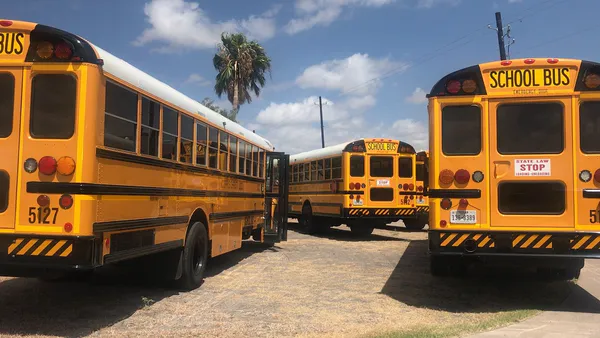
One of the variables for examination in relation to teacher productivity is school physical safety. Physical safety is the absence of harm or injury that can be experienced by any person, from a physical object or practice that includes a physical object (Your
Experience Matters, n.d). For the National Centre on Safe Supportive Learning Environments (2019), it refers to the protection of all stakeholders, including families, care-givers, students, school staff and the community from violence, theft and exposures to weapons and threats, in order to establish a secure learning environment. When physical safety becomes the rule in schools, Physical Safety (2019) reports that buildings are perceived as well as inspected, to be safe, implementation of health guidelines exceeds local, state and community expectations, personnel are proactive about the conditions that could lead to accidents, policies and procedures regarding physical safety are fully implemented and carefully monitored. These, in the position of the Commonwealth of Australia (2018) are essential, because physical safety makes for a safe and supportive learning environment, in which students and staff can thrive, risky behaviours, as violence, imperil safety for students and staff and undermine the teaching and learning climate, just as it unimportant for students feelings of connection to school and their educational experience. However, what cannot be ascertained now, is whether school physical safety correlates with teacher productivity.
Another variable for examination in this study is the social relationships in the schools. In sociological studies, social relationships refer to relations or interactions between two or more individuals. It can therefore refer to all social interactions between people and even groups in schools. Social interactions among people are considered very healthy for individuals and groups. As Umberson and Montez (2010) note, they have significant effect on health, on behavioural, psychological and physiological pathways, have and benefit on health and shape health outcomes, which can impact positively on work place output. Leonard (2018) observes that, with the characteristics such as exchange, competition, co-operation, conflict and coercion, social relationships increase good feelings, morale, improve work and satisfaction and reduce confusion, anxiety, tension and uncertainty. It follows that, if these attributes become the rule and not the exception, in the school system, it will lead to productive development of work morale, consciousness of consumer satisfaction, facilitating positive interaction and risk reduction on the part of teachers. These in education parlance are indicators or pathways to teacher productivity.
II. STATEMENT OF THE PROBLEM
In contemporary society, it is widely believed that, teachers who work in schools where the physical safety of school members is guaranteed protection and where the teachers are allowed the freedom to involve themselves in webs of social interactions or relationships, such teachers are bound to perform in manners considered productive. Following from this proposition, school leaders and significant others in the school system, are adjudged to be making considerable efforts, to ensure school physical safety and also allow an open climate, where school members can interact, freely. Surprisingly, research findings, observations and comments from stakeholders in school affairs, tend to show that, schools are not physically safe and that school administrators run schools as closed units, which make it difficult for teachers to work with confidence, security and freedom of interaction, which enhance productive undertakings. The researchers were bothered that despite the conditions provided for productive services, the reverse becomes what obtained and therefore wondered whether school physical safety and social relationships correlate with teacher productivity in secondary schools.
III. AIM AND OBJECTIVES OF THE STUDY
The study examined physical safety and social relationships as correlates of teacher productivity in public secondary schools in Akwa-Ibom State. Specifically, the study sought to:
i. Determine the correlation between physical safety and teacher productivity in public secondary schools in Akwa-Ibom State of Nigeria.
ii. Establish the correlation between social relationships and teacher productivity in public secondary schools in Akwa-Ibom State of Nigeria.
IV. RESEARCH QUESTIONS
The following research questions were answered in the study:
i. What is the correlation between physical safety and teacher productivity in public secondary schools in Akwa-Ibom State of Nigeria?
ii. What is the correlation between social relationships and teacher productivity in public secondary schools in Akwa-Ibom State of Nigeria?
V. RESEARCH HYPOTHESES
The following hypotheses were tested in the study at 0.05 level of significance.
: There is no significant correlation between social relationships and teacher productivity in public secondary schools in Akwa-Ibom State of Nigeria.
VI. METHODOLOGY
The design for the study was correlational, with the population as all the 268 public secondary schools in Akwa-Ibom State of Nigeria. These schools have 268 principals from which number 203 (75%) were selected as sample, using the simple random sampling technique. The instrument of the study were two. These included 18-itemSchool Physical Safety and Social Relationships Scale and the 11-item Teacher Productivity Index (TPI), with a reliability indexes of 0.76 and 0.86, respectively, obtained using Cronbach Alpha Statistics. Pearson Product Moment Correlation Coefficient was used in answering the research questions while the r.values from the Pearson were converted p.values and used in testing the hypotheses at 0.05 level of significance.
VII. RESULTS
The results of the study came from the answers to the research questions and the test of hypotheses. Thus;
Research Question 1: What is the correlation between physical safety and teacher productivity in public secondary schools in Akwa-Ibom State?
: There is no significant correlation between physical safety and teacher productivity in public secondary schools in Akwa-Ibom State of Nigeria.
| Variables | n | df | r.value | p.value | Alpha Level | Decision |
| Physical Safety | 202 | 200 | 0.76 | 0.00 | 0.05 | Significant (Positive High Correlation) |
| Teacher Productivity |
Data on Table I, presents the Pearson Product Moment Correlational Calculations on the correlation between physical safety and teacher productivity in public secondary schools in Akwa-Ibom State of Nigeria. With data from 202 authenticated respondents, the calculated r.value stood at 0.76, which depicted a positive and high correlation between physical safety and teacher productivity in public secondary schools in the state, studied. When the r.value of 0.76, was converted to probability value, it resulted in 0.00, which is less than the Alpha level of 0.05. Based on the foregoing observations, the researchers rejected the null hypothesis in favour of the alternative that, there is a significant correlation between physical safety and teacher productivity in public secondary schools in Akwa-Ibom State of Nigeria.
Research Question 2: What is the correlation between social relationships and teacher productivity in public secondary schools in Akwa-Ibom State?
: There is no significant correlation between social relationships and teacher productivity in public secondary schools in Akwa-Ibom State of Nigeria.
| Variables | n | df | r.value | p.value | Alpha Level | Decision |
| Social Relationships | 202 | 200 | 0.85 | 0.00 | 0.05 | Significant (Positive High Correlation) |
| Teacher Productivity |
* Legend for Table 1 applies
Data on Table 2, presents the Pearson Product Moment Correlation Calculations on the correlation between social relationships and teacher productivity in public secondary schools in Akwa-Ibom State of Nigeria. With data from 202 authenticated respondents, the calculated r.value stood at 0.85, which showed a positive and high correlation between social relationships and teacher productivity in public secondary schools in the state, studied. Further, when the r.value of 0.85 was converted to probability value, it resulted in 0.00, which is less than the Alpha level of 0.05. Arising from these observations, the researchers rejected the hypothesis in favour of the alternative that, there is a significant correlation between social relationships and teacher productivity in public secondary schools in Akwa-Ibom State of Nigeria.
VIII. DISCUSSION OF FINDINGS AND IMPLICATIONS
a) School Physical Safety and Teacher Productivity in Secondary Schools
The first finding of the study is that there is a positive high correlation between school physical safety and teacher productivity in public secondary schools in Akwa-Ibom State of Nigeria. Also, a corresponding finding from test of hypothesis shows that there is a significant correlation between school physical safety and teacher productivity in the schools. These findings agree with the National Centre on Safe Supportive Learning Environment (2019), Physical Safety (2019) and Common Wealth of Australia (2018). These academic sources and scholarly agencies have established a nexus between school physical safety and members productivity. These findings may be explained in the fact that, with the current trend, where school leaders are expected to make provisions for physical safety, school members feel safe to put in their best. This implies that schools where teachers are productive, there is a corresponding aura of physical safety.
b) Social Relationships and Teacher Productivity in Secondary Schools
The second finding of the study is that, there is a positive high correlation between school social relationships and teacher productivity in public secondary schools in Akwa-Ibom State of Nigeria. Also, the study also establishes a significant correlation between school social relationships and teacher productivity in the schools. These findings agree with Montez (2010) and Leonard (2018). The researcher and scholar have established a relationship between social relationships in organizations and productivity in health and other organizations. A possible explanation for this trend may not be unconnected with the fact that, where organizational members are involved in active social interactions, they are bound to do well, in their official engagements, which benefits the organization. These findings imply that, where teachers are productive, there are webs of social interactions in such schools.
IX. CONCLUSION
Based on the findings of the study, it is concluded that school physical safety and social relationships are strong correlates of teacher productivity in secondary schools.
X. RECOMMENDATIONS
In the light of the findings and conclusion of the study, it is recommended as follows:
Stakeholders in school management, should continue to put in place appropriate physical safety measures for implementation in schools, as this will continue to guarantee the safety of the school environment for positive output.
School members should endeavour to maintain the existing tone of social relations while also thinking of new ways to improve such relationships, as social relationships have positive implications for members productivity in educational organizations.