The study of Science, Technology and Society (STS) is quite embracing and relevant to today’s society. In this article, we intend to approach the issue and reflect on the interaction that exists between the three areas and education, as well as the relationship with Science, Technology, Engineering and Mathematics (STEM). For that, a qualitative research was carried out from a narrative review about the subject in books, articles and works presented in event annals highlighting STS in the context of education, the challenges faced in relation to the STEM approach and the possibilities of integration between science, technology and society in engineering courses. The results indicate that there are challenges such as lack of adequate training for teachers, lack of didactic resources and resistance to change on the part of some educators and managers, as well as that the STS approach in education and STEM in the training of engineers makes it possible to develop professional skills and competencies focused on sustainability, innovation and a fairer and more humane society.
## I. INTRODUÇÃO
busca humana pelo entendimento das leis da natureza remonta à antiguidade, quando os gregos e egípcios realizavam estudos e observações para entender os fenômenos naturais - conhecimentos esses que foram se acumulando e dando origem ao que entendemos hoje como ciência. Ao longo dos séculos, a ciência vem evoluindo e se desenvolvendo em diferentes culturas e sociedades, sendo influenciada por diversas correntes filosóficas e contextos sociais complexos.
O estudo do tema Ciência, Tecnologia e Sociedade (CTS) é bastante abrangente, indo além do que se discute neste artigo. Temos como objetivo revisitar uma reflexão a respeito não só da interação que existe entre essas três áreas e a educação, mas também a relação com Ciência, Tecnologia, Engenharia e Matemática (STEM).
A discussão a respeito do papel do STEM, em particular nos cursos de Engenharia, se dá pela possibilidade que essa abordagem traz para o desenvolvimento não só de habilidades profissionais dos estudantes, como também pela busca em formar indivíduos cada vez mais comprometidos com o meio ambiente e com uma sociedade mais justa e humana.
No contexto amazônico, especificamente no Amazonas, torna-se estruturante pensar nas questões sociais, ambientais, éticas, políticas e suas conexões com os povos do campo, das águas e das florestas que aqui habitam e se relacionam com: o Polo Industrial de Manaus (PIM) nos segmentos eletroeletrônico, duas rodas, naval, mecânico, metalúrgico e termoplástico, entre outros (Brasil, 2017); a extração de minerais que vem fazendo parte da economia do estado (Hauradou e Amaral, 2019); e a bioeconomia gerada do desdobramento das ciências básicas, aplicadas e áreas tecnológicas (informática, robótica e controle de processos) (Willerding, et al, 2020).
Diante dos impactos que as questões econômicas podem causar na sociedade e no meio ambiente, a engenheira dialoga com estes cenários locais e globais, tonando-se campo fértil para integração de CTS e STEM, numa perspectiva de ensino crítico e reflexivo sobre ciência e tecnologia, possibilitando uma capacidade de resposta rápida as inovações e soluções tecnológicas.
Apesar de importante, a abordagem STEM nas instituições de ensino superior enfrenta desafios aos quais podemos elencar como sendo a sua implementação, a mudança na cultura educacional, falta de formação pedagógica dos professores, ausência de recursos didáticos adequados e a necessidade de uma abordagem interdisciplinar e aplicada. Dessa forma, para torná-la possível é necessário que as instituições de ensino superior estejam preparadas para enfrentá-los, investindo em recursos e formação adequada de seu corpo docente.
Neste estudo discutimos quais os desafios e as possibilidades para o STEM nos cursos de engenharia, com foco na temática Cts? Para isso, realizamos uma revisão narrativa sobre o tema em livros, artigos e trabalhos apresentados em anais de evento, a fim de discutir alguns apontamentos sobre a abordagem Ciência, Tecnologia e Sociedade (CTS) na educação e o STEM na formação de engenheiros relacionado com CTS, de maneira que possam contribuir para a formação de profissionais críticos e reflexivos.
## II. AbOrDAGeM CiÊNCIA, TECNOLOGIA E SoCiEdade (Cts) na EDUcAÇÃO
Quando questionados quanto ao conceito de tecnologia, logo nos vem à mente, aparelhos eletrônicos, de informática e comunicação, pois estamos acostumados a nos referir à tecnologia como equipamentos e aparelhos. Estes são considerados exemplos de tecnologia, assim como um simples lápis ou um caderno também o são, pois, a tecnologia não é representada apenas pelo produto final, mas pelo conjunto de saberes necessários desde a sua concepção, execução e à utilização do produto ou serviços (Veraszto et al, 2008; Oliveira, 2008).
A tecnologia, então, surge da capacidade do homem em expandir seus conhecimentos, facilitar seu trabalho, tornar a vida mais agradável a partir das dificuldades encontradas e com criação de instrumentos (artefatos, sistemas, processos e ambientes), capazes de suprir suas necessidades históricas pessoais e coletivas, garantindo sua sobrevivência em qualquer ambiente com diferentes formas, usos e aplicações (Kenski, 2007; Veraszto et al, 2008; Araújo e Sá, 2021).
Na antiguidade, a tecnologia estava voltada para o comércio, transporte de água, para uma economia predominantemente doméstica, mais tarde virou força propulsora da expansão social para o crescimento das cidades pelo desenvolvimento da tecnologia do transporte e hoje como em outros momentos da história da humanidade o monopólio das armas e do poderio militar, do emprego de imagens, assim como também as tecnologias digitais (Elias, 1994).
A temática que envolve a tecnologia, continua alvo de preocupação e exige reflexões, por ser um dos principais problemas teóricos e práticos da atualidade, abordados nos mais diversos campos de estudo,
Da Engenharia à Sociologia da Ciência, da História à Biotecnologia, da Antropologia aos Estudos Sociais da Ciência, da Física/Química/Matemática à Pedagogia/ Psicologia/Economia, passando pelas Ciências da Computação, ecoam questões que envolvem a condição tecnológica. Não só! O tema não se restringe ao universo acadêmico e um observador mais estimulado não terá dificuldade de encontrar nas transmissões televisivas, nos jornais, nos mercados, nas praças, nos diálogos do cotidiano, elementos teóricos problematizadores da referida temática (Silva, 2007, p.116).
Nessa perspectiva, na busca incessante pelo bem-estar humano, surge o conflito entre a manutenção dessa situação e o risco à sobrevivência devido à exploração excessiva, destruição dos recursos naturais e até mesmo da degradação humana, pois se tornou acessório da tecnologia, sendo substituído até mesmo das relações afetivas e morais constituindo-se como fenômeno de alienação (Oliveira, 2008).
A abordagem CTS tem como um de seus objetivos a compreensão da ciência e da tecnologia como atividades humanas, socialmente situadas e culturalmente mediadas que superará a visão ingênua e idealizada da ciência e da tecnologia como atividades neutras, objetivas e desinteressadas, propondo uma reflexão crítica sobre as implicações sociais, políticas, econômicas e ambientais em nossa sociedade (Bazzo, 2018).
Apesar de haver muitas iniciativas e produções bibliográficas em CTS, ainda há desafios a serem enfrentados - como a falta de formação adequada dos professores para trabalhar com CTS e a dificuldade em integrar essa abordagem ao currículo escolar. Além disso, Bazzo (2018) aponta haver uma tendência em reduzir a abordagem CTS a um conjunto de técnicas ou atividades pontuais, sem considerar sua dimensão crítica e reflexiva.
A visão desta dificuldade de CTS chegar até a escola sempre me acometeu desde que comecei a trabalhar com a relação ciência, tecnologia e sociedade. [...] Essa dificuldade se acentuou nesses últimos anos porque pela 'febre' das publicações em revistas 'indexadas' muitos autores se despreocuparam em chegar até os professores que estavam na lida diária da construção de conhecimento (Bazzo, 2018, p.262).
Mesmo promissora, ainda há muito o que ser feito para consolidar a abordagem CTS na educação brasileira. O autor destaca haver muitas iniciativas e produções bibliográficas na área, bem como a criação de grupos de pesquisa e redes colaborativas. Isso porque, o ensino de ciências no Brasil ainda é marcado por uma visão tecnicista e descontextualizada da ciência, que não considera as dimensões sociais, culturais e políticas envolvidas na produção do conhecimento científico (Bazzo, 2018).
É necessário avançar na consolidação da abordagem CTS na educação brasileira, buscando superar os desafios mencionados. Ele também ressalta a importância de se manter uma perspectiva crítica e reflexiva sobre a ciência e a tecnologia, buscando desmistificar esses temas e promover um desenvolvimento tecnológico mais humano (Bazzo, 2018).
Nesse processo civilizatório é importante entender as concepções dos processos sociais, a economia, a política, a tecnologia, a cultura ao que tange a mudança de conduta e sentimentos humanos em outras direções. Muito embora essa mudança não tenha sido "racionalmente" planejada, não quer dizer que tão pouco foi aleatória, foi pela ação integrada do homem (ações coletivas são mais fortes para o processo civilizador).
De acordo com N. Elias (1994, p. 199) "a transformação da existência social na totalidade é a condição básica para civilizar-se a conduta", mas apesar disso costuma-se mensurar o grau de civilização pela estrutura social a qual pertencem, geralmente julgando-se civilizados aqueles inseridos numa cultura digital.
A aplicação da ciência e tecnologia trouxeram implicações na organização do trabalho e das empresas e, consequentemente, nas profissões e na maneira como ocorre o processo de formação destes no contexto educacional. Desta forma, os avanços tecnológicos, em especial na informação e comunicação, impactam na formação de professores, nos processos de ensino e aprendizagem, nos currículos e nas políticas educacionais de CTS, ou seja, na forma de conceber a educação (Peña; Alves; Peppe, 2003).
Na busca por uma sociedade mais justa e igualitária, a educação tecnológica é uma possibilidade de emancipação do cidadão, quando visa formar cidadãos críticos e reflexivos para o mundo, por conhecimentos técnicos das ferramentas necessárias para o trabalho, para contribuir na construção de uma sociedade mais humana (Durães, 2009).
Desta forma, Gonçalves e Azevedo (2021), ressalta que a "Educação Tecnológica busca não somente formar um nível ou grau, mas sim uma formação que consiga proporcionar aos indivíduos um olhar crítico e reflexivo para as questões do mundo". Ou seja, deve-se incentivá-los a pensar de forma crítica e analítica sobre o papel da tecnologia em nossa sociedade e refletir sobre as implicações éticas, sociais, ambientais e econômicas do uso da tecnologia, tais como o impacto da tecnologia na privacidade, segurança, saúde, emprego, relações sociais, entre outras.
Para Harari (2018), compreender o impacto da tecnologia na sociedade, reforça a ideia de que a educação tecnológica deve incluir uma formação mais ampla, que vá além das habilidades técnicas e profissionais, buscando desenvolver um pensamento crítico e reflexivo das implicações que a tecnologia pode trazer para a sociedade.
O autor argumenta que a tecnologia está mudando rapidamente a sociedade, criando oportunidades e desafios, dessa forma, o ensino tecnológico pode ajudar a preparar os estudantes para lidar com essas mudanças, capacitando-os a adaptarse a novas tecnologias e contextos (Harari, 2018).
Não podemos deixar de descrever a relação entre a Educação Tecnológica com o STEM, o qual é uma abordagem interdisciplinar para o ensino que integra essas quatro áreas de conhecimento, e é amplamente reconhecido como uma forma de preparar os estudantes para as demandas do mercado de trabalho atual, valorizando habilidades em tecnologia e ciência. Além disso, "permitem desenvolver a observação, o questionamento e a resolução de problemas no processo de ensino e aprendizagem" (Bacich; Moran, 2018).
Bazzo, Pereira e Bazzo (2014) apontam três alternativas para a inserção do enfoque CTS no currículo de Engenharia, a) inserção de temas sobre CTS nos conteúdos; b) inserção de disciplinas específicas de CTS, c) organização de um currículo no qual todas as disciplinas tenham enfoque CTS (descritas pelos autores como a abordagem ideal) e na formação didático-pedagógica que apontam para um olhar reflexivo na abordagem STEM.
## III. sTEm na FORmAÇÃo dE ENgENheiros E a RelaçÃo Com cts
Os estudos sobre STEM emergem nos Estados Unidos a partir da corrida espacial de 1950 e 1960 engenheiros, cientistas e matemáticos ajudaram a enviar os primeiros objetos ao espaço, em 1970 e 1980 o EUA tornou-se líder global de educação científica e os computadores passaram cada vez mais parte da vida das pessoas. Nos anos de 1990, ciências, matemática, engenharia e tecnologia, SMET, foi utilizado pela National Science Foundation (NSF), orientaram políticas de currículo integrado, avaliações externas e em larga escala, levando para as escolas a alfabetização científica, fortalecendo sobretudo a economia competitiva usando como fundamento a tecnologia e engenharia (Pugliese, 2020; Hardoim e Santos, 2021).
Nos anos 2000, a palavra do acrônico STEM aparece na literatura perdurando até os dias atuais, contudo só em 2008 passou a chamar-se STEAM, que para alguns aparece como estímulo à criativade e estética e para outros como forma de evitar a preeminência da Ciência e da Tecnologia em relação aos demais (Pugliese, 2021). Em 2010 o termo STEM tornou-se popular, mas referia-se as quatro áreas do conhecento de forma distinta, de lá para cá em 2024 podemos perceber que no contexto educacional brasileiro há movimentos de integrar essas áreas numa abordagem de aprendizagem integrada e interdisiclinar (Gamboa et al., 2020; Hardoim e Santos, 2021).
Internacionalmente existem muitas críticas à educação STEM, por estar relacionada a movimentos de políticas educacionais globalizantes para atender sobretudo ao mercado de trabalho competitivo e impulsionar ao crescimento econômico, com algumas ações voltadas as mudanças nos currículos, entregas de pacotes metodológicos de ensino, materiais (kits de maker) e espaços, principalmente no ensino médio (Pugliese, 2020b).
Embora seja importante preparar estudantes para as demandas do mundo do trabalho atual e futuro, é importante que carreiras relacionadas à ciência, tecnologia, engenharia e matemática suscitam uma educação ampla, humanizada e equilibrada para a vida profissional.
Para Bacich e Holanda (2020) as palavras do acrônico STEM, nome utilizado neste estudo, ganham sentido quando relacionados a aprendizagem ativa e integrativa. Para a Ciência estão os conhecimentos científicos e a experimentação que levam à reflexão e modelagem de diferentes fenômenos; a Tecnologia para obtenção de informação, análise, uso de programação para soluções de problemas; a Engenharia para estudantes realizam o planejamento, o design e a construção de objetos para solucionar algo para compreensão de um fenônemo ou conceito científico; a Arte, como forma transversal da arteeducação na proposta de inovação, criatividade, pensamento crítico, comunicação, integração; e a Matemática empregada para medir, calcular, projetar soluções, ajudar nas análises dos dados obtidos e desta forma integrar a educação científica e tecnológica. (Bacich; Holanda, 2020)
Na abordagem STEM são considerados relevantes os conhecimentos das áreas STEM pelo menos ao nível de compreensão conceitual, poisajuda o professor a apreender e desenvolver o conhecimento pedagógico no ensino STEM. Esse diálogo entre conheicmento e ensino possibilita estudantes a desenvolvem sua capacidade de realizar investigações, resolver problemas da vida cotidiana, trabalharem colaborativamente e desenvolverem sua capacidade de criação, que são balizares na formação do engenheiro e do papel da CTS (Kutlu, Bakirci e Kara, 2022; Tekin e Şan, 2023).
Em consonância com Bazzo e Costa (2019) é questão de engenharia pensar o uso dos recursos naturais, as questões climáticas, os impactos na distribuição de renda na sociedade, refletindo o papel CTS na formação de engenheiros e na formação dos professores de engenharia para uma toma de consciência crítica, criativa,resolutiva, ética e humanista.
Desta forma, esta abordagem é vista cada vez mais como caminho possível aos cursos de Engenharia, à medida que as questões ambientais e sociais das quais estamos vivendo e que colocam em risco a segurança global. Logo a demanda por habilidades STEM articuladas à CTS está se tornando exasperada devido ao cenário econômico, social, ambiental e político enfrentados por muitos países.
No Brasil, a Resolução N° 2, de 24 de abril de 2019, estabelece as novas Diretrizes Curriculares Nacionais (DcN) para a formação em engenharia. Essas diretrizes propõem uma nova proposta de formação do egresso, baseado em competências e habilidades, em contraposição ao modelo tradicional focado apenas no conteúdo, trazendo os fundamentos científicos e tecnológicos, projeto e análise de sistemas, produtos e processos, comunicação, trabalho em equipe e liderança, autoaprendizagem e educação continuada (DCN N° 2, 2019).
Além disso, as DCN enfatizam a importância da integração do estudante às demandas sociais por meio da curricularização da extensão. Conforme Vásquez, Paiva e Souza (2022), isso é relevante porque a engenharia é uma das profissões responsáveis pelas transformações no planeta e precisa considerar a responsabilidade social e a qualidade de vida humana, considerando os possíveis impactos ambientais e sociais.
Em 2015 a Organização das Nações Unidas - ONU adotou a Agenda 30 com os 17 objetivos para o desenvolvimento sustentável para assegurar um futuro melhor, onde engenheiros são chamados a desempenhar papel essencial para que essas metas sejam atingidas não só através da criação de tecnologias ambientalmente amigáveis, mas também com aplicações de soluções ambientalmente sustentáveis, diretamente relacionada à redução da pobreza, ao desenvolvimento de infraestrutura, de promoção da saúde e da educação (Vásquez; Paiva; Souza, 2022, p. 2).
Nesse contexto, é urgente olhar para a formação dos estudantes de engenharia, que devem ser capazes de pesquisar, adaptar e utilizar tecnologias inovadoras e empreendedoras, assim como reconhecer as exigências do mercado e resolver problemas de engenharia com perspectivas multidisciplinares, transdisciplinares e com foco na redução da pobreza e dos impactos ambientais. Habilidades essas que inclusive já são mencionadas no Art $3 ^ { \circ }$ da DCNs do CNE/CES no 02/2019.
Os estudantes de curso de engenharia na abordagem STEM com enfoque CTS problematizam, constroem perguntas, identificam conhecimentos científicos necessários para a solução, são estimulados à autodisciplina, tem oportunidade de errar, autoconfiança e ao professor o papel mediador que permita ao estudante construir seus próprios projetos (Pugliese, 2020; Gamboa et al., 2020).
Kelley e Knowles (2016) pontuam o problema de desinteresse que os estudantes geralmente apresentam em relação às ciências e matemática quando aprendem de maneira isolada e desarticulada, acabando por perder as conexões entre os conceitos e o mundo real, que acaba contribuindo para que muitas instituições de ensino procurem formas de manter o interesse e a motivação dos alunos em relação à abordagem STEM.
Assim como a CTS, a abordagem STEM surgi como alternativa de pensar em uma educação mais contextualizada e interdisciplinar, que considere as implicações sociais, políticas e ambientais da ciência e da tecnologia. Ambas as abordagens pretendem formar cidadãos críticos e conscientes, capazes de compreender e intervir nos processos de produção, difusão do conhecimento científico e tecnológico.
Reforçando esse ideia, para Pugliese (2020) é fundamental refletir que quem trabalha com a abordagem STEM, a reconheça como um processo dialógico, não se tem uma receita pronta, mas aponta uma uma possiblidade de encontrar os seus próprios caminhos para promover as experiências.
Enquanto o STEM se concentra principalmente nas áreas do conhecimento de ciências, tecnologia, engenharia e matemática, a abordagem CTS amplia essa perspectiva para incluir outras áreas do conhecimento, como as ciências humanas e sociais. Faz-se necessário uma interdisciplinaridade efetiva entre os campos do saber para formar seres humanos mais críticos e preocupados com o coletivo (Bordin; Bazzo, 2017).
A educação STEM pode desenvolver nos estudantes a compreensão da base social e institucional da credibilidade científico-tecnológica, como estimular e habilitar os estudantes a aprender ciências a partir de seus próprios interesses. Os principais percalços enfrentados no STEM se voltam para um ensino centrado no docente, na aprendizagem mecânica de conteúdos, na falta de integração entre componentes curriculares (Moreira, 2018).
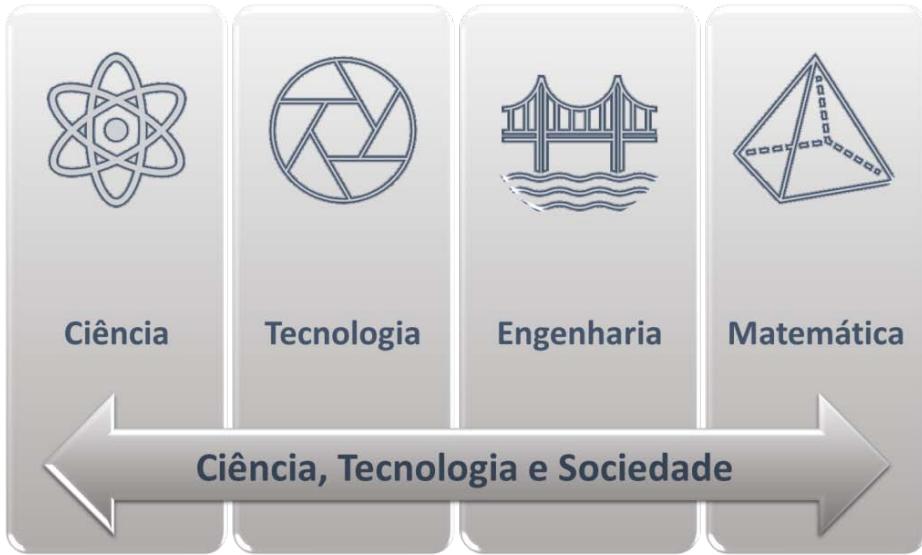
O STEM ancorado numa abordagem CTS otimiza e enfatiza a reflexão crítica sobre as implicações sociais da ciência e da tecnologia em nossa sociedade como na Figura 1.
 Fonte: Produção dos próprios autores.
2024. Figura 1: Relação STEM e CTS
É preciso que as escolas de engenharia pensem em soluções sustentáveis, criativas e inovadoras, ao pressupor a integração de conhecimentos que possibilite ao estudante se preparar para desafios como cidadão crítico, colaborativo, produtivo para a vida e o mercado de trabalho, integrando diferentes áreas do conhecimento e resolutivo diante dos problemas diários, ultrapassando os modelos tradicionais de ensino e suas relações didático-pedagógicas.
Podemos dizer que do ponto de vista da educação, na relação engenharia e vida, serão necessárias outras concepções epistemológicas de ciência e tecnologia, romper com a perspectiva de ensino instrumental, investimento na formação continuada em questões didático-pedagógicas e mobilizar os saberes docentes dos engenheiros a partir de formações de professores priorizadas por suas instituições (Bordin; Bazzo, 2017).
No STEM, o foco significativo de trabalho está na ressignificação da prática pedagógica do corpo docente, apoiando-se na mudança da apresentação baseada em palestras para a prática baseada em evidências, pela investigação (Stainset al., 2018).
É importante ressaltar que estar que professores engenheiros que participam de processos formativos didático-pedagógicos, tem possibilidade de trabalhar melhor as atividades de aprendizagem, escolher seu material significativo, definir a melhor metodologia de ensino para sua realidade, redimensionar o papel da avaliação da aprendizagem, entre outros elementos conseguem articular sua atividade de ensino ao STEM articulado a CTS na engenharia (Rüütmann, 2023).
Moreira (2018, p.224) apresenta algumas estratégias de ensino para disciplinas de STEM, com a utilização de atividades práticas e experimentais, o uso de tecnologias educacionais, a integração de componentes curriculares STEM, a promoção da criatividade e do pensamento crítico, com participação em atividades contextualizadas com a vida cotidiana dos estudantes. Além disso, é importante que os professores tenham um profundo conhecimento do seu componente de ensino articulado com práticas pedagógicas inovadoras.
Corroborando neste sentido de práticas pedagógicas ressaltamos Tardif (2014), ao dizer que a pedagogia na sala de aula é feita de negociações, pois "ensinar é fazer escolhas constantemente, em plena interação com os alunos", (Tardif, 2014, p. 132). Logo no ensino de engenharia que abordagem STEM de enfoque CTS propiciam situações e respostas únicas para cada local e realidade trabalhada.
O ensino STEM na abordagem CTS, emergem condições basilares focada em pensamento crítico, questionamentos, problemas da vida real, contextualizado, de natureza multidisciplinar, interdisciplinar, envolvido com a inovação, resolução de problemas, trabalho colaborativo, desenvolvimento da capacidade de observação e comunicação. (Thibaut et al., 2018).
Outro ponto relevante nesta discussão está voltado para o currículo, no STEM está geralmente centrado em projetos de engenharia, que pode ajudar a desenvolver o conhecimento dos estudantes por meio da aplicação prática do conteúdo (Fan; Yu e Lin, 2021). Os autores exploram as etapas importantes na aplicação do conhecimento de conteúdo ao processo da elaboração de um projeto de engenharia, propondo uma estrutura para implementar um currículo STEM focado tanto na engenharia, quanto no projeto, conforme figura 2.
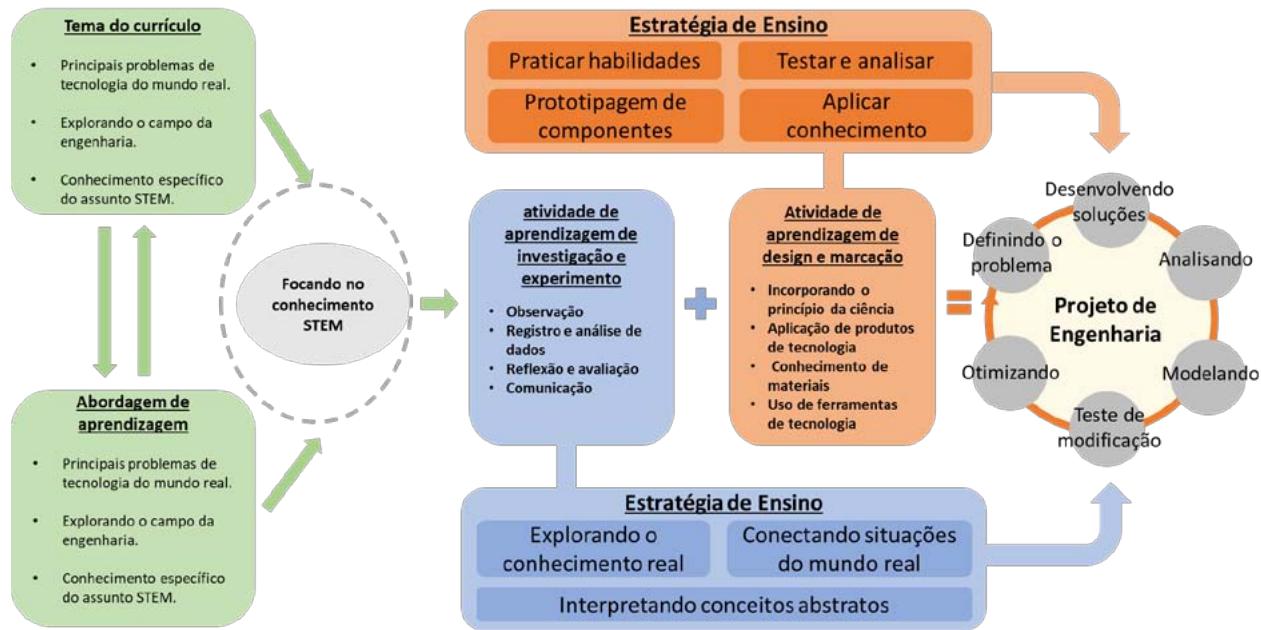 Figura 2: Estrutura para implementar um currículo STEM focado em engenharia Fonte: adaptado de Fan; Yu; Lin (201, p. 1528).
No caso de um currículo STEM, geralmente as seguintes características são consideradas: um histórico do mundo real; conteúdo de integração e aplicação de ciência, tecnologia, engenharia e matemática; atividades baseadas em investigação, problema ou projeto; um ambiente que inspira os alunos a se tornarem aprendizes ativos; e cultivo de habilidades de pensamento de alto nível em estudantes (Bayer Corporation, 2010; Hudson, English e Dawes,
## IV. CONSIDERAÇÕES FINAIS
- 2014; Roehrig, Moore, Wang e Park, 2012 apud Fan et al, 2021, p.1525).
- Fan et al (2021) também define as principais etapas utilizadas na aplicação do conhecimento STEM no processo de construção de um projeto de engenharia, tais como: identificar um problema ou necessidade; definir os requisitos do projeto; gerar soluções conceituais; avaliar e selecionar uma solução; desenvolver um modelo ou protótipo da solução selecionada assim como testar e avaliar a solução. Essas etapas são descritas como fundamentais para a implementação de um currículo STEM centrado em um projeto de engenharia.
- Hoje, quer na Amazônia como em todo o mundo, as questões ambientais, sociais e econômicas nos levam a refletir a formação técnica e humanista do papel do engenheiro na sociedade e o uso da tecnologia. Contribuindo com essa discussão, o STEM se apresenta como possiblidade, quando crítico e reflexivo, de pensar um ensino pautado em situações reais que levam o futuro profissional engenheiro a refletir as possíveis consequências de suas tomadas de decisões frente a sociedade, a natureza e ecossistema.
- Diante deste cenário, este estudo apresenta os desafios enfrentados pelos cursos de Engenharia em relação ao STEM, apontando a falta de formação adequada dos professores para trabalhar com CTS e a dificuldade em integrar essa abordagem ao currículo. Além disso, foi apontada uma tendência em reduzir a abordagem CTS a um conjunto de técnicas ou atividades pontuais, sem considerar sua dimensão crítica e reflexiva.
- Neste contexto, é de fundamental importância relacionar a educação STEM à CTS, pois esta interconexão pode ajudar os estudantes a entenderem como essas áreas estão interconectadas e como elas se aplicam no mundo real, o que é um dos objetivos da CTS.
- É fundamental refletir que quem trabalha com a abordagem STEM no ensino de engenharia com enfoque CTS, reconheça o processo dialógico, sem receita pronta ou uma metodologia a ser seguida, mas aponta possiblidades de encontrar seus próprios caminhos para promover suas experiências.
- Dessa forma, entendemos com este estudo que a abordagem integrada pode ajudar a desenvolver, quer em docentes e discentes, habilidades importantes, como resolução de problemas com um pensamento crítico e colaborativo, contribuindo para a formação de indivíduos comprometidos com o meio ambiente e com uma sociedade mais justa e humana. E o âmbito das Engenharias é sensível a está construção. Portanto, destacamos ser de fundamental importância que os cursos de Engenharia incluam essa abordagem em
- seus currículos e que os professores sejam capacitados para trabalhar com ela.
Generating HTML Viewer...
References
32 Cites in Article
M Araujo,R Sá,De (2021). Saber tecnológico: a construção dos saberes docentes à luz da epistemologia da complexidade.
Rosa Azevedo,Evandro Ghedin,Maria Silva-Forsberg,Amarildo Gonzaga (2013). Questões sociocientíficas com enfoque CTS na formação de professores de Ciências: perspectiva de complementaridade.
L Bacich,J Moran (2018). Metodologias ativas para uma educação inovadora: uma abordagem teóricoprática.
Walter Bazzo (2018). Quase três décadas de CTS no Brasil!: sobre avanços, desconfortos e provocações.
W; Bazzo,L Pereira,J Bazzo (2014). Conversando sobre educação tecnológica.
W Bazzo,L Costa,Da (2019). A Revolução 4.0 e seus Impactos na Formação do Professor em Engenharia.
L Bordin,W Bazzo (2017). Sobre as muitas variáveis -e incógnitas -que se articulam em torno da complexa e não linear relação entre Engenharia e Vida.
Brasil (2017). Superintendência da Zona Franca de Manaus.
Brasil (2019). Unknown Title.
M Durães (2009). Educação Técnica e Educação Tecnológica Múltiplos Significados no Contexto da Educação Profissional.
N Elias (1994). O processo civilizador.
S Fan,K Yu,K Lin (2021). A Framework for Implementing an Engineering-Focused STEM Curriculum.
Alejandro Fuentes Pavéz (2020). Implementación de un modelo de evaluación formativa de la docencia: cambios que genera en las estrategias didácticas para el desarrollo de habilidades científicas dentro del aula.
K Gonçalves,R Azevedo (2021). Discussões em torno do ensino tecnológico.
Y Harari (2018). Lições Para o Século 21.
Rafael Seixas De Amoêdo (2021). Aula Inaugural do Programa de Pós-Graduação Interdisciplinar em Ciências Humanas ministrada pelo Professor José Aldemir de Oliveira (16/08/2016) O significado da Pós-Graduação em Ciências Humanas na Amazônia..
Gladson Hauradou,Maria Amaral (2019). MINERAÇÃO NA AMAZÔNIA BRASILEIRA: aspectos da presença e avanço do capital na região.
T Kelley,J Knowles (2016). A conceptual framework for integrated STEM education.
V Kenski,J Moreira (2007). Educação e tecnologias: o novo ritmo da informação.
Emine Kutlu,Hasan Bakirci,Yilmaz Kara (2022). STEM Education Effect on Inquiry Perception and Engineering Knowledge.
Marco Moreira (2018). O ensino de STEM (Ciência, Tecnologia, Engenharia e Matemática) no século XXI.
M Peña,M Alves,M Peppe,Educação (2003). tecnologia e humanização. Cad. de Pós-Graduação em Educ., Arte e Hist. da Cult. São Paulo.
Gustavo Pugliese (2021). STEM education no contexto das reformas educacionais: os efeitos das políticas de educação globalizantes no currículo e na profissionalização docente.
G Pugliese (2020). Um panorama do STEAM education como tendência global.
G Pugliese (2020). STEM education -um panorama e sua relação com a educação brasileira.
T Rüütmann (2023). Engineering Pedagogy and Engineering Educators' Competency Model for Effective Teaching and Learning STEAM.
M Stains,J Harshman,M Barker,S Chasteen,R Cole,S Dechenne-Peters,M Eagan,J Esson,J Knight,F Laski,M Levis-Fitzgerald,C Lee,S Lo,L Mcdonnell,T Mckay,N Michelotti,A Musgrove,M Palmer,K Plank,T Rodela,E Sanders,N Schimpf,P Schulte,M Smith,M Stetzer,B Van Valkenburgh,E Vinson,L Weir,P Wendel,L Wheeler,A Young (2018). Anatomy of STEM teaching in North American universities.
M Tardif (2014). Saberes docentes e formação profissional.
L Thibaut,S Ceuppens,H Loof,J Meester,L Goowaerts,A Struyf,F Depaepe (2018). Integrated STEM Education: A Systematic Review of Instructional Practices in Secondary Education.
F Vásquez,N Paiva,K Souza (2022). Academia STEM/UEA: Uma análise preliminar sobre o sucesso acadêmico dos estudantes dos cursos de engenharia da Universidade do Estado do Amazonas -UEA.
André Willerding,Leonardo Silva,Roseana Silva,Geison Assis,Estevão Paula (2020). Estratégias para o desenvolvimento da bioeconomia no estado do Amazonas.
No ethics committee approval was required for this article type.
Data Availability
Not applicable for this article.
How to Cite This Article
Felicien Gonçalves Vásquez. 2026. \u201cScience, Technology and Society: Challenges and Possibilities for STEM in Engineering Courses\u201d. Global Journal of Research in Engineering - I: Numerical Methods GJRE-I Volume 24 (GJRE Volume 24 Issue I1): .
Explore published articles in an immersive Augmented Reality environment. Our platform converts research papers into interactive 3D books, allowing readers to view and interact with content using AR and VR compatible devices.
Your published article is automatically converted into a realistic 3D book. Flip through pages and read research papers in a more engaging and interactive format.
The study of Science, Technology and Society (STS) is quite embracing and relevant to today’s society. In this article, we intend to approach the issue and reflect on the interaction that exists between the three areas and education, as well as the relationship with Science, Technology, Engineering and Mathematics (STEM). For that, a qualitative research was carried out from a narrative review about the subject in books, articles and works presented in event annals highlighting STS in the context of education, the challenges faced in relation to the STEM approach and the possibilities of integration between science, technology and society in engineering courses. The results indicate that there are challenges such as lack of adequate training for teachers, lack of didactic resources and resistance to change on the part of some educators and managers, as well as that the STS approach in education and STEM in the training of engineers makes it possible to develop professional skills and competencies focused on sustainability, innovation and a fairer and more humane society.
Our website is actively being updated, and changes may occur frequently. Please clear your browser cache if needed. For feedback or error reporting, please email [email protected]
Thank you for connecting with us. We will respond to you shortly.