The Computer Age, also known as Digital Age, and Information Age, and New Media Age, has been the most impactable historical period of human civilization. If well the truth that its precursor, the Industrial Revolution, drastically changed the way societies lived and worked and plaid, the magnitude of its impact in terms of communication cannot be compared with the one the Computer Age has brought into today’s society. Consequently, technology and human interaction have become a modern society norm. Indeed, a well-considered focus for academic and scientific research. The study takes on the Communication philosophy and Communication Theory to present an outlook on searching for information through technology and human interaction. It focuses on the Shamon Weaver Model to transcribe this model communication concept into a Search Engine Communication Model (SECM). The study has used a qualitative method approach for the collection and analysis of correlated materials such as books and publications and Internet-accredited websites.
## I. INTRODUCTION
The Computer Age, also known as Digital Age, and Information Age, and New Media Age, has been the most impactful historical period of human civilization. If well the truth that its precursor, the Industrial Revolution, drastically changed the way societies lived and worked and plaid, the magnitude of its impact in terms of communication cannot be compared with the one the Computer Age has brought into today's society. Consequently, technology and human interaction have become a modern society norm. Indeed, a well-considered focus for academic and scientific research.
Today, anyone with access to the internet can get the information pursued by key-in computer search engines such as Google, Bing, Yahoo!, Yandex, Duck DuckGo, Baidu etc. These search engines make up the top ten list in the world, and are among the most popular ones when public searching refers. According to research statistic outputs, it is estimated that the number of people that use these and other search engines easily overpasses the million on a daily basis worldwide (Kinstat Website, 2023). Regardless of the technical internet navigating glitches this technology could present, users' searching demand is always a high level. And the main reason for such reliance relies on the vast and diverse source of knowledge they put at the public disposal. A review of this subject matter produced the hypothesis that all internet' users have one thing in common; a search engine searching communication approach that characterizes the way they do interact with this particular technology aid. Thus, the following outcomes seek to answer the research questions and provide an understanding of this communication approach. See Diagram 1: Shannon-Weaver model Graphical Representation. Diagram 2: Search Engine Communication Model. Table 1: Based Search Engine Communication Categories. And table 2: Search Engine Searching Behavior Criteria:
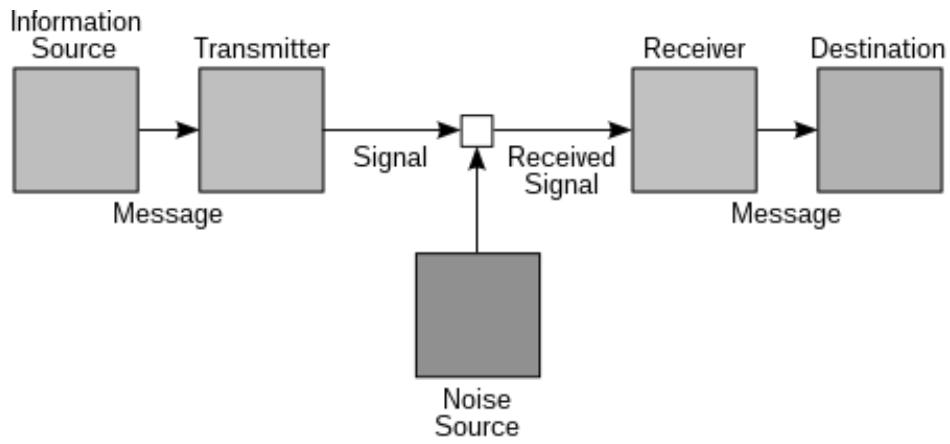
Diagram 1: Shannon-Weaver model Graphical Representation
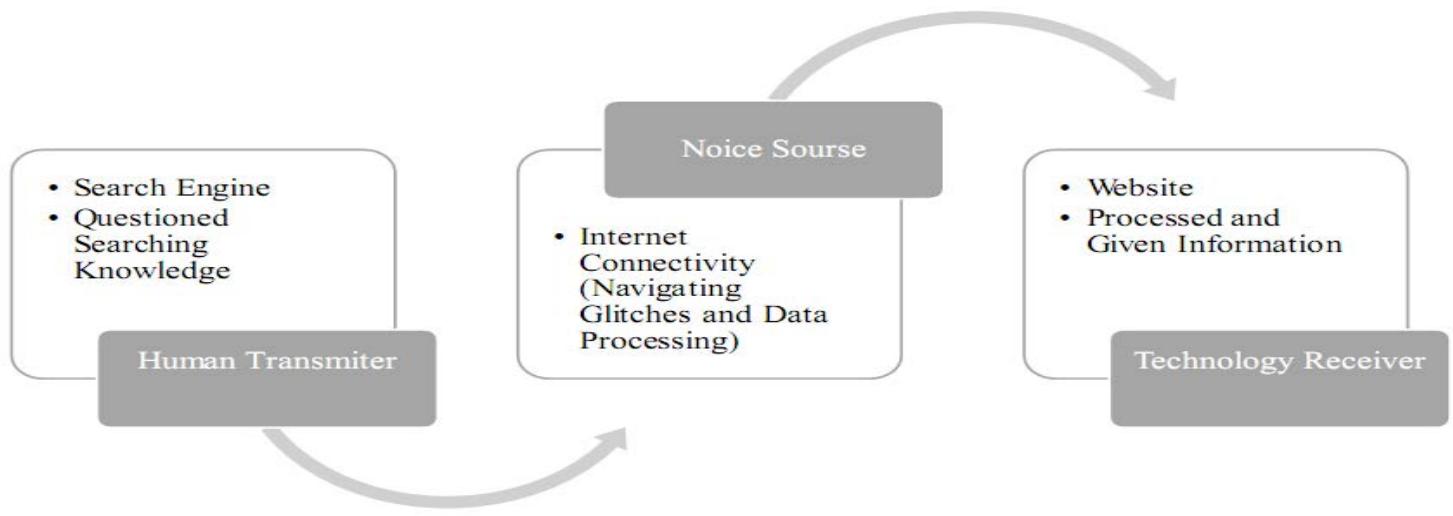
Diagram 2: Search Engine Communication Model
Table 1: Based Search Engine Communication Categories and Equivalence
<table><tr><td>Human Transmitter</td><td>Technology Receiver</td></tr><tr><td>Information Source=Search Engine</td><td>Destination=Website</td></tr><tr><td>Message=Questioned Searching Knowledge</td><td>Message=Processed and Given Information</td></tr></table>
Table 2: Search Engine Searching Behavior Criteria
<table><tr><td>What?</td><td>Searching Subject</td></tr><tr><td>Why?</td><td>Knowing or Verifying</td></tr><tr><td>How?</td><td>First-hand Data Collection and Self- Interpretation</td></tr></table>
## II. LITERATURE REVIEW
Communication is usually defined as the transmission of information. The term can also refer to the message, or the field of inquiry studying these massages, known as communication studies. Still, there are some disagreements about the precise definition of communication - for example, whether unintentional or failed transmissions are also included and whether communication does not just transmit meaning but also create it (Rosengren, 2000). An excellent example to be cited is the meaningful linguistic setting that the use of technology creates to communicate specific insights: Google it!.
Communication Theory, (Katherine, 2005) quotes that it is a proposed description of communication phenomena, the relationships among them, a storyline describing these relationships, and an argument for these three elements. She also argues that Communication theory provides a way of talking about and analyzing key events, processes, and commitments that together form communication. For her, Theory can be seen as a way to map the world and make it navigable; communication theory gives us tools to answer empirical, conceptual, or practical communication questions. According to (Carey, 2009), Communication theory emphasizes its symbolic and social process aspects as seen from two perspectives—as exchange of information (the transmission perspective), and as work done to connect and thus enable the exchange (the ritual perspective). Similarly, the communication concept the (Shannon-Weaver model, 1948). A Mathematical Theory of Communication explains communication in terms of five essential components: a source, a transmitter, a channel, a receiver, and a destination, which has been the pathway to create the Search Engine Communication Model (SECM) and air disclose.
The Model of Communications aims to provide a simplified overview of its main components and their interaction. This makes it easier for researchers to formulate hypotheses, apply communication-related concepts to real-world cases, and test predictions. Models of communication are often categorized based on their intended applications and how they conceptualize communication (Ruben, 2001); (McQuail, 2008); (Narula, 2006). According to (Uma, 2006), New Models May Occur Due to Changes in Modalities. Other communication models have been used to understand communication patterns: Linear transmission model; Interaction model; Transaction model (University of Minnesota, 2016); (Kastberg, 2019).
## III. METHODOLOGY
According to (Elizabeth, 2022), Qualitative research is a type of research that aims to gather and analyze non-numerical (descriptive) data to gain an understanding of individuals' social reality, including understanding their attitudes, beliefs, and motivation. Indeed, this is a well-simplified view of the Qualitative Research method. Based on this research approach, the set criteria of the present research study involved the collection and analysis of correlated materials such as books and publications and Internet accredited websites. These relevant materials were gathered firsthand and the references extracted from them were treated and cited according to the academic and scientific ethical research criteria to follow. Considering the advantages of the technologies, specifically search engines, it was possible to access all the materials used. The research study development was guided by two fundamental questions. And the revising of the subject matter presented produced the hypothesis and the intended objective.
## IV. FUNDAMENTAL QUESTIONS
1) Can a transcription of the Shannon Weaver Model communication concept help us to understand Searching for information through technology and human Interaction?
2) How relevant is this model communication concept in the Era of Technology?
## V. HYPOTHESIS
All internet' users have one thing in common; a search engine searching communication approach that characterizes how they interact with this particular technology aid.
## VI. OBJECTIVE
The study takes on the Communication philosophy and Communication Theory to present an outlook on searching for information through technology and human interaction. It focuses on the Shannon Weaver Model to transcribe this model communication concept into a Search Engine Communication Model (SECM).
## VII. ANALYSIS
Undoubtedly, the Shannon Weaver Model remains relevant in the Era of Technology. Its communication idea matches the concept and purpose of Communication philosophy and Communication Theory, more importantly, help to create new models according to communication tendencies nowadays. For instance, the one between search engines and humans. As was previously cited, the number of people that use search engines such as Google, Bin; Yahoo!, Yandex, DuckDuckGo, Baidu, and others, easily overpass the million on a daily basis worldwide. Indeed, this is a considerable statistical outcome for us to ponder the necessity to look at and evaluate this subject matter from communication perspectives like the one described in this study. It is well-known that all search engines cited in this paperwork alike when searching for information refer. So, The Search Engine Communication Model, and the Based Search Engine Communication Categories, and Search Engine Searching Behavior Criteria the present study has put forward can be used to analyze communication patterns accordingly.
## VIII. RESULTS
The Search Engine Communication Model (SECM) and the Based Search Engine Communication Categories and Search Engine Searching Behavior Criteria provide the necessary insights for us to assign the interaction between search engines and humans. Alike the (Shannon-Weaver model) that explains communication in terms of five essential components; Diagram 2, and Table 1, and Table 2 show these five essential components' functionality according to their intended communication purpose. Diagram 2 shows the Human Transmitter, and the Noise Source, and the Tech Receiver, each one of them with their respective associated insights. Table 1 shows the transmitter and the receiver exchange communication meaning. Table 2 shows the behavior criteria we can use to access this particular communication approach. The result of What and Why and How can be chronologically interpreted as Individual Interest, and Individual Awareness, and Individual Readiness. Although behaviourists generally accept the important role of heredity in determining behaviour, they focus primarily on environmental events (Araiba, 2019). Similarly, one can say that the hypothesis "All internet users have one thing in common; a search engine searching communication approach that characterizes how they interact with this particular technology aid" is valid. So, the results of this study are trusted as the intended objective has been accomplished. The questions have been answered, and an understanding of the subject matter discussed has been provided. Thus, the research hypothesis is reaffirmed as the Search Engine Communication Model (SECM) and the Based Search Engine Communication Categories and Search Engine Searching Behavior Criteria presented valuable insights that help understanding how searching information through technology and human interaction work, mainly when Search Engines Searching for Information refer. The communication transcription this research study has put forward based on the Shannon Weaver Model communication concept is an example of it.
## IX. CONCLUSION
Models of Communication aim to provide a simplified overview of its main components and their interaction. This makes it easier for researchers to formulate hypotheses, apply communication-related concepts to real-world cases, and test predictions. This based conceptual communication model reflects the present research study outcome. The Search Engine Communication Model (SECM) and the Based Search Engine Communication Categories and Search Engine Searching Behavior Criteria could lead us to consider adopting their valuable contribution, by doing so, create new models that help understand technology and human interaction contexts.
## X. RECOMMENDATION
Undoubtedly, the $21^{\text{st}}$ Century has changed human society's development on an unprecedented scale. It is the century of technological advances that have catapulted the field of communication beyond boundaries, being human and technology interaction a well-stablished modern society norm, moreover, a future communication prospect? Because technology and human interaction have gained prominence and use with other technologies such as Chat GPT and Artificial Intelligence (AI), it is recommendable to consider the search engine communication perspective this research study highlights to analyze and answer more complex technology and human interaction settings.
### ACKNOWLEDGEMENT
The author is very thankful to all the associated personnel in any reference that contributed to this research study. The research study holds no conflict of interest. It is not funded through any local or foreign monetary source other than being sponsored by the professional interest of its author.
### BIOGRAPHY
1. Murray, James (2011-12-18). "Cloud network architecture and ICT-Modern Network Architecture". TechTarget= IT Knowledge Exchange. Archived from the original on 2017-09-20. Retrieved 2013-08-18.
2. Mitcham, C. (15 October 1994). Thinking Through Technology: The Path Between Engineering and Philosophy. University of Chicago Press. ISBN 978-0-226-53198-4.
3. Kinstat Web, Search Engine Market Share: According to Country (as of June 2022) https://kinsta.com/search-engine-market-share/
4. Rosengren, Karl Erik (11 February 2000). "1.1 On communication". Communication: An Introduction. SAGE. pp. 1-2. ISBN 9780803978379.
5. Miller, Katherine (2005). Communication theories: perspectives, processes, and contexts (2nd ed.). Boston: McGraw-Hill. ISBN 0072937947.
6. Carey, James W. (2009). Communication as culture: essays on media and society (Rev. ed.). New York: Routledge. ISBN 9780415989763.
7. Ruben, Brent D. (2001). "Models Of Communication". Encyclopedia of Communication and Information. pp. 607-8. ISBN 9780028653860.
8. McQuail, Denis (2008). "Models of communication". In Donsbach, Wolfgang (ed.). The International Encyclopedia of Communication, 12 Volume Set. Wiley-Blackwell. pp. 3143-9. ISBN 9781405131995.
9. Narula, Uma (2006). "1. Basic Communication Models". Handbook of Communication Models, Perspectives, Strategies. Atlantic Publishers & Dist. pp. 11-44. ISBN 9788126905133.
10. Elizabeth St. Clair, MLIS. "City University of Seattle Library: Research Methods and Design: Qualitative Research Methods". library.cityu.edu. Retrieved 2022-12-14.
11. Cao, Longbing (2008). "Behavior Informatics and Analytics: Let Behavior Talk". 2008 IEEE International Conference on Data Mining Workshops: 87-96. doi:10.1109/ICDMW.2008.95. hdl: 10453/10879. S2CID 10850849.
12. Uma, Narula (2006) Book. Atlantic Publishers & Dist, 2006 ISBN 8126906766, 9788126906765
13. Araiba, S. (2019). "Current diversification of behaviorism". Perspectives on Behavior Science. 43 (1):157-175. doi: 10.1007/s40614-019-00207-0. PMC 7198672. PMID 32440649
14. Shannon, C. E. (July 1948). "A Mathematical Theory of Communication". Bell System Technical Journal. 27 (3):381. doi: 10.1002/j.1538-7305.1948.tb01338.x.
15. "1.2 The Communication Process". Communication in the Real World. University of Minnesota Libraries Publishing. 29 September 2016. ISBN 9781946135070.
16. Kastberg, Peter (13 December 2019). Knowledge Communication: Contours of a Research Agenda. Frank & Timme GmbH. p.
56. ISBN 9783732904327.
17. Narula, Uma (2006). "1. Basic Communication Models". Handbook of Communication Models,
Perspectives, Strategies. Atlantic Publishers & Dist. pp. 11-44. ISBN 9788126905133.
#### Internet Accredited Websites
1. https://en.wikipedia.org/wiki/Communication theorists#:~:text=CMC%20theories%20fall%20into%20three_adaptation%20to%2Fexploitation%20of%20media.
2. https://blog.hubspot.com/marketing/top-search-engines
3. https://99firms.com/blog/search-engine-statistics/#gref
4. https://en.wikipedia.org/wiki/Internet_of Things
5. https://www.communicationstudies.com/communication-theories
6. https://en.wikipedia.org/wiki/Communication理論#Information_Theory
7. https://en.wikipedia.org/wiki/Information_and_communications_technology
8. https://en.wikipedia.org/wiki/Behavior_informatics
9. https://books.google.es/books/about/Communication_Models.html?id=NCpYZSSEWwEC&source=kp_book_description&redir_esc=y
Generating HTML Viewer...
References
18 Cites in Article
James Murray (2011). Cloud network architecture and ICT-Modern Network Architecture.
C Mitcham (1994). Thinking Through Technology: The Path between Engineering and Philosophy, Carl Mitcham. 1994. University of Chicago Press, Chicago, IL. 328 pages. ISBN: 0-226-53196-1(hc); 0-226-53198-8(pb). $47.50(hc); $15.95(pb.
(2022). 4.9. Chinese Internet firm revenue, 2003-2005 (up) and search engine market share in Beijing, 2005 (down).
Karl Rosengren,Erik (2000). 1.1 On communication.
Katherine Miller (2005). Communication theories: perspectives, processes, and contexts.
James Carey (2009). Communication as culture: essays on media and society.
Brent Ruben (2001). Book Reviews : Communication Yearbook 2. Brent D. Ruben (Ed.), New Bruns wick, NJ: Transaction Books, 1978.
Denis Mcquail (2008). Models of Communication.
Uma Narula (2006). Introduction.
Elizabeth St,Clair,Mlis (2021). Principles of Qualitative Methods.
Longbing Cao (2008). Behavior Informatics and Analytics: Let Behavior Talk.
Narula Uma (2006). Publishers' International ISBN Directory 2004/2005 (31st edition).
Sho Araiba (2019). Current Diversification of Behaviorism.
C Shannon (1948). A Mathematical Theory of Communication.
(2016). Sociology: Understanding the Changing Social World.
Peter Kastberg (2019). Knowledge Communication: Contours of a Research Agenda.
Timme Frank,Gmbh Unknown Title.
Uma Narula (2006). Communication networks and systems for power utility automation.
No ethics committee approval was required for this article type.
Data Availability
Not applicable for this article.
How to Cite This Article
Joel Laffita Rivera. 2026. \u201cSearching Information through Technology and Human Interaction\u201d. Global Journal of Human-Social Science - A: Arts & Humanities GJHSS-A Volume 23 (GJHSS Volume 23 Issue A3): .
Explore published articles in an immersive Augmented Reality environment. Our platform converts research papers into interactive 3D books, allowing readers to view and interact with content using AR and VR compatible devices.
Your published article is automatically converted into a realistic 3D book. Flip through pages and read research papers in a more engaging and interactive format.
The Computer Age, also known as Digital Age, and Information Age, and New Media Age, has been the most impactable historical period of human civilization. If well the truth that its precursor, the Industrial Revolution, drastically changed the way societies lived and worked and plaid, the magnitude of its impact in terms of communication cannot be compared with the one the Computer Age has brought into today’s society. Consequently, technology and human interaction have become a modern society norm. Indeed, a well-considered focus for academic and scientific research. The study takes on the Communication philosophy and Communication Theory to present an outlook on searching for information through technology and human interaction. It focuses on the Shamon Weaver Model to transcribe this model communication concept into a Search Engine Communication Model (SECM). The study has used a qualitative method approach for the collection and analysis of correlated materials such as books and publications and Internet-accredited websites.
Our website is actively being updated, and changes may occur frequently. Please clear your browser cache if needed. For feedback or error reporting, please email [email protected]
Thank you for connecting with us. We will respond to you shortly.